谷子经济

Search documents
超大规模市场优势体现在哪,怎样用好
Sou Hu Cai Jing· 2025-11-14 12:02
Core Insights - The article emphasizes the importance of China's super-large market advantage as a strategic asset for economic development and modernization [1][5][6] - It highlights the continuous growth of domestic consumption and the shift towards service consumption as key trends in the market [2][3] Group 1: Market Growth and Consumption Trends - China's social retail sales reached 36.5877 trillion yuan in the first three quarters of this year, with a year-on-year growth of 4.5%, accelerating by 1.2 percentage points compared to the previous year [2] - The retail sales of social consumer goods are projected to grow from 39.1 trillion yuan in 2020 to 48.3 trillion yuan in 2024, with an average annual growth rate of 5.5% [1] - Service retail sales are expected to grow by 6.2% in 2024, outpacing goods retail sales by 3 percentage points, indicating a shift towards service-oriented consumption [2] Group 2: New Consumption Patterns - New consumption formats are emerging, integrating experiences such as shopping, exhibitions, and entertainment, enhancing leisure experiences for consumers [3] - Innovative products and cultural items, including traditional clothing and local specialties, are gaining popularity both domestically and internationally [3] Group 3: Strategic Initiatives and Future Outlook - The "14th Five-Year Plan" emphasizes expanding domestic demand as a strategic foundation, focusing on three key tasks: expanding increments, improving efficiency, and ensuring smooth circulation [5][6] - The plan aims to enhance government investment in public welfare and infrastructure, optimize investment structures, and eliminate market barriers to fully leverage the benefits of the super-large market [6] - The eighth China International Import Expo saw a record high in participating enterprises, with intended transaction amounts reaching 83.49 billion USD, reflecting strong market engagement [5]


浙数文化(600633):归母净利润高增,文化+科技创新驱动发展
Guoyuan Securities· 2025-08-11 00:11
Investment Rating - The report maintains a "Buy" rating for the company [3] Core Views - The company reported significant growth in net profit driven by fair value changes in financial assets and investment income from associates, with a proposed cash dividend of 101 million yuan [1] - The company focuses on the "Culture + Technology" strategy, enhancing its "1335" strategic plan across four main business areas, including digital culture, digital technology, data operations, and innovation [2] - The projected net profit for the company from 2025 to 2027 is estimated to be 6.79 billion yuan, 7.49 billion yuan, and 8.31 billion yuan respectively, with corresponding EPS of 0.54, 0.59, and 0.66 yuan per share [3] Financial Performance Summary - In H1 2025, the company achieved operating revenue of 1.414 billion yuan, a year-on-year increase of 0.09%, and a net profit attributable to the parent company of 377 million yuan, a year-on-year increase of 156.26% [1] - The company’s operating revenue for Q2 2025 was 708 million yuan, a year-on-year decrease of 3.66%, while the net profit attributable to the parent company was 234 million yuan, a year-on-year increase of 386.45% [1] - The company’s mid-year cash dividend proposal represents a payout ratio of 26.88% [1] Business Strategy and Development - The company is deepening its "1335" strategic action plan, focusing on four business directions: digital culture, digital technology, data operations, and innovation [2] - In the digital culture sector, the company’s subsidiary achieved revenue of 1.015 billion yuan and a net profit of 294 million yuan in H1 2025 [2] - The company is actively investing in 14 companies through funds, with some of these companies already applying for listing on the Hong Kong Stock Exchange [2]

私募上半年成绩单出炉 事件应对成致胜关键
Zhong Guo Zheng Quan Bao· 2025-08-08 07:16
Core Insights - The A-share market in the first half of 2025 experienced significant volatility, leading to a stark performance divergence among private equity firms, with some capitalizing on new trends while others faced losses [1][2] - The focus of investment strategies shifted towards sectors such as artificial intelligence (AI), new consumption, innovative pharmaceuticals, and dividend assets as firms actively adjusted their portfolios [1][5] Performance of Private Equity Firms - Notable private equity firms showed significant performance variation, with firms like Tongben Investment achieving substantial positive returns due to the rise of the new consumption sector, shifting their focus from "big consumption" to "new consumption" since November 2024 [2] - Conversely, some well-known private equity firms faced losses exceeding 20% due to heavy investments in the oil and gas sector [2] Market Reflections - The market's main theme in the first half of 2025 was characterized by "wide fluctuations combined with structural opportunities," leading many investors to struggle with decision-making during periods of volatility [3] - Key events included the "DeepSeek moment" before the Spring Festival and overseas disturbances in early April, which influenced investment strategies and market dynamics [3] Outlook for the Second Half - Private equity firms expressed optimism for the second half of the year, maintaining focus on AI, new consumption, innovative pharmaceuticals, and dividend assets [5][6] - Investment strategies are expected to emphasize a dual focus on "technology + consumption," with an increased emphasis on sectors like financial technology and biotechnology as well as new consumption leaders [6] - Firms like Qinghequan Capital anticipate that the Chinese market remains attractive to foreign capital due to relatively low valuations, with expectations of a positive market sentiment driven by global capital flows [6]
商务部:从实际购买力看,中国社零总额已超美国
中国基金报· 2025-07-18 16:11
Group 1 - The core viewpoint of the article highlights the significant growth and transformation of China's consumption market during the "14th Five-Year Plan" period, emphasizing the expansion, quality improvement, innovation, and openness of the market [1][2][4] Group 2 - The consumption market in China is expected to grow from 39.1 trillion yuan in 2020 to 48.3 trillion yuan in 2024, with an average annual growth rate of 5.5%. By the end of this year, the total retail sales are projected to exceed 50 trillion yuan [1] - The retail sales of home appliances have maintained double-digit growth since September last year, and the penetration rate of new energy vehicles reached 50.2% in the first half of this year, with a 5.4-fold increase in ownership compared to 2020 [2] - The service consumption expenditure is expected to grow at an average annual rate of 9.6% from 2020 to 2024, outpacing goods consumption, indicating a shift towards higher quality service offerings [2] - New consumption trends are emerging, with innovative retail experiences being developed, such as integrating museums and entertainment into shopping environments, and the rise of digital consumption and AI-driven retail [3] - The import of consumer goods from 2021 to 2024 is projected to reach 7.4 trillion yuan, showcasing China's role as a significant player in the global market [3][4] - The tourism and shopping experience for international visitors is expected to generate a total expenditure of 94.2 billion USD in 2024, reflecting a 77.8% increase, thus converting tourism traffic into shopping growth [4]

商务部部长:按实际购买力算,中国社零总额已超过美国
Nan Fang Du Shi Bao· 2025-07-18 05:53
Group 1 - The core achievement of the "14th Five-Year Plan" is the significant growth of China's consumption market, with the total retail sales of consumer goods expected to rise from 39.1 trillion yuan in 2020 to 48.3 trillion yuan in 2024, reflecting an average annual growth of 5.5% [2] - China's total retail sales of consumer goods are approximately 80% of the United States in absolute terms, but in terms of purchasing power, they exceed the U.S. by 1.6 times according to World Bank data [2] - In the first half of this year, it is anticipated that China's total retail sales will surpass 50 trillion yuan for the entire year, with sectors like online retail and automotive sales maintaining a leading global position [2] Group 2 - The "14th Five-Year Plan" period is characterized by a "renewal" in consumption, with new consumption trends emerging, such as high-quality domestic products and creative trends appealing to younger consumers [3] - The Ministry of Commerce is promoting the integration and innovation of new consumption formats, focusing on digital consumption, quality e-commerce, and cultivating new growth points like "AI + consumption" and "IP + consumption" [3]

6月16日复盘:反弹=假象!天天这样玩,9成散户还在亏钱?需要变通!
Sou Hu Cai Jing· 2025-06-16 11:59
Core Viewpoint - The recent rebound in A-shares is perceived as weak, with banks leading the rise, followed by securities, insurance, and real estate sectors, while the previously favored innovative pharmaceuticals have shifted focus [1] Market Analysis - The buying power on Friday was over 900, but the market has shown weak buying strength in the past five days, indicating a lack of strong momentum for a sustained rally [3] - Despite the presence of significant buying power, the market remains stagnant, suggesting that the main players may be controlling the market without a clear intention to push prices higher [3] Sector Performance - The current market is dominated by ST stocks, with blockchain concepts gaining traction, particularly stablecoins, which have emerged as a new focus area [5] - Other sectors like oil services showed a decline in momentum, indicating that without further positive news, their performance may not sustain [5] - The innovative pharmaceutical sector may see renewed interest if the blockchain narrative continues to evolve [5] Trading Strategy - Investors are advised to adopt a diversified approach and be prepared for sector rotations, as the market dynamics are shifting and may not favor traditional strategies [1][5] - The current market environment suggests that even if there are opportunities, they may not be accessible to all investors, particularly retail ones [1]

新消费,火了!基金经理最新解读
天天基金网· 2025-05-27 06:49
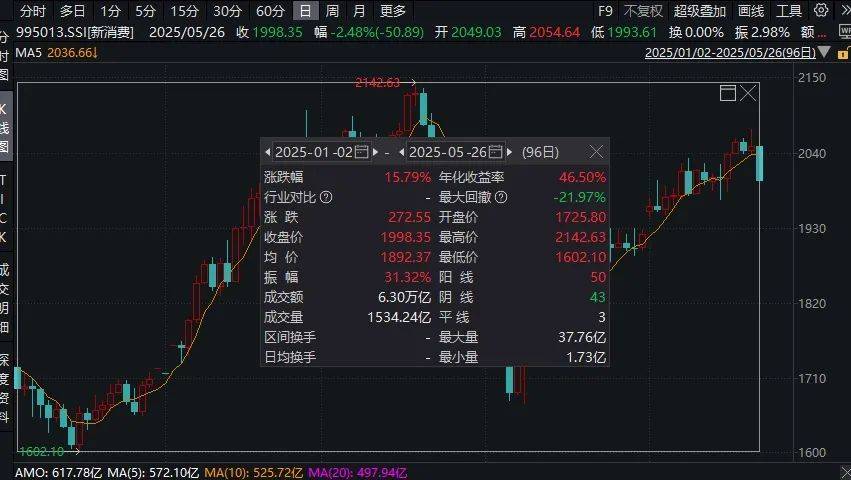
Core Viewpoint - The article discusses the rise of new consumption trends focusing on emotional value and self-satisfaction, highlighting the strong performance of related stocks and the emergence of multiple tenfold stocks in the market [1][3]. New Consumption Trends - New consumption is characterized by a shift from traditional needs to emotional and personalized experiences, with a focus on "self-satisfaction" rather than just material consumption [3][4]. - The new consumption sector includes emotional and spiritual consumption such as trendy toys, cultural tourism, IP, pets, and medical beauty, as well as a focus on high cost-performance ratio [3][4]. Market Performance - As of May 26, the new consumption index (995013) has seen a cumulative increase of 15.79% this year, outperforming the traditional consumption index (801273) [1]. - Recent strong performance in the new consumption sector includes beauty products, snacks, IP trendy toys, and the pet economy, which have attracted significant market attention [6]. Investment Opportunities - The new consumption sector is seen as having clear growth logic and strong performance, attracting both traditional and new funds [7]. - The current market environment, including government policies aimed at stimulating consumption, is expected to support the growth of new consumption companies [7][8]. Future Outlook - The article suggests that while the new consumption narrative is gaining traction, there may be risks of market volatility and potential bubbles in some newly listed companies [8]. - Investment strategies should balance traditional and new consumption opportunities, focusing on structural changes and consumer behavior shifts [10][11]. Key Focus Areas - Future investment in new consumption should target emotional consumption, cost-performance, and international expansion, with a focus on identifying quality companies in these segments [10][11]. - The article emphasizes the importance of adapting to generational changes in consumer preferences and the potential for new brands to emerge in the market [11].

新消费,火了!基金经理最新解读
Sou Hu Cai Jing· 2025-05-27 01:35
Core Viewpoint - The new consumption sector is gaining traction in the capital market, driven by trends such as emotional value and self-consumption, leading to significant stock performance and the emergence of multiple tenfold stocks [1][5]. New Consumption Trends - New consumption is characterized by supply-driven demand, focusing on opportunities that emerge from economic development and changing consumer preferences, particularly in emotional and quality-price ratio consumption [3][6]. - The rise of new consumption is attributed to younger consumers, particularly Generation Z, who prioritize individual experiences and quality over mere affordability [6][10]. Market Performance - The new consumption sector has shown strong performance, with notable stocks like Pop Mart reaching new highs and others like Old Puhuang and Mixue Ice City experiencing significant gains after their Hong Kong listings [5][8]. - The current market interest in new consumption is fueled by strong fundamentals and rapid earnings growth of related companies, attracting both traditional and new capital [9]. Investment Strategies - Investment in the consumption sector requires a balanced approach, focusing on both traditional and emerging consumption opportunities, with an emphasis on identifying alpha opportunities in niche markets [11][12]. - A "barbell strategy" is recommended, targeting high-growth areas in emotional and spiritual consumption while also securing stable cash flow from essential consumer goods [12][13]. Future Outlook - The new consumption sector is expected to continue benefiting from policy support, consumption upgrades, and technological innovations, with a potential for valuation recovery as the macroeconomic environment stabilizes [9][10]. - There is a recognition that while emotional and self-consumption trends will persist, their forms will evolve with generational changes, necessitating ongoing exploration and adaptation [10].
新消费风口终于来了!各大券商正扎堆举办消费主题策略会
Mei Ri Jing Ji Xin Wen· 2025-05-20 11:31
Group 1 - The new consumption sector in A-shares is gaining momentum, with various themes such as pets, snacks, health products, trendy toys, and beauty care emerging as hot topics [1][8] - In the past 10 days, multiple securities firms, including Huafu Securities, CITIC Securities, and Guojin Securities, have held consumption industry strategy meetings, indicating a shift in focus from technology to consumption [2][10] - The enthusiasm for consumption-themed events contrasts sharply with two years ago when such events saw minimal attendance, highlighting the current interest in the sector [5][11] Group 2 - The performance of the consumption sector has outpaced that of the technology sector this year, with significant gains in sub-sectors such as personal care products (up 33.65%), animal health (up 26.55%), and cosmetics (up 21.3%) [7][11] - New consumption trends are leading the market, with a focus on keywords like pets, snacks, and health products, rather than traditional sectors like liquor [8][10] - Recent strategy reports from various securities firms indicate a strong interest in new consumption, with nearly 30 reports published recently, compared to only about 10 related to technology [11]

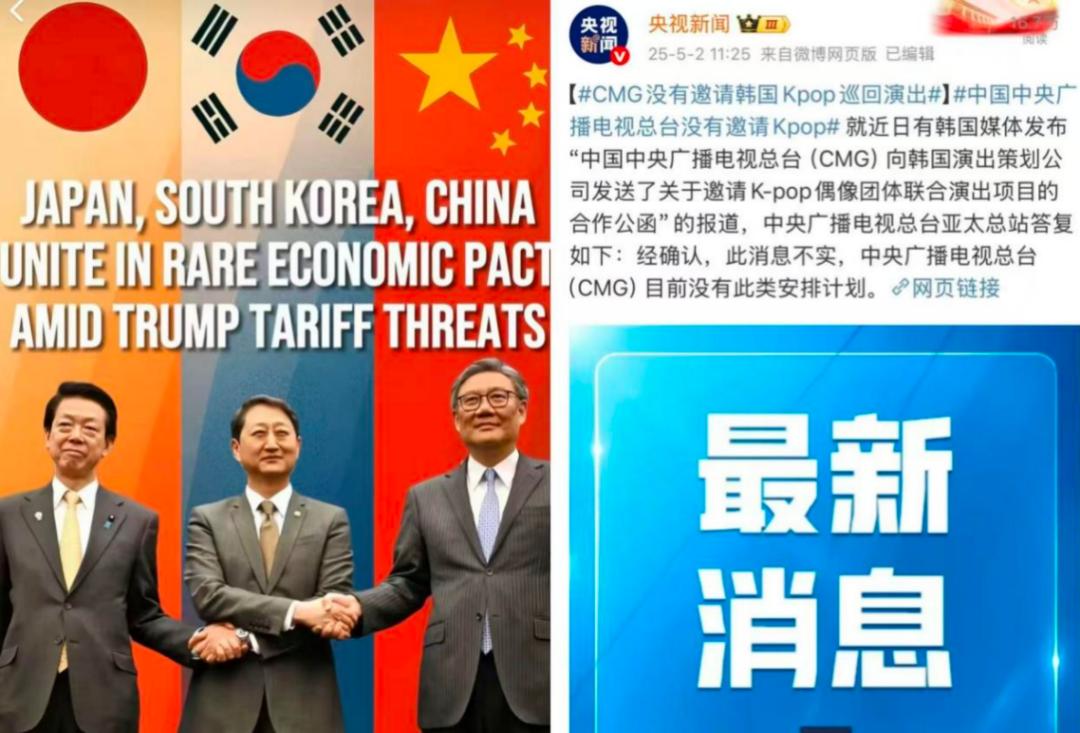
韩星未被邀请,内娱抢购日货
3 6 Ke· 2025-05-16 09:57
Group 1 - The article discusses the growing collaboration between Chinese entertainment and Japanese entertainment, driven by geopolitical factors and the decline of Hollywood influence [1][3][23] - There is a notable increase in the number of Japanese films being released in China, with 14 films already screened this year, potentially breaking the previous record of 25 films [4][11] - The rising popularity of Japanese films in China is attributed to their box office success, with titles like "Suzume's Door Lock," "What Kind of Person Do You Want to Be," and "Slam Dunk" becoming box office hits [4][11] Group 2 - The competition for Japanese anime IP rights has intensified, with prices for top titles reaching nearly $10 million, necessitating a box office of at least $25 million to break even [8][11] - Despite the high costs, older Japanese films have proven to be profitable, with some companies successfully monetizing through merchandise sales related to popular titles [11][13] - The music industry is also seeing a shift towards Japanese artists, with a significant increase in the number of Japanese music performances and festivals in China [14][18] Group 3 - Japanese artists are becoming a staple in Chinese variety shows, with successful cases like Mei Yiliya from "Sister Who Makes Waves" showcasing the potential for cross-cultural appeal [19][21] - The traditional Japanese entertainment industry has been slow to adapt to international markets, but recent changes indicate a growing interest in collaboration with Chinese companies [23][24] - The article suggests that the current environment presents a unique opportunity for Chinese entertainment to innovate and diversify by engaging with Japanese content [24][25]