银行纸黄金

Search documents
黄金全面解析(QA问答版)
Sou Hu Cai Jing· 2026-02-05 07:46
Core Viewpoint - The current domestic gold T+D price is 1092.5 CNY per gram, and the London gold spot price is 4853.83 USD per ounce, both showing slight declines recently. However, the long-term upward trend in gold prices remains supported by ongoing global central bank gold purchases and the onset of the Federal Reserve's interest rate cuts [1][3]. Group 1: Financial Attributes of Gold - Gold possesses two core financial attributes: safe-haven and value preservation, while also being a hard currency with no credit risk. Over the past 20 years, gold has achieved an average annual return of 7.2%, significantly outpacing inflation [2]. - During market volatility, gold has a low correlation with stocks and bonds, and a 5-15% allocation to gold can effectively reduce overall portfolio volatility [2]. Group 2: Current Gold Prices - As of the latest data, the domestic gold T+D price is 1092.5 CNY per gram, down 36.9 CNY or 3.27% from the previous day. The international London gold price is 4853.83 USD per ounce, reflecting a decline of 3.14% [3]. - There are significant price differences across various channels, with retail prices at gold shops being higher, while the gold trading market prices are closest to spot prices [3]. Group 3: Pricing Factors of Gold - The pricing logic of gold has shifted since 2022, now primarily driven by central bank purchases and fiscal deficits, influenced by factors such as U.S. Treasury yields, geopolitical tensions, and the U.S. dollar index [4]. - The People's Bank of China has increased its gold reserves for 13 consecutive months, with reserves expected to reach 2305.39 tons by November 2025 [4]. Group 4: Types of Gold - Gold is categorized into three main types: physical gold, paper gold, and gold derivatives, each differing in investment attributes, liquidity, and entry barriers [5]. - Physical gold includes investment bars, coins, and jewelry, with investment bars having the strongest investment attributes [5]. Group 5: Investment Methods for Ordinary Investors - Ordinary investors are advised to prioritize gold ETFs, bank paper gold, and physical gold bars, while high-leverage gold futures are not suitable for beginners [6]. - The minimum investment for gold ETFs is low, with the total scale of gold-themed ETFs in China expected to exceed 110 billion CNY by December 2025 [6]. Group 6: Advantages of Gold Investment - The primary advantage of investing in gold is its ability to act as a hedge against inflation and geopolitical conflicts, with a historical average return of 7.2% over the past 20 years [7]. - Gold's global recognition allows LBMA-certified standard bars to be liquidated in 180 countries [7]. Group 7: Market Environment for Gold Investment - The current market environment is favorable for gold investment, with ongoing central bank purchases and the onset of the Federal Reserve's interest rate cuts providing a solid foundation for gold prices [9]. - Short-term price corrections present opportunities for staggered entry into gold investments [9]. Group 8: Risk Control in Gold Investment - Risk control in gold investment emphasizes diversification, position control, and avoiding high-leverage products. New investors should be cautious of over-allocating to gold [21]. - It is recommended to avoid blindly chasing high prices and to adopt a staggered entry approach to mitigate price volatility risks [21].
CA Markets:A股黑色星期一资源股跌停,你的钱袋子受影响了吗?
Sou Hu Cai Jing· 2026-02-03 03:44
Core Viewpoint - The sudden drop in A-shares on February 2, referred to as "Black Monday," significantly impacted resource stocks, leading to widespread losses among investors, including those holding related funds and gold investments [1][3]. Group 1: Market Reaction - On February 2, resource stocks experienced a sharp decline, with many stocks hitting the daily limit down, causing panic among investors [3][4]. - The gold sector saw multiple stocks, including Sichuan Gold and Zhaojin Gold, hit the limit down, while leading companies in the non-ferrous sector, such as Zijin Mining, faced declines exceeding 8% [3][4]. - Investors in stock funds reported a drop in net value by over 4%, leading to concerns about whether to redeem their investments [5]. Group 2: Causes of the Drop - The primary cause of the drop was the cooling of international commodity prices, particularly due to rising expectations of interest rate hikes by the Federal Reserve, which led to a sell-off in commodities like gold and copper [6][7]. - Large institutional investors began to sell off their holdings in resource stocks to lock in profits, contributing to a chain reaction of selling pressure in the market [7][8]. - The breach of key technical support levels, particularly the 3850-point mark on the Shanghai Composite Index, triggered automated selling by algorithmic trading systems, exacerbating the market's decline [9]. Group 3: Impact on Investors - Investors directly holding resource stocks faced immediate risks of further declines, with recommendations to set stop-loss limits to mitigate potential losses [10][11]. - Those invested in resource-heavy funds could expect a normal decline in net value of 4%-8%, with advice against panic selling, as the long-term value of resource sectors remains intact [11][12]. - Investors in gold-related financial products were advised to remain calm, as the recent price drop was attributed to short-term fluctuations rather than a loss of gold's inherent value [12]. Group 4: Future Outlook - Experts have differing views on the market's future, with some suggesting that the recent drop is a short-term adjustment and that the market may rebound as conditions stabilize [13]. - Caution is advised regarding potential "black swan" events, such as unexpected rate hikes or geopolitical tensions, which could further impact commodity prices and the stock market [13]. - A recommended investment strategy is the "three-three" approach, which involves diversifying investments to mitigate risks associated with market volatility [14][15].




昨晚黄金暴跌300美元,你的账户被行情“扇了几巴掌”?
Sou Hu Cai Jing· 2026-01-30 13:11
Group 1 - The core event involved extreme volatility in gold and silver prices, with gold reaching $5600 per ounce and silver increasing by 3.5%, followed by a rapid decline that saw gold drop below $5200, leading to significant losses for many investors [3][10][32] - The market experienced a high-speed trading environment where price fluctuations were accelerated by 3 to 5 times during volatile periods, making it difficult for ordinary investors to react in time [9][10] - There are two main perspectives on the market's behavior: one argues that the market is too volatile for retail investors, while the other blames investors for inadequate risk management [12][20] Group 2 - The World Gold Council reported a 40% increase in the frequency of gold price fluctuations exceeding 2% over the past five years, indicating a trend towards greater market volatility [16] - The International Monetary Fund (IMF) found that 70% of retail investor losses stem from chasing prices and using leverage, rather than from incorrect market direction predictions [20][34] - Different trading products experienced varied impacts during the volatility: futures had the fastest liquidation due to high leverage, contracts for difference (CFDs) had significant emotional trading issues, and bank paper gold led to psychological stress without liquidation [24][26][28] Group 3 - The combination of speed, leverage, and emotional trading contributed to widespread losses among retail investors during the event, with the IMF data confirming that emotional factors, rather than directional errors, were the primary cause of losses [32] - Recommendations for retail investors include avoiding leverage if not understood, being cautious of overbought indices, and prioritizing risk management strategies such as stop-loss orders [35][36]
不只是涨价!黄金税改的逻辑,国家在为你规划一条安全的投资赛道
Sou Hu Cai Jing· 2025-11-07 10:59
Core Viewpoint - The recent tax policy changes regarding gold are part of a broader strategy by the Chinese government to enhance its global financial influence and establish a more regulated gold market [3][24]. Group 1: Tax Policy Changes - The new tax policy separates the "investment" and "consumption" attributes of gold, applying different VAT rules to each [3][10]. - Only standard gold transactions through the Shanghai Gold Exchange and Shanghai Futures Exchange will enjoy VAT exemptions, encouraging institutional and bulk traders to engage in compliant trading [5][6]. - Consumption gold, such as jewelry and industrial gold, will incur VAT during transactions, while businesses can deduct input tax when processing and selling these gold products [9][10]. Group 2: Market Implications - The policy aims to increase the liquidity and scale of on-exchange trading, thereby establishing the authority of "Shanghai Gold" [7][12]. - The shift towards compliant trading channels indicates a future where non-compliant trading options will diminish, leading to a more regulated gold market [12][26]. - The tax reform is closely linked to China's goal of becoming a financial powerhouse as outlined in the "14th Five-Year Plan" [12][24]. Group 3: Internationalization of the Renminbi - The changes are a significant step in the strategy to internationalize the Renminbi, as China seeks to establish its own gold pricing mechanism rather than relying on Western markets [14][18]. - The recognition of "Shanghai Gold" in global markets will enhance the credibility and attractiveness of the Renminbi, reducing dependence on the US dollar [18][20]. - This process is gradual but essential for China's long-term financial strategy, aiming to challenge the existing global monetary system [20][24]. Group 4: Investor Guidance - Investors are advised to utilize compliant channels such as bank paper gold, products from the Shanghai Gold Exchange, and compliant gold ETFs, avoiding non-regulated options that carry higher risks [22][24]. - Understanding the different value logic between investment gold and consumption gold is crucial for investors to avoid losses [22][24]. - The new tax policy represents a significant transformation from broad regulation to precise governance, reflecting the ambition to secure global gold pricing authority and strengthen the foundation for Renminbi internationalization [24][27].
让黄金消费归消费,投资归投资
Bei Jing Shang Bao· 2025-11-05 16:19
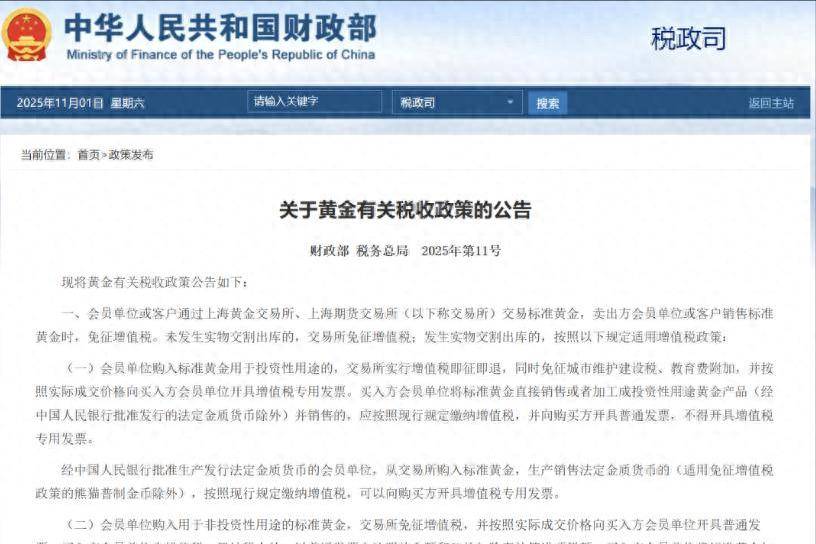
Core Insights - The new tax policy for gold, jointly issued by the Ministry of Finance and the State Taxation Administration, has triggered significant market reactions, including adjustments in gold accumulation services by major state-owned banks and price increases for gold jewelry [1][2] - The policy aims to clarify the distinction between investment and non-investment uses of gold, thereby addressing potential tax arbitrage opportunities that existed under previous regulations [1] Group 1: Tax Policy Changes - The new tax regulations optimize existing benefits by reducing taxes on gold purchased through exchanges while maintaining the tax rules for non-exchange channels [1] - A tax "watershed" is established for physical gold withdrawal, where no VAT is applied if gold is not extracted, but different VAT treatments apply based on the investment or non-investment use of the gold [1] Group 2: Market Implications - The tax changes are expected to encourage investment demand to shift towards standardized platforms like the Shanghai Gold Exchange and Shanghai Futures Exchange, aligning with modern financial investment trends [2] - The reduction in input tax deduction rates for non-investment gold uses from approximately 13% to 6% will increase the tax costs for gold jewelry manufacturers, potentially leading to higher consumer prices for gold jewelry [2] Group 3: Global Market Positioning - The new tax policy not only aims to regulate the domestic market but also seeks to enhance China's positioning and influence in the global gold market by improving the liquidity and price discovery function of "Shanghai Gold" [2] - By aligning with international standards, the policy is expected to strengthen China's voice in global gold tax and trading rule formulation, thereby enhancing its governance influence in the global gold market [2]
【西街观察】让黄金消费归消费,投资归投资
Sou Hu Cai Jing· 2025-11-05 15:05
Group 1 - The new tax policy for gold, issued by the Ministry of Finance and the State Taxation Administration, has led to significant market reactions, including adjustments in gold accumulation services by major state-owned banks and price increases for gold jewelry [1] - The policy clarifies the distinction between investment and non-investment uses of gold, aiming to eliminate tax arbitrage opportunities that existed under previous regulations [1] - The new regulations optimize existing tax benefits for trading gold on exchanges, reducing taxes for exchange transactions while maintaining existing tax rules for non-exchange channels [1] Group 2 - The tax policy encourages investment demand to shift towards standardized platforms like the Shanghai Gold Exchange and Shanghai Futures Exchange, aligning with modern financial investment trends [2] - The input tax deduction rate for gold used in non-investment applications, such as jewelry and industrial purposes, has decreased from approximately 13% to 6%, increasing the tax burden on gold jewelry manufacturers [2] - The new policy is expected to enhance China's position and influence in the global gold market by lowering transaction costs and improving the liquidity and price discovery of "Shanghai Gold" [2]
黄金交易税收新规三问
Shang Hai Zheng Quan Bao· 2025-11-03 18:16
Core Viewpoint - The new tax policy on gold, effective from November 1, 2025, aims to enhance the regulation of the gold market by distinguishing between "investment gold" and "non-investment gold," thereby encouraging more transactions through formal channels and reducing illegal trading and speculation [2][6]. Tax Policy Adjustments - The new regulations optimize existing tax incentives, focusing on four key dimensions, including the differentiation of tax benefits between exchange and non-exchange channels [3][4]. - Transactions of standard gold through exchanges like the Shanghai Gold Exchange and Shanghai Futures Exchange will be exempt from value-added tax (VAT) upon sale, while sales outside these exchanges will incur a VAT of 13% [3][4]. - The policy establishes a clear distinction between physical delivery and non-delivery transactions, with non-delivery transactions exempt from VAT, thus maintaining tax advantages for exchange-based trading [4][5]. Definition of Gold Types - The announcement provides clear definitions for "investment gold" and "non-investment gold," with investment purposes including direct sales and the production of high-purity gold products, while non-investment purposes encompass all other uses [5][6]. - Different tax treatments will apply based on the intended use of the gold, with investment gold subject to immediate VAT refund and non-investment gold exempt from VAT [5][6]. Compliance and Regulation - The new rules impose compliance requirements on member units purchasing standard gold, mandating accurate reporting of intended use for physical delivery, with penalties for non-compliance [4][6]. - The regulations aim to close loopholes that previously allowed for tax evasion and improper use of tax benefits, thereby enhancing the integrity of the gold market [6][7]. Impact on Costs and Market Dynamics - For ordinary consumers, the purchase cost of gold jewelry remains unchanged as the new regulations do not introduce new taxes; however, the procurement costs for jewelry brands and gold shops may increase, potentially affecting retail prices [9]. - The new policy is expected to significantly impact investors in physical gold, as they will face increased costs due to the inability to claim tax credits on sales, leading to a shift towards gold ETFs or futures for investment [9].

黄金征税新规,如何影响黄金投资?有色龙头ETF(159876)收跌1.43%短期均线失而复得
Xin Lang Ji Jin· 2025-11-03 14:05
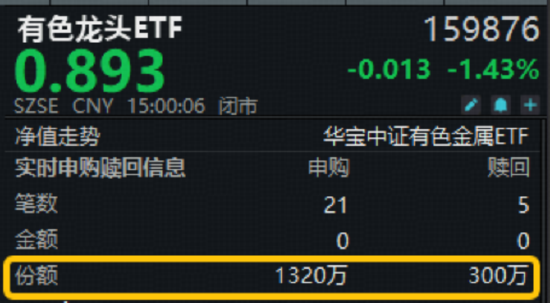
Core Viewpoint - The A-share market experienced a rebound on November 3, with the three major indices rising despite a quick rotation of hot sectors, while the non-ferrous metals sector led the market decline [1] Group 1: Market Performance - The non-ferrous metals sector ETF (159876) saw its price drop nearly 4% intraday but ultimately closed down 1.43%, with a total trading volume of 46.18 million CNY, an increase of 24% compared to the previous day [1] - The non-ferrous metals ETF (159876) recorded a net subscription of 10.2 million shares throughout the day, indicating that funds are actively positioning themselves during the pullback [1] Group 2: ETF Composition and Performance - As of October 31, the non-ferrous metals ETF (159876) had a total size of 513 million CNY, making it the largest among three products tracking the same index [1] - In the top 10 constituent stocks of the ETF, aluminum companies dominated, with eight out of ten stocks showing gains, including Zhongfu Industrial, which rose over 6% [2] Group 3: Industry Outlook - Analysts suggest that investing in the entire non-ferrous metals sector may be more beneficial than focusing solely on gold, as the sector is essential for both traditional and emerging industries [3] - The fourth quarter is expected to see tight supply conditions driving prices of copper and cobalt higher, while lithium prices may benefit from unexpected demand in energy storage [3][4] - The non-ferrous metals sector is anticipated to enter a new era, driven by the transition from traditional industries to strategic emerging industries [3] Group 4: Investment Strategy - The non-ferrous metals ETF (159876) and its linked funds are designed to track the CSI Non-Ferrous Metals Index, which has a diversified weight distribution across copper, aluminum, gold, rare earths, and lithium, providing a risk diversification strategy [6]
聊聊这周的几个热点
表舅是养基大户· 2025-11-02 13:37
Group 1 - The article discusses the recent macroeconomic events, including the US-China talks and the Federal Reserve's interest rate cut, indicating a potential macroeconomic window of calm in the short term [1][2] - Key focus areas for the remainder of the year include the US non-farm employment and inflation data in October and November, which will help assess the likelihood of another interest rate cut in December [1] - In the domestic context, the issuance quota for 2026 and the upcoming economic work conference are highlighted as critical points to watch before the year ends [1] Group 2 - The A-share third-quarter reports have been released, with a notable market decline despite over 70% of stocks rising, indicating a rare market behavior where the top traded stocks all fell [5][7] - The AI industry stocks, which had been performing well, experienced significant drops, suggesting a potential risk as fund concentration in the TMT sector reached extreme levels [7][8] - The article notes a shift in investor sentiment, leading to a concentrated sell-off of previously leading growth stocks, indicating a crack in the previous market consensus [8] Group 3 - The article analyzes the performance of the Hong Kong stock market, which lagged behind after several months of gains, with a net inflow of approximately 85 billion yuan from southbound funds in October, marking a four-month low [10][11] - The performance of Japanese and Korean markets is contrasted with the Hong Kong market, suggesting a reallocation of foreign capital towards these markets due to recent geopolitical agreements [13] Group 4 - The article discusses the implications of major investors halting new subscriptions, indicating potential structural overheating in the A-share market [19][21] - Despite the concerns, the article maintains a positive outlook on quality equity investments, emphasizing the ongoing low-interest-rate environment and the shift in household wealth [23][24] Group 5 - New tax regulations on gold are expected to increase the cost of purchasing gold jewelry and physical gold bars, while making gold ETFs and bank paper gold investments relatively cheaper [25][29] - The article suggests a trend towards ETF investments in gold as a response to the new tax policies [29] Group 6 - The analysis of A-share and US stock quarterly reports indicates a lack of clear profit recovery for non-financial enterprises, with significant structural differentiation observed [31] - The article highlights that despite the absence of profit growth, listed companies may still hold relative operational advantages over non-listed firms, reinforcing the rationale for investing in quality equities [31] Group 7 - The article provides insights from insurance companies regarding their investment strategies, emphasizing the pressure on net investment returns due to declining interest rates and credit risks [37] - Insurance firms are adjusting their asset allocations, focusing on alternative assets and growth opportunities in digital economy and healthcare sectors [37]

金价走势大跳水!水贝今日金价详情全知道
Sou Hu Cai Jing· 2025-10-30 19:26
Core Points - The recent drop in gold prices is attributed to the Federal Reserve's decision to cut interest rates by 25 basis points, leading to significant market volatility [1][3] - The current price of gold in the domestic market is 901.24 CNY per gram, which is lower than the international price of approximately 920 CNY per gram, primarily due to processing fees [5][6] - There is a notable increase in trading volume for paper gold, with a 30% surge as retail investors panic sell amid uncertainty [3][6] Market Reaction - Gold prices fell sharply, with international gold dropping to a low of 3916 USD per ounce, reflecting a 0.8% decline [1][3] - The market is experiencing confusion among investors regarding whether to buy the dip or sell off their holdings [1][3] - The volatility in gold prices is seen as a result of capital market dynamics rather than fundamental changes in gold's value as a safe haven [6] Historical Context - Compared to the same period last year, gold prices have increased from 850 CNY per gram to 901.24 CNY, indicating a significant year-on-year rise despite recent declines [3][5] - Historical data shows that gold prices were around 3800 USD per ounce in 2024, marking a 3% increase, but with much higher volatility [5] Investment Strategy - The article suggests that investors should be cautious and avoid following market trends blindly, advocating for a long-term view on gold as a hedge against inflation [3][6] - It emphasizes the importance of timing investments, recommending that investors wait for clearer signals from the Federal Reserve before making decisions [3][6]