Zhong Guo Neng Yuan Wang

Search documents
建材建筑新材料结构性亮点,高质量转型 | 投研报告
Zhong Guo Neng Yuan Wang· 2025-12-30 02:04
Core Viewpoint - The construction materials and new materials industry is expected to maintain high investment attractiveness in 2025, despite continued pressure from traditional domestic demand in real estate and infrastructure [2]. Group 1: Cement Industry - Cement demand is projected to be under pressure, with structural adjustments expected. The anticipated demand distribution for 2025 is 30% from real estate, 50% from infrastructure, and 20% from rural areas [2][3]. - The industry is expected to experience a low point around April-May 2024, with a gradual improvement in supply-demand relationships as supply exits in an orderly manner [2][3]. Group 2: Glass Fiber Industry - The glass fiber sector is expected to benefit from the release of profits in AI electronic cloth by 2026, with a focus on high-end fabric price elasticity [3]. - The industry has undergone domestic substitution, establishing China as a global supplier, making both domestic and international demand crucial [3]. Group 3: Glass Industry - The glass sector is facing demand pressure and a slowdown in cold repairs, with a net reduction of approximately 4,000 tons per day as of December 21, 2025, which is a deceleration compared to 2024 [4]. - The overall glass prices are under pressure due to weak downstream demand, with a projected decline in construction completions by 18% year-on-year from January to November 2025 [4]. Group 4: Consumer Building Materials - The consumer building materials sector has shown signs of stabilization since Q3 2025, with narrowing revenue declines and reduced price competition, indicating that the most challenging phase has passed [5]. - Despite ongoing pressures in new housing demand, the release of second-hand housing and renovation projects is expected to provide strong support, leading to structural opportunities [5].
《低空经济及其核心产业统计分类(试行)》印发,广东多方位组合拳发力低空经济 | 投研报告
Zhong Guo Neng Yuan Wang· 2025-12-30 02:02
金元证券近日发布低空经济周报(第五十二周):本周低空经济指数涨5.61%,相对涨幅3.66%,日均 成交额829.0亿元,市盈率(TTM)达129.59倍,本周日均主力净流入额-7.70亿元。较上周而言,本周 成交额上升,估值维持高位,主力资金净流出。 以下为研究报告摘要: 板块行情回顾: 本周低空经济指数涨5.61%,相对涨幅3.66%,日均成交额829.0亿元,市盈率(TTM)达129.59倍,本 周日均主力净流入额-7.70亿元。较上周而言,本周成交额上升,估值维持高位,主力资金净流出。 个股表现: 2.广东低空金融"十二条"发布; 3.广东省低空经济人才培育服务平台正式上线;4.广东省低空飞行综合管理服务平台正式发布;5.广州 低空飞行综合管理服务平台发布; 6.广东省市场监督管理局发布低空经济应用4项地方标准; 7.京东物流无人机已进入全国常态化测试运营阶段;8.顺丰丰翼方舟ARK80物流无人机获中国民航局颁 发TC。政策动态: 1.新修订《中华人民共和国民用航空法》明年7月1日起施行; 2.深圳市监局发布《低空经济商业秘密保护工作指引》。 公司动态: 本周涨幅前五个股为超捷股份、广联航空、北斗星通 ...
光伏硅片价格回升,出光兴产、三井化学整合千叶乙烯业务 | 投研报告
Zhong Guo Neng Yuan Wang· 2025-12-30 02:02
Industry Overview - The chemical sector's overall performance ranked 7th this week (2025/12/22-2025/12/26) with a fluctuation of 4.23%, outperforming the Shanghai Composite Index by 2.35 percentage points and the ChiNext Index by 0.34 percentage points [1] - The chemical industry is expected to continue its differentiated trend in 2025, with a focus on synthetic biology, pesticides, chromatography media, sweeteners, vitamins, light hydrocarbon chemicals, COC polymers, and MDI [1] Synthetic Biology - The arrival of a pivotal moment in synthetic biology is anticipated, driven by the adjustment of energy structures, which may disrupt fossil-based materials and favor low-energy products [1] - Traditional chemical companies are expected to compete based on energy consumption and carbon tax costs, with successful firms leveraging green energy alternatives and integrated advantages to reduce costs [1] - The demand for bio-based materials is projected to surge, leading to potential profitability and valuation increases for leading companies in the synthetic biology sector, such as Kasei Bio and Huaheng Bio [1] Refrigerants - The implementation of quota policies is expected to usher in a high-growth cycle for third-generation refrigerants, with supply entering a "quota + continuous reduction" phase starting in 2024 [2] - The demand for refrigerants is anticipated to grow steadily due to the development of heat pumps, cold chain markets, and the expansion of the air conditioning market in Southeast Asia [2] - Companies with a high quota share, such as Juhua Co., Sanmei Co., Haohua Technology, and Yonghe Co., are expected to benefit significantly from this trend [2] Electronic Specialty Gases - Electronic specialty gases are critical to the electronics industry and represent a core component of domestic industrial chain localization [2] - The domestic market faces a contradiction between rapid upgrades in wafer manufacturing and insufficient high-end electronic specialty gas capacity, presenting significant domestic substitution opportunities [2] - Key players like Jinhong Gas, Huate Gas, and China Shipbuilding Gas are positioned to capitalize on the growing demand driven by integrated circuits, panels, and photovoltaics [2] Light Hydrocarbon Chemicals - The trend towards light raw materials in the global olefin industry is becoming increasingly significant, with a shift from heavy naphtha to lighter low-carbon alkanes like ethane and propane [3] - Light hydrocarbon chemicals are characterized by low carbon emissions, low energy consumption, and low water usage, aligning with global carbon neutrality goals [3] - Companies in the light hydrocarbon sector, such as Satellite Chemical, are expected to see a revaluation of their value as this trend continues [3] COC Polymers - The industrialization process of COC/COP (cyclic olefin copolymer) is accelerating in China, driven by domestic companies achieving breakthroughs and the shift of downstream industries to domestic sources [4] - COC/COP materials are increasingly used in various applications, including mobile camera lenses and medical packaging, with a focus on high-end applications [4] - Companies like Acolyte are recommended for their potential in the COC polymer production segment [4] Potash Fertilizers - Potash fertilizer prices are expected to rebound as the industry enters a destocking cycle, with supply constraints due to Canpotex withdrawing new quotes and Nutrien announcing production cuts [5] - The demand for potash fertilizers is likely to increase as farmers respond to rising grain prices, leading to a potential reversal in potash prices [5] - Leading companies in the potash sector, such as Yara International, Salt Lake Potash, and Zangge Mining, are recommended for investment [5] MDI Market - The MDI market is characterized by oligopoly, with demand steadily improving due to the expansion of polyurethane applications [6] - The global MDI production capacity is concentrated among five major chemical giants, which control approximately 90.85% of the market [6] - Companies like Wanhua Chemical are expected to benefit from the favorable supply dynamics and demand recovery in the MDI sector [6] Chemical Price Tracking - The top five price increases this week included NYMEX natural gas (9.59%), PTA (8.95%), and butadiene (6.83%) [6] - The top five price decreases included pure MDI (-4.23%) and acrylic fiber (-3.45%) [6] - A total of 170 chemical companies reported production capacity impacts this week, with 6 new repairs and 10 restarts [6]


AI发展加速液冷渗透率,液冷工质打开成长空间 | 投研报告
Zhong Guo Neng Yuan Wang· 2025-12-30 02:02
Core Insights - The development of AI has led to significant power consumption issues, making liquid cooling solutions increasingly essential for data centers and high-density computing environments [1] - The Chinese liquid cooling server market is projected to reach $2.37 billion in 2024, representing a year-on-year growth of 67.0%, and is expected to grow to $3.39 billion in 2025, with a compound annual growth rate (CAGR) of 46.8% from 2024 to 2029, ultimately reaching $16.2 billion by 2029 [1] - The demand for liquid cooling fluids is also expected to surge alongside the growth of the liquid cooling market [1] Liquid Cooling Fluids - Various options for liquid cooling fluids are available, with glycol, propylene glycol, and water being predominant in cold plate cooling, while oil, silicone, and fluorinated liquids are used in immersion cooling [2] - Fluorinated liquids are becoming a critical component in both immersion and cold plate cooling systems due to their surface tension, insulation properties, and material compatibility, especially in high-power density AI server applications [2] - The exit of 3M from the market presents growth opportunities for domestic companies in the high-performance fluorinated liquid segment [2] Investment Recommendations - The rise of AI has created significant power and cooling challenges, positioning liquid cooling as a vital solution, with liquid cooling fluids expected to grow rapidly [2] - Companies that are early entrants into the liquid cooling supply chain are likely to benefit, with specific recommendations to focus on firms such as Dongyangguang, Xinzhoubang, Runhe Materials, Juhua Co., Yonghe Co., Haohua Technology, Jinshi Resources, Dongyue Group, Yongtai Technology, Huayi Group, Sanmei Co., Unity Co., Bayi Shikong, Changlan Technology, Xin'an Co., and Jitai Co. [2]



1亿吨到8600万吨,山东省的能源“换血”之路
Zhong Guo Neng Yuan Wang· 2025-12-30 01:55
Core Viewpoint - Shandong province, a key player in China's industrial and energy landscape, is facing challenges in energy structure adjustment and resource constraints while coal enterprises are actively seeking transformation and diversification in response to declining production and demand trends [1][2]. Group 1: Coal Production and Consumption - As of the first three quarters of 2025, Shandong's industrial raw coal production reached 65.861 million tons, remaining stable compared to the previous year [1]. - The province's coal production has been on a downward trend, decreasing from over 100 million tons annually at its peak to an expected 86.702 million tons in 2024 [2]. - Shandong's coal consumption is significant, accounting for about 10% of the national total, with a consumption volume of 390 million tons in 2024 [2]. Group 2: Energy Structure and Transition - Shandong's total installed power capacity reached 250 million kilowatts, ranking second in the country, with an annual power generation expected to be around 700 billion kilowatt-hours [2]. - The province is focusing on energy efficiency and carbon reduction in coal-fired power plants, with a shift towards replacing coal with green electricity in high-energy-consuming industries [2]. Group 3: Coal Industry Transformation - Shandong coal enterprises are exploring resource extraction outside the province and even internationally to diversify supply channels and enhance energy security [4]. - Major coal companies in Shandong have significant geological reserves, with 865 billion tons in total, of which only 139.4 billion tons are within the province [4]. - In 2024, Shandong coal enterprises are projected to produce approximately 29 million tons of coal, with over 20 million tons sourced from outside the province [4]. Group 4: High-End Manufacturing and Local Integration - Companies like Jining Energy Development Group are transitioning to high-end manufacturing, leveraging their operational expertise in mining and equipment needs [6]. - The transformation of old coal enterprises into high-end manufacturing hubs is exemplified by the successful conversion of the former Luoling coal mine into a manufacturing park [6]. - There is a need for collaboration between external resource development and local coal machinery enterprises to drive upgrades and rapid development [7].
BC技术:驱动光伏行业新一轮增长的核心引擎
Zhong Guo Neng Yuan Wang· 2025-12-30 01:26
Core Viewpoint - The BC (Back Contact) technology is emerging as a mainstream solution in the photovoltaic industry, shifting from a technical benchmark to a core engine for growth, addressing the industry's challenges of overcapacity and competition [1][6]. Technology Advancement - BC technology enhances solar cell efficiency by placing both positive and negative electrodes on the back, increasing light absorption and conversion efficiency, with laboratory results showing a conversion rate of 27.55%, outperforming other technologies by over 1.2% [6][8]. - The technology has resolved industry pain points such as shading, hot spots, and micro-cracking, with certifications indicating superior performance in high-temperature and shaded environments [8][9]. - Aiko Solar has successfully implemented BC technology across various applications, including residential, commercial, and utility-scale projects, demonstrating its versatility and effectiveness in extreme conditions [9][10]. Market Dynamics - The market share of BC technology in centralized applications is expected to grow by 10% annually, emphasizing the importance of creating diverse application scenarios for competitive advantage [11]. - The industry is transitioning from a focus on cost competition to value creation, with BC technology redefining the value dimensions of photovoltaic products [19][21]. Collaborative Ecosystem - BC technology fosters a new collaborative ecosystem among companies, moving beyond traditional supply chain relationships to a model of open innovation and shared growth [15][18]. - Companies are working together to overcome technical challenges, enhancing overall industry capabilities and competitiveness [16][17]. Value Creation - The shift towards BC technology allows for higher energy output and safety features, enabling better adaptation to various customer needs and scenarios, thus creating more value [22][23]. - Aiko Solar's products have achieved significant market penetration in high-value regions, with a notable market share in distributed scenarios across Europe and Australia, showcasing the potential for profit growth in the industry [22][23].


董宇辉直播间亿元沙发陷“代工”质疑 顾家家居回应:均为自主生产
Zhong Guo Neng Yuan Wang· 2025-12-30 00:33
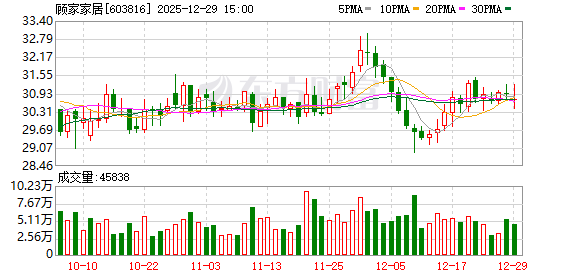
Group 1 - The core point of the article highlights the record-breaking sales achieved by the top streamer Dong Yuhui, with a single live stream generating sales of 3.56 billion yuan, including over 1 billion yuan from a single sofa product by Kuka Home [2] - Kuka Home confirmed that all sofas sold during the live stream were self-manufactured, addressing concerns about third-party production [2] - The company stated that external cooperation is only used to alleviate production pressure for non-core products, while core products like sofas and custom furniture are designed and produced in-house [2] Group 2 - In the first three quarters of the year, the company reported total revenue of 15.012 billion yuan, an increase of 8.77% year-on-year, with third-quarter revenue of 5.211 billion yuan, up 6.50% year-on-year [3] - The net profit attributable to shareholders was 1.539 billion yuan, reflecting a year-on-year growth of 13.24%, indicating improved operational efficiency [3] - In January 2024, Yingfeng Group became the controlling shareholder of Kuka Home, marking a change in control [3]

国网晋中供电分公司:零点作业避峰谷 智慧保电稳电网
Zhong Guo Neng Yuan Wang· 2025-12-29 13:16
(孔晨再,武平,赵学红) 本次投运检修时间紧,任务重,为最大限度减少对用户的影响,该公司科学安排作业时段,针对高负荷 线路开展"零点作业",于负荷谷期完成四条关键线路负荷转供,有效规避过载风险。前期准备阶段,该 公司提前将8条相关公线对侧联络点开关置于热备用状态:检修过程中,依托配电自动化系统实施遥控 合环倒供,大幅压缩倒闸时间,提升操作安全效率。同时,全面校核并调整全线保护定值,杜绝过负荷 及越级跳闸风险。面对所涉线路均为串带运行,负荷较重的实际情况,该公司强化特巡特护, 夜间组 织青年突击队对电缆接头,架空线并沟线夹等薄弱环节开展红外测温与精细化巡视,实时掌握设备状 态,及时消除隐患,确保检修期间配网安全可靠供电。此次任务圆满完成,充分体现了该公司在电网运 行保障方面的专业能力与精细化管理水平。 近日,110千伏韩村变电站顺利完成新1号主变投运及相关检修工作,10千伏出线全部恢复至正式间隔运 行。在此期间,国网晋中供电分公司周密部署,精准协同,采取系列有效措施,圆满完成了各项工作任 务,实现所涉线路零负荷损失,有力保障了电网安全稳定运行。 下一步,该公司将继续开展零点作业,持续加大设备隐患排查力度,筑牢设 ...
孝义公司:暖冬护电在行动,民生服务显担当
Zhong Guo Neng Yuan Wang· 2025-12-29 13:16
活动现场,队员分工明确、协同高效,迅速部署全方位供电保障服务。针对冬季农村用电负荷剧增、取 暖设备使用频繁的特点,服务队重点对村内配电变压器、高低压线路廊道及开关柜等关键设备开展特巡 特护,运用红外测温、负荷监测技术全面排查设备接点发热、线路老化、杆塔基础松动等风险点,发现 问题立即整改。青年突击队员主动深入村民家中,尤其针对独居老人、留守家庭等特殊群体,对室内配 电箱、插座开关及电暖器等用电设备进行细致检查,更换老化破损元件,现场指导村民安全用电知识, 强调超负荷用电及私拉乱接风险。活动中,队员还向村民发放《冬季安全用电指南》宣传资料,具体解 读峰谷分时电价政策,实操演示"网上国网"APP线上缴费、故障报修及业务办理功能,让村民足不出户 享受便捷服务,切实畅通服务"最后一公里"。 寒冬凌冽,温情不减。12月29日,孝义公司组织党员服务队与青年突击队联合推进行动,深入东盘粮村 实施冬季护电便民活动,通过专业检修与贴心服务为村民构建温暖过冬的电力屏障,让寒冬乡村充盈电 力温情。 下一步,孝义公司将紧盯冬季保供电核心任务,密切关注天气变化与电网负荷波动,持续开展乡村用电 安全排查与便民服务,针对特殊群体建立"一对 ...
国家级零碳园区正式拉开“施工”大幕
Zhong Guo Neng Yuan Wang· 2025-12-29 10:45
Core Viewpoint - The establishment of national-level zero-carbon parks marks a significant step in China's commitment to achieving its dual carbon goals, transitioning from planning to large-scale implementation of green development initiatives [2][4][10]. Group 1: National-Level Zero-Carbon Parks - On December 26, the National Development and Reform Commission, Ministry of Industry and Information Technology, and National Energy Administration announced the first batch of national-level zero-carbon parks, comprising 52 parks across 31 provinces and regions, including Xinjiang Production and Construction Corps [2][8]. - The selection of these parks is seen as a practical implementation of the goal to establish around 100 national-level zero-carbon parks during the 14th Five-Year Plan period [2][4]. - The parks are expected to generate a total output value of approximately 3.54 trillion yuan, with an annual comprehensive energy consumption exceeding 60 million tons of standard coal and carbon emissions below 15 million tons [8][10]. Group 2: Construction and Development - The construction of these parks is characterized by high standards, robust participation, and a generally stable construction timeline, indicating a solid foundation for zero-carbon park development [4][5]. - Specific projects include a 1,400 MW offshore wind power project and a 390 MW photovoltaic project in Fujian, as well as a 300 MW photovoltaic park in Shanxi, which aims for a carbon emission reduction to 0.2 tons per ton of standard coal by 2027 [5][6]. - Jiangsu's Liyang High-tech Industrial Development Zone is advancing major projects, including a 400 MW photovoltaic power project expected to provide 500 million kWh of green electricity annually by 2026 [6][11]. Group 3: Policy and Market Dynamics - The zero-carbon park initiative is supported by various provincial-level plans and policies, with regions like Sichuan, Inner Mongolia, and Guangdong actively promoting their own zero-carbon park construction [7][10]. - The parks are designed to attract high-quality projects and capital, with "zero carbon" becoming a core competitive advantage in the market [7][8]. - The parks will serve as experimental grounds for new energy systems, promote deep decarbonization of industries, and act as benchmarks for regional coordinated development [12][18]. Group 4: Key Performance Indicators - The core target for these parks is to achieve a unit energy consumption carbon emission level of 1/10 of the current national average, which is approximately 2.1 tons per ton of standard coal [16][17]. - Additional guiding indicators include a clean energy consumption ratio of no less than 90%, a solid waste utilization rate of no less than 80%, and a water reuse rate of no less than 80% [17][18]. - The parks will not be officially recognized as national-level zero-carbon parks until they meet these standards after 3-5 years of construction [18].