Zhong Guo Jing Ying Bao

Search documents
聚焦“十五五”规划建议 循环经济迎来发展机遇
Zhong Guo Jing Ying Bao· 2025-12-20 02:30
Core Insights - The "14th Five-Year Plan" emphasizes significant progress in building a beautiful China, with core goals including the formation of a green production and lifestyle and the timely achievement of carbon peak targets, closely linked to the development of the recycling resource industry [1] Group 1: Industry Trends - The second "Top 50 New Energy Technology Enterprises" award ceremony highlighted the interconnectedness of circular economy, new energy materials, and sustainable fuels, which promote each other [1] - The report indicates a continuous increase in the scale of China's resource recycling industry, corresponding with the rapid development of new energy materials and sustainable fuels [1] Group 2: Technological Integration - AI is playing an increasingly important role in enhancing the potential of these sectors, driving innovation and contributing to global energy transition [1] - The future of the circular economy is expected to deeply integrate with cutting-edge technologies such as digitalization and intelligence, gradually constructing a data-driven new industrial ecosystem [1] Group 3: Competitive Landscape - Strengthening the competitiveness of leading enterprises is identified as a core pathway to promote the development of the entire industry chain [1]
世纪华通谢斐:以长期主义应对挑战,游戏出海需文化适配
Zhong Guo Jing Ying Bao· 2025-12-20 02:19
Core Insights - The core viewpoint presented by the company emphasizes the importance of long-term certainty in addressing multiple challenges in the gaming industry, particularly in the context of globalization and technological advancements [1][2]. Group 1: Global Market Expansion - The company aims to focus on expanding its global market presence, particularly through the export of Chinese games, which is seen as a way to share Chinese culture with global players rather than merely seeking profits [1]. - The standards for "going global" should not be one-size-fits-all; instead, they should incorporate Chinese cultural values, technical safety norms, and value-oriented guidelines as foundational standards [1]. Group 2: AI Technology Integration - The gaming industry is recognized as a critical arena for technological innovation, particularly in the context of the current AI wave, where the demand for AI applications is driving accelerated implementation [2]. - The company believes that a sense of mission is essential for gaming enterprises to transcend short-term technical applications and uncover deeper social value within the industry [2]. Group 3: Digital-Physical Integration - The company advocates for a forward-looking approach in the realm of digital-physical integration, suggesting that focusing on short-term financial returns is less effective than transforming exploration into trusted value assets [2]. - This long-term coexistence of responsibility and profit is expected to yield policy benefits and brand recognition, ultimately leading to new growth trajectories that balance commercial value with social significance [2].



世纪华通谢斐:以长期主义的确定性应对多重挑战
Zhong Guo Jing Ying Bao· 2025-12-20 01:33
Group 1 - The core viewpoint presented by the president of Century Huatong emphasizes the importance of long-term certainty to address multiple challenges in the new era of the gaming industry [2] - The company aims to focus on expanding its global market presence through game exports, leveraging AI technology to enhance productivity, and deepening the integration of digital and physical realms for high-quality development [2][3] - The essence of China's game export is not merely to generate overseas profits but to share Chinese culture's joy, kindness, and wisdom with global players [2] Group 2 - The gaming industry has evolved beyond being just an entertainment medium, now serving as a testing ground for cutting-edge technology and a incubator for cultural innovation, particularly in the context of the current AI wave [3] - The high demand for AI technology within gaming companies accelerates the application of AI, which in turn enhances the social value of the technology as it matures [3] - The company believes that focusing on long-term value rather than short-term financial returns in the integration of online and offline gaming will lead to trust and recognition, ultimately creating new growth opportunities that balance commercial value with social significance [3]
企业争相布局“AI+教育”生态 人工智能应用场景探索加速
Zhong Guo Jing Ying Bao· 2025-12-19 21:12
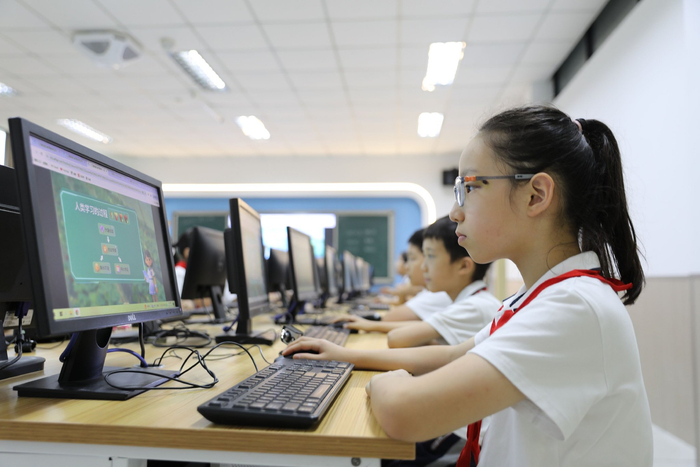
Core Insights - The education sector is a key application area for large AI models, with multiple tech companies focusing on "AI + Education" initiatives [2] - The market for "AI + Education" is projected to reach nearly 150 billion yuan by 2026, with an annual growth rate of 10% to 15% [2] - Companies are increasingly integrating AI into educational products to create a closed ecosystem, enhancing personalized learning and reducing teacher workloads [4][6] Group 1: Company Initiatives - Xiaomi is actively hiring for various AI education-related positions, indicating a strategic focus on products like the REDMI Pad 2 and MiTu children's smartwatch [2][4] - Other companies, such as Alibaba and Huawei, are also launching AI educational products, including AI learning machines and AI toys, to capture market interest [5] - The domestic learning tablet market is divided into "tech" and "education" camps, with companies like TAL and Yuanfudao enhancing their AI capabilities for educational purposes [3] Group 2: Market Dynamics - The demand for personalized education from families and schools is driving the growth of "AI + Education," with significant interest from both B2B and B2C sectors [4][6] - The use of AI in education is becoming more prevalent, with over half of middle school teachers in Shanghai utilizing AI-assisted teaching, surpassing the OECD average [5] - The competitive landscape is shifting, with tech companies viewing educational AI as a crucial part of their ecosystem strategy rather than just a direct revenue source [9] Group 3: Challenges and Considerations - The implementation of "AI + Education" faces challenges such as adapting AI products to educational contexts and addressing data privacy concerns [7][8] - The need for a unified industry standard is essential to avoid homogenized competition in the market [8] - The dual nature of AI as both a tool and a potential risk necessitates a balanced approach to its integration in educational settings [6]

喜茶大量关店背后:新茶饮收支失衡待解
Zhong Guo Jing Ying Bao· 2025-12-19 20:54
Core Insights - Heytea, once a benchmark for high-end tea drinks, is undergoing unprecedented strategic contraction, with a net decrease of 680 stores year-on-year, bringing the total to 3,930 by October 2025 [1] - The company has shifted from explosive growth in franchise stores in 2023 to announcing a halt on new franchise recruitment in 2025, emphasizing a return to product essence rather than scale [1] - The strategic shift reflects a broader industry challenge for mid-to-high-end brands in balancing brand integrity, rapid expansion, and profitability [1] Franchise Model Challenges - Heytea's franchise model, initiated in November 2022, aimed to expand into lower-tier cities but has revealed core contradictions, particularly in maintaining quality standards while pursuing efficiency and profitability [2][3] - Franchisees face high material costs, with Heytea's supply prices approximately 40% above market rates, leading to profitability issues as average sales volumes decline [3] - The company's strict operational management and quality control measures have increased costs for franchisees, complicating the sustainability of the franchise model [2][3] Market Position and Competition - Heytea's high-end brand positioning conflicts with its strategy to penetrate lower-tier markets, leading to intensified competition with other brands in the same price range [4] - The company has attempted to lower prices to compete, but this has resulted in reduced profit margins without a corresponding decrease in operational costs [5] - The overall market for new tea drinks is slowing, with growth rates dropping to 15%-20%, prompting a shift from aggressive expansion to refined operations [6] Strategic Refocus - In February 2025, Heytea announced a pause on new franchise applications, citing the need to address issues stemming from previous blind expansion and price wars that led to market saturation [6] - The company is now focusing on product innovation and enhancing customer experience, with plans to open larger stores that reflect its brand identity [6] - Heytea has also expanded its overseas presence, with over 100 international locations, although it faces challenges in supply chain management and local market adaptation [7][8]
仅仅四小时!他做出了豆包手机平替产品“肉包”
Zhong Guo Jing Ying Bao· 2025-12-19 20:29
Core Insights - The "Doubao AI Phone" launched by ByteDance and ZTE has become a focal point in the tech industry, showcasing advanced AI capabilities but facing restrictions from major apps due to risk control mechanisms [1][8] - The development of a similar product called "Roubao" by Li Yunlong demonstrates that the technical barriers for AI phone assistants are not as high as perceived, with the real challenges lying in model optimization, data annotation, and sustainable business models [2][7] Group 1: Product Development and Features - The initial version of "Roubao" was developed in just four hours, with 99% of the code generated by AI, highlighting the efficiency of AI in software development [3] - "Roubao" operates locally on the user's device, enhancing security by keeping data on-site, unlike other models that require cloud processing [5] - The core functionality of "Roubao" is similar to that of the "Doubao Phone," allowing users to automate tasks across various apps using natural language commands [4][6] Group 2: Market Challenges and Barriers - Major apps like WeChat and Meituan have restricted access to AI assistants, perceiving their operation as non-human, which poses a significant barrier for third-party AI tools [8][9] - The lack of detailed data annotation is a critical obstacle for improving AI assistant efficiency, with estimates suggesting that training "Roubao" to match "Doubao" would require substantial financial and time investments [7] - The competition from in-house AI services launched by major companies indicates a trend where these firms aim to retain user engagement within their ecosystems, limiting the potential for third-party AI assistants [9] Group 3: Regulatory and Ethical Considerations - The issue of responsibility and liability in AI operations is a significant concern, especially for apps handling sensitive information, necessitating strict regulatory measures [11] - There is a need for collaboration between phone manufacturers and major app developers to create secure AI interfaces that protect user data while enhancing functionality [10]


以“三新”战略迎战“十五五” 解码东风股份“新质造”全链路逻辑
Zhong Guo Jing Ying Bao· 2025-12-19 20:29
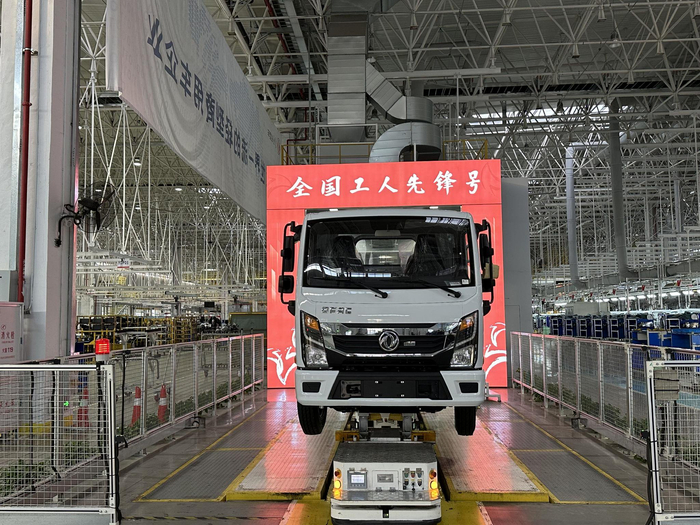
Core Viewpoint - Dongfeng Motor Corporation is advancing its light commercial vehicle segment with a focus on automation and new energy strategies, aiming for over 60% penetration of new energy vehicles by 2030 [3][4][5]. Group 1: Automation and Production Efficiency - Dongfeng's manufacturing facilities feature 154 KUKA robots collaborating in welding, and an automated production line for VAN vehicles that integrates body and chassis assembly in minutes [3]. - The company employs 60 AGVs in its light truck assembly line for efficient parts delivery, enhancing overall production efficiency [3][10]. - The flexible production line has achieved automation rates of over 85% in stamping, 92% in welding, and 70% in painting, significantly improving operational efficiency [11]. Group 2: Research and Development - Dongfeng's R&D center includes key facilities such as a prototype workshop and engine testing labs, focusing on modular development for multiple vehicle types [4][5]. - The company has developed a "three-dimensional balance system" to enhance vehicle lightweighting and energy efficiency, achieving a 15% reduction in fuel consumption [6]. - Dongfeng has established a smart connected testing lab to support the development of intelligent driving and networked platforms [5]. Group 3: New Energy Strategy - Dongfeng aims to increase the penetration of new energy vehicles to over 60% by 2030, indicating a shift from traditional battery reliance to system efficiency optimization [5][6]. - The company has implemented a high-voltage platform for urban delivery vehicles, allowing for 80% charge in just 17 minutes, which is crucial for high-frequency energy replenishment scenarios [6]. Group 4: Product Innovations - The launch of the Dongfeng QianKun K6, equipped with advanced fuel-efficient engines, aims to address cost challenges in cold chain logistics, potentially saving over 5400 yuan in fuel costs annually [7][8]. - The K6 features a smart fuel consumption optimization system, enhancing operational reliability and efficiency for urban transport [7]. Group 5: Smart Manufacturing Initiatives - Dongfeng Cummins has undergone a digital transformation, achieving significant improvements in manufacturing capabilities and becoming a national-level smart manufacturing demonstration factory [8][9]. - The company is focused on integrating IoT technologies across its production processes, enhancing the overall smart manufacturing ecosystem [8][9].

“反内卷”升格制度治理:汽车价格战走向“硬约束”时代
Zhong Guo Jing Ying Bao· 2025-12-19 20:29
在中央经济工作会议明确提出"深入整治'内卷式'竞争"后,监管层迅速给出制度回应。 中经记者 陈靖斌 广州报道 在推进全国统一大市场建设的政策语境下,"反内卷"正从一项行业共识上升为具有制度约束力的宏观治 理议题。 12月10日至11日召开的中央经济工作会议明确提出,要"纵深推进全国统一大市场建设,深入整治'内卷 式'竞争",并首次提出制定全国统一大市场建设条例,强调推动要素自由流动和规则统一。与以往侧 重"综合整治"不同,此次表述将"反内卷"升级为"深入整治",政策指向更为清晰——引导产业竞争逻辑 由低水平价格博弈,转向以技术、效率和服务为核心的价值竞争。 这一信号在汽车行业率先得到呼应。12月12日,国家市场监督管理总局发布《汽车行业价格行为合规指 南(征求意见稿)》(以下简称《合规指南》),对汽车生产企业和销售企业的价格行为作出系统规 范,直指近年来行业内频繁出现的恶性价格战、变相降价、价格欺诈等问题。从时间节点看,该文件被 视为中央经济工作会议精神在重点行业的具体化落地。 《中国经营报》记者从比亚迪、小鹏汽车、长安汽车等多家车企相关负责人处获悉,上述企业已明确表 态支持相关政策方向。在行业层面,"反内卷 ...




天顺风能“陆转海”:定增19.5亿元“押注”海上风电
Zhong Guo Jing Ying Bao· 2025-12-19 20:15
Core Viewpoint - TianShun Wind Power (002531.SZ) has announced a private placement plan to raise up to 1.95 billion yuan, focusing on offshore wind power equipment manufacturing, heavy marine engineering equipment dock construction, and special transport vessel acquisition, as a strategic move to pivot from a competitive onshore wind market to offshore opportunities [2][3]. Group 1: Financial Performance - In 2022, TianShun Wind Power reported a revenue of 6.738 billion yuan, a year-on-year decline of 17.49%, and a net profit of 628 million yuan, down 52.03% [3]. - The company showed signs of recovery in 2023 with a revenue of 7.727 billion yuan, a 14.67% increase, and a net profit of 795 million yuan, up 26.53%, attributed to a strategic shift towards offshore wind power [3]. - However, in 2024, the company faced a significant decline with revenue dropping to 4.860 billion yuan, a 37.10% decrease, and net profit falling to 204 million yuan, down 74.29% [4]. Group 2: Strategic Shift to Offshore Wind - The offshore wind market is seen as a key growth area, with domestic planned capacity exceeding 300 million kilowatts and significant global growth expected, with annual additions projected to exceed 30 million kilowatts by 2030 [2][5]. - TianShun Wind Power's strategic transition to offshore wind is supported by a robust policy environment and a growing market, with the company planning to invest the raised funds into five major projects to enhance its offshore capabilities [7]. - The company is adopting a dual approach of "self-built + acquisition" to establish offshore bases in key coastal areas, while also addressing logistical challenges in the offshore wind supply chain [7]. Group 3: Market Dynamics and Challenges - The offshore wind sector is characterized by strong growth potential, with the Global Wind Energy Council forecasting a compound annual growth rate of 28% until 2029 [5]. - Despite the promising outlook, TianShun Wind Power faces challenges such as policy fluctuations, increased competition, and the need for technological advancements in offshore projects [8]. - The company acknowledges that its product pricing and profit margins are sensitive to market demand and competition, which could impact future performance [8].


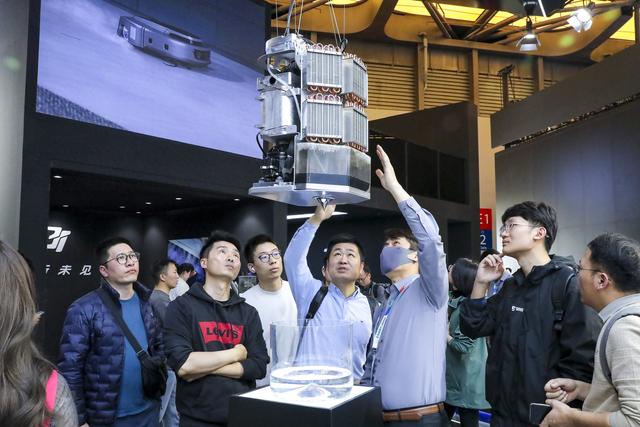
iRobot破产重组背后:代工厂转向品牌商有利有弊
Zhong Guo Jing Ying Bao· 2025-12-19 20:15
Core Viewpoint - iRobot Corporation has filed for Chapter 11 bankruptcy protection, entering a restructuring agreement with its main creditor, Picea, which will acquire 100% of iRobot's equity through a court-supervised process, leading to the company's delisting from NASDAQ and total loss for common stockholders [2][3][5]. Financial Performance - For the first three quarters of fiscal year 2025, iRobot reported revenues of $375 million, a year-over-year decline of 17.5%, and a net loss of $130 million, down 90% from the previous year [2]. - The company has only $24.8 million in cash and equivalents, with total liabilities reaching $508 million and shareholders' equity at -$26.8 million, indicating a negative cash flow of $104 million [2][3]. Reasons for Bankruptcy - The bankruptcy is attributed to intensified market competition, rising costs, and a lack of innovation, particularly as Chinese brands have rapidly gained market share with high-cost performance products [3][4]. - iRobot's asset-liability ratio has been as high as 105% over the past five years, indicating insolvency, with revenues projected to drop from $1.183 billion in 2022 to $682 million in 2024 [3][4]. - The failed acquisition by Amazon for approximately $1.7 billion, which was blocked by regulatory scrutiny, directly contributed to iRobot's financial distress [4][5]. Impact of Acquisition by Picea - The acquisition by Picea represents a significant shift for the company, providing a pathway for debt restructuring and business continuity while marking Picea's transition from a manufacturing leader to a global brand operator [6][7]. - This acquisition is expected to leverage Picea's supply chain efficiencies and technological capabilities to revitalize iRobot's product innovation and market competitiveness, particularly in emerging markets [6][7]. Market Dynamics - The global market for robotic vacuums is experiencing growth, with a reported 18.7% increase in shipments year-over-year, while iRobot's market share has fallen to 7.9%, pushing it out of the top five global players [5][10]. - Chinese brands dominate the market, with companies like Roborock and Ecovacs leading in sales, benefiting from cost advantages, rapid innovation cycles, and effective localization strategies [10][11]. Industry Insights - The rise of Chinese robotic vacuum manufacturers highlights the need for iRobot and similar companies to enhance their technological innovation and brand positioning to remain competitive in a rapidly evolving market [10][11]. - The bankruptcy of iRobot signifies a pivotal moment in the robotic vacuum industry, emphasizing the importance of adapting to market changes and consumer demands for enhanced product features and affordability [11].