
Zhong Guo Qi Che Bao Wang

Search documents
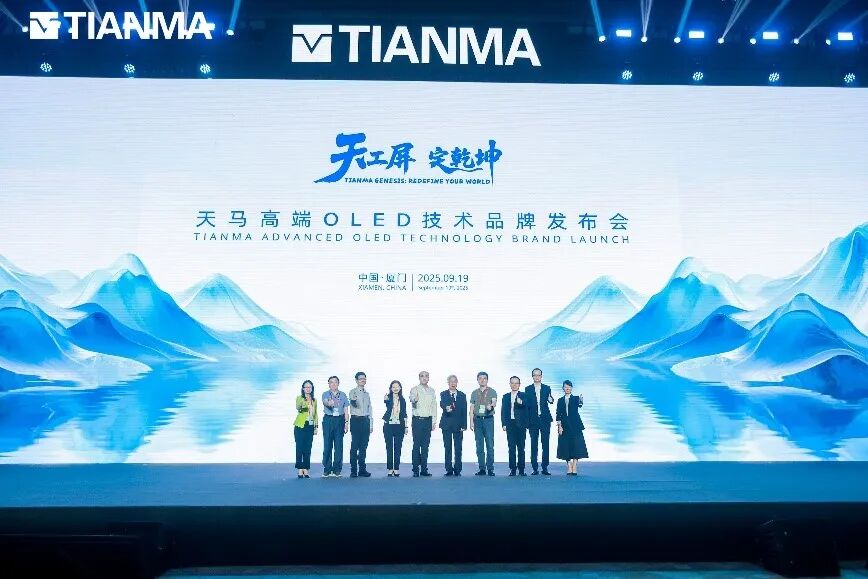
“天工屏”横空出世,高端OLED开启感官体验新纪元
Zhong Guo Qi Che Bao Wang· 2025-09-25 01:56
Core Viewpoint - Tianma Microelectronics has launched a new high-end OLED technology brand called "Tiangong Screen," aiming to redefine high-end display standards and expand its market presence beyond mobile phones into automotive and IT sectors [2][7]. Group 1: Product Features - The "Tiangong Screen" emphasizes visual health with features such as flicker-free technology, 1nit brightness for eye protection, low blue light emission at 4.7%, and adaptive ambient light sensing [3]. - It boasts a peak brightness of 8000nits and a global brightness of 2500nits, ensuring clear visibility even in bright sunlight, with a refresh rate supporting up to 240Hz for smooth operation [5]. - The product has received the "S++ level" certification for visual health from the China Quality Certification Center, indicating its commitment to user well-being [5]. Group 2: Strategic Shift - The launch of "Tiangong Screen" marks a strategic upgrade for Tianma, transitioning from a low-profile screen manufacturer to a high-end brand creator, focusing on co-creating brand value with customers [7]. - The company plans to systematically expand the "Tiangong Screen" brand into automotive and IT display markets, creating a synergistic high-end brand matrix [7]. Group 3: Automotive Display Innovations - Tianma has established a strong foundation in the automotive display sector, focusing on enhancing driving safety and user interaction rather than just technical specifications [8]. - The company has developed various innovative technologies for automotive displays, including ultra-wide high-definition projection and dynamic flexible displays that adapt to user preferences [8][11]. - Tianma's automotive OLED products, such as the dual 13-inch curved OLED display, integrate seamlessly into vehicle interiors, showcasing the company's commitment to innovation in the automotive display market [9]. Group 4: Market Performance - In 2024, Tianma's global automotive display panel shipments are projected to grow by 25%, with revenue increasing over 40%, significantly outpacing industry averages [13]. - The company has maintained its position as the global leader in automotive TFT-LCD and instrument display shipments for five consecutive years, with its products featured in 95% of global automotive brands [13]. - Tianma's automotive displays have been adopted by high-end brands such as McLaren and Ferrari, underscoring its technological strength and brand influence in the premium automotive market [13].


多家企业发文预祝小米17系列发布成功
Zhong Guo Qi Che Bao Wang· 2025-09-25 01:42
9月24日晚,比亚迪汽车、东风汽车、东风日产、长安汽车、深蓝汽车、理想汽车、智己汽车、京 东、天猫等企业预祝小米17系列发布成功。 ...
六部门出拳 狠刹汽车业网络歪风
Zhong Guo Qi Che Bao Wang· 2025-09-25 01:12
Core Viewpoint - A nationwide special action is being launched in the automotive industry to address various online irregularities that disrupt fair competition, as mandated by multiple government departments [4][6]. Group 1: Background and Rationale - The automotive industry has been facing unhealthy competition characterized by malicious rumors, online disputes, and sensationalism, which threaten the development and innovation of the sector [5][9]. - The rapid development of China's automotive industry has led to increased competition, resulting in negative behaviors such as unfair competition and internal strife [5][6]. Group 2: Objectives of the Special Action - The special action aims to strengthen regulation and guide the industry towards a good competitive order and social discourse environment [6][7]. - It will involve self-inspection by automotive companies, establishing reporting channels, and analyzing issues to enhance the handling of online irregularities [7][11]. Group 3: Key Areas of Focus - The action will target behaviors such as manipulating evaluation accounts, conducting false or non-standard assessments, and using media influence for commercial gain [8][11]. - It will also address the creation of false data and rankings, as well as the use of new technologies to generate fake content and trends [11][12]. Group 4: Industry Response and Collaboration - Industry leaders emphasize the need for rational competition focused on technological innovation and quality improvement, rather than engaging in malicious practices [10][12]. - Companies like Changan and NIO advocate for a collaborative approach involving government, platforms, and the public to create a fair competitive environment [12][13]. Group 5: Long-term Vision - The initiative is seen as a critical step towards establishing a sustainable competitive ecosystem and a positive online environment for the automotive industry [13].

直击病灶 三方受益 车诊云给出汽车智诊AI解决方案
Zhong Guo Qi Che Bao Wang· 2025-09-25 01:12
Core Insights - The 2024 automotive after-sales service customer satisfaction survey indicates that authorized service centers are struggling with low customer satisfaction due to market saturation, service homogenization, and slow digital transformation [2] - Despite efforts to improve institutional frameworks and professional capabilities, customer satisfaction has only seen a slight increase [2] - A significant issue identified is the low satisfaction regarding "first-time fix capability" and "problem diagnosis capability," primarily due to technicians' inability to accurately diagnose vehicle issues [3][4] Group 1: Industry Challenges - The traditional fault diagnosis and repair model is flawed, leading to low first repair rates and a lack of data closure in the "diagnose-repair-match" supply chain [3] - As the automotive industry moves towards electrification and intelligence, the proportion of electronic and electrical architecture in vehicles is expected to rise from 30% to 75%, exacerbating after-sales service conflicts [3] - The prevalence of "small repairs leading to large fixes" reflects a systemic issue where technicians can read fault codes but struggle to diagnose the underlying problems accurately [4] Group 2: Technological Solutions - The company has developed a patented intelligent diagnosis technology that utilizes a knowledge graph to analyze fault codes, providing precise diagnostics within 120 seconds [4][5] - This technology allows for real-time, remote diagnostics that can be applied universally across different brands and models, enhancing the efficiency of service centers [5][6] - The implementation of this technology has resulted in a 92% increase in first repair rates, a 91% reduction in after-sales disputes, and an 89% increase in service conversion rates [7] Group 3: Market Opportunities - The automotive after-sales market generates three times the profit of vehicle sales, indicating a significant opportunity for companies that can innovate in this space [9] - The intelligent diagnosis technology is being rapidly adopted across regions, with interest from both domestic and international markets, including East Asia and Europe [9] - The technology not only benefits repair shops but also enhances the relationship between manufacturers and customers by providing standardized technical solutions and improving service quality [8][9]

从“小米SU7受调查被动召回”说开来……
Zhong Guo Qi Che Bao Wang· 2025-09-25 00:49
Group 1 - Xiaomi announced a recall of 117,000 SU7 vehicles to enhance the reliability of its assisted driving features, following a defect investigation initiated by the State Administration for Market Regulation [2] - The recall is categorized as a safety defect and is not a voluntary action by Xiaomi, indicating a response to regulatory scrutiny [2] - The automotive recall landscape has seen increased attention this year, particularly in the assisted driving sector, with notable cases from Tesla and Xiaomi highlighting safety concerns in extreme scenarios [2][7] Group 2 - In the first half of the year, China conducted 87 automotive recalls affecting 5.2806 million vehicles, showing a decrease in recall frequency but an increase in the number of vehicles recalled by over one million [3] - Traditional fuel vehicles accounted for 56 recalls involving 3.7516 million units, while new energy vehicles had 48 recalls affecting 1.529 million units, indicating a shift in recall dynamics [4] - Steering system defects were the most common cause of recalls, affecting 2.2403 million vehicles, emphasizing the need for improved quality control in this area [4] Group 3 - The recall data indicates that joint venture brands are the primary contributors to recalls, while domestic brands have seen a significant decline in both the number and frequency of recalls [5] - The rise in recalls for new energy vehicles is attributed to software and electronic architecture issues rather than mechanical failures, with assisted driving function failures being a significant concern [7][8] - Over 1 million new energy vehicles were recalled in the first half of 2023, with recalls related to assisted driving systems becoming a focal point for the industry [7] Group 4 - Over-the-air (OTA) updates have emerged as a new mainstream method for implementing recalls, with 5 OTA recall events affecting 1.6675 million vehicles reported in 2025 [10][11] - Recent policies aim to strengthen the management of automotive product quality and safety, emphasizing the importance of thorough testing and validation of OTA updates [12][13] - The automotive recall system is designed to enhance consumer trust and safety by ensuring manufacturers can quickly identify and rectify product defects [13][14]


记者体验:长安“智”造,制造“长”安
Zhong Guo Qi Che Bao Wang· 2025-09-24 09:57
Core Viewpoint - The article highlights the efforts of Chinese new energy vehicle companies in providing convenient and intelligent driving experiences to global users, emphasizing the significance of the "Belt and Road" initiative in fostering international collaboration and development opportunities [1]. Group 1 - A delegation of media from 15 countries, including Pakistan, Tunisia, Serbia, and Sweden, visited various facilities of Changan Automobile, such as the global R&D center and intelligent testing center, to explore China's manufacturing capabilities [1]. - The visit is part of the 2025 "Belt and Road" media research initiative, showcasing China's commitment to sharing development opportunities with other nations [1].

CCTP年度会议在京举行,多方共探中国交通绿色低碳转型路径
Zhong Guo Qi Che Bao Wang· 2025-09-24 09:19
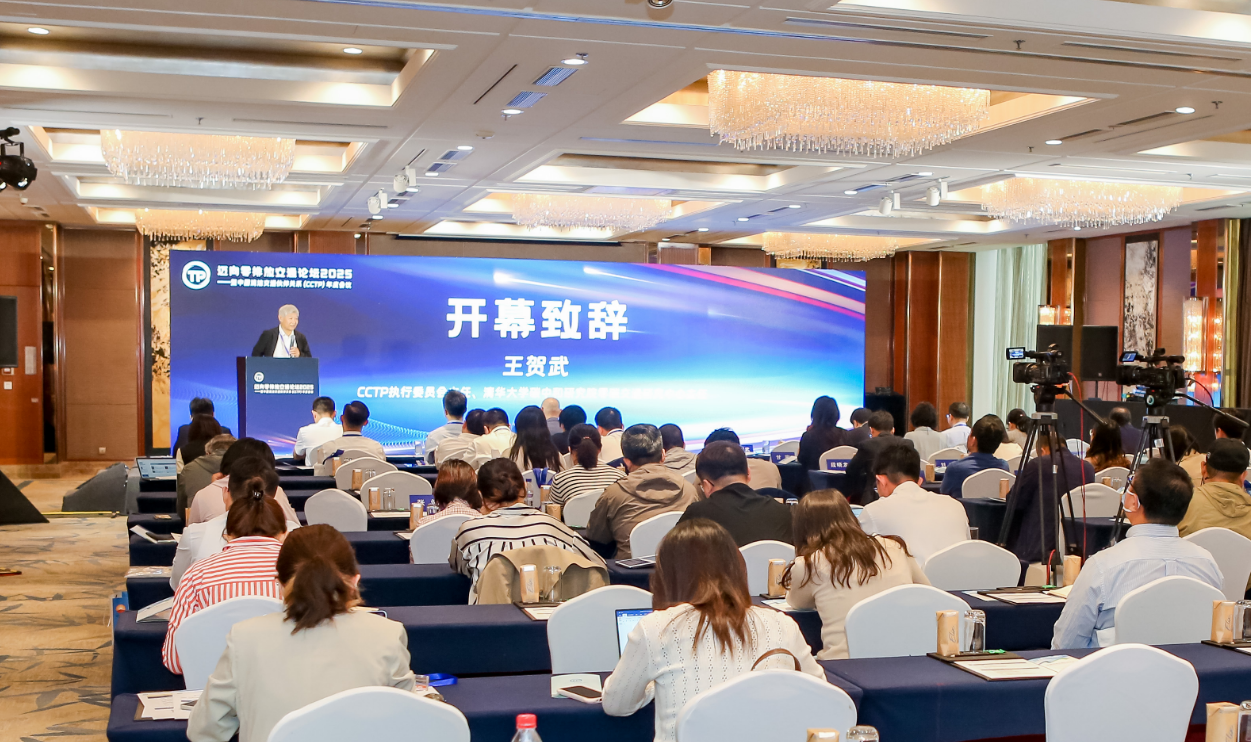
Group 1 - The forum "Towards Zero Emission Transportation 2025" highlighted China's significant achievements in the new energy vehicle (NEV) industry, emphasizing the integration of transportation and energy sectors [3][4] - The Ministry of Transport and ten other departments issued guidelines to promote the integration of transportation and energy, indicating a shift from top-level design to practical implementation [3] - The past five years have seen notable progress in China's green and low-carbon transformation in transportation, with policies increasingly incorporating zero-emission freight and diversified energy applications [3][4] Group 2 - China has established a competitive advantage in green industries such as NEVs, power batteries, and photovoltaics, with investments, production capacity, and patent numbers ranking among the world's top [4] - The CCTP is set to release a collection of case studies on zero-emission transportation, focusing on multimodal transport, green logistics, energy-transport integration, and new productivity [4] - V2G (Vehicle-to-Grid) technology is approaching large-scale commercial application, particularly in private and park scenarios, as highlighted by industry experts [4][5] Group 3 - The hydrogen energy sector is actively developing, with companies participating in significant projects and planning to establish hydrogen refueling stations by 2025-2026 [5] - The automotive industry in China, with an annual production exceeding 30 million vehicles and leading global exports, creates a strong demand for efficient and low-carbon transportation modes [5] - The transition to zero-emission transportation is recognized as a systematic project requiring coordinated efforts in policy guidance, technological breakthroughs, and practical exploration [5]
关税“大山压顶” 日系“小而美”“美”不起来
Zhong Guo Qi Che Bao Wang· 2025-09-24 09:19
Core Viewpoint - The reduction of U.S. import tariffs on Japanese cars from 27.5% to 15% is expected to alleviate some pressure on Japanese automakers, but the remaining tariff still poses significant challenges for smaller manufacturers like Mazda, Subaru, and Mitsubishi, which rely heavily on imports and have limited risk-bearing capacity [2][9]. Group 1: Impact of Tariff Changes - The new 15% tariff applies to Japanese passenger cars, light trucks, and auto parts, which still burdens smaller Japanese automakers [2]. - Despite the tariff reduction, the impact on smaller companies is severe, as they must raise prices in the U.S. market to survive, potentially erasing their profits [2][9]. Group 2: Sales Performance in the U.S. - Mazda's U.S. sales are projected to grow by 16.8% in 2024, reaching 424,000 units, with the U.S. market accounting for nearly 30% of its global sales [3]. - Subaru's U.S. sales are expected to reach 660,000 units in 2024, a 5.6% increase, with 70% of its global sales coming from the U.S. market [3]. - Mitsubishi anticipates U.S. sales of approximately 110,000 units in 2024, marking a 26% increase and the best sales record since 2019 [4]. Group 3: Market Strategies and Adaptations - Mazda plans to increase its market share in the U.S. to 450,000 units by 2025 and is actively developing new energy technologies [3]. - Subaru's success in the U.S. is attributed to its alignment with consumer demands for reliability and safety, particularly in winter conditions [3]. - Mitsubishi is set to introduce hybrid models in the U.S. and plans to expand its vehicle lineup from 4 to 8 models by the 2030 fiscal year [4]. Group 4: Cost Management and Production Adjustments - Japanese automakers are implementing cost-cutting measures and enhancing collaboration to increase local production capacity in the U.S. [11]. - Mazda is focusing on increasing efficiency at its Alabama plant and shifting production towards higher-margin models [11][12]. - Subaru is investing 40 billion yen to expand production in the U.S. and is transitioning some production to local facilities to reduce import reliance [11][12]. Group 5: Financial Outlook and Profitability - Japanese automakers expect a significant drop in profits due to tariffs, with Mazda forecasting an 82.5% decrease in net profit for the 2025 fiscal year [9]. - Subaru anticipates a 52.7% decline in net profit for the 2025 fiscal year, while Mitsubishi has lowered its profit forecast by 30% [10][11]. - The overall impact of tariffs is expected to reduce the combined operating profit of Japan's seven major automakers by approximately 2.67 trillion yen for the 2025 fiscal year [9].

神州租车南宁机场火车站双网点同步启用,为国庆租车自驾热添保障
Zhong Guo Qi Che Bao Wang· 2025-09-24 09:04
Group 1 - The domestic self-driving travel market is expected to experience a new wave of growth during the upcoming National Day holiday in 2025, with Shenzhou Car Rental launching two key service points in Nanning [1] - The new service points at Nanning Wuxu International Airport T2 terminal and Beihai Railway Station provide efficient "pick-up within ten minutes of arrival" service, enhancing the travel experience for holiday travelers [1] - Shenzhou Car Rental's Nanning branch has established a comprehensive service network covering all prefecture-level cities in Guangxi, with a total of 125 operational points as of September 2025 [1] Group 2 - As the National Day holiday approaches, Shenzhou Car Rental's Nanning branch has initiated a holiday guarantee plan to offer convenient, safe, and diverse self-driving services [2] - Vehicle booking rates for the holiday period are reported to be nearly explosive, with new energy models like the Wenjie M7, Lantu Dreamer, and BYD Qin PLUS particularly popular among customers [2] - Tourists planning to visit Guangxi during the National Day holiday are advised to plan their trips early and book vehicles through the official app or physical stores to ensure smooth travel plans [2]
众所瞩目的这一新赛道,未来将如何破局前行?
Zhong Guo Qi Che Bao Wang· 2025-09-24 06:49
Core Viewpoint - The development of hydrogen fuel cell vehicles in China faces challenges in technology, cost, and infrastructure, despite increasing demonstration and promotion efforts [2][3] Group 1: Industry Challenges - Hydrogen fuel cell vehicles have not met expectations in the passenger car market, with annual production still below 10,000 units compared to over 10 million electric vehicles [3] - The industry is exploring the unique advantages of fuel cells in commercial vehicles, long-distance logistics, and specific environments such as high altitudes and low temperatures [3][4] - The transition to green hydrogen is a core issue for the promotion of fuel cell vehicles, as achieving green low-carbon status requires significant investment [4][7] Group 2: Policy and Support - National and local policies continue to support the development of fuel cell vehicles, but the expiration of subsidy policies raises concerns about the sustainability of the industry [5][6] - The establishment of a comprehensive testing and evaluation system for fuel cell vehicles is necessary to address existing shortcomings and support the growth of the industry [5][6] Group 3: Market Application - The current market application of fuel cell vehicles is limited, primarily focused on heavy commercial vehicles, which restricts expansion into other areas [6] - Collaborative efforts among demonstration cities have led to significant progress in technology and component development, particularly in domestic substitution [6] Group 4: Future Directions - The industry must strengthen top-level design, create long-term policy support mechanisms, and explore diverse application models to enhance the development of fuel cell vehicles [7][8] - The integration of green development into the core competitiveness of fuel cell vehicles is essential for influencing consumer choices in the future [8]
