Zhong Guo Qi Che Bao Wang

Search documents
泰达论四化 || 高端化:从品牌溢价转向技术溢价
Zhong Guo Qi Che Bao Wang· 2025-09-23 01:33
Core Viewpoint - The current stage of the Chinese automotive industry emphasizes the necessity of brand high-endization as a survival and development mission, making it a critical topic for the future [3][4]. Group 1: High-End Market Dynamics - New forces in the automotive industry are set to dominate the high-end market, with the ability to define products, markets, and eras being crucial for market success [4]. - The transition to high-end brands is essential for achieving the goal of becoming a strong automotive nation and creating world-class enterprises [4]. - High-endization is characterized by four key aspects: product and technology refinement, user experience and service enhancement, aesthetic and cultural development, and a commitment to social responsibility [4]. Group 2: Changing Consumer Demands - As technology evolves, consumer demands are shifting towards a blend of practicality and emotional value, with a focus on quality, usability, and cost-effectiveness [4]. - The concept of "new luxury" combines traditional luxury with technological innovation, aiming to redefine luxury experiences [4][5]. Group 3: Global Recognition of Chinese Brands - Increasingly, multinational companies are acknowledging the rise of Chinese high-end automotive brands on a global scale, attributing this to advancements in technology and national confidence [5]. - To successfully elevate Chinese automotive brands to high-end status, a focus on original design, leading technology, and safety is essential [5]. Group 4: Technological Revolution in the Automotive Industry - New forces are reshaping the high-end market landscape, with a significant increase in their market share, projected to reach 63.9% this year [6]. - The core competitiveness of high-end brands is increasingly determined by advanced driver assistance systems, appealing to tech-savvy consumers [6]. - The automotive industry is undergoing a major transformation driven by technological revolutions, necessitating a shift from isolated technological advancements to integrated system capabilities [6][7]. Group 5: Shifts in Product Selling Points - Automotive selling points are transitioning from "power and leather" to "computational power and experience," moving away from brand premium to technology premium [7]. - Domestic brands must shift from a price-driven model to a high-value model driven by collaborative innovation across the entire value chain [7]. - Building technological competitiveness requires four strategic paths: hardware-software collaboration, data-driven approaches, enhanced safety systems, and ecosystem co-construction [7].


以传动技术为核 法士特开拓智能农机发展新格局
Zhong Guo Qi Che Bao Wang· 2025-09-23 01:33
Core Insights - The company Fastech has officially entered the smart agricultural machinery sector, launching nine smart agricultural machinery transmission system assemblies and showcasing nine core component products, marking a significant step towards its strategic goal of diversifying beyond a single field [2][3] Industry Context - The agricultural equipment industry in China faces a structural contradiction of "low-end surplus and high-end shortage," particularly in the high-end heavy machinery sector, where core transmission components are heavily reliant on imports, hindering the modernization of agriculture [3] - The increasing emphasis on agricultural modernization and smart agriculture development in China, along with supportive policies, provides a favorable environment for the agricultural machinery industry [3] Technological Advancements - Fastech's "Zhikun" smart agricultural machinery innovations demonstrate its capability in technology transformation, with self-developed transmission components achieving advanced levels in efficiency and reliability, tailored for automation and precision in smart agricultural operations [4] - The company has developed a hybrid power bridge assembly that breaks through foreign technological limitations, aligning with China's new energy development characteristics [4] Production Capacity - Fastech is investing 500 million yuan in a new production base for high-power tractor smart agricultural machinery transmission systems in Shaanxi, expected to be operational by the end of the year, significantly enhancing production capacity for core components [5] Collaborative Innovation - Fastech emphasizes the importance of collaborative innovation in technology development, having established partnerships with universities for research and talent cultivation, ensuring alignment with global industry trends [6] - The company has implemented strict quality control measures from the commercial vehicle sector to the agricultural machinery sector, ensuring high reliability and performance under demanding conditions [7] Strategic Diversification - Fastech's expansion into the smart agricultural machinery sector is a rational extension of its core business in gear transmission technology, allowing for efficient resource reuse and reduced cross-industry development risks [9] - The company is exploring multiple fields, including engineering machinery and high-end equipment transmission, leveraging technological synergies to achieve breakthroughs across sectors [9] Future Goals - Fastech aims to become a world-class enterprise by increasing R&D investment and strengthening core gear transmission technologies, while also addressing the pressures of imports in the smart agricultural machinery sector [10] - The seventh Technology Innovation Week serves as a milestone for Fastech's strategic transformation and development, with a focus on contributing to high-quality manufacturing and agricultural modernization in China [10]

市场要稳增长 产业要快升级 ——记2025泰达汽车论坛
Zhong Guo Qi Che Bao Wang· 2025-09-23 01:33
Core Viewpoint - The automotive industry is focusing on high-quality development and technological innovation, with an emphasis on integrating AI, big data, and other advanced technologies throughout the vehicle lifecycle [2][3][8]. Policy and Regulation - The Ministry of Industry and Information Technology plans to evaluate the development of the new energy vehicle industry and optimize support measures for technological advancements [3]. - The introduction of the "National 7" emission standards will shift from single vehicle emission limits to a dual management system that includes average corporate emissions [3]. Market Dynamics - The automotive ownership per thousand people in China still lags behind developed countries, prompting the Ministry of Commerce to enhance the implementation of vehicle replacement policies [4]. - The automotive industry is transitioning from purchase management to usage management to stimulate consumption [4]. Technological Trends - The development of electric vehicles is diversifying, with various technological routes being explored, including range-extended electric vehicles and pure electric vehicles [5][6][7]. - The integration of AI and digital technologies is becoming essential for automotive companies, with a focus on creating intelligent applications and enhancing user experience [8][9]. Strategic Reorientation - Companies are restructuring their strategies to adapt to market challenges, with a focus on digitalization, low-carbon initiatives, and enhancing brand strength [10]. - The automotive industry is witnessing a shift from traditional manufacturing to becoming service-oriented and ecosystem operators, emphasizing the importance of software and data as primary value sources [8][9].

泰达论四化 || 全球化:走向体系化竞争新阶段
Zhong Guo Qi Che Bao Wang· 2025-09-23 01:33
Group 1 - The core viewpoint of the article emphasizes the achievements of the automotive industry during the "14th Five-Year Plan" and the need for strategic recommendations for the "15th Five-Year Plan" [1] - The global influence of Chinese automobiles is expanding, but the industry faces increasing challenges in the international market [3] - The export of Chinese automobiles is expected to enter a platform period, transitioning to a new stage of systematic competition, with a focus on localization and regional operations [4] Group 2 - By 2030, China's annual automobile production is projected to reach 36 million units, accounting for 40% of global capacity, with exports expected to exceed 9 million units [4] - The share of new energy vehicles in exports is steadily increasing, currently exceeding 20%, which lays a foundation for the international expansion of intelligent connected vehicles [4] - The challenges faced by intelligent connected vehicles in international markets include stringent compliance requirements, material management difficulties, and high costs [4] Group 3 - The role of battery recycling is becoming increasingly important in the energy sector, with varying regulations across countries focusing on economic benefits and carbon emission reductions [5] - Data compliance for cross-border operations is crucial for companies entering global markets, directly impacting their growth potential and innovation speed [5] - High-value data applications are reshaping operational models and are key to brand pricing and trust [5] Group 4 - The rapid growth of Chinese automobile exports has led to significant logistics challenges, particularly in vehicle transportation [6] - Roll-on/roll-off transport accounted for approximately 75% of vehicle exports in the first half of the year, with domestic shipping companies contributing only 15% [6] - To enhance export capabilities, collaboration among industry players is essential to improve logistics efficiency and communication with international transport markets [6] Group 5 - Chinese auto parts companies face challenges such as declining profit margins and shortened R&D cycles in overseas markets [6] - Localizing operations and building a robust supply chain are critical for success in markets with incomplete industrial chains [6] - The increasing uncertainty in the global trade environment necessitates a shift from simple assembly models to localized production processes [6]

2025泰达汽车论坛智库共识发布
Zhong Guo Qi Che Bao Wang· 2025-09-23 01:33
本报讯 日前,2025中国汽车产业发展(泰达)国际论坛在五大关键维度达成共识。中国汽车技术 研究中心有限公司党委委员、副总经理李洧发布了智库报告。 其中,绿色化新方案智库共识三条:一是聚焦油电关键驱动技术,推进多元技术路线并行发展;二是加 强固态电池关键核心技术攻关,构建有序发展的产业链生态;三是强化产业政策支撑,稳步推进汽车产 业绿色动能转换。 全球化新市场智库共识三条:一是促进技术体系协同升级,强化产业链可持续发展韧性;二是筑牢数字 治理基座,驱动跨境数据安全高效流动;三是优化全球资源布局,构建立体协同的产业生态体系。 智能化新升级智库共识三条:一是加强智能网联标准体系顶层设计,推动智能化技术创新和高质量发 展;二是积极支持关键技术攻关,实现核心技术自主可控;三是规范行业竞争秩序,引导高质量发展, 回归价值创造的初心。 具体来看,一是坚持安全为先,护航汽车产业可持续发展;二是坚持全生命周期理念,推动汽车产业绿 色低碳发展;三是坚持新兴技术布局,赋能汽车产业新动能;四是坚持长期主义,推动民族汽车品牌向 上;五是坚持生态理念,推进国际化走深、走实。 高端化新力量智库共识三条:一是坚定推动自主品牌高端化,服务产 ...
泰达论四化 || 智能化:创新与安全双轮驱动
Zhong Guo Qi Che Bao Wang· 2025-09-23 01:30
本届泰达汽车论坛上,来自政产学研界的嘉宾回顾"十四五"汽车业取得的业绩,共同为"十五五"产业发展建言献策。本报梳理了四个热点话题,以飨读 者。 13 William the state 3 3 2 1 2 1.85 Kiss 17 1-57 1 150 are 1 20 B - 4/12/2 194 P 12 t 2015 A I 195 Children y W 东风汽车集团有限公司首席专家、东风汽车研发总院副院长陈涛表示,AI技术正推动汽车从"功能机"向"智能体"转变,通过多模态大模型实时捕捉驾驶员生 理和情绪状态,自动调节车内环境,实现"共情式"出行体验。在企业端,AI能力体系已应用于研发、制造、供应链和服务全链条,显著提升生产效率和质量 控制水平。 智能化转型成为本届泰达汽车论坛重点讨论的话题,在多场关于智能化的专场论坛中,技术创新、安全底线、政策法规等问题被反复提起,成为汽车智 能化进程的重要挑战。 数据驱动产业生态重构 北京理工大学副教授、新能源汽车国家大数据联盟副秘书长刘鹏指出,数据作为新生产要素,正深刻改变汽车产业的研发、生产与服务模式。数据已成为驱 动产业全面升级的新动力,如何系统性挖掘数据 ...

泰达论四化 || 低碳化:打通“车-件-料”全链路循环体系
Zhong Guo Qi Che Bao Wang· 2025-09-23 01:26
本届泰达汽车论坛上,来自政产学研界的嘉宾回顾"十四五"汽车业取得的业绩,共同为"十五五"产业发展建言献策。本报梳理了四个热点话题,以飨读 者。 目前,动力电池的年使用量已经从数年前的100GWh增长到今年的超1000GWh,到2030年将超3000GWh,而1GWh相当于有1万吨动力电池要回收。 中国资源循环集团电池有限公司总经理白春平提出,从退役动力电池的分拣到拆解,要全产业链推动回收环节能耗更低、纯度更高、产品符合标准、回收更 具技术含量。 而对于数据价值的发掘,广州市巴图鲁信息科技有限公司创始人、董事长曾万贵提出,数据是打通零部件交易的沟通语言,也是提高其交易流通效率的基 础。通过十几年的积累,公司在数据交易系统工具、供应资源及运营能力方面,已经能够支撑从整车回收到零部件回收交易全流程的数字化。 中汽中心首席专家、中国汽车标准化研究院副院长郑天雷表示,要重新梳理和完善标准体系,填补标准空白;加强重点领域标准研究,包括碳管理、节能、 新能源汽车、循环利用等领域的标准,加快制定进度,形成更完善的技术支撑;加强国际交流合作,更好地将"中国方案"推向国际,支撑我国汽车产业和技 术"出海"。 在汽车回收环节,对于 ...

汽车早餐 | 一汽收购卓驭科技股权公示;均胜电子:与网传汽车热失控自动弹射电池技术无关;李想称没有“理想i7”这个车型
Zhong Guo Qi Che Bao Wang· 2025-09-23 00:54
Domestic News - The Ministry of Industry and Information Technology and four other departments have issued a plan for the steel industry, targeting an average annual growth of around 4% in value added over the next two years, focusing on quality upgrades in major steel-consuming industries such as automotive and machinery [2] - In August, the retail sales of new energy passenger vehicles increased by 7.5% year-on-year, with a penetration rate of 55.2%, indicating a steady growth in the consumption market [3] - The State Administration for Market Regulation has revised and published national standards for urban public transport and car rental services, which will take effect on November 1, emphasizing the verification of rental operators and vehicles [4] - Since the beginning of the 14th Five-Year Plan, the cumulative insurance coverage for motor vehicles has exceeded 1.6 billion instances, marking a 40% increase compared to the previous five-year period [5] International News - In the first 20 days of September, South Korea's automobile export value increased by 14.9% year-on-year, reaching $3.42 billion, despite an overall export decline due to new U.S. tariff policies [6] - Belgium's exports of passenger cars to the U.S. plummeted by 45% from May to July, contributing to a trade deficit of €2.2 billion with the U.S. during this period [7] - Porsche announced a significant adjustment to its electric platform development timeline, extending the market lifecycle of existing internal combustion engine models while introducing new models [8] Company News - China FAW Group Corporation is in the public announcement period for its acquisition of a stake in Shenzhen Zhuoyu Technology Co., which specializes in advanced driver-assistance systems (ADAS) [9] - Geely Automobile issued 24,000 ordinary shares due to the exercise of stock options under its plan adopted in April 2023 [10] - Li Xiang, CEO of Li Auto, clarified that there is no model named "Li Xiang i7," addressing public inquiries about the vehicle [11] - CATL signed a strategic cooperation agreement with the People's Government of Milin City, focusing on new energy projects and zero-carbon industries [12] - WeRide partnered with Grab to launch the Ai.R autonomous driving service in Singapore, marking the first such service in residential areas [13]






现款已售罄,焕新极氪001将于明日提前开启预售
Zhong Guo Qi Che Bao Wang· 2025-09-22 11:34
自8月8日提前发布改款预告以来,极氪近期推行包括"神秘客户体验官计划"、"客服服务公约"等在 内的一系列举措,引发用户积极反馈,也为市场终端带来正面影响。 今日,多个社交媒体平台流传疑似内部工作群紧急通知,内容显示,现款极氪001已售罄,极 氪将提前至9月23日开启焕新极氪001的预售,上市时间则按照原计划十月中旬,届时将同步开启 交付。记者联系到多个门店销售,均反馈消息属实。 ...
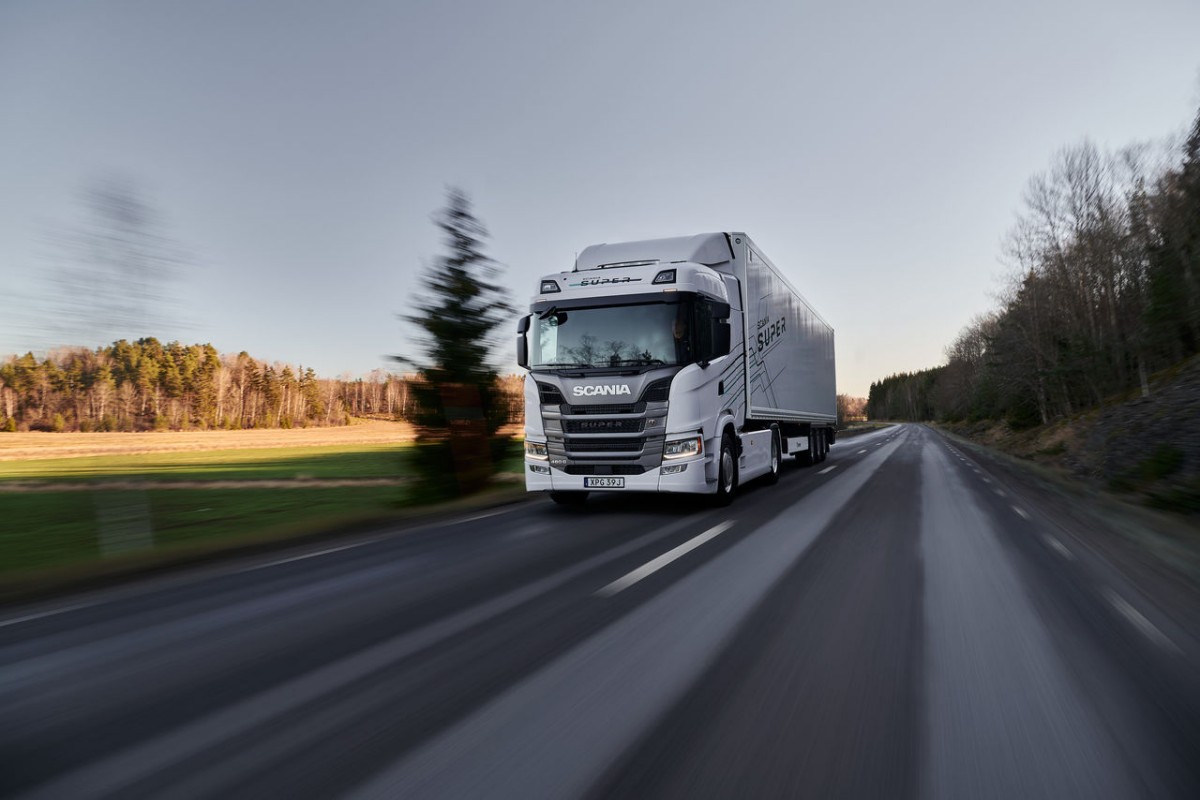
入华60年,“公路之王”斯堪尼亚二次创业了
Zhong Guo Qi Che Bao Wang· 2025-09-22 09:35
Core Insights - Scania is marking 2025 as a significant year in its development in the Chinese market, celebrating 60 years of partnership while launching a new production base in Rugao, which symbolizes its commitment to localizing operations and enhancing its supply chain in China [1][3]. Strategic Upgrades - Scania is implementing a comprehensive upgrade of its strategy in China, focusing on R&D, manufacturing, and overall solutions, transitioning from a transactional partner to an operational partner, which is akin to a "second startup" for the company [3][7]. - The new "Strategy 2.0" is driven by evolving industry regulations, increasing logistics demands, and the rapid development of digital solutions, which present both opportunities and challenges for the company [7][16]. Operational Focus - The core of Scania's strategic upgrade is the introduction of "worry-free solutions" based on Total Cost of Ownership (TCO), allowing for customized solutions for various applications, supported by a digital hub through the Scania app [8][10]. - Scania's new operating lease business aims to reduce initial capital expenditure for logistics companies and individual owners, enhancing operational efficiency and resource allocation [10][17]. Dealer Network Expansion - Scania is focused on expanding its dealer network in China, with plans to increase the number of dealers from over 40 by the end of 2025 to more than 70 by the end of 2026, thereby improving market coverage [18][23]. - The company is also addressing the financing needs of its dealers by providing comprehensive financing solutions, enabling them to operate with reduced financial pressure [23]. Service Strategy - Scania plans to enhance its service offerings by providing value-added services such as fleet consulting and management, allowing customers to focus on their core operations while Scania manages the backend services [23].