
Zhong Guo Huan Jing Bao

Search documents
中华环保联合会:矢志20载,为全面绿色转型贡献环保社会组织力量
Zhong Guo Huan Jing Bao· 2025-12-15 23:37
从2005年到2025年,中华环保联合会已走过20个春秋。作为国务院批准、民政部注册的全国性非营利社 团组织,中华环保联合会始终秉承"大中华、大环境、大联合"理念,在环境权益维护、团结凝聚社会组 织、参与国际交流合作、环保技术推广与咨询服务等领域深耕细作,架起政府、社会与企业间的沟通桥 梁,为美丽中国建设和全球环境治理注入了坚实的社会力量。 中华环保联合会的发展历程从一定维度展现了中国环保社会组织如何成长成熟,如何与国家生态文明建 设同频共振,共同书写美丽中国建设的时代答卷。我们构建了覆盖全国30个省(自治区、直辖市)的环 保社会组织协作网络,发布国内首份环保民间组织调查报告,连续举办17届环保民间组织可持续发展年 会,率先提起全国首例环保社会组织环境公益诉讼,累计推动97起公益诉讼案件落地,30余份法律提案 与建议被相关部门采纳,积极参与60余次联合国系统环境议题的会议,获得14个重要的国际资质。作为 社会力量的代表之一,我们深深感到,环保社会组织以其专业性、灵活性和公信力,帮助政府拾遗补 阙,放大市场良性机制,聚集社会公益能量,激活公众内在动力,在现代环境治理体系中扮演着不可替 代的角色,发挥着多元、动态 ...
河北省委书记倪岳峰赴唐山督导督察整改工作 用市场化法治化手段倒逼企业节能降耗转型升级
Zhong Guo Huan Jing Bao· 2025-12-15 03:36
Core Viewpoint - The article emphasizes the importance of ecological environment protection in Tangshan, highlighting the need for strict compliance with environmental regulations and the implementation of corrective measures to address violations in the steel industry [1][2]. Group 1: Ecological Environment Protection - The Central Ecological Environment Protection Supervision Team reported violations in Tangshan, including the illegal establishment of steel projects and significant air pollution issues [1]. - The provincial leadership stresses the need for a robust mechanism to ensure long-term ecological protection and to promote a comprehensive green transformation of economic and social development [1]. Group 2: Accountability and Enforcement - There is a call for strict accountability measures against those responsible for environmental violations, including legal actions against illegal steel production and pollution [1]. - The article highlights the necessity of establishing a mechanism for discovering environmental violations and conducting regular monitoring to prevent air pollution [1]. Group 3: Strategic Initiatives - The provincial government aims to enhance political awareness regarding the seriousness of ecological supervision and to implement detailed rectification plans with clear timelines [2]. - There is a focus on optimizing industrial layout and maintaining ecological protection boundaries while promoting pollution prevention and ecological system optimization [2].
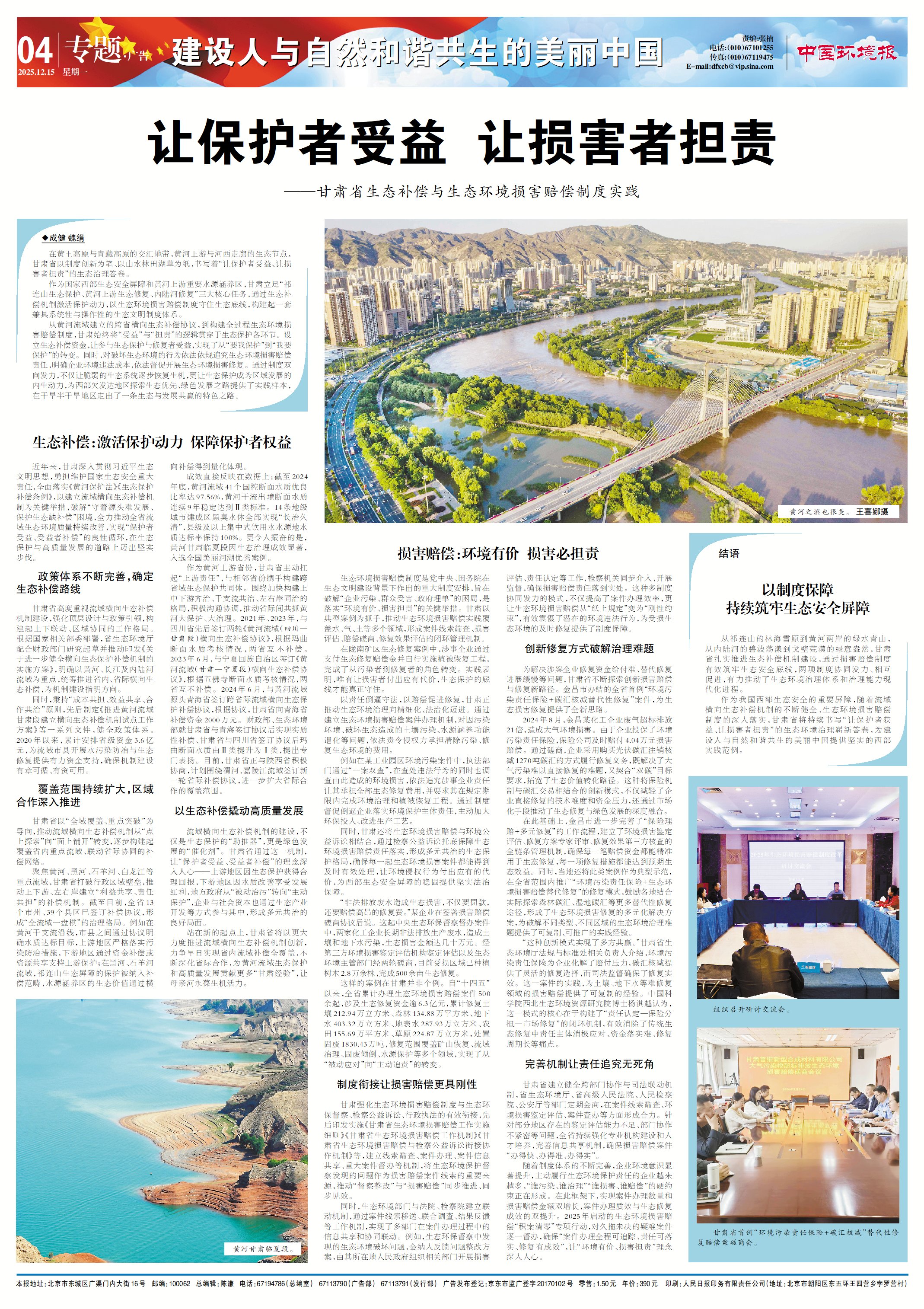
让保护者受益 让损害者担责——甘肃省生态补偿与生态环境损害赔偿制度实践
Zhong Guo Huan Jing Bao· 2025-12-15 00:41
Core Viewpoint - Gansu Province is implementing an innovative ecological compensation mechanism to promote ecological protection and restoration, ensuring that protectors benefit while those who cause damage are held accountable [3][4][16]. Group 1: Ecological Compensation Mechanism - Gansu is focusing on three core tasks: ecological protection of Qilian Mountains, ecological restoration of the upper Yellow River, and restoration of inland rivers, using an ecological compensation mechanism to activate protection efforts [3][16]. - The province has established a horizontal ecological compensation agreement across provinces, integrating the logic of "benefit" and "responsibility" throughout ecological protection processes [17]. - As of 2024, the water quality in 41 national control sections of the Yellow River basin has a good rate of 97.56%, with the main stream's water quality meeting Class II standards for nine consecutive years [20]. Group 2: Policy Framework and Implementation - Gansu has developed a comprehensive policy framework for horizontal ecological compensation, emphasizing top-level design and regional collaboration [20]. - Since 2020, Gansu has allocated 360 million yuan to support water pollution prevention and ecological restoration in various regions [20]. - The province has signed multiple horizontal ecological compensation agreements with neighboring provinces, including Sichuan and Ningxia, to enhance cross-province ecological protection [24]. Group 3: Environmental Damage Compensation - The ecological damage compensation system aims to address the issue of "polluters pay" and ensure that environmental damages are compensated [27][28]. - Gansu has handled over 500 ecological damage compensation cases since the 14th Five-Year Plan, involving over 630 million yuan in ecological restoration funds [29]. - The province is enhancing the rigidity of the damage compensation system by integrating it with environmental supervision and public interest litigation [30]. Group 4: Innovative Repair Methods - Gansu is exploring innovative paths for damage compensation and restoration, including the first case of "environmental pollution liability insurance + carbon credit reduction" [31]. - This innovative model combines insurance mechanisms with carbon trading to facilitate ecological restoration while alleviating financial burdens on companies [32]. Group 5: Strengthening Accountability - Gansu is establishing a robust inter-departmental collaboration and judicial linkage mechanism to ensure effective handling of ecological damage cases [33]. - The province is promoting a culture of accountability where enterprises are increasingly aware of their environmental responsibilities, leading to a rise in proactive compliance [35].

持之以恒地铲除加拿大一枝黄花
Zhong Guo Huan Jing Bao· 2025-12-15 00:38
清除加拿大一枝黄花的方式有四种。一是人工铲除。在苗期或种子成熟前,剪掉花头,连根拔除植株并 清理地下根茎,集中焚烧或者无害化处理植株。二是机械防除。对大面积或农田的加拿大一枝黄花可采 取机械防除。可用镰刀或割草机割除地上部分,随后用旋耕机翻耕土地(深度10厘米以上)以清除地下 根茎。三是化学防治。在幼苗期(20厘米—50厘米)进行施药效果最好。针对农田、果园、林地、荒 地、公路铁路坡地等生境选用不同除草剂和喷施方法。彻底清理后及时种植农作物或绿化植物,占据生 态位,防止其死灰复燃。农田的加拿大一枝黄花通过连续种植两季农作物可根除;绿化带则需要加强日 常防护,发现再生植株即予清除。四是生物防治。芦苇根系发达,种植芦苇可抑制其扩散。真菌锈菌、 土生真菌能迅速感染并杀死加拿大一枝黄花。 加拿大一枝黄花原产于北美,1935年作为庭院观赏植物引入上海、南京等地栽植,上世纪80年代扩散至 河滩、荒地、路边及部分农田,成为中国一种常见的恶性杂草。它入侵我国很多省(自治区、直辖 市),严重危害本土植物的生存,2023年1月被列入《重点管理外来入侵物种名录》,成为重点管理的 重大农林入侵物种,当前仍在不断蔓延。加拿大一枝黄花颜 ...
如何应对东道国气候风险,筑牢海外投资安全网?
Zhong Guo Huan Jing Bao· 2025-12-14 23:33
Core Viewpoint - China's outbound direct investment (ODI) is expanding significantly, with 52,000 overseas enterprises established in 190 countries by the end of 2024, including 19,000 in Belt and Road Initiative countries. However, climate risks in host countries are increasingly impacting the safety of these investments, as global temperatures have risen approximately 1.55°C above pre-industrial levels, surpassing the 1.5°C target set by the Paris Agreement, highlighting the urgent need for climate risk management [1]. Group 1: Climate Risks Faced by Chinese Outbound Investment - Chinese outbound investment enterprises face three main climate risk impacts: physical risks that increase operational costs and weaken investment willingness, regulatory challenges from stricter environmental regulations, and limitations imposed by the rising demand for green products and stricter ESG standards [2][3][4]. - Physical risks from climate change lead to higher operational costs due to increased disaster preparedness investments and disruptions in supply chains, which can reduce production efficiency and product delivery [2]. - Stricter environmental regulations in developed economies impose higher compliance costs and technological upgrade pressures on Chinese enterprises, while many developing economies lack the capacity to adapt to climate change, increasing potential investment risks [2][3]. Group 2: Recommendations for Enhancing Investment Quality and Resilience - To effectively address climate risks in host countries and enhance the quality and resilience of China's outbound direct investment, it is recommended to strengthen corporate climate risk management capabilities and stabilize investment willingness [4][5]. - Companies should integrate climate risk assessments into their investment decision-making processes and develop emergency response plans for extreme weather events to mitigate risks from the outset [5]. - Promoting supply chain resilience through diversified and alternative supply networks, as well as leveraging digital supply chain management technologies, is essential to ensure operational continuity [5]. - Enhancing employee health and efficiency management by implementing protective measures against high temperatures and providing climate adaptation skills training can help mitigate the impact of climate disasters on labor productivity [5]. Group 3: Policy Coordination and Financial Support - Strengthening international policy coordination and cooperation mechanisms is crucial for optimizing the cross-border investment environment, including establishing regular dialogues on ecological and environmental policies with developed economies [6][7]. - Developing targeted fiscal and tax support policies for investments in disaster protection, energy-saving equipment, and low-carbon technology can guide enterprises towards a green transition [8]. - Enhancing ESG management capabilities among enterprises and aligning with international ESG disclosure standards will improve transparency and build trust with international investors [8].
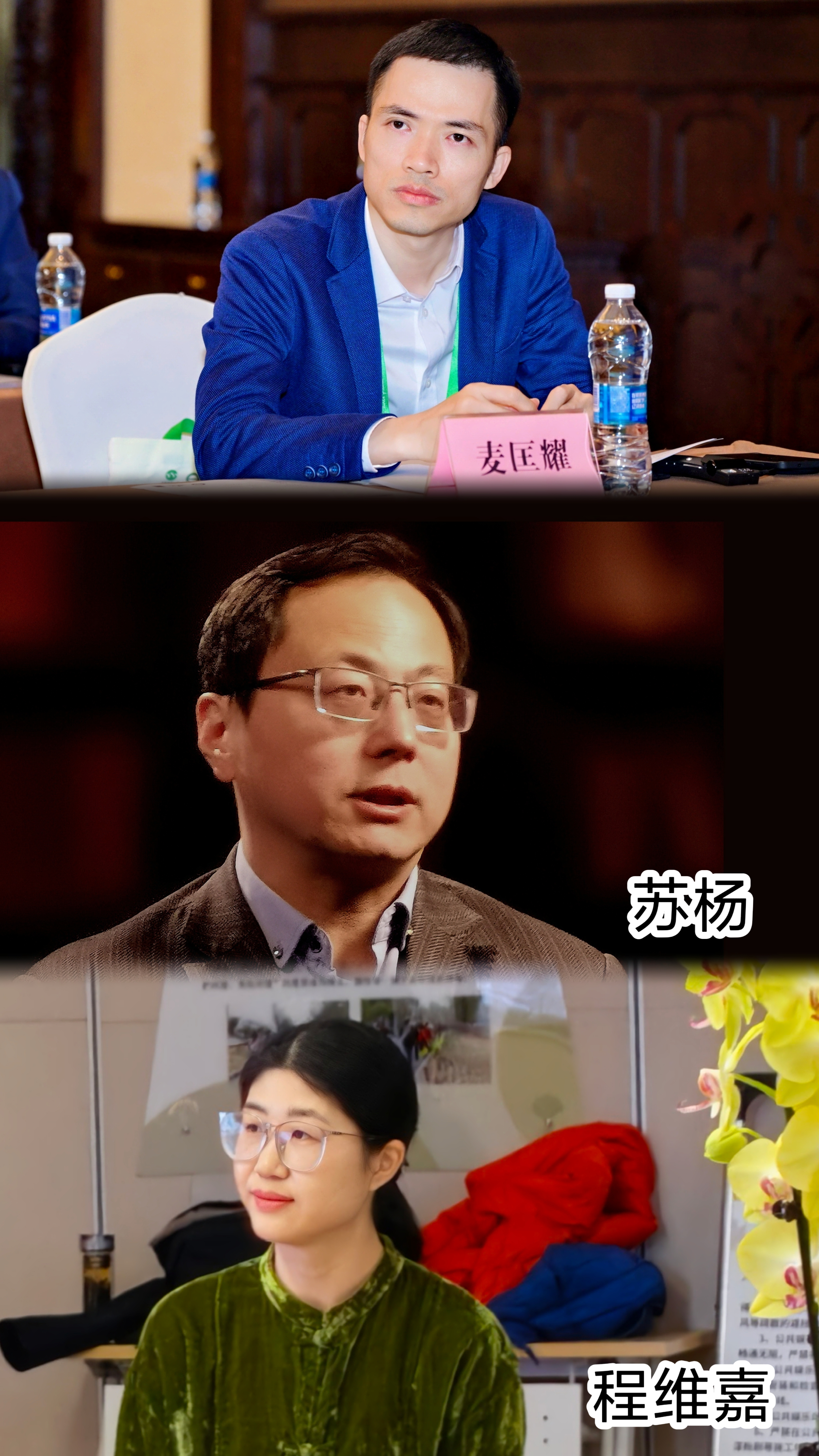
专访麦匡耀、周建宏、苏杨:实施《国家公园法》,推动高水平保护与高质量发展同域共存
Zhong Guo Huan Jing Bao· 2025-12-12 09:40
Core Viewpoint - The article discusses the 20th anniversary of the "Two Mountains" concept, emphasizing the need for high-level protection and high-quality development in the context of national parks, highlighting the ongoing discussions among experts on how to achieve this balance [1]. Group 1: Implementation of the National Park Law - The National Park Law, effective from January 1, 2026, provides strong support for the transformation of the "Two Mountains" concept into practice, although challenges remain [5][6]. - The law introduces a significant shift in management style from a restrictive "blacklist" approach to a more flexible "whitelist" management, allowing certain human activities while ensuring ecological protection [7][8]. Group 2: Community Involvement and Economic Benefits - In the Hainan Tropical Rainforest National Park, a "whitelist" management approach allows local residents to maintain necessary facilities while ensuring ecological integrity, leading to a win-win situation for both protection and livelihood [8][10]. - The South Mountain National Park candidate area has implemented measures that allow for scientific research and non-damaging production activities, enhancing community support for conservation efforts [10][19]. Group 3: Ecological Product Value Realization - The ecological environment's high-quality protection is essential for developing green industries, with the GEP (Gross Ecosystem Product) accounting for 446.78 billion yuan, providing a scientific basis for ecological product pricing [10][16]. - Initiatives like the "Zhu Huan Rice" and the establishment of an ecological product brand system have led to increased sales and community benefits, demonstrating the successful integration of ecological protection and economic development [16][20]. Group 4: Challenges and Future Directions - The article highlights the need for clearer guidelines on how specific ecological elements can serve as production factors in various industries, avoiding superficial approaches like mere tourism or agricultural sales [20][21]. - Both national parks are exploring innovative methods to concentrate production factors towards green industries, including land use reforms and financial incentives for ecological projects [21][22].
除了旅游和特产,生态还能怎么赚钱?答案在这里
Zhong Guo Huan Jing Bao· 2025-12-12 05:53
Core Viewpoint - The article emphasizes the importance of expanding the channels for realizing the value of ecological products, which can transform ecological value into economic and social value, thus promoting the conversion of "green mountains and clear waters" into "golden mountains and silver mountains" [1] Group 1: Resource Planning and Layout - It is essential for local areas to understand their ecological resources and optimize resource allocation based on their unique ecological endowments, as demonstrated by the ecological product value (GEP) accounting in Kaihua County, Zhejiang Province [2] - Local governments should conduct dynamic monitoring and comprehensive inventory of natural resources to create an ecological directory and ledger, which will facilitate the identification and tracking of ecological products' characteristics and values [2] Group 2: Supply Structure Optimization - The realization of ecological product value should be guided by public demand, with a focus on health, safety, and environmental protection, which are increasingly valued by consumers [3] - Market research should be intensified to accurately assess the urgent ecological product needs of the public, leading to a tailored supply model that addresses diverse consumer demographics [3] Group 3: Brand Development - Brand building is crucial for enhancing the added value of ecological products and gaining market share, as many regions face challenges of having products without brands and quality without premium pricing [4] - Regions should develop recognized public brands based on local characteristics to promote ecological product value recognition and achieve market breakthroughs, as exemplified by the Lishui Mountain Farming brand [4] Group 4: Institutional Framework - The establishment of effective institutional frameworks is necessary to support the realization of ecological product value, with Zhejiang Province exploring innovative models such as the "three rights separation" and "two mountains cooperatives" [5][6] - These institutional developments help reduce uncertainties in market transactions and promote sustainable transformation and development of ecological product value [6] Group 5: Digital Empowerment - The integration of advanced information technologies like AI and cloud computing can significantly enhance the channels for realizing ecological product value, as seen in the practices of Anji County and Kaihua County [7] - A smart management platform for ecological products should be established to facilitate decision-making and enable cloud-based transactions, supported by a robust digital monitoring and early warning system [7]
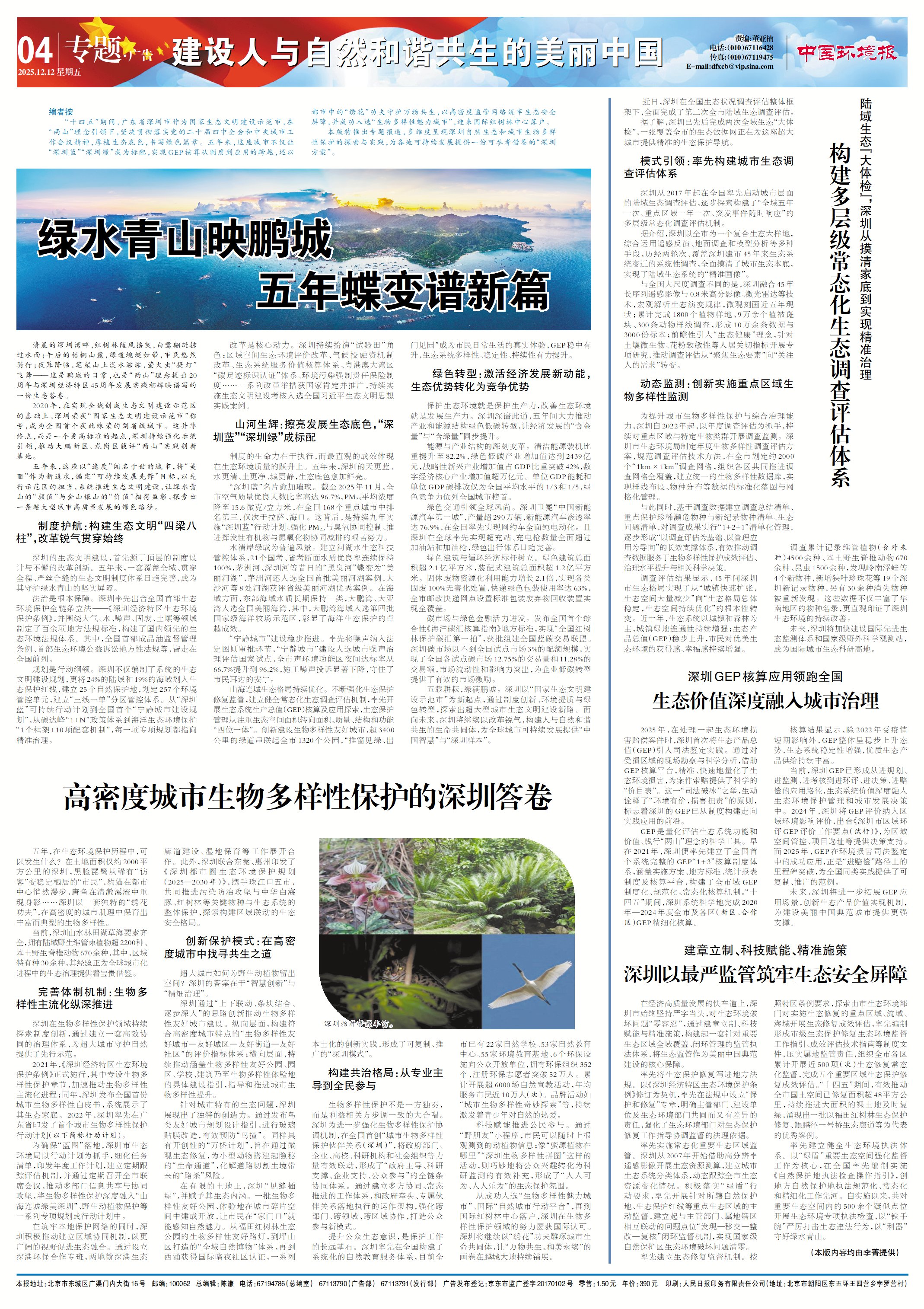
绿水青山映鹏城五年蝶变谱新篇
Zhong Guo Huan Jing Bao· 2025-12-12 01:53
Core Viewpoint - Shenzhen has made significant strides in ecological civilization construction, becoming a national model city for ecological development, integrating environmental protection with economic growth, and setting a benchmark for sustainable urban development [2][14][22]. Institutional Support - Shenzhen has established a comprehensive ecological civilization system, including the first ecological environment protection legislation in China, which covers air, water, noise, solid waste, and soil [5][17]. - The city has developed a systematic ecological civilization construction plan, designating 24% of land and 19% of sea areas for ecological protection [17][18]. Environmental Quality Improvement - Over the past five years, Shenzhen has achieved a significant improvement in environmental quality, with air quality good days reaching 96.7% and PM2.5 concentration dropping to 15.6 micrograms per cubic meter, ranking third among 168 major cities in China [20]. - The city has transformed polluted rivers into clean water bodies, with 100% of monitored river sections meeting water quality standards [20][21]. Green Economic Transformation - Shenzhen has shifted towards a green economy, with clean energy accounting for 82.2% of installed capacity and the value added of green low-carbon industries reaching 2.439 billion yuan [22][23]. - The city has become a leader in electric vehicles, with over 2.9 million units produced and a penetration rate of 76.9% for new energy vehicles [22]. Carbon Market and Green Finance - Shenzhen's carbon market has achieved significant trading volume and value, accounting for 12.75% of the national pilot market's trading volume, providing effective market incentives for low-carbon transitions [23].
高密度城市生物多样性保护的深圳答卷
Zhong Guo Huan Jing Bao· 2025-12-12 01:53
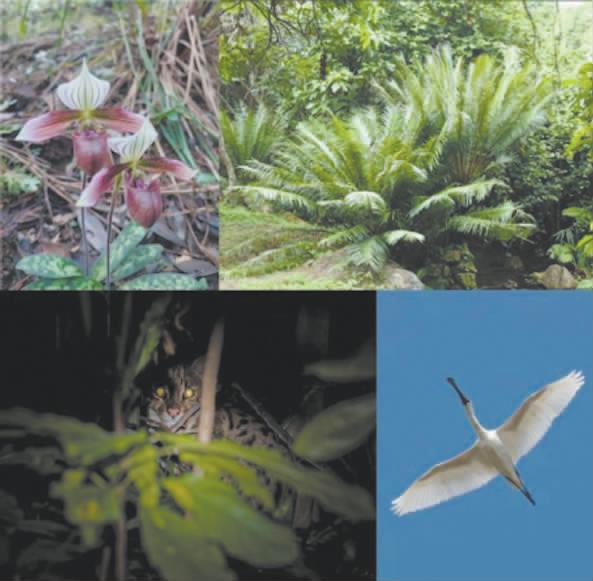
深圳物种资源丰富。 五年,在生态环境保护历程中,可以发生什么?在土地面积仅约2000平方公里的深圳,黑脸琵鹭从稀 有"访客"变稳定栖居的"市民",豹猫在都市中心悄然漫步,唐鱼在清澈溪流中重现身影……深圳以一套 独特的"绣花功夫",在高密度的城市肌理中保育出丰富而典型的生物多样性。 当前,深圳山水林田湖草海要素齐全,拥有陆域野生维管束植物超2200种、本土野生脊椎动物670余 种,其中,区域特有种30余种,其经验正为全球城市化进程中的生态治理提供着宝贵借鉴。 完善体制机制:生物多样性主流化纵深推进 深圳在生物多样性保护领域持续探索制度创新,通过建立一套高效协同的治理体系,为超大城市守护自 然提供了先行示范。 2021年,《深圳经济特区生态环境保护条例》正式施行,其中专设生物多样性保护章节,加速推动生物 多样性主流化进程;同年,深圳发布全国首份城市生物多样性白皮书,系统展示了其生态家底。2022 年,深圳率先在广东省印发了首个城市生物多样性保护行动计划(以下简称行动计划)。 提升公众生态意识,是保护工作的长远基石。深圳率先在全国构建了系统化的自然教育服务体系,目前 全市已有22家自然学校、53家自然教育中心、55 ...
深圳构建多层级常态化生态调查评估体系
Zhong Guo Huan Jing Bao· 2025-12-12 01:53
近日,深圳在全国生态状况调查评估整体框架下,全面完成了第二次全市陆域生态调查评估。 据了解,深圳已先后完成两次全域生态"大体检",一张覆盖全市的生态数据网正在为这座超大城市提供 精准的生态保护导航。 模式引领:率先构建城市生态调查评估体系 动态监测:创新实施重点区域生物多样性监测 为提升城市生物多样性保护与综合治理能力,深圳自2022年起,以年度调查评估为抓手,持续对重点区 域与特定生物类群开展调查监测。深圳市生态环境局制定年度生物多样性调查评估方案,规范调查评估 技术方法,在全市划定约2000个"1km×1km"调查网格,组织各区共同推进调查网格全覆盖,建立统一 的生物多样性数据库,实现样线布设、物种分布等数据的标准化落图与网格化管理。 与此同时,基于调查数据建立调查总结清单、重点保护珍稀濒危物种与新纪录物种清单、生态问题清 单,对调查成果实行"1+2+1"清单化管理,逐步形成"以调查评估为基础、以管理应用为导向"的长效支 撑体系,有效推动调查数据服务于生物多样性保护成效评估、治理水平提升与相关科学决策。 调查评估结果显示,45年间深圳市生态格局实现了从"城镇快速扩张,生态空间大量减少"向"生态格局 总体稳 ...