3 6 Ke

Search documents
AI算力的下一个战场,已经延伸到了太空?
3 6 Ke· 2026-02-09 06:26
你有没有想过:下一代的"算力工厂",可能根本不在地球上?过去几年,AI把数据中心变成了新的"能源怪兽"。电力、散热、用水、选址,这些都成为了 制约AI进化的关键瓶颈。 于是,一个听起来似乎很科幻的想法,突然被拎到了台面上:那就是把数据中心搬到太空去。在太空建数据中心,听起来有点像是个骗投资人的 PPT? 但实际上,一场关于"轨道算力"的圈地运动,已经拉开了帷幕。 在刚刚闭幕的达沃斯论坛上,马斯克宣称在未来的2至3年内,太空就将成为部署AI数据中心成本最低的地方。紧接着当地时间2月2号,SpaceX宣布已收 购人工智能公司xAI,而马斯克透露,二者完成合并后,SpaceX最重要的事情之一就是将推进部署太空数据中心。 除了马斯克外,其他公司也在密切布置着太空数据中心。亚马逊创始人贝佐斯旗下的蓝色起源,在一年多前已经秘密组建了开发团队,用以打造轨道AI 数据中心的专用卫星;谷歌也在近期发布了一项名为Suncatcher(捕光者)的太空数据中心计划,预计将在2027年把第一批"机架级算力"送入轨道;英伟 达刚刚通过初创公司Starcloud将一颗搭载了H100 GPU的卫星送入了轨道,并且首次在太空中完成了Nano- ...





又一企业退市,从万店标杆到“喷射之王”,“中国版肯德基”要闷声赚钱了?
3 6 Ke· 2026-02-09 06:20
没有危机预警、没有负面披露,2026年春节前夕,华莱士母公司华士食品正式了启动新三板摘牌程序。 活的还算滋润 2月4日,华士食品公告称,其于2月2日提交的终止挂牌申请,已顺利获得全国股转公司受理。这也意味着,华士食品的摘牌正式进入了既定程序。 根据华士食品对外披露的信息,此次摘牌的官方解释为,"优化经营决策效率、降低运营成本"。其明确表示,终止挂牌后,公司将持续聚焦主营业务,进 一步提升自身经营管理能力与市场竞争力。 自华士食品公开摘牌计划以来,外界不乏各类猜测。按常规认知,企业摘牌、退市,往往会与"业绩下滑、经营承压"直接关联。 不过,从华士食品公开的财务数据来看,华莱士活得还算滋润。 2025年上半年财报显示,华士食品实现营收46.25亿元,同比微降0.49%,营收规模保持稳定;同期净利润1.22亿元,同比增长35.32%,经营活动产生的现 金流量净额3.07亿元,同比增长38.92%。 | 盈利能力 | 本期 | 上年同期 | 增减比例% | | --- | --- | --- | --- | | 营业收入 | 4,624,629,560.92 | 4,647,326,221.45 | -0.49% | ...

经销商利润的十大“杀手”
3 6 Ke· 2026-02-09 06:09
2025年我实地调研了不低于50位经销商老板,在他们的仓储物流管理、团队管理、渠道管理等诸多方面发现很多问题。接下来我会整理成系列文章分享给 大家,今天先聊聊影响经销商利润的十大因素。 近几年,就经销商而言钱越来越难赚是事实,外在环境因素都一样,但有些因素的改善确实可以提升经销商利润。我分为节流篇和开源篇,先聊聊如何节 流? 01 杜绝"三费" 这里提出的"三费"指的是基于分区建线不合理情况下的"费人(来回折腾,时间消耗在拜访路途中)"、"费车(车销无线路规划,东一榔头西一棒槌的订 单为核心,来回折腾)"、"费油(当天销量无预期规划,拉出去一车,拉回来半车)"。 就车辆而言,要优化配送路线,合理安排货物装载,提高车辆容积和重量的利用率,减少无效运输。 实际走访中看到很多经销商团队的"片区分配+线路规划"出现了严重的问题,一个老生常谈的事情却最容易出错。 例如,团队片区划分为简单的城区和乡镇东西方向划分或者南北方向划分,压根不去研究每一个片区的网点个数、片区居民收入情况等,导致旱的旱死涝 的涝死。 线路规划没有平衡价值网点与普通网点线路占比,一条线路东南西北四个边界跨度距离等,导致日工作量饥一顿饱一顿。 这个事 ...

OpenClaw的火热与冷思考:它面临的重大问题、下一步发展态势,以及将如何改变软件生态?
3 6 Ke· 2026-02-09 06:03
Core Insights - OpenClaw, an AI agent, is rapidly gaining traction in the tech industry, showcasing advanced capabilities that raise both excitement and concerns about security and control [1][8][12] - The market response to OpenClaw is divided into three distinct strategies: cautious adoption, proactive integration, and a focus on geek-oriented applications [2][3][5] Group 1: Market Reactions - The "cautious" approach emphasizes the need for controlled management of AI technologies to mitigate security risks, as highlighted by industry leaders [1][2] - The "proactive" strategy involves immediate integration of OpenClaw into existing products, with companies eager to leverage its capabilities for enhanced productivity [3][4] - The "geek-oriented" perspective suggests that OpenClaw is primarily suited for tech-savvy users, with concerns about its applicability in enterprise settings [5][7] Group 2: OpenClaw's Capabilities - OpenClaw is described as a powerful AI agent capable of autonomously managing various tasks, distinguishing itself from previous models like Manus [11][12] - It operates as a local deployment, providing users with a private assistant that can learn and adapt to new tasks, unlike cloud-based solutions [12][13] - The platform is open-source, allowing developers to create specialized applications, which enhances its versatility and appeal [12][14] Group 3: Challenges and Concerns - Security issues are a significant concern, as OpenClaw requires high system permissions for deployment, raising questions about data privacy and potential vulnerabilities [13][14] - The commercial viability and governance of the OpenClaw community are also under scrutiny, as rapid growth necessitates a sustainable business model [14] - The reliance on cloud-based models for processing tasks introduces additional costs and privacy risks, complicating its adoption in sensitive environments [13][14] Group 4: Future Trends - The emergence of security-focused applications based on OpenClaw is anticipated, as developers seek to address safety concerns while leveraging its capabilities [16][17] - Specialized AI agents for specific job functions are expected to proliferate, enhancing workplace efficiency and safety [17] - The shift towards Windows devices as the primary platform for OpenClaw is predicted, as the market seeks more robust and secure hardware options [18] Group 5: Software Ecosystem Transformation - OpenClaw's rise is prompting discussions about the future of software and SaaS, with potential shifts in business processes and user interactions [19][20] - The integration of AI agents into traditional software workflows is expected to redefine how software is designed and utilized, moving towards a model that prioritizes machine interaction [21][22] - The business model for SaaS may evolve from user-based licensing to performance-based pricing, reflecting the impact of AI on operational efficiency [25][26]
微软AI CEO:AI越像人,信任成本越贵
3 6 Ke· 2026-02-09 05:57
开源智能体 OpenClaw (Moltbot)推出不到两个月,GitHub 已有 10万+ star。有人用它自动给妻子回消 息,妻子和这个工具聊了两天,完全没起疑心。 这个看似有趣的案例,恰好触及了 AI 发展的一个深层风险。 最近,播客节目 Exponential View 发布了一期专访,对话嘉宾是微软 AI CEO、DeepMind 联合创始人 Mustafa Suleyman。他们讨论的是:AI 越来越像人,会发生什么? Suleyman 的担忧是:当用户把 AI 的流畅、贴心、善解人意误以为是有心智、有感受,对 AI 的信任就 不再建立在理性判断上,而是基于情感投射。一旦足够多的人开始把 AI 当人,整个社会的权力体系、 法律框架都可能被改写。 那么,人与机器的边界应该画在哪?什么该说,什么不该说?我们又如何在有用和像人之间找到平衡? 第一节|信任的基础正在改变 要回答"边界在哪",得先搞清楚一个更基本的问题:AI 到底有没有意识? 业内对此意见不一。深度学习教父、诺贝尔奖得主 Geoffrey Hinton 认为 AI 是有意识的。但 Mustafa Suleyman 不同意。在这场对话中,他 ...
西蒙斯真去钓鱼了,钓上一条1069亿的“大金枪”
3 6 Ke· 2026-02-09 05:28
女方:"你今晚上要去钓鱼,我今天就不让你回家。"贺强头也不回,继续出门。女方:"贺强,我今天要让你进了屋,我跟你姓!"贺强,依旧头也不回。最后 女方无力地喊:"你给我滚回来!"之后贺强义无反顾的走出家门。 至今都有网友调侃道,要说钓鱼佬的天花板不是坐拥3475万粉丝的邓刚,而是贺强;贺强钓鱼,吾辈之楷模,钓鱼封神榜排名第一,足以看出对钓鱼运动 的爱。 在NBA等顶级体育联盟中,也有相当一部分球星是忠实的钓鱼爱好者,每当这些球星发挥的不尽如人意时,球迷们就会调侃:"别打了,去钓鱼吧!"近 期,一位NBA曾经的状元郎、三届全明星球员本·西蒙斯悄然完成了一次转身,他将钓鱼从爱好,变成了职业近海咸水钓鱼联赛(Sport Fishing Championship,下文简称:SFC)南佛罗里达帆船队的控股运营人。 图源:SFC官网 据悉,这笔交易估值数千万美元,西蒙斯换来了俱乐部一半的股权。那个在篮球世界里毁誉参半的天才,如今掌舵着价值百万美元的钓鱼艇,驶向了他的 新赛场。表面上看,像似有钱人的玩票,实则,海面下正被顶尖运动员和顶级资本搅动着旋涡。 01 投资千万美元 根据Global Growth insights发布 ...

3000亿美元因Agent一夜蒸发,纳德拉、MongoDB CEO等宣告:传统SaaS已走到拐点
3 6 Ke· 2026-02-09 05:19
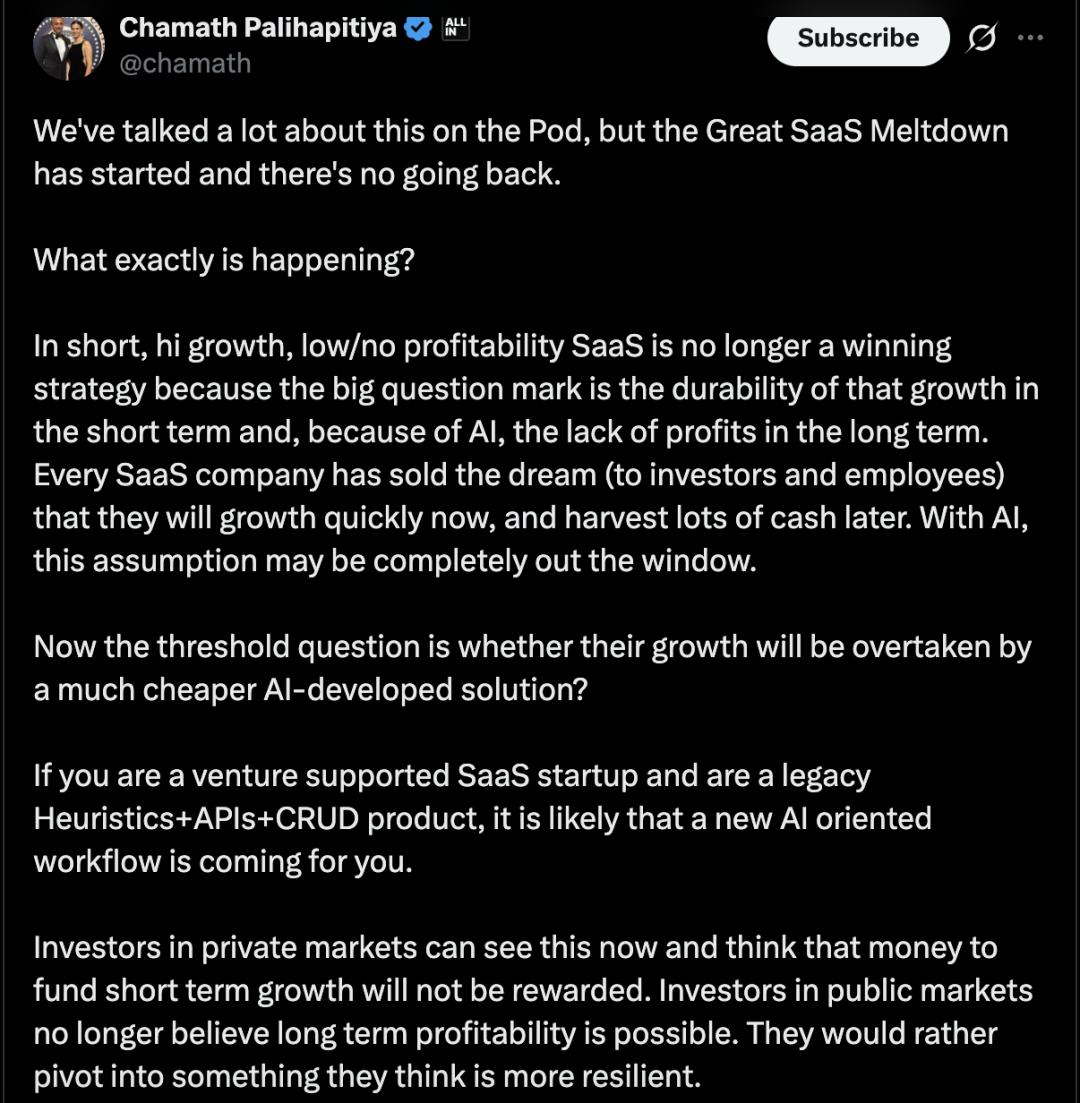
Core Insights - The market capitalization of SaaS, data, and software investment companies has evaporated by approximately $300 billion due to the release of an AI product, rather than disappointing earnings or macroeconomic shocks [1] - The IGV software index has dropped about 30% from its peak in late September, with significant declines in stock prices for major companies like Salesforce, ServiceNow, Adobe, and Workday, which fell around 7%, and Intuit, which plummeted nearly 11% [2] - The average expected price-to-earnings ratio for software companies has sharply decreased from about 39 times to approximately 21 times in just a few months [2] Group 1: Market Dynamics - The crisis in the SaaS sector has been ongoing for several months, with a recent acceleration in the speed of market reactions [2] - Short sellers have profited over $20 billion by betting against traditional SaaS businesses, indicating a significant loss of confidence in the sector [2] - The core assumption being challenged is the sustainability of traditional SaaS growth models, which have been supported by predictable recurring revenues and high switching costs [3][4] Group 2: AI Impact - AI is fundamentally testing the logic behind traditional SaaS models, as modern AI systems can replace many human workflows across various applications [6] - Investors are increasingly concerned that the growth of many SaaS companies may be rapidly supplanted by lower-cost, AI-driven solutions [8] - The emergence of AI-driven workflows is seen as a significant threat to the high-growth, low-profit SaaS development path, leading to a loss of market trust [7] Group 3: Future Outlook - High-profile figures like Chamath Palihapitiya and Microsoft CEO Satya Nadella have expressed that the SaaS model is becoming obsolete, predicting a shift towards AI-driven platforms [12][9] - Goldman Sachs predicts that by the end of the decade, AI agents will capture a disproportionate share of profits in the software market, with over 60% of software economic benefits potentially realized through agent systems rather than traditional SaaS services [15][18] - The transition from static applications to adaptive systems is expected to weaken the economic benefits of traditional software, although overall market growth is anticipated [18][19] Group 4: Investment Sentiment - The private equity and credit markets are reacting to the changing landscape, with investors recognizing that continued funding for short-term growth may not yield returns [8][20] - The prevailing investment logic in the software industry, based on predictable revenues and low customer churn, is being recalibrated in light of AI advancements [20] - MongoDB's CEO emphasizes that true platforms, rather than mere products, will endure in the evolving software landscape, highlighting the importance of adaptability and speed in technology transitions [21][26]



日本芯片,“复仇”韩国?
3 6 Ke· 2026-02-09 05:13
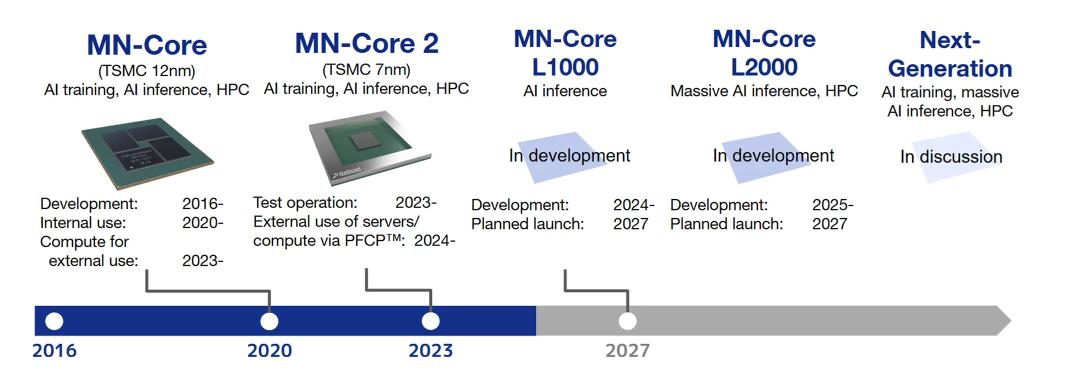
Group 1 - The global storage industry has undergone a significant power shift over the past thirty years, with Japan losing its dominance in the DRAM market to South Korean manufacturers [1][2][10] - In the 1980s, Japanese companies held over 50% of the global DRAM market share, benefiting from a strong manufacturing base and government support for semiconductor development [3][4][8] - The decline of Japanese DRAM dominance began in the 1990s due to economic challenges, structural changes in the DRAM industry, and increased competition from South Korean firms like Samsung and SK Hynix [8][9][10] Group 2 - High Bandwidth Memory (HBM) has emerged as a critical component in AI computing, with South Korean manufacturers capitalizing on their expertise in DRAM technology to dominate this market [12][13] - Japan's current presence in the HBM market is minimal, primarily limited to materials and equipment, lacking significant production capacity or technological advancements [13][14] - The introduction of SAIMEMORY, a subsidiary of SoftBank, aims to innovate in memory technology with the development of Z-Angle Memory (ZAM), which seeks to overcome limitations of current memory architectures [15][16][18] Group 3 - Japan's semiconductor strategy has shifted from attempting to regain past dominance to focusing on securing positions in key technological areas, such as advanced logic processes and packaging technologies [19][20][30] - The establishment of Rapidus represents Japan's effort to maintain a foothold in advanced semiconductor manufacturing, collaborating with IBM and ASML to ensure technological relevance [19][20] - Japanese companies are also investing in AI chip development, with firms like PFN and EdgeCortix leading initiatives to create specialized AI processors for various applications [21][26][28] Group 4 - The overall strategy for Japan's semiconductor industry is to avoid direct competition with South Korea and the U.S. by focusing on niche markets and innovative technologies rather than scale [30][31] - Japan's renewed focus on semiconductor technology reflects a strategic re-evaluation of its position in the global market, aiming to redefine its role in the evolving landscape of AI and memory technologies [29][30]
创业公司忙着掀桌子,老牌巨头如何优雅反杀?
3 6 Ke· 2026-02-09 05:04
Core Insights - Traditional companies can leverage their existing business while innovating, avoiding the pitfalls of solely relying on incremental innovation, which increases the risk of disruption [1][3] - Successful innovation processes in established firms involve three key stages: exploration, commitment, and scaling [3] Exploration: Finding Suitable Startups - Established companies often face challenges in innovation due to their focus on reliable products and services, leading to limited innovation strategies [6] - Many traditional firms have missed opportunities due to their reluctance to embrace disruptive innovations, as exemplified by Blockbuster's failure to acquire Netflix [6] - Successful innovators in established firms follow three practices during the exploration phase to avoid failure [6] Commitment: Leveraging Strengths - Once a breakthrough is achieved, established companies often reassess their roles and increase their commitments, typically through significant investments or acquisitions [10] - Companies should view commitment as a carefully managed upgrade process rather than a binary investment decision [10] - Key questions to assess the viability of an innovation project include the feasibility of the business model, the existence of a supportive ecosystem, customer readiness, and stakeholder support [11][12][13] Scaling: Rapid Action - When a new business model becomes viable, rapid resource mobilization and scaling are crucial for established companies [14] - Investment is often the only factor preventing new enterprises from realizing their full potential, and hesitation can lead to missed market leadership opportunities [14] - Leadership teams can overcome scaling obstacles by involving CFOs early, presenting conservative proposals to the board, avoiding pitfalls of differentiation, and fostering an entrepreneurial spirit [15][16]


前飞书表格技术负责人创业:用AI表格嵌入一切,“喂养”AI丨涌现新项目
3 6 Ke· 2026-02-09 04:26
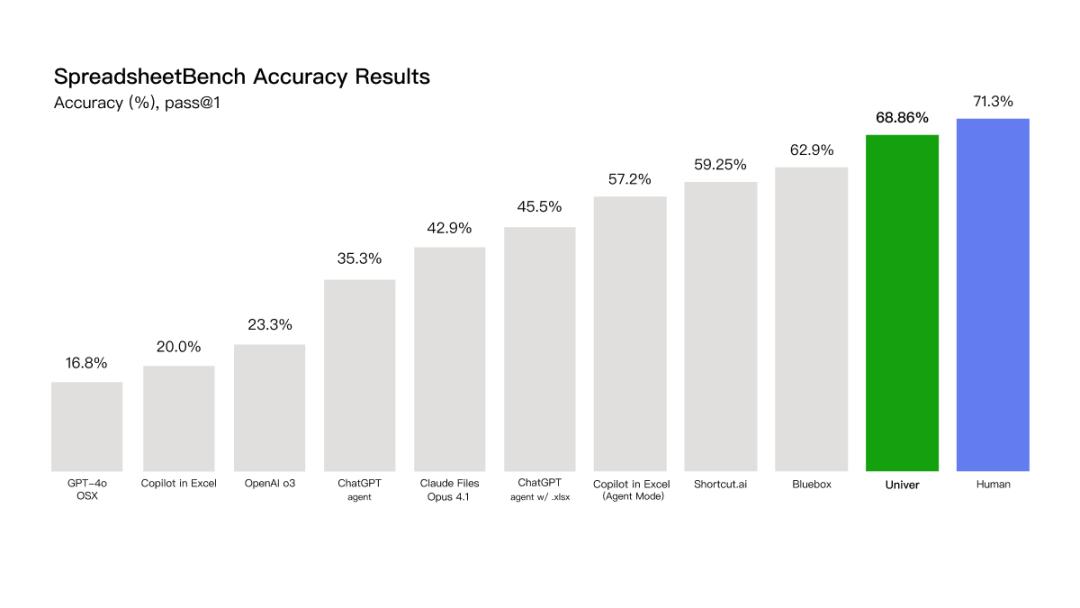
Core Insights - Univer transforms electronic spreadsheets from complex and inefficient tools into an AI-native universal computing engine, relying entirely on its self-developed spreadsheet SDK [2][5][36] Financing Progress - Univer has secured seed round financing, primarily from individual investors [3] Team Introduction - The founder and CEO, Liu Yang, previously led the technology for Feishu's electronic spreadsheets and developed the open-source project Luckysheet, which has over 16,000 stars on GitHub [4] - The server technology lead, Shen Weimin, has a background in Huawei's core network development and was among the first 20 employees at Feishu, contributing to significant user growth [4] - Spreadsheet technology expert, Min Chengcheng, has eight years of experience in spreadsheet development and has held key roles in various projects [4] Product and Business - Univer's product matrix consists of the core Univer engine and various SDK plugins aimed at engineers, along with AI applications like the spreadsheet editing and analysis product "Biao Da" [5][21] - In December 2025, Univer achieved a score of 68.86% in the SpreadsheetBench global evaluation, surpassing ChatGPT Agent and Excel Copilot [5] Product Structure - Univer's product is structured in two layers: the self-developed spreadsheet engine at the bottom and a plugin architecture (SDK) at the top, providing over 100 plugins for core functionalities [17][18] AI Integration - Liu Yang emphasizes that the goal of AI spreadsheet products should be to automate data import, cleaning, and analysis, allowing AI to generate insights directly [9][29] - Univer's self-developed engine allows for better handling of complex data structures, providing more context and accuracy compared to traditional large models [22][34] Market Positioning - Univer aims to position itself as a leader in the AI-native spreadsheet market, with the belief that spreadsheets will become the next major battleground for AI applications [27][35] - The company has already attracted paying customers from North America, Europe, East Asia, and China, including major firms like Novartis and Samsung [26] Future Outlook - The company believes that as AI becomes more integrated into spreadsheets, the role of spreadsheets will shift from being a tool for humans to a tool for AI agents [29][30]