
Tai Mei Ti A P P

Search documents
无人配送车市场刚爆发,就卷成了红海?
Tai Mei Ti A P P· 2025-09-28 00:53
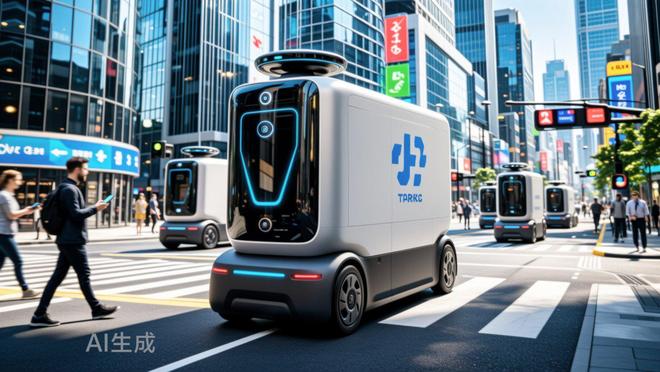
Core Insights - The low-speed unmanned delivery vehicle market is experiencing a surge in demand, with sales expected to exceed 10,000 units this year, indicating a potential for industry scale and profitability [2][4] - The market is becoming increasingly competitive with new entrants, including Desay SV and Youjia Innovation, which are expanding their operations into the unmanned delivery vehicle sector [3][4] - Desay SV is positioning unmanned delivery vehicles as a key growth area, leveraging its 40 years of experience in smart cockpit and driving technology [4][6] Market Potential - The market for unmanned delivery vehicles is estimated to be around 4.68 trillion yuan based on the number of logistics points in China, and between 5.46 trillion to 7.28 trillion yuan based on the number of residential communities [4] - The potential for growth is significant, with estimates suggesting a tenfold increase in the development speed of unmanned delivery vehicles [5] Competitive Landscape - The entry of new players is intensifying competition, leading to a "red ocean" market scenario where differentiation and cost management are critical [3][9] - Desay SV and Youjia Innovation are adopting automotive-grade quality standards in their unmanned delivery vehicles, raising the bar for industry competition [7][9] Financial Performance - Youjia Innovation reported a revenue of 346 million yuan for the first half of 2025, a 32% year-on-year increase, but also saw its losses widen to 162 million yuan [5] - Desay SV achieved a revenue of 14.644 billion yuan in the first half of 2025, a 25.25% increase, with a net profit of 1.223 billion yuan, reflecting a 45.82% growth [6] Industry Trends - The unmanned delivery vehicle sector is witnessing a shift towards "vehicle-grade" standards, which is expected to enhance product quality and increase competition barriers [7] - The market is projected to see significant growth, with estimates of over 30,000 units sold in 2025, driven by major logistics companies ramping up their deployment of unmanned vehicles [8][12] Business Models - The current business models in the unmanned delivery vehicle sector primarily focus on vehicle sales and low-cost hardware, with a lack of innovation leading to increased price competition [9][10] - The emphasis is shifting towards providing operational services that enhance customer experience and reduce costs, rather than merely selling vehicles [10][11] Future Outlook - The demand for unmanned delivery vehicles is expected to grow significantly, with major logistics companies planning to deploy thousands of units in the near future [12] - The industry is on the brink of a turning point, with advancements in technology and supportive policies paving the way for rapid growth [12]


【钛晨报】央行例会最新定调:抓好政策执行,加力支持小微、外贸等;开源鸿蒙新进展:未来可支持全尺寸类人型机器人;零跑汽车回应成失信被执行人
Tai Mei Ti A P P· 2025-09-27 23:29
Monetary Policy Insights - The People's Bank of China indicated that the economy is stabilizing with improvements, but still faces challenges such as insufficient domestic demand and low price levels [2][3] - The third quarter meeting emphasized the need for effective implementation of monetary policy measures to maximize their impact [2][3] - Structural monetary policy tools will be prioritized, with increased financial support for small and micro enterprises and stabilization of foreign trade [2][3] Banking Sector Developments - The meeting highlighted the importance of maintaining liquidity and guiding financial institutions to increase credit supply, aligning social financing growth with economic growth and price expectations [3] - Large banks are encouraged to play a leading role in supporting the real economy, while smaller banks should focus on their core responsibilities [3] Market Stability Measures - The meeting reiterated the need to stabilize the foreign exchange market and prevent excessive fluctuations in the RMB exchange rate [3] - For the bond market, attention will be paid to long-term yield changes to prevent capital turnover issues [3] - The capital market will continue to focus on stability, utilizing mechanisms like stock repurchase and loan support for market maintenance [3] Automotive Industry Updates - Leap Motor addressed its status as a dishonest executor due to a contract dispute, confirming that all payments have been made and operations are normal [5] - Nezha Auto's restructuring process has seen only one potential investor meet the requirements, indicating challenges in attracting investment [5] Technology Sector Developments - OpenAI's CEO stated that general artificial intelligence will arrive by 2030, potentially taking over 30-40% of jobs [4] - The development of humanoid robots is becoming a competitive focus for companies, with significant advancements expected in the next 2-3 years [4] Credit Card Market Changes - Several banks have adjusted credit card overdraft rates, with some offering rates as low as 0%, aiming to attract high-quality customers [8][9] Stock Market Trends - Nine ST companies have seen stock price increases exceeding 100% this year, with significant movements linked to acquisitions and emerging business areas [21] - The Hong Kong stock market is viewed as having substantial upside potential, particularly in the technology sector [22] Regulatory Developments - The Chinese government is implementing export license management for pure electric passenger vehicles starting January 1, 2026, to regulate the market [17] - The National Development and Reform Commission is promoting the construction of a national integrated computing network to support digital economy innovation [18]

天汽模第四次易主终落定!10.3亿卖身乌鲁木齐国资委,汽车模具“老兵”闯关国资时代
Tai Mei Ti A P P· 2025-09-26 14:41
Core Viewpoint - The control transfer of Tianqi Mould (002510.SZ) is nearing completion, marking a significant shift as the company transitions to state-owned capital after multiple failed attempts since its listing in 2010 [2][3]. Group 1: Control Transfer Details - On September 24, Tianqi Mould announced the signing of a share transfer agreement with Xinjiang Jianda Fanyu Industrial Investment Fund, planning to transfer 162 million shares, which represents 15.94% of the total share capital, for a total consideration of 1.03 billion yuan [2][3]. - The transaction will be executed in four phases: 30% in the first phase, 40% in the second, 20% in the third, and 10% in the final phase [3]. - The current chairman, Ren Wei, will relinquish voting rights for approximately 10.24 million shares (1.0085% of total shares) for a period of 36 months post-transaction [3]. Group 2: Background and Context - Tianqi Mould has attempted to change control four times since its listing, with previous attempts failing due to various reasons, including non-payment of deposits and slow progress [3]. - The new controlling entity, Jianda Fanyu, is backed by the Urumqi Economic and Technological Development Zone (Toutunhe District) State-owned Assets Supervision and Administration Commission, which has a strong industrial foundation and several listed companies in the region [5]. Group 3: Financial Performance and Strategic Intent - Tianqi Mould has faced significant financial pressure, with a revenue decline of 15.46% year-on-year to 1.016 billion yuan and a net profit drop of 78.72% to 21.9 million yuan in the first half of 2025 [6]. - The company aims to leverage state-owned capital to improve its operational status and enhance profitability and risk resistance, potentially expanding into new business areas such as aerospace components [6][7]. Group 4: Implications of the Transaction - For the Urumqi Economic and Technological Development Zone, acquiring a publicly listed company represents a breakthrough in connecting regional industrial economy with capital markets [7]. - The involvement of state capital may provide financial relief and facilitate business expansion for Tianqi Mould, enhancing its order acquisition and operational capabilities [7].


山姆、 朴朴们盯上的前置仓,是巨头的游戏
Tai Mei Ti A P P· 2025-09-26 07:57
Core Insights - The article discusses the intense competition in the instant retail market in China, driven by major platforms like Meituan, Taobao Flash Purchase, and JD.com, which are engaged in a subsidy war to capture market share and consumer habits [1][14]. Instant Retail Market Overview - Instant retail has evolved significantly, with a peak of 220 million orders in a single day, indicating a robust market potential for home delivery services [1]. - The market is transitioning from traditional retail to online platforms, with instant retail projected to reach a market size of 3 trillion yuan by 2030, growing at a compound annual growth rate (CAGR) of 25% [8]. Historical Context - The origins of instant retail can be traced back to Webvan in the U.S., which failed due to aggressive expansion without sufficient order density [2][3]. - In China, companies like Meituan and JD.com began exploring instant retail around 2015, with various business models emerging, including platform-based and self-operated front warehouses [3]. Business Models and Performance - Companies like Dingdong Maicai and Pupu Supermarket have shown significant growth, with Dingdong achieving a GMV of 25.56 billion yuan in 2024, a 16.3% increase year-on-year [5]. - Walmart China reported a net sales figure of $5.8 billion (approximately 41.6 billion yuan) for Q2 2025, reflecting a 30.1% year-on-year growth, driven by e-commerce and digital sales [6][7]. Competitive Landscape - Major players are investing heavily in front warehouse models, which have become crucial for efficient logistics and inventory management [4][7]. - The competition is intensifying as new entrants like Pinduoduo and Douyin are expected to join the instant retail battle, further challenging smaller players [14]. Strategic Responses - Companies are adopting various strategies to enhance their market positions, such as establishing brand-specific near-field flagship stores and integrating services across platforms [11][12]. - Meituan has a significant advantage with approximately 15,000 comprehensive flash warehouses, while Taobao Flash Purchase has over 20,000, indicating a strong logistical network [12]. Future Outlook - The article suggests that while instant retail currently addresses urgent consumer needs, it will increasingly compete with traditional retail and long-distance e-commerce for market share [10]. - Smaller players may need to focus on niche markets and operational efficiencies to survive against the dominant platforms [16].




阿里京东千亿对战!下一个十年的中国AI如何“出奇制胜”
Tai Mei Ti A P P· 2025-09-26 06:47
Core Insights - The core focus of the articles is the competition between Alibaba and JD.com in the AI sector, highlighting their respective strategies and investments in AI technologies and applications [2][3][9]. Group 1: Company Strategies - JD.com aims to invest in AI to create a trillion-scale ecosystem over the next three years, with a cumulative R&D investment exceeding 150 billion yuan since its technological transformation began in 2017 [2]. - Alibaba is increasing its capital expenditure to 380 billion yuan, focusing on developing Super AI (ASI) and positioning its model as the Android of the AI era [2][9]. - JD.com emphasizes sustainable AI development that creates real value for industries, rather than merely pursuing operational efficiency [3][11]. Group 2: AI Product Development - JD.com introduced new AI products under the JoyAI brand, including "京犀," "他她它," and "JoyInside," targeting applications in retail, health, logistics, and industrial sectors [2][11]. - JD's open-source model inference engine, Oxygent-9N-xLLM, has reportedly improved efficiency by five times and reduced costs by 90% in its retail operations [3]. - Alibaba's "通义千问" has released over 300 models, achieving over 600 million downloads globally, making it the largest open-source model matrix [9][10]. Group 3: Market Trends and Investment - The global AI industry has seen over 400 billion dollars in investments in the past year, with projections of over 4 trillion dollars in cumulative investments over the next five years [9]. - The market capitalization of major U.S. tech companies has increased by 10.9 trillion dollars since the launch of ChatGPT, with Nvidia's valuation rising by 3.9 trillion dollars [5]. - The competition between Alibaba and JD.com is intensifying as both companies seek to leverage their existing user bases and traffic from the mobile internet era to innovate in AI applications [9][16]. Group 4: Technological Advancements - JD.com's JoyAI model has achieved a performance improvement of 1.8 times and ranks second globally in a benchmark evaluation for large models [12]. - The concept of "embodied intelligence" is being explored by JD.com, aiming to integrate AI with robotics for practical applications in daily life [13][17]. - JD.com is focusing on transforming its supply chain through AI, aiming to unlock more value in the AI era [10][11].
减肥市场下一个爆点明确了
Tai Mei Ti A P P· 2025-09-26 03:54
Core Insights - Amylin, a previously overlooked target, is emerging as a significant player in the multi-billion dollar weight loss market, particularly with the recent data from Novo Nordisk's cagrilintide and its combination with semaglutide showing promising weight loss results [1][2][3] Group 1: Clinical Developments - Novo Nordisk's cagrilintide achieved an average weight loss of 11.8% after 68 weeks of treatment in the REDEFINE 1 study [1] - The combination formulation CagriSema, which includes cagrilintide and semaglutide, demonstrated an average weight loss of 20.4%, significantly outperforming monotherapy [1][9] - Novo Nordisk has registered a Phase 2 clinical trial for NNC0662-0419, a GLP-1/GIP/Amylin triple agonist [1] Group 2: Industry Movements - Pfizer announced a $4.9 billion cash acquisition of Metsera to strengthen its weight loss pipeline, leading to a significant surge in Metsera's stock price [1] - Major pharmaceutical companies like Roche, AstraZeneca, Eli Lilly, and AbbVie are increasingly investing in Amylin through collaborations and acquisitions [2][11] Group 3: Mechanism and Competitive Advantage - Amylin is not a new target; it was discovered in 1987 but faced challenges in earlier formulations due to short half-lives and side effects [3][4] - New generation Amylin analogs have significantly improved half-lives, allowing for less frequent dosing, which enhances patient compliance [5][10] - Amylin's mechanism offers complementary effects to GLP-1, potentially leading to better patient outcomes through combined therapies [8][9] Group 4: Future Directions - The industry consensus is shifting towards collaborative strategies rather than isolated competition, with companies exploring combinations of Amylin and GLP-1 for enhanced efficacy [12][16] - Innovations in drug delivery systems, such as long-acting formulations and oral delivery methods, are being prioritized to improve patient adherence and treatment outcomes [15][16]


阿里ASI时代下,首个影像智算一体机发布
Tai Mei Ti A P P· 2025-09-26 02:13
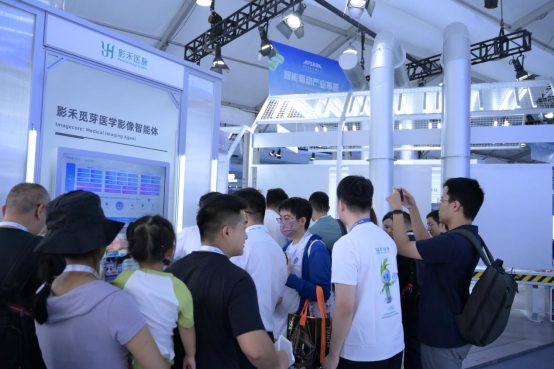
Core Insights - The State Council has issued the "Opinions on Deepening the Implementation of 'Artificial Intelligence+' Actions," indicating that AI will be a key digital technology for various industries moving forward [1] - The launch of the "Medical Imaging Large Model Intelligent Computing Integrated Machine MIIA-X1" by Yipai Sunshine and Yinghe Medical, in collaboration with Alibaba Cloud, marks a significant advancement in AI applications in the medical imaging sector [1][12] - The MIIA-X1 represents a shift from the 1.0 era of "single-scenario tool" to a 2.0 phase characterized by a "data-model-computing power" integration [1][5] Group 1: Market Trends - The concept of integrated machines has gained traction following the emergence of large models, with enterprises preferring local deployment for security and cost-effectiveness [2][3] - The demand for integrated machines has surged across various industries, particularly in finance, education, healthcare, and government sectors, driven by the need for data security [3][15] - Despite the initial excitement, many enterprises face challenges in effectively utilizing integrated machines, leading to underutilization [3][5] Group 2: Technological Advancements - The "影禾觅芽®" model, developed by Yinghe Medical, utilizes millions of multimodal medical imaging data for training, significantly enhancing the capabilities of AI in medical imaging [6][13] - The MIIA-X1 integrates the "影禾觅芽®" model with hardware, allowing for a comprehensive solution that adapts AI to hospital needs rather than the other way around [12][14] - The collaboration between Yipai Sunshine, Yinghe Medical, and Alibaba Cloud aims to transition medical AI from experimental technology to a standard clinical tool [14][15] Group 3: Industry Applications - AI's integration into the medical field is expected to enhance efficiency, reduce patient wait times, and improve overall healthcare experiences [15][16] - Leading hospitals are already implementing large models for various applications, such as personalized treatment plans and enhanced diagnostic capabilities [16][17] - The future development of AI in healthcare will focus on building standardized research databases, optimizing model training efficiency, and developing specialized AI tools for specific medical needs [17]
品茗科技资本急转弯:易主落空引“国家队”AI战投,细节反常留悬念 |并购一线
Tai Mei Ti A P P· 2025-09-26 01:41
Core Viewpoint - The ownership change plan of Pinming Technology (688109.SH) has been reversed, with the company terminating the control change due to disagreements between the actual controller and the transaction party. Instead, a share transfer agreement was signed with Tongzhi Qingyan, which will become the second-largest shareholder with a 15.9206% stake for a total price of 495 million yuan [2][4]. Group 1: Ownership Change and Market Reaction - The share transfer agreement involves the actual controller and four other shareholders transferring a total of 15.9206% of shares at a price of 39.504 yuan per share, approximately 20% lower than the closing price before the suspension [4][5]. - Despite the termination of the ownership change plan, the market reacted positively, with Pinming Technology's stock hitting the daily limit after resuming trading [2][4]. Group 2: Financial Performance and Future Prospects - Pinming Technology has shown a significant turnaround in performance, with a 270% increase in net profit in the first half of the year, despite a weak real estate market affecting revenue growth [4][6]. - The company has participated in major projects like the Yajiang Hydropower Station and is actively looking for merger and acquisition opportunities, indicating potential for future growth [4][6]. Group 3: Strategic Investment and Terms - Tongzhi Qingyan, as a strategic investor, has committed to not seeking control of the company for three years, despite holding a stake close to that of the actual controller [2][7]. - The performance commitment set by Tongzhi Qingyan is notably low, only requiring positive net profit over the next three years, which is considered easily achievable given the company's recent performance [3][7]. Group 4: Background of Tongzhi Qingyan - Tongzhi Qingyan is backed by the Beijing General Artificial Intelligence Research Institute, which is a non-profit research institution supported by the Beijing municipal government, focusing on strategic and foundational technological innovations in the field of general artificial intelligence [8][10]. - The institute has established collaborations with prestigious universities and has a strong research focus, indicating a potential for future synergies with Pinming Technology [8][10].


常青科技百亿TMA豪赌:纸面合理与现实挑战的AB面 | 深度
Tai Mei Ti A P P· 2025-09-26 00:54
Core Viewpoint - The price of trimellitic anhydride (TMA) has significantly dropped, losing over 72% from its peak last year, raising concerns about the viability of Changqing Technology's ambitious 10 billion TMA project amidst a challenging market environment [2][3]. Group 1: Market Conditions - In September 2025, the mainstream transaction price of TMA in East China fell to 15,500-15,600 yuan/ton, reflecting a drastic decline from previous highs [2][14]. - The price of TMA surged to over 50,000 yuan/ton in 2024 due to global supply disruptions, but has since plummeted, with a 50% drop noted from early 2025 [13][17]. - The TMA market is facing a potential oversupply as multiple companies are expanding production, leading to fears of a price drop and supply-demand imbalance by 2026 [12][19]. Group 2: Company Strategy and Financials - Changqing Technology initiated an 8 billion convertible bond financing for its TMA project, which was approved by shareholders on September 19 [2]. - The company’s total assets are only 2.56 billion yuan, while the first phase of the TMA project alone requires an investment of 3 billion yuan, raising concerns about financial sustainability [25]. - The company has reported a significant decline in revenue and net profit, with a year-on-year decrease of 10.67% and 31.89% respectively, indicating weakened profitability [25]. Group 3: Competitive Landscape - The closure of INEOS's TMA production facility has created a temporary supply gap, but the subsequent market response has led to aggressive expansions by domestic companies [6][8]. - Other companies like Zhengdan Co. and Baichuan Co. are also expanding their TMA production capacities, which could further saturate the market [9][12]. - The market's cautious sentiment towards Changqing Technology is reflected in its stock performance, with institutional holdings below 5%, contrasting with competitors like Zhengdan Co. which have higher institutional support [21][23].


两日股价累跌30%,为何辉瑞“扇动翅膀”,博瑞医药就处在风波中?
Tai Mei Ti A P P· 2025-09-26 00:32
Core Viewpoint - The significant drop in the stock price of Borui Pharmaceutical is linked to Pfizer's acquisition of Metsera, which has raised concerns about the competitive landscape in the GLP-1 drug market [1][2][4]. Group 1: Stock Performance and Market Reaction - Borui Pharmaceutical's stock price has fallen by 70% over 30 consecutive trading days, with a 30% drop occurring within just two days following the announcement of Pfizer's acquisition [1]. - The latest rolling price-to-earnings ratio for Borui Pharmaceutical stands at 313.01, significantly higher than the industry average of 31.43 [1]. - The external factors, particularly the Pfizer acquisition, are identified as the primary cause of the stock price decline, as Borui's operational status remains normal [1]. Group 2: Pfizer's Acquisition of Metsera - Pfizer announced the acquisition of Metsera for up to $7.3 billion, focusing on developing next-generation treatments for obesity and metabolic diseases [2][4]. - Metsera's lead drug, MET-097i, is a GLP-1 receptor agonist showing promising results in clinical trials, with participants experiencing an average weight loss of 11.3% [2][3]. - The acquisition reflects Pfizer's strategic move to strengthen its position in the GLP-1 market, especially after facing setbacks with its own GLP-1 drug developments [3][4]. Group 3: Borui Pharmaceutical's Potential - Borui Pharmaceutical is recognized as a potential player in the GLP-1 space, with its core product BGM0504 showing significant efficacy in clinical trials for type 2 diabetes and weight loss [6][8]. - BGM0504 has demonstrated superior results in reducing HbA1c levels compared to placebo and has shown promising weight loss effects in overweight participants [7][8]. - Despite its strong R&D capabilities, Borui faces uncertainty regarding its inclusion in multinational corporations' acquisition lists amid the ongoing "buying spree" in the innovative drug sector [8].
