Tai Mei Ti A P P

Search documents
通用AI智能体公司Manus首次公布财务数据:收入运行率超6亿元
Tai Mei Ti A P P· 2025-08-20 05:13
Group 1 - Manus has reported a revenue run rate (RRR) of $90 million since its launch in March, equivalent to approximately 646 million RMB [2] - The revenue run rate is a financial metric used by startups to forecast annual revenue, calculated by multiplying monthly revenue by 12 [2] - Manus co-founder Xiao Hong clarified that revenue does not equal cash income, as many AI products offer annual payment options that are considered as deposits rather than revenue [2] Group 2 - Manus is backed by the company Butterfly Effect, with its core product being Monica.im, and the domestic entity is Beijing Butterfly Effect Technology Co., Ltd., established in April 2022 [5] - The company completed Series A financing in 2024, with investors including Tencent and ZhenFund [5] - Manus launched its general AI agent product in March 2025, claiming to be the world's first general-purpose AI agent capable of handling complex tasks and achieving state-of-the-art results in GAIA benchmark tests [5] Group 3 - Manus initially adopted an invitation-only registration system, leading to high demand for access codes, which were reportedly sold for up to 100,000 RMB on second-hand trading platforms [5] - The company has relocated its headquarters to Singapore, with a partner stating that Manus represents the next "ChatGPT moment" in AI development [5]


中美AI竞争加剧:OpenAI对手智谱发布智能体应用,奥尔特曼称美国低估中国AI威胁
Tai Mei Ti A P P· 2025-08-20 05:13
Core Insights - The article discusses the emergence of AI agents, highlighting the launch of Z.ai's AutoGLM 2.0, which is a comprehensive AI agent application capable of performing various tasks across multiple platforms [3][10]. - OpenAI's CEO Sam Altman expresses concerns about China's rapid advancements in AI, indicating that the competition between the US and China in AI is more complex than a simple lead-lag scenario [5][17]. Company Developments - Z.ai has released AutoGLM 2.0, which operates on domestic models GLM-4.5 and GLM-4.5V, and is designed to assist users in daily tasks, functioning as a multi-agent system [3][10]. - The company has received significant funding, completing approximately 11 financing rounds with a total exceeding 12.5 billion yuan, backed by major investors including Sequoia China and Hillhouse Capital [7]. - Z.ai's AutoGLM 2.0 has shown superior performance in benchmark tests compared to competitors like ChatGPT Agent, indicating its potential as a versatile AI tool [12][11]. Industry Trends - The AI industry in China is projected to exceed 700 billion yuan in 2024, maintaining a growth rate of over 20% annually, reflecting the increasing competitiveness in AI applications [5]. - The market for AI agents is evolving, with major tech companies like Baidu, Alibaba, and Tencent intensifying their focus on collaborative AI systems, marking a shift from isolated AI applications to integrated solutions [6][9]. - OpenAI's recent strategy includes releasing open-weight models to counter the growing influence of Chinese AI technologies, indicating a shift in the competitive landscape [18][19].

AI圈“爱马仕”Manus:裁员跑路,神话坍塌
Tai Mei Ti A P P· 2025-08-20 04:54
Core Insights - Manus, an AI application, gained significant attention for its capabilities in analyzing stocks, organizing invoices, and generating financial reports, leading to a valuation of $500 million after a $75 million funding round from Benchmark [1][5] - However, the company faced rapid decline, relocating its headquarters to Singapore and laying off a significant portion of its workforce, raising concerns about its future viability [2][6][10] Group 1: Company Overview - Manus was founded by Xiao Hong, who previously developed successful AI products and aimed to create a "general intelligent agent" capable of complex tasks [3][11] - The application generated immense hype, with invitation codes being sold for as much as 50,000 yuan, indicating high demand and interest [4][5] Group 2: Funding and Investment Challenges - The investment from Benchmark, a prominent Silicon Valley VC, was initially seen as a strong endorsement, but subsequent U.S. government restrictions on capital investment in Chinese tech raised concerns about the funding's future [9][10] - The relocation to Singapore was a strategic move to satisfy U.S. investment conditions, but it led to operational challenges and potential withdrawal of funding [6][9] Group 3: Market Competition and Product Viability - The domestic AI market has become increasingly competitive, with numerous alternatives emerging, leading to a significant drop in Manus's user engagement and brand reputation [12][15] - Manus's reliance on external APIs for functionality poses a long-term risk, especially if competitors like OpenAI enter the agent space directly [13][15]
溢价超260%再跨界豪赌,梅雁吉祥遭监管机构火速问询 | 并购一线
Tai Mei Ti A P P· 2025-08-19 13:43
Core Viewpoint - The company, Meiyan Jixiang, is planning a high-premium acquisition of Shanghai Xinjiyu Information Technology Service Co., aiming to diversify its business despite facing significant financial challenges and past acquisition failures [2][4][8]. Group 1: Acquisition Details - Meiyan Jixiang intends to spend 106 million yuan to acquire 65% of Shanghai Xinjiyu, representing a premium of over 260% [2][4]. - The acquisition is expected to create approximately 76 million yuan in goodwill, raising concerns about future performance uncertainty [6][8]. - Shanghai Xinjiyu reported projected revenues of 170 million yuan for 2024 and a net profit of 7.44 million yuan, which may not significantly alleviate Meiyan Jixiang's losses [4][5]. Group 2: Financial Performance - Meiyan Jixiang has reported a net loss of 82.82 million yuan for 2024, continuing a trend of losses for two consecutive years [7]. - In Q1 2025, the company experienced a revenue increase of 58.59%, but net losses deepened to 16.52 million yuan, indicating ongoing financial struggles [7]. - The company's traditional hydropower business remains its only profitable segment, generating 224 million yuan in revenue with a gross margin of 40.9% [7]. Group 3: Historical Context and Challenges - The company previously acquired Guangzhou Guoce, which failed to meet performance targets, contributing to its current financial difficulties [8][9]. - The new acquisition mirrors past strategies aimed at finding new profit growth points, raising questions about the sustainability of such approaches [8][9]. - Regulatory scrutiny has intensified, with the Shanghai Stock Exchange questioning the necessity and valuation of the new acquisition [9].

靠平价车“小赚”3000万,零跑汽车下一关要卖够百万辆|钛度车库
Tai Mei Ti A P P· 2025-08-19 13:18
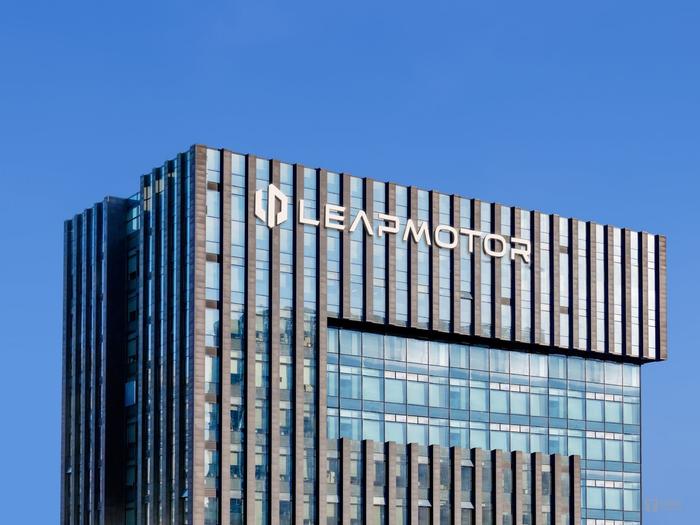
Core Insights - Leap Motor has reported a strong half-year performance for 2025, achieving revenue of 24.25 billion yuan and a net profit of 33 million yuan, becoming the second new force in China's automotive industry to achieve profitability after Li Auto [2] - The company's profitability is based on a strategy of offering affordable models with an average price of around 100,000 yuan, challenging the notion that new energy vehicle companies must focus on high-end models to be profitable [2][3] - Despite its success, Leap Motor faces challenges in maintaining its profitability, improving gross margins, and increasing R&D investment while aiming for ambitious sales targets [2][6] Revenue and Sales Performance - Leap Motor's sales strategy focuses on high cost-performance vehicles, with models like the B01 sedan and B10 SUV achieving rapid sales growth, including over 22,170 vehicles delivered in the first half of the year, a 155.7% increase year-on-year [3][4] - The company has set an aggressive sales target for 2025, increasing its guidance from 500,000-600,000 units to 580,000-650,000 units, with a long-term goal of reaching one million units sold by 2026 [6][7] Strategic Partnerships and Global Expansion - Strategic partnerships, such as the collaboration with Stellantis, have been crucial for Leap Motor, generating 1.5 billion yuan in carbon credit trading income and facilitating overseas sales through shared channels [4][10] - Leap Motor has begun to establish a presence in international markets, exporting 20,375 vehicles in the first half of 2025 and achieving over 1% market share in Germany's BEV market [10][11] Challenges and Future Outlook - The company faces challenges in gross margin improvement, with a gross margin of approximately 12% in the first half of 2025, which is lower than competitors like Tesla and Li Auto [4][5] - Leap Motor's R&D spending of 1.89 billion yuan in the first half of 2025 is still lower than that of competitors, raising concerns about potential technological gaps in the future [5][6] - The company is also navigating the complexities of balancing short-term sales growth with long-term brand building, particularly in the competitive European market [11]

汽车平均售价达到28.7万元,卢伟冰:小米汽车已经成为高端车
Tai Mei Ti A P P· 2025-08-19 12:42
Core Insights - Xiaomi's automotive business has significantly contributed to its rapid revenue growth, with a notable increase in performance metrics in Q2 2023 [2][3] Financial Performance - Xiaomi reported Q2 revenue of 116 billion yuan, a year-on-year increase of 30.5%, marking the third consecutive quarter of exceeding 100 billion yuan [2] - Adjusted net profit for Q2 reached 10.8 billion yuan, up 75.4% year-on-year, continuing a trend of surpassing 10 billion yuan for two consecutive quarters [2] - The smartphone business generated 45.5 billion yuan in revenue, a slight decline of 2.1% year-on-year, while IoT and lifestyle products revenue was 38.7 billion yuan, up 44.7% [2] Automotive Business - Xiaomi's automotive revenue for Q2 was 20.6 billion yuan, reflecting a remarkable year-on-year growth of 230.3% [2] - The average selling price of Xiaomi cars reached 253,000 yuan, which could rise to 287,000 yuan when tax is included, positioning Xiaomi in the high-end vehicle market [2] - A total of 81,302 cars were sold in Q2, with over 157,000 units delivered in the first half of the year [3] IoT and Home Appliances - The IoT and lifestyle products segment, including major appliances, saw significant growth, with air conditioning units shipped exceeding 5.4 million, a year-on-year increase of over 60% [4] - Xiaomi's refrigerator and washing machine shipments also showed strong growth, with increases of over 25% and 45% respectively [4] - The company plans to expand its home appliance business internationally, targeting markets in Southeast Asia and Europe by 2025 [4] Chip Development - Xiaomi's self-developed chip, the Xuanjie O1, has exceeded expectations, indicating the company's growing capabilities in chip-level platform development [5] - The company aims to increase its market share in the Chinese smartphone market by 1% annually and targets global smartphone sales of 200 million units per year [5]


一箭7星发射成功,中科宇航的力箭一号已累计发射70颗卫星
Tai Mei Ti A P P· 2025-08-19 12:31
Core Viewpoint - Zhongke Aerospace successfully launched the Lijian-1 Yao-10 rocket, placing seven satellites into orbit, marking a significant achievement in the commercial space launch sector [1][4]. Company Overview - Zhongke Aerospace, established in 2018, specializes in the development of medium to large rockets, customized space launches, suborbital scientific experiments, and space tourism [1][2]. - The company has achieved a market share of over 70 satellites launched, with a total payload mass exceeding 7 tons [1]. - The Lijian-1 rocket is noted for its cost-effective launch capabilities, with costs reduced to below $10,000 per kilogram [5]. Recent Developments - The Lijian-1 Yao-10 mission was the eighth flight of the Lijian-1 rocket, which has now demonstrated the ability to support the launch of over 50 satellites in a single mission [1][5]. - Zhongke Aerospace has initiated the development of the Lijian-2 liquid rocket, aiming to enhance cargo transport efficiency to China's space station [1][2]. - The company is preparing for an IPO on the Sci-Tech Innovation Board, with the process officially starting as of August 12, 2023 [3]. Market Position - Zhongke Aerospace is the only private commercial rocket company in China to have achieved multiple foreign payload launches, with services extending across China, Europe, North America, South Asia, and the Middle East [2]. - The commercial space industry in China is projected to reach a market size of 2.8 trillion yuan by 2025, with a significant increase in the number of private space companies [6][7]. Industry Insights - The commercial space sector is still in its early stages, with a need for improved profitability models beyond just launch services [7]. - The industry faces challenges in achieving a mature supply chain and reducing the gap in reusable, low-cost rocket technology compared to the United States [7].
“雅江水电牛股”西藏天路上半年经营恶化,题材炒作难掩盈利短板|看财报
Tai Mei Ti A P P· 2025-08-19 12:10
Core Viewpoint - The financial report of Tibet Tianlu (600326.SH) reveals the essence of speculation surrounding the "Yajiang Hydropower" concept, showing a significant disconnect between stock price and fundamental performance, with a net loss of 112 million yuan in the first half of 2025, worsening from the previous year [2][3] Financial Performance - In the first half of 2025, Tibet Tianlu achieved revenue of approximately 1.409 billion yuan, representing a year-on-year growth of 19.88%, but the net loss attributable to shareholders was 112 million yuan, an increase in loss of 45 million yuan compared to the same period last year [3][4] - The company reported a decline in net profit from 2022 to 2024, with losses of 498 million yuan, 532 million yuan, and 104 million yuan respectively, indicating a consistent downward trend in profitability [3][4] Business Segments - The main business of Tibet Tianlu includes engineering contracting, cement production, and sales, with cement and cement products accounting for over 75% of revenue in 2024 [3][4] - The construction segment reported revenue of 334 million yuan in the first half of 2025, but incurred a loss of 56.68 million yuan due to increased bad debt provisions and impairment losses [5][7] Market Conditions - The cement industry is facing significant pressure due to declining demand in the real estate sector and weak infrastructure investment, with over half of the A-share cement companies reporting losses in the first half of 2025 [4][6] - The competitive landscape in Tibet remains challenging, with external cement supplies continuing to flood the market, leading to a decline in cement prices [4][6] Cost Structure - Despite a slight increase in gross margin from 10.48% to 11.63%, the net margin worsened from -7.93% to -9.40%, indicating persistent cost issues [7] - High management and financial costs have significantly eroded profits, with management expenses reaching 40.54 million yuan and financial expenses at 30.68 million yuan in the first half of 2025 [7] Future Prospects - The anticipated "Yajiang Hydropower" project, valued at 1.2 trillion yuan, is expected to boost local cement demand, with an estimated consumption of 30-35 million tons of cement [8] - While Tibet Tianlu has a local advantage, the actual impact on its performance remains uncertain, dependent on the timing of industry demand recovery and the company's ability to capitalize on the hydropower project [8]


外资银行的中国变局:关网点、深耕高端财富、转战中西部
Tai Mei Ti A P P· 2025-08-19 09:43
Core Insights - Foreign banks in China are undergoing significant changes, with over 30 branches closed since early 2025, indicating a strategic shift in their operations [1][2] - The focus is moving from traditional retail banking to high-end wealth management services, with flagship branches and private wealth management centers being established in core cities [1][3] Branch Closure and Restructuring - In 2025, 34 foreign bank branches closed, with Standard Chartered and Citibank leading in closures, shutting down 7 branches each [2] - HSBC has closed 27 branches since 2022, with 4 closures in 2025 alone, reflecting a trend of reducing physical presence in developed economic areas [2][3] Market Competition and Digital Transformation - Increased competition from domestic banks in retail banking has pressured foreign banks, leading to a decline in their market share in traditional savings [3] - The digital transformation is changing customer behavior, with a significant shift towards online banking, reducing reliance on physical branches [3][7] Focus on Central and Western Regions - Foreign banks are shifting their focus to China's central and western regions, where economic growth is outpacing the east, particularly in sectors like semiconductors and high-end manufacturing [3][4] - Standard Chartered opened its Hefei branch in April 2025, marking its first new provincial branch in nearly nine years [4] Cost Efficiency and Operational Changes - HSBC's flagship store in Chengdu is four times larger than traditional branches but has reduced operational costs by 40% [4] - The restructuring includes significant layoffs, particularly in Citibank's technology department, as part of a strategy to streamline operations and reduce costs [5][6] Strategic Shift to Wealth Management - Foreign banks are focusing on high-net-worth clients, with HSBC's flagship store achieving asset scales three times that of traditional branches [7] - The growth of wealth management services is supported by government policies that facilitate foreign banks' expansion in this sector [7][8] Digital Innovation and Green Finance - Digital innovation is a core strategy for foreign banks, with HSBC aiming to increase blockchain trade financing coverage from 35% to 70% [8] - Green finance initiatives are also being prioritized, with HSBC supporting climate solutions and Standard Chartered aiming for 30% of its loans to be green by 2030 [9] Conclusion - The transformation of foreign banks in China reflects a broader trend of moving from extensive physical networks to focused, high-value services, leveraging digital tools and targeting emerging markets in the central and western regions [10]

国产航空动力电池破解“不可达三角”,固定翼飞机迎来量产关键助力
Tai Mei Ti A P P· 2025-08-19 07:48
Core Viewpoint - The breakthrough in aviation power battery technology by Zhengli New Energy marks a significant step towards the commercialization of electric aviation in China, with the successful certification of the RX1E electric fixed-wing aircraft's battery system [1][3][5] Group 1: Technological Breakthrough - Aviation power batteries have long faced the "unreachable triangle" of high energy density, high discharge rate, and high safety, which directly impacts the commercialization process [1][6] - Zhengli New Energy has achieved a key technological breakthrough through its "LISA-321" R&D strategy, launching the industry's first battery that integrates high safety, high energy density, high power, and fast charging capabilities [6][7] - The new battery can achieve an energy density exceeding 320Wh/kg, support 12C high discharge at 20% low battery, and charge 80% in 15 minutes, meeting ppb-level aviation safety standards [7] Group 2: Industry Impact - The successful certification of the RX1E electric fixed-wing aircraft's battery system signifies that Zhengli New Energy has met the stringent quality management requirements set by the Civil Aviation Administration of China, establishing a leading position in the industry [3][5] - This achievement enhances China's self-sufficiency in key components for electric aviation, breaking foreign technology monopolies and increasing China's influence in the global new energy aviation industry [5] - Zhengli New Energy's collaboration with domestic companies, such as Zero Gravity Aircraft Industry, aims to shift the industry from "catching up" to "leading," accelerating the development of China's low-altitude economy [7]