Tai Mei Ti A P P

Search documents
赢时胜实控人唐球套现过亿,不久前因信披问题被监管
Tai Mei Ti A P P· 2025-12-13 11:16
Core Viewpoint - The stock price of Ying Shisheng has surged significantly due to the strong rise in the financial technology index, despite the company facing recent regulatory scrutiny and poor financial performance [1][2][3]. Group 1: Stock Performance and Trading Activity - Ying Shisheng's stock price experienced a cumulative increase of over 30% on December 5 and December 8, leading to an announcement regarding abnormal trading fluctuations [1][3]. - The actual controller of the company, Tang Qiu, cashed out over 100 million yuan during this stock price surge, having reduced his holdings by 211.7 million shares, which is 0.28% of the total share capital [4]. - The company confirmed that there were no undisclosed matters that could significantly impact the stock price [3]. Group 2: Financial Performance - For the first three quarters of 2025, Ying Shisheng reported revenue of 937 million yuan, a year-on-year decrease of 5.18%, and a net loss of 43 million yuan, a decline of 210.75% [2][14]. - The company's gross profit margin decreased by 1.27 percentage points to 42.96%, and the net profit margin was -5.01%, indicating a significant reduction in profitability [14][15]. - The cash flow situation is concerning, with a net cash outflow from operating activities of 212 million yuan, a year-on-year decrease of 23.53% [15]. Group 3: Regulatory Issues - Ying Shisheng was recently subjected to administrative supervision by the Shenzhen Securities Regulatory Commission due to accounting issues, which required the company to submit a corrective report [2][6][7]. - The company acknowledged multiple accounting irregularities, including improper revenue recognition and inadequate impairment assessments for long-term investments [7]. - A corrective report was submitted on November 30, indicating that the company has completed the required rectifications and will continue to implement corrective measures [8]. Group 4: Market Position and Competition - Ying Shisheng has been a key player in providing IT solutions for the financial sector, focusing on asset management and custody services [11]. - However, its financial performance has been underwhelming compared to competitors like Hengsheng Electronics, which reported a gross profit margin of 69% and a net profit of 455 million yuan for the same period [15].

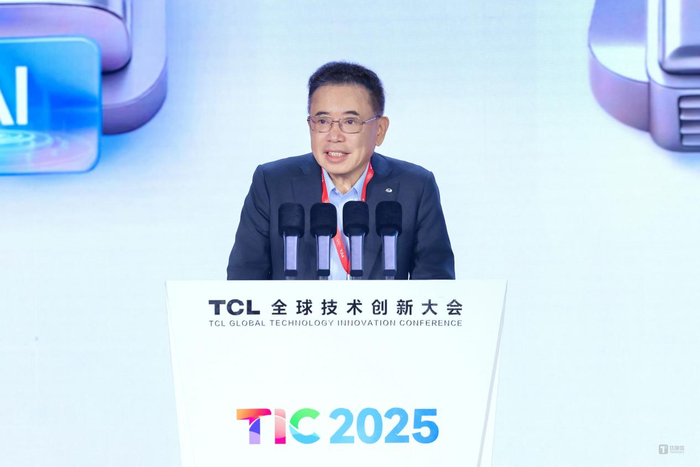
TCL李东生:2025年,AI落地带来了超10亿综合效益
Tai Mei Ti A P P· 2025-12-12 08:57
Core Insights - TCL is focusing on the practical application of AI technology, emphasizing the theme "AI for Real" at the 2025 Global Technology Innovation Conference, aiming to create tangible value rather than just theoretical concepts [2][3] - The company plans to increase its R&D expenditure to 15 billion yuan by 2025, with a total of 110,000 patent applications, including 19,000 PCT patents, indicating a strong commitment to innovation [3][4] Group 1 - The rapid development of AI technology is reshaping the global industrial landscape and is seen as a key competitive factor for future enterprises [2] - TCL has made significant strides in key core technology areas, transitioning from following to leading in some aspects, although it acknowledges a gap compared to international industry benchmarks [2] - The focus of global AI competition is currently on model parameters and the expansion of computing infrastructure, leading to issues such as resource waste and lack of practical application [2] Group 2 - TCL's product lineup, including TVs, smartphones, and AR/AI glasses, has integrated AI technology, enhancing the core value of consumer products [4] - In the semiconductor display sector, TCL's X-Intelligence 3.0 model ranks first in the display field and 11th globally, demonstrating its advanced capabilities in product development and efficiency improvements [4] - The company has initiated a global AI talent recruitment plan to enhance its technological innovation and collaborative capabilities within the industry [4]


GPT-5.2获封“最强打工人”,谷歌同日以Gemini“性价比”系列应战
Tai Mei Ti A P P· 2025-12-12 08:22
Core Insights - OpenAI's CEO Sam Altman expressed strong optimism about the company's R&D and product roadmap during the launch of GPT-5.2, despite facing unprecedented competition from rivals like Google and Anthropic [2][3] - The release of GPT-5.2 has been positioned as a significant advancement, with performance metrics surpassing competitors, particularly in professional applications [4][5] Product Performance - GPT-5.2 was launched with three different model tiers: Instant, Thinking, and Pro, achieving benchmark scores that outperformed competitors like Gemini 3 PRO and Claude Opus 4.5 [4] - In the GPQA Diamond evaluation, GPT-5.2 scored 92.4%, a notable increase from GPT-5.1's 88.1% and higher than Gemini 3 PRO's 91.9% [4] - The model achieved a perfect score in the AIME 2025 competition, showcasing its capabilities in advanced mathematics [4] Competitive Landscape - Google launched its Gemini Deep Research product shortly before GPT-5.2, emphasizing its competitive stance in the AI model market [10][12] - Gemini Deep Research reportedly offers similar performance to GPT-5 Pro at a significantly lower cost, highlighting Google's focus on cost-effectiveness and efficiency [12] - OpenAI's reliance on computational power for GPT-5.2 raises concerns about sustainability and market competitiveness, especially as rivals demonstrate more cost-effective models [7][12] User Experience and Feedback - Users have praised GPT-5.2 for its practical applications in tasks such as data analysis and project management, earning it titles like "strongest AI worker" [7] - However, some users reported slower response times in the Thinking and Pro models compared to previous versions, raising concerns about efficiency [8] - Despite its strengths, GPT-5.2 still encounters issues with common knowledge questions, indicating areas for improvement [9] Future Developments - OpenAI plans to continue enhancing its offerings, with Altman hinting at upcoming features and models, including a new model named "Garlic" [12] - The competitive landscape is expected to evolve further, with other players like Meta and DeepSeek also preparing to launch new products [12][13]


两大股东6亿增持+榜单领跑,解码成都银行稳健经营底色
Tai Mei Ti A P P· 2025-12-12 08:08
Core Viewpoint - The recent surge in the A-share banking sector, particularly the significant share buybacks by major shareholders of Chengdu Bank, reflects strong confidence in the bank's robust operational performance and competitive positioning in the regional market [2][3]. Group 1: Shareholder Actions - Chengdu Bank's major shareholders, Chengdu Industrial Capital Group and Chengdu Xintianyi Investment, have collectively invested 611 million yuan to buy back 34.247 million shares, indicating their commitment to the bank's future growth [2]. - The initial buyback plan announced in April 2023 was adjusted in August 2023 due to rising stock prices, with the new plan allowing for a total investment of between 699.98 million yuan and 1.39996 billion yuan [3]. - As of November 21, 2023, the shareholders have increased their holdings to 6.0618% and 4.2737%, respectively, with plans for further investments [3]. Group 2: Financial Performance - For the first nine months of 2023, Chengdu Bank reported a revenue of 17.761 billion yuan, a year-on-year increase of 3.01%, and a net profit of 9.493 billion yuan, up 5.03% [4]. - The bank's total assets reached 1.39 trillion yuan, growing by 10.81% since the beginning of the year, with total loans increasing by 14.13% to 847.481 billion yuan [4]. - The bank maintains a low non-performing loan ratio of 0.68% and a high provision coverage ratio of 433.08%, indicating strong asset quality and risk management capabilities [5]. Group 3: Awards and Recognition - Chengdu Bank has received multiple prestigious awards, reinforcing its competitive edge among regional banks, including recognition as a leading bank in the 2025 China Banking Competitiveness Research Report [7]. - The bank's commitment to supporting the Chengdu-Chongqing economic circle has led to over 1 trillion yuan in credit support over the past five years, with significant investments in infrastructure and public services [8]. Group 4: Innovation and Service - The bank has implemented various innovative financial services, including targeted support for local industries and a focus on elderly financial services, enhancing its community engagement and customer base [10]. - Chengdu Bank has actively participated in major infrastructure projects, providing substantial funding for initiatives such as the Tianfu Airport Phase II and urban transportation systems [9].

Sora“不懂”的物理常识,成了这家杭州独角兽的护城河?
Tai Mei Ti A P P· 2025-12-12 05:53
Group 1 - The article discusses the challenges faced by the "Hangzhou Six Little Dragons," a group of prominent ToB unicorns in the SaaS industry, as they navigate the intersection of SaaS growth plateau and the excitement surrounding AI models by 2025 [2][3] - The Chinese SaaS industry is experiencing structural difficulties, including low willingness to pay, high customization demands, and growth saturation, as highlighted by the CEO of Qunke Technology, who questions the profitability of adding AI to an already unprofitable software sector [3][4] - The limitations of general AI models in understanding the physical world are emphasized, with a metaphor illustrating that current AI cannot accurately depict real-world objects, such as a watch, due to its reliance on internet data rather than physical mechanics [4][5] Group 2 - Qunke Technology aims to address the shortcomings of general models by utilizing its extensive database of 500 million 3D structured scene data to transition AI from "guessing the world" to "calculating the world" [5][6] - The company has launched LuxReal, a video generation tool that incorporates real physical attributes into its 3D models, ensuring that the generated videos adhere to physical laws, thus transforming AI video from a toy into a commercial tool [6][7] - Qunke Technology's broader ambition is to become a "water seller" in the robot era, with plans to shift from traditional subscription models to a hybrid model that includes "subscription + token/computing power" as robots will increasingly utilize their scene data for training [7][8] Group 3 - The chairman of Qunke Technology envisions a future where robots will play a significant role in daily life, suggesting that to achieve a high standard of living, reliance on robots will be essential, as they will need to perform physical tasks in the real world [9]

年营收超60亿元,它会成为3D打印领域的大疆吗?
Tai Mei Ti A P P· 2025-12-12 05:46
Core Insights - The conflict between DJI and TuoZhu Technology has escalated due to DJI's investment in a 3D printing company, which TuoZhu's founder views as a direct attack on his business [1] - TuoZhu has rapidly grown in the 3D printing market, attracting significant investment from top firms, indicating a shift in market dynamics [1] Company Background - TuoZhu Technology was founded by former DJI employees, including founder Tao Ye, who left DJI after eight years to pursue opportunities in 3D printing [2][5] - The founding team possesses extensive experience from DJI, allowing TuoZhu to replicate DJI's successful business strategies [4][5] Growth Strategy - TuoZhu's growth strategy mirrors DJI's approach: starting with high-quality products in niche markets, then aggressively pricing to capture broader consumer markets [6][8] - TuoZhu's first product, Bambu Lab X1, launched at approximately $1,000, achieving a printing speed of 500mm/s, significantly faster than the industry average [7] - By 2024, TuoZhu's annual shipments are projected to exceed 1.2 million units, capturing nearly 30% of the global market with revenues around 6 billion yuan [8] Ecosystem Development - TuoZhu has implemented a "3M strategy" focusing on Machine, Model, and Material to create a sustainable ecosystem for 3D printing [9][10] - The company launched MakerWorld, an open-source model platform, allowing users to easily print models and enhancing user engagement [10][12] - MakerWorld has grown to become the largest 3D printing model community globally, with around 50 million registered users and over a million models available [12] Market Dynamics - The global 3D printing market is projected to reach $24.6 billion by 2024, with a compound annual growth rate (CAGR) of 28%, indicating significant growth potential [13] - Investment activity in the 3D printing sector has surged, with over 70 investment events reported in 2023 alone, highlighting increased interest from capital markets [14] Competitive Tensions - DJI's recent investment in TuoZhu's competitor, SmartPrint, is perceived as a defensive move to mitigate the threat posed by TuoZhu's rapid growth and potential encroachment into DJI's core markets [15][17] - Talent retention has become a critical issue for DJI, as many former employees have successfully transitioned to startups, creating a competitive landscape that challenges DJI's market position [16][17]
段永平和门徒们的AI新江湖
Tai Mei Ti A P P· 2025-12-12 02:58
Core Insights - The article discusses the investment strategies of Duan Yongping, often referred to as the "Chinese Buffett," highlighting his approach to AI investments and the influence he has on his disciples in the tech industry [1][2][12]. Investment Philosophy - Duan Yongping's investment philosophy is characterized by a rational participation in AI, acknowledging its potential without fully understanding it. He emphasizes the importance of not missing out on opportunities while maintaining a value investment approach [2][4]. - His strategy involves buying into AI stocks like Nvidia and Google when he sees long-term trends, but he is quick to sell when valuations become too high, demonstrating a disciplined approach to market fluctuations [2][4]. AI Adoption in Companies - Pinduoduo, led by Duan's disciple Huang Zheng, has integrated AI deeply into its operations since 2020, focusing on practical applications like agricultural product grading and sales forecasting [5][6]. - The overseas version of Pinduoduo, TEMU, leverages AI for recommendation algorithms and supply chain optimization, significantly enhancing its competitive edge in international markets [7][8]. Mobile Industry Innovations - OPPO and Vivo, other disciples of Duan, are utilizing AI as a core selling point in their smartphones, with OPPO launching a self-developed AI model and Vivo integrating AI into hardware for enhanced user experience [8][9]. - The competition in the mobile market is intensifying, with companies recognizing that AI can differentiate their products in a saturated market [9]. Emerging AI Applications - Jin Zhijiang, another disciple, has successfully integrated AI into children's products, such as the "Little Genius" watch, which features AI capabilities for precise location tracking and homework assistance, capturing a significant market share [9][10]. - Zhang Yuan, the founder of Suzhou Bubugao, is also investing heavily in AI and robotics, indicating a broader trend of capital flowing into AI-related ventures [10][11]. Conclusion - The article concludes that while Duan Yongping and his disciples have different entry points into AI, they share a common goal of practical application and efficiency, avoiding hype and focusing on tangible results [12][13].
谁定义未来出行?高德、百度、腾讯的AI地图暗战
Tai Mei Ti A P P· 2025-12-12 00:49
Core Insights - The article highlights the competitive landscape of the map industry, emphasizing the shift towards AI-driven services and the challenges faced by major players like Baidu, Gaode, and Tencent in balancing technology implementation with user experience [1][13]. Gaode Map - Gaode Map has launched the world's first AI-native map application, leveraging AI technology to enhance its competitive edge in the industry [2][3]. - The integration with Alibaba's ecosystem allows Gaode to utilize advanced models and cloud computing, creating a robust "spatial intelligence" capability that enhances its service offerings [3]. - Despite its advancements, Gaode faces challenges in user experience due to potential over-commercialization, which may detract from the core navigation experience [4][5]. Baidu Map - Baidu Map is recognized for its strong technical capabilities, driven by its Wenxin model and extensive AI patent portfolio, positioning it as a key supplier for major smart car brands [6][7]. - The platform has achieved 96% AI automation in data production, boasting a vast database that supports high-precision navigation and intelligent decision-making [8]. - However, Baidu's lack of a cohesive service ecosystem limits its ability to fully capitalize on its technological advantages, resulting in challenges in commercializing its offerings [9]. Tencent Map - Tencent Map, while historically a follower in the market, is now pursuing a differentiated strategy with the launch of its GAIA platform and Smart Driving Map 9.0, aiming to enhance its service capabilities [10][11]. - The integration with social platforms like WeChat provides Tencent with a unique advantage, allowing seamless access to navigation services without requiring a standalone app [11][12]. - Nonetheless, this reliance on social platforms may hinder brand recognition and the establishment of a strong, independent identity for Tencent Map [12]. Industry Trends - The competition among Gaode, Baidu, and Tencent is intensifying, with a shift from traditional navigation tools to intelligent services capable of perception, understanding, and decision-making [13]. - The value proposition of map services is expanding beyond transportation to encompass broader lifestyle applications, necessitating a focus on ecosystem collaboration [13]. - The future of competition will hinge on the ability to deliver reliable, useful, and unobtrusive AI services on top of accurate navigation capabilities [13].


躲在流量后面的人,被监管点名了
Tai Mei Ti A P P· 2025-12-11 14:48
Core Viewpoint - The Chinese content industry is undergoing a significant and necessary "supply-side reform," particularly in the automotive sector, as regulatory scrutiny intensifies against misinformation and tax evasion practices [2][3]. Group 1: Regulatory Changes - The recent exposure of various automotive self-media accounts and the tax penalty imposed on a prominent figure signal a comprehensive regulatory crackdown on the content industry, particularly in vertical sectors like automotive [5][6]. - The regulatory focus has shifted from just high-profile celebrities to include influential figures in niche markets, indicating a broader scope of compliance enforcement [4][6]. - The government's actions reflect a commitment to ensuring tax compliance across all income brackets, eliminating loopholes that previously allowed high-income individuals to evade taxes [6][8]. Group 2: Impact on Business Models - The dual pressures of stringent content regulation and tax scrutiny are raising the compliance costs for content creators, pushing them to adopt a more institutionalized operational model [9][10]. - The traditional "individual entrepreneur" model is becoming less viable as the industry faces increased financial and risk management demands, necessitating a shift towards a more professionalized approach [11][12]. - The emergence of a more structured environment will likely lead to a reevaluation of the roles of MCNs (Multi-Channel Networks), transforming them into compliance service providers and risk management platforms [13][14]. Group 3: Market Dynamics - The focus on compliance is expected to change how brands allocate their marketing budgets, favoring established organizations over individual creators who may pose regulatory risks [12][16]. - The content industry is moving away from reliance on "super KOLs" (Key Opinion Leaders) towards a more systematic and standardized approach to content creation and distribution [15][16]. - The regulatory environment aims to foster a healthier content ecosystem that prioritizes professional and social value over mere profit generation [17][18].

豆包和智谱,二线手机厂商的救命稻草
Tai Mei Ti A P P· 2025-12-11 12:35
Core Insights - Elon Musk predicts that traditional smartphones and standalone apps will disappear within the next 5 to 6 years, evolving into "AI reasoning edge nodes" that rely on cloud and local AI for complex tasks [2] - The launch of the "Doubao AI phone" in collaboration with ZTE has sparked significant market interest, with initial sales of 30,000 units selling out quickly and prices on secondary markets reaching as high as 36,000 yuan [2][3] Group 1: AI Phone Market Dynamics - The concept of AI phones has transitioned from a novelty to a practical tool capable of cross-app operations and comprehensive price comparisons, significantly increasing market appeal [3] - The introduction of the Doubao AI phone has led to a surge in AI phone-related stocks, indicating a strong investor interest in this emerging market [4] - The new generation of AI phones integrates "edge AI models" directly into devices, allowing for independent processing of complex tasks without needing constant internet connectivity [7] Group 2: Technological Advancements - The Doubao AI phone utilizes a system-level integration of its AI model, enabling it to perform automated operations across applications, such as price comparisons and order placements, with minimal user input [7][8] - The AutoGLM model from Zhiyu provides robust capabilities for understanding and executing complex tasks across over 50 popular Chinese applications, enhancing user experience through voice commands [8] Group 3: Market Challenges and Responses - Despite initial excitement, the Doubao AI phone faced restrictions from multiple platforms within three days of launch, prompting the company to adjust features to comply with security regulations [9] - Industry experts acknowledge the impressive capabilities of the Doubao AI phone but highlight the inherent data security risks associated with its ability to control system functions [10] Group 4: Competitive Landscape - The competition between Doubao and Zhiyu reflects two distinct strategies: Doubao focuses on deep integration of its AI into existing devices, while Zhiyu promotes an open-source approach to foster a collaborative ecosystem among manufacturers [11][15] - The AI phone market is projected to see significant growth, with an estimated 147 million units expected to ship in China by 2026, representing a 31.6% year-on-year increase [17] Group 5: Future Considerations - The emergence of AI agents capable of managing multiple applications could disrupt traditional app ecosystems, potentially diminishing the role of major internet companies as gatekeepers of user engagement [18][19] - Establishing a compliance framework for AI operations on mobile devices will be crucial to differentiate between legitimate assistance and potential misuse, highlighting the need for a balanced approach to user experience, business interests, and security [20]