Tai Mei Ti A P P

Search documents
南非政府拟1200亿美元推进能源转型;TikTok Shop第三季度全球GMV达190亿美元;全球电车销量创新高|一周出海参考
Tai Mei Ti A P P· 2025-10-21 09:02
Emerging Market Dynamics - Saudi Arabia's Kafalah program aims to boost SME financing by 8% year-on-year, reaching approximately $3.73 billion [1] - Saudi Arabia will implement new freight regulations on October 29, 2025, requiring all import cargo loading information to be submitted via the "FASAH" electronic customs platform, potentially extending clearance times by 3-5 days [2] - Dubai has launched the "Free Zone Mainland Operating Permit" to facilitate cross-border operations for free zone registered companies, expected to drive a 15%-20% growth in cross-border business in the first year [3] - South Africa plans to invest approximately $126.7 billion to advance energy transition, aiming to reduce coal's share in power generation from 58% to 27% by 2039 [4] Platform Dynamics Overview - Amazon will report seller tax information by October 31, covering the period from July to September 2025, in compliance with new regulations [5] - Amazon Bazaar in India saw a 26-fold increase in order volume, with new user numbers growing 4.2 times [6] - Amazon released the "2025 Amazon Global Store Consumer Category Guide," highlighting six major consumer trends [7] - Amazon Business introduced a dual discount program to reduce shipping fees and sales commissions for bulk orders [8] Popular Industry Observations - Global electric vehicle deliveries reached a record 2.1 million units in September, with 62% from China, marking a 24% year-on-year increase [15] - Japan's silver economy is booming, with a significant rise in demand for senior-friendly products [16] - China's energy storage battery shipments reached 165 GWh in Q3 2025, a 65% year-on-year increase [17] Service Ecosystem Trends - JD Logistics and Xpeng Motors launched a parts warehouse in Dubai to support regional operations [18] - J&T Express reported a 78.7% year-on-year increase in parcel volume in Southeast Asia for Q3 2025 [19] - Cainiao announced logistics plans for the year-end promotion, enhancing service capabilities in key markets [20] - XTransfer reported that 75.9% of its overseas payments in the first nine months of 2025 came from emerging markets [21] - Alibaba Cloud opened its second data center in Dubai to meet growing demand for cloud computing and AI [22] Overseas Policy Changes - The U.S. plans to extend a tariff reduction arrangement for the automotive industry, allowing manufacturers to lower import tariffs on auto parts [23] - Malaysia is considering banning smartphone and social media use for individuals under 16 to combat bullying and crime [24][25] - Italy plans to impose additional taxes on fast fashion products from China to protect its fashion industry [26] - The EU has made an initial anti-dumping ruling against Chinese fiberglass yarn, with tariffs up to 56.1% [27] - The U.S. has begun charging a "port fee" on Chinese vessels, significantly increasing shipping costs and leading to a rise in canceled voyages [28]


三大上市公司联手,开卖10万级“国民车”?
Tai Mei Ti A P P· 2025-10-21 05:42
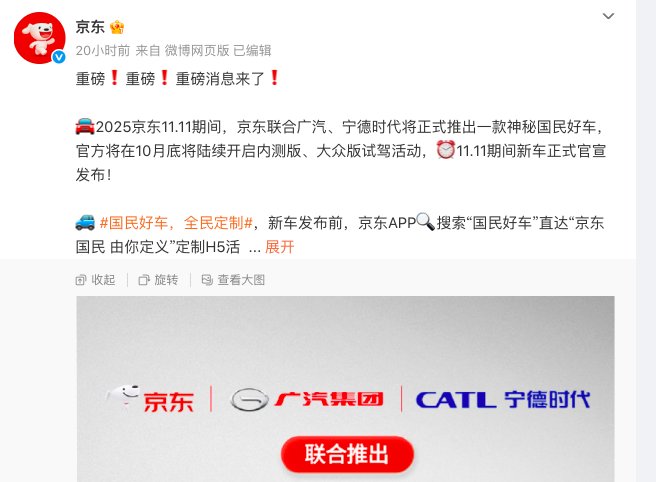
Core Insights - GAC Group, JD.com, and CATL have formed a strategic partnership to redefine the sales and manufacturing process of electric vehicles, introducing a new model for the automotive industry [1][3][10] Group 1: GAC Group's Transformation - GAC Group is shifting from a traditional dealership model to a direct sales approach, facing challenges from new entrants in the electric vehicle market [4][8] - The company has experienced a significant decline in revenue and profit, with a total revenue of 426.11 billion yuan, down approximately 7.88% year-on-year, and a net profit turning negative [8][9] - GAC's collaboration with JD.com and CATL represents a strategic shift from "market for technology" to "technology for ecosystem," aiming to leverage its manufacturing capabilities and integrate with external resources [9][10] Group 2: JD.com's Role - JD.com has been building its automotive ecosystem since 2015, focusing on a full lifecycle service model for car owners, including sales, maintenance, and parts [11][12] - The company aims to redefine the car buying experience, making it as simple and transparent as purchasing electronics, and has introduced innovative service packages to enhance customer engagement [13][14] - JD.com is not involved in manufacturing but focuses on consumer insights and sales, positioning itself as a facilitator in the automotive market [11][12] Group 3: CATL's Strategy - CATL is transitioning from a battery supplier to an energy service provider through this partnership, aiming to address competitive pressures from second-tier manufacturers and in-house battery development by automakers [9][10] - The collaboration allows CATL to promote its "chocolate battery" technology and expand its service offerings, enhancing its market position [9][10] Group 4: New "Iron Triangle" Model - The partnership between GAC, JD.com, and CATL represents a new industrial division of labor, integrating manufacturing, technology, and e-commerce to create a comprehensive automotive experience [15][17] - This model shifts the focus from traditional vehicle sales to a full lifecycle service approach, potentially transforming the automotive industry's value chain [15][17] - The collaboration is seen as a proactive response to the declining profit margins in the automotive sector, with the industry profit rate dropping to 3.9% in early 2025 [15][16]




全面拉产能,宁王终于熬出头了?
Tai Mei Ti A P P· 2025-10-21 04:33
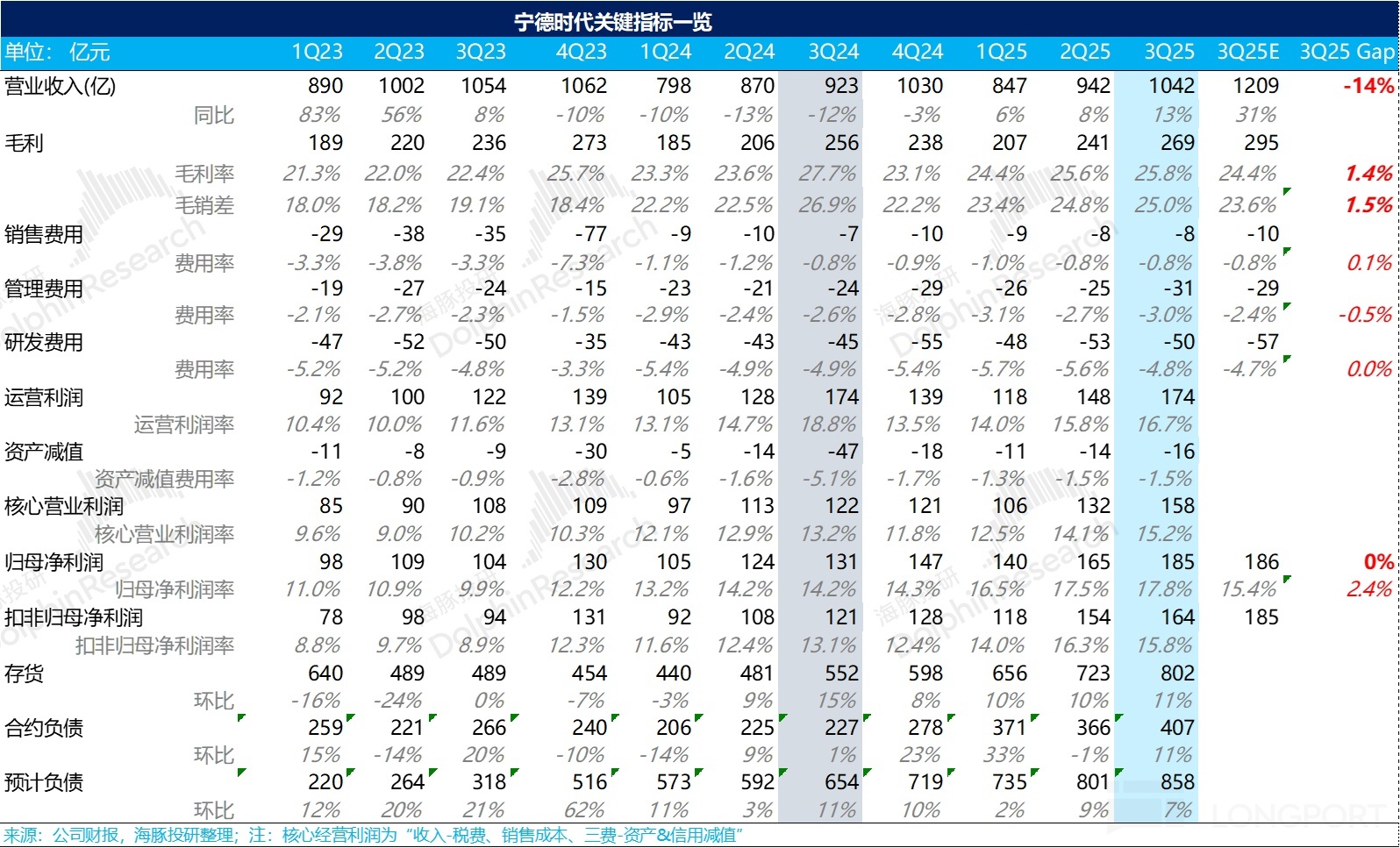
Core Viewpoint - The third-quarter performance of CATL (宁德时代) did not meet market expectations, with revenue of 104.2 billion yuan falling short of the anticipated 120 billion yuan, indicating a discrepancy of over 10% [1][2][14]. Revenue and Profitability - The company's revenue for Q3 was 104.2 billion yuan, showing a year-on-year growth of 13% but not reaching the levels of the same period in 2023, with a quarter-on-quarter increase of 11% [14][16]. - The core operating profit, which reflects the company's true profit-generating ability, grew by 30% year-on-year, primarily due to last year's significant asset impairment [4][30]. - The net profit attributable to shareholders was 18.55 billion yuan, aligning closely with market expectations and representing a 42% year-on-year increase [2][30]. Shipment and Inventory - The total shipment volume for Q3 was 180 GWh, with a recognized revenue volume of 165 GWh, which is in line with market expectations for the year [2][16]. - Inventory reached a record high of 80.2 billion yuan, indicating a buildup of stock in anticipation of the fourth quarter's peak season and reflecting a significant amount of shipped but unrecognized revenue [5][32]. Cost and Margin Analysis - The battery unit price remained stable at approximately 0.56 yuan/Wh, despite an increase in lithium carbonate prices, suggesting a shift in product mix towards lower-priced lithium iron phosphate batteries [2][23]. - The overall gross margin improved slightly from 25.6% to 25.8%, indicating a gradual recovery in profitability [2][25]. Capacity and Expansion - The company is operating at near full capacity and has plans for significant domestic and overseas capacity expansion to meet rising demand [5][36]. - Capital expenditures are expected to accelerate, with major production bases in China expanding and new facilities in Europe and Indonesia being developed [36][38]. Market Position and Future Outlook - CATL's market share in domestic battery installations is declining, but the company is well-positioned to benefit from the growing demand for energy storage solutions, particularly in overseas markets [17][21]. - The company has set a production target of over 1 TWh for 2026, with expectations of achieving a net profit of approximately 69 billion yuan for the year [9][11].
中智科仪完成超亿元 A 轮融资,引领超快成像技术国产化浪潮 | 融资首发
Tai Mei Ti A P P· 2025-10-21 04:31
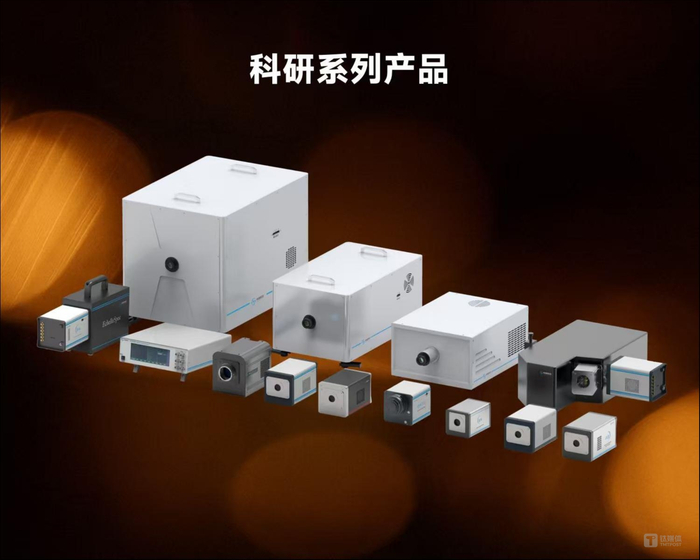
Core Insights - Zhongzhi Keyi (Beijing) Technology Co., Ltd. has completed over 100 million RMB in Series A financing, led by Shunxi Fund under Beijing Guoguan, with participation from various industry and investment partners [1][8] - The financing will focus on three main areas: enhancing R&D for breakthroughs in ultrafast time-resolved imaging and single-photon detection technologies, expanding application scenarios in cutting-edge research and key industries, and improving service quality to reinforce the company's leading position in the industry [1][8] Company Development - Since its establishment in 2016, Zhongzhi Keyi has concentrated on the independent R&D of ultrafast time-resolved imaging and single-photon detection technologies, successfully breaking through key technical bottlenecks and filling domestic gaps in this field [2][5] - The company has developed a dual-driven business model combining "research + industry," allowing top-tier technology to serve both frontier exploration and industrial upgrades [2] Product Innovation - The "Zhu Guang" series of enhanced cameras has become a core product in time-gated imaging, widely used in advanced research scenarios such as PLIF combustion diagnostics and plasma imaging [4] - In 2024, the company will launch the first domestic camera with synchronization precision of 10 picoseconds and shutter speed of 200 picoseconds, significantly enhancing research efficiency in major national projects [4][5] Industry Applications - Zhongzhi Keyi has successfully applied its picosecond gated imaging technology in various complex scenarios, including emergency firefighting, traffic management, and industrial welding, effectively overcoming traditional visual perception limitations [7] - The company has achieved batch shipments of related industry products and initiated overseas market expansion, establishing a stable international partner and customer base [7] Future Outlook - The company has received over 30 patents and provided reliable products and services to more than 100 higher education institutions and research organizations, with sales and intended orders expected to exceed 100 million RMB by 2025, anticipating a growth rate of 40%-50% in the next three to four years [5][7] - The founder emphasized that the financing reflects market and investor recognition of the company's technological strength and development potential, aiming to accelerate the localization of key technologies and expand the boundaries of human visual perception [8][9]
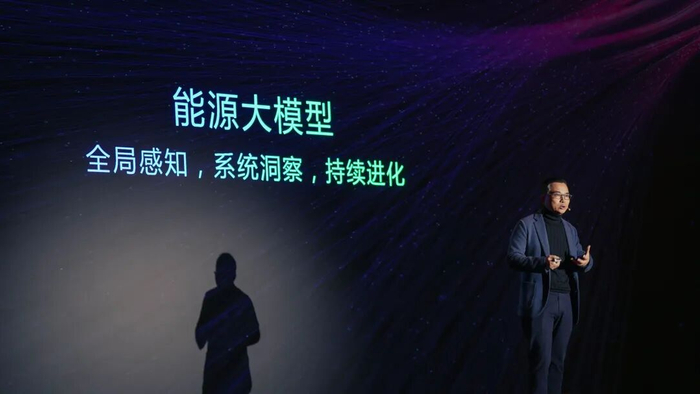
远景科技集团董事长张雷:美国搞不定的能源大模型,我们三年内做大做强
Tai Mei Ti A P P· 2025-10-21 02:28
Core Concept - The concept of "Physical AI" is introduced as a new paradigm that combines AI with physical laws and knowledge graphs, aiming to eliminate the "hallucinations" of traditional language models and enable reliable AI applications in the physical world [2][3]. Group 1: Development of Physical AI - The future development of Physical AI is seen as a significant direction, particularly in the context of energy systems [2]. - The integration of data intelligence with physical laws like energy conservation and aerodynamics is expected to enhance AI's reliability in real-world applications [2]. Group 2: Energy Model and AI Applications - The energy model is considered crucial for reconstructing energy systems, providing a rich application scenario for Physical AI [4]. - AI's ability to process vast amounts of data in milliseconds can help optimize decision-making in complex energy systems, addressing human anxieties related to energy management [4][5]. Group 3: Competitive Landscape - The U.S. is viewed as lacking the necessary industrial scenarios and complex energy systems to support the development of Physical AI and energy models, giving China a potential advantage in this field [3][5]. - Companies that only specialize in single areas like wind or solar energy may struggle to develop comprehensive energy models due to a lack of holistic understanding and data [5]. Group 4: Addressing Industry Challenges - The energy sector is currently facing issues of overcapacity and price wars, particularly in solar and wind energy, which have led to significant financial losses for many companies [7]. - Physical AI and energy models are proposed as solutions to end the cycle of homogeneous competition and shift the focus from material assets to intelligent assets [8]. Group 5: Future Outlook - The development of energy models is expected to evolve into a robust system capable of generating significant value within 1-3 years [11]. - The future energy system is envisioned as an ecosystem of intelligent agents rather than just a collection of devices, aimed at better integrating renewable energy sources and providing energy at lower costs [11].
“智能充电桩第一股”登陆香港:超购5000倍,背后依然在失血
Tai Mei Ti A P P· 2025-10-21 02:08
Core Viewpoint - The recent IPO of Zhida Technology, known as the "first stock of smart charging piles," has attracted significant attention due to its massive oversubscription and soaring stock price, despite the company's poor financial performance and high debt levels [1][2][17]. Group 1: IPO Performance - Zhida Technology's IPO was marked by an oversubscription of 5,440 times, with approximately HKD 250 billion in frozen funds, making it the "super subscription king" in the Hong Kong stock market for the year [2]. - On its first trading day, the stock price surged by 192%, closing at HKD 195.5, with a market capitalization reaching HKD 11.6 billion [2]. Group 2: Financial Performance - The company has experienced declining revenues for three consecutive years, with figures of CNY 697 million, CNY 671 million, CNY 593 million, and CNY 217 million from 2022 to Q1 2025, resulting in a compound annual growth rate of -7.76% [4]. - Since its establishment in 2010, Zhida Technology has never reported a profit, with a loss of CNY 236 million in 2024, which is more than three times the previous year's loss [5]. - The company's debt-to-asset ratio exceeds 900%, indicating that over 90% of its total assets are financed through debt [6]. Group 3: Business Strategy and Challenges - The IPO is viewed as a "lifesaving drug" for the company, as it faces declining gross margins, which fell from 20.4% in 2022 to 14.9% in 2024 due to price wars in the electric vehicle sector [7]. - Zhida Technology has consistently reported negative operating cash flows from 2022 to Q1 2025, indicating a lack of self-sustaining financial capability [8]. - The company faces significant cash flow issues, with accounts receivable turnover days exceeding 200, meaning it takes over six months to collect payments after delivering goods [9]. Group 4: Market Position and Future Prospects - Despite its financial struggles, Zhida Technology has positioned itself as a leader in the global home electric vehicle charging pile market, with over 1.3 million units shipped and a market share of approximately 9% globally and 13.6% in China [13]. - The company is shifting its focus to international markets, with overseas revenue increasing from 1.9% to 12.1% in 2024, and plans to allocate 38% of IPO proceeds for overseas expansion [14]. - The choice to list in Hong Kong is strategic, as the market is more accommodating for companies like Zhida Technology that are still in the red but have compelling narratives to tell [15]. Group 5: Investor Dynamics - The backing of major stakeholders like BYD, which not only invested in Zhida Technology but also serves as its largest customer, enhances the company's market appeal [13]. - The founder, Huang Zhiming, is under pressure due to a performance guarantee agreement with investors, which necessitated the IPO to avoid personal financial penalties [10][11].
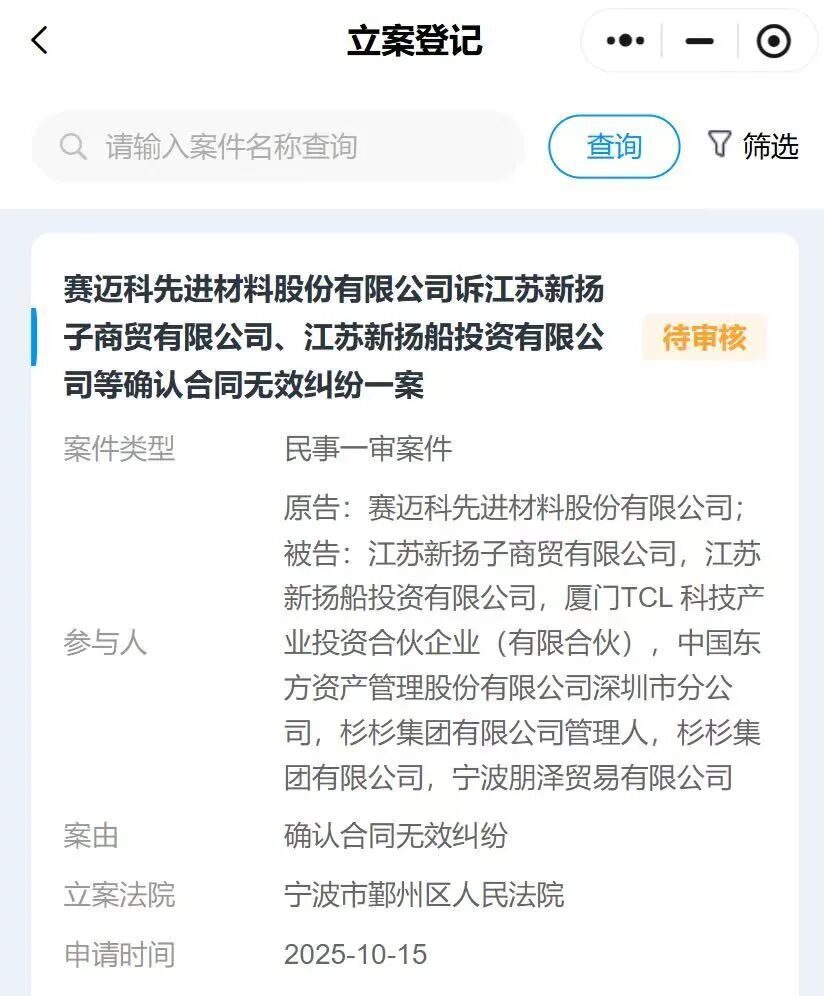
突发诉讼,原中选投资人离奇出局,杉杉集团重整计划横生波折
Tai Mei Ti A P P· 2025-10-21 00:57
Core Viewpoint - The restructuring plan of Shanshan Group faces unexpected challenges as a Zhejiang company, Saimai Ke, has filed a lawsuit to invalidate the restructuring investment agreement, delaying the creditor meeting and the vote on the restructuring plan [1]. Group 1: Legal Proceedings - Saimai Ke Advanced Materials Co., Ltd. has filed a lawsuit against multiple parties involved in the restructuring investment agreement, claiming that it was wrongfully excluded from the agreement despite being part of a successful consortium [3]. - The lawsuit was filed on October 15, 2025, in the Ningbo Yinzhou District People's Court, seeking confirmation of the invalidity of the contract [3]. Group 2: Investment and Business Context - Shanshan Group's restructuring involves significant players, including Jiangsu New Yangzi Trade and Jiangsu New Yangzi Ship Investment, with Saimai Ke claiming that its exclusion undermines the initial selection process based on industry synergy [4][5]. - Shanshan Co., Ltd. is a leading supplier in the new energy materials and high-end display materials sectors, with a strong focus on lithium battery anode materials and polarizers [6]. Group 3: Financial Implications - Shanshan Co., Ltd. reported explosive growth in the first half of the year, achieving revenue of 9.858 billion yuan, a year-on-year increase of 11.78%, and a net profit of 207 million yuan, up 1079.59% [6]. - The restructuring investment agreement allows Jiangsu New Yangzi Trade to control a company valued at 30 billion yuan with a minimum investment of approximately 1 billion yuan, highlighting the financial leverage involved [6][7].

在新能源的时代洪流中,谁在为燃油车“续命”?
Tai Mei Ti A P P· 2025-10-20 08:46
Core Viewpoint - The persistence of fuel vehicles in the Chinese market, despite the rapid growth of electric vehicles, indicates a market shift rather than a decline in demand for traditional cars [3][4][10]. Market Dynamics - In the first half of 2025, fuel vehicles accounted for 49.9% of total passenger car sales in China, translating to approximately 600 million units, despite a nearly 20 percentage point decline over five years [4]. - The retreat of joint venture brands in the 10-20 million yuan price range has created opportunities for domestic brands like Geely to fill the gap with higher configurations and lower prices [4][5]. - Consumer preferences are diverging, with first-tier city users leaning towards electric vehicles while lower-tier cities continue to favor fuel vehicles due to infrastructure and maintenance considerations [5]. Technological Advancements - Geely's new China Star series incorporates advanced technologies such as the GEEA 3.0 electronic architecture and AI systems, which were previously exclusive to electric vehicles, enhancing the appeal of fuel vehicles [6][7]. - The integration of smart features into fuel vehicles allows them to compete effectively in terms of user experience without the high costs associated with electric vehicle batteries [7]. Strategic Importance - Fuel vehicles serve as a stable cash flow source for Geely, providing financial support during the high-risk transition to electric vehicles [8]. - The China Star series acts as a bridge to reach lower-tier markets while maintaining profitability and funding for electric vehicle development [8]. Global Trends - The resurgence of fuel vehicles is not unique to China; similar trends are observed in Europe and Japan, where traditional vehicles are being re-evaluated in light of changing market conditions [9]. - Fuel vehicles are evolving to meet consumer demands for comfort and technology, positioning themselves as a balanced choice amidst the uncertainties of early electric vehicle adoption [9]. Future Outlook - While fuel vehicles may experience a temporary revival, they face long-term challenges from regulatory pressures and shifting consumer preferences towards electric vehicles [10][11]. - The success of products like the China Star may represent a final flourish for fuel vehicles, emphasizing the need for innovation and adaptation in a rapidly changing automotive landscape [11].


国潮出海:从华人乡愁到全球爆款,中国零食正在攻占世界货架
Tai Mei Ti A P P· 2025-10-20 06:18
Core Insights - The article discusses the rising trend of Chinese snack brands expanding into international markets, driven by intense domestic competition and the need for growth opportunities [2][3]. Group 1: Market Trends - Chinese snacks have become popular not only among overseas Chinese but also among local young consumers in foreign markets [1]. - Social media influencers are showcasing Chinese snacks like spicy strips and sunflower seeds, indicating a growing acceptance and demand in regions like Southeast Asia [2]. - Domestic brands are facing challenges due to increased competition from low-cost retailers, prompting them to seek growth abroad [2]. Group 2: Financial Performance - In the first half of the year, Qiaqia Foods reported a 6.4% decline in domestic revenue, while overseas revenue grew by 13.18% [2]. - Weidong's overseas revenue surged by 54.4%, significantly outpacing its domestic growth of around 20% [2]. - Yanjinpuzi's overseas business saw an astonishing growth of 67,800% due to a low base effect [2]. Group 3: Historical Context - The trend of Chinese snacks going international began in the early 2000s, with Qiaqia Foods being one of the pioneers [4]. - Initial international efforts were primarily focused on Chinese communities abroad, limiting brand reach [4]. - A shift occurred in 2015 when Qiaqia began to focus on brand storytelling and international trademark registration [4]. Group 4: Market Strategies - Qiaqia emphasizes offline channels, targeting high-traffic convenience stores like 7-Eleven in Thailand, which holds a 70% market share in the local convenience store sector [6]. - Three squirrels adopted an online strategy, launching flagship stores on platforms like Lazada and Amazon, and utilizing social media for brand promotion [7]. - Post-2018, brands have shown increased initiative and sophistication in their international strategies, reflecting a better alignment with market positioning [7]. Group 5: Competitive Landscape - Despite the growth, Chinese snack brands still face significant competition from established Western and Japanese brands in international markets [8]. - Unique Chinese snacks like spicy strips and quail eggs are being positioned as niche products to carve out market space [8][9]. Group 6: Localization and Compliance - Successful international brands like Weidong have adapted their products to local tastes, such as offering milder flavors in Italy and incorporating local ingredients in Southeast Asia [10]. - Compliance with local food regulations is critical, as different countries have varying standards that can impact product viability [11][12]. - The need for halal certification in Indonesia and strict labeling requirements in Western markets highlight the complexities of international expansion [12]. Group 7: Long-term Strategies - Companies are moving from merely exporting products to establishing local production facilities, which helps reduce logistics costs and respond to local demand [14][15]. - Qiaqia has invested significantly in overseas production, with its first factory in Thailand contributing to a notable increase in overseas revenue [15]. - The long-term goal is to integrate into global supply chains, enhancing brand recognition and acceptance similar to established brands like Oreo [15].

【钛晨报】国常会:推动人工智能与物流深度融合,部署拓展绿色贸易;蚂蚁、京东据报已暂停在港发行稳定币计划;安世中国最新发声:国内全部主体运营及员工薪资福利一切正常
Tai Mei Ti A P P· 2025-10-19 23:37
Group 1: Logistics Cost Reduction - The State Council meeting emphasized the need to continuously promote cost reduction and efficiency improvement in logistics, aiming to build a modern logistics system that is safe, efficient, and green [2] - Investment in logistics warehousing facilities will be increased, optimizing layout and functionality, and accelerating the construction and upgrading of digital logistics infrastructure [2] - Support for logistics enterprises, especially small and micro enterprises, will be enhanced, particularly in terms of short-term financing [2] Group 2: Green Trade Expansion - The meeting called for the acceleration of the establishment of a green trade policy system, enhancing coordination with industrial, technological, fiscal, and financial policies [3] - There is a focus on improving the green low-carbon development capabilities of foreign trade enterprises and promoting green design and production [3] - The establishment of a standard system for green low-carbon products, technologies, and services that aligns with international standards is a priority [3] Group 3: Agricultural Production - The meeting highlighted the collaboration among various regions and departments to ensure a good harvest for the year, with sufficient supply of agricultural products [3] - Emphasis was placed on reinforcing bottom-line thinking and ensuring the supply and price stability of agricultural materials [3] - The use of policy-based storage to support market entities in increasing purchase efforts to secure farmers' income was discussed [3] Group 4: Semiconductor Industry - TSMC plans to increase the price of 2nm wafer foundry services by 50%, which may impact major clients like Qualcomm and MediaTek [9] - Qualcomm's mobile chip prices are expected to rise by 16% due to TSMC's price hike, while MediaTek's chip prices may increase by approximately 24% [9] - The CEO of NVIDIA stated that the company's market share in high-end chips in China has dropped from 95% to 0% due to U.S. export controls [13] Group 5: Financial Market Trends - UBS upgraded its global stock market rating to "attractive," particularly favoring Chinese tech stocks due to expected improvements in corporate earnings [22] - The report indicates that the earnings per share for Chinese tech stocks are projected to grow nearly 40% by 2026 [22] - The market is experiencing a rotation in investment styles, with a focus on sectors such as dividends, precious metals, and technology [23] Group 6: AI and Robotics - UBTECH has secured a significant order worth 126 million yuan for its Walker humanoid robot, bringing its total orders for the year to over 630 million yuan [6] - The robotics industry is expected to grow significantly, with various companies focusing on niche markets to meet diverse demands [4]