投中网

Search documents
用“烧钱”来换取战略价值已经过时了
投中网· 2025-12-01 07:24
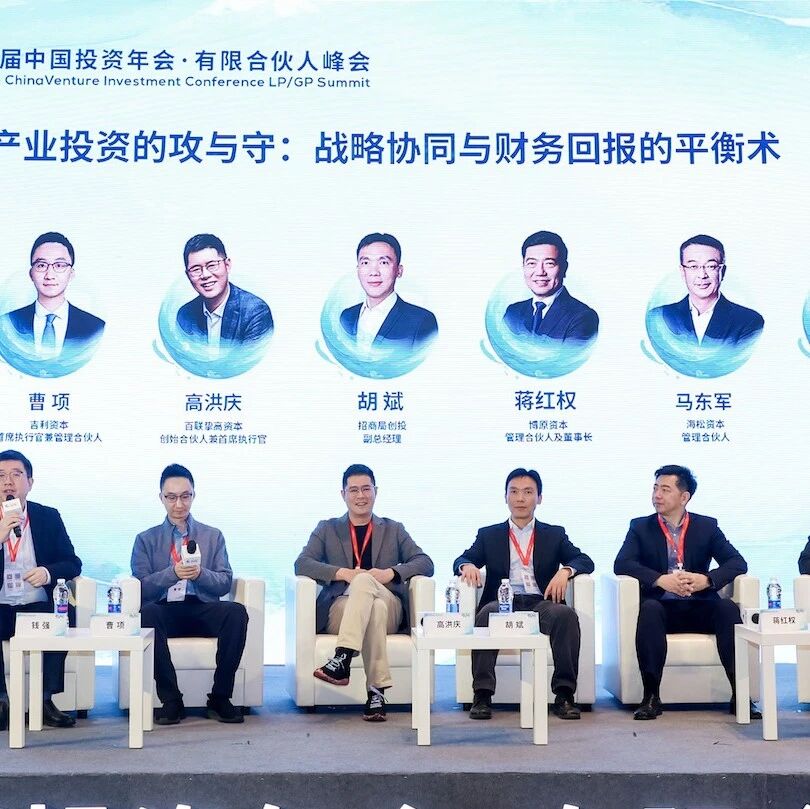
Core Insights - The article emphasizes the increasing role of industrial capital in the primary market, particularly in the application of new AI technologies, highlighting the complex relationship between industrial investors and project parties [2][3] - It discusses the balance between strategic collaboration and financial returns, with various industry leaders sharing their perspectives on how to achieve this balance [4][5] Group 1: Industrial Capital's Role - Industrial capital is becoming increasingly significant in the primary market, especially in AI technology applications [2] - The relationship between industrial investors and project parties is more complex than that of financial investors, requiring a careful balance to achieve win-win outcomes [2][3] Group 2: Strategic Collaboration vs. Financial Returns - High Hongqing outlines the "Four Board Logic" of Corporate Venture Capital (CVC), which includes extending strengths, filling gaps, solidifying foundations, and forging new paths, emphasizing the need for innovation alongside maintaining core business [3][13] - Cao Xiang stresses that investment profitability and strategic collaboration are core considerations, with strategic value being particularly crucial [4][17] - Hu Bin highlights the importance of trust responsibility starting from the fundraising stage, indicating that balancing various stakeholder demands should be planned early on [5][24] Group 3: Investment Decision-Making - Jiang Hongquan emphasizes the added value that investment can bring to enterprises, focusing on whether investments can provide actual value through existing or future business [5][14] - Ma Dongjun suggests that exit decisions should be made with respect for market principles, balancing value and risk, and should not overly focus on short-term market fluctuations [5][40] Group 4: Challenges and Opportunities - Hu Bin identifies the long-term decline in interest rates and inflation as providing a favorable funding environment for growth-oriented companies, which is crucial for technology investments [43] - He also points out the importance of technological confidence in driving innovation and entrepreneurship in China, moving from imitation to creation [44] - The challenges include the coexistence of scarcity in early-stage industries and intense competition in mature stages, necessitating deeper industry understanding from investment institutions [45]

北京的明星机器人企业,又融资了丨投融周报
投中网· 2025-12-01 07:24
Focus Review - The hard technology sector, particularly semiconductors and chips, remains mainstream with significant financing activities. For instance, Yanwei Semiconductor completed hundreds of millions in Series A financing, backed by notable investors like Yongxin Ark and Jinyuan Capital [4][15]. - In the health sector, medical devices are gaining attention, exemplified by Jingwei Vision's recent financing exceeding 100 million, supported by multiple investment funds [5][25]. - The internet sector is seeing advancements in AI, with Deep Principle securing over 100 million in Series A financing, led by Alibaba's fund and Ant Group [5][34]. Hard Technology - Yanwei Semiconductor completed hundreds of millions in Series A financing with investments from Yongxin Ark and Jinyuan Capital [4][15]. - Liding Microelectronics raised nearly 100 million in Series A financing, led by CMB International Capital [5][20]. - Hypershell, a consumer-grade exoskeleton company, announced a successful completion of 70 million USD in Pre-B and B rounds, achieving a post-financing valuation of nearly 400 million USD [7]. Health Sector - Jingwei Vision completed a new round of financing exceeding 100 million, with investments from various funds [5][25]. - Jiangsu Zhenyi Medical Technology announced the completion of several hundred million in Series C financing, backed by multiple investment institutions [5][30]. - Weike Biotechnology secured nearly 100 million in Series A financing, led by Shenzhen Capital Group [5][28]. Internet/Enterprise Services - Deep Principle, a pioneer in AI for Science, completed over 100 million in Series A financing, with participation from several major investors [5][34]. - Vision Future, a visual large model company, announced nearly 100 million in angel round financing, led by a listed company [5][35]. - Kulan Dream completed a million-level angel round financing, with investments from notable figures in the gaming industry [5][37].


一级市场的“上证50”来了丨投中嘉川
投中网· 2025-11-30 07:21
Group 1 - The core viewpoint of the article is that the Chinese venture capital market is experiencing a significant recovery, transitioning from a fundraising-driven phase to an exit-driven phase [5][6][10] - The "China Venture Capital 100 Comprehensive Index" was developed to quantify the industry's temperature and assess its current stage and future direction [7][9] - The index shows that the market has gone through various phases over the past decade, influenced by policy, industry development, geopolitical factors, and unexpected events [9][10] Group 2 - The comprehensive index has rebounded to 194.06, indicating the emergence of a new cycle and a recovery in market confidence [10][12] - The investment index reached a low of 81.86 in the first half of 2024 but improved to 109.12 by the first half of 2025, reflecting a recovery in investment activity [20][24] - The exit index saw a strong rebound to 195.40 in the first half of 2025, driven by improved IPO channels and increased merger and acquisition activities [27][28] Group 3 - The fundraising index remains in a bottoming phase, having peaked at 326.35 in 2018 before entering a downward trend [29][32] - By the first half of 2025, the number of funds raised was 1,966, with a total fundraising amount of 10,665 billion, continuing the downward trend [33]

裁了7000人的2000亿美元巨头,疯狂啃“兔子”
投中网· 2025-11-30 07:21
Core Viewpoint - Disney's success in China and globally is fundamentally a victory of the "experience economy" [5][18] Group 1: Box Office Performance - "Zootopia 2" achieved a record-breaking pre-sale box office of over 310 million yuan, surpassing "Nezha: Birth of the Demon Child" to top the Chinese animation pre-sale box office list [5] - On its opening day, "Zootopia 2" grossed 228 million yuan, with projections for the first week box office exceeding 1.2 billion yuan, aiming for a total of 2.5 billion yuan [5] - The film's opening day saw a nationwide cinema share of 66.5% and a box office share of 92.7% [5] Group 2: Marketing and Merchandise - The midnight screenings at Wanda Cinemas sold out quickly, with merchandise like popcorn buckets featuring characters from the film seeing a 35% order rate, significantly higher than usual [6] - Luckin Coffee launched co-branded merchandise, leading to a surge in orders, with one person reportedly ordering 2.5 cups of coffee per minute [7] - Disney's marketing strategy included extensive brand collaborations, with at least 47 brand partnerships announced four months prior to the film's release [10] Group 3: Strategic Shifts and Financial Performance - Disney's recent financial report indicated a revenue growth of approximately 3% and a net profit increase of about 149%, stabilizing its market value around 200 billion USD [10] - The company has undergone a significant transformation over the past three years, focusing on leveraging creative and brand assets, reducing content budgets, and laying off thousands of employees [10][14] - Disney's strategy has shifted from aggressive online expansion to a focus on traditional IP models, particularly in the Chinese market where "Zootopia" holds significant value [10][18] Group 4: Experience Economy and Future Prospects - Disney plans to invest 60 billion USD in parks and experiences over the next decade, doubling previous investments, highlighting the importance of experience-driven revenue [18] - The success of "Zootopia" as an IP is evident in its ability to drive ticket sales and merchandise, with projections indicating that 40% of global sales from related products will come from China by 2025 [20] - The competition in the Chinese market is intensifying, with local IPs like "Nezha" and "Boonie Bears" also making significant strides in box office and merchandise sales [20][21]


江门女首富又要IPO了
投中网· 2025-11-30 07:21
Core Viewpoint - The article highlights the remarkable journey of Zeng Fangqin, the CEO of Lingyi iTech, who built a "hundred billion precision manufacturing" empire over nearly 20 years, emphasizing her significant contributions to the precision components industry and her recent IPO plans [3][4][8]. Company Overview - Lingyi iTech, with a market value of 95 billion, is preparing for an IPO on the Hong Kong Stock Exchange, showcasing its growth and Zeng Fangqin's status as a leading female entrepreneur in China [3][4]. - The company has established itself as a key player in the precision components sector, particularly in the consumer electronics supply chain, with over 60% of its revenue coming from Apple-related businesses [7][10]. Financial Performance - Lingyi iTech's revenue for 2022-2024 is projected to be 34.5 billion, 34.2 billion, and 44.3 billion respectively, with net profits of 1.57 billion, 2.02 billion, and 1.76 billion during the same period [10]. - In the first nine months of 2025, the company achieved a revenue of 37.59 billion, with a notable increase in quarterly earnings, indicating a strong growth trajectory [10]. Strategic Acquisitions - The company has made strategic acquisitions to enhance its market position, including the 21.5 billion acquisition of Saierkang Group and the 11.2 billion acquisition of two automotive parts factories from Flex, which expanded its customer base and production capabilities [11]. - Following these acquisitions, Lingyi iTech's global service points increased from 12 to 28, and its overseas revenue share rose from 35% to 60% by 2024 [11]. Future Growth Initiatives - Zeng Fangqin is focusing on the robotics sector, particularly bipedal robots, with plans to invest at least 200 million annually over the next three years to become a top player in the field [11][12]. - The company has formed strategic partnerships to enhance its capabilities in robotics, indicating a commitment to diversifying its product offerings and exploring new growth avenues [12]. Industry Context - The article also discusses the rise of female entrepreneurs in China, with Zeng Fangqin being part of a broader trend of women leading successful companies in various sectors, including technology and manufacturing [14][16]. - The success stories of female leaders like Zeng Fangqin, Zhou Qunfei, and Wang Laichun illustrate the potential for women to break through barriers in traditionally male-dominated industries [15][16].

一个人,募资210亿
投中网· 2025-11-29 07:03
又将刷新Solo VC的行业纪录。 作者丨 蒲凡 来源丨 投中网 将投中网设为"星标⭐",第一时间收获最新推送 两年前,我曾经写过一篇题为 《一个人募资80亿》 的文章,聊起了近来年逐渐兴起的Solo VC模式。 所谓Solo VC,可以按照字面意思简单理解为"风险投资个体户"。他们既在物理层面做到"solo",那样没有团队,不设置复杂 的组织架构,看项目、做尽调、投后管理全部自己完成;同时又在法律层面向"VC"看齐,注册公司、在监管部门把自己从自 然人备案为GP、按照金融产品的标准制定投资节奏、向LP募资、接受IRR和DPI的考核。 这样的特质高度适配当下的投资环境:Solo VC的发起人就是团队里唯一成员,负责思考也负责决策,带来了前所未有的简化 流程;Solo VC的发起人通常是垂直领域专家出身,是特定领域的经验宝库,更能够基于特定领域的特点制定个性化的投资组 合管理方式;Solo VC一旦成立就是"单枪匹马"作战,决定了发起人远比大平台的投资人更有创业心态,斗志旺盛且行动敏 捷,更容易与创业者合拍。 因此最近几年,Solo VC的数量不但大幅增加,能够募集到的资金也越来越夸张,其中最牛逼的Solo V ...

芯联资本袁锋:CVC下半场,要摆脱简单的供应链投资
投中网· 2025-11-29 07:03
Core Viewpoint - The next five years will be a golden period for Corporate Venture Capital (CVC), emphasizing its value and role in driving innovation and establishing competitive advantages for companies [2][4]. Group 1: Past Five Years - The past five years have seen the gradual recognition of CVC's value, with supply chain investment serving as the essential entry point for CVCs [5][10]. - The Chinese hard technology sector, particularly the automotive industry, has undergone significant transformation, with the penetration rate of new energy vehicles rising from less than 5% in 2020 to 50% today [6]. - The semiconductor industry has also experienced rapid growth, with domestic companies increasing their market presence, leading to a rise in the localization rate of semiconductor equipment from about 10% to 40%-50% in some wafer fabs [9]. Group 2: Future Five Years - The future will witness a shift from simple supply chain investments to a focus on innovation and ecosystem building, with CVCs acting as connectors to enhance their companies' competitive advantages [11][14]. - By 2025, the industry will see a consolidation phase, with many startups exiting the market, leading to increased concentration in both the automotive and semiconductor sectors [12]. - There will be a transition from pursuing scale to fostering foundational innovation, with Chinese companies aiming to lead in core technologies such as autonomous driving and battery systems [13]. - CVCs will need to build systematic capabilities rather than relying on single-point breakthroughs, as comprehensive systems become crucial for industry leadership [13]. - Internationalization will become increasingly important, with Chinese companies establishing local production to adapt to global supply chain strategies [14]. Group 3: CVC's New Mission - CVCs must evolve to become "links" that help companies build their strengths while also investing in emerging industries and reinforcing competitive barriers through innovation [14][15]. - Successful examples include investments in silicon carbide technology, which has captured 70% of the Chinese market, and collaborations in robotics and AI to enhance foundational technology capabilities [15][16]. - The role of CVCs will vary across different stages of corporate development, as seen in historical examples like Intel, which transitioned from supply chain investments to ecosystem building and embracing AI innovations [17][18].
LP周报丨150亿,绍兴老城也要“搞事”了
投中网· 2025-11-29 07:03
Core Insights - The article focuses on the investment landscape in various regions of China, highlighting the establishment of new funds and their strategic focus areas, particularly in emerging industries and technological innovation [6][7][9][12][13][14][15][17][18][19][20][21]. Fund Establishments - The Shaoxing Industrial Fund, with a total scale of 15 billion RMB, aims to support strategic industry projects and technological innovation in Shaoxing [7]. - The Wuhan Future Intelligent Venture Fund has been established with a total scale of 1 billion RMB, focusing on artificial intelligence and humanoid robotics [9]. - The Henan Lihua Angel Fund has been successfully set up with a total scale of 1.77 billion RMB, targeting investments in AI, 5G, and new energy sectors [10][11]. - The Jiangmen High-tech Guangdong Science and Technology Industrial Development Fund has been established with a total investment of 1 billion RMB, focusing on emerging industries like new energy and AI [12]. - The Xiamen Industrial M&A Equity Investment Fund has been registered with a total scale of 2 billion RMB, focusing on key industries such as new energy and semiconductor [18]. - The Jimei Specialized Fund has been established with a scale of 100 million RMB, targeting strategic emerging industries and traditional industry upgrades [19]. Strategic Focus Areas - The funds are primarily directed towards high-tech sectors such as integrated circuits, biomedicine, and advanced equipment, reflecting a strong push for technological innovation and industrial transformation [7][12][13][14]. - The collaboration between Cainiao and China Life to establish a logistics investment fund of over 1.7 billion RMB emphasizes the importance of modern logistics infrastructure in key economic regions [17]. - The establishment of the Xin Ke Industry Investment Fund, with a total scale of 5 billion RMB, aims to enhance the communication network and support the development of cutting-edge technologies like AI and quantum communication [13]. Regional Highlights - Shaoxing is recognized for its traditional industries, particularly textiles, which have evolved significantly since the 1980s [6]. - Wuhan is positioning itself as a hub for light communication technology, leveraging its strong industrial base and strategic partnerships [13]. - The Hebei Free Trade Zone is focusing on high-end manufacturing and digital economy sectors, with the establishment of the Yunfan Equity Investment Fund to fill the investment gap in these areas [20][21].

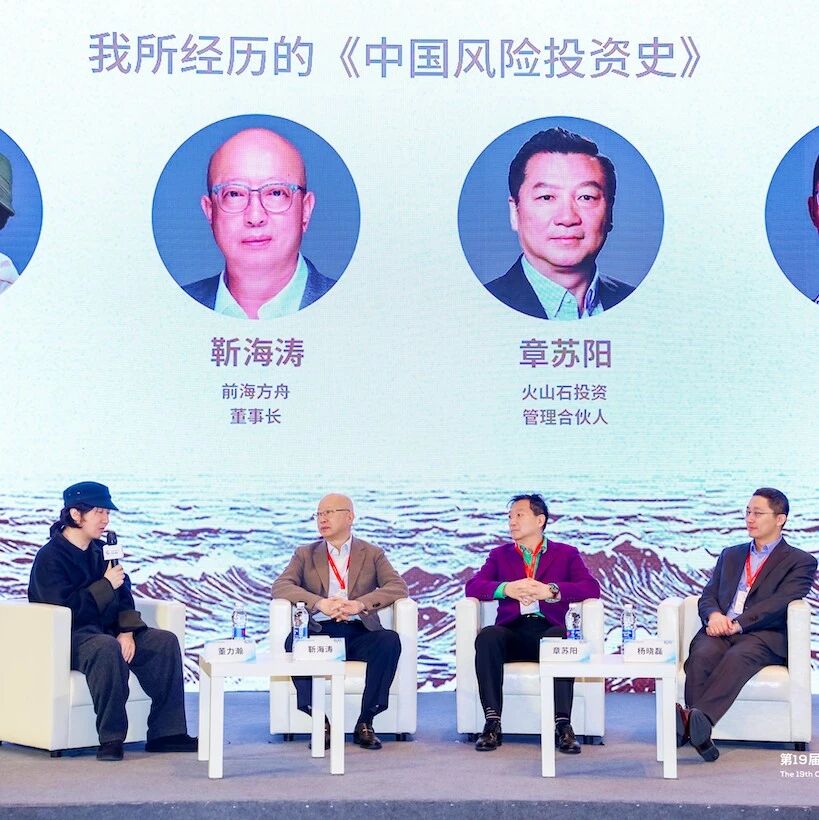
靳海涛x章苏阳:我所经历的《中国风险投资史》
投中网· 2025-11-29 07:03
Core Viewpoint - The article discusses the evolution of venture capital in China, highlighting the release of the book "A History of Venture Capital in China," which aims to document the growth and transformation of the industry from its inception to the present day [4]. Group 1: Historical Context and Development - The book consists of over 300,000 words and 14 chapters, detailing how venture capital emerged, started, developed, and transformed in China [4]. - The authors acknowledge limitations in the book due to constraints on firsthand materials and the ability to provide in-depth insights into significant historical events [4]. Group 2: Comparison of Investment Institutions - A discussion is held comparing IDG and Shenzhen Capital Group (深创投), noting that both have different operational styles but share a similar core essence in their investment approaches [9][10]. - IDG is recognized for its early entry into venture capital and its significant contributions, while Shenzhen Capital Group is seen as a pioneer in domestic venture capital, particularly in hard technology and manufacturing sectors [10]. Group 3: Investment Strategies and Market Perception - The article highlights the differences in investment focus between RMB funds and USD funds, with RMB funds often being more localized and focused on technology and manufacturing, while USD funds tend to emphasize innovative business models, particularly in the internet sector [22][23]. - The concept of "sexiness" in investment projects is discussed, where projects deemed innovative or disruptive receive more attention and higher valuations, often overshadowing solid financial returns from less "sexy" sectors [25][26]. Group 4: Personal Relationships in Investment - The article explores the nature of friendships and relationships in the investment industry, noting that while personal connections can exist, the complexity of financial relationships often complicates these dynamics [38][39]. - It is suggested that in the Chinese context, maintaining long-term relationships with investors is challenging due to frequent changes in personnel and the evolving nature of capital management [39][40].
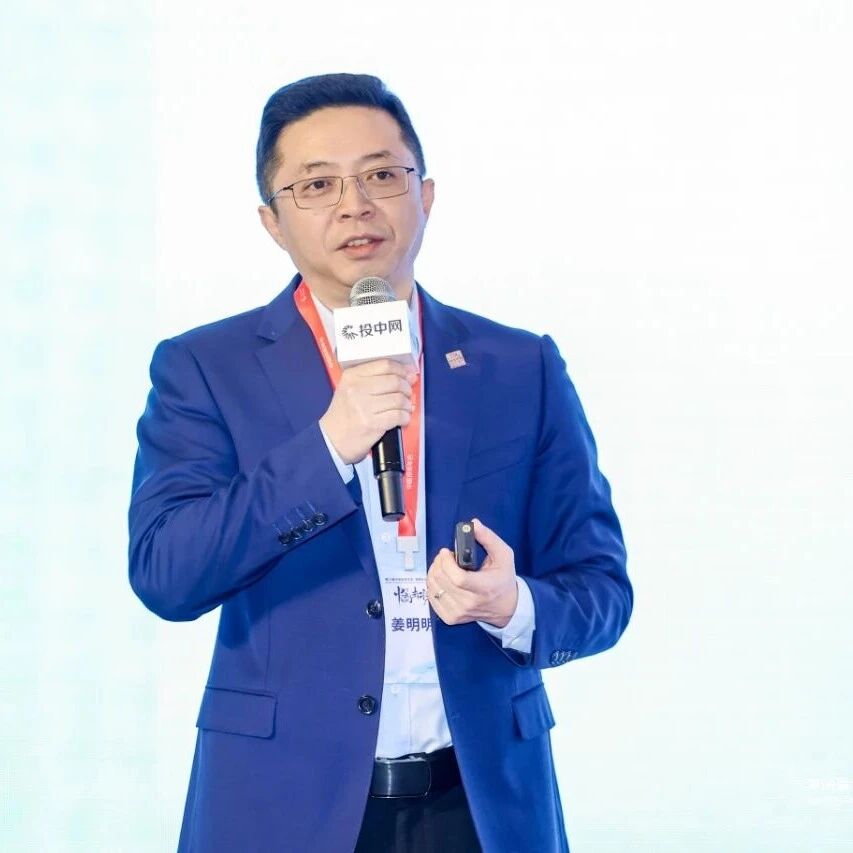
盛世投资姜明明:S基金才是真正的长期资本与耐心资本
投中网· 2025-11-28 06:54
将投中网设为"星标⭐",第一时间收获最新推送 S基金通过创造流动性推动资本循环投资,对行业可持续发展具有关键意义。 整理丨陈美 来源丨 投中网 "退出"一直是一级市场最关心的话题。11月27日,由投中信息、投中网共同主办的第19届中国投资 年会·有限合伙人峰会在上海隆重召开。 作为S基金最有代表性的投资机构,盛世投资董事长姜明明表示,当前中国创投市场面临募投管退全 链条挑战,核心症结在于"退"。若14万亿存量资产无法实现有效退出,在地方政府、国资财政压力 较大的当下,期望其持续投入新资金支持创投行业,难度可想而知。因此,S基金通过创造流动性推 动资本循环投资,对行业可持续发展具有关键意义。 S基金的快速发展,有源于三个关键层面的推动: 一是政策驱动。今年"国办一号文"明确提及S基金,这在国家层面支持创投、VC/PE行业发展的文件 中实属罕见,也为S基金完成了高效科普。如今,上海、江苏、浙江、安徽等私募股权活跃地区,地 方政府金融办在出台创业投资支持政策时,也必然会纳入S基金相关内容。 二是行业退出需求的集中释放。一方面,14万亿存量规模对应22.8万个项目,庞大的存量资产亟待盘 活;另一方面,人民币基金自20 ...