晚点Auto

Search documents
裁员计划逼近 10 万,海外车企集中 “瘦身”
晚点Auto· 2025-05-27 15:44
Core Viewpoint - The global automotive industry is facing significant challenges, including a slowdown in electrification trends, shrinking demand, intensified market competition, and an unstable international trade environment, leading to widespread layoffs among major overseas automotive brands [2][7]. Group 1: Layoff Trends - Major overseas automotive companies have announced layoffs affecting nearly 100,000 employees across key markets such as China, North America, Europe, and Japan [2]. - Volkswagen Group plans to cut approximately 35,000 jobs by 2030, with 7,000 already laid off, aiming to save €1.5 billion annually in labor costs [3][4]. - Other companies like Ford, General Motors, and Nissan are also implementing significant layoffs, with Ford cutting 4,000 jobs in Europe and Nissan planning to lay off 20,000 employees due to weak sales and trade uncertainties [3][5][6]. Group 2: Reasons for Layoffs - The layoffs are primarily driven by the need for cost reduction, increased competition, and the impact of tariffs and trade policies [3][5][6]. - Companies are restructuring to improve efficiency and adapt to changing market conditions, with many citing the need to streamline operations and reduce overhead costs [4][5][6]. Group 3: Comparison with Chinese Brands - In contrast to the layoffs among overseas brands, Chinese automotive companies are experiencing growth, with brands like BYD, Geely, and NIO increasing their workforce [7]. - The expansion of Chinese brands highlights a divergence in market performance, as they continue to capitalize on opportunities while traditional automakers face contraction [7].


小米卢伟冰谈 SU7 竞争力:市面上一个能打的都没有丨一分钟财报
晚点Auto· 2025-05-27 15:44
Core Viewpoint - The company achieved its best quarterly report in history, driven by strong sales of the SU7 model, indicating that strong product capability ensures profitability [2][4]. Group 1: Financial Performance - In the first three months of the year, the company delivered 76,000 new cars, a quarter-on-quarter increase of 8.9%, leading to automotive business revenue of 18.1 billion yuan, a 10.8% increase from the previous quarter [2]. - Losses in the automotive and AI innovation sectors narrowed to 500 million yuan, a reduction of 200 million yuan from the previous quarter [2]. - The gross margin increased to 23.2%, surpassing competitors like Li Auto (19.7%) and BYD (20.07%) [2]. Group 2: Product Strength and Market Position - The SU7 has not seen a price drop since its launch, and the introduction of the higher-priced SU7 Ultra has contributed to revenue [4]. - The company’s management efficiency and cost structure are reportedly 2-3 times more effective than traditional automotive companies [4]. - The SU7 has faced no direct competitors since its launch, allowing the company to maintain pricing power and reasonable profit margins [5][6]. Group 3: Future Prospects - The YU7 model, set to launch in July, is anticipated to impact the SU7's market position, with early indicators showing higher interest and engagement compared to the SU7 at the same stage [5]. - The company’s president emphasized that strong product capability will ensure profitability, regardless of competition [5][6].


AI 如何成为理想一号工程
晚点Auto· 2025-05-22 07:16
Core Viewpoint - The article discusses Li Auto's strategic shift towards AI and intelligent driving, emphasizing the importance of AI in the company's long-term competitiveness and product development [3][10][12]. Group 1: AI Strategy and Development - Li Auto held a strategic meeting in October 2022, where the priority of AI-related business was adjusted, emphasizing the strategic importance of intelligent driving [3][5]. - The company aims to become a global leader in AI by 2030, with significant investments in AI talent and technology [5][10]. - Li Auto's AI assistant, "Li Xiang," has evolved from a car-mounted system to a multi-platform application, indicating a broader vision for AI applications beyond the vehicle [7][8]. Group 2: Intelligent Driving Focus - Intelligent driving was designated as the company's primary strategy in 2023, with plans to heavily invest in this area to compete with major players like Huawei [10][12]. - The company has expanded its intelligent driving team significantly, with over 50 new positions created in late 2023, reflecting a strong commitment to this technology [10][11]. - Li Auto is transitioning its intelligent driving technology from a modular approach to an "end-to-end" model, which is expected to enhance performance and user experience [11][12]. Group 3: Organizational Changes and AI Integration - An AI Technical Committee was established to integrate AI capabilities across various business lines, indicating a strategic focus on AI as a core business direction [14][15]. - The committee includes leaders from product development and research departments, ensuring that AI applications are aligned with the company's overall strategy [15][16]. - Li Auto's foundational model for AI is seen as a critical component for future developments, with aspirations to rank among the top three in the industry [17][18].


独家丨上汽按 “上、下车身” 整合零部件企业,加强与内部整车企业的协同
晚点Auto· 2025-05-21 14:52
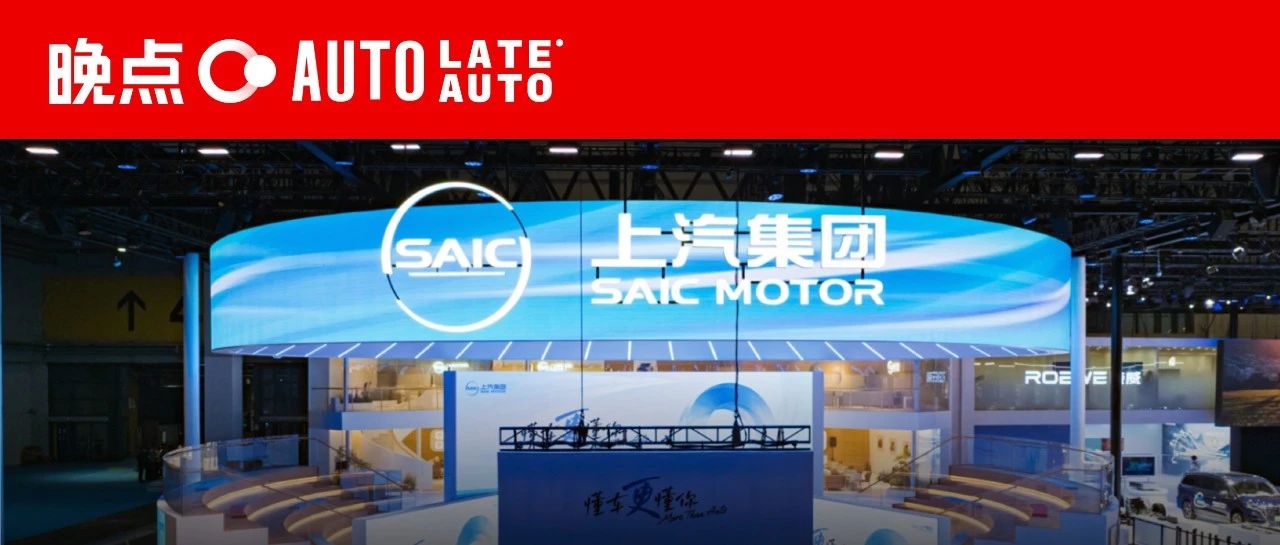
Group 1 - SAIC Group is integrating its component system into two main entities: "upper body" led by Yanfeng and "lower body" which is a new chassis company under preparation [2][4] - The integration aims to enhance collaboration between vehicle manufacturers and component suppliers, moving beyond traditional client-supplier relationships [2][4] - The new chassis company will be formed from several subsidiaries, including Shanghai Huizhong and Lianchuang Automotive Electronics, with a focus on developing a smart chassis architecture [4][5] Group 2 - SAIC has previously restructured its vehicle segment into passenger and commercial vehicle divisions to improve synergy among different entities [4][6] - The "Lingxi Digital Chassis," developed by SAIC, integrates advanced technologies like rear-wheel steering and electronic suspension, aiming to enhance vehicle stability and maneuverability [5][6] - Despite a well-established component industry, SAIC's vehicle business reported a low gross margin of 3.86% last year, compared to 17.91% for its component business, indicating a need for improved competitiveness in the new energy vehicle sector [5][6] Group 3 - The automotive industry is entering a phase of consolidation, with companies like Geely and BYD also restructuring their operations to focus on core technologies and improve efficiency [6]

不犯错,是小鹏现在最正确的事丨一分钟财报
晚点Auto· 2025-05-21 14:52
Core Viewpoint - Xiaopeng Motors has shown improvement in gross margin and a reduction in net loss, positioning itself for greater challenges in the second half of the year [1] Financial Performance - In Q1, Xiaopeng's net loss narrowed to 660 million yuan, a decrease of over 50% year-on-year and quarter-on-quarter, with free cash flow exceeding 3 billion yuan [2] - The overall gross margin reached 15.6%, an increase of 2.7 percentage points year-on-year and 1.2 percentage points quarter-on-quarter; the automotive gross margin was 10.5%, marking a continuous increase for seven consecutive quarters [2] - Despite a quarter-on-quarter revenue decline of 290 million yuan to 15.81 billion yuan, the new vehicle delivery volume increased by 2,500 units to 94,000 units, with the lower-priced MONA M03 accounting for 50.1% of deliveries [2] Revenue Composition - Service revenue, which has a gross margin exceeding 66%, accounted for less than 10% of Xiaopeng's total revenue but contributed nearly 40% of the gross margin, primarily from technology development services related to collaborations with Volkswagen Group [3] Future Outlook - Xiaopeng anticipates continued growth in Q2, with expected deliveries between 102,000 and 108,000 units and revenue projected to be between 17.5 billion and 18.7 billion yuan, representing a year-on-year growth of approximately 115.7% to 130.5% [4] - The company aims for over 100% growth in annual sales and plans to achieve profitability in Q4 while maintaining a scalable free cash flow [4] Competitive Landscape - Xiaopeng faces increasing competition from new entrants like Xiaomi and Li Auto, as well as traditional automakers such as Toyota, Honda, and Volkswagen, who are accelerating their new product launches [5] - The company is transitioning from full-stack self-research to a matrix-style integrated research and development approach to enhance its technological capabilities for long-term competitive success [5]


宁德时代最大的短板是没有短板
晚点Auto· 2025-05-20 13:00
Core Viewpoint - CATL is recognized as a leading company in the battery industry, often referred to as "Ning Wang" in the capital market, due to its ability to turn market concepts into reality. The company recently completed a secondary listing in Hong Kong, raising approximately 45 billion USD, and its market capitalization reached 1.41 trillion HKD, surpassing BYD in momentum [2][3]. Group 1: Company Performance and Market Position - CATL's revenue for Q1 2025 was 847 billion CNY, with a net profit of approximately 140 billion CNY, achieving a record net profit margin of 17.6% [7]. - The company held over 50% market share in China and over 30% globally in 2021, with its largest customer, Tesla, experiencing a 50% annual sales growth at that time [8]. - Despite facing challenges, CATL's global market share continues to grow, with one in three electric vehicles worldwide equipped with CATL batteries [8][11]. Group 2: Strategic Challenges and Competitive Landscape - CATL has faced criticism for its pricing power, with some automakers feeling squeezed by its dominant position. The company has maintained high profit margins, often above 20%, while competitors engage in price wars [18][22]. - The shift in the market towards lower-cost lithium iron phosphate batteries has posed challenges for CATL, which has historically focused on higher-end battery technologies [28]. - The competition from BYD has intensified, particularly in the under 200,000 CNY electric vehicle market, where BYD's sales growth has outpaced CATL's [25]. Group 3: Future Growth and Innovation - CATL is exploring new business avenues, including battery swapping and the development of solid-state batteries, which are seen as crucial for the company's long-term growth [40][46]. - The company has committed to significant R&D investments, with over 700 billion CNY spent in the past decade, aiming to maintain its technological edge [45]. - CATL's leadership emphasizes the importance of continuous improvement and innovation to transition from a leading company to a great company, with a focus on becoming a key player in the global energy landscape [42][44].



消失的门把手:创新,还是为了不同而不同?
晚点Auto· 2025-05-16 14:27
Core Viewpoint - The article discusses the evolution and challenges of hidden door handles in the automotive industry, highlighting their aesthetic appeal and the associated safety concerns that have led to regulatory scrutiny [3][4][5]. Group 1: Product Innovation and Market Trends - Hidden door handles were initially designed for aesthetics and aerodynamics, becoming more common in mainstream vehicles due to technological advancements and cost reductions [4][5]. - Tesla played a significant role in popularizing hidden door handles with the Model S, which integrated this design to enhance the vehicle's technological appeal and performance [5][6]. - The adoption of hidden door handles has increased, with approximately 60% of the top 100 new energy vehicles in China featuring this design [15]. Group 2: Safety and Regulatory Concerns - Recent issues with hidden door handles include problems such as hand pinching, freezing in winter, and sensor failures, prompting regulatory bodies to intervene [5][6]. - The Ministry of Industry and Information Technology in China proposed new safety standards for automotive door handles, addressing concerns about strength, control logic risks, and emergency escape scenarios [6][15]. - The complexity of hidden door handles increases the potential for failure, especially in emergency situations where traditional mechanical systems may be more reliable [13][15]. Group 3: Cost and Engineering Challenges - The implementation of hidden door handles significantly increases vehicle weight and costs, with estimates suggesting a 7-8 kg increase and BOM costs that can be 4-7 times higher than traditional systems [14][15]. - Some manufacturers are adopting hybrid designs, such as semi-hidden handles, to balance aesthetics and functionality while mitigating risks associated with fully electronic systems [14][15]. - The lack of unified industry standards for hidden door handles raises concerns about safety and reliability, as different manufacturers may have varying levels of quality and emergency features [16][17]. Group 4: Future Developments and Innovations - Suppliers are developing safer hidden door handle solutions, including mechanical systems that do not rely on electrical power, ensuring functionality in emergencies [20][21]. - The automotive industry is urged to prioritize safety and quality over cost-cutting measures, as the current trend of focusing on price may lead to increased risks in product reliability [27].


独家丨比亚迪智能化业务新变动:廖杰重回地平线,辅助驾驶、座舱团队整合
晚点Auto· 2025-05-16 10:50
Core Viewpoint - After more than two years of adjustments, BYD's intelligent business structure has entered a relatively stable phase, reflecting the company's strategic focus on intelligent driving and related technologies [2][3]. Group 1: Organizational Changes - Recent personnel changes at BYD's intelligent business unit highlight the company's strategic decisions and investments in intelligent driving, with key figures like Liao Jie and Tang Minxin leaving their positions [3][5]. - Liao Jie, who joined BYD in August 2023, was involved in the self-research of intelligent driving algorithms and has now returned to Horizon Robotics [3][5]. - The restructuring has led to a clearer division of responsibilities within the intelligent business unit, with a focus on integrating intelligent driving and cockpit functions under single management [6]. Group 2: Strategic Focus on Intelligent Driving - BYD has elevated intelligent driving to one of its core strategies, with significant investments and rapid recruitment aimed at catching up in the market [5][6]. - The company has formed two major self-research teams, "Tianxuan" and "Tianlang," which were later consolidated into a single team to streamline operations [5][6]. - The integration of intelligent driving and cockpit management is seen as a way to reduce costs and improve efficiency, aligning with the trend of combining these functionalities into a single computing chip [6]. Group 3: Technological Development and Market Position - BYD is focused on the self-research and mass production of the "Tianshen Zhi Yan B" platform, which aims to implement advanced driving features at a lower cost by replacing supplier solutions with in-house developments [6]. - The company has successfully validated this strategy with the "Tianshen Zhi Yan C" platform, demonstrating its capability to integrate advanced features into more affordable vehicle models [6]. - Unlike other emerging car manufacturers, BYD, as the world's top-selling new energy vehicle company, balances its desire for technological leadership with cost and return considerations, setting a sales target of 5.5 million vehicles for the year [6].

“一个吉利” 加速成形:确定的和未知的
晚点Auto· 2025-05-15 15:38
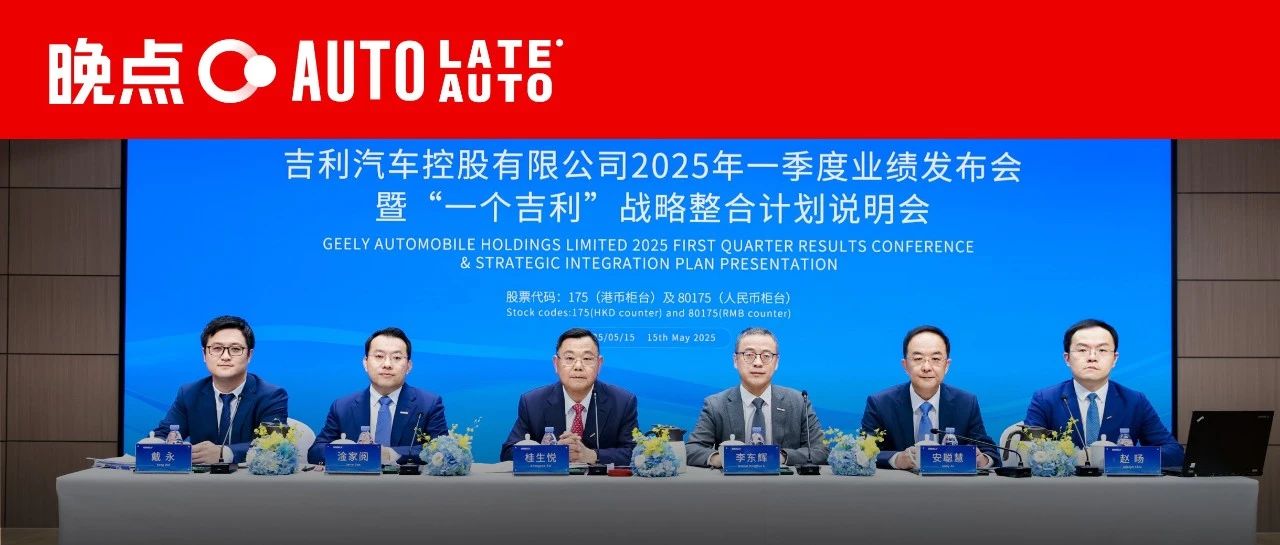
Core Viewpoint - Geely Auto aims to consolidate its brands and resources to enhance competitiveness in a challenging market environment, as stated by CEO Gui Shengyue during the Q1 earnings call [2]. Financial Performance - In Q1, Geely's new car sales reached 704,000 units, a year-on-year increase of 48% - Revenue was 72.5 billion yuan, up 25% year-on-year - Net profit attributable to shareholders was 5.67 billion yuan, with a significant year-on-year growth of 264% [2]. Strategic Moves - Geely announced plans to acquire the remaining shares of its U.S.-listed subsidiary, Zeekr, aiming for full privatization and delisting from the NYSE [2][4]. - The privatization process involves several stages, including negotiations on merger terms and a shareholder meeting for approval [5]. Management Changes - Following the merger, key management changes include: - Gan Jiayue will become CEO of Geely Auto Group, expanding his responsibilities - An Conghui will take over as CEO of Geely Holding Group - Li Donghui will transition to Vice Chairman of Geely Holding Group [6]. Cost Reduction Goals - Post-merger, Geely aims to achieve a cost reduction target of over 15% in R&D, management, and marketing [8]. - The company plans to save at least 900 million yuan in R&D expenses in Q2 compared to the previous year [8]. Integration Challenges - The integration of Zeekr into Geely's structure raises questions about resource allocation and operational efficiency, especially given the different incentive mechanisms of the two companies [12][13]. - The complexity of integrating various brands and ensuring effective collaboration remains a significant challenge for Geely [12][13]. Market Positioning - After the merger, Zeekr will be positioned as a global luxury technology brand, while Lynk & Co will focus on the global high-end new energy market [12]. - The consolidation aims to enhance operational efficiency and reduce redundant investments across Geely's extensive brand portfolio [12]. Future Outlook - Geely's management believes that the merger will facilitate better internal collaboration among its brands, potentially leading to improved performance and market competitiveness [10][11]. - However, uncertainties remain regarding how the integration will affect Zeekr's strategic importance and operational independence [11].
对话印奇:节奏比方向重要,智驾冲刺的信号已经响起
晚点Auto· 2025-05-12 14:47
Core Viewpoint - The article discusses the transformation of Qianli Technology under the leadership of CEO Yin Qi, focusing on the integration of AI and automotive technology, aiming to create a sustainable business model that emphasizes the importance of a commercial loop in the AI industry [4][22]. Group 1: Company Transformation - Yin Qi transitioned from the founder of Megvii to the chairman of Qianli Technology, which was previously known as Lifan Technology, with a strategic focus on "AI + Vehicle" [4][5]. - The restructuring aims to leverage existing partnerships with major stakeholders like Geely Group and local governments to enhance Qianli's position in the automotive intelligence supply chain [4][22]. - The company is shifting its focus from pure AI research to practical applications in robotics and automotive technology, emphasizing the need for a commercial model to support technological advancements [4][18]. Group 2: Market Dynamics - The AI industry is experiencing a shift where the focus is moving from pure technology development to creating practical applications that can generate revenue [4][14]. - Yin Qi believes that the future of AI lies in integrating large models with real-world applications, particularly in the automotive sector, where data-driven solutions will be crucial [14][38]. - The competitive landscape is expected to consolidate, with only a few key players emerging as leaders in the AI and automotive integration space [3][38]. Group 3: Strategic Insights - Yin Qi emphasizes the importance of a sustainable business model, stating that without a solid commercial loop, technological advancements cannot be maintained [18][17]. - The company aims to create a dual strategy focusing on both hardware and software integration, which is seen as essential for long-term success in the AI and automotive sectors [22][29]. - Yin Qi's experience highlights the necessity of adapting business strategies based on market conditions and the importance of maintaining a balance between innovation and practical application [4][31].