阿尔法工场研究院

Search documents
口子窖或交出最差年报,实控人刚套现3个亿
阿尔法工场研究院· 2026-01-09 00:04
Core Viewpoint - The article highlights the significant decline in the financial performance of Kuaijiao, a Chinese liquor company, with a projected net profit drop of 50% to 60% for the year 2025 compared to the previous year, primarily due to market differentiation and declining demand in the high-end liquor segment [5][7]. Financial Performance Summary - Kuaijiao expects a net profit attributable to shareholders of between 662 million to 828 million yuan for 2025, a decrease of 828 million to 993 million yuan from the previous year, representing a year-on-year decline of 50% to 60% [5][7]. - The company anticipates a net profit of 645 million to 811 million yuan after excluding non-recurring gains and losses, which is a reduction of 799 million to 965 million yuan from the previous year, indicating a decline of 49.65% to 59.93% [5][7]. - In the first three quarters of 2025, Kuaijiao reported revenue of 3.174 billion yuan, down 27.24% year-on-year, and a net profit of 742 million yuan, a decrease of 43.39% year-on-year [7][8]. Product Segment Analysis - High-end liquor sales accounted for 95% of Kuaijiao's total revenue in the first three quarters of 2025, with sales revenue of 2.96 billion yuan, reflecting a year-on-year decline of 27.98% [9][11]. - Mid-range liquor sales were 41 million yuan, down 15.38% year-on-year, while low-end liquor sales increased by 25.09% to 114 million yuan [9][11]. Regional Sales Performance - Kuaijiao's revenue in Anhui province, its home market, fell by 27.24% to 2.587 billion yuan, while revenue from outside the province decreased by 23.93% to 530 million yuan, indicating a more significant decline in the home market [9][12]. Shareholder Activity - Despite the poor performance, Kuaijiao's controlling shareholder, Liu Ansheng, reduced his stake by selling up to 10 million shares in July 2025, amounting to 3.3 billion yuan at a price of 32.92 yuan per share [12][14]. - Following the share reduction, Kuaijiao's stock price experienced a significant drop, falling below 30 yuan per share by December 10, 2025, with an annual decline of nearly 21% compared to an 18.41% increase in the Shanghai Composite Index [14][16].


刚换帅、裁员又全球召回,雀巢中国能否破局?
阿尔法工场研究院· 2026-01-09 00:04
Core Viewpoint - Nestlé faces a significant challenge in the Chinese market due to a global food safety alert that has led to the recall of infant formula products, coinciding with strategic adjustments within the company [2][4]. Group 1: Product Recall and Safety Concerns - Nestlé announced a preventive recall of infant formula in 31 countries, including China, due to potential contamination from a supplier's raw material [2][4]. - The recall involves 30 batches of products from four brands, including "Liduo Jing" and "Platinum Neng En," while major products like "Super Q Neng En" and "Qifu" remain unaffected [4]. - The recall is a precautionary measure, with no reported consumer illnesses, but it raises concerns about consumer trust in Nestlé's products [4][15]. Group 2: Management Changes and Strategic Adjustments - A new management team for Nestlé's nutrition business in China has been established, led by CEO Xie Guoyao, who faces immediate challenges due to the recall [5][8]. - The merger of Nestlé's infant nutrition business with Wyeth aims to enhance operational efficiency, but the recall tests the new team's ability to manage crises and maintain consumer trust [5][8]. - The new CEO, Kais Marzouki, has been tasked with reversing a trend of declining sales in the Chinese market, which has seen a drop from 6.913 billion Swiss francs in 2019 to 5.558 billion Swiss francs in 2024 [10]. Group 3: Market Performance and Competitive Landscape - Nestlé's infant nutrition business has struggled, with market share dropping from approximately 13% in 2019 to 10.7% in 2022, facing competition from local brands like Feihe and Junlebao [5][7]. - The company has experienced a -6.1% organic growth rate in the Greater China region, with the infant nutrition segment being a significant contributor to this decline [7][10]. - Local brands are gaining market share by leveraging localized formulas and lower prices, further challenging Nestlé's position in the market [13]. Group 4: Global Restructuring and Cost-Cutting Measures - Nestlé plans to lay off 16,000 employees globally, aiming for annual cost savings of 1 billion Swiss francs by 2027, with a focus on replacing human labor with technology [12][14]. - The restructuring includes optimizing overlapping white-collar positions, which may provide financial flexibility for investment in technology and food safety in China [12][14]. - Despite these efforts, there are concerns about the impact of layoffs on research and development capabilities, as well as the potential for increased scrutiny from consumers regarding product safety [13][15]. Group 5: Future Outlook and Challenges - The year 2026 is seen as a critical period for Nestlé in China, as the effectiveness of the merged nutrition business and the new management strategies will be tested [15]. - The company must address the immediate fallout from the recall while also adapting to changing consumer demands and accelerating product innovation to regain market share [15].
康师傅新帅上任,如何让方便面“值得吃”?
阿尔法工场研究院· 2026-01-08 00:05
Core Viewpoint - The article discusses the challenges faced by Master Kong (康师傅) as it transitions under the leadership of new CEO Wei Hongcheng, emphasizing the need for the company to redefine its value proposition to modern consumers amidst declining sales in its instant noodle segment and increasing competition in the beverage market [4][11]. Group 1: Instant Noodle Business Challenges - Master Kong's instant noodle business has seen a decline in revenue for three consecutive years, dropping from 29.634 billion yuan in 2022 to 28.414 billion yuan in 2024, with a further 2.5% decrease in the first half of 2025 [10]. - The traditional convenience of instant noodles is being undermined by the rise of food delivery services and a growing variety of ready-to-eat meals, leading to a shift in consumer preferences [9]. - Health consciousness among consumers has negatively impacted the perception of instant noodles, which are often viewed as high in oil and salt [10]. Group 2: Beverage Segment Performance - Since Wei Hongcheng took over the beverage division in 2019, Master Kong has expanded its product range significantly, with beverage revenue increasing from 35.6 billion yuan in 2019 to 51.621 billion yuan in 2024, accounting for 64% of total revenue [12]. - Despite this growth, the beverage segment faced a rare decline of 2.6% in revenue in the first half of 2025, indicating potential challenges ahead [13]. - The competition in the sugar-free tea market is intensifying, with rivals like Nongfu Spring and Suntory gaining market share, while Master Kong struggles to establish a strong brand identity [13]. Group 3: Distribution and Brand Trust Issues - Master Kong's distribution network has shrunk significantly, with the number of distributors dropping from 76,875 in 2024 to 67,215, marking the largest decline in five years [15]. - A price increase in 2024 for several key products has led to consumer dissatisfaction, as competitors have not followed suit and have increased promotional efforts [15]. - The brand's credibility is at risk as consumers perceive new products as mere marketing gimmicks rather than genuine improvements, leading to a loss of loyalty [16]. Group 4: Leadership and Future Directions - Wei Hongcheng's appointment as CEO is seen as a pivotal moment for Master Kong, requiring a shift from merely managing beverages to a comprehensive strategy that rebuilds brand trust and addresses the challenges in the instant noodle segment [17]. - The company must answer critical questions about revitalizing its instant noodle offerings, establishing a distinctive brand in the beverage market, and restoring trust with both distributors and consumers [17]. - The year 2026 is highlighted as a crucial period for Master Kong to adapt and thrive in a rapidly changing consumer landscape dominated by Generation Z [17].
遭吉利23亿天价索赔,电池龙头欣旺达错了吗?
阿尔法工场研究院· 2026-01-08 00:05
Core Viewpoint - The recent lawsuit between XWANDA and Geely highlights significant quality issues in battery production, which may jeopardize XWANDA's upcoming IPO and reflects broader industry challenges related to rapid expansion and quality control [6][11][20]. Group 1: Lawsuit and Financial Impact - XWANDA announced a major economic loss due to quality issues in battery cells, resulting in a compensation claim of 2.314 billion yuan from Geely's subsidiary, which accounts for 90% of XWANDA's net profit for 2023 and 2024 [6][11]. - Following the announcement, XWANDA's stock plummeted by 15.97% at the opening and closed down 11.39%, leading to a market value loss of 6.3 billion yuan in a single day [6][11]. - The lawsuit could potentially derail XWANDA's plans for a Hong Kong IPO, which was submitted in July 2025 [6][11]. Group 2: Quality Issues and Industry Context - The lawsuit reveals underlying quality problems in the battery industry, exacerbated by rapid production expansion and intense competition, which have led to compromised quality control [20][23]. - XWANDA's production capacity surged from 4 GWh in 2018 to a planned 140 GWh by 2025, with a significant increase in battery shipments, reflecting the industry's aggressive growth strategy [17][20]. - The electric vehicle market's explosive growth has resulted in numerous quality complaints from major automakers, indicating that XWANDA's issues are part of a larger trend affecting the industry [20][23]. Group 3: Customer Reactions and Brand Image - Following battery quality complaints, Geely's brand, Zeekr, faced significant backlash, leading to a costly battery replacement program estimated at 2 to 2.4 billion yuan for around 40,000 vehicles [8][12]. - XWANDA's reputation has suffered as consumers express concerns over battery quality, with some customers of Li Auto opting to cancel orders when informed their vehicles would be equipped with XWANDA batteries [12][14]. - The negative publicity surrounding battery quality issues has resulted in a broader loss of consumer trust in XWANDA and potentially other manufacturers in the industry [14][20]. Group 4: Industry-Wide Challenges - The rapid expansion of battery production capacity has led to a significant increase in output, from 83.4 GWh in 2020 to an estimated 826 GWh by 2024, raising concerns about quality management [20][21]. - The intense price competition in the battery market has prompted some manufacturers to cut corners, leading to safety risks and quality failures [21][22]. - Regulatory bodies are beginning to address these quality issues, with new safety standards being implemented to ensure battery safety and reliability [31][33].


徒手拌奶茶、高含咖啡因,霸王茶姬真让人上头
阿尔法工场研究院· 2026-01-08 00:05
Core Viewpoint - The incident involving a staff member of Bawang Chaji preparing tea in an unsanitary manner has led to a significant trust crisis regarding food safety for the brand, despite the company's rapid expansion and unique positioning in the market [2][11][28]. Group 1: Incident Overview - A viral video showed a Bawang Chaji employee preparing tea without gloves or masks, leading to public outrage and scrutiny of the brand's food safety practices [1][4][5]. - The company quickly announced measures in response to the incident, including the indefinite closure of the involved store and the dismissal of the employee [11][10]. - Despite the company's claims that the incident was an isolated case, there are concerns about systemic food safety issues within the brand [16][19]. Group 2: Business Performance and Challenges - Bawang Chaji has experienced a decline in single-store GMV for seven consecutive quarters, raising questions about its ability to balance rapid expansion with food safety and profitability [2][24]. - The brand's aggressive expansion strategy has resulted in over 7,338 stores by Q3 2025, but this has led to increased competition and reduced profitability per store [22][24]. - The total GMV for Bawang Chaji was approximately 79.3 billion, down from 83.01 billion the previous year, indicating a significant drop in sales despite the increase in store numbers [24]. Group 3: Market Position and Competitive Landscape - Bawang Chaji's rapid growth has outpaced competitors like Heytea and Nayuki, but this has also resulted in high store density and intense competition in key markets [22][26]. - Other leading tea brands are slowing their expansion, contrasting with Bawang Chaji's aggressive growth strategy, which may lead to sustainability issues in the long run [26][27]. - The brand's high caffeine content in its products has also sparked consumer concerns, further complicating its market position [19][20]. Group 4: Operational and Management Issues - The company faces challenges in maintaining food safety standards across its franchise network, with reports of unsanitary practices and customer complaints about product quality [19][25]. - Bawang Chaji's franchise model, which accounts for over 80% of its stores, raises questions about the effectiveness of its management and oversight of franchisees [25][24]. - The need for a robust franchise management system is critical to prevent hygiene issues and service disputes, which could undermine the brand's reputation [25][28].

300公里高空跑大模型,苏州科达押注遥感卫星万亿赛道
阿尔法工场研究院· 2026-01-07 00:04
Core Viewpoint - The article discusses the innovative application of hyperspectral remote sensing technology, particularly through the efforts of Suzhou Keda, which aims to integrate AI models into satellites for enhanced environmental monitoring and data analysis [6][7][8]. Group 1: Hyperspectral Technology Overview - Hyperspectral remote sensing captures hundreds of continuous spectral bands, allowing for detailed identification of material compositions, such as detecting nitrogen deficiency in crops or identifying pollution sources [9][10]. - The technology is increasingly being utilized in various fields, including environmental monitoring, agriculture, and emergency response, due to its ability to provide deep insights rather than just broad coverage [9][10]. Group 2: Development and Commercialization - China has launched over 20 hyperspectral satellites as part of its long-term strategy for environmental monitoring, establishing a preliminary integrated observation network [11][14]. - The commercialization of hyperspectral data is beginning to take shape, with the first domestic case of hyperspectral data being valued at over 27 million yuan, indicating a shift towards recognizing remote sensing data as a tradable digital asset [14]. Group 3: Suzhou Keda's Innovations - Suzhou Keda is leading the development of a hyperspectral satellite that will be the first fully privately developed and operated in China, featuring an integrated AI system for on-orbit data processing [16][17]. - The satellite aims to reduce data transmission by 90% and improve response times from hours to minutes by processing data in space and only transmitting high-value information [17][18]. Group 4: Integrated Ecosystem Approach - The company is not only focusing on a single satellite but is also developing a comprehensive ecosystem that integrates satellite, drone, and ground-level data processing to enhance the utility of hyperspectral technology [20][26]. - This integrated approach aims to create a closed-loop system for real-time monitoring and response, leveraging the company's existing expertise in various environmental applications [26]. Group 5: Future Prospects and Challenges - While the technology is promising, challenges remain, including low data utilization rates and the need for industry standards, as many users prefer cheaper alternatives [20][26]. - The success of this initiative will depend on collaboration between state-owned enterprises and private companies, as well as the integration of hyperspectral data into smart city frameworks [26].


董宇辉爆单沙发陷“代工”争议,背后老板是“美的太子”
阿尔法工场研究院· 2026-01-07 00:04
Core Viewpoint - The article discusses the recent performance and controversies surrounding Kuka Home, particularly focusing on a successful live-streaming event led by Dong Yuhui, which raised questions about the company's production practices and financial health [4][10][11]. Group 1: Company Performance - Kuka Home experienced a decline in revenue and net profit in 2024, but showed signs of recovery in the first three quarters of 2025, with revenue and net profit increasing by 8.77% and 13.24% respectively [8][30]. - The company's sofa products are a significant revenue driver, contributing 56.67 billion yuan in the first half of 2025, up from 49.42 billion yuan in the same period the previous year, marking a growth of 14.68% [17]. - Despite the revenue growth, Kuka Home's accounts receivable increased by 22.94% year-on-year, raising concerns about cash flow and financial management [9][30]. Group 2: Controversies and Production Practices - Following a live-stream event where a sofa sold over 1 billion yuan, there were allegations regarding whether the products were manufactured in-house or outsourced to third parties, leading to market speculation about production capabilities [5][14]. - Kuka Home's management clarified that the sofas sold during the live stream were self-manufactured, and they are accelerating production to meet demand [6][15]. - The company maintains a production model that primarily focuses on self-manufacturing, supplemented by external production to address capacity issues [16]. Group 3: Leadership and Ownership Changes - Kuka Home's actual control shifted from the Gu family to He Jianfeng, son of Midea Group's founder, following a significant share transfer in January 2024 [25]. - The new leadership has faced challenges, with Kuka Home reporting a 3.81% decline in revenue and a 29.38% drop in net profit for 2024, indicating a tough transition period [27][29]. - The company has initiated a capital increase plan to raise 19.97 billion yuan for various projects, including 10 billion yuan for working capital, which has drawn scrutiny due to the significant price difference from the market value at the time of announcement [26].
米哈游押注的卡牌奢侈品,估值狂飙20倍
阿尔法工场研究院· 2026-01-07 00:04
Core Viewpoint - Suplay, a card company, is preparing for an IPO, focusing on collectible cards and aiming to test the long-term growth potential of the collectible card business model in China [4][24]. Group 1: Company Overview - Suplay specializes in collectible cards, distinguishing itself from social trading cards popular among youth, with products including cultural heritage cards and popular IP collaborations [4]. - The company ranks first in the Chinese collectible non-combat card market by GMV for 2024, holding a market share greater than the second and third competitors combined [4]. - In the first nine months of 2025, Suplay reported revenues of 283 million yuan, with adjusted net profits nearing 100 million yuan [4]. Group 2: Business Model and Strategy - Suplay began as a secondary market trading platform for collectibles, addressing inefficiencies in the trading of blind box items [5][6]. - The company transitioned from being a platform to a brand by launching its own high-end collectible card brand, Kakawo, focusing on adult collectors [8][9]. - Suplay's revenue is increasingly driven by collectibles, which accounted for over 70% of total revenue in the first nine months of 2025, up from less than half in 2023 [14]. Group 3: Financial Performance - Suplay's revenue grew from 146 million yuan in 2023 to an estimated 281 million yuan in 2024, with a significant increase in net profit from 2.95 million yuan in 2023 to 49.12 million yuan in 2024 [13]. - The company's gross margin improved from 41.7% in 2023 to 54.5% in the first three quarters of 2025, driven by the higher margins associated with collectible cards compared to blind box products [14]. Group 4: Market Position and Competitive Advantage - Suplay has established partnerships with top global IPs, including Disney and MiHoYo, enhancing its product offerings and market appeal [9][12]. - The company targets a demographic of 18-35-year-olds, positioning its products as collectible assets rather than mere toys, which differentiates it from traditional card games [20][21]. - Suplay's unique market strategy includes a strong community and trading functionality within its app, allowing users to track real-time market prices for their cards, fostering a perception of cards as tradable assets [22]. Group 5: Future Outlook and Challenges - The collectible card market in China is projected to exceed 30 billion yuan by 2025, with Suplay aiming to capture a significant share of this growing market [19]. - Suplay faces challenges related to its dependency on a few key IPs for revenue and the need to diversify its distribution channels beyond traditional distributors [15][16]. - The company plans to use IPO funds to expand its IP portfolio globally and explore the development of trading card games (TCGs) to enhance the longevity of its products [24].

金风科技“炼金术”
阿尔法工场研究院· 2026-01-07 00:04
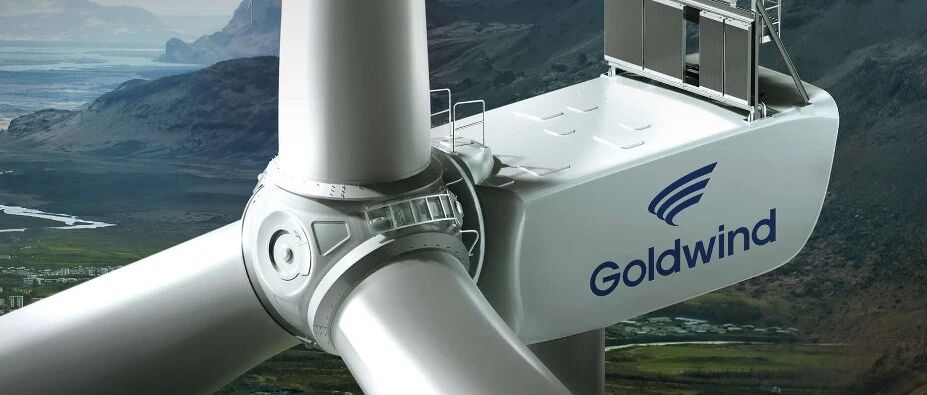
Core Viewpoint - The article discusses the recent surge in stock prices of Goldwind Technology (金风科技) driven by the excitement surrounding the IPO of Blue Arrow Aerospace (蓝箭航天), highlighting the strategic investments and potential synergies between the two companies in the clean energy and aerospace sectors [4][19]. Group 1: Investment and Financial Performance - Goldwind Technology's stock price reached a historical high, with a nearly 21% increase on the first trading day of 2026 in Hong Kong, attributed to the IPO acceptance of Blue Arrow Aerospace [4]. - Blue Arrow Aerospace aims to raise approximately 7.5 billion RMB through its IPO, with an estimated valuation of 75 billion RMB, significantly benefiting Goldwind's investment, which has appreciated over five times since its initial investment of 500 million RMB in 2018 [8][19]. - Goldwind's investment strategy has evolved from early-stage investments to focusing on mid-to-late stage projects with clear technological paths and market prospects, reflecting a more mature investment approach [10][19]. Group 2: Strategic Synergies and Technological Innovations - The collaboration between Goldwind and Blue Arrow Aerospace highlights potential technological synergies, such as the application of aerospace lightweight carbon fiber technology in Goldwind's wind turbine blades [8]. - Goldwind is exploring the feasibility of using high-purity liquid methane produced from its green methanol and green hydrogen projects as rocket fuel, indicating a cross-industry innovation strategy [8][19]. - The investment in Blue Arrow Aerospace is seen as a strategic move to extend Goldwind's industrial capabilities and mitigate risks associated with its core wind energy business [20][22]. Group 3: Market Dynamics and Future Outlook - The wind energy sector is facing intense competition and pricing pressures, leading to a plateau in profitability for Goldwind's core business, while investment returns from ventures like Blue Arrow Aerospace are becoming increasingly significant [19][22]. - The article emphasizes the need for traditional manufacturing companies to adapt their investment strategies to navigate the challenges of low margins in manufacturing and leverage high-return opportunities in emerging technologies [22]. - Goldwind's approach to investing in hard technology sectors is positioned as a means to counterbalance the cyclical nature of its primary business, suggesting a shift towards a more diversified asset portfolio [19][22].

鑫元基金,出了个年度“亏损王”
阿尔法工场研究院· 2026-01-07 00:04
影响价值圈层!创立于2011年,关注中国最具价值公司,是新中产的财富顾问。 导语:基金规模持续萎缩。 2025年是A股牛市第二年, 全市场4378只主动权益类基金超九成取得正收益 ,平均收益率超30%。 当 永赢科技智选基金踩中科技风口大涨 超 233 % 、 打破基金业17年历史纪录, 另一边却有产品逆势大跌近 20% 。 以下文章来源于深蓝财经 ,作者深蓝财经 深蓝财经 . Choice 数据显示,2025年, 鑫元消费甄选在主动 权益基金中亏损幅度最大,年内A/C份额净值均跌 近20 % ,在同类排名中分列最后两位。 | 序号 | 基金名称 | 2025年年年度的篇) | 故益率的同类排名 | 基金经理 | 成立时间 | | --- | --- | --- | --- | --- | --- | | | 蒸元消费甄选混合发起A | -19.6477 | 8051/8052 | 姚启辑 | 2023-03-24 | | | 由万泰信医药先锋股票A | -17.2888 | 4368/4369 | 姚宏福 | 2020-11-16 | | 3 | 中信建投留章生活A | -16.3290 | 8048/80 ...