阿尔法工场研究院

Search documents
专家访谈汇总:嘉士伯“抢注”山城商标,民族品牌“被边缘化”?
阿尔法工场研究院· 2025-06-02 13:38
Group 1: Investment Opportunities in Tourism and CRO Industry - Mid-term focus on companies in the tourism service sector such as China Youth Travel Service, China Duty Free Group, Songcheng Performance, and Jinjiang Hotels, especially those targeting mid-to-high-end tourism consumption and high-growth regions like East and South China [1] - The domestic CRO industry has transitioned from a boom driven by policy and capital to a downturn dominated by oversupply and shrinking demand, indicating a clear mid-to-long-term investment logic due to policy catalysts and concentration among leading firms [3] - For investors with higher risk tolerance, the current period may present a left-side opportunity to invest in quality CRO companies, with a recommendation to closely monitor policy developments and changes in the fundamentals of leading firms [3] Group 2: Trends in Livestock and New Energy Vehicles - Short-term caution against heavily investing in pig farming stocks such as Wens Foodstuffs, Muyuan Foods, and Zhengbang Technology, as profitability remains challenged [3] - The pig industry is currently experiencing a phase of high prices stagnating, rising costs, and cautious restocking, leading to compressed profits across the industry chain, which is unfavorable for the recovery of farming profitability [3] - Data indicates a significant increase in the acceptance of new energy vehicles for long-distance travel, suggesting a structural change in user behavior beyond urban commuting [2] Group 3: Developments in Pharmaceutical Retail - The launch of the first national standard for research-oriented pharmacies marks a significant step in integrating pharmacies into the clinical research system, enhancing the diversity and validity of data samples for traditional Chinese medicine [6][7] - Major chain pharmacies like Yifeng Pharmacy, Dazhenglin, and Lao Baixing are expected to lead the transformation into research-oriented pharmacies, equipped with necessary data collection devices and quality control systems [7] - Traditional Chinese medicine companies such as Tongrentang, Yunnan Baiyao, Yiling Pharmaceutical, and Kangyuan Pharmaceutical may benefit from this new model by expanding real-world data channels and improving the success rate of new drug registrations [6]

今年最尴尬的科技产品,可能是AI眼镜
阿尔法工场研究院· 2025-06-02 13:38
Core Viewpoint - The AI glasses market is rapidly evolving with numerous new products launched, but a killer feature is still needed for widespread consumer adoption [3][14][15]. Group 1: Market Dynamics - In May 2023, multiple companies including Thunderbird, Google, and Lenovo launched new AI glasses, totaling ten new products in the month [1][3]. - The competitive landscape is characterized by a "three kingdoms" scenario at the forefront, with Google and Qualcomm standardizing systems and chips, thus lowering production barriers [2][4]. Group 2: Product Development - The AI glasses industry is reaching a mature stage, with hardware and software consensus among manufacturers [4][8]. - Upcoming AI glasses are expected to feature high-end smartphone-like chip configurations, with Qualcomm's SoC becoming the mainstream choice [5][7]. - Recent AI glasses weigh under 40g, significantly lighter than previous models, enhancing user comfort for prolonged wear [7]. Group 3: Software Integration - AI glasses manufacturers are leveraging advancements in AI large models to enhance functionality, with companies like Rokid collaborating with Alibaba to enrich their software ecosystems [8][10]. - Some manufacturers are adopting Android systems to expedite software development, allowing for a broader range of applications [10][12]. Group 4: Consumer Insights - The current consumer demand for AI glasses leans more towards display capabilities rather than AI functionalities, as evidenced by the market dominance of AR glasses [15]. - Despite the advancements, many consumers find the AI features underwhelming, particularly in terms of speed and practicality [16][17]. Group 5: Future Outlook - The industry is experiencing a "Cambrian explosion" of product offerings, raising questions about market absorption capacity [13]. - There is a need for further refinement in AI glasses to enhance user experience and practical applications, suggesting a period of adjustment between the products and market expectations [18].

创始人儿子上任不到一年,珀莱雅昔日功勋几乎全数出局
阿尔法工场研究院· 2025-06-02 13:38
Core Viewpoint - The article discusses the leadership transition at Proya, highlighting the challenges faced by the new CEO, Hou Yameng, in shifting the company's focus from marketing to research and development, amidst significant executive turnover and a legacy of high marketing expenses [1][10]. Group 1: Leadership Changes - Wang Li, the Vice General Manager and Secretary of the Board, resigned two years before her term ended, indicating potential instability in the company's leadership [4]. - Several key executives, including the R&D Director and Chief Marketing Officer, have left the company recently, suggesting a significant shift in the management team [4][5]. - Hou Yameng, the son of the company's actual controllers, has taken over as CEO, marking a generational transition in leadership [5]. Group 2: R&D and Marketing Focus - Despite Hou Yameng's efforts to enhance R&D hiring, Proya still struggles with the perception of being "heavy on marketing and light on R&D" [10]. - In 2024, Proya's sales expenses reached 5.16 billion yuan, a 30% increase year-on-year, with a sales expense ratio of 48% [10]. - The company's R&D expense ratio has remained around 2%, which is relatively low compared to industry standards, indicating a potential area for improvement [10]. Group 3: Historical Context - Proya's rise can be attributed to effective marketing strategies, including collaborations with influencers and the introduction of popular product lines [8][9]. - The company's founder, Hou Jun Cheng, initially built trust by distributing established brands before launching Proya as its own brand [7][8].


王石回归救火,但万科已非当年
阿尔法工场研究院· 2025-06-02 13:38
Core Viewpoint - The article discusses the potential return of Wang Shi to Vanke amid significant financial losses, highlighting the shift in the company's governance structure and the implications for both Wang and Vanke's future [2][6][10]. Group 1: Wang Shi's Influence and Company Dynamics - Wang Shi's influence at Vanke has diminished due to the institutionalization of decision-making processes, making it difficult for him to exert authority without going through formal channels [2][8]. - The company has undergone a transformation since 2017, with a shift from a private enterprise to one with state-owned enterprise characteristics, leading to a disconnect between Wang Shi and the current management [7][8]. - Vanke's current management structure reflects a deep integration into the state-owned governance system, indicating that the company is no longer solely Wang Shi's [9][10]. Group 2: Financial Challenges and Market Reactions - Vanke reported a staggering loss of approximately 495 billion yuan, which raises concerns about its financial stability and the burden of short-term debts amounting to 150 billion yuan, creating a daily repayment pressure of over 4 billion yuan [16][17]. - Despite Wang Shi's public statements expressing a sense of responsibility towards Vanke, the stock market did not react significantly to his comments, indicating a rational response from investors [6][12]. Group 3: Personal Considerations and Future Implications - Wang Shi's personal life, including his responsibilities as a father to a young daughter, complicates the decision to return to Vanke, as he must weigh family obligations against the high risks associated with a potential comeback [18][19][20]. - The article suggests that returning to Vanke at this critical juncture would require Wang Shi to risk his long-established reputation and personal stability, which contrasts with his historically cautious approach to business [17][19].


华熙生物“大战”巨子生物,这场公关战到底有多惨烈?
阿尔法工场研究院· 2025-05-29 13:40
Core Viewpoint - The public relations battle between Huaxi Biological and Juzhi Biological has led to a significant market value loss for Juzhi Biological, amounting to 17.4 billion yuan in just 10 days [4]. Group 1: Public Relations Battle - Huaxi Biological publicly criticized the capital market's behavior of favoring collagen while disparaging hyaluronic acid, directly naming Juzhi Biological and several brokerage firms [3][4]. - Juzhi Biological's market value dropped from 90.9 billion yuan to 73.5 billion yuan within 10 days, a decrease of 17.4 billion yuan [4]. - The negative publicity may impact consumer sentiment and Juzhi Biological's performance during the upcoming 618 promotional event [4]. Group 2: Controversial Testing Methods - The primary controversy revolves around the testing methods used to assess the collagen content in Juzhi Biological's products [5][6]. - A beauty blogger claimed that the actual collagen content in Juzhi Biological's product was only 0.0177%, significantly below the stated standard of ≥0.1% [9]. - Juzhi Biological defended its testing methods, stating that the blogger's approach lacked industry standards and that they were involved in formulating these standards [11]. Group 3: Timeline of Events - On May 17, Huaxi Biological published a critical article targeting Juzhi Biological and brokerage firms [18]. - Juzhi Biological did not respond initially, leading to perceptions of a "pillow fight" in the public relations battle [18]. - The timeline of events suggests a coordinated effort by the blogger to raise questions about Juzhi Biological's products, particularly before the 618 sales event [22][23]. Group 4: Industry Implications - The incident serves as a cautionary tale for other beauty and skincare brands regarding the importance of protecting their core assets, particularly product ingredients and their efficacy [33]. - Companies are urged to establish robust standards and testing methods to safeguard against potential public relations crises [34]. - The need for a credible third-party testing framework is emphasized, as the absence of such standards can lead to consumer distrust and brand damage [30].


专家访谈汇总:被成本逼退的化工巨头们
阿尔法工场研究院· 2025-05-29 13:40
Quantum Computing and Cloud Integration - Quantum computing leverages the properties of quantum bits to achieve parallel processing capabilities that traditional computing cannot match, significantly enhancing the speed and efficiency of cloud computing platforms in handling large-scale complex data [1] - Quantum cryptography utilizes quantum entanglement and key distribution to provide theoretically unbreakable communication security, addressing major security concerns in traditional cloud computing [1] - The integration of quantum computing and cloud computing not only enhances basic computing capabilities but also fosters new application models in key areas such as artificial intelligence, cryptography, materials science, and drug development [1] - The maturation of quantum simulation and optimization algorithms is expected to drastically shorten the cycle and cost of drug and new material development, presenting strong commercial prospects and investment value, particularly for cross-industry integrated technology companies and related startups [1] - Current quantum computing hardware is still in its early stages, with quantum bit scale and stability being core bottlenecks, but rapid technological innovations are emerging, including new quantum chips, novel quantum gates, and low-noise architectures [1] - Investors should closely monitor technological breakthroughs and policy trends, prioritizing investments in core companies with R&D capabilities and policy support to seize the window of accelerated industry development [1] Novartis Innovative Drug - PNH is a rare and life-threatening clonal disease of hematopoietic stem cells, primarily characterized by chronic intravascular hemolysis, with a high risk of renal failure [3] - Current mainstream treatments rely on complement C5 inhibitors (such as eculizumab and ravulizumab), which effectively control intravascular hemolysis but still leave some patients with persistent anemia due to extravascular hemolysis, while intravenous administration increases the treatment burden on patients, affecting their quality of life and compliance [3] Chemical Industry Developments - Iptacopan targets the complement system bypassing the B factor, inhibiting the formation of C3 and C5 convertases, thus controlling both intravascular and extravascular hemolysis, providing a more comprehensive hemolysis management compared to traditional C5 inhibitors [3] - Based on the APPLY-PNH head-to-head study, iptacopan shows superior performance in hemoglobin elevation, reduced transfusion dependence, and improved patient fatigue compared to continued use of C5 inhibitors, demonstrating significant clinical advantages and market potential [3] - Iptacopan has been approved for treating PNH and adult C3 glomerulopathy (C3G), and has received FDA accelerated approval for primary IgA nephropathy (IgAN), indicating its broad applicability in complement-mediated diseases [3] - Its research layout for multiple potential indications, including atypical hemolytic uremic syndrome (aHUS), immune complex membranoproliferative glomerulonephritis (IC-MPGN), and lupus nephritis (LN), lays a foundation for long-term growth [3] - Mitsui Chemicals and Asahi Kasei have recently announced their exit from several traditional basic chemical businesses, including nitrogen trifluoride, methyl methacrylate (MMA), and acrylic resin and related latex businesses, due to severe profit declines caused by intense international market competition, rising costs, and shrinking demand [3] - These products are primarily traditional petrochemical and basic chemical products, which have faced persistent low operating rates due to global overcapacity, rising raw material prices, and expansion pressures from emerging production areas, with structural issues difficult to reverse [3] - As Japanese companies gradually exit low-profit traditional categories, capacity expansion in East Asia, particularly in South Korea, China, as well as in the Middle East and North America, will further strengthen their market positions [3] - Investors may focus on Japanese and Chinese companies with scale and cost advantages in the methyl methacrylate and specialty resin sectors, as well as chemical segment leaders with technological innovation capabilities that align with global green trends [3] Nvidia Financial Performance - Nvidia's revenue for the first quarter of fiscal year 2026 reached $44 billion, a year-on-year increase of 69%, with data center business revenue of $39.1 billion, growing 73% and accounting for 88% of total revenue [4] - Due to U.S. export restrictions on H20 chips to China, Nvidia recorded a $4.5 billion charge for inventory buildup in the first quarter, resulting in a year-on-year net profit increase of 26% but a quarter-on-quarter decline of 15%, with gross margin significantly dropping to 60% [4] - Nvidia's CEO Huang Renxun stated that the closure of the $50 billion Chinese market is a significant blow, and he believes the ban will accelerate the development of domestic AI chips in China, posing long-term pressure on Nvidia [4] - Domestic chips like Huawei's Ascend have significantly eroded market share, with Nvidia's share in the Chinese market dropping from 95% to 50%, reflecting a reshaping of the global AI chip landscape [4] - Despite geopolitical risks, Nvidia's stock surged after the earnings report, nearing historical highs, as investors recognized the growth resilience driven by its Blackwell architecture and its global leading position [4] IDC Service Business Performance - Century Internet's revenue grew by 18.3% year-on-year to 2.25 billion RMB in the first quarter, with adjusted EBITDA increasing by 26.4%, and profit margin rising to 30.4% [5] - WanGuo Data's revenue increased by 12% to 2.72 billion RMB, with adjusted EBITDA growing by 16.1%, and EBITDA margin reaching 48.6%, while data center usage area increased by 14.6%, achieving a utilization rate of 75.7% [5] - Century Internet is focusing on large-scale data center construction in the Beijing-Tianjin-Hebei and Yangtze River Delta regions, planning to deliver 377 megawatts in the next 12 months, reflecting its deep understanding of core regional computing power demand in China [5] - WanGuo Data is expanding into overseas markets through its DayOne brand, with a signed capacity of 70 megawatts in the first quarter of 2025, covering Thailand and Finland's first European project, and expects to exceed 750 megawatts in signed capacity for the year, indicating the initial success of its "domestic + international" dual-engine strategy [5]

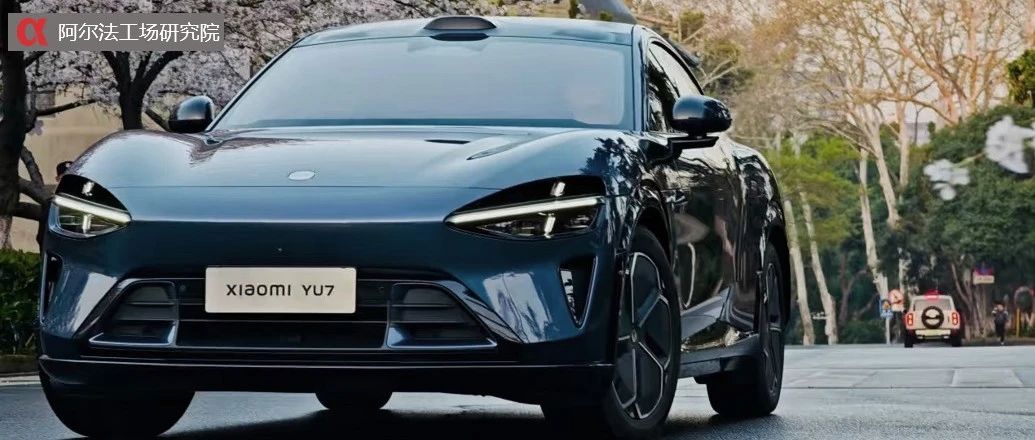
科技资产大重估,小米的野心与筹码
阿尔法工场研究院· 2025-05-29 13:40
Core Viewpoint - The article discusses the revaluation narrative of Chinese technology assets, led by companies like Xiaomi, as they gain momentum in the global market, similar to the "Magnificent 7" in the U.S. stock market [1][30]. Group 1: Xiaomi's Financial Performance - Xiaomi's Q1 2025 financial report showed a revenue increase of 47.4% year-on-year, reaching 111.3 billion yuan, and an adjusted net profit exceeding 10.7 billion yuan, up 64.5% [3][30]. - The report highlighted that Xiaomi's revenue growth outpaced major competitors, with Apple achieving only 11% growth in Q4 2021 and Tesla experiencing a 9% decline in Q1 2025 [3][30]. Group 2: Market Position and Strategy - Xiaomi's market share in China surged from 13% to 19%, while Apple's share dropped from 21% to 15% in Q1 2025, indicating a significant shift in the smartphone market landscape [15][20]. - The company has successfully positioned itself in high-end markets across smartphones, automobiles, and home appliances, with the average selling price (ASP) of smartphones reaching a historical high of 1211 yuan, up 5.8% year-on-year [7][12]. Group 3: Ecosystem Development - Xiaomi has established a comprehensive ecosystem that spans smart devices, home appliances, and electric vehicles, capturing a significant share of the 3 trillion yuan market [21][24]. - The company’s strategy focuses on integrating various product lines to create a seamless user experience, which is crucial for building a sustainable ecosystem [17][24]. Group 4: Research and Development Investment - Xiaomi plans to invest 200 billion yuan in R&D over the next five years, with Q1 2025 R&D spending reaching 6.7 billion yuan, a 30.1% increase [27][30]. - The introduction of the self-developed 3nm flagship SoC chip "Xuanjie O1" marks a significant technological advancement for Xiaomi, enhancing its competitive edge in the market [28][30]. Group 5: Future Outlook - The article suggests that the revaluation of Chinese technology assets is gaining traction, with Xiaomi's Q1 performance serving as a pivotal moment in this narrative [33][34]. - The focus on technological innovation and ecosystem development positions Xiaomi favorably for future growth, with expectations of continued investment and market expansion [30][34].

卖不掉的县城万达,可能更有性价比
阿尔法工场研究院· 2025-05-29 13:40
Core Viewpoint - The article discusses the strategic decision of Wanda Commercial Management to sell high-value, easily liquidated assets in first and second-tier cities while retaining projects in lower-tier markets, which may be the most advantageous choice for the company amid liquidity challenges [2][11]. Group 1: Asset Sales and Financial Strategy - Wanda Commercial Management is undergoing a significant asset sale, with a recent transaction involving the acquisition of 48 Wanda Plaza companies by a consortium including Tencent, reportedly valued at 50 billion yuan [2][5]. - Over the past two years, Wanda has sold more than 30 Wanda Plazas, with seven sold at the beginning of this year alone, indicating a focused strategy to alleviate financial pressures [2][3]. - The company is prioritizing the sale of assets in first and second-tier cities due to their higher asset values, which can quickly generate cash flow to address debt issues [11][19]. Group 2: Market Position and Competitive Landscape - The sold Wanda Plazas are primarily located in first, new first, and second-tier cities, where competition in commercial real estate has intensified, leading to a perception of these properties as outdated [5][11]. - In contrast, Wanda Plazas in lower-tier cities remain highly valued, with the company holding a leading position in these markets, having established nearly 30 projects in the top 100 counties in China [11][14]. - The article highlights the changing consumer landscape, where lower-tier cities are experiencing economic growth and increased consumer spending, benefiting Wanda's early investments in these markets [14][15]. Group 3: Future Challenges and Competition - The competition for consumer attention in lower-tier markets is intensifying, with other players like Wuyue Plaza and China Resources' Mixc entering the fray, posing a challenge to Wanda's market dominance [18][19]. - As Wanda continues to divest from first and second-tier cities, maintaining its competitive edge in lower-tier markets will be crucial for the company's long-term success [19].

5个湖南人,撑起中国零售创新半边天
阿尔法工场研究院· 2025-05-28 14:28
Core Viewpoint - Changsha has emerged as a dense incubator for new consumption in China, showcasing a vibrant ecosystem of innovation across various retail sectors, including tea drinks, snacks, and community group buying [1][3]. Group 1: Investment and Market Dynamics - In 2023, Changsha's consumer enterprises accounted for 8.4% of national financing, with a projected retail sales total of 579.77 billion yuan in 2024 [3]. - The city has a night economy that ranks second nationally, with the number of new consumption brands per ten thousand people exceeding that of first-tier cities by twofold [3]. - The snack sector alone has produced six listed companies, indicating a robust and innovative market landscape [3]. Group 2: Key Players and Innovations - **Xingsheng Youxuan**: Founded by Yue Lihua, it pioneered community group buying with a "pre-sale + self-pickup" model, leveraging a three-tier logistics system for efficient delivery [5][6]. - **Zero Snacks**: Founded by Yan Zhou, it has rapidly expanded to over 7,000 stores by focusing on low-cost, high-quality snacks, achieving a valuation of 25 billion yuan after a 240 million yuan Series A funding round [9][10]. - **Tea Yan Yue Se**: Founded by Lü Liang, it emphasizes cultural value and direct sales, achieving a valuation exceeding 20 billion yuan by 2021 and planning to expand to over 1,000 stores by 2025 [14][16]. - **Le Er Le**: Founded by Chen Zhenguo, it introduced a hard discount model, achieving significant sales growth and establishing a unique supply chain strategy that minimizes costs [21][22]. - **Wen He You**: Founded by Wen Bin, it combines dining with cultural experiences, creating a unique consumer environment that has attracted significant investment and attention [23][24]. Group 3: Market Trends and Future Outlook - The snack market is experiencing a compound annual growth rate of 114.6%, driven by innovative retail strategies that target lower-tier cities [10]. - The integration of local culture into retail experiences is becoming a key differentiator, as seen in the success of brands like Wen He You, which merges dining with cultural nostalgia [24]. - The entrepreneurial spirit in Changsha, characterized by resilience and local market understanding, is expected to continue driving innovation and growth in the retail sector [26][27].
晶澳或出售美国工厂,中东+北非布局提上日程
阿尔法工场研究院· 2025-05-28 14:28
Core Viewpoint - JinkoSolar is considering selling its solar module factory in Arizona due to economic inefficiencies and rising sanction risks, while its new factories in Oman and Egypt are crucial for its strategy to supply the U.S. market [2][4][20]. Group 1: U.S. Factory Situation - JinkoSolar announced a 2GW solar module project in Arizona with an investment of approximately 1.244 billion RMB, expected to create over 600 jobs [4][6]. - The factory's production has been delayed until Q4 2024, raising concerns about cost considerations, as U.S. labor costs are significantly higher than those in Southeast Asia [7][8]. - Recent U.S. policy changes, including the potential early termination of clean energy tax credits, threaten the profitability of domestic production [10][11]. Group 2: Supply Chain and Market Dynamics - The U.S. solar market is shifting towards HJT technology, which is favored due to its lower labor costs and compliance with environmental regulations [13][16]. - JinkoSolar's profitability in the Americas is significant, with a gross margin of 31.43%, contrasting with negative margins in other regions [17][18]. Group 3: Strategic Adjustments - Following the imposition of high tariffs on solar products from Southeast Asia, JinkoSolar plans to utilize its upcoming factories in Egypt and Oman to supply the U.S. market [19][20][25]. - The factory in Oman is strategically positioned to facilitate exports to the U.S., benefiting from lower tax rates and stable diplomatic relations [24][25].