36氪

Search documents
「金铲铲」式自律,一款游戏怎么让宅男爱上健身的
36氪· 2025-09-23 00:12
Core Viewpoint - The article discusses how the game "Teamfight Tactics" (金铲铲之战) has become a new trend in gyms, replacing traditional workout routines with gaming, thus reshaping the way young people engage with fitness and leisure activities [4][10][51]. Group 1: Game Mechanics and Appeal - "Teamfight Tactics" is characterized by its low entry barrier, fixed game duration, and strategic depth, making it an attractive option for players looking to fill fragmented time during workouts [6][26]. - The game operates on a "passive competition" model, focusing on strategy and decision-making rather than fast reflexes, which aligns well with the lifestyles of busy young adults [26][57]. - Players experience a sense of achievement through strategic victories, which contrasts with the delayed gratification often found in real-life challenges [26][55]. Group 2: Social Dynamics and Community - The game fosters a strong social connection among players, with features like team modes that emphasize collaboration and shared experiences [43][46]. - The community around "Teamfight Tactics" has developed a culture of strategy sharing and learning, akin to academic study, indicating its deep integration into the social lives of young people [46][48]. - The emotional investment in the game is heightened by its connection to the larger "League of Legends" universe, creating a sense of belonging and nostalgia among players [37][39]. Group 3: Economic Aspects and Monetization - The game has seen significant revenue growth, with a nearly 49% increase in income due to seasonal events, highlighting its commercial success [41]. - Players are drawn into spending through a well-designed reward system that plays on psychological triggers, such as the thrill of chance and emotional attachment to characters [37][39]. - The monetization strategy transforms spending into a form of self-expression and identity within the digital realm, as players purchase skins and other items to enhance their gaming experience [33][39].


扎克伯格聊新款智能眼镜:干掉手机?神经腕带才是真的「疯狂」
36氪· 2025-09-23 00:12
Core Viewpoint - The integration of glasses and AI is seen as a natural evolution, with Meta's new smart glasses and neural band representing a significant step towards a future where AI is an omnipresent assistant [2][14]. Group 1: Product Launch and Features - Meta unveiled three new smart glasses and a neural band at the Meta Connect 2025 event, with the Ray-Ban Display smart glasses being the highlight, featuring navigation, real-time translation, photography, and voice calls [3][4]. - The starting price for the Ray-Ban Display is set at $799, with availability in the U.S. starting September 30 [4]. - Despite technical difficulties during the live demonstration, the overall industry response to the Ray-Ban Display has been positive, with some media outlets calling it the best smart glasses they have experienced [6][8]. Group 2: Future Vision and AI Integration - Mark Zuckerberg emphasized that glasses are the ideal form for AI, allowing for continuous interaction and contextual awareness, which is crucial for the development of personal super intelligences [14][17]. - The neural band is designed to support the glasses but has potential applications beyond that, indicating a broader vision for its use in various contexts [11]. - The concept of "live AI vision" is introduced, where users can interact with AI seamlessly during conversations, enhancing multitasking capabilities without interruptions [17][18]. Group 3: Market Position and Long-term Strategy - The company believes that glasses will become a primary computing platform due to their unique advantages in maintaining presence and integrating digital and physical worlds [14][15]. - The future of augmented reality (AR) and virtual reality (VR) is discussed, with AR being likened to the future of mobile devices and VR to traditional television, highlighting the different use cases and experiences each technology offers [20][21].


8点1氪:英伟达拟向OpenAI投资至多1000亿美元;万豪酒店承认拖鞋循环多次使用;“最快女护士”张水华发文道歉
36氪· 2025-09-23 00:12
Core Viewpoint - Nvidia intends to gradually invest up to $100 billion in OpenAI to support data center and related infrastructure development [4]. Group 1: Partnership and Investment - OpenAI and Nvidia announced a letter of intent for a partnership, with Nvidia planning to invest up to $100 billion [4]. - The collaboration aims to deploy at least 10 gigawatts of Nvidia systems for OpenAI's next-generation AI infrastructure, with the first systems expected to be deployed in the second half of 2026 [4]. - Details of the partnership will be finalized in the coming weeks [4]. Group 2: Market Reactions - Following the announcement, Nvidia's stock rose over 3%, reaching a historical high [8]. - The broader US stock market saw all three major indices rise, with Nvidia contributing significantly to this upward trend [8]. Group 3: Industry Collaborations - Industry insiders confirmed that OpenAI is collaborating with domestic supply chains on related projects [18]. - OpenAI has reportedly signed agreements with companies like Luxshare Precision to develop consumer-grade devices [18].


MOVA生态链企业获数千万融资,瞄准海外电动工具赛道、预计2025年营收破亿|早起看早期
36氪· 2025-09-23 00:12
Core Viewpoint - Woting Technology (Suzhou) Co., Ltd. has recently completed several million yuan in angel round financing, which will be used to enhance technological research and development, improve innovation capabilities, and accelerate the construction of the upstream and downstream ecosystem [5][15]. Company Overview - Woting Technology was established in January 2025, focusing on the research, manufacturing, and sales of electric tools, with R&D centers and offices in multiple locations including Suzhou, Dongguan, and Nanjing. The core team members have extensive experience in the electric tool industry, having graduated from renowned engineering universities and worked in leading companies [5][6]. Market Analysis - The global electric tool market is projected to grow from approximately $36.7 billion in 2023 to $59.5 billion by 2030, with a compound annual growth rate (CAGR) of 6.4% [7]. - The market can be divided into two main segments: consumer-grade electric tools, which cater to DIY home users, and professional-grade tools used in various industries such as construction and manufacturing. Major brands in the professional segment include Milwaukee, Dewalt, Bosch, Hilti, and Makita [7][8]. Product Development - Woting Technology aims to develop a full range of electric tools, covering both professional and consumer-grade products. The professional line focuses on standardized tools that can be used across different scenarios, emphasizing high performance and strong intelligence [8][10]. - The company is also innovating in consumer-grade products by integrating industrial design and smart algorithms to meet the aesthetic and functional needs of younger users, particularly the Z generation [12]. Strategic Focus - Woting Technology is concentrating its R&D resources on three advanced application scenarios: electric tools compatible with humanoid robots, the evolution of electric tools into smart robots driven by industry scenarios, and tools that are highly integrated with human-machine collaboration [12][15]. - The company has already begun commercializing its consumer-grade products in Europe, with plans for professional-grade products to launch in the first quarter of 2026, targeting the high-end market [15].

绝味食品突遭ST!熟悉的鸭脖,为何栽在「虚减收入」?
36氪· 2025-09-22 14:28
Core Viewpoint - The article discusses the financial misconduct of Juewei Foods, highlighting its unique case of "reverse fraud" where the company understated its revenue from franchise store renovations, leading to significant financial discrepancies over five years [5][10][24]. Financial Misconduct - Juewei Foods failed to recognize revenue from franchise store renovation services from 2017 to 2021, resulting in understated annual revenue by 5.48%, 3.79%, 2.20%, 2.39%, and 1.64% respectively, potentially hiding billions in revenue [5][12][24]. - The company's financial director arranged for employees to use personal bank accounts for transactions, which deviated from standard accounting practices, raising questions about whether this was a misunderstanding of accounting standards or a deliberate attempt to obscure financial data [5][9][12]. Regulatory Response - The China Securities Regulatory Commission (CSRC) has adopted a strict stance on financial misreporting, treating both revenue inflation and understatement equally, leading to immediate penalties for Juewei Foods [10][9][24]. - Juewei Foods will be designated as "ST Juewei" starting September 23, 2025, marking it as a problematic enterprise, which reflects the serious nature of the violations [6][9][10]. Market Implications - The incident has created a divide among investors regarding the potential for a turnaround, with some viewing the situation as an opportunity for investment due to the potential for stock price recovery post-penalty [16][18][19]. - Despite being the market leader with a revenue of 28.2 billion, Juewei Foods has seen a significant decline in sales and profitability, raising concerns about its long-term viability [17][20][21]. Industry Context - The renovation fees in the franchise model are often a significant profit source, with many companies operating in a gray area regarding revenue recognition, making Juewei's case particularly noteworthy [11][12]. - The competitive landscape is intensifying, with rivals like Zhou Hei Ya and Huang Shang Huang gaining ground, further complicating Juewei's recovery prospects [19][21][24]. Conclusion - The case of Juewei Foods serves as a cautionary tale about the importance of financial transparency and the evolving regulatory environment in China's capital markets, emphasizing that any form of financial misrepresentation, whether through inflation or understatement, is subject to severe consequences [23][25].

AI重塑交互,元服务成为服务精准触达的新解法
36氪· 2025-09-22 14:28
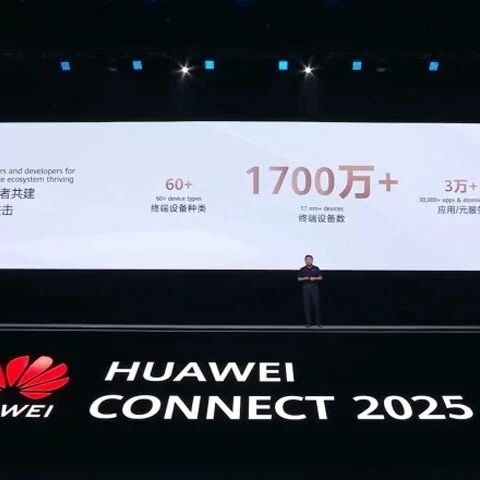
Core Insights - The article discusses the transformation of AI from a passive tool to an active partner in complex task execution, enhancing user experience and operational efficiency [4][5][7] - It highlights the emergence of AI-native services, particularly Huawei's HarmonyOS "meta services," which provide lightweight, on-demand solutions that cater to user needs without replacing traditional apps [5][9] Group 1: AI Transformation - AI agents have shifted from being passive responders to proactive executors of complex tasks, significantly improving productivity (66%), cost savings (57%), decision-making speed (55%), and customer experience (54%) for businesses [4] - The transition represents a fundamental redefinition of human-machine relationships, where AI understands user intent through multimodal inputs and provides timely services [4][8] Group 2: HarmonyOS Meta Services - HarmonyOS meta services, with over 30,000 applications, are designed to respond precisely to user needs, enhancing the user experience by eliminating multiple steps in service access [5][9] - The services utilize an intent framework that allows for proactive service delivery, transforming the interaction from "users finding services" to "services finding users" [8][9] Group 3: Developer Empowerment - Huawei's ASCF (Atomic Service Cross Framework) facilitates efficient development and deployment of meta services, allowing developers to reuse existing assets and achieve multi-device distribution [12][20] - The introduction of HarmonyOS payment services streamlines transactions for developers, offering features like fund distribution and marketing support, which are particularly beneficial for high-frequency trading sectors [13][14] Group 4: Ecosystem Expansion - The rapid growth of HarmonyOS meta services, driven by AI capabilities, has led to a significant increase in developer engagement, with over 800,000 developers and 17 million HarmonyOS devices [19][21] - The services are expanding globally, with international developers joining the ecosystem, enhancing user experience across various regions [21][23]
从中东土豪到地方政府,为何都在抄底蔚来?
36氪· 2025-09-22 14:28
Core Viewpoint - NIO's future relies more on the improvement of long-term gross margins than on achieving profitability in the short term [4][20]. Financing and Market Response - NIO successfully completed a $1.16 billion equity financing, exceeding market expectations due to the exercise of an overallotment option, indicating strong capital market recognition [5]. - Following the financing announcement, NIO's stock prices surged, with a more than 11% increase in Hong Kong and nearly 6% in the U.S. markets on September 17, 2023 [6]. Financial Situation - As of the end of Q2 2023, NIO had cash reserves of approximately 27 billion yuan, with a quarterly loss nearing 5 billion yuan, highlighting significant financial pressure [5][7]. - Despite the financial challenges, NIO has been the most frequently financed new energy vehicle company, attracting substantial investments from various institutions, including state-owned enterprises and international investment banks [7][8]. Unique Selling Proposition - NIO's brand image in the high-end electric vehicle market, along with its Battery as a Service (BaaS) model, creates a unique value proposition that attracts investors [8][9]. - The BaaS model allows users to rent batteries, reducing the purchase price of vehicles and enhancing customer loyalty through a strong user community [8][9]. Cost Management and Profitability Outlook - NIO aims to achieve profitability in Q4 2023, with a focus on cost reduction through self-developed chips and improved platform efficiency [11][13]. - The company has implemented measures to control expenses, resulting in a decrease in R&D and SG&A expenses in Q2 2023 [13][15]. - NIO projects Q3 2023 vehicle deliveries between 87,000 and 91,000 units, with expected revenue of 21.8 billion to 22.9 billion yuan [15]. Market Strategy and Future Prospects - NIO's multi-brand strategy is beginning to show results, with significant sales from its new models, enhancing market confidence [21][26]. - The company is positioned to replicate the success of competitors like XPeng by leveraging a combination of new product cycles and pricing strategies to drive volume [20][26]. - Future vehicle launches, including models based on the NT3.0 platform, will be critical for sustaining growth and improving profitability [26].

香港人涌向中山养老?成交一套,住建局或「返佣」数万
36氪· 2025-09-22 14:28
Core Viewpoint - Zhongshan is launching a marketing initiative targeting Hong Kong and Macau residents to boost real estate sales, leveraging public networks for referrals and offering cash rewards for successful transactions [3][4][5]. Group 1: Marketing Initiative - The Zhongshan Housing and Urban-Rural Development Bureau has initiated a marketing campaign from September 17, 2025, to March 31, 2026, aimed at encouraging referrals from the public for property purchases by Hong Kong and Macau residents [3]. - Successful referrers will receive a cash reward of 1% of the purchase invoice amount from the bureau and at least 2% from the real estate companies, totaling a minimum of 3% [3][4]. - For example, if a referrer successfully recommends a property purchase worth 1 million yuan, they could earn at least 30,000 yuan [4]. Group 2: Market Context - Zhongshan has historically been a popular property destination for Hong Kong and Macau residents, with a significant portion of the population having ties to Zhongshan [4][13]. - The average price of new homes in Zhongshan was reported at 12,200 yuan per square meter in August, with a notable decline in transaction volume and price compared to previous periods [9][10]. - The market has seen a 19.28% year-on-year decline in transaction area, indicating a challenging environment for real estate sales [9]. Group 3: Buyer Demographics and Trends - The majority of property purchases by non-local residents in Zhongshan are made by Hong Kong and Macau residents, who account for over 18% of the total purchases [16]. - The primary motivation for these buyers is not investment but rather retirement and personal residence [16][14]. - Following the resumption of cross-border travel, there has been an observed increase in interest from Hong Kong buyers, with many seeking properties for retirement [14][15].

清华学霸炫富,年薪1.67亿,「在逃」
36氪· 2025-09-22 10:37
Core Viewpoint - The article discusses the case of Wu Jian, a Tsinghua University graduate, who faces criminal and civil lawsuits in the U.S. for fraud and money laundering, following his extravagant claim of a $16.7 million salary in 2022, which was later revealed to be obtained through fraudulent means [4][5][8]. Group 1: Background of the Case - Wu Jian's salary claim of $16.7 million in 2022 was ten times higher than the previous year, which drew attention and led to investigations by the SEC and federal prosecutors [5][10]. - The SEC's lawsuit revealed that Wu Jian's fraudulent activities spanned two years, and he is currently evading capture [8][34]. Group 2: Details of the Fraud - Wu Jian worked at Two Sigma, a well-known quantitative fund company, where he was responsible for developing investment models. His salary was significantly inflated due to fraudulent practices [12][13]. - The SEC's findings indicated that Wu Jian submitted models that appeared unique but were actually copies of existing models, allowing him to falsely claim credit for their performance [18][21]. - His actions resulted in a total profit of $450 million for Two Sigma's funds, while clients suffered losses of $170 million, raising concerns about risk management and internal controls at the firm [21][30]. Group 3: Company and Industry Implications - Two Sigma faced scrutiny for its internal controls, which allowed Wu Jian to manipulate model parameters without proper oversight, leading to significant reputational damage [27][30]. - The SEC's investigation into Two Sigma revealed that the firm had ignored known vulnerabilities in its risk management processes, resulting in a settlement where it agreed to pay $165 million in restitution and a $90 million civil penalty [32][34]. - The incident highlights the reliance on individual analysts in the quantitative finance industry and the potential risks associated with such dependencies [34][42]. Group 4: Broader Reflections on Ethics and Education - The case raises questions about the relationship between high academic achievement and ethical behavior, particularly in high-stakes environments like Wall Street [35][38]. - The article suggests that the pursuit of quick financial gains can lead individuals to compromise their ethical standards, reflecting a broader cultural shift in values among young professionals [41][42].

圆桌对话:从本土走向全球:企业出海的「破圈」征程|2025中国—东盟博览会品牌文化出海交流会
36氪· 2025-09-22 10:37
Core Viewpoint - The article discusses the shift in China's globalization strategy from merely exporting products to promoting cultural experiences and identities, emphasizing the importance of cultural output in various sectors such as gaming, new consumption, and short dramas [3]. Group 1: Cultural Output and Globalization - Over the past two decades, Chinese companies primarily focused on product exports, but the narrative is changing towards cultural experiences and recognition [3]. - The "Breaking the Circle: Chinese Brand Culture Goes Global" forum highlighted the new paths, challenges, and opportunities for Chinese culture in the global market [3]. Group 2: Company Insights and Strategies - Voice Intelligence Technology is focusing on AI hardware for global markets, achieving significant sales milestones, and expanding into regions like Thailand, North America, and Japan [6][7]. - VETRESKA, a pet lifestyle brand, began exploring overseas markets early on and shifted focus to international expansion post-pandemic, establishing offices in Singapore and Japan [9]. - CMC Capital emphasizes the long-term nature of consumer demand and the importance of brand content over mere price-performance ratios in the context of globalization [11]. Group 3: Market Dynamics and Challenges - The logistics sector plays a crucial role in supporting brands entering Southeast Asian markets, with companies needing to adapt to local regulations and infrastructure challenges [15][17]. - Companies are advised to understand local cultures and market dynamics to avoid pitfalls when entering new regions [18][19]. Group 4: Investment and Resource Allocation - CMC Capital is actively investing in companies with strong organizational capabilities for overseas expansion, focusing on both internal and external resource mobilization [12][19]. - The importance of aligning product offerings with local consumer preferences is highlighted, suggesting that companies should prioritize markets where their products can meet specific consumer needs [33][36]. Group 5: Strategic Recommendations - Companies are encouraged to choose their initial overseas markets based on product characteristics and local market conditions, with Southeast Asia being a suitable testing ground for new products [36][37]. - The article suggests that brands should leverage their strengths and adapt their strategies based on the unique demands of each market, whether it be high-end or cost-sensitive segments [33][36].