半导体行业观察

Search documents
DRAM已经疯狂
半导体行业观察· 2025-11-18 01:40
Core Viewpoint - The global AI investment surge is exacerbating the DRAM shortage, leading to a shift from monthly or quarterly pricing negotiations to long-term supply contracts of six months or more, with discussions even extending to contracts for 2027 due to supply challenges [2][5]. Group 1: Market Dynamics - The DRAM market is transitioning to a long-term contract-oriented market, with demand surpassing that of the 2017 supercycle, driven by the rise of AI technologies like ChatGPT [2]. - General DRAM demand is significantly increasing, particularly from US and Chinese companies, as major firms like OpenAI and Meta announce substantial AI infrastructure investments [3]. - The typical supply contracts for DRAM, which were previously monthly, are now shifting to six-month or longer contracts due to heightened demand and willingness to pay above market prices [3]. Group 2: Supply and Inventory Trends - Samsung Electronics reported a 14.6% decrease in its semiconductor inventory to 3.404 trillion KRW in Q3, while SK Hynix also saw a reduction in inventory [4]. - SK Hynix has completed all DRAM supply contracts for the upcoming year and is negotiating contracts for 2027, indicating a strong demand that has led to a sell-out of their DRAM [5]. Group 3: Pricing and Profitability - With the demand surge, Samsung Electronics is considering raising DRAM prices by over 40%, reflecting the market's shift to long-term contracts which are expected to enhance profitability [5]. - DRAM contract prices have increased approximately 170% year-on-year, primarily due to demand from AI server manufacturers, with forecasts for Q4 indicating a market growth of 18%-23% [6]. Group 4: Distribution and Sales Strategies - Some distributors in Taiwan are implementing unprecedented bundling sales strategies, requiring customers to purchase motherboards alongside DRAM modules, reflecting the tightening distribution of DRAM [6]. - This bundling strategy has reportedly led to a surge in motherboard sales, indicating a significant shift in the memory market dynamics since the beginning of the year [6]. Group 5: Impact on OEMs and Market Ratings - Morgan Stanley has downgraded ratings for major OEMs due to the ongoing DRAM shortage, predicting sustained price increases for computers and electronic devices over the next few years [7]. - Dell's rating was notably downgraded from OW to UW, while other companies like HP and ASUS also faced rating reductions, reflecting the severe impact of rising memory costs on their profitability [7][8].

英特尔前CEO,加盟芯片公司
半导体行业观察· 2025-11-18 01:40
Core Viewpoint - PowerLattice, a Vancouver-based startup, has developed a micro-solution aimed at addressing the significant energy consumption issues of data centers through a specialized chip technology that enhances power delivery efficiency [2][3]. Group 1: Investment and Leadership - PowerLattice announced it has raised $25 million in new funding for its technology development, with former Intel CEO Pat Gelsinger joining its board [2]. - The investment round also included participation from Playground Global and Celesta Capital, with notable figures from Intel involved [2]. Group 2: Technology and Impact - The company has designed a specialized chiplet that can be installed near processors responsible for AI core computations, allowing for more precise power delivery [2]. - The anticipated outcome is a potential reduction in power consumption by up to 50% while maintaining the same computational capabilities, which could alleviate the energy crisis caused by soaring data center power demands [3][4]. Group 3: Industry Context - The energy crisis is exacerbated by the increasing power demands of AI, leading to significant electricity consumption that can rival that of entire cities [3][4]. - PowerLattice aims to tackle both the energy crisis and the slow development of new computing technologies by providing more efficient computing solutions [4].

安谋科技Arm China“周易”X3 NPU IP,树立端侧AI新标杆!
半导体行业观察· 2025-11-18 01:40
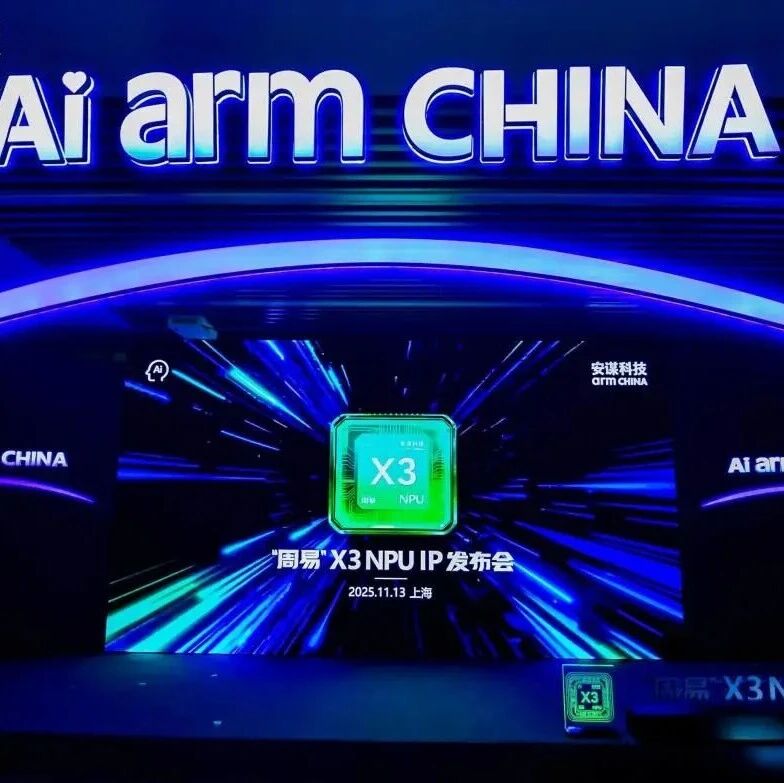
Core Viewpoint - The article discusses the rapid growth of AI computing demand in edge intelligent devices, highlighting the challenges such as limited computing power, bandwidth bottlenecks, and high development thresholds that hinder the large-scale implementation of edge AI. It emphasizes the role of NPU (Neural Processing Unit) as a key driver for the realization of edge AI applications [2]. Group 1: Product Launch and Strategy - On November 13, 2025, Arm China officially launched the "Zhouyi" X3 NPU IP, marking a significant step in its "All in AI" strategy aimed at setting new benchmarks for edge AI computing efficiency [3]. - The release of the "Zhouyi" X3 NPU IP is a critical practice in Arm China's strategic direction for AI development [5]. - Arm China’s Vice President of Product Development, Liu Hao, stated that the company will continue to invest in integrating top-tier R&D resources and providing comprehensive solutions from hardware to software to empower partners' product innovation and commercialization [8]. Group 2: Technical Innovations - The "Zhouyi" X3 features a new DSP+DSA architecture specifically designed for large models, marking a transition from fixed-point to floating-point calculations, thus creating a hybrid architecture [13]. - The NPU supports a flexible computing power configuration ranging from 8 to 80 FP8 TFLOPS, with a single core bandwidth of up to 256GB/s, which, when combined with proprietary decompression hardware, can achieve an additional 15%-20% equivalent bandwidth improvement [15]. - The introduction of W4A8/W4A16 computation acceleration modes significantly reduces bandwidth consumption, facilitating the efficient migration of cloud-based large models to edge devices [17]. Group 3: Software Ecosystem - The "Zhouyi" X3 is equipped with the upgraded Compass AI software platform, which focuses on openness, ease of use, and efficiency, addressing the challenges of adapting to edge AI development [19]. - The platform supports over 160 operators and more than 270 models, including cutting-edge models like LLM, VLM, and MoE, and has open-sourced core components to enhance development efficiency [19]. - The software ecosystem aims to lower the development threshold and improve the overall user experience for AI developers [19]. Group 4: Performance and Applications - The "Zhouyi" X3 demonstrates a performance improvement of 30%-50% in CNN models compared to its predecessor, the X2, with a linear scalability of multi-core computing power reaching 70%-80% [23]. - The NPU is designed to support various AI applications across four core areas: infrastructure, smart vehicles, mobile terminals, and smart IoT, providing robust computing power for diverse AI devices [28][30]. - The NPU's capabilities enable it to handle complex cognitive tasks, marking a transition from single-function implementations to widespread adoption of edge AI [31]. Group 5: Future Directions - Arm China plans to enhance the general computing capabilities and scalability of its NPU architecture, exploring multi-die and multi-chip collaboration technologies [33]. - The company aims to optimize programming models and develop a more user-friendly software interface to support a wider range of data formats and network structures [33]. - Arm China is committed to fostering an open ecosystem and expanding collaboration models to promote efficient deployment of hardware and software [33].
激光雷达先驱,或破产,都怪大客户?
半导体行业观察· 2025-11-18 01:40
Core Viewpoint - Volvo has canceled its five-year contract with Luminar due to Luminar's failure to meet contractual obligations, highlighting the increasing tensions between the two companies and Luminar's precarious financial situation, which may lead to bankruptcy [2][12][15]. Group 1: Luminar's Technology and Market Position - Luminar, founded by Austin Russell in 2012, has developed advanced lidar technology using a 1550nm wavelength, which offers significant advantages in safety and performance for automotive applications [4][6]. - The company claims that its 1550nm lidar can achieve 17 times the photon emission potential and four times the detection range compared to lower wavelength alternatives [6][8]. - Luminar's lidar technology has been integrated into various automotive models, with Volvo being a key partner, which has significantly contributed to Luminar's credibility and market presence [10][11]. Group 2: Financial Performance and Strategic Challenges - In Q3 2025, Luminar reported revenues of $18.7 million, a 20% quarter-over-quarter increase, primarily driven by sensor deliveries and non-recurring engineering revenue [13]. - The CEO emphasized a strategic shift towards non-automotive markets and the importance of LSI photon business, which now accounts for one-third of Luminar's annual revenue [13]. - The uncertainty surrounding the partnership with Volvo has raised concerns about Luminar's future, leading to potential asset sales or business divestitures [13][14]. Group 3: Industry Trends and Competitive Landscape - The global automotive lidar market is projected to grow from $861 million in 2024 to $3.804 billion by 2030, with a compound annual growth rate (CAGR) of 28% [17]. - Chinese lidar manufacturers are gaining market share, with companies like Hesai Technology and RoboSense leading the market, while Western firms face challenges due to higher costs and slower adoption rates [20][21]. - The average price of lidar systems is expected to decrease significantly, with entry-level models projected to cost around $200 post-2025, driven by advancements in technology and increased production [23].

光芯片,被引爆
半导体行业观察· 2025-11-18 01:40
Core Insights - The rapid growth of artificial intelligence (AI) is creating a bottleneck in traditional electrical communication methods, prompting a shift towards photonics for chip interconnectivity [2][3] - Significant venture capital is flowing into photonics startups, with companies like Lightmatter and PsiQuantum achieving valuations of $4.4 billion and $7 billion respectively [3] - The semiconductor industry is undergoing a transformation as companies race to develop new networking technologies to support AI workloads, which are doubling every three months [2][3] Group 1: Industry Trends - Traditional networking technologies are struggling to keep up with the demands of AI, leading to innovations in speed and efficiency [3][6] - Major companies like NVIDIA and Broadcom are investing heavily in AI data centers and custom chip solutions, indicating a shift towards highly specialized networking [4][6] - The competition is intensifying as established firms and startups alike seek to capitalize on the growing need for faster data transmission in AI applications [7] Group 2: Company Developments - NVIDIA's foresight in acquiring Mellanox Technologies for $7 billion in 2020 has positioned it well in the AI data center market [3][4] - Broadcom is becoming a preferred partner for companies like Google and Meta, showcasing its expertise in custom data center chips [4][6] - Startups like Celestial AI and Lightmatter are innovating in optical interconnect technology, with Lightmatter claiming to have developed the fastest AI chip photonic engine [5][6] Group 3: Challenges and Opportunities - While photonics technology presents significant opportunities, it also faces challenges such as high costs and the need for integration with existing electrical systems [5][6] - The industry is moving towards highly customized solutions, which may favor larger companies over startups, despite the latter's valuable intellectual property [6][7] - The outcome of this technological race will determine which companies will dominate the infrastructure that drives the next generation of AI [7]


ASML CEO:危机大部分已过去
半导体行业观察· 2025-11-17 01:26
Core Viewpoint - The recent tensions between the Netherlands and China, highlighted by the Nexperia incident, underscore the fragility of the semiconductor supply chain and the importance of dialogue to prevent escalation [2][3]. Group 1: Nexperia Incident - The Nexperia situation illustrates the critical nature of the semiconductor industry and the ecosystem's vulnerability, emphasizing the need for responsible actions and dialogue among stakeholders [2]. - Nexperia, owned by China's Wingtech Technology, primarily supplies power control chips to automotive manufacturers like BMW and Volkswagen. The Dutch government's sudden takeover of the company's key decision-making authority led to retaliatory actions from Beijing, disrupting the supply of critical automotive components [2]. - Recent developments indicate a thawing of relations, with China resuming some exports of Nexperia chips and the Dutch government planning to send a delegation to seek a mutually acceptable solution [2]. Group 2: ASML's Position - ASML, as the sole producer of advanced extreme ultraviolet (EUV) lithography machines, plays a pivotal role in the semiconductor industry, providing equipment to major companies like TSMC and Intel [3][5]. - The company reported a net sales figure of €28.3 billion (approximately $33.1 billion) for 2024, with a market capitalization exceeding €350 billion (around $406 billion), making it the most valuable company in Europe [5]. - ASML's success is attributed to significant investments in EUV technology, which required breakthroughs in physics, optics, and materials science, supported by direct investments from major industry players like Intel, TSMC, and Samsung [6]. Group 3: Leadership and Culture - ASML's CEO, Christophe Fouquet, emphasizes the company's strong sense of responsibility within the industry and the importance of long-term vision and restraint in leadership [6][8]. - The company fosters a culture of openness and collaboration, which is seen as a cornerstone of its innovation, allowing employees to communicate freely across all levels [8]. - The leadership style at ASML is characterized by humility and a focus on creating value for customers, recognizing the broader impact of their work on the world [8][9]. Group 4: Geopolitical Context - Geopolitical factors increasingly influence ASML's future, with export controls, subsidies, and strategic alliances playing a critical role alongside technological advancements [8]. - The company recognizes the necessity of adapting to macroeconomic and geopolitical uncertainties while maintaining strong relationships with customers and entering vital markets [9].

英特尔先进封装,被苹果高通看上
半导体行业观察· 2025-11-17 01:26
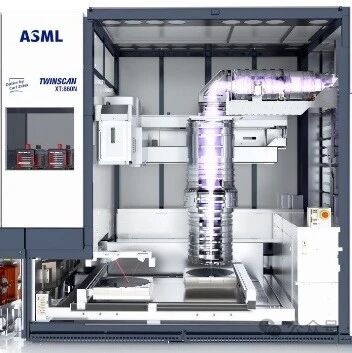
Core Viewpoint - Intel is lagging in chip business but has competitive options in advanced packaging technology, which is becoming essential in the supply chain as demand for powerful computing solutions grows rapidly [2][7]. Group 1: Advanced Packaging Technology - Advanced packaging solutions have become indispensable in the supply chain, with companies like AMD and NVIDIA integrating multiple chips into single packages to enhance chip density and platform performance [2]. - Intel's EMIB (Embedded Multi-Die Interconnect Bridge) technology connects multiple chipsets within a single package without the need for large intermediary layers, making it a viable alternative to TSMC's CoWoS [4]. - Intel also offers Foveros Direct 3D packaging technology, which utilizes TSV (Through-Silicon Via) for stacking on substrates, recognized as one of the industry's most esteemed solutions [4]. Group 2: Market Demand and Competition - Companies like Qualcomm and Apple are actively seeking talent skilled in Intel's EMIB technology, indicating a strong demand for advanced packaging expertise in the industry [2]. - Intel's advanced packaging solutions are seen as a strategic move for companies like Apple, Qualcomm, and Broadcom, especially as TSMC faces capacity bottlenecks due to high order volumes from competitors like NVIDIA and AMD [7]. - NVIDIA's CEO has praised Intel's Foveros technology, suggesting a promising market outlook for Intel's advanced packaging solutions, despite recruitment listings not guaranteeing adoption [9].

台积电,几无敌手
半导体行业观察· 2025-11-17 01:26
Core Viewpoint - TSMC is expected to see significant growth in AI-related revenue, with projections indicating a potential increase to over $40 billion next year, driven by strong demand from major clients like Nvidia, AMD, and Broadcom [2]. Group 1: TSMC's AI Revenue Growth - TSMC's AI-related revenue is anticipated to grow exponentially, with expectations of surpassing $400 million next year and continuing to rise, potentially exceeding $1 billion in USD revenue by 2026 [2]. - The company has a clear visibility of orders extending to 2028, indicating strong demand for its advanced process technologies [2]. Group 2: Advanced Process Technology - TSMC's advanced 2nm process is expected to grow rapidly, driven by applications in smartphones, high-performance computing, and AI [2]. - The company has already begun mass production of its 2nm technology, which is projected to significantly contribute to its revenue by 2026 [2]. Group 3: Market Dynamics and Challenges - Despite the strong demand for chips, TSMC is cautious about increasing production capacity due to past experiences with semiconductor market cycles, which often lead to overcapacity [3]. - The cost of building advanced fabs is high, approximately $20 billion, and takes 3-4 years to complete, which adds to TSMC's cautious approach [3]. Group 4: Industry Trends - The wafer foundry industry is projected to grow by about 20% by 2026, with advanced processes benefiting from high-performance computing (HPC) demand, expected to lead the market with a 31% annual growth rate [5][6]. - The semiconductor landscape is shifting significantly due to strong AI demand, leading to a more pronounced monopoly among leading semiconductor manufacturers [6].

2nm拿下两大客户,三星再建一座晶圆厂
半导体行业观察· 2025-11-17 01:26
Group 1 - The core point of the article highlights that major Chinese cryptocurrency mining companies, Bitmain, MicroBT, and Canaan, are shifting their 2nm ASIC orders to Samsung due to TSMC's full capacity, indicating a significant development in the semiconductor industry [2][3] - Samsung's foundry division has received 2nm orders from MicroBT and Canaan, which represent about 10% of Samsung's total 2nm capacity, translating to an estimated annual revenue of $480 million [2][3] - The article notes that Samsung is accelerating its acquisition of 2nm clients, having already secured important customers like Tesla, and is expected to reduce prices to attract TSMC's clients [3] Group 2 - Samsung plans to invest in a new chip production line in Pyeongtaek, South Korea, as part of a broader $310.79 billion investment plan over the next five years, driven by the growing demand for AI [4][5] - The new production line, known as the P5 factory, is expected to start mass production in 2028 and aims to meet the increasing demand for memory chips amid a global semiconductor supply shortage [5] - Samsung has raised prices for certain memory chips by up to 60% compared to September, reflecting the tight supply conditions in the semiconductor market [4][5]
寻找铜互联的替代者
半导体行业观察· 2025-11-17 01:26
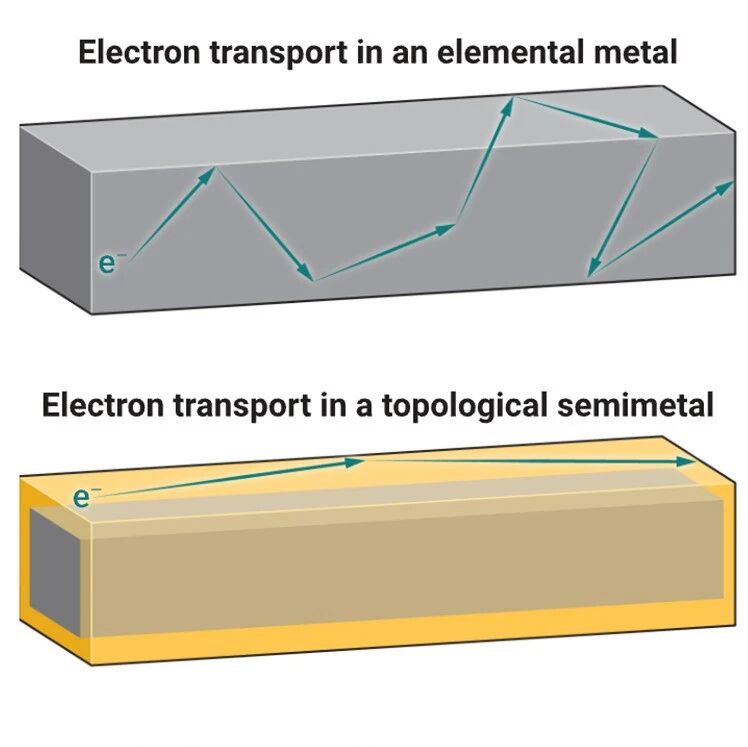
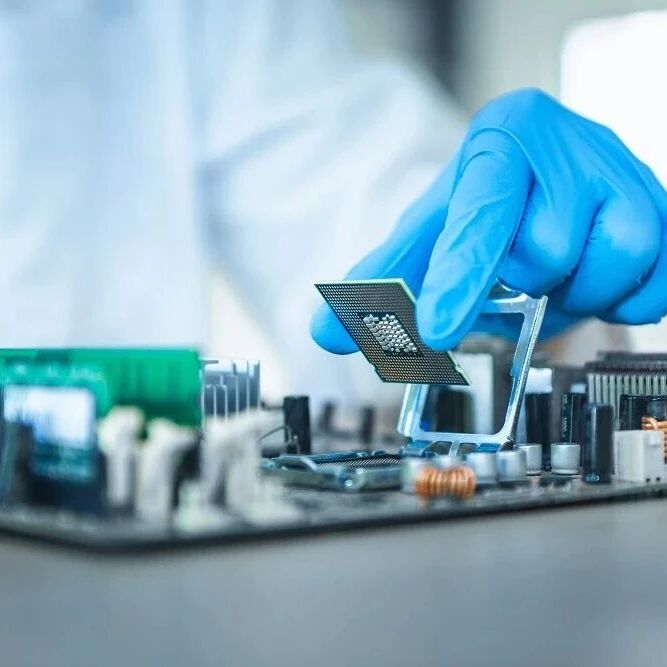
Core Viewpoint - The semiconductor industry is facing challenges in improving the performance of integrated circuits as transistor sizes shrink to the nanoscale, necessitating the development of new interconnect materials to overcome the bottleneck caused by RC time delay in interconnect lines [1][2]. Group 1: Transistor and Interconnect Challenges - The continuous reduction in transistor size, following Moore's Law, has led to an increase in the number of transistors on microchips, enhancing processing speed [1]. - As transistor sizes approach the nanoscale, interconnect lines become the primary bottleneck for processing speed, requiring innovative materials beyond just smaller transistors [1][2]. - The RC time delay in interconnect lines, which is significantly affected by the material's resistance and capacitance, can be up to 20 times the switching speed of transistors when using current materials like copper [2]. Group 2: Material Properties and Alternatives - Copper has been the standard material for interconnects due to its excellent conductivity, but its resistance increases as the size decreases, leading to longer RC time delays [2][3]. - The electron mean free path in copper at room temperature is approximately 40 nm, and when interconnect widths fall below this threshold, increased electron scattering occurs, raising resistance [3]. - The semiconductor industry is exploring alternative materials with electron mean free paths smaller than copper, such as ruthenium, to optimize interconnect performance [7]. Group 3: Topological Semimetals - Topological semimetals are emerging as promising materials due to their unique electronic properties, which can significantly alter electron transport behavior [8]. - Certain topological semimetals, like Weyl and chiral semimetals, exhibit robust surface electronic states that are not present in traditional metals like copper, potentially leading to lower resistance as dimensions decrease [8]. - Research indicates that over 50% of known crystalline compounds could be topological, providing a vast design space for interconnect applications [8]. Group 4: Potential Candidates and Performance - Compounds such as niobium arsenide and niobium phosphide have shown potential as interconnect materials, with niobium arsenide exhibiting a resistivity of about 1 to 3 microohm·cm at room temperature, which is significantly lower than that of single-crystal copper [9]. - Molybdenum phosphide and cobalt silicide also demonstrate favorable resistivity characteristics, with molybdenum phosphide showing resistance independent of size [9]. - The line resistance of topological semimetals needs further evaluation to accurately predict their performance in integrated circuits [9]. Group 5: Research and Development Challenges - The study of topological semimetals is still in its early stages, with many materials yet to be explored for their size-dependent resistivity [10]. - Experimental investigations into the electron transport behavior of these materials are crucial for understanding their stability under manufacturing conditions [10]. - The transition from laboratory-scale measurements to large-scale industrial production requires a comprehensive understanding of material properties beyond just transport behavior [12].