
半导体行业观察

Search documents
从幕后到台前:南芯科技如何抢占智驾PMIC赛道
半导体行业观察· 2025-11-19 01:35
Core Viewpoint - The article discusses the rapid transformation in the domestic electric vehicle (EV) sector, emphasizing the importance of power management integrated circuits (PMIC) in supporting advanced driver-assistance systems (ADAS) and the growth of smart driving technologies [1][5]. Industry Trends - The penetration rate of L2 level ADAS in China saw a significant increase in 2024, with a surge in the number of sensors, including nearly 60 million vehicle-mounted cameras and over 15 million millimeter-wave radars in the first half of the year [1]. - The focus on smart driving innovations often overlooks the critical components like PMICs, which are essential for the stable operation of smart driving systems [1]. Company Overview - Nanchip Technology has emerged as a leader in the PMIC sector, launching its first automotive PMIC product in September 2023 and rapidly establishing a comprehensive product lineup within a year [5][6]. - The company recognized the growing demand for PMICs driven by the increasing complexity of ADAS systems and began developing its product line early in 2022 [5][6]. Product Development Strategy - Nanchip's strategy includes a full-spectrum product offering that covers both remote sensing and ECU applications, providing specialized PMICs for cameras and radars, as well as supporting products like buck-boost converters [6][7]. - The company has tailored its products to meet the diverse needs of different customer types, such as TIER 1 suppliers, by focusing on performance metrics like power supply rejection ratio (PSRR) and compatibility with various MCU brands [6][11]. Safety and Compliance - Safety is a paramount concern for automotive power chips, with Nanchip achieving ISO26262 functional safety management system certification in 2023, ensuring compliance with ASIL B and ASIL D safety standards [9][11]. - The company has established a dedicated functional safety team to focus on high safety level chip development, emphasizing the importance of safety in automotive applications [9][11]. Competitive Advantages - Nanchip has developed significant competitive advantages in technology, supply chain stability, and service responsiveness, allowing it to compete effectively with international firms [11]. - The company utilizes a fully domestic supply chain, which enhances development speed and reduces supply chain risks, gaining recognition from OEMs for its reliability [11]. Future Outlook - The evolution of PMICs from passive components to system enablers reflects the increasing complexity of ADAS systems, with Nanchip's products now integrating multiple functions beyond basic power supply [12][13]. - The company plans to focus on the integration, efficiency, safety, and reliability of PMICs while leveraging its domestic supply chain advantages to maintain its market leadership [13].



驰拓科技STT-MRAM产品通过AEC-Q100 Grade1车规认证
半导体行业观察· 2025-11-19 01:35
Core Insights - The article discusses the advancements in Magnetic Random Access Memory (MRAM) technology, highlighting its application in high-reliability microcontrollers (MCUs) and System on Chips (SoCs) as traditional eFlash technology reaches its limits [1][2]. Group 1: MRAM Technology Development - MRAM technology is being adopted by leading semiconductor foundries like TSMC, Samsung, and Globalfoundries, initially targeting IoT, wearables, and AI, and now expanding to industrial and automotive applications [1]. - Renesas has launched the RA8 series MCU based on a 22nm MRAM platform, while NXP's S32K5 series MCU is built on a 16nm MRAM process [1]. Group 2: Hikstor Technology's Achievements - Hikstor Technology has achieved AEC-Q100 Grade 1 automotive certification for its standalone 4Mb MRAM products, offering a range of capacities from Kb to 64Mb with various interfaces [2]. - The company's MRAM products are already being utilized in leading firms within industrial automation, power, and metering sectors, with potential applications in edge computing enhanced by AI [2]. Group 3: Embedded MRAM Solutions - Hikstor Technology has introduced embedded MRAM IP across 90nm, 40nm, and 28nm platforms, suitable for applications in industrial control, low-power SoCs, automotive electronics, identity authentication, and smart wearables [4]. - The embedded MRAM solutions boast non-volatility, high endurance (up to one million write cycles), rapid data retention without external power, and a wide temperature range of -40 to 125°C, ensuring reliability [4]. Group 4: Company Overview - Hikstor Technology is the first company in China to achieve MRAM mass production, equipped with a 12-inch MRAM pilot production line and a comprehensive platform for storage chip R&D and industrialization [6]. - The company possesses critical technologies for MRAM design and manufacturing, offering customized chips and services across various process nodes including 90nm, 55nm, 40nm, and 28nm [6].

Tenstorrent,估值30亿美金
半导体行业观察· 2025-11-19 01:35
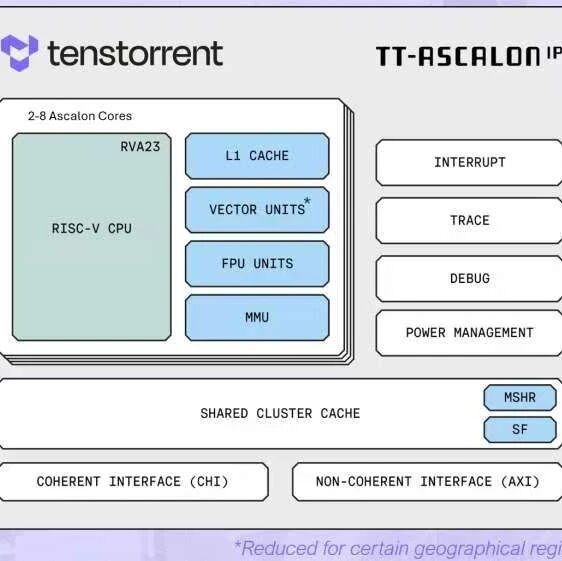
Core Insights - Tenstorrent, led by Jim Keller, has achieved a valuation of $3 billion in its recent funding round, focusing on scalable AI accelerators for cloud and edge computing [2] - The company is developing RISC-V CPUs and plans to license its designs to other entities, utilizing open-source technologies to reduce costs associated with high-bandwidth memory [2][3] - The first chip, Tensix processor, is produced in collaboration with GlobalFoundries and features a grid-based architecture for efficient tensor computation [4] Product Development - The Grayskull processor, Tenstorrent's first Tensix processor, simplifies programming and enhances scalability, featuring up to 120 Tensix cores and supporting various AI precision formats [3] - The Wormhole variant of Grayskull reduces the number of cores to 80 but increases SRAM capacity and adds support for more precision formats, with a local memory capacity of 12GB GDDR6 [3][4] - Tenstorrent's RISC-V CPU, Ascalon, is set to compete with Arm's Neoverse V2 and V3, with performance metrics of 10 to 20 SPECint2006/GHz [5] Market Strategy - Tenstorrent is focusing on IP licensing, with existing clients including LG and Hyundai, and aims to allow customization of its cores, which is uncommon in the industry [4][5] - The company plans to release new core generations every 18 months, with the next generation, Babylon, expected to enhance performance and efficiency [7] - Tenstorrent is exploring markets in industrial and medical sectors, which have traditionally been overlooked by competitors like Arm [7] Technological Advancements - The upcoming Tensix-Neo core adopts a cluster architecture for improved area efficiency and utilization, allowing for more modular and flexible designs [8][10] - Customers will have the option to customize certain parameters while Tenstorrent manages more complex configurations, offering innovative licensing for those interested in deeper customization [10]
疯狂的存储芯片,明年产能全部售罄
半导体行业观察· 2025-11-19 01:35
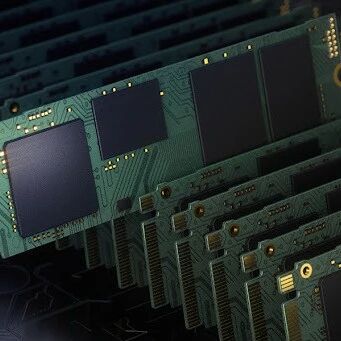
Core Viewpoint - The semiconductor industry is facing a significant supply shortage of memory chips, particularly DRAM and NAND flash, driven by the surging demand from artificial intelligence (AI) data centers and related infrastructure [2][5][11]. Group 1: Demand and Supply Dynamics - SK Hynix and Samsung Electronics are experiencing a surge in demand for memory chips, with clients from various sectors, including PC manufacturers and tech giants like OpenAI, seeking to secure supplies for upcoming product launches [2][5]. - The demand for DRAM and NAND is primarily fueled by server applications, with a notable increase in prices due to supply constraints [3][11]. - Major cloud service providers are projected to increase their spending on AI data center servers significantly, from $285 billion in 2024 to $621 billion by 2026 [6]. Group 2: Market Conditions and Price Trends - The memory chip market is nearing full capacity, with many manufacturers prioritizing AI-related demands, leading to concerns about supply shortages for other sectors [5][10]. - Prices for memory products have surged dramatically, with 16GB DDR4 DRAM prices increasing by 840% year-on-year, reaching approximately $30.30, while 16GB DDR5 prices rose by 316% to around $20 [10][15]. - The NAND flash market is also experiencing tight supply, with expectations of price increases of 10% to 25% in the first half of next year due to ongoing demand pressures [15][12]. Group 3: Competitive Landscape - Companies like NVIDIA and AMD are seeing a significant increase in order volumes, which is exacerbating the supply constraints for memory products and related components [9][12]. - The shift from older DDR4 products to DDR5 is being driven by the need to meet the high-performance requirements of AI servers, despite ongoing demand for lower-tier DRAM in consumer electronics [10][11]. - Smaller companies and white-box manufacturers are likely to face more significant challenges in securing memory supplies compared to larger tech firms [11][17]. Group 4: Future Outlook - The current demand surge is seen as a double-edged sword for memory manufacturers, as it could lead to over-investment and subsequent price volatility if supply exceeds demand [16][18]. - Analysts predict that the memory market will continue to experience fluctuations, with potential for significant profit margins in the near term, but concerns remain about the sustainability of this growth [15][16]. - The semiconductor industry is urged to adapt to the structural changes in demand driven by AI, as traditional supply chains may struggle to keep pace with the rapid evolution of technology [12][18].

微软3纳米CPU,重磅发布
半导体行业观察· 2025-11-19 01:35
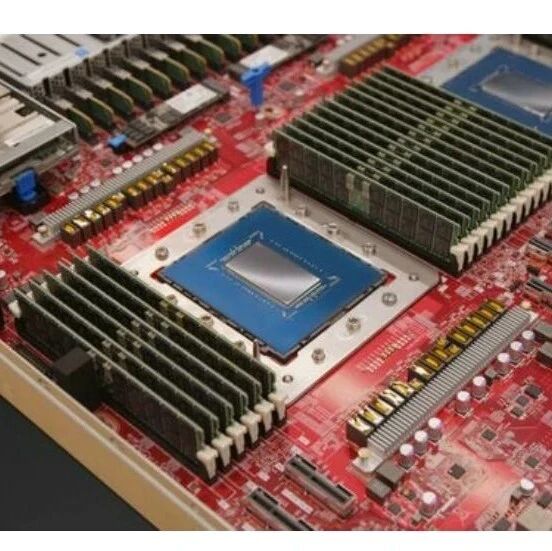
Core Viewpoint - Microsoft has announced the launch of Azure Cobalt 200, a next-generation Arm-based CPU designed specifically for cloud-native workloads, achieving a performance improvement of up to 50% compared to its predecessor, Cobalt 100 [2][9]. Group 1: Cobalt 200 Overview - Cobalt 200 is a significant milestone in Microsoft's strategy to optimize every layer of its cloud stack, from chips to software [2]. - The first production-grade Cobalt 200 servers are now operational in Microsoft's data centers, with broader deployment expected by 2026 [2]. Group 2: Performance and Efficiency - Cobalt 200 is designed to be fully compatible with workloads using existing Azure Cobalt CPUs, ensuring seamless transition for customers [2]. - The CPU features 132 active cores, each with 3MB of L2 cache and 192MB of L3 cache, providing exceptional performance for customer workloads [9]. - Dynamic voltage and frequency scaling (DVFS) allows each core to operate at different performance levels, optimizing power consumption based on workload demands [9]. Group 3: Benchmarking and Workload Optimization - Microsoft has developed over 140 independent benchmark variants based on telemetry data from various workloads running in Azure, addressing the limitations of traditional CPU-centric benchmarks [7]. - The design process involved modeling over 350,000 configurations of Cobalt 200 systems to identify the optimal design, resulting in a performance increase of over 50% while maintaining energy efficiency [8]. Group 4: Security Features - Cobalt 200 includes a custom memory controller with default memory encryption and minimal performance impact, enhancing security for customer data [11]. - The architecture supports hardware-based isolation between virtual machine memory, hypervisors, and host operating systems, leveraging Arm's confidential computing architecture [11]. Group 5: Infrastructure Innovations - Azure Boost, integrated into Cobalt 200, significantly enhances network and remote storage performance by offloading tasks to custom hardware, reducing latency [15]. - The system also includes Azure-integrated hardware security modules (HSM) for top-tier encryption key protection, ensuring compliance with FIPS 140-3 Level 3 standards [15]. Group 6: Future Developments - Microsoft plans to focus on developing its own AI chips, with the Azure Maia 100 AI accelerator already released, featuring advanced performance metrics [16]. - The company is also exploring innovative cooling technologies in collaboration with Corintis to enhance system efficiency [17].

川土微的收购,黄了
半导体行业观察· 2025-11-19 01:35
Core Viewpoint - The company, Mengtian Home, has announced the termination of its plans to acquire assets through the issuance of shares and cash payments, as well as the cessation of control transfer plans by its actual controller [2][4]. Summary by Sections Securities Suspension and Resumption - Mengtian Home's stock will resume trading on November 19, 2025, following the termination of its asset acquisition plans and control transfer [4]. Acquisition Plans - The company was previously planning to acquire control of ChuanTu Microelectronics through share issuance and cash payments, along with raising matching funds [4][5]. ChuanTu Microelectronics Overview - ChuanTu Microelectronics, established in 2016, specializes in high-end analog chip research, design, and sales. The company has undergone multiple financing rounds, with significant revenue growth reported in 2022, including a 251% year-on-year increase in revenue and a 641% increase in net profit [6].


全球最大的硅光企业诞生
半导体行业观察· 2025-11-19 01:35
Core Insights - GlobalFoundries has acquired Singapore-based silicon photonics manufacturer AMF, becoming a leading player in the silicon photonics sector [2] - Silicon photonics technology uses light instead of electrical pulses for data transmission, which is crucial for communication within chips, between components, and across servers [2] - NVIDIA plans to implement silicon photonics technology in its next-generation AI servers to reduce power consumption while increasing data transfer speeds, which is essential for managing millions of GPUs in data centers [2][3] - AMD is also investing heavily in this technology, having established a dedicated R&D center in Taiwan with an investment of nearly $300 million and previously acquiring Enosemi to enhance its competitive edge against NVIDIA [2][3] Industry Trends - The demand for silicon photonics technology is driven by the rapid expansion of AI data centers, which are experiencing significant increases in power consumption and placing pressure on electrical grids [3] - Tim Breen, CEO of GlobalFoundries, emphasized the importance of high-speed, precise, and energy-efficient data transmission for AI data centers and advanced telecommunications networks [3] - Silicon photonics is also a key technology for quantum computing, allowing for systems that do not require low-temperature cooling, making quantum computers more practical and cost-effective [3] Competitive Landscape - Major companies like AMD, NVIDIA, and GlobalFoundries are investing in silicon photonics, but several startups such as Ayar Labs, Celestial AI, and Lightmatter are also developing their own photonic technologies, indicating a competitive landscape [3] - While consumer-grade CPUs, GPUs, and motherboards are not expected to adopt this technology in the short term, it is already being utilized in large servers capable of processing terabytes of data per second [4] - Continued investment in AI data centers is anticipated to drive further research and development in this promising technology [4]


给芯片降温的新方法
半导体行业观察· 2025-11-18 01:40
Core Viewpoint - The article discusses the rapid increase in data center rack density driven by the demands of artificial intelligence and high-performance computing, leading to higher power consumption and heat generation, which traditional cooling methods struggle to manage [2][4]. Group 1: Rack Power Consumption - Average power per rack has increased from 6 kW eight years ago to 270 kW currently, with projections of 480 kW racks next year and megawatt-level racks within two years [2]. - The cooling infrastructure is challenged to keep pace with this increase in power requirements [2]. Group 2: Microfluidic Cooling Technology - Corintis is developing microfluidic technology that delivers cooling liquids directly to specific areas of chips, significantly improving cooling efficiency [2][4]. - In tests with Microsoft, servers running Teams showed three times the cooling efficiency compared to existing methods, with microfluidic technology reducing chip temperatures by over 80% compared to traditional air cooling [2][4]. Group 3: Environmental Impact and Water Usage - Current industry standards require approximately 1.5 liters of water per kW per minute for cooling, which could escalate to 15 liters per minute for chips nearing 10 kW, raising environmental concerns [4]. - Corintis aims to optimize liquid cooling to ensure efficient use of water, addressing community concerns regarding large AI facilities [4]. Group 4: Design and Manufacturing Innovations - Corintis has expanded its additive manufacturing capabilities to produce copper components with microchannels as small as 70 microns, compatible with existing liquid cooling systems [4][5]. - The company believes that collaborating directly with chip manufacturers to etch channels on silicon wafers could lead to a tenfold improvement in cooling performance [5]. Group 5: Future Directions - The goal is to integrate cooling systems directly with chip designs, addressing thermal transfer bottlenecks [8]. - Corintis has produced over 10,000 copper cold plates and aims to reach an annual production of 1 million by the end of 2026, while also developing internal cooling channels within chips [8]. - The company has announced plans for expansion in the U.S. and Germany, alongside a $24 million Series A funding round led by BlueYard Capital [8].
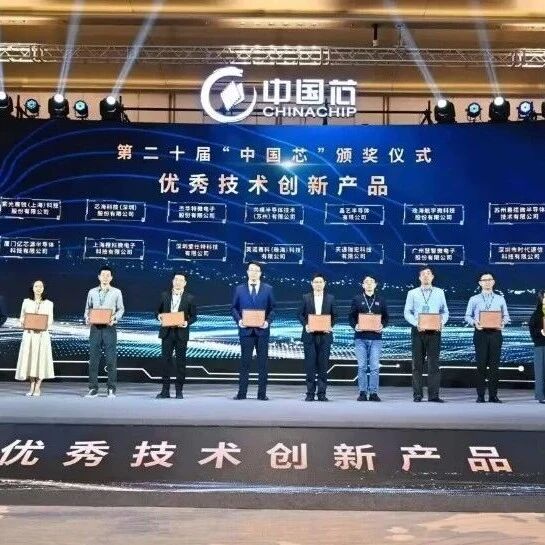
承接巨头战略退场,慧智微再以“中国芯”证明高端射频“同时同质”能力
半导体行业观察· 2025-11-18 01:40
Core Viewpoint - The article highlights the significant advancements in China's integrated circuit industry, particularly focusing on the achievements of Guangzhou Huizhi Microelectronics Co., Ltd. in the high-end RF front-end module market, especially in light of the recent merger of major players Skyworks and Qorvo, which creates strategic opportunities for domestic companies [1][6][33]. Group 1: Event Overview - The "China Chip" Integrated Circuit Industry Promotion Conference and the 20th "China Chip" Excellent Product Collection Results Release Ceremony took place on November 13-14, 2025, marking the 20th anniversary of the "China Chip" Excellent Product Collection [1]. - The conference gathered top experts and representatives from leading companies in the integrated circuit field, focusing on technological breakthroughs, industrial ecosystem construction, and innovative application practices [1]. Group 2: Product Recognition - Guangzhou Huizhi Microelectronics' "Phase8L NSA/SA 5G High Integration L-PAMiD RF Front-End Module/S55051" was recognized as the only company in the RF front-end module category to receive the 2025 "China Chip" Excellent Technology Innovation Product award [3][5]. - The Phase8L module is designed for high-end flagship smartphones, featuring complete functionalities required for SA and NSA, and represents the highest integration level currently available in mobile terminal solutions [5][12]. Group 3: Market Dynamics - The merger of Skyworks and Qorvo, announced on October 28, 2025, signifies a strategic retreat from low-margin businesses and a focus on high-end markets, which creates a vacuum in the high-end RF front-end market that domestic companies like Huizhi Micro can fill [7][8][33]. - The shift in strategy from these international giants places Chinese smartphone manufacturers in a spotlight, as they will increasingly rely on high-integration RF front-end modules like L-PAMiD for flagship designs [7][8]. Group 4: Technological Advancements - Huizhi Micro's ability to launch products "simultaneously and equally" with international competitors is a key competitive advantage, allowing them to meet customer needs without dependency on foreign suppliers [11][31]. - The company has developed a reconfigurable RF front-end architecture that allows for adaptation to various global frequency bands and modes, achieving significant technological breakthroughs recognized by industry awards [11][12][31]. Group 5: Future Outlook - The successful launch of the Phase8L L-PAMiD module indicates a new phase for China's RF chip industry, transitioning from a follower to a parallel player in the market, with the potential to define future standards [33][34]. - The article emphasizes the importance of maintaining autonomy in high-end RF core components, which is crucial for China's competitive position in global technology [33][34].
这类芯片,新大门开启
半导体行业观察· 2025-11-18 01:40
Core Viewpoint - The article discusses the ongoing challenges and dynamics in the RAN (Radio Access Network) chip market, highlighting the reliance on a few major suppliers and the implications of geopolitical factors on market competition [2][3]. Group 1: Market Dynamics - The RAN chip market is dominated by a few players, specifically Ericsson, Nokia, and Samsung, which limits competition for telecom operators [3]. - The revenue for RAN products was approximately $45 billion in 2022, projected to decline to $35 billion by 2024, indicating a shrinking market [3]. - The introduction of Open RAN has not significantly increased chip diversity, leading to a reliance on a limited number of manufacturers [3]. Group 2: Technological Shifts - Virtual RAN (vRAN) is gaining traction, with its share expected to double from 10% in 2023 to over 20% by 2028, potentially impacting the custom chip market [5]. - Ericsson continues to invest heavily in ASIC (Application-Specific Integrated Circuit) development, but the shift towards vRAN may affect the returns on this investment [6][7]. - Samsung is rapidly moving towards vRAN solutions, with its products showing improved performance and reduced costs compared to traditional RAN [7]. Group 3: Competitive Landscape - Intel remains a key partner for both Ericsson and Samsung, while Nokia relies on Marvell for its RAN products [3][7]. - AMD is positioned as a potential alternative to Intel, with its financial performance significantly better than Intel's, but challenges remain regarding hardware integration [9]. - Nvidia's recent investment in Nokia indicates a strategic move to support RAN software development, although there are concerns about the cost and energy efficiency of Nvidia's GPUs [12][13].


