半导体行业观察

Search documents
EUV很难被颠覆,纳米压印也不行
半导体行业观察· 2025-10-27 00:51
Core Viewpoint - The article discusses the potential of Nano Imprint Lithography (NIL) technology as a competitor to Extreme Ultraviolet (EUV) lithography, highlighting its theoretical advantages but also significant practical challenges that hinder its adoption in advanced semiconductor manufacturing [2][30]. Group 1: NIL Technology Overview - NIL technology uses patterned "stamps" to imprint designs onto resin, aiming to transfer patterns from masks to wafers, similar to ASML's lithography technology [3]. - The most promising NIL technology was invented in 1996 and commercialized in 2001 as Molecular Imprints Inc. (MII), later acquired by Canon in 2014 [5]. - Canon positions NIL as the next-generation patterning technology following DUV, claiming it to be the only technology that can surpass KrF scanners [8]. Group 2: NIL Process and Mechanism - Canon's NIL process, termed "J-FIL," involves applying photoresist, imprinting with a mask, and curing with ultraviolet light, optimizing the coating process to enhance throughput [9][11]. - The imprinting process is designed to minimize defects and improve efficiency, with a total cycle time of approximately 1.3 seconds per wafer [28]. Group 3: Comparison with EUV - Theoretically, NIL can achieve higher resolution than EUV, with significant cost and power consumption advantages, as NIL's operational power is claimed to be reduced by 90% compared to EUV [30]. - Despite these advantages, the industry is cautious about adopting NIL due to unresolved practical challenges [30]. Group 4: Key Challenges - The lifespan of NIL masks is a critical issue, with current estimates suggesting they can only be used for about 50 wafers, compared to over 100,000 for traditional lithography masks [32]. - Overlay accuracy and the ability to align printed patterns with existing layers on the wafer present significant technical hurdles [34]. - Customer feedback indicates that NIL technology is not yet ready for advanced chip manufacturing, with concerns about resolution limits and mask roughness affecting performance [37].



成熟制程太卷了,联电要求降价
半导体行业观察· 2025-10-27 00:51
Core Viewpoint - The article discusses the increasing pressure on wafer foundries, particularly UMC and World Advanced, as they negotiate pricing for 2026 amid rising costs and competitive pressures from mainland China and Southeast Asia [2][5][6]. Group 1: Pricing Strategies - UMC has initiated negotiations by requesting upstream suppliers to propose at least a 15% price reduction starting in 2026 to mitigate rising costs and pricing pressures [2]. - The 15% cost reduction request will affect various supply chain components, including chemicals, specialty gases, substrate materials, consumables, and maintenance services [2]. - The strategy aims to stabilize average selling prices (ASP) and cash flow by negotiating better terms with upstream suppliers before addressing downstream customers [2][3]. Group 2: Market Dynamics - IC design clients are adopting a conservative outlook for 2026, preferring flexible pricing and avoiding long-term contracts, which has led to a passive bargaining position for foundries and reduced order visibility [2][3]. - The competitive landscape has shifted, with increased production capacity in mainland China and Southeast Asia, leading to ongoing pricing pressures and the need for Taiwanese foundries to enhance their pricing strategies and customer relationships [5][6]. Group 3: Future Outlook - The next two years are expected to see a peak in global supply for mature nodes (28nm and above), with price competition becoming a norm, necessitating Taiwanese foundries to leverage technical services and customer loyalty to maintain market share and profitability [6][7]. - The International Semiconductor Industry Association (SEMI) projects a 15% increase in mainland China's chip manufacturing capacity by 2024, further intensifying competition for Taiwanese foundries [6]. - The article emphasizes that maintaining price stability and customer relationships will be critical for UMC and World Advanced during the economic adjustment period [3][7].


DRAM,走向9纳米
半导体行业观察· 2025-10-26 03:16
Core Insights - The storage industry is experiencing a significant upturn due to strong demand from AI data centers and a shortage of HBM, marking a new phase after years of challenges [2][23] - The industry is at a critical technological inflection point, with increasing demand for high-bandwidth, low-power memory across various applications [2][23] - Major DRAM manufacturers are accelerating the development and production of nodes below 10nm, with the competition intensifying as they aim to dominate the market [2][23] Development of 10nm-class Technology - The 10nm-class technology is not a precise measurement but refers to a range of 10-19nm, representing a key step in DRAM manufacturing [3] - The evolution of 10nm-class technology has seen the emergence of three mature production nodes: 1xnm (17-19nm), 1ynm (14-16nm), and 1znm (11-13nm) [3] - Future nodes like 1anm, 1bnm, and 1cnm will continue to optimize within the 10nm-class framework, focusing on density and power reduction [3][5] Challenges in Advancing to 9nm - The 9nm node aims to reduce DRAM feature sizes below 10nm, which could significantly enhance DRAM capacity and lower costs [5][6] - However, challenges include maintaining charge storage stability and managing leakage rates as capacitor sizes shrink [6] - The existing silicon materials and lithography techniques are nearing physical limits, complicating the transition to 9nm [6] Samsung's Strategy - Samsung is aggressively pursuing the 9nm node, incorporating a new 4F² cell structure to overcome limitations faced by the traditional 6F² structure [8][9] - The company plans to develop both 0a (9nm) and 0b (9.8nm) DRAM products, with a target to begin sample delivery by 2027 [11] - Samsung's competitive pressure has led to a more urgent approach in its technology roadmap to regain its leading position in the DRAM market [11] SK Hynix's Approach - SK Hynix is adopting a more conservative strategy, focusing on EUV technology for its next-generation DRAM, with plans to increase EUV layer counts [12][13] - The company is also preparing for the introduction of high numerical aperture (High-NA) EUV technology, which is expected to enhance resolution and manufacturing efficiency [13][20] - SK Hynix's advancements in HBM technology may allow it to debut its 9nm products in the next generation of HBM [14] Micron's Unique Path - Micron is taking a leapfrogging approach, potentially skipping the 8th generation 10nm process and moving directly to the 9nm generation [14][15] - The company is exploring innovative architectures to avoid the costs and time associated with intermediate generations [15][18] - Micron's strategy emphasizes integrated and system-level optimizations, aligning with its goal of transitioning to 3D or stacked solutions [18] High-NA EUV Technology - The surge in orders for ASML's High-NA EUV systems indicates a shift in the semiconductor equipment market, with storage chips gaining a larger share of orders [19][20] - High-NA EUV technology is expected to significantly reduce manufacturing complexity and costs, which is crucial for advancing DRAM processes [19][22] - The transition to High-NA EUV will require comprehensive upgrades across the semiconductor supply chain, presenting both opportunities and challenges [22] Conclusion - The global DRAM industry is at a pivotal moment, with the 9nm node representing a shift from size reduction to architectural upgrades [23] - The competition among major players is not just about technology but also involves strategic investments, customer relationships, and patent positioning [23] - The current market dynamics, driven by AI and data center demands, are fostering a rare dual-driven investment cycle in the storage industry [23][24]


台积电,压力陡升
半导体行业观察· 2025-10-26 03:16
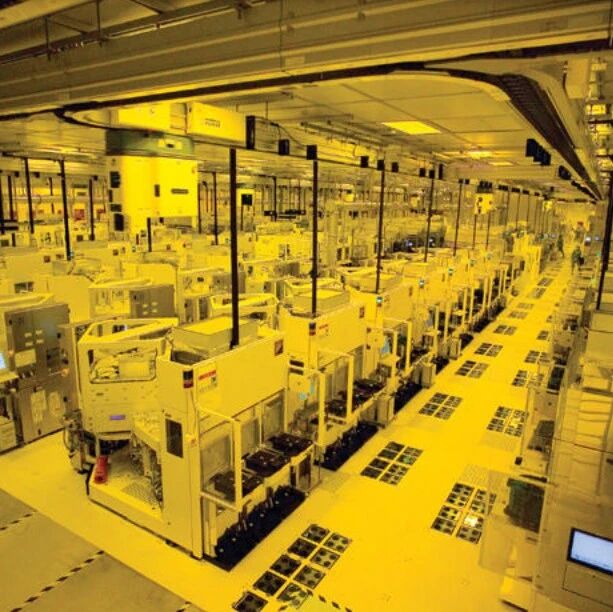
Core Viewpoint - OpenAI's recent agreements with AMD and Broadcom to produce AI chips highlight the financial implications and broader industry impacts, particularly on TSMC, the sole company capable of mass-producing these chips [3][4]. Group 1: OpenAI's Agreements - OpenAI has signed significant agreements with AMD and Broadcom to produce AI chips, requiring substantial financial investment estimated in the hundreds of billions [3]. - The agreement with AMD will enable the production of 6 GW of GPUs, with the first deployment of 1 GW expected by the end of 2026 [3]. - Broadcom will collaborate with OpenAI to develop a 10 GW AI accelerator and Ethernet systems, with initial deployments starting in the second half of 2026 and continuing until 2029 [3]. Group 2: Industry Implications - The partnerships are expected to generate "hundreds of billions" in revenue for AMD, indicating the complexity of the financing involved [3]. - OpenAI's strategy to produce its own chips is anticipated to lower costs compared to purchasing from NVIDIA, enhancing speed and performance while diversifying its supply chain [6][5]. - TSMC is identified as the primary manufacturer for these chips, emphasizing its critical role in the AI industry and the potential risks associated with reliance on a single supplier [6][8]. Group 3: TSMC's Dominance and Challenges - TSMC is recognized as the leading provider of advanced 3nm process technology, with its only significant competitors being Intel and Samsung, neither of which currently pose a threat to TSMC's dominance [9][10]. - TSMC's production capacity is under significant strain, with over 75% of its business coming from North American clients, and it is struggling to meet the growing demand [10][11]. - The company is investing heavily in expanding its manufacturing capabilities in both Taiwan and the U.S., with new facilities expected to come online in the coming years [11][12].

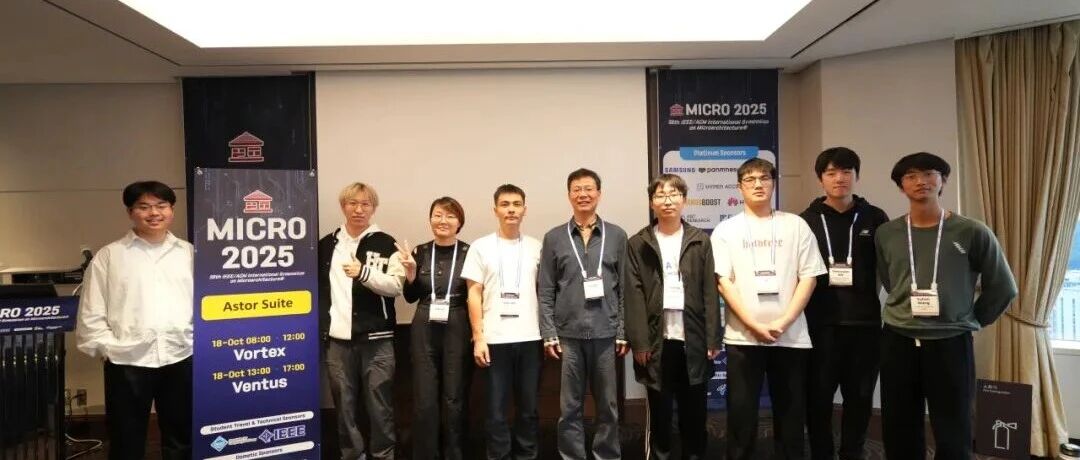
清华大学 集成电路学院在 MICRO 2025 成功举办“Ventus:基于 RISC-V 的高性能开源 GPGPU”学术教程
半导体行业观察· 2025-10-26 03:16
Core Insights - The article discusses the successful organization of a tutorial on "Ventus: A High-performance Open-source GPGPU Based on RISC-V and Its Vector Extension" by Tsinghua University at the IEEE/ACM International Symposium on Microarchitecture (MICRO 2025) [1][15] - The tutorial included eight presentations and a hands-on demonstration, showcasing Tsinghua University's comprehensive research achievements in the open-source GPGPU project "Ventus" [3][15] Group 1: Project Overview - Professor He Hu introduced the Ventus GPGPU project, covering its inception, key technologies, team development, future research goals, and plans for open-source community building [3][15] - The project encompasses a complete layout in instruction set architecture (ISA), hardware architecture, compilers, simulators, and verification tools [3][15] Group 2: GPGPU Design Philosophy and Architecture - PhD student Ma Mingyuan elaborated on the essence of GPGPU as a hardware multithreaded SIMD processor, discussing core issues in instruction design and how Ventus builds a complete GPGPU base on RISC-V Vector extensions [5][16] - Key microarchitecture components such as CTA scheduler, core pipeline, and warp scheduler were introduced [5][16] Group 3: Cache Subsystem and MMU Design - PhD student Sun Haonan presented the cache subsystem and memory management unit (MMU) design under the RISC-V RVWMO memory model, utilizing a release consistency-guided cache coherence mechanism (RCC) [6][16] - The design achieved over 95% L1 DTLB hit rate and over 85% L2 TLB hit rate while controlling MMU overhead between 15% and 25% [6][16] Group 4: Multi-Precision Tensor Core Design - PhD student Liu Wei introduced a new generation of multi-precision reusable tensor cores optimized for AI workloads, supporting various data precisions from FP16 to INT4 [7][16] - Benchmark tests showed significant optimizations of 69.1% in instruction count and 68.4% in execution cycles after integrating the tensor core [7][16] Group 5: Differential Verification Framework - Master's student Xie Wenxuan presented the GVM (GPU Verification Model) framework, which addresses verification challenges posed by out-of-order execution in GPGPU [8][17] - The framework effectively identifies bugs and shortens debugging cycles by integrating with the Ventus software stack [9][17] Group 6: Compiler Design - Dr. Wu Hualin from Zhaosong Technology discussed the design considerations for the OpenCL compiler and Triton AI operator library compiler for Ventus GPGPU [10][17] - Ventus GPGPU supports OpenCL 2.0 profile and has passed over 85% of OpenCL conformance tests [10][17] Group 7: Toolchain Design - Engineer Kong Li introduced the design of the Ventus GPGPU toolchain, which includes core modules such as Compiler, Runtime, Driver, and Simulator [11][17] - The toolchain has achieved stable functionality through OpenCL-CTS and Rodinia benchmark tests [11][17] Group 8: Hands-on Demonstration - The hands-on demonstration provided an entry-level guide for developers to deploy the Ventus environment and run OpenCL programs [12][17] - The team showcased a two-tier FPGA verification platform, successfully running key tests such as vector addition and MNIST inference [13][17] - The tutorial highlighted Tsinghua University's systematic research capabilities in the intersection of RISC-V and GPGPU, marking significant progress in open-source high-performance computing architecture [14][17]
AMD,起源于这颗芯片?
半导体行业观察· 2025-10-26 03:16
Core Viewpoint - The article discusses the historical significance of AMD's Am9080 processor, which was a reverse-engineered clone of Intel's 8080, highlighting its impact on AMD's growth in the CPU market and the financial success it brought to the company [4][7]. Group 1: Historical Context - AMD's Am9080 was developed through reverse engineering of Intel's 8080, leading to a licensing agreement between the two companies to avoid legal disputes [4][8]. - The Am9080 was first produced in 1975, with AMD manufacturing costs at $0.50 per unit and selling prices reaching $700, particularly to military clients [7][8]. Group 2: Technical Specifications - The Am9080 had multiple versions with clock speeds ranging from 2.083 MHz to 4.0 MHz, showcasing AMD's advanced N-channel MOS manufacturing process [10]. - The chip's design was more compact than the Intel 8080, allowing for higher clock frequencies, with the Intel 8080 never exceeding 3.125 MHz [10]. Group 3: Business Agreements - In 1976, AMD signed a cross-licensing agreement with Intel, which allowed AMD to become a "second source" for Intel's products, facilitating future collaborations and product developments [8]. - The agreement included a payment of $25,000 to Intel and an annual fee of $75,000, which also absolved both companies from past infringement liabilities [8].



高端车规MCU,芯驰官宣:规模化量产
半导体行业观察· 2025-10-26 03:16
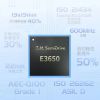
Core Viewpoint - The mass production of the E3650 MCU by Xinchip Technology marks a significant challenge to established international competitors in the automotive MCU market, particularly in the domain control sector [1][3]. Product Overview - The E3650 has officially entered mass production and has completed AEC-Q100 Grade 1 reliability certification, positioning it as a core solution for next-generation vehicle area controllers (ZCU) and domain controllers (DCU) [1][3]. - The E3650 features a 22nm automotive-grade process, a high-performance ARM Cortex-R52+ multi-core cluster with a frequency of 600MHz, and 16MB of embedded non-volatile memory, establishing a performance benchmark in its category [5][6]. Competitive Landscape - Historically, the automotive MCU market has been dominated by international giants such as Renesas, Infineon, STMicroelectronics, and NXP. The introduction of the E3650 represents a new competitive force from a domestic manufacturer [1][3]. - The E3650 outperforms competitors in several key specifications, including a higher main frequency and more available I/O ports, which enhances its capability to integrate various functions [2][5]. Market Positioning - The E3650 is positioned as a solution for the evolving automotive E/E architecture, which demands higher integration and performance from fewer, more powerful controllers [12][15]. - The product has already secured multiple key projects and is being developed for future vehicle platforms aimed at 2027 and 2028 [6][17]. Application Scenarios - The E3650 addresses the challenges faced by manufacturers in integrating advanced functions into area controllers, particularly as the industry moves towards more complex architectures [9][10]. - It also supports the central computing unit for integrated cockpit and driving functions, providing enhanced processing capabilities and reducing the need for additional I/O expansion chips [10][11]. Ecosystem Development - Xinchip Technology has built a comprehensive ecosystem around the E3650, including high-function safety PMICs, efficient I/O expansion chips, and mature virtualization software, facilitating a smooth transition from chip selection to mass production [15][17]. - The E3 series products have already achieved significant market penetration, with millions of units shipped across over 50 mainstream production models, showcasing the company's capability in automotive applications [17].
这家AI芯片独角兽,考虑出售
半导体行业观察· 2025-10-26 03:16
Core Viewpoint - SambaNova Systems, an AI chip startup, is considering selling the company due to funding difficulties, despite having raised over $1.1 billion and being valued at over $5 billion in its last funding round in 2021 [2]. Company Overview - Founded in 2017 and headquartered in California, SambaNova focuses on AI chips designed for training and inference, with a recent chip release aimed at fine-tuning and inference for large language models [2]. - The company was co-founded by notable figures in the chip and AI/ML fields, including CEO Rodrigo Liang, Kunle Olukotun, and Christopher Ré, and has a strong team with extensive experience from Sun Microsystems [3]. Shift in Strategy - In April 2023, SambaNova significantly deviated from its initial goal of providing a unified architecture for training and inference, laying off 15% of its workforce to focus solely on AI inference [3][4]. - This shift reflects a broader trend in the AI chip industry, where companies are moving from training to inference due to market size considerations and the technical challenges associated with training [5]. Market Dynamics - Analysts suggest that the AI inference market could be ten times larger than the training market, making it a more attractive focus for startups [4][5]. - The technical advantages of inference, such as reduced memory requirements and simpler inter-chip networking, further support this strategic pivot [4]. Industry Trends - SambaNova's transition mirrors similar moves by other startups like Groq and Cerebras, which have also shifted their focus from training to inference in recent years [6][7]. - The dominance of Nvidia in the AI training chip market has prompted many startups to pursue the relatively easier and potentially more lucrative inference market [5][7].

蓝牙路线图,最新发布
半导体行业观察· 2025-10-26 03:16
Core Insights - The Bluetooth Special Interest Group (SIG) held a press conference to discuss market trends and future roadmap for Bluetooth technology by 2025 [2][5] - A new community vision was established as "Connecting a Better World," emphasizing the need for a clear definition of wireless technology goals [2][5] Market Trends - By 2025, the number of Bluetooth SIG members is expected to exceed 40,000, with annual Bluetooth device shipments surpassing 5 billion units [5] - Audio products are projected to reach annual shipments of 900 million units by 2025, while Human Interface Devices (HID) are expected to hit 386 million units [5] - The healthcare sector is anticipated to grow, with wearable devices like smartwatches expected to ship 323 million units annually, and patient monitoring devices like thermometers and blood glucose meters expected to reach 36 million units [5] - Supply chain tracking labels are also on the rise, with an expected annual shipment of 245 million units [5] Future Developments - A high-resolution and lossless audio standard is planned for development by October 2026, along with High Data Throughput (HDT) technology to enhance performance [7][8] - Bluetooth technology is also aiming to support higher frequency bands, such as 5GHz and 6GHz, to ensure stable connections in the next 25 years [8] - The focus on electronic shelf labels and smart tags is highlighted, with predictions of 138 million electronic shelf labels shipped annually by 2029 [5][6]

存内计算芯片,热度大增
半导体行业观察· 2025-10-26 03:16
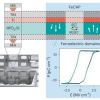
Core Insights - The article emphasizes the importance of edge AI and the need for efficient memory and computation solutions to reduce power consumption and latency in edge devices [3][4][10]. Group 1: Edge AI Challenges - Edge AI applications require real-time responses and often deal with sensitive data that cannot be shared with third parties, leading to strict limitations on computational resources [3]. - In typical mobile workloads, data movement in memory accounts for 62% of total energy consumption, highlighting the inefficiency of current memory systems [3]. Group 2: Memory Solutions - Near-memory computing and advanced memory technologies like RRAM (Resistive Random Access Memory) and ferroelectric capacitors are proposed as potential solutions to address power and performance issues [4][5]. - RRAM offers high read endurance but has low write endurance, making it suitable for inference tasks but challenging for training tasks that require frequent updates [6][9]. Group 3: Hybrid Approaches - Hybrid solutions combining RRAM and ferroelectric materials can leverage the strengths of both technologies, allowing for efficient training and inference in edge AI applications [5][7]. - The integration of ferroelectric transistors into CMOS processes is complex but necessary for achieving high performance in memory computing [6][7]. Group 4: New Computational Frameworks - Memory computing can enhance not only traditional neural network computations but also facilitate the development of new modeling methods, such as solving Ising glass problems [10][11]. - Future advancements in memory computing will require new software frameworks that can adapt memory access patterns to specific problem requirements, independent of external memory controllers [13].