
半导体行业观察

Search documents
量子芯片,史上首次,谷歌造
半导体行业观察· 2025-10-23 01:01
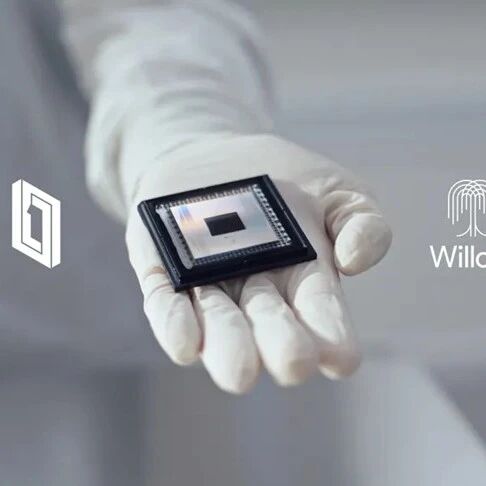
Core Insights - Google has achieved a historic milestone by successfully running a verifiable quantum algorithm that surpasses the capabilities of the fastest classical supercomputers, demonstrating a speed increase of 13,000 times [2][5] - The breakthrough is based on the Willow quantum chip, which significantly reduces error rates and enhances computational speed, paving the way for practical applications in fields like medicine and materials science [6][11] Quantum Echoes Algorithm - The Quantum Echoes algorithm represents the first verifiable quantum advantage, meaning results can be replicated on Google's quantum computer or any equivalent quantum system, confirming the outcomes [5][6] - This algorithm simulates physical experiments and tests both complexity and accuracy, making it a significant step towards practical quantum computing applications [6] Willow Quantum Chip - The Willow chip has achieved two major advancements: it reduces errors exponentially with an increase in qubit numbers and completes a standard benchmark calculation in five minutes, a task that would take the fastest classical supercomputer approximately 10^25 years [11][15] - The chip features 105 qubits and has shown impressive performance in quantum error correction and random circuit sampling benchmarks, indicating its potential for scalable quantum computing [18][19] Applications in Science - Quantum computing is expected to play a crucial role in modeling quantum mechanical phenomena, such as atomic interactions and molecular structures, which are foundational in chemistry, biology, and materials science [8][9] - Experiments conducted in collaboration with UC Berkeley using the Quantum Echoes algorithm on the Willow chip have validated the method against traditional nuclear magnetic resonance (NMR) results, revealing new insights [8] Future Prospects - Google aims to demonstrate practical, super-classical computations that are relevant to real-world applications, bridging the gap between quantum computing capabilities and commercial viability [19] - The advancements in quantum error correction and the performance of the Willow chip suggest that practical large-scale quantum computers are becoming increasingly feasible [13][17]


大众预警:Nexperia 芯片供应中断,生产或中断
半导体行业观察· 2025-10-23 01:01
Core Viewpoint - The recent takeover of Nexperia by the Dutch government has led to export restrictions from China, causing potential production disruptions in the automotive industry, particularly affecting companies like Volkswagen and General Motors [2][4][5]. Group 1: Impact on Automotive Industry - Volkswagen has warned of possible temporary production halts due to export restrictions on semiconductors produced by Nexperia, despite not being a direct supplier [2][4]. - The German Automotive Industry Association (VDA) has indicated that if the chip supply disruption is not resolved quickly, it could lead to severe production limitations [2][6]. - General Motors has formed an internal team to mitigate potential disruptions from the Nexperia situation, emphasizing the current instability of the situation [4][5]. Group 2: Nexperia's Situation - The Dutch government intervened in Nexperia's operations citing serious governance issues and concerns over economic security risks [5][6]. - Nexperia has notified its clients that it cannot guarantee the supply of chips to the automotive supply chain, raising alarms among manufacturers [6][7]. - The company has been under scrutiny due to its ties with the Chinese firm Wingtech Technology, which has faced export restrictions from the U.S. [7][8]. Group 3: International Reactions - The Chinese government has reacted by imposing export bans on certain products from Nexperia, leading to heightened tensions between China and the Netherlands [3][5]. - Discussions between Chinese and Dutch officials are ongoing, aiming to find a constructive solution to the semiconductor supply chain issues [8][10]. - The situation has escalated into a broader technology dispute between China and the West, impacting global supply chains [4][10].


一家芯片初创公司,单挑Nvidia和Intel
半导体行业观察· 2025-10-23 01:01
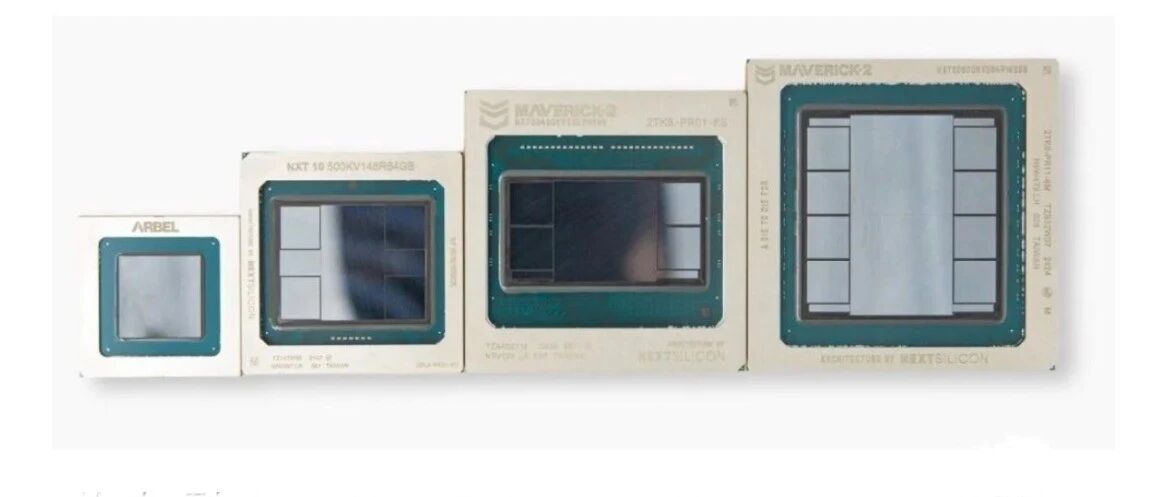
Core Viewpoint - NextSilicon is set to launch Maverick-2, the world's first Intelligent Compute Accelerator (ICA), designed to meet the demands of high-performance computing and AI applications while reducing power consumption and costs [2][4]. Group 1: Company Background and Funding - NextSilicon was founded in 2017 and has raised a total of $303 million in seed funding and three rounds of venture capital, with the latest round in June 2021 raising $120 million [4][5]. - The company's valuation reached approximately $1.5 billion during its C round of funding [5]. Group 2: Product Development and Architecture - Maverick-2 is based on a novel architecture that minimizes overhead and maximizes computational power for demanding AI and HPC applications, utilizing a non-Von Neumann data flow architecture [10][11]. - The architecture allows for real-time dynamic optimization of applications, focusing on the most resource-intensive code paths, achieving up to 10 times acceleration with only a quarter of the power consumption [13][14]. Group 3: Technical Specifications of Maverick-2 - Maverick-2 features four computing areas with a total of 224 computing blocks, each containing hundreds of ALUs, and is manufactured using TSMC's 5nm process with 54 billion transistors [16][22]. - The chip offers configurations with 32 RISC-V cores (single die) or 64 RISC-V cores (dual die), with a thermal design power (TDP) of 400W and 750W respectively [22][23]. - Performance metrics include 10.8 TFLOPS for float64 operations and 20.3 TFLOPS for float32 operations in the single die configuration [22]. Group 4: Competitive Landscape and Market Position - NextSilicon aims to differentiate itself from established players like NVIDIA by providing a specialized accelerator for high-performance computing, addressing the limitations of traditional GPU and CPU architectures [7][8]. - The company emphasizes the elimination of vendor lock-in and the ability to run existing CPU code without modification, positioning itself as a revolutionary force in the computing landscape [13][14][34]. Group 5: Introduction of Arbel RISC-V CPU - Alongside Maverick-2, NextSilicon introduced the Arbel RISC-V CPU, designed to handle serial code that is difficult to parallelize, achieving clock speeds of up to 2.5 GHz [26][28]. - The Arbel core features a wide instruction pipeline and advanced memory subsystems, aiming to compete with Intel and AMD's offerings [30][32].
三星HBM4,首次亮相
半导体行业观察· 2025-10-23 01:01
公众号记得加星标⭐️,第一时间看推送不会错过。 来 源: 内容 编译自 wcctech 。 三星首次向公众展示了其 HBM4 内存模块,这表明这家韩国巨头确实为即将到来的 HBM 竞争做好 了准备。 虽然目前市场以第五代 HBM3E 芯片为主,但业内观察人士预计 HBM4 将成为明年的主要因素,因 为 Nvidia 计划在其下一代 AI 加速器 Rubin 中使用它。 SK海力士目前是HBM3E的主要供应商,与Nvidia和台积电组成了三方供应链,目前已完成HBM4的 开发,并正在准备量产。据报道,该公司正在与Nvidia洽谈大规模供应事宜。 据报道,三星正在避免重蹈覆辙,避免在 DRAM 领域失去主导地位。为了确保不落后,这家韩国巨 头正与竞争对手一起推进 HBM4 的量产。据《电子时报》报道,三星 HBM4 逻辑芯片的良率已达到 惊人的 90%,这表明该公司的量产进度已步入正轨,更重要的是,目前预计不会出现延期。 据报道,这家韩国巨头还在实施多项策略,以确保HBM4的早期普及,包括保持有竞争力的价格、提 供更高的产能,更重要的是,为NVIDIA等客户提供更快的引脚速度(额定速度约为11 Gbps),高 于 ...

十篇论文,揭秘寒武纪AI芯片崛起之路
半导体行业观察· 2025-10-23 01:01
Core Insights - The article discusses the rise of Cambricon, a leading AI chip company in China, highlighting its technological evolution and competitive edge against global giants like NVIDIA [5][26]. Group 1: Foundational Era - The inception of Cambricon is attributed to the academic journey of two brothers, Chen Yunji and Chen Tianshi, who laid the groundwork for deep learning processor architecture through their research at the Chinese Academy of Sciences [7]. - The "DianNao" series, introduced by the brothers, was one of the earliest systematic studies on deep learning processor architectures, addressing the efficiency bottlenecks of general-purpose CPUs/GPUs in executing neural networks [7][12]. Group 2: Technological Evolution - The article highlights ten significant papers published between 2014 and 2025, tracing the technological advancements from the "DianNao" architecture to the Cambricon series of AI chips [5]. - The first paper, "DianNao," demonstrated a high-throughput accelerator capable of executing 452 GOP/s with a power consumption of 485 milliwatts, achieving a speedup of 117.87 times compared to a 128-bit 2GHz SIMD processor [11]. - Subsequent innovations, such as "DaDianNao" and "PuDianNao," showcased significant performance improvements, with "DaDianNao" achieving a 450.65 times speedup over GPUs and "PuDianNao" supporting seven mainstream machine learning algorithms [14][20]. Group 3: Commercialization and Ecosystem Development - Cambricon's transition from academic research to commercial products was marked by the introduction of the "Cambricon ISA," a specialized instruction set for deep learning, which decoupled upper applications from lower hardware [26][30]. - The integration of Cambricon-1A into Huawei's Kirin 970 chip marked a significant commercial breakthrough, establishing Cambricon as a key player in the mobile AI chip market [37]. - Following the loss of Huawei as a major client, Cambricon pivoted to focus on its "Siyuan" (MLU) cloud chips and the NeuWare software platform, aiming to compete with NVIDIA's ecosystem [37]. Group 4: Future Challenges and Opportunities - The article concludes by emphasizing the challenges Cambricon faces against NVIDIA's established technology and the need to carve out a unique path in the AI chip market [59]. - Despite the challenges, the growing demand for autonomous AI computing in China presents a significant opportunity for Cambricon to leverage its academic roots and build a robust developer ecosystem [59].


干掉40%的工程师?初创公司推动AI开发芯片
半导体行业观察· 2025-10-22 01:20
Core Insights - The article discusses the challenges in chip development, particularly the lengthy and complex process that can take up to four years, which is increasingly hindered by the growing complexity of chips [2][3] - Chipmind, a Zurich-based startup, has raised $2.5 million in seed funding to develop AI agents that can automate low-level tasks in chip design, potentially reducing the development cycle by one year [2][4] - The article highlights the competitive landscape, noting that established companies like Cadence Design Systems and Synopsys are also pursuing AI-driven chip development solutions, posing significant competition to startups like Chipmind and ChipAgents [3][5] Chipmind's Approach - Chipmind aims to automate approximately 40% of the manual tasks currently performed by engineers, which could lead to job displacement in the industry [2] - The company is collaborating with select chip manufacturers in Europe to validate its technology, emphasizing the need for AI tools tailored to specific manufacturing environments [3][4] - The goal is to commercialize their technology by the second half of next year, requiring further R&D investment and collaboration with key industry players [4] ChipAgents' Development - ChipAgents.ai has raised $21 million in early funding to enhance its AI platform for chip design and verification, bringing its total funding to $24 million [5][6] - The platform automates routine design and verification tasks, allowing engineers to focus on more innovative aspects of chip development [5][6] - ChipAgents operates at the front end of the chip design process, generating extensive documentation and helping engineers identify inconsistencies or defects [6][7] Market Dynamics - The semiconductor industry is witnessing a shift towards AI solutions for design verification, with ChipAgents reporting a 60-fold increase in usage in the first half of 2025 [7][8] - The company plans to enhance R&D and customer support, establishing a new headquarters in Santa Clara to be closer to Silicon Valley [8] - The integration of AI-driven tools into the chip design workflow is seen as a critical step in addressing the complexities of modern chip development [8]
本土激光雷达大厂CEO:特斯拉纯视觉方案不够安全
半导体行业观察· 2025-10-22 01:20
Core Viewpoint - The founder of Chinese LiDAR manufacturer RoboSense, Qiu Chunchao, argues that multi-sensor systems are superior and safer for autonomous vehicles compared to the pure vision system promoted by Tesla's CEO Elon Musk [2][4]. Group 1: LiDAR vs. Vision Systems - LiDAR, which stands for Light Detection and Ranging, is a sensor technology that scans the environment by emitting laser beams and measuring the time it takes for the signals to return [2]. - Qiu emphasizes that relying solely on vision systems is insufficient for achieving Level 3 or Level 4 autonomous driving capabilities, necessitating the inclusion of additional sensors like LiDAR [2][3]. - Market research firm Yole Group predicts that RoboSense will capture the largest market share of global passenger car LiDAR systems by 2024 [3]. Group 2: Musk's Perspective on LiDAR - Musk has been a long-time critic of LiDAR systems, asserting that the future of autonomous driving lies solely in the use of cameras [4][6]. - He claims that the reliance on cameras is the most "human-like" way to navigate, as humans use their eyes for navigation [6]. - The cost of LiDAR systems is significantly higher, approximately $12,000 per vehicle, compared to around $400 for cameras [4][6]. Group 3: Industry Opinions on Sensor Technology - Other companies like Waymo and Zoox utilize a combination of cameras and sensors, including radar and LiDAR, to enhance object detection in adverse weather and low-light conditions [5]. - Uber's CEO Dara Khosrowshahi supports the use of a combination of sensors, including LiDAR, for achieving superior safety in autonomous vehicles [6][7]. - Qiu points out that the cost of LiDAR systems has dramatically decreased from around $70,000 per vehicle to a few hundred dollars, while performance has improved [7]. Group 4: Regional Differences in Autonomous Driving - Li Xiang, CEO of Chinese electric vehicle manufacturer Li Auto, suggests that Musk's dismissal of LiDAR may stem from differences in traffic conditions between the U.S. and China [7][8]. - He argues that in China, drivers often encounter poorly lit or malfunctioning vehicles, which current camera systems may struggle to detect [8].


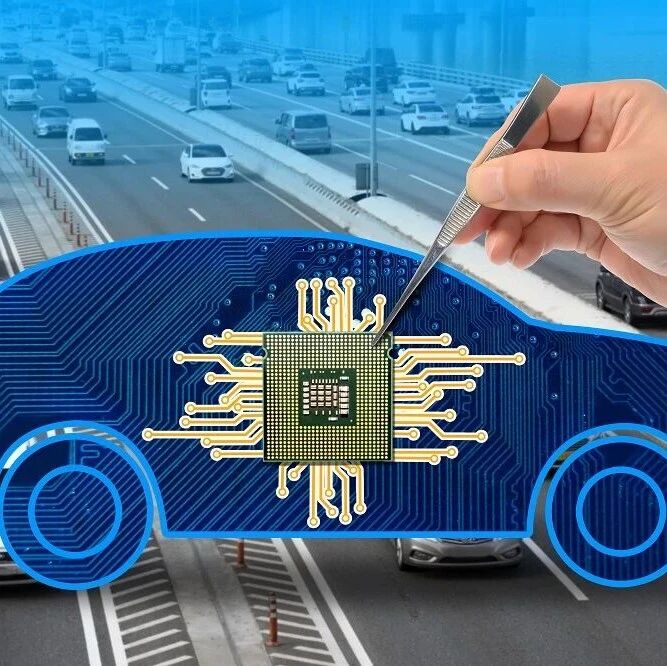
汽车产业,再现缺芯危机
半导体行业观察· 2025-10-22 01:20
Core Viewpoint - The article discusses the significant impact of the Nexperia semiconductor supply issue on the automotive industry, highlighting the potential for production disruptions due to the company's recent operational challenges and geopolitical tensions [2][4][5]. Group 1: China-EU Trade Relations - Wang Wentao, the Chinese Minister of Commerce, emphasized the need for constructive dialogue with the EU regarding semiconductor supply chain stability and urged the EU to adhere to market principles [2]. - The EU is willing to collaborate with China to address trade frictions and understands China's export control measures on rare earths due to national security concerns [2]. Group 2: Nexperia's Operational Challenges - Nexperia, a key semiconductor supplier, has faced supply issues after being taken over by the Dutch government, which has raised concerns about its ability to meet automotive industry demands [4][6]. - The company has informed clients that it can no longer guarantee chip supplies, which could lead to significant production limitations for major automotive manufacturers [4][6]. Group 3: Impact on the Automotive Industry - The German Automotive Industry Association (VDA) warned that if Nexperia's supply issues are not resolved quickly, it could lead to large-scale production restrictions or even halts in vehicle manufacturing [4][5]. - Major automotive brands like BMW, Toyota, and Mercedes-Benz are actively assessing their exposure to Nexperia and seeking alternative chip sources to mitigate risks [6][7]. Group 4: Supply Chain Vulnerabilities - The automotive sector is experiencing renewed fears of semiconductor shortages, reminiscent of previous crises that severely impacted production [5][9]. - Nexperia holds approximately 40% market share in basic semiconductor components, making its supply disruptions particularly concerning for the automotive supply chain [6][9]. Group 5: Geopolitical Tensions - The Dutch government's takeover of Nexperia was influenced by U.S. warnings regarding national security risks, highlighting the geopolitical complexities affecting semiconductor supply chains [7][10]. - The situation has prompted automotive manufacturers to request assistance from Chinese authorities to resolve export restrictions and stabilize supply chains [8][9].
创VCSEL产业单轮融资纪录,老鹰半导体超7亿元B+轮融资收官
半导体行业观察· 2025-10-22 01:20
Core Insights - Zhejiang Eagle Semiconductor Technology Co., Ltd. successfully completed its B+ round of financing, raising over 700 million, setting a record for single-round financing in the VCSEL sector in China [1] - The financing was led by CITIC Jinshi and Guoxin Fund, with participation from several top institutions, indicating strong market consensus on the value of photonic chips and AI computing power [1] Industry Consensus - There is a pressing need for a Chinese solution in large-scale computing power competition, especially in the context of US-China strategic rivalry [2][3] Company Capabilities - The founding team of Eagle Semiconductor consists of top experts from the global VCSEL industry, with over 50% of the workforce dedicated to R&D, showcasing a strong capability in research, manufacturing, and management [5][7] - The company has developed a unique VCSEL technology platform with five core technologies and is set to lead in the production of 100G VCSEL chips, breaking the long-standing US monopoly [7] Investment Logic - The interest from leading investment firms highlights the long-term value and scarcity of Eagle Semiconductor's technological breakthroughs and market focus [10] - The transition from single-card computing power to cluster computing power is essential for China's computing infrastructure, with Eagle Semiconductor positioned as a key player in this evolution [10]
日本半导体,失落的30年
半导体行业观察· 2025-10-22 01:20
Core Viewpoint - Japan once dominated the global semiconductor market but has experienced a 30-year decline due to policy shifts, rigid corporate culture, and global competition. The future direction of Japan's semiconductor industry is under scrutiny as it seeks to regain its competitive edge in a market projected to reach $733 billion by 2025 [2][4]. Group 1: Historical Context - In the late 1980s to early 1990s, Japan's semiconductor industry held over 50% of the global market share, marking the "Japan's semiconductor" golden era, with NEC, Hitachi, and Toshiba ranking among the top three semiconductor companies [2][3]. - Japan's initial success was attributed to advanced manufacturing technology and a management model based on General Electric, allowing for efficient operations through vertical integration and clear export strategies [3][4]. Group 2: Factors Leading to Decline - The decline of Japan's semiconductor competitiveness is multifaceted, with significant turning points including the policy failures marked by the "Japan-U.S. Semiconductor Agreement," which pressured Japan to open its market [4][5]. - Japan's focus on domestic demand and mass production led to aggressive price competition, perceived as dumping, and a reluctance to adopt U.S. semiconductor technologies [5][6]. - The vertical integration model, while effective initially, became a hindrance as the industry grew, leading to slow decision-making and an inability to adapt to market changes [6][7]. Group 3: Impact of Global Competition - The rise of South Korean companies like Samsung, which adopted owner-managed structures for rapid decision-making and investment, further exacerbated Japan's decline [7][8]. - Economic factors, including the appreciation of the yen and the bursting of the real estate bubble in the 1990s, led to reduced investment enthusiasm among Japanese manufacturers [8][9]. Group 4: Current Landscape and Future Prospects - Despite the decline of major vertical integration semiconductor manufacturers, Japan's materials and equipment sectors remain robust, suggesting potential for a resurgence in the semiconductor industry [8][9]. - The COVID-19 pandemic highlighted the vulnerabilities in global supply chains, prompting calls for Japan to rebuild its domestic semiconductor manufacturing capabilities to maintain industrial competitiveness [9][10].
