半导体行业观察

Search documents
寒武纪,回应多个热点问题
半导体行业观察· 2025-09-19 01:29
公众号记得加星标⭐️,第一时间看推送不会错过。 来源 : 内容来自中国证券报,作者:杨洁,谢谢 。 9月18日,寒武纪举办2025年半年度业绩说明会,集中回答了投资者关于定增项目、产品迭代、软件 生态等相关问题。 值得注意的是,对于投资者关于寒武纪是否重启汽车驾驶芯片业务、是否考虑在芯片之外提供集成式 的解决方案,以及如何看待云厂商纷纷自研AI芯片等问题,寒武纪方面并未回答。 今年8月,寒武纪曾多次披露股票交易异常波动公告、股票交易风险提示公告,驳斥了网络传言。 2025年上半年,寒武纪业绩大增备受资本市场关注,对于未来的销售研判也是投资者关注的重点。 有投资者问及,寒武纪上半年存货水平有较大幅度增长,这主要是出于对下游需求的乐观预期而主动 备货,还是有其他方面的原因? 持续推动产品迭代优化 在当天下午举办的寒武纪业绩说明会上,有投资者问及寒武纪的产品路线和时间节点是否具有先进 性。 寒武纪董事长、总经理陈天石回复称,公司坚持自主研发,聚焦技术创新,以保持公司技术前瞻性、 领先性,进而推动公司智能芯片产品、基础系统软件平台的迭代升级与优化,提升公司芯片产品的市 场竞争力,为客户提供优质的芯片产品。 陈天石称, ...


华为一口气发布多款芯片
半导体行业观察· 2025-09-19 01:29
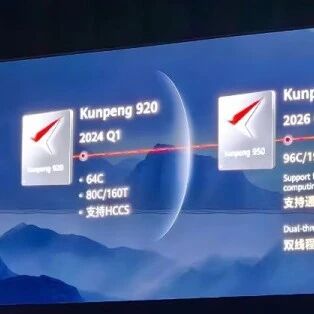
Core Viewpoint - Huawei is leading a new paradigm in AI infrastructure with its innovative supernode interconnection technology, emphasizing the importance of computing power in artificial intelligence development [2][3]. Group 1: Ascend Chip Development - Huawei has made significant progress in its Ascend chip series, with the upcoming Ascend 950 series expected to enhance AI computing capabilities [3][4]. - The Ascend 950 series includes two chips: Ascend 950PR and Ascend 950DT, which will improve training efficiency and inference throughput [5][6]. - The Ascend 950PR chip targets inference prefill and recommendation scenarios, while the Ascend 950DT focuses on inference decode and training, with significant improvements in memory bandwidth and capacity [6][7]. Group 2: Supernode Products - The Atlas 950 supernode, based on the Ascend 950DT chip, will support 8192 Ascend 950DT chips, significantly increasing computing power and interconnection bandwidth [9][10]. - The Atlas 960 supernode, set to launch in 2027, will further enhance performance with a maximum support of 15488 cards, doubling the capabilities of the Atlas 950 [11][12]. - The Atlas 950 SuperCluster will consist of 64 Atlas 950 supernodes, achieving a total computing power of 524 EFLOPS, making it the world's strongest computing cluster [21][22]. Group 3: Interconnection Technology - Huawei has developed a new interconnection protocol, "Lingqu," to support large-scale supernode architectures, enhancing reliability and bandwidth [20][23]. - The interconnection technology addresses challenges in long-distance, high-reliability connections and aims to achieve TB-level bandwidth with low latency [19][20]. - The Lingqu protocol will be open for industry partners to foster collaboration and innovation in interconnection technology [20][23].
晶圆厂,挂牌出售
半导体行业观察· 2025-09-19 01:29
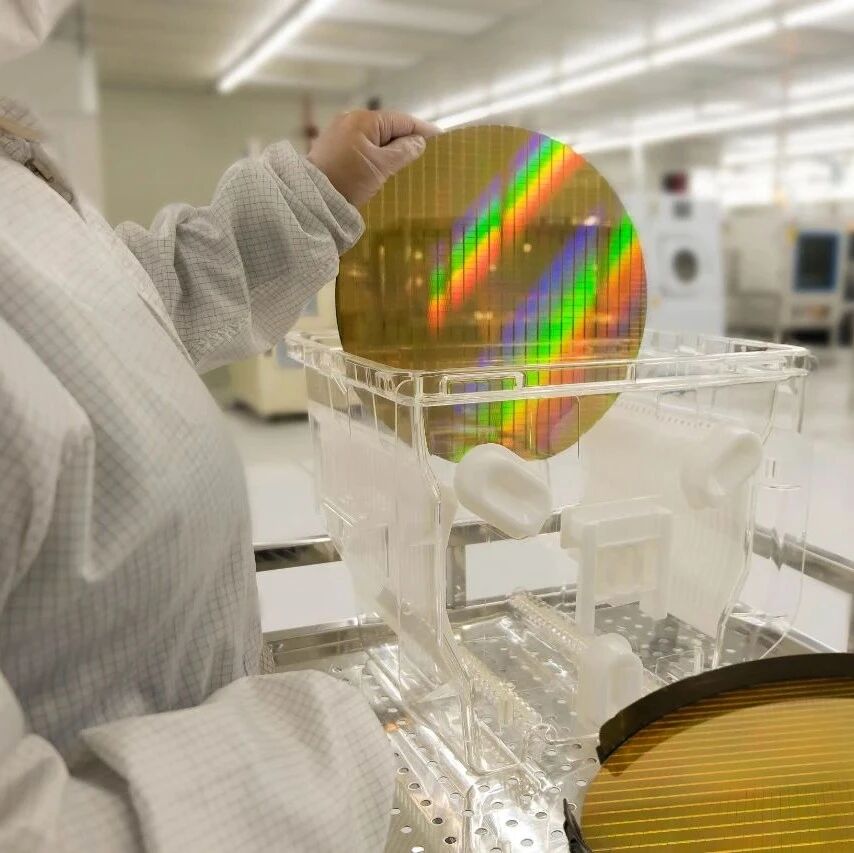
Core Viewpoint - LA Semiconductor has initiated the sale process of its Pocatello wafer manufacturing facility in Idaho, aiming to streamline operations and focus on its role as an ITAR-registered domestic foundry [2][3]. Group 1: Facility Details - The Pocatello facility spans 31 acres and features over 57,000 square feet of cleanroom space, with the capability for expansion [2]. - The manufacturing processes at the facility cover a range from 0.18 microns to 1.5 microns, including digital, analog, mixed-signal BCD, CMOS, bipolar, MEMS, and advanced discrete devices, with lithography capabilities down to 0.13 microns [2]. - The facility includes a prototype assembly lab and a 7,000 square foot detection and testing cleanroom [2]. Group 2: Operational Performance - Since its acquisition from Onsemi in October 2022, the Pocatello facility has achieved its most stable and efficient operational levels, attributed to process improvements and proprietary IP development [3][4]. - The facility's success is largely credited to its experienced workforce, with over 35% of engineering and maintenance staff having more than 10 years of experience [3]. Group 3: Strategic Focus - The decision to sell the Pocatello facility aligns with LA Semiconductor's strategy to streamline operations and maximize efficiency while focusing on its role as a domestic foundry [3]. - Buyers are increasingly interested in brownfield fabs that can be operational more quickly than greenfield projects, reducing execution risks and boosting domestic market activity [3]. Group 4: Future Operations - Despite the planned sale, LA Semiconductor will continue to operate and provide custom semiconductor solutions for sectors including automotive, defense, aerospace, medical, industrial, and commercial [3].
新思科技中国30周年引领AI智能体工程师重塑芯片设计范式
半导体行业观察· 2025-09-19 01:29
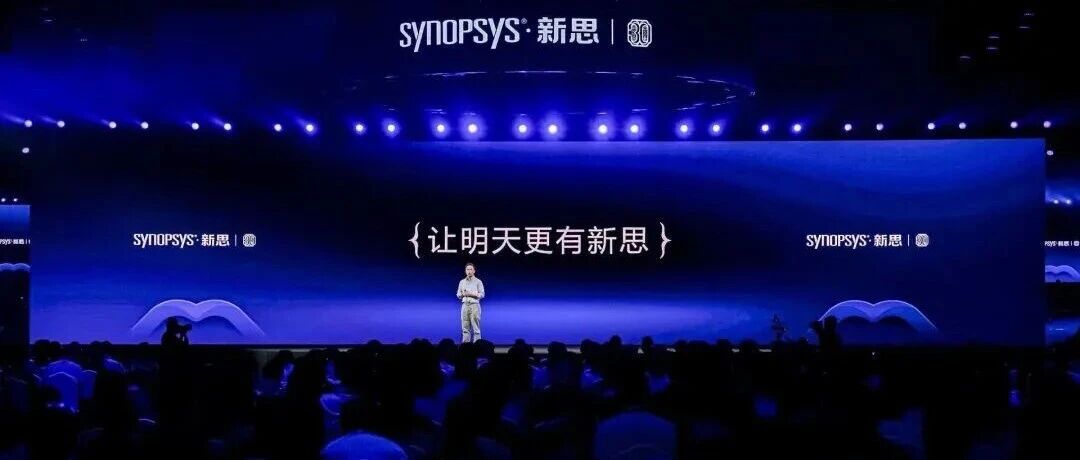
Core Viewpoint - Synopsys is celebrating its 30th anniversary in China and is focusing on transforming from a chip-centric company to a system-oriented leader in engineering solutions, emphasizing the integration of digital tools to innovate engineering design paradigms [4][10][12]. Group 1: Company History and Development - Synopsys entered the Chinese market over 30 years ago, initially as an agent, and has since evolved alongside the local semiconductor industry, contributing significantly to academic institutions like Tsinghua University [6][8]. - The company established its leadership in the EDA and IP sectors through strategic acquisitions, such as Avanti, and has fostered local talent development [8][10]. Group 2: Strategic Transformation - The acquisition of Ansys marks a pivotal shift for Synopsys, positioning it as a global leader in providing comprehensive engineering solutions from chip to system [10][12]. - The company aims to address the complexities of modern intelligent systems, such as robotics and autonomous vehicles, by integrating capabilities across the entire technology chain [14][20]. Group 3: Key Technological Breakthroughs - Synopsys is focusing on three critical areas: system-level design, chip technology upgrades, and AI integration, which are reshaping the engineering design landscape [15][17]. - The company is developing a framework for intelligent systems that evolves from basic capabilities to advanced decision-making and action abilities [18]. Group 4: Industry Collaboration and Innovation - Synopsys is collaborating with industry leaders to create differentiated intelligent systems that enhance developer productivity and innovation while addressing developer shortages [20]. - A high-level forum discussed the importance of a holistic approach to product development, emphasizing the integration of hardware, software, and system-level solutions [21][24]. Group 5: Future Outlook and Ecosystem - The conference outlined a technology blueprint from chip to system, highlighting the importance of interdisciplinary collaboration and the role of digital twins in engineering innovation [26][28]. - Synopsys is committed to fostering a vibrant ecosystem that connects global innovation efforts, focusing on talent development and technological breakthroughs [28].

MPU,最新预测
半导体行业观察· 2025-09-19 01:29
公众号记得加星标⭐️,第一时间看推送不会错过。 预计到 2034 年,全球微处理器芯片制造市场规模将从 2024 年的1146 亿美元增至约2615 亿美元, 在 2025 年至 2034 年的预测期内以8.6%的复合年增长率增长。2024年,亚太地区 占据主导地位, 占有超过61.4% 的份额,收入为703 亿美元。 微处理器芯片制造市场是指从事设计、制造和供应微处理器单元(MPU)的行业,微处理器单元是 计算设备的中央处理单元。微处理器是在电子系统中执行算术、逻辑、控制和输入/输出操作的集成 电路。 市场驱动力来自对高性能计算日益增长的需求、互联设备的日益普及以及云基础设施的扩展。人工智 能、机器学习和高级数据分析的发展需要强大的处理器,从而推动了微处理器设计的创新。随着电动 汽车和自动驾驶的兴起,汽车行业对专用芯片的需求也显著增加。 来源 : 内容 编译自 market 。 消费电子产品的需求最为强劲,尤其是智能手机、笔记本电脑、平板电脑和游戏机,这些领域构成了 微处理器的最大市场。数据中心和云服务提供商也是主要的消费市场,需要强大的芯片来处理海量工 作负载。随着汽车集成先进的驾驶辅助系统、信息娱乐和互 ...


英伟达,重金入股英特尔!
半导体行业观察· 2025-09-18 13:24
Core Viewpoint - NVIDIA announced a $5 billion investment in Intel, marking a significant support for the struggling American chip giant following a recent government stake acquisition [1][2]. Group 1: Investment Details - After the transaction, NVIDIA will hold approximately 4% or more of Intel's new shares, becoming one of its largest shareholders [2]. - NVIDIA will purchase Intel's common stock at $23.28 per share, which is lower than Intel's closing price of $24.90 but higher than the government's previous investment price of $20.47 [2]. Group 2: Strategic Implications - The partnership allows for joint development of PC and data center chips, enhancing Intel's opportunities in the market [2]. - This investment is seen as a step for NVIDIA to diversify its investments in the U.S. and improve political relations, although it does not address larger issues in China [2][5]. Group 3: Market Impact - The announcement led to a 30% pre-market surge in Intel's stock, while NVIDIA's stock rose over 3% and AMD's stock fell nearly 4% [2][3]. - Intel has previously secured $2 billion from SoftBank and $5.7 billion from the U.S. government, indicating a strong cash position [3]. Group 4: Competitive Landscape - The collaboration poses potential risks for TSMC, which currently manufactures NVIDIA's flagship chips, as future production may shift to Intel [3]. - AMD may also face challenges in the data center market due to this partnership [3]. Group 5: Technological Development - Intel will design custom data center CPUs to be packaged with NVIDIA GPUs, enhancing chip interconnectivity crucial for AI applications [3][4]. - NVIDIA aims to provide custom GPUs for Intel's PC CPU packaging, potentially boosting Intel's competitiveness in the consumer market [3].

黄仁勋表示“失望”
半导体行业观察· 2025-09-18 02:09
公众号记得加星标⭐️,第一时间看推送不会错过。 来源 : 内容 编译自 yahoo 。 据外媒报道,中国相关部门已禁止大型科技公司购买英伟达的人工智能 (AI) 芯片,并指示字节跳动 和阿里巴巴 (BABA) 等公司停止测试专为内地买家定制的芯片。针对这一消息,英伟达首席执行官 黄仁勋周三告诉记者,他感到"失望",但随着监管障碍的消除,他会"耐心等待"。 "有很多地方我们去不了,这没关系,"黄仁勋说道。他和许多其他科技界领袖一起在英国出席特朗普 总统的国事访问。 黄仁勋周三在回答有关《金融时报》报道的问题时表示,"只有国家需要,我们才能为市场服务。" "我们对中国市场的贡献可能比大多数国家都大。我对目前的情况感到失望,"黄先生说。"但他们在 中美之间有更大的议程要解决,我理解这一点。" 此前几年,英伟达在中国的业务经历了动荡,黄仁勋形容其"就像坐过山车一样"。 黄先生周三在伦敦的新闻发布会上告诉记者:"我们已经指导所有金融分析师不要将中国纳入财务预 测中。这样做的原因是,这在很大程度上将在美国政府和中国政府的讨论范围内。" 黄 仁 勋 告 诉 外 媒 , 美 国 需 要 " 确 保 包 括 中 国 在 内 的 ...

Arm芯片,改变游戏规则
半导体行业观察· 2025-09-18 02:09
Core Viewpoint - Arm has established itself as a dominant player in the chip architecture market, transitioning from a focus on general computing solutions to developing infrastructure-specific technologies with its Neoverse product line, which caters to data centers, edge computing, and high-performance computing (HPC) [2][3][4]. Group 1: Arm's Market Position and Product Lines - Arm was founded in 1990 and began licensing its processor IP in 1993, later acquired by SoftBank for $32 billion in 2016, and went public again in 2023 while remaining under SoftBank's majority ownership [2]. - The Neoverse product line is categorized into three main series: the V series for high-performance general computing, the N series for server markets, and the E series for edge computing [3][4]. - The V2 series is utilized by major companies like AWS, Google, and Nvidia, while the N2 series is used in Microsoft's Cobalt chips, highlighting Arm's integration into significant cloud and AI workloads [4][8]. Group 2: Industry Trends and Challenges - The industry is shifting focus from traditional computing to encompass networking and storage, driven by the emergence of Data Processing Units (DPUs) and the need for more integrated solutions [5][10]. - Arm's approach to Neoverse has evolved to provide integrated subsystems that allow for rapid customization without significant investment, changing the game for data center optimization [7][12]. - The demand for performance is increasing, with a blurred line between power and performance in AI systems, necessitating a focus on optimizing infrastructure to meet these demands [10][11]. Group 3: Future Directions and Innovations - Arm aims to facilitate seamless workload migration across infrastructures, emphasizing the importance of efficiency and performance in a system-level world [13]. - The company is recognized for its partnerships with major hyperscale companies, which enhances its reputation and assures new clients of the longevity and reliability of its products [12]. - By 2025, a significant portion of infrastructure investments is expected to concentrate on a few technology providers, most of whom collaborate with Arm, indicating a trend towards customizable chips designed for specific workloads [11][12].
Sitimes MEMS 器件,进军新市场
半导体行业观察· 2025-09-18 02:09
Core Insights - SiTime has announced its entry into the $4 billion resonator market with the launch of its new MEMS resonator series, the Titan platform, aimed at replacing quartz solutions in Bluetooth microcontrollers, wearables, and IoT applications [3][10] - The Titan series features a frequency range of 32 MHz to 76.8 MHz and is based on SiTime's sixth-generation FujiMEMS technology and seventh-generation analog circuits [10][11] Size and Efficiency - The Titan resonator is notable for its compact size, measuring 0.46 x 0.46 mm, making it seven times smaller than 1210 quartz crystal devices and four times smaller than 1008 quartz crystal devices [5][10] - This miniaturization is significant for space-constrained electronic products, allowing designers to either reduce PCB size or repurpose the freed space for additional functionalities [10][11] Performance Advantages - Titan offers improved aging stability, reportedly five times better than quartz, with a lifespan of five years at maximum rated temperature and strict stability across a temperature range of -40°C to +125°C [10][11] - The mechanical resilience of Titan is enhanced, with shock resistance improved by 50 times and vibration resistance by 30 times compared to quartz [10][11] - Power efficiency is another key advantage, with Titan potentially reducing oscillator circuit power consumption by up to 50% and startup energy consumption by three times compared to quartz solutions [10][11] Compatibility and Integration - Titan's design ensures electrical compatibility with existing oscillator circuits originally designed for quartz, allowing engineers to use Titan as a direct replacement without the need for extensive redesigns [11][13] - The integration of Titan with SoC or MCU can eliminate the need for external resonators, simplifying PCB layout and maximizing the utility of limited I/O pins [13] Product Launch and Future Plans - The first product in the Titan series is the 32 MHz SiT11100, with mass production samples available now, while additional models will be released by December 2025 [13] - SiTime has also introduced the SiT6400EB evaluation board to facilitate the design process, enabling customers to replace quartz devices with Titan resonators in existing designs [13]

AI芯片黑马融资53亿,估值490亿
半导体行业观察· 2025-09-18 02:09
Core Viewpoint - Groq Inc. has raised $750 million in new funding, with a current valuation of $6.9 billion, significantly higher than last year's $2.8 billion, to enhance its AI inference chip technology, particularly its Language Processing Unit (LPU) [3][5]. Funding and Valuation - Groq Inc. announced a new funding round of $750 million led by Disruptive, with participation from Cisco Systems, Samsung Electronics, Deutsche Telekom Capital Partners, and other investors [3]. - The company's current valuation stands at $6.9 billion, a substantial increase from the previous year's valuation of $2.8 billion [3]. Technology and Product Features - Groq's LPU claims to operate certain inference workloads with 10 times the energy efficiency compared to GPUs, thanks to unique optimizations not found in competitor chips [3]. - The LPU can run models with up to 1 trillion parameters, reducing the computational overhead associated with coordinating different processor components [3]. - Groq's custom compiler minimizes overhead by determining which circuit should execute which task before the inference workload starts, enhancing efficiency [4]. Architectural Principles - The LPU is designed with four core principles: software-first, programmable pipeline architecture, deterministic computation, and on-chip memory [8]. - The software-first principle allows developers to maximize hardware utilization and simplifies the development process [9][10]. - The programmable pipeline architecture facilitates efficient data transfer between functional units, eliminating bottlenecks and reducing the need for additional controllers [11][12]. - Deterministic computation ensures that each execution step is predictable, enhancing the efficiency of the pipeline [13]. - On-chip memory integration significantly increases data storage and retrieval speeds, achieving a memory bandwidth of 80 TB/s compared to GPUs' 8 TB/s [14]. Market Context - The funding comes at a time when a competitor, Rivos, is reportedly seeking up to $500 million at a $2 billion valuation, indicating a competitive landscape in the AI inference chip market [6].