半导体行业观察

Search documents
构建自主可控的集成电路产业体系
半导体行业观察· 2026-03-03 15:30
Core Viewpoint - The article emphasizes the evolution of the integrated circuit industry in China from the "Sixth Five-Year Plan" to the "Fourteenth Five-Year Plan," highlighting its development, current status, and global competitive landscape, while identifying challenges and proposing strategies for the "Fifteenth Five-Year Plan" [1]. Group 1: Economic Long Wave Cycle - The world economy exhibits a 50-year long wave cycle, known as the Kondratiev cycle, with the fifth cycle driven by the information industry, particularly the integrated circuit sector [3][4]. - China's GDP has shown a steady increase since the late 20th century, with projections indicating that by 2035, China's GDP could reach approximately $33.8 trillion, potentially rivaling that of the United States [5][6][7]. Group 2: Integrated Circuit Industry Development - The integrated circuit industry in China has evolved significantly since the 1950s, with key milestones including the establishment of major companies like SMIC and the rapid growth of the industry post-2001 [19][20]. - The sales revenue of China's integrated circuit industry has increased dramatically, with projections for the "Fifteenth Five-Year Plan" indicating an average annual sales revenue of 104 billion yuan [20][22]. Group 3: Current Status and Challenges - The integrated circuit industry in China has achieved 100% self-sufficiency in critical areas related to national security, with significant advancements in electronic design automation (EDA) and chip design [28][30]. - Despite progress, the industry faces challenges such as fragmentation, lack of collaboration between upstream and downstream enterprises, and the need for improved data statistics and industry standards [50][51][52]. Group 4: Key Segments of the Integrated Circuit Industry - The EDA market is dominated by three major foreign companies, while domestic firms like Beijing Huada Jiutian Technology Co., Ltd. have made significant strides, ranking sixth globally [28][29]. - In chip design, domestic companies are increasingly competitive, with firms like HiSilicon and Unisoc leading in smartphone processor design [30][32]. - The manufacturing segment is represented by SMIC, which has achieved a global market share of 33% for chips with a process node of 28 nm or larger, ranking third globally [33]. - The packaging and testing segment is led by companies like Jiangsu Changjiang Electronics Technology Co., Ltd., which ranks third globally in revenue [34]. - The semiconductor equipment sector is witnessing a trend towards localization, with companies like North Huachuang Technology Group Co., Ltd. ranking sixth globally [35][36]. Group 5: Investment and Future Outlook - The National Integrated Circuit Industry Investment Fund has played a crucial role in supporting the industry's development, with significant capital allocations planned for the future [44][47]. - The article stresses the importance of addressing the challenges of small and fragmented enterprises, enhancing collaboration, and improving data accuracy to foster a more robust integrated circuit industry in China [50][52].




AWS放弃了一项芯片计划
半导体行业观察· 2026-03-03 02:31
Core Viewpoint - AWS has decided to terminate its cloud RAN project, which was initially aimed at providing telecom operators with more options in the RAN market, potentially disappointing those seeking alternatives to traditional hardware providers like Ericsson and Nokia [2][3]. Group 1: AWS's Strategy and Changes - AWS showcased a server equipped with the Graviton3 processor designed for RAN functions but has shifted focus away from physical hardware to a Container as a Service (CaaS) layer that integrates AI solutions [3][4]. - AWS confirmed the termination of its collaboration with Nokia for specific server deployment, emphasizing a pivot towards a broader CaaS approach rather than concentrating on hardware [3][4]. Group 2: Market Dynamics and Challenges - The RAN market has been shrinking, with revenues dropping from $45 billion in 2022 to an expected $35 billion in 2024 due to reduced spending by telecom operators on 5G [4]. - The Open RAN concept has not succeeded in providing alternatives to existing RAN vendors, with Huawei, Ericsson, and Nokia still dominating the market [4][5]. Group 3: Technical Compatibility and Competition - Designing RAN software compatible with Graviton3 is challenging for suppliers, as Ericsson requires a dedicated hardware accelerator for resource-intensive tasks, which AWS's solution lacks [5][6]. - Nokia has opted for a different approach by offloading all Layer 1 functions to a custom chip developed with Marvell Technology, while using Graviton3 for less demanding Layer 2 and Layer 3 functions [6][8]. Group 4: Future Prospects and Client Engagement - Despite AWS's commitment to cloud RAN, its services have not seen widespread adoption, with major clients like EchoStar's Dish Network shutting down their cloud-based RAN initiatives [9]. - AWS's focus at recent events has shifted towards Agentic AI, indicating a potential end to its expansion in the chip sector [9].


英伟达重磅押注硅光
半导体行业观察· 2026-03-03 02:31
Core Viewpoint - Nvidia's strategic investments in Lumentum and Coherent aim to enhance its optical technology capabilities, crucial for the development of advanced AI systems and networking solutions [2][3]. Group 1: Nvidia's Acquisition and Investment Strategy - Nvidia acquired Mellanox Technologies for $6.9 billion in early 2020, positioning itself as a key player in Ethernet and InfiniBand transceiver sales [2]. - The company invested $2 billion each in Lumentum and Coherent to drive research and development towards optical technologies that support Nvidia's AI objectives [2][3]. - Nvidia's investments are suspected to be in the form of convertible bonds or other equity instruments rather than direct stock purchases [3]. Group 2: Importance of Optical Technology - The LinkX optical cables and transceivers are critical, potentially accounting for over half of network costs and power consumption [2]. - Lumentum and Coherent are involved in Nvidia's upcoming Quantum-X InfiniBand and Spectrum-X Ethernet switch projects, indicating a significant demand for optical components [4]. - The introduction of competition among laser suppliers is expected to lower prices and enhance product offerings for Nvidia [4]. Group 3: Market Performance and Financial Metrics - Lumentum's market value surged 10.7 times over the past year to $50.1 billion, with revenues of $2.11 billion and net profits of $251.6 million [5]. - Coherent's revenue for the past 12 months was $6.3 billion, with a net profit of $331 million, and its market value increased 3.8 times to $48.5 billion [5]. Group 4: Optical Switching Technology - Lumentum's R300 optical switch can potentially reduce overall network power consumption by 65% in AI cluster systems with 100,000 XPUs [9]. - Coherent has begun delivering a liquid crystal-based optical switch with various port configurations, indicating advancements in optical networking solutions [11]. - Nvidia may transition to a ring or dragonfly interconnect topology in future architectures, utilizing optical switching to enhance connectivity and efficiency [13].

芯片公司,集体涨价
半导体行业观察· 2026-03-03 02:31
Group 1 - The core viewpoint of the articles highlights a significant price increase in the semiconductor industry driven by rising raw material costs and strong demand, particularly influenced by AI applications [2][5][6] - Domestic chip manufacturers, including Xidian Micro and Guokewai, have announced price hikes for various products, with increases ranging from 15% to 80% depending on the product type [3][5] - The memory chip shortage, exacerbated by AI-driven demand, is expected to lead to a 14% increase in smartphone prices, reaching an all-time high of $523, and a projected 12.9% decline in smartphone sales by 2026 [5][6][7] Group 2 - The semiconductor crisis is attributed to the booming AI sector and the subsequent surge in data center construction, which heavily relies on memory chips [5][6] - Major memory chip suppliers, including SK Hynix, Samsung, and Micron, have seen their stock prices reach historical highs, with production capacity nearly sold out [7] - Analysts warn that the memory shortage is likely to persist into the following year, posing significant challenges for electronic manufacturers [7]




苹果基带,用了FD-SOI工艺
半导体行业观察· 2026-03-03 02:31
Core Insights - The article highlights the integration of advanced SOITEC FD-SOI substrate technology in the 5G millimeter-wave antenna modules of Apple's iPhone 17 series, marking a significant architectural shift in high-frequency RF integration technology [2][3]. Group 1: Technology and Integration - The Qualcomm QTM565 millimeter-wave integrated antenna packaging (AiP) module used in the iPhone 17 series employs GlobalFoundries' 22FDX RF process, which is based on the advanced FD-SOI substrate provided by Soitec [2]. - The use of FD-SOI technology in the iPhone 17 series signifies its growing application in high-end smartphone millimeter-wave RF integrated circuit design, representing a major commercial validation for FD-SOI technology in the mass market 5G millimeter-wave application [3]. Group 2: Advantages of FD-SOI Technology - FD-SOI technology allows for complete integration of 5G millimeter-wave SoCs, enhancing the scalability of logic circuits while maintaining excellent RF characteristics. This integration enables designers to combine baseband functions, beamforming control logic, power management, and RF front-end components into a single chip [4]. - The integration leads to reduced bill of materials (BOM) costs, smaller PCB sizes, and lower interconnect losses between discrete components, which can translate into thinner device profiles or more space for battery capacity and thermal management in space-constrained smartphones [5]. Group 3: Performance and Future Trends - FD-SOI technology operates at low voltage, optimizing performance per watt through dynamic body biasing and precise threshold control, which is crucial for maintaining 5G millimeter-wave throughput without excessive battery drain [5]. - The technology provides the necessary device-level precision for high-frequency operation below 6GHz and in the FR2 millimeter-wave band, enhancing linearity and gain control in phased array architectures, which directly impacts transmission distance, data rate stability, and thermal performance [5]. - As 5G technology evolves and early research into 6G accelerates, the demand for compact, energy-efficient, and highly integrated millimeter-wave solutions will grow, positioning FD-SOI technology as a key enabler for future mobile connectivity platforms [6].

混合键合,关键进展
半导体行业观察· 2026-03-03 02:31
Core Viewpoint - The future of semiconductor manufacturing is shifting from merely reducing sizes to rethinking device construction, stacking, and power delivery methods. Hybrid bonding technology is a crucial structural driver for achieving 3D integration, enabling significantly more interconnections within the same package size compared to traditional methods, while improving signal and power integrity [2][3]. Group 1: Hybrid Bonding Technology - Hybrid bonding technology is expected to grow at a compound annual growth rate (CAGR) of 21% from 2025 to 2030, driven by strong demand in artificial intelligence and high-performance computing [2]. - This technology has been applied in high-end applications but requires further improvements in bonding interface quality to match the performance of on-chip copper interconnections [2][3]. - The initial purpose of hybrid bonding was to enhance the brightness of CMOS image sensors, and it is now facilitating breakthroughs in high-performance computing (HPC) SRAM/processor stacking and multi-layer 3D NAND devices [3]. Group 2: Challenges and Developments - Leading HBM manufacturers like SK Hynix, Micron, and Samsung are likely to continue using micro-bump technology in HBM4 due to hybrid bonding's challenges in meeting low thermal budget and cost-effectiveness requirements [4]. - The hybrid bonding process must achieve lower-cost processing techniques, particularly in time-consuming annealing steps and slow pick-and-place operations, which can introduce harmful moisture [5]. - Controlling contamination during the manufacturing process is critical, with engineers turning to plasma cutting technology to reduce particle content during single crystal processing [6]. Group 3: Design and Integration - Hybrid bonding necessitates a shift from single-chip thinking to a system-level multi-chip collaborative design approach, requiring careful consideration of power and thermal distribution, as well as chip interconnect planning [6][7]. - The technology allows for extremely fine pitch, high-density vertical interconnections, which increases the demand for three-dimensional timing analysis and verification [7]. - Synopsys has developed a compact inter-chip I/O solution optimized for 2.5D, 3D, and SoIC packaging, enabling high bandwidth, low latency, and energy-efficient vertical interconnections [7]. Group 4: Process and Quality Control - Achieving high-quality hybrid bonding involves several key factors, including the use of plasma-enhanced chemical vapor deposition (PECVD) for dielectric layer deposition and ensuring minimal copper diffusion into the dielectric layer [14][15]. - The bonding process requires precise alignment, with alignment accuracy needing to be better than 100nm, and often as tight as 50nm [16]. - Chemical mechanical polishing (CMP) is highlighted as a critical step in hybrid bonding, ensuring uniform copper recess across the wafer and preventing excessive erosion of the dielectric layer [17]. Group 5: Future Applications and Innovations - The application of hybrid bonding technology in HBM requires low thermal budget films, such as sputtered SiCN or nano-twinned copper, which can be annealed at lower temperatures [26]. - The introduction of inorganic protective layers during the bonding process can help shield the bonding interface from moisture and chemical exposure during various assembly steps [22][23]. - The industry is focusing on improving defect control at the bonding interface, which is essential for the success of die-to-wafer hybrid bonding [24][25].

芯片公司CEO:年薪14亿
半导体行业观察· 2026-03-03 02:31
Core Viewpoint - Broadcom's CEO Hock Tan's total compensation surged to $205.3 million (approximately 1.4 billion RMB) last year, primarily due to stock awards linked to the company's growing position in the artificial intelligence (AI) sector [2] Group 1: Financial Performance - Broadcom's Q4 revenue reached a record $18 billion, a 28% year-over-year increase, exceeding analyst expectations of $17.4 billion [3] - Non-GAAP diluted EPS was $1.95, surpassing the market consensus of $1.86 [3] - For the full year, Broadcom's consolidated revenue grew 24% to $64 billion, driven by AI semiconductors and VMware [3] - AI semiconductor revenue increased 74% year-over-year to $6.5 billion in Q4, with annual revenue expected to reach $20 billion, a 65% increase [3] Group 2: AI and Custom Solutions - Broadcom's custom AI accelerator, internally referred to as XPU, has attracted more large-scale customers, with a fifth customer placing an initial order worth $1 billion [3] - AI total order backlog reached $73 billion, expected to be delivered within the next 18 months [3] Group 3: Infrastructure Software and VMware - Infrastructure software revenue, bolstered by the acquisition of VMware, reached $6.9 billion in Q4, a 19% year-over-year increase [4] - Software gross margin was 93%, with operating margin rising to 78% [4] - Adjusted EBITDA for FY2025 grew 35% to a record $43 billion, with free cash flow reaching $26.9 billion, a 39% increase [5] Group 4: Market Concerns and Risks - Despite strong performance, Broadcom's stock price fell significantly post-earnings call due to a profit margin warning from the CFO, predicting a 100 basis point decline in gross margin in Q1 [5] - The revenue concentration among a few large customers raises concerns about potential revenue risks if any major cloud service provider slows down deployment [6] - The infrastructure software segment is expected to grow by 3%, reflecting normal seasonal weakness in renewal business [6]


高通亮剑,擘画6G新蓝图
半导体行业观察· 2026-03-03 02:31
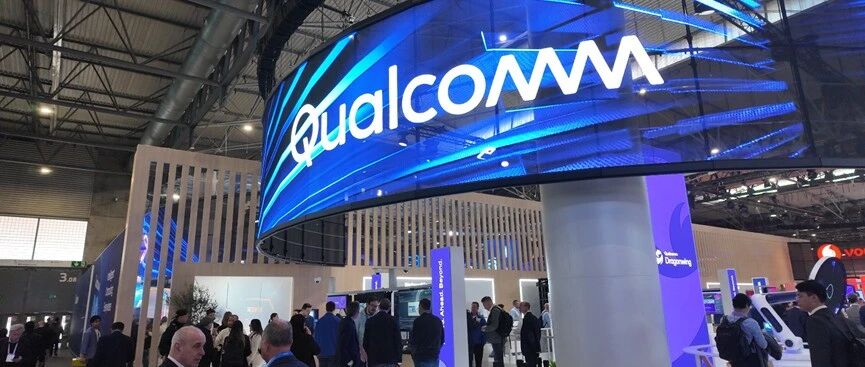
Core Viewpoint - The article emphasizes the transition from 5G to 6G, highlighting the integration of AI into communication technologies, which is expected to redefine the infrastructure of connectivity and intelligence in the upcoming AI era [1][4][25]. Group 1: 6G Development and Industry Consensus - Qualcomm is positioning itself as a leader in the development of 6G, focusing on AI-native connectivity and perception infrastructure that will support personal AI, physical AI, and intelligent agents [4][11]. - At MWC 2026, Qualcomm announced partnerships with nearly 60 global collaborators, including around 20 Chinese partners, to advance the development and deployment of 6G systems, aiming for commercial rollout starting in 2029 [5][13]. Group 2: Technological Innovations and System Design - The success of 6G relies on scalable system design choices, such as utilizing large bandwidth and improving spectrum efficiency, with a shift in focus from merely transmitting bits to ensuring consistent user experiences [6][9]. - Key innovations required for 6G include ultra-large scale MIMO, sub-band full duplex, and new 6G interfaces, which are essential for supporting complex applications like network-level perception and digital twins [9][11]. Group 3: Product Offerings and AI Integration - Qualcomm introduced several products at MWC, including the AI-enabled 5G Advanced modem and RF systems, the FastConnect 8800 mobile connectivity system, and the new Wi-Fi 8 product lineup, all designed to enhance connectivity in the AI era [14][17][18]. - The company is also enhancing its RAN capabilities with AI features to improve network performance and reduce costs for operators, while launching a Snapdragon wearable platform to bolster AI capabilities on devices [21][25]. Group 4: Future Outlook and Strategic Positioning - Qualcomm's strategic vision for 6G encompasses a comprehensive system that integrates connectivity, perception, and computation, moving beyond data transmission to become a foundation for intelligent applications [25]. - The company aims to leverage its extensive experience from previous generations of wireless technology to drive innovation and set new standards for intelligent connectivity in the AI era [25].
又一颗2纳米Arm芯片,144核
半导体行业观察· 2026-03-03 02:31
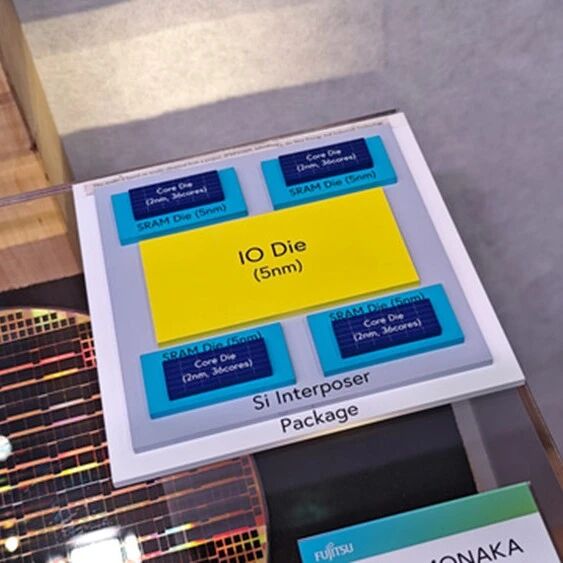
Core Viewpoint - Fujitsu has unveiled its MONAKA processor, which is set to be released in the fiscal year 2027, during the MWC event alongside its spinoff network equipment supplier 1FINITY [2] Group 1: Processor Specifications - The MONAKA processor is the successor to the Arm A64FX processor, which was utilized in the Fugaku supercomputer. The A64FX was manufactured using a 7nm process, while MONAKA's CPU cores will be produced using a 2nm process [4] - MONAKA features a 3D chip structure, with cache and I/O chips both manufactured using a 5nm process, arranged in a combination of 2D and 3D stacking [4][14] - The CPU core utilizes the Armv9-A architecture (compatible with SVE2), supports dual sockets with 144 cores per socket, and is equipped with 12 channels of DDR5 memory, along with support for confidential computing [11] Group 2: Future Developments and Market Demand - Fujitsu has previously announced support for NVIDIA and NVLink Fusion, but the current release does not mention NVLink Fusion, indicating that the first version of MONAKA may not support it, with future versions potentially including this feature [11] - There is a growing demand for domestically produced IT products that do not rely on foreign supply chains or data storage locations, referred to as "sovereign demand." This trend is becoming increasingly significant in the data center industry, making MONAKA's development crucial for Japanese manufacturers [11] - Fujitsu showcased an engineering sample of MONAKA, which includes a package of chips and components, as well as a wafer that stacks SDRAM and CPU chips in a 3D configuration [12]
大芯片的新瓶颈
半导体行业观察· 2026-03-02 01:41
Core Insights - The article discusses the emerging supply chain bottlenecks in semiconductor materials, particularly focusing on T-Glass, a specialized glass fiber controlled by Nittobo, which may become a critical limiting factor for advanced packaging and AI hardware [2][5][10] Group 1: Supply Chain Vulnerabilities - The semiconductor industry learned from the 2021 ABF material shortage, highlighting how a single material can cripple the entire supply chain [5] - T-Glass is crucial due to the physical requirements of AI chip packaging, necessitating larger integrated circuit substrates with low thermal expansion coefficients to avoid warping [5][6] - Nittobo currently holds about 85% market share in T-Glass, with plans to invest 15 billion yen to triple production capacity, indicating a significant market gap and urgency in project timelines [6][7] Group 2: Market Dynamics and Pricing - The shift in production focus from standard E-glass to T-Glass and other low Dk materials is actively reducing the supply of E-glass, impacting various sectors including memory, automotive, and telecommunications [8][9] - Prices for lightweight glass fiber fabrics have surged nearly 100%, while heavyweight fabrics have increased over 150%, reflecting a structural shift in pricing power towards upstream suppliers [9] - Major suppliers like Resonac are raising prices for CCL and prepreg products by 30% starting March 2026, marking a significant turning point in the market [9] Group 3: Geopolitical and Strategic Implications - Geopolitical tensions are prompting governments to seek supply chain diversification, yet this may deepen reliance on Chinese consumer goods in the global electronics industry [10][13] - The supply chain for AI hardware is tightly coupled, meaning delays in T-Glass production directly affect the delivery timelines for IC substrates and GPU server modules [10][13] - The Japanese government recognizes the strategic importance of T-Glass and has approved subsidies for expanding production facilities, indicating a national security concern [14]