半导体行业观察

Search documents
台积电员工,赚疯了
半导体行业观察· 2026-03-01 03:13
公众号记得加星标⭐️,第一时间看推送不会错过。 台积电作为不少人心中的梦幻企业,2025 年度员工薪资正式出炉,据最新上传资料显示,员工人均 年薪为 409.3 万新台币,年薪首次突破 400 万新台币大关,刷新历史新高,较前一年增加超过 76.4 万元,增幅高达 22.95%,为公布以来第二高的年度调薪幅度,仅次于 2022 年近 29% 的涨幅。 一般年后转职潮过后,3 月又将展开新一轮校园招聘活动,台积电员工薪资一直是备受关注的焦点。 这家市值近 52 万亿新台币的公司,已跻身全球前六大市值企业,员工薪资究竟如何?据公司最新上 传至证交所公开信息观测站的资料显示,2025 年平均员工福利费用为 442.5 万新台币,较前一年度 增加 79.2 万新台币。 而最受关注的员工平均薪资,在报告中已升至 409.3 万新台币,创下有相关纪录以来的新高。若按 12 个 月 计 算 , 相 当 于 月 薪 34 万 新 台 币 。 2025 年 度 平 均 薪 资 较 2024 年 的 332.9 万 新 台 币 增 长 22.95%,涨幅仅次于疫情解封后的 2022 年。 六年时间,年薪从不到 200 万翻倍增长 ...



全球首款 3.2T NPO 模块,阿里云成功点亮
半导体行业观察· 2026-03-01 03:13
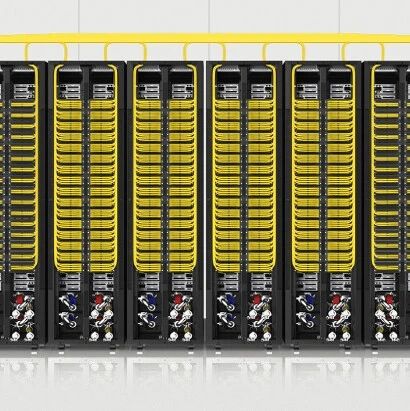
Core Viewpoint - The transition from copper to optical interconnects is essential for scaling up AI infrastructure, addressing limitations in bandwidth, latency, and operational complexity associated with copper interconnects [3][4]. Group 1: Current Challenges and Solutions - The current mainstream scale-up solutions rely on copper cabling, which, while cost-effective and low-latency, faces limitations in transmission distance, leading to increased complexity in manufacturing, wiring, power supply, and heat dissipation as systems scale [3]. - As clusters expand to hundreds or thousands of nodes, the physical coverage capability of copper interconnects approaches its limits, necessitating a shift to optical solutions for greater scalability and maintainability [3]. Group 2: UPN512 Architecture - Alibaba Cloud officially launched the UPN512 (Ultra-Performance Network for 512 xPU) architecture in October 2025, designed to create a large-scale, high-performance, reliable, low-cost, and easily expandable xPU interconnect system [4]. - UPN512 utilizes optical interconnects to directly connect xPUs with switches, employing a single-layer CLOS topology to achieve full interconnectivity for 512 xPUs, with future scalability to over 1,000 nodes [4]. Group 3: Key Technology - NPO - NPO (Near-Packaged Optics) is the core enabling technology of the UPN512 architecture, deploying optical engines close to the main chip and utilizing Linear Direct Drive technology to enhance bandwidth density and reduce reliance on advanced DSP chips [6]. - Compared to LPO (Linear-drive Pluggable Optics), NPO offers higher bandwidth density and lower requirements for the main chip's SerDes performance, promoting ecosystem development [6]. - NPO maintains an open decoupled characteristic with standard LGA connectors, making it more user-friendly for end-users compared to CPO (Co-Packaged Optics) [6]. Group 4: Performance Metrics - The 3.2T NPO module, developed by Alibaba Cloud, achieves a transmission bandwidth of 3.2Tb/s within a compact size of 22.5mm × 35.1mm, supporting both silicon photonics and VCSEL technology routes for various applications [9]. - The NPO module reduces power consumption by over 50% and costs by 30%, while maintaining end-to-end latency comparable to copper interconnects [10]. Group 5: Implementation and Future Plans - Alibaba Cloud has successfully implemented the 3.2T NPO technology in a new generation of domestic four-chip switches, achieving a total switching capacity of 102.4T, with potential upgrades to 409.6T [19]. - The switch operates with fine-grained port modes and maximizes single-chip Radix utilization, enhancing network scalability and flexibility while remaining compatible with existing MPO fiber optic cabling systems [20]. - Future plans include focusing on the stability and failure rate of NPO technology in long-term operations, which is crucial for the large-scale deployment of optical interconnects [27].
人工智能开始革命这类芯片
半导体行业观察· 2026-03-01 03:13
Core Insights - The article discusses the increasing role of artificial intelligence (AI) in the design and management of programmable logic, particularly in simplifying and accelerating certain aspects of the design process [2] - Despite the efficiency of FPGAs and DSPs being lower than fixed architecture chips, they remain valuable in rapidly changing markets such as life sciences, AI processing, automotive electronics, and 5G/6G chips [2] - The programmability of FPGAs provides a future-proof solution for new protocols, standards, and architectural modifications, likened to a blank canvas for loading any workload [2] Group 1: AI and FPGA Design - AI is expected to accelerate FPGA design, although it may not fully assist users in completing FPGA programming [5] - Current AI capabilities in generating RTL code from high-level code or natural language are still limited, but there is potential for innovation in this area [5][6] - The introduction of high-level synthesis technologies has made FPGA programming simpler, allowing engineering teams to convert algorithms or C code into RTL [6][8] Group 2: Challenges in FPGA Programming - The complexity and time-consuming nature of FPGA design remain significant challenges, requiring specialized knowledge in RTL design [2][6] - Users transitioning to AI-enhanced FPGA design face challenges, particularly in integrating hardware design with software algorithms [6][8] - The need for experienced hardware designers is critical as the integration of algorithms into FPGAs becomes more prevalent [6] Group 3: Software and Compiler Development - The demand for intelligent compilers that can optimize RTL code generation from high-level languages is increasing, but such tools are still scarce [6][12] - The industry is shifting towards software-driven design, with a focus on flexible and scalable embedded memory solutions to support unique AI algorithms [18] - The evolution of AI models necessitates a balance between programmability, efficiency, and flexibility in FPGA and AI system design [11][19] Group 4: Future of Programmable Logic - The future of FPGA applications will be determined by technical architects who decide which parts are best suited for FPGA implementation versus other chip types [19] - Key advantages of FPGAs include I/O flexibility, deterministic low latency, and the ability to integrate various uncontrollable workloads [19] - The overall cost of ownership and the ability to adapt to market demands will be crucial in determining the success of FPGA implementations [19]



美光首家印度工厂,终于落成
半导体行业观察· 2026-03-01 03:13
Core Viewpoint - Micron Technology has opened its first semiconductor assembly and testing plant in Sanand, India, expanding its global manufacturing scale and supporting India's role in the semiconductor value chain [2][3] Group 1: Plant Details - The Sanand facility will process advanced DRAM and NAND wafers into finished memory and storage products, with expectations to assemble and test tens of millions of chips by 2026 and scale up to hundreds of millions by 2027 [2] - The project represents a joint investment of approximately $2.75 billion from Micron and its government partners, with the first phase including over 500,000 square feet of cleanroom space [2] - The plant has commenced commercial production, with initial products delivered to Dell Technologies for use in laptops produced in India [2] Group 2: Strategic Implications - Micron's investment reflects a broader transformation in India from a focus on semiconductor design and software to hardware production, with assembly, testing, and packaging being crucial for building a comprehensive semiconductor ecosystem [3] - The Sanand plant contributes to supply chain diversification, as traditionally, memory packaging and testing have been concentrated in East and Southeast Asia, thus enhancing supply chain resilience amid growing demand driven by artificial intelligence [3] - While India may not immediately compete with established backend centers like Taiwan, Malaysia, or Singapore, Micron's establishment in India could influence future investment decisions, demonstrating the feasibility of large-scale semiconductor operations in the country [3]

聚焦半导体创新 共赴光博盛会——半导体行业观察联合承办专区启幕 四大标杆企业聚力参展
半导体行业观察· 2026-03-01 03:13
Core Viewpoint - The 2026 Munich Shanghai Optical Expo will be held from March 18 to 20, showcasing cutting-edge technologies and quality resources in the optoelectronic field, with a focus on driving high-quality industry development [1][2]. Group 1: Event Overview - The expo will feature a dedicated semiconductor display area, co-hosted by Semiconductor Industry Observer, covering 27 square meters [2]. - The event aims to connect industry value and support the innovative development of the semiconductor industry in advanced packaging, silicon photonics integration, and chip design [4]. Group 2: Participating Companies - Four leading companies will participate: Zhuhai Silicore Technology Co., Ltd., Guokai Guangxin (Haining) Technology Co., Ltd., Shanghai Langxi Technology Co., Ltd., and Shenzhen Guangjian Technology Co., Ltd. [4][5]. - These companies are recognized for their core technological breakthroughs and mature industrial practices, contributing significantly to the upgrade of the domestic semiconductor industry [5]. Group 3: Company Highlights - **Zhuhai Silicore Technology Co., Ltd.** focuses on EDA software for 2.5D/3D stacked chips, with a closed-loop design platform that supports various chip applications, addressing industry pain points [7][8]. - **Guokai Guangxin (Haining) Technology Co., Ltd.** specializes in silicon nitride silicon photonics technology, achieving high yield production with transmission loss at 0.1 dB/cm and over 95% process yield [13][14]. - **Shanghai Langxi Technology Co., Ltd.** leads in silicon-based passive devices, with breakthroughs in 3D silicon capacitors that exceed traditional ceramic capacitors in lifespan and reliability [18][19]. - **Shenzhen Guangjian Technology Co., Ltd.** has developed a full-stack solution for nano-photonics chips and 3D visual perception, successfully overcoming overseas patent barriers [23][24]. Group 4: Industry Impact - The semiconductor display area will serve as a vital platform for showcasing core strengths and linking industry resources, facilitating discussions on industry trends and potential collaborations [26].

一颗旨在颠覆CPU和GPU的芯片
半导体行业观察· 2026-02-28 01:14
Core Insights - The article discusses the testing of a novel supercomputer architecture by Sandia National Laboratories, which integrates reconfigurable accelerators developed by NexSilicon, allowing for self-optimization without the need to rewrite software [2][4]. Group 1: Technology and Performance - The Spectra system incorporates 128 NextSilicon Maverick-2 accelerators, which reportedly consume only half the power of NVIDIA Blackwell while achieving speeds up to four times faster [2][5]. - The Maverick-2 accelerators demonstrate significant performance improvements, achieving double the speed of NVIDIA Blackwell in HPCG benchmarks and ten times faster in PageRank tests [5]. - The architecture aims to alleviate memory bandwidth limitations, potentially enhancing the speed of applications that currently struggle with GPU performance [6]. Group 2: Strategic Importance - Sandia National Laboratories utilizes computer simulations to maintain the U.S. nuclear arsenal, emphasizing the need for diverse technological solutions to avoid dependency on a single provider [8]. - The Spectra project is part of a pioneering initiative that allows government collaboration with startups to test and develop early-stage high-performance computing technologies [8]. - The focus on high-performance scientific computing is relatively rare among startups, with many currently centered around artificial intelligence [9]. Group 3: Future Implications - The potential for NextSilicon's accelerators to provide advantages in performance efficiency under given power constraints is highlighted, addressing a critical limitation faced by large AI data centers [9]. - The "pioneering program" aims to explore high-risk technologies, validating their feasibility for broader application in other laboratories and commercial entities [9].
英伟达飞速崛起的芯片业务,不是GPU
半导体行业观察· 2026-02-28 01:14
Core Viewpoint - Nvidia's recent quarterly earnings report exceeded expectations, with significant growth driven by its networking division in Israel, which saw a remarkable year-on-year increase of 263% [2][5]. Group 1: Financial Performance - Nvidia's networking division, established after acquiring Mellanox, generated $11 billion in revenue for the fourth quarter, marking its first time surpassing the $10 billion threshold [2]. - The overall revenue from the networking business exceeded $31 billion for the year, which is more than ten times the revenue from the fiscal year 2021 when the Mellanox acquisition was completed [5][6]. - The revenue from Nvidia's networking division accounted for 16% of the company's total revenue, indicating its growing importance as a growth engine [3]. Group 2: Business Expansion and Workforce - Nvidia's workforce in Israel has grown to nearly 6,000 employees, up from approximately 5,000 the previous year, reflecting the company's expansion in the region [2][7]. - The company's assets in Israel increased from $840 million in 2024 to $1.47 billion, compared to just $325 million in 2023 [2]. - Nvidia's tax contributions in Israel rose to $1.287 billion, approximately 4 billion new shekels, highlighting its economic impact in the region [2]. Group 3: Strategic Importance of Networking Technology - The networking technology acquired from Mellanox is crucial for Nvidia's success, enabling efficient data processing speeds necessary for AI infrastructure [5][6]. - Nvidia's CEO Jensen Huang emphasized the shift from focusing on individual processors to the entire data center, underscoring the importance of connectivity between chips and data centers [3]. - The bottleneck in AI data centers is not the number of GPUs but rather memory limitations and high-speed data processing capabilities, which Nvidia aims to address through its networking solutions [3][4]. Group 4: Future Prospects - Nvidia's expansion in Kiryat Tivon is expected to transform the area into a hub for the AI ecosystem in Israel, potentially making it the largest private employer in the country, surpassing Intel [7]. - The company has made additional acquisitions, including Deci and Run:AI, totaling over $1 billion, further solidifying its presence in the Israeli tech landscape [7].

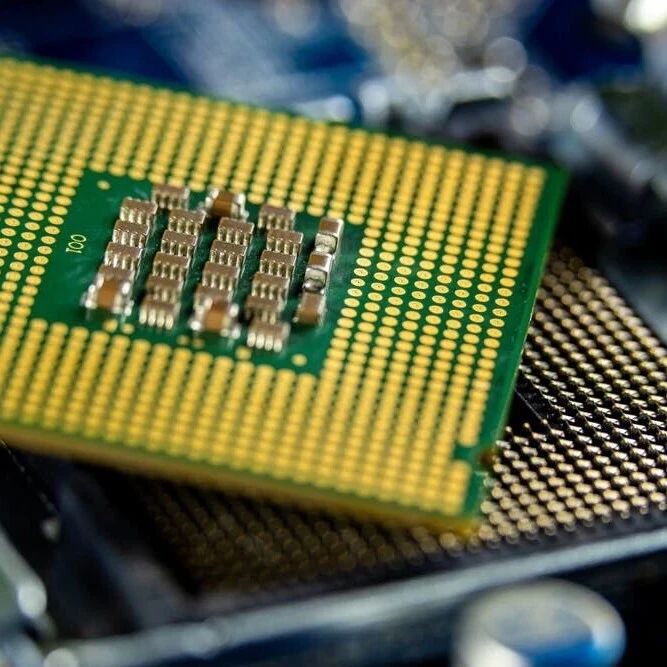
第一批芯片“受害者”出现了
半导体行业观察· 2026-02-28 01:14
Core Insights - The semiconductor industry is experiencing unprecedented concentration of value creation, with significant economic profits being captured by a small number of leading companies, while many smaller firms face substantial losses [3][30]. - The rise of AI has increased the entry barriers in the semiconductor sector, leading to a "Matthew effect" where larger players benefit disproportionately compared to smaller firms [6][30]. Group 1: Economic Profit Trends - From 1990 to 2009, the semiconductor industry generated approximately $38 billion in economic profit, primarily driven by Intel [3]. - In the decade from 2010 to 2019, the industry saw a significant increase in economic profit, totaling $450 billion, due to the rise of mobile internet and smartphone growth [3]. - Between 2020 and 2024, the semiconductor industry is projected to create $473 billion in economic profit, surpassing the total from the previous decade, with the top 5% of companies capturing $159 billion [3]. Group 2: Challenges for Smaller Firms - In 2025, over 64% of the top 30 Fabless companies in South Korea are expected to report operating losses, indicating a widespread issue rather than isolated cases [9]. - Companies like Fadu, Nextchip, and HiDeep have reported significant losses, highlighting the struggles of smaller firms in the face of rising costs and competitive pressures [9][10]. - The rising costs across various segments, including EDA tools, wafer fabrication, and packaging, are creating a challenging environment for smaller Fabless companies [15][16][17]. Group 3: The Five Layers of Cost Increases - The first layer of cost increase is the EDA/IP tax, where design costs are rising significantly, impacting smaller firms' ability to absorb these costs [15]. - The second layer is the wafer tax, with advanced nodes becoming more expensive and difficult to access, further disadvantaging smaller players [16]. - The third layer is the packaging tax, where advanced packaging has become essential for AI chips, leading to increased costs and supply constraints [17]. - The fourth layer is the storage tax, where rising prices for HBM and other memory types are increasing overall system costs, putting pressure on margins [18]. - The fifth layer is the talent tax, as competition for skilled IC design talent drives up salaries, impacting smaller firms' ability to retain key personnel [19][22]. Group 4: Competitive Landscape - Chinese Fabless companies are increasingly encroaching on traditional South Korean markets, leveraging their larger ecosystems and cost advantages [25][26]. - The competitive pressure from Chinese firms is forcing South Korean companies to struggle in both advanced and mature process nodes, leading to a significant loss of market share [28]. - The overall trend indicates a bifurcation in the semiconductor industry, where large firms with pricing power thrive, while smaller firms face ongoing challenges [30].


这项创新,将打造完美芯片
半导体行业观察· 2026-02-28 01:14
Core Viewpoint - The semiconductor industry faces a multi-trillion dollar challenge to develop the most powerful and dense silicon microchips within the limits of physical laws, marking a significant engineering victory and the final step of Moore's Law, with commercial applications expected no earlier than 2040 [2][4]. Group 1: Moore's Law and Its Implications - Moore's Law states that the number of transistors on a microchip doubles approximately every two years, but this doubling is limited by the physical constraints of silicon wafers [4]. - The current advanced silicon etching technology achieves a precision of 10 nanometers, equivalent to about 60 silicon atoms, with a target of reducing this to around 5 nanometers [6]. Group 2: Photolithography Technology - The technology required to achieve this goal is photolithography, which uses a narrow wavelength light source to etch patterns onto silicon wafers with atomic-level precision [4][6]. - The introduction of metal-organic frameworks (MOFs) as a new type of photoresist material could potentially revolutionize chip manufacturing due to their self-assembling properties and compatibility with various metals and organic molecules [11][12]. Group 3: Challenges and Future Prospects - Integrating MOFs into existing semiconductor manufacturing processes poses significant engineering challenges, with experts suggesting that commercial viability may not be realized until 2040 [14]. - The demand for more powerful and energy-efficient chips is driven by the need for advanced devices like smartphones and AI data centers, which could lead to a shift away from silicon materials in the future [16].
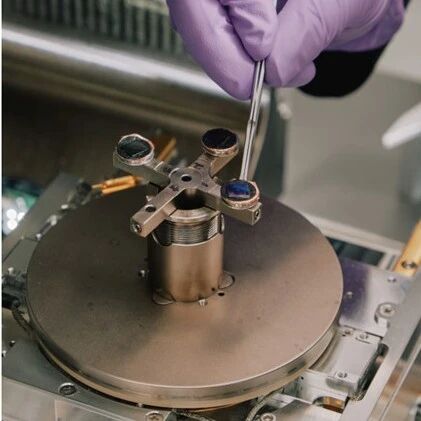
联发科投资了一家硅光公司
半导体行业观察· 2026-02-28 01:14
Core Viewpoint - MediaTek, through its subsidiary Digimoc Holdings Limited, has invested approximately $90 million to acquire a 2.4% stake in the American silicon photonics company Ayar Labs, aiming to deepen their partnership and continue developing application-specific integrated circuit (ASIC) technology [2][4]. Group 1: Investment Details - MediaTek announced the acquisition of 1,722,759 shares of Ayar Labs at $52.24 per share, totaling around $90 million, equivalent to approximately NT$2.8 billion [2]. - Ayar Labs has received investments from major chip companies including NVIDIA, AMD, and Intel, indicating strong industry backing [4]. Group 2: Ayar Labs Overview - Ayar Labs, founded in 2015, focuses on overcoming the physical limits of electronic communication by integrating optical components into chips, addressing the challenges of data transmission in high-performance computing (HPC) [4][5]. - The company plans to establish an office in Hsinchu, Taiwan, in 2025, to enhance collaboration with semiconductor manufacturers like TSMC and ASE [4]. Group 3: Technology and Challenges - Ayar Labs' core technology involves optical chips that facilitate chip-to-chip communication using light, which is essential for handling increasing data transmission demands [7][8]. - The main challenges for Ayar Labs include mass production and aligning with the specifications and application needs of major chip manufacturers like Intel and NVIDIA [8].