吴晓波频道

Search documents
2026年,多抓一些“人味儿”
吴晓波频道· 2026-02-16 00:40
Group 1 - The article reflects on the past year, highlighting the publication of 988 pieces of content totaling 3.004 million words and 907 images, engaging with 13.373 million readers [2] - The emergence of AI has led to a shift in reader expectations, with many requesting AI-generated summaries of content, indicating a desire for more concise information [2] - The author emphasizes the importance of human expression and the unique qualities of writing that AI cannot replicate, asserting the value of warmth and individuality in content creation [2] Group 2 - The article discusses the significant decline in the number of insurance sales agents in China, dropping from 9.12 million in 2019 to 2.8134 million by the end of 2023, a decrease of 69.2% [35] - The shift in consumer behavior among the new middle class is noted, moving from "whether to buy insurance" to "what type of insurance to buy," indicating a change in market dynamics [36] - The future competitiveness of insurance companies will depend on their ability to meet the dual expectations of professional service and comprehensive protection from the new middle class [36] Group 3 - The article highlights the rapid growth of the 3D printing industry, with a projected 26% increase in global entry-level 3D printer shipments in 2024, 96% of which will come from Chinese manufacturers [43] - The report indicates that by 2024, the global market share of domestic 3D printing materials is expected to exceed 20%, with PLA plastic holding over 50% of the global market [43] Group 4 - The article notes the rise of the "divorce economy," suggesting that changing marital dynamics are leading to new business opportunities rather than a decline in relationships [28] - It emphasizes the importance of allowing individuals to choose their paths in relationships, promoting a more flexible understanding of happiness and family structures [29]


老铺黄金,如何赢得了奢侈品之战?
吴晓波频道· 2026-02-15 00:29
Core Viewpoint - The article emphasizes that Laopu Gold's success is not solely due to rising gold prices but is deeply rooted in its unique cultural narrative and product value, which resonate with consumers in a way that traditional luxury brands cannot replicate [4][5][6]. Group 1: Market Performance - Laopu Gold has seen a significant increase in consumer interest, with long queues at stores across major cities like Beijing, Shanghai, and Guangzhou, indicating its status as a central consumer hub [3][9]. - In October of the previous year, Laopu Gold raised its prices by 25%, yet contrary to expectations, the demand surged, highlighting its strong market position [4]. - The international gold price recently surpassed $5,000 per ounce, contributing to the brand's visibility and sales performance [4]. Group 2: Cultural and Aesthetic Value - Laopu Gold differentiates itself from traditional luxury brands through its deep cultural roots and unique storytelling, which cannot be easily imitated [6][7]. - The brand integrates both Chinese and global classic cultures into its product themes, creating a strong cultural identity that resonates with high-net-worth individuals [8][11]. - Laopu Gold's commitment to original design and traditional craftsmanship enhances its product value, making it a leader in the luxury market [12][15]. Group 3: Competitive Positioning - Laopu Gold's consumer overlap with top international luxury brands is as high as 80%, indicating a significant shift in high-end consumer preferences towards the brand [17]. - The founder's direct involvement in product development and quality control ensures high standards and market validation for each product [22]. - The brand's unique combination of classic culture and the monetary value of gold breaks traditional luxury market ceilings, establishing a new value consumption era [24]. Group 4: Customer Experience and Brand Strategy - Laopu Gold has implemented a "big store" strategy to enhance its retail presence and customer experience, focusing on creating a pleasant shopping environment [27]. - The brand's customer service philosophy, which positions sales staff as cultural and aesthetic interpreters rather than traditional salespeople, enhances the overall consumer experience [27]. - Laopu Gold aims to balance social and commercial values, positioning itself as a leading global brand in the gold jewelry sector [28].

央行开展万亿逆回购操作,国产大模型节前集体上新 | 财经日日评
吴晓波频道· 2026-02-14 00:39
Monetary Policy - The People's Bank of China conducted a 1 trillion yuan buyout reverse repurchase operation with a 6-month term, marking a net liquidity injection of 600 billion yuan for February, which is an increase of 300 billion yuan compared to the previous month [2][3] - The central bank's continued use of quantity-based tools indicates a reduced likelihood of interest rate cuts or reserve requirement ratio reductions in the short term [2][3] Real Estate Market - In January, new home prices in first-tier cities fell by 0.3% month-on-month, while second-tier cities saw a smaller decline of 0.2%, indicating a narrowing of price drops in these areas [4][5] - The overall trend shows an increase in cities with declining new home prices compared to late 2022, with the year-on-year decline in first-tier cities expanding to 2.1% [4][5] Automotive Industry - The State Administration for Market Regulation released guidelines to clarify legal risks in the automotive industry, aiming to promote healthy competition and compliance among manufacturers [6][7] - The guidelines address various pricing behaviors that could lead to legal issues, emphasizing the need for a clear competitive framework in the automotive sector [6][7] AI Industry - Anthropic raised $30 billion in its latest funding round, achieving a valuation of $380 billion, which is double its previous valuation [10][11] - The competition in the AI sector is intensifying, with major players like OpenAI and Anthropic attracting significant investments, indicating a growing interest in AI commercialization [10][11] Commodity Funds - Recent fluctuations in international oil prices have led to strict purchase limits on commodity funds, with some funds allowing purchases as low as 1 yuan [12] - The volatility in commodity markets has prompted fund companies to implement tighter risk control measures, reflecting a heightened speculative atmosphere [12] Stock Market - The A-share market experienced a decline, with the Shanghai Composite Index falling by 1.26% and trading volume decreasing by 161.8 billion yuan compared to the previous day [13][14] - The market is transitioning from an overheated phase to a more rational state, with the index seeking a new consolidation platform above 4000 points [14]


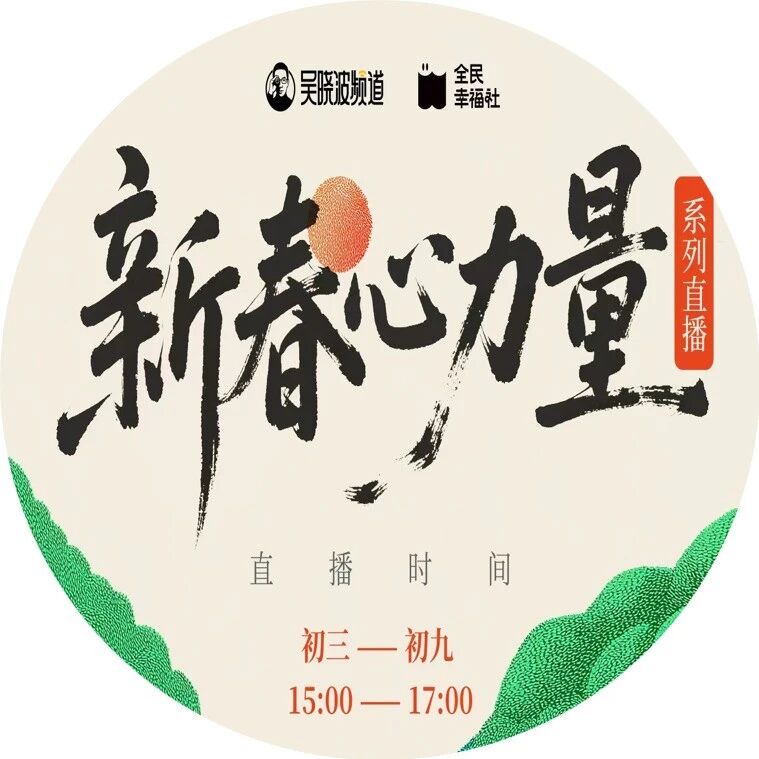
新春新能量:7天心理直播,伴你开启心守护
吴晓波频道· 2026-02-14 00:39
点击按钮▲预约直播 文 /巴九灵(微信公众号:吴晓波频道) 新春伊始,万象更新。对于我们,春节是难得卸下疲惫、回归家庭的时刻 然而,对于有些人,尤其是企业家群体而言,春节往往难以真正"松绑"——企业经营的牵挂、未来发展的焦虑,以及难得的团聚时刻,却更凸现 家庭关系的平衡矛盾等,加剧企业家心理负担。 基于此,我们发起"新春心能量"连续直播,呼吁社会关注心理健康,传递温暖与力量。 中国心理学应用发展大会的发起人 全民幸福社创始人。 飞行嘉宾: 郭盛 智联招聘集团董事长、CEO 潘松挺 为此,我们特别策划连续7天心理主题直播"新春心能量",从初三到初十,我们将与您相约吴晓波频道视频号直播间,用专业心理学工具+企业 家实战经验,为高压群体提供心理疏导方法和操练。 不 同以往,这不是一场知识的盛宴,而是一次心灵的滋养。真正的强大,源 于内心的秩序与和谐。让我们通过七天的直播,帮助大家完成一张 属于你 的"心理资产预算表",以丰沛的心理储备,迎接新一年的到来。 嘉宾介绍 常驻主持人: 魏丹荑 巴九灵副总裁 常驻嘉宾: 李文超 幸福心理学体系创立者 幸福心理学体系创立者 和君咨询CEO 战略与资本专家 姚吉庆 慕思集团副董 ...
春节回家,00后开始整顿相亲
吴晓波频道· 2026-02-14 00:39
根据Soul和后浪研究所的调研数据,00后期待"早婚"的人数占比,远高于其他年龄段;在95后还有超半数没有经历过"备婚"时,20岁出头的00 后,已经有15 .8%的人进入到这一阶段,甚至有人已经结婚生子。 今天,作为婚姻登记实现"全国通办"后的首个情人节,年轻人们正在涌入民政局。据报道,深圳、四川、江苏等多地的结婚登记都已全部约满,江 苏甚至迎来了2026年第一波婚姻登记小高峰。 当传统婚恋的惯性,遇上新世代的逻辑,各种新奇的婚恋剧本开始强抢镜:相亲"群面"、相亲分析师、赛博红娘、招聘软件相亲、兴趣脱单局、 二次元主题婚礼…… 点击图片▲立即查看 "00 后期待 ' 早婚 ' 的人数占比,远高于其他年龄段 … " 文 /巴九灵(微信公众号:吴晓波频道) 情人节撞上春节档,一场关于亲密关系的年度大戏,正在上演。 这次的主角,是逐渐步入婚恋舞台中心的95后和00后。 Just So Soul研究院的调研显示,25—29岁年龄段和中小城镇的年轻人,表示受"催婚、催生小孩"的困扰程度最突出。而在这群人中,有近六成 是"孤岛青年"——没搭子、没暧昧、也没暗恋。 对于他们来讲,有部分人认为"婚姻不是人生必然选择"。但0 ...

对话冯琏:64岁,我的第六次创业
吴晓波频道· 2026-02-13 01:37
Core Viewpoint - The article discusses the evolution of the sleep health industry in China, highlighting the journey of Feng Lian, who transitioned from a traditional career to pioneering a new market focused on sleep products, emphasizing the importance of sleep for overall well-being and quality of life [3][4]. Group 1: Industry Evolution - The concept of sleep health has transformed from a personal issue to a public concern, with the World Sleep Day 2026 theme emphasizing its significance for a better life [3]. - Feng Lian's journey reflects the industry's growth from a non-existent market to a recognized sector, focusing on creating a sleep ecosystem rather than just selling mattresses [3][4]. Group 2: Product Innovation - The company specializes in developing sleep products using a proprietary "gem fiber" material, which enhances sleep quality through its unique properties [8][9]. - The focus is on creating a comprehensive sleep environment with products like thin pads, bedding, and pillows, rather than competing directly with established mattress brands [8][9]. Group 3: Market Strategy - The company targets a broad demographic, initially focusing on the elderly but expanding to include middle-aged and young consumers, addressing the widespread sleep issues across different age groups [19][20]. - The strategy includes launching brands tailored for different demographics, such as "Meimian" for young adults and "Magic Exam" for children, emphasizing the importance of sleep for growth and development [21]. Group 4: Long-term Vision - The company aims to contribute to societal issues related to sleep disorders and aging, with plans for future collaborations in research and technology [26]. - Feng Lian emphasizes the importance of maintaining a long-term perspective in business, focusing on creating genuine value rather than chasing short-term profits [27][30].

老家的物价快赶上一线城市了?
吴晓波频道· 2026-02-13 00:29
Core Viewpoint - The article discusses the phenomenon of price inversion in county-level cities, where the cost of living has been rising and, in some cases, surpasses that of major cities like Beijing and Shanghai, particularly in consumer goods and services [3][8]. Group 1: Price Trends in County-Level Cities - The price index for consumer goods in county-level cities has consistently exceeded the national average over the past three years, aligning closely with first-tier cities [3]. - Specific examples of high prices in county-level cities include movie tickets at 79.9 yuan, specialty coffee at 58 yuan, and clothing items exceeding 1,000 yuan, with services like beauty and entertainment also being 30%-50% higher than in first-tier cities [3][8]. - In contrast, staple foods, dairy products, and household items have seen price decreases in county-level cities, with reductions of 4% for staple foods and 5% for dairy products from 2023 to 2025 [10]. Group 2: Consumer Behavior and Market Dynamics - The concept of "folded consumption" is introduced, indicating a dual market where high-end and affordable products coexist, reflecting a shift in consumer preferences in county-level markets [15][16]. - There is a notable increase in spending on quality goods, with county residents increasingly purchasing premium brands and services that were once exclusive to urban areas [20][21]. - The growth in disposable income in county-level cities is projected to outpace that of first-tier cities, with a 5.9% increase expected from 2023 to 2028 [30]. Group 3: Regional Consumption Characteristics - High-income counties are concentrated in provinces like Zhejiang and Jiangsu, with cities like Yiwu leading in disposable income, surpassing even Beijing [31][33]. - Different consumption patterns are observed across counties, with some exhibiting high spending comparable to first-tier cities, while others show significant growth potential despite conservative spending habits [33][38]. - The article highlights the emergence of new consumption trends in counties, such as increased demand for smart home appliances and beauty services, indicating a shift towards more sophisticated consumer behavior [21][28]. Group 4: Market Opportunities - The article emphasizes the untapped market potential in county-level cities, where major brands have yet to establish a strong presence, suggesting significant growth opportunities for businesses [42][43]. - The density of convenience stores and fitness centers in county-level cities is significantly lower than in urban areas, indicating a gap that can be filled by new entrants [43]. - The evolving consumer landscape in county-level cities presents a promising environment for innovative business models and services to thrive [44].

全国结婚登记数增超一成,部分小城春节酒店涨价20倍 | 财经日日评
吴晓波频道· 2026-02-13 00:29
Group 1: Employment Data - In January, the U.S. non-farm payrolls increased by 130,000, marking the largest growth since the second half of 2025, significantly exceeding market expectations of 50,000 to 75,000 [2] - The unemployment rate decreased by 0.1 percentage points to 4.3%, indicating a slight recovery in the job market [2] - The total employment growth for 2025 was revised down from 584,000 to 181,000, highlighting a more significant weakness in the labor market than previously understood [2][3] Group 2: Currency Exchange Rates - The RMB to USD exchange rate surpassed 6.9, reaching a high of 6.8998, the strongest since May 4, 2023 [4] - The RMB has appreciated by 1.18% against the USD year-to-date, driven by increased demand for RMB and a weakening USD [4] - China's trade surplus exceeded $1 trillion for the first time, contributing to the RMB's strength [4] Group 3: Marriage and Divorce Statistics - In 2025, there were 6.763 million marriage registrations, an increase of 10.76% compared to 2024, with significant growth in regions with high inflows of migrants [6] - The increase in marriage registrations is attributed to the lifting of household registration restrictions and a low base effect from the previous year [6][7] Group 4: Hotel Pricing Trends - Hotel prices in smaller cities surged during the Spring Festival, with some prices increasing by over 20 times compared to regular rates [8] - In contrast, hotel prices in major cities decreased, with some experiencing price drops of over 50% during the same period [9] Group 5: Ford Motor Company Financials - Ford reported a net loss of approximately $8.2 billion for the fiscal year 2025, despite achieving record revenues of about $187.3 billion [14] - The electric vehicle segment, Ford Model e, generated revenues of around $6.7 billion but incurred losses of $4.8 billion, leading to significant asset write-downs [14][15] - Ford is adjusting its strategy in the electric vehicle market, focusing on more practical models to improve financial performance [15] Group 6: Market Performance - The stock market saw a slight increase, with the Shanghai Composite Index rising by 0.05% and significant trading volume of 2.14 trillion [16] - The power equipment sector experienced strong performance due to favorable policies, while consumer sectors showed weakness [16][17]



重点城市二手住宅成交活跃,1月CPI同比涨幅回落 | 财经日日评
吴晓波频道· 2026-02-12 00:29
Economic Indicators - In January, China's CPI rose by 0.2% year-on-year, down from 0.8% in the previous month, while the core CPI, excluding food and energy, increased by 0.8% [2] - The PPI increased by 0.4% month-on-month, marking the fourth consecutive month of growth, with a year-on-year decline of 1.4%, a reduction in the decline compared to the previous month [2] - The recent base period adjustment had a minimal impact on CPI and PPI, averaging about 0.06 and 0.08 percentage points respectively [2][3] Real Estate Market - In January, the average price of second-hand residential properties in 100 cities fell by 0.85% month-on-month and 8.67% year-on-year, while major cities like Shanghai and Shenzhen saw transaction volumes increase [4] - Beijing's second-hand home transactions were 15,000 units, down 12.3% month-on-month but up 20.8% year-on-year, indicating a mixed market response [4] - Despite some recovery in transaction volumes, the overall market remains in a price-for-volume situation, with a nationwide recovery expected to take longer [5] Automotive Industry - In January, China's automotive production and sales reached 2.45 million and 2.346 million units respectively, with a slight year-on-year production increase of 0.01% and a sales decline of 3.2% [6] - New energy vehicle sales were stable, with production and sales of 1.041 million and 945,000 units, reflecting year-on-year growth of 2.5% and 0.1% respectively [6] - The automotive export market showed strong growth, with 302,000 new energy vehicles exported, doubling year-on-year [6][7] Technology and AI - The daily active users of the Qianwen App surged by 727.7% to 58.48 million on the first day of its promotional campaign, significantly narrowing the gap with competitors [8] - Byte's Doubao has taken a more cautious approach in the "red envelope war," focusing on differentiated product positioning, which has helped establish a user base [9] - Semiconductor manufacturer SMIC reported a 23.2% increase in net profit for Q4 2025, driven by demand recovery and domestic orders, with a revenue of 17.813 billion yuan [10][11] Consumer Brands - FountainVest Partners is considering selling its Chinese franchise operator CFB Group, which operates over 1,800 stores for brands like DQ and Papa John's, reflecting a trend of international brands reassessing their Chinese operations [12] - The sale of control over these brands is seen as a strategic move to adapt to changing consumer preferences in China, rather than a withdrawal from the market [12][13] Satellite Internet - Amazon received approval to deploy 4,500 satellites as part of its plan to expand its satellite constellation to compete with SpaceX, aiming to provide satellite internet services [14][15] - The deployment is part of Amazon's strategy to integrate its existing cloud services with satellite technology, potentially enhancing its service offerings [14]



硅谷的这个春节,也难熬了
吴晓波频道· 2026-02-12 00:29
Core Viewpoint - The article discusses the intense competition and significant capital expenditures among major tech companies in the AI sector, highlighting the risks and uncertainties associated with their aggressive investments and marketing strategies [3][4][6]. Group 1: AI Investment Landscape - In 2026, major tech companies like Microsoft, Amazon, Google, and Meta are projected to spend $660 billion (approximately 4.58 trillion RMB) on AI, marking a 60% increase from 2025 and a staggering 165% increase from 2024 [7][8]. - This level of spending represents about 2.1% of GDP, surpassing historical investments in infrastructure projects like the interstate highway system and the Apollo moon landing [8]. - Microsoft plans to allocate $140 billion for capital expenditures by June, while Amazon aims to invest $200 billion in AI-related workloads, significantly exceeding market expectations [10][11]. Group 2: Market Reactions and Concerns - Despite strong financial reports, investor concerns are rising due to the massive capital expenditures, leading to significant stock price drops for companies like Microsoft and Amazon [10][11]. - Analysts predict a drastic decline in free cash flow for Google and Meta, with estimates suggesting a nearly 90% drop for both companies, while Amazon's cash flow may turn negative [13]. - The interconnected nature of AI investments raises concerns about potential distortions in incentives and the risks of over-reliance on single clients, as seen with Microsoft's dependence on OpenAI [11][12]. Group 3: Competitive Dynamics - Google is regaining momentum in the AI space with its Gemini model, which has shown superior performance compared to ChatGPT, leading to increased interest in Google Cloud services [16][20]. - The article highlights the competitive landscape where companies like OpenAI are exploring various monetization strategies, including subscription fees and API services, to sustain their operations amid high costs [21][22]. - The emergence of new AI platforms, such as Moltbook, reflects the public's complex attitudes towards AI, oscillating between fascination and skepticism [30][32].