吴晓波频道

Search documents
7月制造业PMI环比下降,瑞幸二季度净利增长43.6% | 财经日日评
吴晓波频道· 2025-08-01 00:41
Group 1: Manufacturing and Economic Indicators - In July, China's manufacturing PMI recorded at 49.3%, a decrease of 0.4 percentage points from the previous month, indicating a contraction in manufacturing activity [1] - Large enterprises had a PMI of 50.3, while medium and small enterprises recorded PMIs of 49.5 and 46.4, respectively, with small enterprises showing a significant contraction [1] - The non-manufacturing business activity index was at 50.1, also down by 0.4 percentage points, but still above the critical point, indicating overall expansion in business activities [2] Group 2: Federal Reserve and Monetary Policy - The Federal Reserve maintained the federal funds rate target range at 4.25% to 4.5%, marking the fifth consecutive meeting without changes [3] - There is internal division among Fed officials regarding future rate cuts, with two officials supporting a reduction [4] - Fed Chair Powell indicated that the timing of any future rate cuts is under evaluation, particularly in light of potential weaknesses in the job market and consumer spending [4] Group 3: Company Earnings Reports - Meta reported Q2 revenue of $47.516 billion, a 22% increase year-over-year, with net profit rising 36% to $18.337 billion [5] - Microsoft achieved Q4 revenue of $76.4 billion, an 18% year-over-year growth, with net profit increasing by 24% to $27.2 billion [7] - Luckin Coffee's Q2 net income reached 1.251 billion yuan, a 43.6% increase, with total revenue of 12.359 billion yuan, up 47.1% year-over-year [9] Group 4: Industry Trends and Challenges - Ningde Times reported a 33.33% increase in net profit for the first half of the year, with total revenue of 178.886 billion yuan, but faced challenges from price competition in the domestic market [11][12] - The AI sector is driving significant revenue growth for companies like Meta and Microsoft, with both firms investing heavily in AI capabilities [6][8] - Luckin Coffee's aggressive pricing strategy to gain market share has led to increased delivery costs, raising concerns about long-term profitability [10] Group 5: Market Performance - On July 31, the Chinese stock market experienced a decline, with the Shanghai Composite Index falling by 1.18% [15] - The market showed mixed performance with over 4,200 stocks declining, while sectors like innovative pharmaceuticals and AI applications remained active [15][16] - The overall market sentiment was affected by expectations surrounding U.S. monetary policy and trade negotiations [15]


世界500强出炉:民企京东排名最高、4成企业大裁员、中美企业利润差57%
吴晓波频道· 2025-08-01 00:41
Core Insights - The 2025 Fortune Global 500 list reflects the power dynamics of global enterprises, showcasing the economic fluctuations, industry transformations, and shifts in national strengths [1]. Group 1: Overall Performance - The total revenue of the companies on the list reached approximately $41.7 trillion, accounting for over one-third of the global GDP, with a year-on-year growth of 1.8% [2]. - Total profit for these companies was about $2.98 trillion, showing a slight increase of 0.4%, marking the second-highest profit in history [2]. - The average revenue of the 124 Chinese mainland companies listed was approximately $10.21 trillion, representing 25.7% of the total revenue of the Fortune Global 500 [11]. Group 2: Chinese Companies - Among the 124 Chinese mainland companies, 49 saw their rankings improve, while 68 experienced declines, with state-owned enterprises remaining the main contributors to the list [6]. - Five major Chinese private internet companies improved their rankings, with JD.com leading as the highest-ranked private enterprise from mainland China at $161.06 billion in revenue, up three places to rank 44 [7]. - The number of Chinese companies on the list is the lowest in six years, with 130 companies total, including six from Taiwan, a decrease of three from the previous year [9]. Group 3: Profitability and Employment - The average profit of the 124 Chinese companies was $4.2 billion, which is significantly lower than the average profit of $9.7 billion for U.S. companies [13]. - Approximately 40% of the companies on the list have undergone significant layoffs, with a total reduction of 360,000 employees to 70.14 million [32]. - The trend of layoffs is increasing, with 40% of companies reporting layoffs in 2024, up from 35% in 2023 [36]. Group 4: Industry Insights - The majority of Chinese companies on the list are concentrated in traditional sectors, particularly heavy asset industries, which tend to have lower profit margins due to high fixed costs [20]. - The automotive sector in China is facing challenges, with ten companies listed but showing a decline in profitability, with total profits down 20.4% to $14.7 billion [24]. - In contrast, global automotive companies have an average sales return of 4.3%, nearly double that of Chinese automotive firms [26]. Group 5: Notable Companies - Saudi Aramco remains the most profitable company globally, despite a 13% decline in profits, with $105 billion in profit [39]. - Nvidia has seen a remarkable profit increase of 145%, entering the top ten for the first time, with the highest profit margin among the listed companies at over 55% [43]. - Pinduoduo leads Chinese companies in return on equity (ROE) at 36%, ranking 25th overall [47].






IMF上调中国经济增长预期,2025世界500强出炉 | 财经日日评
吴晓波频道· 2025-07-31 00:30
Group 1 - The central government emphasizes the need for sustained macroeconomic policies, including more proactive fiscal policies and moderately loose monetary policies to stimulate domestic demand and investment [1][2] - The upcoming October meeting will significantly influence China's economic development path and structure, focusing on boosting consumption and expanding foreign trade [2] - The implementation of a child-rearing subsidy program aims to alleviate the financial burden on families, with a budget of approximately 90 billion yuan allocated for this initiative [3][4] Group 2 - The IMF has raised China's economic growth forecast for 2025 by 0.8% to 4.8%, reflecting a more optimistic outlook amid global economic uncertainties [5][6] - Despite a challenging global economic environment, China's GDP is expected to achieve a growth target of around 5% for the year, supported by internal demand recovery and easing trade tensions with the US [6][7] - The performance of state-owned enterprises has been under pressure, with a 3.1% decline in profits in the first half of the year, indicating structural issues and the need for transformation towards high-end manufacturing and digital economy [8][9] Group 3 - The 2025 Fortune Global 500 list shows that Chinese companies are approaching the number of US firms, but still lag in revenue and profit performance, highlighting the need for a shift from scale-driven growth to quality and efficiency [10][11] - The rankings reflect changes in industry dynamics, with significant improvements in the positions of Chinese tech companies, driven by e-commerce and new consumption trends [10][11] - Procter & Gamble's second-quarter results exceeded expectations, indicating resilience in the fast-moving consumer goods sector despite inflationary pressures [12][13]

全国性生育补贴来了,但为什么大家觉得不够?
吴晓波频道· 2025-07-31 00:30
Core Viewpoint - The newly implemented national child-rearing subsidy policy aims to encourage childbirth in response to declining birth rates, with a focus on providing financial support to families with children under three years old [1][11][14]. Group 1: Subsidy Details - Starting from January 2023, families with children under three years old will receive an annual subsidy of 3,600 yuan per child, applicable to first, second, and third children [1][11]. - Children born between January 1, 2022, and December 31, 2024, are eligible for retroactive subsidies, with amounts increasing based on the birth month [2][3]. - The total number of newborns in China from 2022 to 2024 is estimated to be around 28.12 million, with families expressing that this group of children is catching the "last train" for subsidies [4][6]. Group 2: Cost of Raising Children - The total cost of raising a child from birth to 17 years is approximately 538,312 yuan, while the annual subsidy of 3,600 yuan represents only about 10% of this total cost [8][10]. - The breakdown of costs shows that raising a child incurs significant expenses, with the largest portion (45.15%) occurring between ages 6-14 [10]. Group 3: Policy Implications and Expert Opinions - Experts suggest that the subsidy amount is too low and the duration too short to significantly impact birth rates, recommending a minimum of 12,000 yuan per year per child [21][26]. - The policy is seen as a milestone in China's approach to population growth, contrasting with previous penalties for exceeding birth limits [13][14]. - The universal nature of the subsidy is highlighted, as it applies equally to all children regardless of birth order, unlike some local policies [14]. Group 4: Future Expectations and Sustainability - There are concerns about the sustainability of the subsidy, with estimates suggesting that the total annual cost could reach 1.2 to 1.3 trillion yuan, which is manageable within the national budget [29][31]. - Experts advocate for additional measures to support families, such as free preschool education and tax incentives, to further alleviate the financial burden of raising children [27][34]. - The need for a comprehensive social security system and reduced living costs is emphasized as essential for improving birth rates [34][36].

出海实战的核心方法论,是找对这三件事
吴晓波频道· 2025-07-31 00:30
Core Viewpoint - The article emphasizes that going global is a crucial direction for many companies seeking new growth opportunities amid the deep adjustments in the global economic landscape [1]. Group 1: Trends and Market Analysis - The "Going Global" trend is highlighted, with a projected 5.9% growth in China's exports in the first half of 2025, although different industries experience varying levels of success [8]. - Traditional industries like textiles and toys face significant challenges, while emerging sectors such as integrated circuits and agricultural products show rapid export growth [9]. - The shift in global trade patterns indicates a decline in exports to the U.S. and an increase in exports to markets like Thailand, Vietnam, and India post-2023 [10][11]. Group 2: Strategic Considerations for Going Global - Companies must adapt to local market conditions, trade rules, and cultural differences, emphasizing the need for localized strategies [12]. - The transition from an order-focused mindset to a customer-centric approach is essential for sustainable growth, even for industrial intermediate goods [12]. Group 3: Cross-Cultural Management - The process of going global is described in three stages: "watching the sea," "rushing to the sea," and "truly going global," with most companies currently in the first three stages [15]. - Effective human resource management is crucial, involving expatriates, local employees, and international talent to ensure successful market integration [17][18]. - Cultural differences should be viewed as opportunities for innovation rather than obstacles [19]. Group 4: Case Studies and Practical Insights - Cool-Vita's approach in Southeast Asia emphasizes deep localization and long-term brand commitment, adapting products to local consumer habits [27][28]. - The company has achieved significant market penetration in Indonesia, demonstrating the importance of understanding local culture and consumer behavior [29]. Group 5: Educational Initiatives - The "Going Global Navigator Class" aims to provide a comprehensive framework for companies to navigate the complexities of international expansion, featuring insights from experienced mentors [30][31].

新央企中国长安成立,同程间接控股大连圣亚 | 财经日日评
吴晓波频道· 2025-07-30 00:29
Group 1: Logistics Industry - The total social logistics volume in China for the first half of the year reached 171.3 trillion yuan, reflecting a year-on-year growth of 5.6%, which is 0.3 percentage points higher than the GDP growth rate [1][2] - Industrial product logistics volume grew by 5.8%, contributing 85% to the overall logistics growth, with significant demand from the equipment manufacturing and high-tech manufacturing sectors, which saw growth rates of 10.9% and 9.7% respectively [1][2] - Consumer logistics also showed positive trends, with a 6.1% year-on-year increase, indicating the effectiveness of policies aimed at stimulating consumption [1] Group 2: Taxation and Personal Finance - Over 100 million taxpayers applied for tax refunds totaling over 130 billion yuan, while 7 million taxpayers reported additional taxes amounting to 480 million yuan [3][4] - The current personal income tax exemption threshold of 60,000 yuan accounts for approximately 62.7% of China's per capita GDP for 2024, which is significantly higher than the typical 40% in developed countries [3] Group 3: Automotive Industry - The establishment of China Changan Automobile Group with a registered capital of 20 billion yuan marks a significant restructuring in the automotive sector, positioning it as the third major state-owned automotive enterprise [5][6] - Changan's transition to an independent entity raises concerns about its ability to manage losses in its growing electric vehicle segment, which has seen increasing sales but also mounting losses [6] Group 4: Technology and Retail - Apple announced the closure of its first direct retail store in China, located in Dalian, due to issues with the shopping center, while continuing to expand its presence in other cities [7][8] - The company faces challenges in keeping up with competitors in AI and foldable phone technology, indicating a shift from being an industry leader to a follower [8] Group 5: Investment and Fund Management - Nearly 90 private equity firms have obtained the Hong Kong 9 license, allowing them to manage USD funds and expand their business internationally [11][12] - The trend of private equity firms seeking to establish a presence in Hong Kong reflects a growing interest from global investors in the Chinese market, although the ability to attract funding remains contingent on the firms' overall quality and performance [12][13] Group 6: Market Performance - The stock market experienced fluctuations with the Shanghai Composite Index rising by 0.33% and the ChiNext Index leading gains at 1.86%, amidst a mixed performance across sectors [16] - The market is currently facing uncertainties due to new trade negotiations between China and the US, which may impact investor sentiment [17]



世界人工智能大会挤满了想买单的普通人丨一线
吴晓波频道· 2025-07-30 00:29
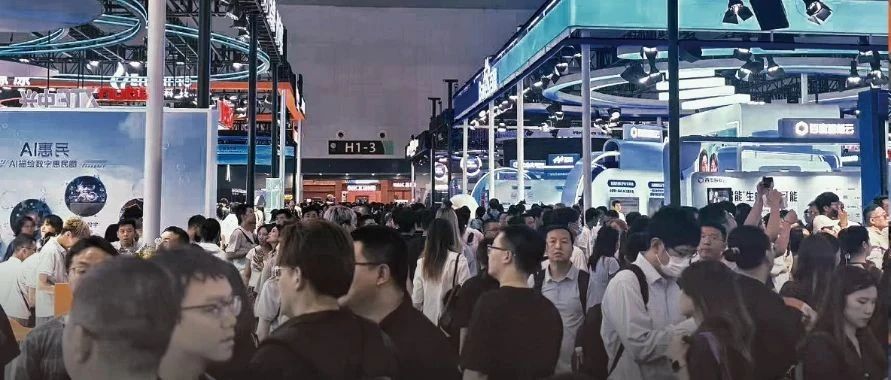
Core Viewpoint - The article emphasizes that artificial intelligence (AI) has transitioned from being an abstract concept to a tangible force that is increasingly penetrating everyday life, showcasing a significant shift towards practical applications and user engagement in the AI sector [21][23][70]. Group 1: Event Overview - The World Artificial Intelligence Conference (WAIC) attracted a record number of attendees, with an estimated 350,000 visitors, including 156 purchasing groups from over ten countries [4][12]. - The event implemented strict entry protocols, requiring advance ticket purchases and identity verification, reflecting the high demand and interest in AI technologies [5][6]. Group 2: AI Applications and Trends - The focus of AI development has shifted from merely enhancing computational power to applying AI in real-world scenarios, with companies competing to convert technology into productivity [10][21]. - The exhibition featured a wide array of robots capable of performing various tasks, indicating a growing interest in practical applications of robotics in everyday life [10][11][12]. Group 3: User Engagement and Market Response - Ordinary visitors showed significant interest in AI technologies, with many expressing a desire for more affordable robotic solutions after witnessing their capabilities [8][11]. - The popularity of AI products, such as smart glasses, highlights a trend where consumers are eager to engage with and utilize advanced technologies in practical settings [17][19][68]. Group 4: Industrial AI and Future Prospects - Industrial AI is gaining traction, with a focus on enhancing efficiency and flexibility in manufacturing processes, as evidenced by the introduction of systems like the Industrial Copilot, which can improve production efficiency by up to 50% [39][41][36]. - The article suggests that the future of AI will involve deeper integration into various industries, emphasizing the importance of collaboration and open-source initiatives to bridge the technological divide [28][30][31]. Group 5: Global Collaboration and Governance - The Chinese government proposed the establishment of a global AI cooperation organization, aiming to foster international collaboration and address ethical and governance challenges in AI development [30][31]. - The conference underscored the need for a unified approach to AI governance, promoting standards and ethical guidelines to ensure responsible AI deployment [47][48].
曹虎×徐瑾×汤飞:下一个现象级消费在哪里? | 今日直播
吴晓波频道· 2025-07-30 00:29
Core Viewpoint - The article discusses the emerging trends in consumer behavior, particularly focusing on the phenomenon of "emotional consumption" and the impact of socio-economic changes on consumer preferences [3][4]. Group 1: Trends in Consumer Behavior - The rise of cultural trends like LABUBU indicates a shift towards "cultural tourism" as a new form of consumer engagement, reflecting a desire for spiritual comfort [3]. - The concept of "first-store economy" is revitalizing urban areas, creating new consumer experiences and opportunities [3]. - The live event aims to explore how to identify and lead the next wave of consumer trends in an increasingly materialistic society [3]. Group 2: Insights from Key Speakers - Xu Jin, editor-in-chief of FT Chinese Network, will analyze the definition and characteristics of the "soft class," correcting common misconceptions about consumption and its relationship with economic growth, while predicting future hotspots in consumption [4][6]. - Cao Hu, global partner at Kotler Consulting Group, will discuss the essence of emotional consumption, emphasizing the need for companies to understand consumer preferences and values, and predict that sectors resonating with emotional needs will become future consumption hotspots [4][8]. - Tang Fei, founder of Strategic Marketing Consulting, will address the trend of consumption stratification, highlighting the shift from ostentatious to rational spending, and predict that future consumption will focus on emotional, health-oriented, and sustainable products, particularly in lower-tier cities [4][10]. Group 3: Event Details - The live event will feature three influential bloggers in the field of consumer research, providing insights into the underlying causes and trends of phenomenon-level consumption [4][11]. - The event is scheduled for July 30 at 18:00, aiming to uncover the reasons behind phenomenon-level consumption and offer valuable references before the next wave of consumer trends emerges [12].

吴晓波:汪林朋们的悲剧不能再发生
吴晓波频道· 2025-07-28 16:36
Core Viewpoint - The recent suicides of several prominent entrepreneurs highlight the urgent need to address the mental health issues faced by business leaders in China, indicating that their psychological pressure may have reached a peak [6][8][29] Group 1: Recent Events - Four notable entrepreneurs have tragically taken their own lives within a span of three months, all in their 50s, which is a rare occurrence in contemporary Chinese business history [6] - The individuals include the founders of significant companies, indicating that even successful business leaders are not immune to severe psychological distress [6][8] Group 2: Psychological Health of Entrepreneurs - Historically, Chinese entrepreneurs, especially self-made ones, have been viewed as optimistic and resilient, but recent events suggest that their mental health may be deteriorating [7][8] - There is a pressing need for a more supportive social environment and collective mental health education for entrepreneurs [8] Group 3: Expert Insights - Experts suggest that the motivations behind such extreme actions may include a profound sense of guilt and the pressure of societal expectations, particularly among those who have achieved significant status [14][18] - The concept of "narcissistic injury" is discussed, where a fall from grace can lead to unbearable emotional pain for those who once held high social standing [19] Group 4: Support Systems - The importance of maintaining a complete support system is emphasized, which includes physiological, social, self-entertainment, and intimate systems to help entrepreneurs cope with crises [20][21][22][23] - Recommendations for entrepreneurs include recognizing their personal identity beyond their business roles, valuing family connections, and engaging in enjoyable activities to alleviate stress [26][27][29] Group 5: Legal Awareness and Risks - The article discusses the legal risks entrepreneurs face, particularly regarding compliance and potential investigations, which can exacerbate psychological stress [30][31][34] - Many entrepreneurs lack adequate legal awareness and preparedness, leading to feelings of helplessness when faced with legal challenges [37][38]


国家育儿补贴方案公布,6月规上工企利润降幅收窄 | 财经日日评
吴晓波频道· 2025-07-28 16:36
Group 1: National Childcare Subsidy Policy - The national childcare subsidy plan will provide 3,600 yuan per year for each child until they reach 3 years old, starting from January 1, 2025, benefiting over 20 million families [1][2] - The subsidy can be claimed online or offline, with specific distribution times determined by local governments [1] - The policy aims to reduce the financial burden of raising children and is a significant step towards encouraging childbirth [1] Group 2: Industrial Profit Trends - In the first half of 2023, profits of large-scale industrial enterprises in China totaled 34,365 billion yuan, a year-on-year decrease of 1.8% [3] - In June, profits amounted to 7,155.8 billion yuan, with a decline of 4.3%, but the drop was less severe than in May [3] - The manufacturing sector showed improvement, with profits turning from a decline of 4.1% in May to a growth of 1.4% in June [3] Group 3: US-EU Trade Agreement - The US and EU reached a preliminary agreement on a 15% tariff rate, with the EU committing to invest an additional 600 billion USD in the US [5][6] - The agreement includes a unified tariff rate for various goods, although there are inconsistencies in the details regarding pharmaceuticals and steel [5][6] - This trade agreement is seen as a way to reduce global trade tensions, but further negotiations are needed to finalize the details [6] Group 4: AI Development and Investment - The 2025 World Artificial Intelligence Conference in Shanghai attracted over 1,572 leaders from 73 countries, with an expected procurement amount of approximately 16.2 billion yuan [7] - The conference highlighted the competitive landscape of AI, with the US leading in model development and China excelling in application [8] - Shanghai's initiative to issue 600 million yuan in computing power vouchers aims to support AI startups and enhance the city's AI infrastructure [9][10] Group 5: Tesla and Samsung Partnership - Tesla signed a significant chip supply agreement worth 16.5 billion USD with Samsung, focusing on the production of AI chips [11] - This partnership is expected to boost Samsung's chip manufacturing capabilities and improve its market position [12] - The collaboration reflects Tesla's commitment to advancing its AI technology, although it carries some risks due to Samsung's current technological standing [12] Group 6: Cryptocurrency Lending - New digital asset institutions are re-entering the cryptocurrency lending market, offering unsecured loans with high interest rates in response to rising digital asset prices [13] - The lending model targets underserved populations, with a high initial default rate of around 40% [13][14] - The approach raises concerns about the sustainability of such lending practices, especially in volatile markets [14] Group 7: Stock Market Performance - On July 28, the stock market experienced a slight rebound, with the Shanghai Composite Index closing at 3,597.94 points, up 0.12% [15] - The market showed mixed performance across sectors, with technology and innovative drug stocks performing well, while cyclical stocks like steel and coal faced declines [15][16] - The overall market demonstrated resilience, with a noticeable recovery in investor sentiment [16]