和讯

Search documents
A股“长假定律”背后的秘密
和讯· 2025-09-24 09:55
Core Viewpoint - The article discusses the performance of the A-share market around the National Day holiday, highlighting the historical "calendar effect" where the market typically experiences adjustments before the holiday and rebounds afterward [5][6][9]. Market Performance - On September 24, the market saw a strong performance with the ChiNext Index reaching a three-year high and the STAR 50 Index rising nearly 5%, with over 4,400 stocks increasing in value [2][3]. - The Shanghai Composite Index rose by 0.83%, the Shenzhen Component Index by 1.80%, and the ChiNext Index by 2.28% on the same day [3]. Calendar Effect - Historical data shows that in the past 10 years, the Shanghai Composite Index has had an 80% probability of declining in the five trading days before the National Day holiday, with a median drop of 1.45% [5][6]. - Conversely, the index has a 60% probability of rising in the five trading days following the holiday, with six out of ten years showing an increase [5][6]. Investment Strategy - Investors face a choice of holding stocks or cash during the holiday, with recommendations depending on the quality of the assets held. Good stocks and funds can be held, while those lacking fundamental support may be sold [6][9]. - The article emphasizes the importance of maintaining confidence and patience to capitalize on the ongoing bull market [6][9]. Long-term Market Outlook - The article notes that the A-share market has seen a significant increase over the past year, with the Shanghai Composite Index rising from 2,700 to around 3,900, a nearly 40% increase [7][8]. - The market's risk appetite has improved, with the risk premium narrowing from 4.6% to 2.6% since September 24 of the previous year [8]. - Despite short-term fluctuations, the long-term outlook remains optimistic, supported by strong performance in sectors like artificial intelligence, biomedicine, and high-end manufacturing [9][10].


坚守金融为民、服务实体,贵州银行“用心”书写“五篇大文章”
和讯· 2025-09-24 09:55
Core Viewpoint - Guizhou Bank has achieved significant growth in various financial services, particularly in supporting small and micro enterprises, green finance, and pension finance, demonstrating its commitment to empowering the real economy and enhancing financial inclusivity [1][6][10]. Group 1: Financial Support for Innovation and Small Enterprises - Guizhou Bank has tailored its financial services to meet the needs of technology innovation enterprises, with a technology finance loan balance of 9.812 billion yuan, reflecting a growth of 21.57% compared to the beginning of the year [2]. - The bank has implemented a "1771" inclusive finance model, which has provided 1.8864 billion yuan in loans to 18,864 small and micro enterprises, enhancing their operational capabilities [6]. - Specific case studies, such as the support for Guizhou Fengda Bearing Co., demonstrate the bank's proactive approach in providing customized financing solutions to alleviate cash flow pressures [7][8]. Group 2: Green Finance Initiatives - Guizhou Bank has actively promoted green finance, with a green credit balance of 61.293 billion yuan, an increase of 4.4% from the start of the year [4]. - The bank has successfully facilitated loans for green projects, such as providing 1.309 billion yuan in green loans to support the aluminum industry in transitioning to cleaner production methods [5]. - The bank's efforts in green finance are exemplified by its collaboration with companies like Guizhou Qizhen Industrial Group, where it provided 20 million yuan in loans backed by intellectual property [4]. Group 3: Pension Finance Development - The bank has significantly increased its pension finance loan balance to 1.621 billion yuan, marking a growth of 57.22% since the beginning of the year [8]. - Guizhou Bank has implemented "age-friendly services" to cater to the elderly population, ensuring that financial services are accessible and tailored to their needs [9]. - The bank's initiatives include providing timely loans to support the operational needs of elder care facilities, demonstrating its commitment to the aging population [9]. Group 4: Digital Transformation and Innovation - Guizhou Bank has focused on digital transformation, achieving a digital economy loan balance of 4.005 billion yuan, with a growth rate of 28.57% [10]. - The bank has developed a domestic mobile banking platform to enhance service delivery and customer experience [10]. - The application of AI technology has been a key driver in the bank's digital transformation, with significant user engagement in AI-driven services [11][12].

数字化转型持续赋能,贵州银行2025年中报营收、净利润双增长
和讯· 2025-09-23 09:10
随着数字化转型的持续深入推进,贵州银行经营成效不断释放,2025年半年度报告显示,期 内, 该行 营收、净利润分别录得61.02亿元、21.29亿元,同比双双增长,在行业息差收窄 的趋势下凸显强劲增长韧性。值得注意的是,截至期末,该行资产规模更是突破了6000亿元 关口。 公开数据显示,在英国《银行家》杂志发布的《2025年全球银行1000强榜单》中,贵州银行 排 名 全 球 248 位 , 在 中 国 银 行 业 协 会 公 布 的 《 2024 年 中 国 银 行 业 100 强 榜 单 》 中 排 名 第 46 位。 营收、净利润实现双增长 对公及零售业务稳健发展 期内,贵州银行坚持稳中求进总基调,全面贯彻新发展理念,深化转型发展,全行经营保持稳 中有进、稳中向好态势。 从整体业绩来看,报告期内,该行营业收入和净利润实现双增,即营业收入61.02亿元,同比 增长1.35亿元,增幅2.26%;净利润21.29亿元,同比增长0.07亿元,增幅0.31%。其中, 淨 利 息 收 入 49.18 亿 元 同 比 增 长 13.25% , 占 营 收 比 例 为 80.60%; 净 息 差 录 得 1.91% , ...
一场海拔5500米的烟花秀,“炸”出了哪些空白
和讯· 2025-09-23 09:10
Core Viewpoint - The article discusses the backlash against the outdoor brand Arc'teryx and artist Cai Guoqiang for their fireworks display in the Himalayas, highlighting the conflict between artistic expression and environmental protection [2][4]. Group 1: Event Overview - On September 19, Arc'teryx collaborated with Cai Guoqiang to host a fireworks show at an altitude of approximately 5,500 meters in the Himalayas, which featured 145 fireworks forming a 3,000-meter-long rainbow [2]. - The event was promoted as a demonstration of "respect for nature," with claims that the fireworks used biodegradable materials and were of the lowest risk level (V) [2]. Group 2: Environmental Concerns - Experts from various fields criticized the event, arguing that the use of fireworks in the Tibetan Plateau, known as the "Chinese Water Tower," contradicts the principles of ecological safety and environmental protection [4]. - The project team attempted to mitigate potential harm to local wildlife by using salt bricks to guide small animals away from the launch area and planned to restore the vegetation afterward [3]. Group 3: Legal and Policy Implications - The event occurred shortly after the implementation of the "Ecological Protection Law of the Qinghai-Tibet Plateau," which emphasizes respecting and protecting nature [5]. - The incident has raised questions about the enforcement of this new law and whether human activities need to be redefined under its regulations [6]. Group 4: Public and Expert Reactions - Following public outrage, Arc'teryx and Cai Guoqiang issued an apology, but the response did not quell the anger from environmental advocates [4]. - Experts highlighted the need for stricter definitions and enforcement of ecological red lines, especially in sensitive areas like the Tibetan Plateau [7][8].

五大战略支点托举“争先进位” 中信银行彰显价值韧性
和讯· 2025-09-22 09:58
Core Viewpoint - The article highlights the strong performance of CITIC Bank in the first half of 2025, showcasing its strategic resilience and growth potential amidst industry challenges, supported by a comprehensive three-year plan aimed at becoming a world-class bank [1][2][3][4][16]. Group 1: Financial Performance - CITIC Bank reported a net profit of 36.478 billion yuan, a year-on-year increase of 2.78%, and total operating income of 105.762 billion yuan [1]. - The bank's total assets reached 985.8466 billion yuan, reflecting a growth of 3.42% compared to the previous year [1]. - The non-performing loan balance stood at 67.134 billion yuan, with a non-performing loan ratio of 1.16% and a provision coverage ratio of 207.53%, indicating overall asset quality stability [1]. Group 2: Strategic Direction - The bank's management emphasizes a forward-looking strategy focused on "stability, balance, and sustainability," which has become a consensus across the organization [2]. - CITIC Bank aims to build a "Four-You Bank" and enter the ranks of world-class banks through its new three-year strategic plan from 2024 to 2026 [3][4]. Group 3: Wealth Management - The bank is advancing its "retail-first strategy," enhancing its wealth management capabilities and focusing on asset management, private banking, and consumer finance [5][6]. - As of the reporting period, CITIC Bank's managed asset balance reached 4.99 trillion yuan, a 6.52% increase from the previous year, with personal deposits growing by over 106.3 billion yuan, reflecting a growth rate exceeding 7% [6]. Group 4: Comprehensive Financing - CITIC Bank's comprehensive financing balance reached 14.78 trillion yuan, a growth of 3.43% from the previous year, showcasing its role as a resource integrator in the evolving financial ecosystem [7][8]. - The bank led the market in debt financing tools, underwriting 1,268 instruments with a total scale of 443.12 billion yuan, indicating its strong position in direct financing [8]. Group 5: Transaction Settlement - The bank has focused on enhancing its transaction settlement capabilities, creating a platform matrix to cover various customer segments and developing tailored financial solutions for key industries [9][10]. Group 6: Foreign Exchange Services - CITIC Bank has established itself as a pioneer in foreign exchange services, achieving a transaction service scale of 114.14 billion USD, a year-on-year growth of 22.20% [11][12]. Group 7: AI Strategy - The bank is actively integrating artificial intelligence into its operations, with over 1,600 intelligent service scenarios developed, significantly enhancing customer engagement and operational efficiency [13]. Group 8: Conclusion - CITIC Bank's performance and strategic initiatives reflect its commitment to high-quality development and its ambition to redefine the future of banking through ecological collaboration and technological innovation [14][16].


蔡昉:重新审视社会保障问题的核心
和讯· 2025-09-22 09:58
Core Viewpoint - The article emphasizes the urgent need to reform China's social security system, particularly the pension scheme, in light of demographic changes, labor market challenges, and the potential for increased productivity through artificial intelligence [5][7][12]. Group 1: Factors Affecting Social Security Sustainability - The three main factors impacting the sustainability of social security are population dynamics, labor market conditions, and labor productivity [5][8]. - Population aging is accelerating, with projections indicating that by 2032, over 21% of China's population will be aged 65 and above, marking a significant demographic shift [8]. - The labor market faces structural employment issues, including high youth unemployment rates and challenges for older workers nearing retirement [9][10]. - Labor productivity has the potential for significant growth, particularly with advancements in artificial intelligence, which could enhance the capacity to support the elderly [11][12]. Group 2: Institutional Arrangements for Sharing Productivity Gains - Current social security arrangements are inadequate for sharing the benefits of increased productivity, necessitating reforms in the pension system [12][16]. - The first pillar of social security is crucial; without a robust first pillar, the second and third pillars cannot function effectively [6][15]. - There is a need to improve the formalization of employment to ensure broader coverage of social security, especially for non-standard employment [13][14]. Group 3: Recommendations for Reform - Establish a universal social security system that includes a living wage and unconditional basic income to address the challenges posed by artificial intelligence [18]. - Reconsider the nominal account system, focusing on a bookkeeping approach that records contributions without requiring them to be fully realized, thus addressing the current paradox in the pay-as-you-go system [19].
盛松成:降息仍有空间
和讯· 2025-09-19 09:28
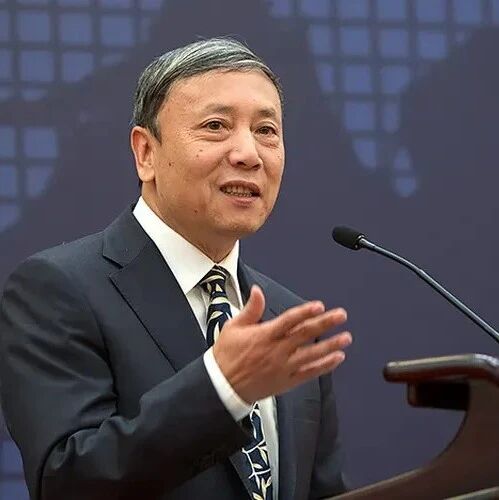
Group 1 - The core viewpoint of the article emphasizes that China's monetary policy is shifting towards reserve requirement ratio (RRR) cuts instead of aggressive interest rate reductions, aiming to protect bank interest margins and maintain indirect financing channels while allowing for gradual interest rate decreases and innovative structural tools to stabilize finance and promote transformation [2] Group 2 - Since 2016, China has adjusted the RRR 23 times, all downward, with the RRR for large deposit-taking financial institutions decreasing from 17.5% to 9.0%, a total drop of 8.5 percentage points [3] - The policy interest rates have only been adjusted 14 times since 2016, indicating a preference for RRR cuts over significant interest rate reductions [3][4] - The net interest margin for commercial banks has decreased to 1.42%, the lowest in history, highlighting the importance of maintaining this margin for the stability of the banking sector [4] Group 3 - RRR cuts will increase the funds available for commercial banks, enabling better support for proactive fiscal policies, as approximately 68% of national debt and 75% of local government debt are held by commercial banks [5] - The effectiveness of monetary policy is largely dependent on the cooperation of commercial banks and the financial system, especially given the low excess reserve ratio in China [5] Group 4 - There is still room for interest rate cuts in China, but the low elasticity of consumption and investment to interest rates limits the effectiveness of sustained large cuts [6] - The decrease in interest rates has led to a reduction in household deposits, with a drop of 1.11 trillion yuan in July, indicating a significant relationship between declining interest rates and reduced household savings [6][7] - Structural monetary policy tools have been increasingly important, with innovations supporting weak economic sectors and key areas such as technology innovation and green development [7]

A股为何跳水?
和讯· 2025-09-18 09:43
Group 1 - The Federal Reserve has lowered the federal funds rate target range by 25 basis points to 4.00%-4.25%, marking the first rate cut of 2025 and following three cuts in 2024 [2][5] - The Fed's dot plot indicates two more rate cuts are expected by the end of the year, each by 25 basis points, potentially totaling a 75 basis point reduction [2][9] - The market reacted strongly to the Fed's decision, with U.S. stock indices showing mixed results, while A-shares and Hong Kong stocks declined despite expectations of improved liquidity [3][4][14] Group 2 - Recent employment data in the U.S. has been disappointing, with non-farm payrolls increasing by only 22,000 in August, significantly below expectations, and the unemployment rate rising to 4.3% [6][8] - Inflation indicators also support the Fed's decision to cut rates, with the Producer Price Index (PPI) showing a month-on-month decline of 0.1% in August, contrary to market expectations of an increase [6][8] Group 3 - The Hong Kong Monetary Authority has also lowered its benchmark interest rate by 25 basis points to 4.50% in response to the Fed's actions [10] - Analysts suggest that the People's Bank of China may have room for monetary policy easing, potentially through rate cuts or reserve requirement ratio adjustments, to support the economy [11][12] Group 4 - The current economic conditions suggest that the Fed's rate cuts are more of a preventive measure rather than a response to a crisis, aiming to mitigate potential economic risks [13] - The impact of the Fed's rate cuts on asset prices is expected to vary, with potential benefits for growth sectors and interest-sensitive industries in both A-shares and Hong Kong stocks [15][16]

美联储降息槌响前,36亿美元外资抢跑A股
和讯· 2025-09-17 09:59
Core Viewpoint - The A-share market is experiencing a strong upward trend, driven by the anticipated interest rate cuts from the Federal Reserve, which is expected to lead to increased foreign investment in Chinese assets [2][3]. Group 1: Foreign Investment Trends - Foreign capital has shown significant interest in Chinese assets, with a net increase of $10.1 billion in domestic stocks and funds in the first half of the year, particularly in May and June, where the net increase reached $18.8 billion [3]. - In August, passive equity funds saw inflows of $3.684 billion into the Chinese market, a substantial increase from $0.313 billion in July, indicating a growing trend of foreign investment [7]. - A Morgan Stanley report indicates that U.S. investors' interest in the Chinese stock market has reached its highest level since 2021, with over 90% of investors expressing a willingness to increase their exposure to the Chinese market [8]. Group 2: Economic and Policy Drivers - China's economic indicators have shown steady recovery, with GDP growth of 5.3% year-on-year in the first half of 2025, providing a strong foundation for foreign investment [5]. - The Chinese government has implemented policies to reduce institutional trading costs for foreign investors, such as the removal of reinvestment registration requirements for foreign-invested enterprises [6]. - The MSCI China Index's 12-month forward P/E ratio stands at 12.1 times, significantly lower than the Nasdaq's 28 times, highlighting the valuation attractiveness of Chinese assets [6]. Group 3: Market Impact and Future Outlook - The influx of long-term foreign capital is expected to enhance market liquidity, improve supply-demand dynamics, and drive stock prices higher [9]. - The investment behavior of foreign long-term funds is likely to shift domestic investors' focus towards long-term value, fundamentals, and dividend capabilities, reducing speculative trading [9]. - The preference of foreign investors for stable, well-governed leading companies may lead to a transition in the A-share market from "liquidity premium" to "profit premium," potentially stabilizing market volatility and enhancing long-term valuation [9].

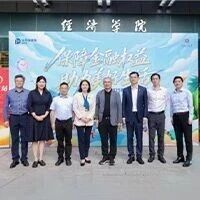
中国太保北京消保示范区携手北京工商大学举办“金融安全进校园”教育活动
和讯· 2025-09-17 09:59
Core Viewpoint - The event titled "Safeguarding Financial Rights and Supporting a Better Life" emphasizes the importance of financial safety education for graduate students, showcasing the collaboration between China Pacific Insurance and Beijing Technology and Business University [1][3]. Group 1: Event Overview - The event was organized by China Pacific Insurance's Beijing branch in collaboration with its other subsidiaries and featured participation from university leaders, insurance executives, and experts from the Beijing Anti-Fraud Center [1]. - A "Financial Safety Education Base" was inaugurated, marking a shift from one-time activities to a long-term educational platform for financial knowledge dissemination and risk case studies [4]. Group 2: Educational Initiatives - A lecture was delivered by a deputy team leader from the Beijing Public Security Bureau's Anti-Fraud Center, focusing on prevalent scams targeting students, such as "campus loans" and "fake customer service" [5]. - An interactive "Financial Knowledge Challenge" was held, allowing students to engage in games and quizzes to reinforce their understanding of financial safety in a fun environment [7]. Group 3: Social Responsibility and Collaboration - The event reflects China Pacific Insurance's commitment to financial education and corporate social responsibility, aligning with regulatory calls and fostering collaboration among academia, industry, and law enforcement [9]. - The innovative model of cooperation established a new ecosystem for financial safety education, integrating insights from academia, industry, and police to enhance students' financial safety awareness [9].