日经中文网

Search documents
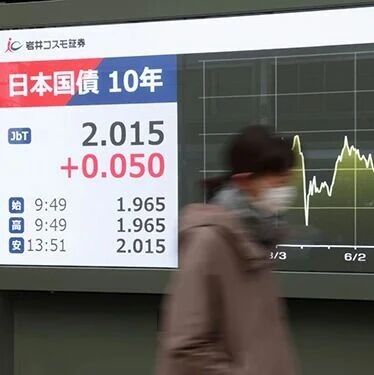
日本长期利率升至2.015%,26年来新高
日经中文网· 2025-12-19 08:00
Group 1 - Japan's long-term interest rate reached 2.015% on December 19, marking the first time it has surpassed 2% since August 1999, driven by concerns over fiscal deterioration and the Bank of Japan's interest rate hikes [2] - On December 17, the long-term interest rate hit 1.98%, the highest level since June 2007, reflecting a 0.91% increase compared to the end of 2024, influenced by fears of worsening fiscal conditions under the current government and expectations of further interest rate hikes [4] - The Bank of Japan raised its policy interest rate from 0.5% to 0.75% on December 19, the highest level in 30 years since the collapse of the bubble economy, amid ongoing inflation driven by yen depreciation [4] Group 2 - The last time long-term interest rates exceeded 2% in 2006, there were improvements in domestic economic and price outlooks, alongside heightened expectations for interest rate increases from the Bank of Japan [5] - The rise in Japan's domestic interest rates has also been influenced by increasing long-term rates in the United States [5]

日本与“安倍经济学”诀别的必然
日经中文网· 2025-12-19 08:00
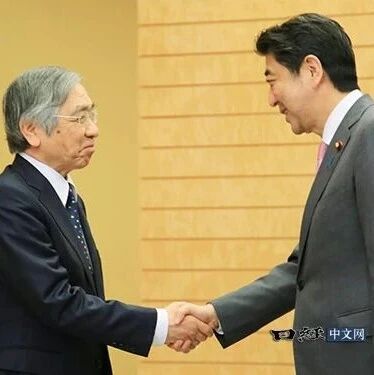
Core Viewpoint - The article discusses the shift in Japan's monetary policy under the Bank of Japan (BOJ) as it moves towards interest rate hikes in response to the depreciation of the yen and rising inflation, contrasting with the previous era of aggressive monetary easing known as "Abenomics" initiated in 2012 [2][4]. Group 1: Economic Context - "Abenomics" began in 2012 when Japan faced record yen appreciation and persistent deflation, with the yen valued at approximately 80 yen per dollar [4]. - Currently, the yen's value has dropped to nearly half of its 2012 level, leading to increased inflation, with the Consumer Price Index (CPI) rising around 3%, which is 1.5 times the BOJ's target of 2% [4][5]. Group 2: Policy Shift - The BOJ's decision to raise interest rates is seen as a necessary response to the current economic conditions, where yen depreciation and inflation require different measures compared to the past [4]. - The article emphasizes that continuing with the previous monetary easing policies would exacerbate yen depreciation and inflation, potentially leading to economic downturns [5]. Group 3: Central Bank Independence - The independence of central banks is highlighted as crucial for maintaining price stability, which sometimes conflicts with political interests [5]. - The BOJ has maintained its stance despite changing economic conditions, indicating a need for the Japanese government to implement effective policies alongside the BOJ's actions [5].
《科学》十大年度成果,全球可再生能源普及居首
日经中文网· 2025-12-19 08:00
Core Viewpoint - The article highlights China's leading role in the increase of renewable energy utilization, particularly in solar and wind power, which is seen as a significant breakthrough in addressing climate change [2][4]. Group 1: Renewable Energy Growth - Renewable energy generation is projected to meet the global increase in electricity demand in the first half of 2025, surpassing coal-fired power generation [4]. - China supplies 80% of the world's photovoltaic (PV) panels and 70% of wind turbines, dominating the production of renewable energy technologies [4]. - The growth of renewable energy has contributed to a reduction in greenhouse gas emissions in China, enhancing the likelihood of reaching peak global CO2 emissions [4]. Group 2: Global Impact - The proliferation of renewable energy sources is now viewed as unstoppable, with significant implications for global energy markets and climate change mitigation efforts [2][4]. - The recognition of renewable energy as a major breakthrough in 2025 underscores its critical role in the global transition towards sustainable energy [2].

日本政策利率上调至0.75%,30年来最高
日经中文网· 2025-12-19 03:31
Core Viewpoint - Japan's central bank has decided to raise its policy interest rate to 0.75%, the highest level in 30 years since 1995, marking a significant shift from the long-standing deflationary environment that has plagued the country [2][4]. Group 1 - The Bank of Japan raised the uncollateralized overnight call rate target by 0.25 percentage points [2]. - This increase brings Japan's policy interest rate to its highest level since 1995, a period during which the rate had never exceeded 0.5% [4]. - The central bank plans to maintain a moderate rate hike approach moving forward [2].

海外投资者净买入日股创12年以来新高
日经中文网· 2025-12-19 03:31
Core Viewpoint - Overseas investors are returning to the Japanese stock market, with net purchases exceeding 5 trillion yen in 2025, marking a potential annual high since the launch of Abenomics in 2013 [2][4]. Group 1: Investment Trends - The first wave of increased buying by overseas investors began in April due to the "Trump tariff shock," which prompted a shift from a heavy focus on the U.S. market to Japan [5]. - The second wave started in mid-September following the election of Kishi Nobuo as the president of the Liberal Democratic Party, with weekly net purchases exceeding 1 trillion yen after her victory [5]. - The net purchase amount by overseas investors reached 5.88 trillion yen by December 12, 2025, significantly surpassing the 3.1 trillion yen recorded in 2023 [4]. Group 2: Market Performance - The Nikkei average index saw a 24% increase in 2025 when measured in U.S. dollars, outperforming the S&P 500's 14% increase, marking the first time in four years that Japanese stocks exceeded U.S. stocks in annual performance [5]. - The gap of 10 percentage points between the two indices is the largest since the 2008 financial crisis [5]. Group 3: Investor Sentiment - Investors are optimistic about Japan's economic growth under a prime minister who prioritizes economic development, as noted by Emily Badger from Man Group [5]. - North American investors have net purchased over 1 trillion yen in Japanese stocks over the past year, the highest since 2014, while European investors have net purchased 3 trillion yen, albeit with greater volatility [6]. Group 4: Future Considerations - Despite the current influx of overseas investment, the overall net purchase scale remains only one-third of the levels seen during the Abenomics era in 2013 [6]. - Concerns about potential long-term interest rate increases due to aggressive fiscal policies under Kishi's administration have led to a slowdown in the momentum of overseas purchases [6].

丰田明年起将“逆进口”3款美国产车到日本销售
日经中文网· 2025-12-19 03:31
Core Viewpoint - Toyota plans to reverse import three models, including the Camry, Tundra, and Highlander, from the U.S. to Japan starting in 2026, aiming to address trade deficit concerns raised by the U.S. government and to expand customer options [2][4]. Group 1: Reverse Import Strategy - The models targeted for reverse import include the Camry, Tundra, and Highlander, which are currently not sold in Japan [4]. - This strategy is seen as a response to the U.S. government's concerns about trade deficits and aims to provide more options for Japanese consumers [2][4]. - Other Japanese automakers, such as Honda and Nissan, are also exploring similar reverse import strategies, indicating a growing trend among Japanese car manufacturers to increase production in the U.S. [5]. Group 2: Regulatory Considerations - The implementation of reverse imports is contingent upon the Japanese Ministry of Land, Infrastructure, Transport and Tourism simplifying the import vehicle review process [4]. - The ministry is considering a new "ministerial exception" system that would allow for safety certification through document review, potentially expediting the process by early 2026 [4]. Group 3: Market Dynamics - The rising labor costs in the U.S. and transportation costs to Japan present challenges for Toyota's profitability in this reverse import initiative [4]. - Toyota's Chairman, Akio Toyoda, has expressed a positive attitude towards reverse imports, aligning with the U.S. administration's push for increased sales of American cars in Japan [4].


日本哪个地方最可能受中国游客减少影响?
日经中文网· 2025-12-19 03:31
在日本其他地区的中国大陆游客占比方面,东京都以20.0%排在第16位,北海道以19.5%排在第18位。 岩手县、广岛县和山口县等低于1成。在新冠疫情后访日游客复苏的过程中,日本各地也出现了致力于 吸引不同国家和地区的游客的动向。 日本首相高市早苗关于"台湾有事"的国会答辩引发的中日对立预计将长期化。中国大型航空公司已将免 费退改签飞往日本机票的期限延长至2026年3月底。航班减少和航线停运也相继发生,截至12月1日,同 月从关西机场起降的中国航班将有3成停运。 抵达日本关西国际机场的访日外国游客(12月) 中日对立的长期化可能给日本旅游业等带来风险。日经通过调查在日本住宿的外国游客中的中国大陆游 客占比发现,2025年1~9月在各都道府县中,和歌山县为37.0%,占比第2高。兵库县为34.4%,排第 3。中国大陆游客占比最高的是…… 日本经济新闻(中文版:日经中文网)通过调查在日本住宿的外国游客中的中国大陆游客占比发现, 2025年1~9月在各都道府县中,静冈县达到45.0%,占比最高。该县拥有受中国游客欢迎的富士山,位 于连接东京、京都和大阪的访日游"黄金路线"上。在中国政府呼吁本国国民谨慎前往日本的情况下 ...

日经Gaming精选:不用再等奥运会:以国家为单位电竞,2026年“电竞国家杯”沙特到底怎么搞?
日经中文网· 2025-12-19 03:31
本文为 日经Gaming EWC观战记 系列第四篇 系列其他文章敬请期待 编者荐语: 日经Gaming是2025年7月创刊的"以商业视点出发的游戏媒体"。日经BP利用在经营、技术、消费、营销 各领域培养的采访力、信息发布力,从商业角度出发,发布游戏及其周边产业的最新动向、商业模式。 以下文章来源于日经Gaming ,作者平野亚矢 日经Gaming . 商业视角的日本游戏媒体。日经BP旗下。 赛事期间,现场观众累计约300万人次。据称,线上直播的总观看人次达到了7亿。 阅读更多内容请点击下方"阅读原文" (本文由日经BP提供) 吸引300万现场观众、7亿线上观看人次的电竞世界杯Esports World Cup(EWC),其主办方电竞世界杯 基金会即将推出新的全球性赛事:以国家为单位的对抗赛 电竞国家杯Esports Nations Cup 。 此举目的为何?日经Gaming专访了赛事运营负责人汉斯·雅格诺。 摄影:中村宏 于2025年7月至8月在沙特阿拉伯首都利雅得举办的电竞世界杯Esports World Cup,其总奖金高达7000万 美元(约合109亿日元,5亿人民币),参赛选手超过2000人, 仅用两 ...

日美利率差缩小,日元仍贬值之谜
日经中文网· 2025-12-18 07:33
Core Viewpoint - The traditional conclusion that a narrowing interest rate differential leads to yen appreciation has become invalid, as the yen remains depreciated despite the narrowing of the US-Japan interest rate gap to its lowest level in three years [2][4]. Group 1: Interest Rate Dynamics - The Bank of Japan is expected to discuss raising policy rates in its upcoming meeting, with a 95% probability of an increase predicted by the market [4]. - The actual interest rate differential has shrunk to its lowest level in two and a half years, yet the yen continues to trade around 155 yen per dollar, similar to the beginning of the year [4][6]. Group 2: Economic Indicators - Japan's current account surplus for January to October reached 27.6 trillion yen, with expectations of setting a new historical high for the year [6]. - Japan has experienced trade deficits for four consecutive years, with a deficit of 1.5 trillion yen recorded for the first ten months of 2025, primarily due to dollar-denominated imports [6]. Group 3: Service Balance and Future Projections - The service balance has shown a significant deficit of 5.6 trillion yen, while tourism income has provided a surplus of 5.4 trillion yen, indicating a precarious balance [6]. - Projections suggest that the digital deficit could exceed tourism surpluses, leading to continued yen depreciation, with estimates indicating a potential increase in the digital deficit to 18 trillion yen by 2035 [6][7]. Group 4: Investment Trends - The introduction of Japan's NISA investment scheme has led to increased outflows, with an average monthly outflow of 690 billion yen since its implementation, significantly higher than previous levels [9]. - The number of NISA accounts is expected to rise from 27 million to around 40 million, maintaining a consistent pressure to sell yen at an annual scale of 10 trillion yen for the next 5 to 10 years [9]. Group 5: Fiscal Policy Concerns - Concerns are growing regarding the impact of fiscal stimulus policies on economic growth and the credibility of the yen, as evidenced by rising credit default swap (CDS) margins for Japanese government bonds [9][10]. - The general account total of the supplementary budget for the fiscal year 2025 has reached a new high post-COVID, raising alarms about fiscal expansion [9].
检方对杀害安倍晋三被告求处无期徒刑
日经中文网· 2025-12-18 07:33
在日本前首相安倍晋三遭枪击事件中,因涉嫌杀人等罪名被起诉的被告山上徹也(45岁)的裁判员参与 审判第15次公审于12月18日在奈良地方法院举行。检方进行了总结性陈述,认为被告的犯罪行为"卑劣 至极、性质极其恶劣",并请求判处无期徒刑。当日在完成辩论、被告最后陈述等程序后,庭审宣告结 束。 本案庭审的争议焦点为量刑问题。被告的家庭因其母亲向世界和平统一家庭联合会(原统一教会)进行 大量捐献而破裂。围绕被告因积怨加深,而将与该宗教团体关系密切的安倍晋三视为袭击目标的经过, 检方与辩方的主张出现对立。 从奈良的警署向大阪移送山上徹也被告(2025年2月14日、奈良市) 判决将于2026年1月21日做出。在日本以往发生的政治人物遭杀害案件中,检方曾请求判处死刑或无期 徒刑,有期徒刑的最高刑期为30年。围绕被告因积怨加深,而将与该宗教团体关系密切的安倍晋三视为 袭击目标的经过,检方与辩方的主张出现对立…… 此外,被告自制枪械的法律定性也是争点之一。辩护方对起诉内容中关于违反枪刀法和武器等制造法的 指控成立与否提出异议。 判决将于2026年1月21日做出。 此前的庭审于10月28日至12月4日期间共举行14天,包括对被告 ...