虎嗅APP

Search documents
什么是a16z新媒体?
虎嗅APP· 2025-11-12 13:33
Core Insights - The article discusses the evolution of Andreessen Horowitz (a16z) as a venture capital firm that aims to transcend traditional models by integrating media and storytelling into its investment strategy [5][8][51] - a16z is positioning itself as a "one-stop media engine" for founders, providing essential services to help them build strong brands and narratives in the competitive tech landscape [9][10] Group 1: a16z's Media Strategy - a16z has strengthened its media team by recruiting online influencers and social media experts to enhance its storytelling capabilities [6][9] - The firm aims to emulate the cultural impact of independent film studio A24, focusing on unique and original narratives rather than mainstream trends [6][7] - The goal is to create a high-signal talent ecosystem that connects founders with top-tier talent and resources, fostering a collaborative environment for innovation [14][48] Group 2: Core Services Offered - a16z provides three main service categories: foundational media infrastructure, social media dominance, and high-signal talent ecosystems [12][13][14] - Foundational services include building owned media channels and enhancing creative execution for portfolio companies [12] - The social media takeover service aims to help companies dominate online presence through various content formats, including videos and articles [13] - The high-signal talent ecosystem focuses on hosting events and creating environments where talented individuals can connect and explore new opportunities [14] Group 3: Narrative and Brand Development - a16z emphasizes the importance of narrative development and brand positioning, offering comprehensive support for product launches and communication strategies [21][42] - The firm employs a "Launch as a Service" model, ensuring that startups can execute effective marketing strategies quickly and efficiently [42] - By embedding media teams within portfolio companies, a16z aims to provide immediate and tangible results in brand building and audience engagement [15][46] Group 4: Long-term Vision and Impact - a16z's media strategy is designed not only to support individual companies but also to elevate the entire tech ecosystem by sharing best practices and fostering innovation [51][52] - The firm aims to create a lasting impact on the industry by developing a new generation of media talent that can drive narrative and community engagement [47][48] - The ultimate goal is to empower founders to build generational businesses while navigating the complexities of modern media landscapes [10][11]


佛山,突然“扩容”了
虎嗅APP· 2025-11-12 13:33
Core Viewpoint - The article discusses the recent administrative changes in Foshan, Guangdong, where nine administrative villages from Zhaoqing's Gaoyao District were transferred to Foshan's Gaoming District, primarily driven by the construction of the new airport in the Pearl River Delta region, referred to as the "Guangzhou Second Airport" [4][5][6]. Group 1: Airport Development and Urban Expansion - The new airport, designed to handle 30 million passengers annually, is located at the boundary between Foshan and Zhaoqing, approximately 80 kilometers from Guangzhou [10][18]. - Foshan's administrative adjustment is seen as a necessary step to facilitate the integrated planning and construction of the airport, breaking down administrative barriers [19][20]. - Foshan joins cities like Xi'an and Chengdu that have expanded due to airport developments, marking a trend of urban growth linked to transportation infrastructure [8][21]. Group 2: Comparison with Other Cities - Over the past decade, five major provincial capitals have undergone significant expansions, with Chengdu and Xi'an being directly related to airport developments [22]. - Chengdu's expansion in 2016 involved the incorporation of Jianyang, which added over 2,200 square kilometers and 1.4 million residents, enhancing its economic capacity [24]. - Xi'an's integration of Xianyang has been a long-discussed topic, with recent plans indicating a shift towards collaboration rather than outright merger [32]. Group 3: Future of Urban Expansion - The article suggests that while Foshan's adjustment is a minor administrative change, it does not signify a broader trend of urban expansion, especially since the last significant expansion occurred in 2020 with Changchun [36][40]. - Current urban development is shifting from rapid expansion to improving existing urban areas, indicating that large-scale city mergers or expansions are unlikely in the near future [39][41]. - The focus is now on addressing the needs of shrinking cities and potential administrative adjustments rather than pursuing new expansions [42].

忍无可忍,LeCun离职:Meta市值应声蒸发1400亿
虎嗅APP· 2025-11-12 09:48
Core Viewpoint - Yann LeCun's departure from Meta signifies a critical shift in the company's AI strategy, moving away from long-term academic research towards a more aggressive, product-driven approach [2][8][33] Group 1: Departure of Yann LeCun - LeCun announced his departure from Meta, intending to start his own venture [3] - Following the news, Meta's market value dropped by 1.5%, equating to over $20 billion [5] - LeCun's dissatisfaction had been building due to frequent restructuring within Meta's AI division, which hindered research progress [12][20] Group 2: Changes in AI Strategy - Meta's AI strategy is shifting under CEO Mark Zuckerberg's leadership, focusing on rapid product development to compete with Google and OpenAI [8][26] - The FAIR lab, led by LeCun, is being strategically abandoned, with significant layoffs occurring under the new leadership of Alexandr Wang [8][19] - LeCun's vision of a "world model" architecture contrasts sharply with Meta's current focus on large language models (LLMs), which he criticizes as lacking true understanding [23][24] Group 3: Historical Context of LeCun's Role - LeCun joined Meta in 2013 and established the FAIR lab, which was characterized by its academic freedom and focus on foundational research [28][30] - His contributions to AI were recognized with the Turing Award in 2018, marking a peak in Meta's reputation in AI research [30] - The departure of LeCun marks the end of an era for Meta's "academic" research approach, as the company pivots towards a more aggressive, product-oriented strategy [33]


战争里的人:4条命能换1架无人机
虎嗅APP· 2025-11-12 09:48
Core Viewpoint - The article discusses how Ukraine is gamifying warfare through a points-based system for drone operators, aiming to boost morale and operational efficiency in the ongoing conflict with Russia [6][12][43]. Summary by Sections Warfare and Media - The Gulf War in 1991 was the first war broadcast live via satellite, leading to a perception that war was becoming a media spectacle rather than a brutal reality [5]. - Modern warfare, particularly in Ukraine, is characterized by graphic imagery shared on social media, transforming the battlefield into a surreal experience for viewers [6][7]. Gamification of Warfare - Ukraine has implemented a points system for drone operators, rewarding them for successful missions, which is believed to enhance morale and combat effectiveness [8][12]. - The points system assigns values to enemy targets, such as 12 points for a regular soldier and 120 points for capturing one [11][18]. Brave1 Market - The "Brave1 Market" was introduced to allow military units to purchase equipment using points earned from combat actions, effectively creating a military marketplace [14][43]. - The product catalog on Brave1 Market has expanded from over 1,000 items to nearly 3,000, including drones, electronic warfare products, and various battlefield equipment [25][43]. Impact and Effectiveness - The points system has reportedly led to increased competition among military units, with some forming drone units to take advantage of the rewards [43]. - The Ukrainian government has allocated additional funds to support the drone army reward program, indicating confidence in the system's effectiveness [43][44]. Ethical Considerations - The article raises ethical concerns about the gamification of war, suggesting that reducing human life to points may seem disrespectful to those in peaceful societies, while those in conflict may view it as a necessary survival strategy [46][47].

现在还有入场AI的蓝海?
虎嗅APP· 2025-11-12 09:48
Core Insights - The article discusses the evolution of mobile application ecosystems, highlighting the shift from traditional app development to AI-driven systems as the new growth frontier in the context of a slowing mobile internet user growth rate of 2.28% in China [2][5]. Group 1: AI Ecosystem Development - The report identifies ten potential growth areas within the Harmony ecosystem, including social communication, financial payments, audio entertainment, and healthcare, which have emerged as new opportunities in the AI era [7]. - The Harmony system's distributed technology aims to create a comprehensive, intelligent, and secure ecosystem, facilitating the integration of AI across various sectors [5][6]. Group 2: Financial Payments and User Experience - In the financial payments sector, Harmony's potential lies in enhancing public service payment systems, which are currently fragmented and do not meet user demands for convenience and security [9]. - The integration of AI in audio and news applications is transforming user habits, shifting from a demand-driven model to a more intuitive, context-aware service that anticipates user needs [11][12]. Group 3: Developer Opportunities and Ecosystem Growth - The article emphasizes the importance of AI capabilities being integrated at the operating system level, creating a flow of benefits from algorithms to systems and ultimately to developers [16]. - Developers are experiencing reduced barriers to entry and increased opportunities for innovation within the Harmony ecosystem, as evidenced by the success of applications like "Yao Guanjia," which saw a peak of 10 million new users in a month [20][24]. Group 4: Investment and Strategic Support - Harmony plans to invest over 6 billion RMB annually to support and incentivize developer innovation, aiming to create a positive cycle of creativity and development [25][29]. - The article notes that the current stage of the Harmony ecosystem presents a unique investment opportunity, as its "ecological value" may offer greater long-term potential compared to immediate revenue generation [29][30]. Group 5: Future of AI Operating Systems - The rise of AI operating systems represents a significant shift in the technological landscape, redefining user experience and the relationship between applications and systems [30]. - The article concludes that the greatest opportunities lie in actively participating in shaping the new ecosystem rather than searching for untapped areas within the existing framework [30].

香港,又到了“拼经济”的时候?
虎嗅APP· 2025-11-12 09:48
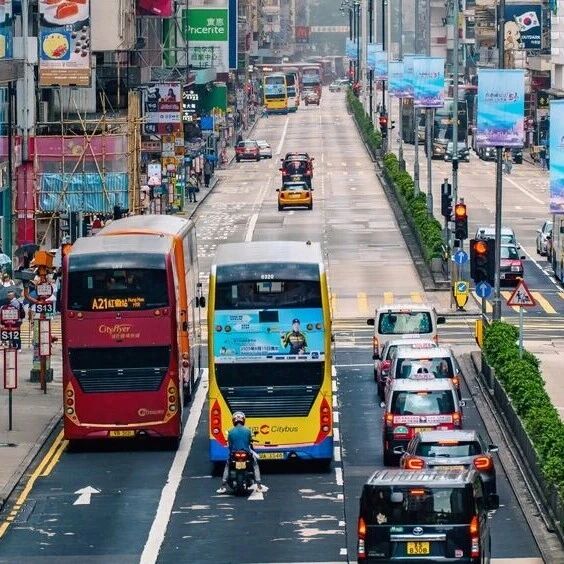
Core Viewpoint - A subtle shift is occurring in Hong Kong, transitioning from a focus on security to prioritizing economic development, with an emphasis on enhancing its international financial center status [2][3]. Economic Overview - Hong Kong's economy is projected to grow at 2.5% in 2024, down from 3.2% in 2023, with forecasts for 2025 generally between 2% and 3% [4]. - Trade and financial services are the two main pillars of Hong Kong's economy, each contributing approximately 20% to GDP [4]. Challenges in Economic Development - The international unique trade status of Hong Kong is uncertain due to changing global dynamics and the emergence of free trade zones in mainland China, which have diminished Hong Kong's previous advantages [5]. - Hong Kong has lost its position as the world's largest container port and is now ranked 11th in 2024, with Shenzhen and Guangzhou taking the 4th and 6th spots respectively [5]. Employment and Social Issues - The financial sector, while strong in capital attraction, does not provide sufficient employment opportunities, leading to a rise in low-end jobs in sectors like retail and dining, exacerbating social mobility issues and income inequality [5]. Opportunities in Technology Innovation - The potential for growth lies in the technology innovation sector, as Hong Kong has a strong academic foundation but lacks the necessary environment for technology commercialization [8][10]. - Hong Kong's R&D investment as a percentage of GDP is only 1.11% in 2023, significantly lower than the EU (2.2%), the US (3.59%), and South Korea (4.85%) [12]. Strategic Initiatives - The "Northern Metropolis" project aims to develop a new urban area focused on innovation and technology, leveraging Shenzhen's industrial strengths to enhance Hong Kong's economic landscape [14][15]. - The establishment of the Hong Kong-Shenzhen Innovation and Technology Cooperation Zone is expected to contribute approximately 52 billion HKD annually to Hong Kong's economy and create around 52,000 jobs [15]. Integration with Mainland China - Recent policies, such as allowing vehicles from Guangdong to enter Hong Kong, signal a growing interconnection between Hong Kong and mainland China, emphasizing the importance of collaboration for future growth [16]. - The shift in economic dynamics indicates that Hong Kong must redefine its role and seek new opportunities in technology and innovation to remain competitive [22].
当AI学会思考,人类还剩什么?
虎嗅APP· 2025-11-12 04:03
Group 1 - The F&M Innovation Festival emphasizes the exploration of human life value in the AI era, inviting thinkers from philosophy, history, and education rather than just business leaders or tech experts [2][20] - The festival will feature speakers like Zhang Xiaoyu, who will discuss the deep societal changes driven by intelligent technology from a historical perspective [2][7] - The event aims to address fundamental questions about human identity and existence in the context of AI's capabilities, as highlighted by discussions led by scholars like Hu Yong [14][21] Group 2 - The festival's focus on non-commercial topics reflects a belief that the ultimate goal of technology is human well-being, prompting a return to ancient questions about identity and happiness [20][21] - Speakers will provide insights on how philosophy can foster critical thinking in the AI age, while history can reveal patterns to avoid losing direction amid technological fervor [20] - The event aims to redefine education to ensure the next generation thrives in a world where humans and machines coexist [20]

工作的暴政,正在被人工智能拆穿
虎嗅APP· 2025-11-11 23:53
Core Viewpoint - The article discusses the transformation of work in the context of technological advancements, particularly artificial intelligence, and its implications for employment, social structures, and economic inequality. Group 1: Employment Trends - Major companies like Amazon and Microsoft are announcing significant layoffs, indicating a shift in employment dynamics and raising concerns about job security in both the US and China [4][5]. - The traditional path to success through education and stable employment is becoming increasingly crowded and uncertain, leading to a disillusionment with the narrative of hard work as a guaranteed route to success [5]. Group 2: Historical Context of Work - The concept of work is a relatively recent construct in human history, primarily shaped by capitalism and the industrial revolution, which established a rigid separation between work and leisure [7][8]. - In pre-industrial societies, work was integrated with social and leisure activities, contrasting sharply with the modern notion of work as a distinct and often burdensome obligation [7][8]. Group 3: The Impact of AI on Work - The rise of AI is leading to the "McDonaldization" of knowledge work, where complex tasks are broken down into standardized, easily executable components, diminishing the creative and intellectual aspects of jobs [14][16]. - AI is increasingly taking over tasks traditionally performed by knowledge workers, such as programming and legal research, fundamentally altering the nature of these professions [15][16]. Group 4: Social Implications of Economic Changes - The article highlights a growing divide between the affluent and the "downstream" classes, where economic stagnation and job insecurity are leading to a loss of hope and ambition among the middle class [21][24]. - The phenomenon of "downstream society" reflects a broader trend of social stratification, where opportunities for upward mobility are diminishing, particularly for younger generations [21][22][26]. Group 5: Policy Responses and Future Outlook - The discussion around Universal Basic Income (UBI) and other social safety nets is gaining traction as a potential solution to address the inequalities exacerbated by technological advancements and economic shifts [30][34]. - The article suggests that without significant reforms in wealth distribution and social welfare, the stability of modern capitalist democracies may be at risk, necessitating a reevaluation of societal values and priorities [28][38].





早报|胖东来“柴怼怼”诋毁案宣判,获赔260万元;常州小米汽车拖下高速后起火;软银清仓英伟达套现58.3亿;巴菲特发表“谢幕信”
虎嗅APP· 2025-11-11 23:53
Group 1 - The U.S. Navy's Ford aircraft carrier strike group has entered the Caribbean Sea, marking a significant military deployment in the region [2] - Meta's Chief AI Scientist Yann LeCun plans to leave the company to start his own venture, coinciding with a major restructuring of Meta's AI operations [3] - SoftBank has fully divested from NVIDIA, raising $5.83 billion, and has also reduced its stake in T-Mobile, generating $9.17 billion [4] Group 2 - Apple has decided to delay the release of the next-generation iPhone Air due to lower-than-expected sales, impacting its supply chain [7][8] - Foxconn has dismantled a significant portion of its production lines in response to Apple's decision, with plans to cease operations by the end of the month [8] - The next iPhone Air is now expected to be redesigned and potentially launched in spring 2027 alongside other new models [9] Group 3 - The "Chai Dui Dui" defamation case against Pang Donglai resulted in a court ruling that ordered the defendants to pay a total of 2.6 million yuan in damages [10][12] - The court found that the defendants had spread false information about Pang Donglai's business practices, which misled the public and disrupted market order [12] Group 4 - Berkshire Hathaway's CEO Warren Buffett announced he will step down by the end of the year and accelerate his philanthropic efforts [13][14] - Buffett's departure marks a significant transition for the company, as he has been a key figure in its management for decades [14] Group 5 - The 2025 World Power Battery Conference will take place in Yibin, Sichuan, focusing on new opportunities in the battery industry [35] - The Shanghai Stock Exchange will host its International Investor Conference, providing a platform for foreign investors to engage with domestic entities [36]


淘宝终于对搜索动刀了
虎嗅APP· 2025-11-11 23:53
Core Viewpoint - The article discusses the rapid evolution of AI in the e-commerce sector, particularly focusing on Alibaba's Taobao platform, highlighting the integration of AI tools to enhance user experience and operational efficiency during the 2024 Double Eleven shopping festival [4][11][30]. Group 1: AI Integration in E-commerce - Taobao's AI tools, such as "Xiao Wan Assistant," have significantly improved sales performance, with some brands reporting over 35% increase in orders after implementing AI-driven strategies [4][11]. - The establishment of the "Search and Promotion Intelligent Product Division" under the leadership of Zhang Kaifu marks a strategic shift towards AI-driven enhancements in Taobao's search and recommendation systems [7][12]. - The urgency for improving user experience in search functionalities was driven by customer feedback on social media, indicating a need for immediate action to address dissatisfaction [8][10]. Group 2: Challenges and Strategic Focus - The search experience issues stem from 22 years of accumulated complexities in Taobao's search engine, necessitating a comprehensive upgrade involving business, technology, and supply chain collaboration [9][19]. - The team identified three key focus areas for AI evolution by 2025: upgrading search and promotion systems, enhancing efficiency for merchants, and launching new AI-driven shopping products for consumers [16][21]. - The transition to AI-driven systems requires a complete overhaul of the existing product database to ensure compatibility with AI technologies, which is a significant undertaking [20][21]. Group 3: Organizational Changes and Talent Development - The internal structure has shifted to support AI initiatives, with a focus on creating flexible project teams that can innovate without being constrained by traditional metrics [24][25]. - A significant recruitment drive has targeted young talent from local universities, emphasizing the importance of nurturing creativity and technical skills in the AI domain [26][27]. - The company has implemented a systematic training approach for new hires, ensuring they are equipped with the necessary skills to contribute effectively to AI projects [27]. Group 4: Performance Metrics and Future Outlook - As of November 8, 2024, the AI-driven search and promotion capabilities have led to a 12% increase in advertising ROI and a 20% improvement in search relevance under complex queries [29][30]. - Despite initial successes, challenges remain in educating traditional merchants about AI tools, indicating a need for ongoing support and training [31]. - The company views AI as a long-term strategic focus, with plans for increased investment and further development of AI capabilities in the coming years [32][33].