首席商业评论

Search documents
抢公章、堵审计,内斗11年终“改姓”:昔日“厨电第一股”,快被拖垮了
首席商业评论· 2025-10-10 04:34
Core Viewpoint - The article discusses the decline of Vatti Corporation, once a leading player in the kitchen appliance industry, highlighting internal conflicts, management issues, and market competition as key factors contributing to its downfall [4][7][26]. Group 1: Internal Conflicts and Management Changes - Vatti Corporation has experienced prolonged internal strife, culminating in a board reshuffle that solidified the dominance of the Pan family, with the majority of board members now being family members [5][6]. - The company has modified its bylaws to remove restrictions on family members holding executive positions, signaling a shift towards a family-controlled enterprise [6][7]. - The internal power struggle peaked in 2023 when a conflict over control of Vatti Electronics led to a public dispute involving accusations of misconduct and a subsequent acquisition of shares to resolve the issue [22][24]. Group 2: Financial Performance and Market Position - Vatti's revenue has significantly lagged behind competitors, with 2024 revenues at 6.3 billion yuan, far below the 17.6 billion yuan of Fotile and 11.2 billion yuan of Boss Appliances [7][24]. - The company has seen a compound annual growth rate (CAGR) of only 0.31% from 2017 to 2022, with net profit plummeting from 510 million yuan to 143 million yuan during the same period [24][26]. - In Q1 2025, Vatti reported a revenue decline of 8.8% and a net profit drop of 14.33%, indicating ongoing financial struggles [25][24]. Group 3: Product and Brand Challenges - Vatti's product sales have suffered, with significant declines in key categories such as disinfection cabinets (down 18.96%) and cabinets (down 57.59%) in 2024 [28][29]. - The company's market share in the high-end segment has drastically decreased, with a notable loss of 6.8 percentage points in the mid-range market over five years [28]. - Consumer complaints regarding product quality and after-sales service have surged, reflecting a deteriorating brand reputation [29][31]. Group 4: Research and Development Investment - Vatti's R&D investment in 2024 was only 263 million yuan, representing a mere 4.13% of revenue, compared to competitors with higher R&D spending [32][33]. - The company holds 3,287 effective patents, which is less than half of Fotile's, and less than 30% of these are invention patents, indicating a lack of innovation [33]. Group 5: Future Outlook - Vatti faces a critical juncture, needing to address internal issues and adapt to a rapidly changing market landscape to avoid further decline [33]. - The company must decide whether to continue its current trajectory or make significant changes to regain market relevance and consumer trust [33].



社交媒体的黄金时代,结束了
首席商业评论· 2025-10-09 04:30
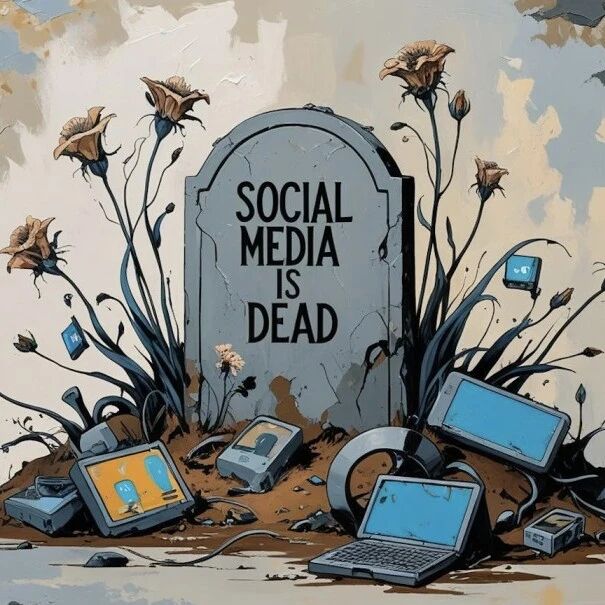
Core Viewpoint - The article discusses the decline of traditional social media platforms due to the overwhelming influence of AI and algorithms, leading users to seek smaller, more intimate digital spaces for genuine connections [6][21]. Group 1: Impact of AI on Social Media - The "attention economy" has been disrupted by AI, which now drives 80% of content recommendation algorithms and generates 71% of images by 2025 [8][11]. - Users experience "attention fatigue" as they are bombarded with AI-generated content, leading to a decline in engagement and trust in social media platforms [15][18]. - A significant 60% of young people feel that social media increases anxiety rather than happiness, highlighting the negative impact of AI content on user experience [15]. Group 2: Shift to Smaller Communities - Users are moving away from large platforms to smaller, more controlled environments like Reddit and Discord, which emphasize community and personal connection [21][25]. - Reddit's stock has surged fivefold since its IPO, reflecting the growing value of community-driven platforms that prioritize user engagement over algorithmic content [22][25]. - Discord has seen rapid growth, with user numbers expected to exceed 500 million by 2025, as it offers a space free from algorithmic interference [25][29]. Group 3: Emergence of the "Intimacy Economy" - The trend towards smaller communities is described as the "intimacy economy," where users seek emotional connection and understanding rather than broad engagement [26]. - Platforms like Substack allow creators to communicate directly with subscribers, bypassing algorithms and fostering deeper relationships [26]. - The future of social media may involve slower, more thoughtful interactions, with users having greater control over their content consumption [29].
奥马尔·亚吉:从“难民营”里走出的诺贝尔奖得主
首席商业评论· 2025-10-09 04:30
Core Viewpoint - Omar M. Yaghi, a Jordanian-American chemist, won the Nobel Prize in Chemistry for his groundbreaking contributions to the field of Metal-Organic Frameworks (MOFs) [3][27]. Background and Early Life - Yaghi was born in 1965 in a Palestinian refugee camp in Amman, Jordan, where he experienced extreme poverty and resource scarcity [8]. - His childhood memories include the weekly water supply day and a fascination with molecular structure diagrams from a chemistry book he discovered at school [9]. - Encouraged by his father, Yaghi moved to the United States at the age of 15, overcoming language barriers and financial hardships to pursue education [11]. Academic Journey - Yaghi pursued a Ph.D. at the University of Illinois, where he became interested in the field of porous materials [14]. - After completing his doctorate, he faced a choice between a high-paying industrial job and an academic position, ultimately choosing the latter for the freedom to explore his research ideas [15]. Breakthrough in MOF Research - In 1995, Yaghi's team made a significant breakthrough by discovering conditions to create a crystal structure that led to the concept of Metal-Organic Frameworks (MOFs) [19]. - Despite initial skepticism from the scientific community, Yaghi adhered to his vision, coining the "5% rule" to focus on the minority who supported his work [21]. - The development of MOF-5 in 2003 marked a turning point, demonstrating the potential of MOFs for practical applications, including high surface area and stability [23]. Applications and Impact - Yaghi's research led to the creation of various MOF materials with applications in carbon dioxide capture, hydrogen storage, and water harvesting, addressing global energy and environmental challenges [23]. - His work on MOF-303, which can produce water from air, reflects his childhood experiences with water scarcity [23]. Recognition and Achievements - Yaghi's contributions have been recognized globally, receiving several prestigious awards, including the Albert Einstein World Science Prize and the Wolf Prize in Chemistry [25]. - He has also expanded his research into Covalent Organic Frameworks (COFs), further broadening the applications of porous materials [25].

“隐形巨头”丹纳赫:一家经营企业的企业
首席商业评论· 2025-10-09 04:30
Core Insights - Danaher Corporation is recognized as a "king of mergers and acquisitions" with a remarkable track record of 400 acquisitions over 40 years, yielding an 1800-fold return [2] - The company has become a model for leading firms like Midea, Fosun, and WuXi Biologics, which seek to emulate its successful strategies [2] Company Overview - Founded in 1984 by Steven and Mitchell Rales, Danaher has evolved from a real estate trust into a diversified global corporation with a market value exceeding $200 billion [4][5] - The company maintains a low profile but owns well-known brands such as Leica Microsystems and Pantone, and has played a crucial role in supplying equipment during the COVID-19 pandemic [6] Financial Performance - Danaher has outperformed Berkshire Hathaway in stock price performance over the past 40 years, achieving nearly 100,000% total shareholder return since its inception [9][8] - The company reported a total shareholder return of 144% over the past five years, double that of the S&P 500 index [9] M&A Strategy - Over its history, Danaher has completed nearly 400 acquisitions, spending approximately $90 billion, which has significantly contributed to its current market valuation [11][10] - The company has successfully integrated acquired businesses, leading to improved operational efficiencies and profitability [12] Management and Operational Excellence - Danaher employs a unique management system known as DBS (Danaher Business System), which enhances operational performance and has been compared favorably to consulting firms like McKinsey [13][14] - The company has consistently improved its operating margins and free cash flow, with a notable increase in earnings per share [15] Leadership Development - Danaher is recognized as a breeding ground for CEOs, having successfully transitioned through multiple leadership changes while maintaining strong performance [17][18] - The company has seen its former executives take on leadership roles in other major corporations, indicating the high caliber of its management talent [19] Business Evolution - Danaher's business model has evolved through distinct phases, focusing on leveraged buyouts, lean operations, globalization, and currently, a strong emphasis on healthcare technology [26][27] - The company has shifted its revenue composition significantly towards life sciences and diagnostics, reflecting its strategic focus on high-margin sectors [25][28]
脑机接口动态电极“神经蠕虫”成功制备|首席资讯日报
首席商业评论· 2025-10-09 04:30
Group 1 - The research teams from the Shenzhen Institute of Advanced Technology and Donghua University have successfully developed a new type of neural fiber electrode called "neural worm," which is flexible, stretchable, and capable of free movement, marking a breakthrough in brain-machine interface technology [2] - Citic Securities suggests focusing on investment opportunities in precious metals and copper, as gold and silver prices surged due to factors like the U.S. government shutdown, expectations of continued interest rate cuts, and global central banks' ongoing gold purchases [3] - Huatai Securities reports that the liquor industry experienced a subdued performance during the National Day and Mid-Autumn Festival, with overall sales under pressure, although some regions showed slight improvements [4][5] Group 2 - Shanghai's online and offline consumption payments reached 79.6 billion yuan during the National Day holiday, with a year-on-year growth of 3.0%, and notable increases in restaurant sales and key shopping districts [6] - Sembcorp Industries announced a 246 million SGD acquisition of an Indian solar power plant, expanding its renewable energy footprint in India [7] - Google has partnered with the Los Angeles Organizing Committee to become the official cloud service provider for the 2028 Olympics, utilizing AI technology to enhance experiences for spectators and athletes [8] - Google plans to invest 5 billion euros in Belgium over the next two years to expand its cloud computing and AI infrastructure, including the addition of 300 full-time jobs [9] - Alibaba completed an exchange offer for its outstanding priority notes, involving up to 1 billion USD in principal amount, as part of its debt management strategy [10] - Airbus delivered 73 aircraft in September, bringing the total deliveries for the year to 507 [11] - The Chinese film market is experiencing a strong recovery, with the National Day box office surpassing 1.8 billion yuan, and the total box office for the year expected to reach 50 billion yuan [12] - IMF President Kristalina Georgieva indicated that while the global economy is performing better than expected, it has not yet faced a comprehensive test, and concerning signs suggest that a real test may be imminent [13]

我国科研人员解决全固态金属锂电池界面接触难题|首席资讯日报
首席商业评论· 2025-10-08 05:07
1.我国科研人员解决全固态金属锂电池界面接触难题 记者从中国科学院物理研究所获悉,由该所研究员黄学杰团队联合华中科技大学、中国科学院宁波材料技 术与工程研究所等组成的研究团队开发出一种阴离子调控技术,解决了全固态金属锂电池中电解质和锂电 极之间难以紧密接触的难题,为其走向实用化提供了关键技术支撑。相关研究成果已于7日发表在国际学术 期刊《自然-可持续发展》上。 点评:我国科研突破固态电池技术瓶颈,产业前景广阔。 2.世贸组织上调2025年全球货物贸易增长预期至2.4% 世界贸易组织(WTO)10月7日发布《全球贸易展望与统计》最新报告指出,受人工智能(AI)相关产品需 求增长、北美在关税上调前的进口激增及新兴经济体间贸易活跃推动,2025年上半年全球货物贸易超出预 期。WTO据此将2025年全球货物贸易增长预测上调至2.4%,高于8月时的0.9%;但2026年预测下调至 0.5%。 3.政府停摆致人手紧张,美多个城市航班大面积延误 当地时间10月7日,由于美国政府停摆造成航空管制人员短缺,美国联邦航空管理局(FAA)当天晚间发布 通告称,芝加哥、达拉斯和纳什维尔等主要城市的航班出现大面积延误。数据显示,飞往芝 ...

瑞·达利欧:我确信我们正面临一个历史反复上演的危险局面
首席商业评论· 2025-10-08 05:07
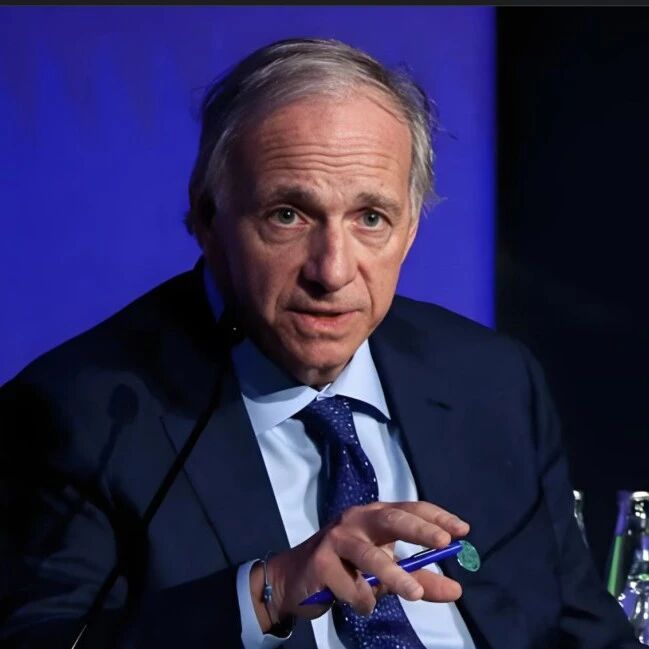
Core Insights - Ray Dalio, founder of Bridgewater Associates, emphasizes the importance of understanding debt cycles and their impact on national economies, as outlined in his new book "How Countries Go Broke: The Big Cycle" [3][4] - The book presents a framework for analyzing the cyclical nature of national rise and fall, warning investors to look beyond market trends [3][6] Group 1: Key Questions Addressed - The article raises critical questions about the limits of national debt growth, the implications of rising interest rates, and the potential for a major reserve currency nation like the U.S. to face bankruptcy [5][6] - It highlights the lack of clear answers to these questions, which are crucial for investors and policymakers alike [6][8] Group 2: Research Perspective - The research is conducted from a global macro investor's perspective, drawing on over 50 years of experience with various debt cycles [8][9] - Dalio's analysis includes a review of significant debt cycles over the past century and a broader examination of 500 years of history to identify patterns and mechanisms [9][10] Group 3: The Big Cycle Concept - Dalio introduces the concept of the "Big Cycle," which encompasses multiple interrelated cycles, including debt cycles, domestic political harmony and conflict, international geopolitical dynamics, natural forces, and technological breakthroughs [11][12] - The evolution of these cycles is characterized by transitions from one order to another, often accompanied by significant crises [12][13] Group 4: Current Economic Context - The article discusses the current high levels of government debt and the risks associated with assuming that "this time will be different" without studying historical precedents [11][14] - It suggests that the world may be on the brink of repeating historical patterns of political and economic turmoil due to rising debt levels [11][14] Group 5: Future Outlook - Dalio predicts that the next 5-10 years will be a period of significant change across all major orders, with potential for both decline and rise among nations, companies, and individuals [16][17] - The article emphasizes the importance of managing various forces effectively to navigate the upcoming changes and mitigate risks [17][18]
砍自己一刀,西贝绝地求生
首席商业评论· 2025-10-08 05:07
Core Viewpoint - The article discusses the recent price reduction strategy implemented by the restaurant brand Xibei, which aims to regain consumer trust after facing criticism for high prices and the use of pre-made dishes. The effectiveness of this strategy during the National Day holiday is analyzed, highlighting both consumer reactions and potential long-term implications for the brand [8][24][28]. Price Reduction Strategy - Xibei announced significant price cuts on various core dishes starting from October 1, with prices for items like Xibei noodles dropping from 39 yuan to 33 yuan and roasted lamb chops from 119 yuan to 109 yuan. Additionally, a 100 yuan no-threshold voucher was introduced [8][12]. - This price adjustment is unprecedented in Xibei's history and is viewed as a self-rescue measure to counteract declining customer traffic [8][12]. Consumer Response - During the National Day holiday, Xibei experienced a noticeable increase in customer traffic compared to the previous period, with some locations seeing wait times for seating [8][18]. - Consumers reported significant savings using the vouchers, with some effectively dining for free by leveraging multiple vouchers [13][15]. However, there were complaints about portion sizes, indicating that the price reduction did not necessarily equate to value [29]. Market Dynamics - The introduction of vouchers led to a surge in secondary market activity, with 100 yuan vouchers being sold for 50-60 yuan on platforms like Xianyu, indicating a potential for arbitrage [19][20]. - The presence of "voucher hunters" and resellers could undermine the original intent of the promotional campaign, shifting it from customer appreciation to profit-making [20][24]. Brand Trust Issues - Despite the price cuts, Xibei continues to face skepticism regarding its use of pre-made dishes, with many consumers expressing doubts about the brand's claims of not using such products [24][26]. - The article notes that while consumers acknowledge the lower prices, they still associate the brand with its previous high pricing and pre-made dish controversies, which complicates the rebuilding of trust [26][28]. Strategic Implications - The article suggests that Xibei's shift from emphasizing value to competing on price could dilute its brand equity and long-term positioning in the market [28][29]. - To regain consumer trust, Xibei may need to focus on transparency regarding its food sourcing and preparation methods, as well as ensuring that pricing aligns with consumer expectations for quality [31][33].

中国这些资产,被韩国人偷偷买走了
首席商业评论· 2025-10-08 05:07
Core Viewpoint - The article discusses the failure of the Suzhou Huayi Brothers Movie World, which was once envisioned as a "Chinese Disneyland," and its subsequent acquisition by Korean capital, highlighting the challenges faced by domestic companies in the theme park industry and the increasing interest of foreign investors in China's cultural tourism sector [4][8][25]. Group 1: Huayi Brothers' Theme Park Dream - The Suzhou Huayi Brothers Movie World, which opened in 2018, was intended to replicate the success of Disneyland but has faced continuous losses, leading to its acquisition by MBK Partners [4][6][13]. - The park, covering 690 acres, suffered losses of 134 million yuan, 162 million yuan, and 93 million yuan from 2018 to 2020, ultimately leading to its bankruptcy restructuring in 2024 [13][14]. - Huayi Brothers initially aimed to generate significant revenue from the park, projecting 18 billion yuan in annual income from 20 planned projects, but the reality proved disappointing [11][12]. Group 2: Foreign Investment in Chinese Cultural Tourism - MBK Partners has previously engaged in "distressed asset" investments, acquiring underperforming assets at a discount, as seen in their successful turnaround of Osaka Universal Studios [22][25]. - The acquisition of Suzhou Huayi Brothers Movie World is part of a broader trend of foreign capital entering China's cultural tourism market, driven by relaxed regulations and a favorable investment environment [26][28]. - The strategic location of the Suzhou park, situated in a prime tourist area, enhances its potential for recovery and profitability, attracting foreign investment interest [33]. Group 3: Challenges in the Domestic Theme Park Market - Domestic theme parks often struggle due to high investment costs and long payback periods, with many companies unable to sustain operations long enough to see returns [15][20]. - The reliance on popular film IPs has not translated into sustained visitor interest, as evidenced by the declining box office performance of related films [16][20]. - The article suggests that the broader issue lies in the lack of effective IP cultivation and operational strategies among domestic companies, which has led to failures in the cultural tourism sector [20][22].


年轻人抢住“拼楼酒店”
首席商业评论· 2025-10-08 02:28
Core Viewpoint - The rise of "building-sharing" hotels in China reflects a shift in the hotel industry from expansion to survival in a competitive market, offering consumers better choices and cost-effectiveness while addressing the challenges of high investment and limited locations [3][19][21]. Group 1: Market Trends - The "building-sharing" model is rapidly gaining popularity, with multiple hotel brands coexisting within the same building, creating a "vertical hotel cluster" phenomenon [9][19]. - Consumers appreciate the increased choice and cost-effectiveness of this model, as it allows them to easily switch between different hotel brands without the hassle of moving to another location [13][19]. - The model reduces transaction costs for consumers, enabling them to compare and decide among various brands in a single location [13][21]. Group 2: Economic Context - The Chinese hotel industry is facing a harsh reality of declining occupancy rates and prices, with a reported 8% year-on-year drop in RevPAR during the summer of 2025, and some regions experiencing price declines of 20% to 30% [19][21]. - The "building-sharing" model emerges as a response to the high investment barriers and long payback periods associated with traditional hotel operations [21][23]. Group 3: Operational Advantages - The model allows for shared facilities among different hotel brands, enhancing operational efficiency and reducing vacancy risks for property owners [21][23]. - Consumers benefit from a diverse range of services and amenities, as brands compete to offer better experiences, leading to a richer service environment [15][21]. Group 4: Challenges and Risks - Despite its advantages, the "building-sharing" model faces potential issues such as brand conflicts, service fragmentation, and management difficulties, which could impact its sustainability [25][26]. - The blending of different hotel brands may dilute the unique characteristics of higher-end brands, leading to concerns about customer experience and loyalty [26][30]. - Safety and security concerns arise from shared spaces, as incidents in similar setups have highlighted the risks associated with multiple brands operating in close proximity [30][31].