美股IPO

Search documents
摩根大通:AI将颠覆美股哪些软件巨头?一张图看清与“悬崖”的距离
美股IPO· 2025-10-21 10:03
Core Insights - Morgan Stanley warns that AI is disrupting the software industry, introducing the "AI Cliff" assessment framework to analyze the vulnerability of software companies [1][3] - Companies with strong ecosystems and high user visibility, such as Microsoft Windows and Bloomberg, are more defensively positioned, while traditional systems and niche software face greater risks [1][3] AI Cliff Assessment Framework - The framework evaluates software companies' vulnerability to AI disruption across nine dimensions, providing a clear risk landscape for investors [3][5] - Key dimensions include replacement cost, criticality, automation level, user visibility, ecosystem size, data resources, scale and resources, adaptability, and regulatory requirements [5][6][7][8][9][10][11][12][13][14] Key Dimensions Explained - **Replacement Cost**: Evaluates the time, financial investment, and customer disruption involved in replacing software; for example, Microsoft Windows has high replacement costs due to learning curves, while Alteryx is easier to replace [6][15] - **Criticality**: Differentiates between mission-critical software (e.g., CDK) and auxiliary tools (e.g., Alteryx) [7][15] - **Automation Level**: Highly automated systems are less likely to be affected by AI, whereas software reliant on manual processes (e.g., Microsoft Excel) is more vulnerable [8][15] - **User Visibility**: Software that users interact with daily (e.g., Microsoft Windows) has higher stickiness compared to backend middleware (e.g., TIBCO) [9][15] - **Ecosystem Size**: A large user ecosystem and vendor support (e.g., Bloomberg) make replacement more difficult compared to niche market software (e.g., PTC) [10][15] - **Data Resources**: Proprietary data sets (e.g., Experian) are more valuable than non-proprietary data (e.g., CoreLogic) [11][15] - **Scale and Resources**: Larger companies (e.g., Google) can better weather disruptions compared to smaller firms (e.g., ZipRecruiter) [12][15] - **Adaptability**: Modern API-based software (e.g., Elastic) can integrate AI more easily than legacy systems (e.g., Unisys) [13][15] - **Regulatory Requirements**: Industries like finance and healthcare provide additional protection for existing software [14][15] Heatmap Analysis - Morgan Stanley applied the framework to various software companies, creating a defense capability heatmap to visualize their proximity to the "cliff" [17] - Examples include CrowdStrike, which excels in criticality and adaptability but scores low in automation, and GoDaddy, which has moderate data resources but low scale and resources [18][19] Conclusion - The analysis indicates that while AI will likely impact nearly all software companies, the timing and extent of this disruption vary significantly [4][23] - The framework serves as a tool for assessing the relative vulnerability of software companies to AI challenges, highlighting the importance of various factors in determining their risk profiles [23]



币圈风暴的中心--Hyperliquid:没有董事会,没有投资者的“杠杆神器”
美股IPO· 2025-10-21 07:05
Core Viewpoint - Hyperliquid, a decentralized exchange with only 11 employees, has rapidly become a major player in the cryptocurrency market, achieving a daily trading volume exceeding $13 billion, driven by its anonymity and high leverage features [1][3][4] Group 1: Company Overview - Hyperliquid operates without a board of directors or external investors, relying solely on self-funding and has generated over $1 billion in annualized revenue [3][4] - The platform has gained significant attention due to its handling of over $10 billion in forced liquidations during a recent market crash, highlighting its impact on the cryptocurrency ecosystem [3][8] Group 2: Founder and Team - The founder, Jeff Yan, has a strong technical background and a vision for a decentralized platform where users can manage their own assets, inspired by the collapse of FTX [5] - The team is composed of highly skilled individuals from prestigious institutions, operating under a unique structure that grants Yan significant autonomy [5] Group 3: Token Economics - Hyperliquid has rejected traditional venture capital funding, instead opting to issue its own HYPE token, which has seen its price surge from $3.90 to $38, resulting in a market capitalization of approximately $10 billion [6] - The platform employs a strategy of distributing 31% of its total token supply to users based on their trading volume, successfully attracting a large user base [6] Group 4: Trading Features and Controversies - The platform's appeal lies in its provision of anonymity and high leverage, primarily through perpetual contracts, which are not available on compliant platforms in the U.S. [7] - Recent market volatility raised concerns about potential insider trading, as two anonymous accounts made significant short bets just before a major market event [3][7][8] Group 5: Future Aspirations - Jeff Yan envisions Hyperliquid as a "universal exchange" that will facilitate trading across various financial products, not limited to cryptocurrencies [9] - The platform is already beginning to attract traditional financial markets, with new products being launched, such as perpetual contracts for stock indices [9]

大摩:OCP大会焦点,制造和封装已大幅扩产,AI芯片瓶颈转向下游,包括内存、机架、电力等
美股IPO· 2025-10-21 07:05
Core Insights - The core argument of the article is that the bottleneck in AI development has shifted from chip manufacturing and packaging to downstream infrastructure, including data center power, liquid cooling, HBM memory, racks, and optical modules [4][9][19] Group 1: Shifts in Industry Focus - The focus of the market has transitioned from TSMC's CoWoS packaging and advanced processes to downstream supply chain challenges [4][5] - Chip manufacturing and packaging have significantly expanded, alleviating previous supply concerns [5][6] - The demand for AI semiconductors is expected to grow robustly, with the global CoWoS demand projected to reach 1.154 million wafers by 2026, a 70% year-on-year increase [7][14] Group 2: Downstream Infrastructure Challenges - The new bottlenecks are centered around data center space, power supply, and supporting infrastructure, which have longer construction cycles than chip manufacturing [9][10] - The OCP conference highlighted the need for redesigning data centers to accommodate large-scale AI clusters, emphasizing power and cooling requirements [10][18] - The demand for HBM is expected to surge, with global consumption projected to reach 26 billion GB by 2026, where NVIDIA alone is expected to consume 54% [18] Group 3: Investment Opportunities - Investment opportunities are shifting from upstream wafer foundries and packaging to a broader downstream supply chain [4][19] - Companies with robust power and space resources in data centers will have a competitive edge in the AI computing race [4][19] - The report suggests that investors should broaden their focus from individual chip companies to the entire data center ecosystem, identifying key players in power, cooling, storage, memory, and networking [19]

获得美国投资意向,澳洲稀土矿企集体暴涨
美股IPO· 2025-10-21 07:05
Core Insights - The recent signing of a critical mineral cooperation agreement between the US and Australia has led to a significant surge in the stock prices of Australian rare earth companies, with Arafura's US stock rising by 29% and its Australian counterpart increasing by over 8% [1] - The AI wave is driving a capital frenzy in the US data center industry, with substantial investments and new players entering the market, but underlying challenges such as profit expectations and systemic risks are emerging [3][9] - Innovative financing structures are becoming the norm to support massive investments in the data center sector [4] Investment Trends - Leaseback transactions are gaining popularity, with companies like xAI and OpenAI utilizing this structure to reduce costs and manage risks associated with chip procurement [5] - The acquisition of Aligned Data Centers for a record $40 billion highlights the growing interest in data center operations and the need for operators to seek buyers [5] Market Dynamics - New entrants in the data center market, such as Poolside and Fermi, are challenging traditional industry norms, raising skepticism among established developers regarding their capabilities [6] - The reality of profit margins is stark, as Oracle's AI cloud business has shown a 15-20 percentage point gap between actual and targeted profit margins for leasing NVIDIA chips [7] Operational Challenges - AI cloud service providers face a race against time to secure expensive NVIDIA chips, with payment contingent on project completion and performance standards [8] - The overlapping identities of suppliers, customers, and financiers are creating systemic risks, as seen in Microsoft's decision to let Oracle handle part of OpenAI's server needs, indicating a cautious approach to long-term demand [9] Competitive Landscape - NVIDIA maintains a dominant position in the market, while traditional cloud giants possess the technical expertise and risk tolerance to navigate challenges, contrasting with new entrants who face significant uncertainties [9]

大摩:需求激增、库存枯竭、存储已成“卖方市场”,大摩:投资者不应因“恐高”而离场
美股IPO· 2025-10-21 07:05
Core Viewpoint - The AI wave is driving the storage chip market into a strong upward cycle, with demand surging and supply lagging, leading to a seller's market where DRAM inventory has dropped to below two weeks, and prices have increased by up to 25% [1][3][4] Group 1: Market Dynamics - The storage industry is in the early to mid-stage of a robust upward cycle, with the best price increases yet to come, urging investors not to exit prematurely due to fear of heights [2][8] - A channel survey indicates that due to a surge in orders from U.S. cloud service customers, storage chip manufacturers have reported price increases of up to 25% for DRAM and NAND flash for Q4 2025, indicating a strong shift towards a seller's market [3][4] - The current supply-demand imbalance for traditional memory is more severe than expected, with DRAM manufacturers' inventory plummeting to below two weeks and NAND flash inventory falling below long-term averages [4][5] Group 2: Price Projections - The new capacity is expected to catch up with demand in 4 to 6 quarters, with supply lagging issues likely to persist, prompting customers to build buffer inventories, further solidifying the seller's market [5][10] - Current prices are still far from historical peaks, with potential for prices to double, especially in the context of AI-driven demand reshaping the global storage market [6][10] Group 3: Investor Sentiment - The report addresses the common "fear of heights" among investors, stating that new highs often lead to even higher peaks, supported by strong earnings momentum rather than just AI narratives [8] - The analysis highlights that stronger earnings revisions lead to stronger stock returns, as evidenced by the significant price increases of SK Hynix and Samsung Electronics, with SK Hynix's stock rising approximately 140% due to a 62% upward revision in earnings expectations [8]
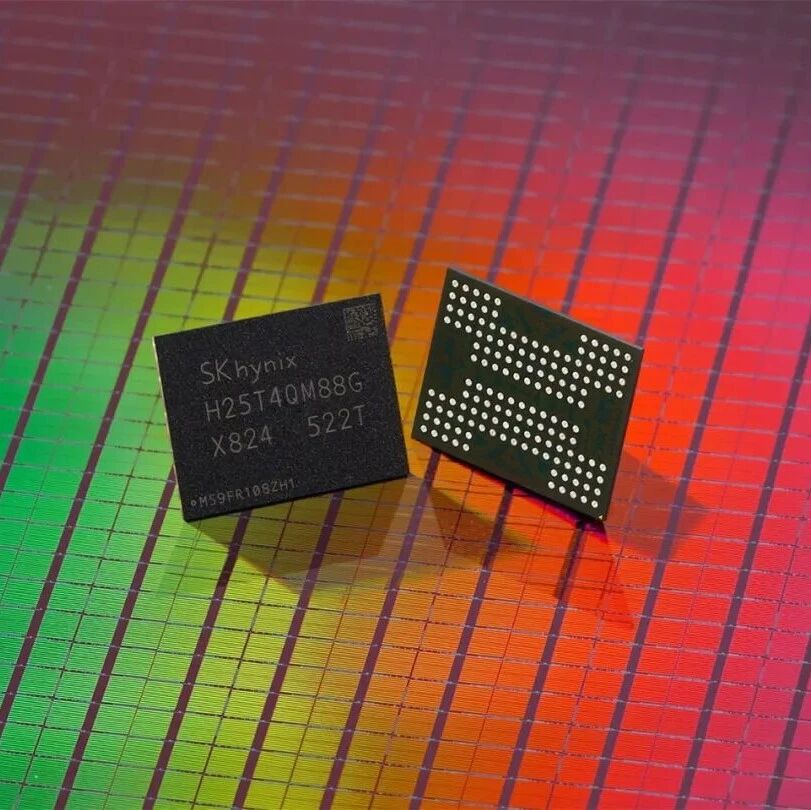
美国数据中心的“淘金时代”
美股IPO· 2025-10-21 07:05
Core Viewpoint - The AI wave is driving a capital frenzy in the U.S. data center industry, with significant investments and new players entering the market, but underlying challenges such as profit expectations versus reality, systemic risks from circular dependencies, and the inexperience of new entrants are emerging [1]. Investment Trends - At a recent data center industry conference, major players like OpenAI, xAI, and Meta pledged to invest hundreds of billions over the next decade, shifting the focus from site and power acquisition to building high-capacity data centers [3]. - BlackRock and MGX led a record $40 billion acquisition of Aligned Data Centers, highlighting the aggressive investment climate [3]. Innovative Financing Structures - The industry is developing creative financing methods to support massive investments, with leaseback transactions becoming popular, allowing companies like xAI and OpenAI to reduce costs while maintaining operational control [4]. - These transactions blur the lines between customers, suppliers, and financiers, facilitating continuous capital flow into data center construction [4]. Nvidia's Role - Nvidia is not only a chip supplier but also deeply involved in financing, providing funds to chip customers and data center projects, raising concerns about potential market distortions and dependency [5]. - OpenAI's recent commitment to using AMD chips indicates a move to break Nvidia's monopoly [5]. Industry Disruption - New entrants like Poolside and Fermi are challenging traditional industry norms by entering large-scale data center projects without prior experience, leading to skepticism from established developers [6]. - There is a growing belief that aggressive projects may fail due to delays and power shortages, indicating a potential industry shake-up [6]. Profitability Challenges - Despite optimistic forecasts from Oracle, actual financial data reveals a significant gap in profit margins for AI cloud services, with current leasing rates for Nvidia chips falling 15-20 percentage points short of targets [7]. - AI cloud providers face pressure to secure expensive chips ahead of project completion, complicating their financial planning [7]. Systemic Risks - The overlapping roles of suppliers, customers, and financiers are creating systemic risks, as evidenced by Microsoft's decision to let Oracle handle part of OpenAI's server needs, suggesting a cautious outlook on long-term demand [8]. - The industry is characterized by a divide where established players with technical expertise and financial resilience are better positioned to withstand market fluctuations compared to new entrants [8].


巴克莱:美国AI产业链财报季前瞻,这家投行称:小心“利好出尽”,抱紧“英伟达、博通和AMD”
美股IPO· 2025-10-21 03:37
Core Viewpoint - Barclays indicates that while the AI investment cycle is still in its early stages, some stocks have fully priced in the benefits of AI deployment, suggesting investors should be more selective with AI concept stocks [1][3]. Group 1: AI Investment Strategy - Barclays recommends concentrating AI exposure on leading companies such as Nvidia, Broadcom, and AMD, while downgrading Marvell, Astera Labs, and Lumentum to neutral ratings [3][5]. - The firm warns of a potential "buy the rumor, sell the news" scenario during the upcoming earnings season, as current valuations are high [3][5]. - The Philadelphia Semiconductor Index has significantly outperformed the S&P 500 by approximately 15% since Q3, with AI and memory sectors showing even greater gains [3][5]. Group 2: Stock Ratings Adjustments - Marvell's rating is downgraded to neutral due to challenges in its ASIC and optical market shares, with a target price maintained at $80 [6][15]. - Astera Labs is also downgraded to neutral, with a target price of $155, as the company faces a significant product transition and lacks a clear growth path post-Trainium 3 [11][12]. - Lumentum's rating is lowered to neutral, with a target price of $165, as its recent stock price surge has fully reflected its short-term growth potential [15][16]. Group 3: KLA's Upgraded Rating - KLA's rating is upgraded to overweight, with a target price raised from $750 to $1200, based on its strong position in the process control market and high exposure to advanced processes [18][20]. - The company is expected to benefit from increasing process control intensity due to rising technological complexity [18][19]. Group 4: HBM Demand and Micron's Outlook - Barclays provides a detailed HBM demand forecast, projecting a potential demand of approximately 50.7 exabytes based on AI computing projects, significantly boosting Micron's long-term growth outlook [21][22]. - The estimated HBM market size for 2025 is projected to be around $652.4 billion, with Micron's potential annual HBM revenue reaching $25.1 billion, far exceeding the expected $6.8 billion for 2025 [22][24]. Group 5: Semiconductor Market Concerns - Barclays expresses caution regarding the analog chip sector, suggesting a potential structural contraction in the total addressable market (TAM) rather than just cyclical fluctuations [25][28]. - The firm maintains a cautious outlook on Texas Instruments, anticipating downward risks for revenue and profit margins in the upcoming quarter [30].
达利欧复制了“AI达利欧”:谈论投资时“有本人80%的效果”
美股IPO· 2025-10-21 03:37
Core Insights - Ray Dalio has launched his AI clone "Digital Ray," which is designed to replicate his unique investment principles and decision-making logic, achieving 80% effectiveness in investment discussions and 95% in life principles [1][2][8] - The AI clone aims to serve as a "thought partner" for a broader audience, allowing for unlimited dialogue and the dissemination of Dalio's lifelong learnings [8][10] Group 1: AI Clone Development - The AI clone is a natural extension of Dalio's work over the past 40 years, beginning with the establishment of a computer decision-making system shortly after founding Bridgewater Associates [2][12] - Dalio emphasizes the distinction between his AI clone and general language models, stating that the clone replicates specific individual values, perspectives, and preferences, unlike generic AI products [5][14] - The AI clone has undergone extensive training, with Dalio documenting his principles and decision rules over decades, which were then programmed into the system [19][21] Group 2: Performance and Testing - Initial tests indicate that "Digital Ray" can engage in conversations with approximately 95% similarity to Dalio's views on life and work principles, and 80% on topics related to markets and investments [23] - The AI clone is expected to improve further with ongoing training, potentially surpassing Dalio in knowledge and decision-making speed [22][23] Group 3: Future Implications - Dalio's initiative may signal a transformation in how financial expertise is disseminated, moving from static formats like books to interactive, personalized AI interactions [8][10] - The development of personalized AI clones could lead to a future where individuals have tailored AI companions that reflect their values and preferences, enhancing decision-making processes [27]

AI生成视频已成“流量王牌”,Meta AI下载量也出现暴涨
美股IPO· 2025-10-21 03:37
Core Insights - Meta has experienced explosive user growth following the launch of its short video feature "Vibes," with daily active users increasing from 775,000 to 2.7 million in just four weeks, and daily downloads reaching 300,000 [1][2][5] User Growth and Market Impact - The launch of "Vibes" on September 25 is closely correlated with the surge in Meta AI's user numbers, providing strong data support for the argument that AI video drives traffic [2][5] - On October 17, Meta AI's daily active users grew by 15.58%, while competitors ChatGPT, Grok, and Perplexity saw declines of 3.51%, 7.35%, and 2.29% respectively [4] Features of Vibes - "Vibes" allows users to create, discover, and share AI-generated short video content, with personalized recommendations improving over time as users engage more [7] - Users can easily repurpose content and share it across platforms like Instagram and Facebook, enhancing the potential for viral spread [7] Competitive Landscape - Meta AI's growth may also be indirectly supported by competitor Sora's recent strategies, which have drawn attention to AI video generation technology [8][9] - Sora's "invite-only" strategy may have inadvertently created opportunities for Meta AI, as users unable to access Sora may seek alternatives like Meta AI [9]

日股再创新高,野村:日股的关键在于高市早苗能撑多久
美股IPO· 2025-10-21 03:37
Core Viewpoint - The Japanese stock market is experiencing a strong upward trend, driven by expectations of stable government and economic reforms under the leadership of new Prime Minister Kishi Sanae, rather than solely relying on inflationary policies [1][5][6]. Group 1: Market Performance - On October 21, the Japanese stock market opened strong, rising by 1% to reach 49,675.43 points, setting a new historical high [2]. - The Tokyo Stock Exchange index also followed suit, approaching its historical peak [2]. Group 2: Market Dynamics - The driving force behind the market's momentum is the strong expectation that Kishi Sanae's government will maintain an expansionary fiscal policy [5]. - The concept of "Kishi trading" is evolving from a focus on inflationary measures and weak yen to a greater emphasis on political stability and structural economic reforms [6]. Group 3: Political Support and Market Stability - Political support rates are critical for the sustainability of the stock market's upward trend. A recent poll indicated a support rate of 44% for Kishi Sanae's cabinet, significantly higher than previous administrations, while the Liberal Democratic Party (LDP) support stands at only 20% [7]. - Analysts suggest that a weak government may rely more on inflationary measures, which could undermine the foundation of "Kishi trading" [7]. Group 4: Cautious Investor Sentiment - Despite the market's enthusiasm, some investment managers express caution regarding the new coalition government's stability and its ability to implement expansive policies [8]. - Concerns have been raised about the political and economic limitations that may hinder Kishi's ability to pursue a large-scale expansion agenda [8].