美股IPO

Search documents
英国《金融时报》:诺基亚如何从iPhone受害者变成10亿美元的英伟达交易对象
美股IPO· 2026-01-02 16:04
Core Viewpoint - Nokia has undergone a significant transformation to embrace the artificial intelligence revolution, shifting its focus from mobile phones to providing hardware necessary for cloud services and data centers, supported by a $1 billion investment from Nvidia [1][3][15]. Group 1: Historical Context - Nokia was a dominant player in the mobile phone industry, with its iconic ringtone played 1.8 billion times daily by 2009, and held a 26.4% market share in 2000 [3][11]. - The company's market value peaked at approximately €286 billion during the internet bubble, contributing about 4% to Finland's GDP [11]. - Nokia sold 126 million units of its popular 3310 model, which featured the famous Snake game [11]. Group 2: Strategic Shifts - The rise of smartphones, particularly the iPhone in 2007, led to a dramatic decline in Nokia's sales, resulting in a loss of market share from nearly 40% in 2008 to a significant drop by 2014 [12][14]. - Nokia's decision to adopt Microsoft's Windows Phone in 2011 was a critical misstep, leading to poor sales of the Lumia brand and ultimately the sale of its devices and services division to Microsoft for €5.4 billion [12][13]. - Under CEO Rajeev Suri, Nokia shifted focus to network services, acquiring Alcatel-Lucent for €15.6 billion, which was a controversial but pivotal move for the company [13]. Group 3: Current Developments - Nokia is now focusing on emerging technologies such as cloud services and optical networks, with a recent acquisition of Infinera for $2.3 billion [15]. - The company aims to capitalize on the "AI supercycle," which is expected to drive significant spending in data centers, with its fiber technology facilitating information transfer [15]. - Following Nvidia's investment, Nokia's stock rose by 25%, although its current market value of approximately €32 billion is still far from its historical highs [15]. Group 4: Challenges Ahead - Analysts express concerns about Nokia's new strategy, highlighting the volatile nature of AI investments and the presence of competitors like Ciena and Cisco [16]. - There are significant worries among network operators regarding the future returns on AI investments, as they prefer not to rely heavily on a single supplier [16]. - Despite these challenges, Nokia's CEO remains optimistic about the company's ability to adapt and navigate the evolving landscape [16].


股价七连跌!特斯拉第四季度交付量418227辆,不及预期
美股IPO· 2026-01-02 16:04
Core Viewpoint - Tesla's vehicle deliveries and production have declined, with a significant drop in annual delivery numbers for the second consecutive year, while its energy business continues to grow [2][3]. Group 1: Delivery and Production Data - In Q4 2025, Tesla delivered 418,227 vehicles and produced 434,358 vehicles, with an annual delivery total of 1.64 million vehicles and an annual production of approximately 1.65 million vehicles [2]. - Compared to Q4 2024, Tesla's Q4 2025 delivery volume decreased by about 16% from 495,570 vehicles, and production fell by 5.5% from 459,445 vehicles [2]. - The annual delivery volume for 2025 dropped by 8.6% from 1.79 million vehicles in 2024 to 1.64 million vehicles [2]. Group 2: Market Competition and Challenges - Tesla faces intense competition from companies like BYD, Kia, Hyundai, and Volkswagen, which has contributed to the decline in deliveries [3]. - The early termination of federal electric vehicle purchase incentives by the U.S. government has also negatively impacted Tesla's sales, as consumers shifted their purchasing decisions to Q3 [3]. - CEO Elon Musk's political activities and statements have led to consumer backlash, further complicating Tesla's market position despite the launch of a more affordable Model Y SUV [3]. Group 3: Regional Market Performance - Tesla's market share in Europe has significantly declined, with new car registrations dropping by 39% in the first 11 months of 2025, while BYD's registrations surged by 240% [4]. - The overall acceptance of pure electric vehicles in the European market has increased, with electric vehicles accounting for approximately 16% of new car sales in 2025 [4]. - Analysts suggest that the introduction of the more affordable Model Y standard version could help Tesla regain some market share in the coming quarters [4]. Group 4: Long-term Vision - Tesla's narrative extends beyond vehicle sales, focusing on Musk's vision of "sustainable prosperity," which includes promises of autonomous taxi services and humanoid robots that could perform various roles [5]. - These projects are seen as potential long-term value drivers for Tesla, supporting its future valuation [5].

三星电子大涨7%!CEO放豪言:“三星回来了”,HBM4赢回客户信任
美股IPO· 2026-01-02 16:04
受公司高层关于HBM4(第四代高带宽内存)业务重获客户认可的积极表态提振,三星电子股价周五大涨7.2%, 创下收盘历史新高,推动韩国首尔综合指数收涨2.3%,历史上首次突破4300点大关。 这一表态极大地提振了投资者信心,市场预期三星正逐步缩小此前在关键的高带宽内存市场与SK海力士(SK Hynix)的差距,并有望在2026年凭借下一代HBM产品重新进入英伟达(Nvidia)的核心供应链。 此次股价大涨也得益于亚洲科技股的整体共振及行业基本面的强力支撑。 周五,受壁仞科技上市表现及DeepSeek相关进展引发的AI投资热潮影响,恒生科技指数一度飙升4.3%。 宏观数据方面,韩国12月半导体出口同比激增43%,也印证了三星、SK海力士在全球AI硬件繁荣中的重要性。 来源:华尔街见闻 受公司高层关于HBM4(第四代高带宽内存)业务重获客户认可的积极表态提振,三星电子股价周五大涨7.2%, 创下收盘历史新高,推动韩国首尔综合指数收涨2.3%,历史上首次突破4300点大关。 一向低调的三星电子联席CEO全永铉(Jun Young Hyun)在向员工发表的新年致辞中透露,公司的HBM4产品 已展示出"差异化的竞争力", ...
高盛对冲基金负责人:2025美股“非常好”,2026市场将更加“狂野”
美股IPO· 2026-01-02 16:04
Core Insights - The year 2025 is characterized by high returns and high volatility in the U.S. stock market, with the S&P 500 achieving an 18% total return, the Nasdaq 100 soaring 21%, and the Dow Jones rising 15% [7][12] - Despite the impressive index performances, the market experienced significant volatility, with a realized volatility of 19% and a maximum drawdown of 19% for the S&P 500, indicating a challenging environment for investors [9][12] - The market is expected to become even more "wild" in 2026, with high valuations and technological changes posing challenges to traditional investment strategies [31] Market Performance - The S&P 500 recorded an 18% total return, while the Nasdaq 100 and Dow Jones saw increases of 21% and 15%, respectively, marking a strong year for U.S. equities [7] - The volatility in 2025 was notable, with the S&P 500 experiencing a maximum drawdown of 19%, nearly double the historical median of 10% [9] - The actual volatility for the year reached 19%, placing it in the 83rd percentile historically, indicating a turbulent market environment [12] Sector Analysis - Technology stocks remained dominant in 2025, but internal disparities increased, with about one-third of Nasdaq components ending the year lower [13][17] - The "Magnificent 7" tech stocks showed diminishing marginal returns, with total market cap growth slowing from $5.1 trillion in 2023 to $4 trillion in 2025 [14] - Nvidia exemplified the market's volatility, gaining $1 trillion in market cap but subsequently losing the same amount within seven weeks [15][16] Earnings and Market Drivers - The primary driver of the 2025 bull market was earnings growth, contributing 14 percentage points to the S&P 500's total return, while valuation expansion added only 3 percentage points [19] - The options market played a significant role in influencing short-term market movements, with nearly 90% of SPX options trading volume concentrated in one-month expirations [21] Asset Performance - Gold emerged as a major winner in 2025, surging 65%, while silver and other industrial metals also performed well [24] - In contrast, Bitcoin faced a disappointing year, ending down 6% and experiencing significant profit-taking, highlighting its lack of intrinsic value compared to gold [25][26] Global Market Opportunities - European equities delivered a surprising 21% return despite weak GDP growth, with bank stocks rising 80% [28] - Asian markets, particularly South Korea and Japan, showed strong performance, driven by sectors linked to AI and advanced manufacturing [29] 2026 Outlook - The market is anticipated to face higher stakes in 2026, with elevated price-to-earnings ratios and expanding sovereign debt, suggesting a more volatile environment ahead [31] - Tactical flexibility will be crucial for investors as traditional "buy and hold" strategies may struggle in the face of high valuations and rapid technological changes [31]

彭博:2025是美国经济优势消失的一年
美股IPO· 2026-01-02 16:04
The Year America's Economic Edge Evaporated 作者:罗伯特·伯吉斯 罗伯特·伯吉斯是彭博观点版块的执行主编。此前,他曾担任彭博新闻社负责金融市场的全球执 行主编。 又到了投资者查看账户,决定节日庆祝方式的时候了:是香槟鱼子酱配香槟,还是啤酒薯片配啤 酒?MSCI美国指数16.3%的涨幅似乎表明前者更有可能,然而,后者或许更合适。 没错,股市涨幅已连续第三年轻松超过长期平均水平。但这一结果很难印证唐纳德·特朗普总统 反复宣称的美国是全球"最火热"的国家。与世界其他地区相比,美国股市表现平平:MSCI美国 指数的涨幅远不及MSCI全球所有国家指数(不包括美国)29.2%的涨幅。 摄影师:Chip Somodevilla/Getty Images North America 这种情况不可能持续下去。事实上,个人储蓄率已降至4%,为2022年以来的最低水平,而 2022年正是通货膨胀肆虐之时。 为了理解此次表现究竟有多糟糕,不妨想想,自2009年全球经济开始从金融危机中复苏以来, 从未发生过如此规模的事件。股市并非个例,美国债券和美元也同样表现不佳。 投资者为何如此迅速地抛售 ...

SemiAnalysis深度报告:美国电网跟不上,AI数据中心“自建电厂”跟时间赛跑
美股IPO· 2026-01-01 16:08
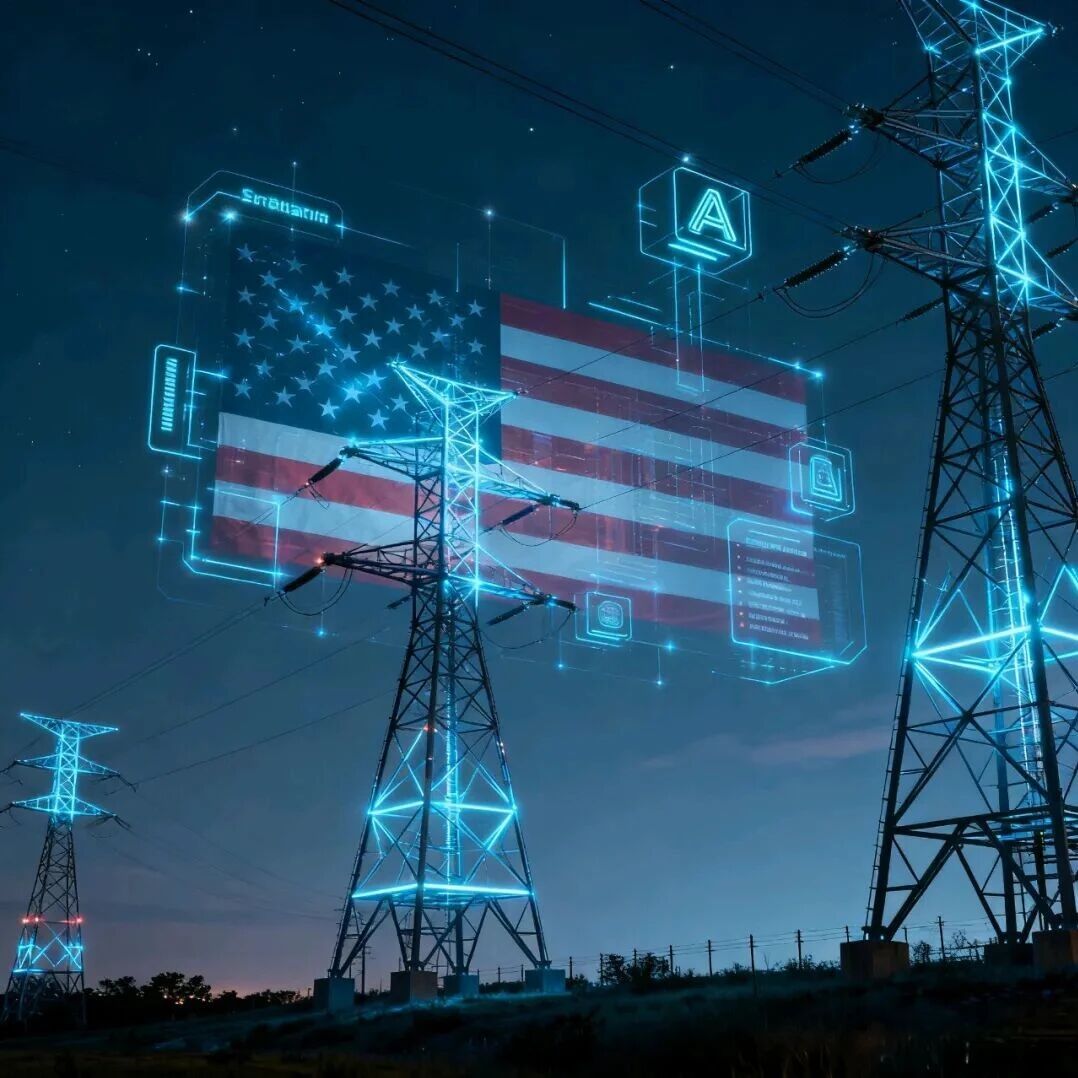
Core Insights - The article discusses the urgent need for AI companies to bypass the aging public power grid by building their own gas power plants to meet the exponential demand for computing power, which has become a critical constraint for timely deployment [1][3][4]. Group 1: Power Crisis and AI Demand - The real bottleneck for AI data centers is not the lack of electricity but the slow delivery of power that cannot keep pace with the rapid expansion of computing needs [4][8]. - AI data centers are now being constructed in 12-24 months, while the typical cycle for power grid expansion and approval is still 3-5 years, making waiting for the grid a significant risk [5][6]. Group 2: Economic Implications of Power Supply - The time value of computing power is reshaping decision-making, with a 1GW AI data center potentially generating annual revenues of up to $10 billion, making it economically viable to incur higher electricity costs for faster deployment [9][10]. - Power is no longer just an operational cost but a prerequisite for the existence of AI projects, emphasizing the need for immediate power solutions [10][22]. Group 3: Onsite Power Generation Solutions - The BYOG (Bring Your Own Generation) model has emerged as a practical solution, allowing data centers to quickly start operations without waiting for grid connections [11][48]. - Major AI companies, including xAI, OpenAI, and Oracle, are leading the trend of onsite power generation, with significant projects underway, such as a 2.3GW gas power plant in Texas [16][29]. Group 4: Gas as the Preferred Energy Source - Natural gas has become the dominant choice for onsite power generation due to its scalability, stability, and rapid deployment capabilities, unlike nuclear or renewable sources [20][21]. - The competition in AI is increasingly defined by speed rather than cost, with companies prioritizing quick power access over traditional cost considerations [22]. Group 5: Market Dynamics and New Entrants - The onsite gas power generation market is experiencing unprecedented growth, with over a dozen suppliers securing contracts for AI data centers, indicating a shift in how power is viewed within AI infrastructure [17][30]. - New entrants, such as Doosan Energy and Wärtsilä, are capitalizing on this trend, with significant orders for gas turbines to support AI data centers [30][31]. Group 6: Challenges and Considerations - While onsite power generation offers speed, it also presents challenges, including higher long-term costs compared to grid power and complex permitting processes [34][36]. - The deployment of onsite power systems requires careful planning to ensure redundancy and reliability, as the complexity of managing power independently from the grid increases [94][100].




股神谢幕!伯克希尔生涯最后一年,巴菲特坚决“卖股票,囤现金”
美股IPO· 2026-01-01 16:08
Core Viewpoint - Warren Buffett officially stepped down as CEO of Berkshire Hathaway, marking a significant transition in the company's leadership as he hands over to Greg Abel. This year, Berkshire has sold $10 billion worth of stocks, becoming a net seller for the third consecutive year, while cash reserves have surged to a historic high of $358 billion. Since Buffett took over, an initial investment of $100 has grown to approximately $5.5 million, compared to about $39,000 from the S&P 500 index during the same period, with Buffett's portfolio outperforming the market benchmark approximately 67% of the time [1][3]. Group 1 - In his final year as CEO, Buffett adhered to his investment principles, maintaining patience in a high market and significantly increasing cash reserves. He sold stocks to push cash reserves to a record high, demonstrating a classic strategy of "selling stocks and hoarding cash" during market peaks [3][6]. - Buffett's decision to reduce his stake in Apple, selling approximately 41.79 million shares in the third quarter, reflects a disciplined approach even as Apple's stock price rose by 9% this year. The total reduction over two quarters exceeded 60 million shares, indicating a strategic exit from a previously significant holding [6][7]. - Berkshire Hathaway completed its last major acquisition under Buffett's leadership, purchasing OxyChem for $10 billion, which provided Western Oil with much-needed cash while potentially offering Berkshire an attractive price [9]. Group 2 - The transition of leadership has led to notable personnel changes, including the departure of key executives such as Todd Combs and Marc Hamburg. Buffett expressed confidence in his successor Greg Abel, highlighting Abel's superior understanding of the company's potential and risks compared to many seasoned executives in the field [5][10]. - Following Buffett's announcement of his retirement, Berkshire's stock has seen a decline of over 6%, with concerns that the absence of Buffett's influence may lead to a loss of talent and a shift towards a more ordinary corporate structure [10].

《经济学人》封面文章:“斩杀线”的真相
美股IPO· 2026-01-01 16:08
Core Argument - The article discusses the concept of "affordability" and its implications in wealthy countries, highlighting the disconnect between public perception and economic reality regarding price increases and wage growth [4][5]. Group 1: Affordability Crisis - The term "affordability crisis" has gained traction, particularly among politicians, as a response to rising prices, but it may lead to misguided policies that do not address the real issues [5][7]. - Despite rising prices for goods like milk, wages across income levels have generally outpaced inflation, suggesting that an affordability crisis may not exist in the way it is perceived [5][6]. - The shift in consumer spending from goods to services has created a different set of affordability challenges, particularly in sectors like healthcare and housing, where supply constraints are more significant than price increases [6][7]. Group 2: Economic Misdiagnosis - The article argues that the narrative of an affordability crisis conflates real economic issues with perceived anxieties, leading to potential harmful policy responses [5][8]. - The disparity in asset price growth compared to wage increases creates a competitive environment for high-value items, which can exacerbate feelings of affordability issues among consumers [6][7]. - Policymakers face challenges in addressing these issues due to entrenched interests and regulatory barriers that complicate efforts to lower prices in sectors like housing and services [7][8]. Group 3: Political Implications - The political landscape is influenced by the affordability narrative, with politicians likely to propose populist solutions that may not effectively address the underlying economic realities [5][8]. - Historical lessons from past economic policies, such as price controls, suggest that current approaches may lead to further complications rather than solutions [7][8]. - The persistence of certain economic narratives can lead to self-reinforcing cycles that may not reflect actual economic conditions, complicating the policy response [8].

英国金融时报:美元或将创下近十年来最大年度跌幅
美股IPO· 2026-01-01 16:08
Core Viewpoint - Analysts predict that the Federal Reserve's interest rate cuts will lead to a depreciation of the US dollar by 2026 [1] Group 1: Dollar Performance and Predictions - The US dollar is facing its largest annual decline since 2017, with a 9.5% drop against a basket of major currencies this year [3][4] - The euro has gained nearly 14% against the weak dollar, reaching over 1.17 USD, the highest level since 2021 [3] - Analysts expect the Federal Reserve to cut rates two to three times by the end of 2026, each by 25 basis points, while other central banks, including the European Central Bank, may maintain or raise borrowing costs [4] Group 2: Impact of Federal Reserve Policies - The dollar's initial weakness was triggered by aggressive tariffs imposed by Trump in April, leading to a 15% drop against major currencies [4] - The Fed's return to rate cuts in September has continued to pressure the dollar, with expectations of further cuts influencing market sentiment [4][5] - The dollar's decline is seen as beneficial for US exporters but detrimental for many European companies with sales in the US [4] Group 3: Future Leadership and Market Sentiment - The potential successor to Fed Chair Jerome Powell could influence the dollar's trajectory, especially if they are perceived to be more accommodating to the White House's demands for aggressive rate cuts [5] - Concerns about the erosion of the dollar's dominance due to political influences are noted, indicating a long-term worry among market participants [5] Group 4: Market Reactions and Investor Behavior - The dollar has rebounded 2.5% from its September low, partly due to the absence of recession predictions stemming from the trade war [6] - Investors are hedging against dollar exposure when purchasing US stocks, reflecting a structural reassessment by global investors, particularly from Europe [6][7]
华盛顿邮报:ChatGPT被高估了,以下是一些替代选择
美股IPO· 2026-01-01 16:08
Core Viewpoint - The article argues that there is no single best AI chatbot, and users should select different tools for different tasks based on their performance in practical applications [4][5]. Group 1: AI Chatbot Performance - ChatGPT, despite its popularity, has never ranked above second in various tests against other chatbots [6]. - Anthropic's Claude chatbot outperformed ChatGPT in writing tasks, demonstrating better emotional expression and consideration [7]. - Google's AI mode is preferred for research and quick answers due to its ability to conduct multiple searches and provide timely information [7]. Group 2: Limitations of AI Tools - Many chatbots struggle with basic knowledge questions, indicating their reliance on text and limitations in image recognition [10][11]. - AI tools often provide seemingly immediate answers but lack the ability to express uncertainty, leading to incorrect responses [11]. - The performance of AI chatbots in practical scenarios often falls short of human standards, with most scoring between 50% and 65% in tests [10]. Group 3: Recommendations for Effective Use - Users are encouraged to provide detailed information when querying chatbots to improve the quality of responses [12]. - Custom instructions can be added to chatbots to request clarification when prompts are vague, enhancing interaction quality [12]. - Continuous evaluation and testing of AI tools are necessary to adapt to their evolving capabilities and limitations [13].