GEELY AUTO(00175)

Search documents
吉利汽车(00175) - 翌日披露报表
2025-12-02 03:57
FF305 翌日披露報表 (股份發行人 ── 已發行股份或庫存股份變動、股份購回及/或在場内出售庫存股份) 表格類別: 股票 狀態: 新提交 公司名稱: 吉利汽車控股有限公司 呈交日期: 2025年12月2日 如上市發行人的已發行股份或庫存股份出現變動而須根據《香港聯合交易所有限公司(「香港聯交所」)證券上市規則》(「《主板上市規則》」)第13.25A條 / 《香港聯合交易所有限公司GEM證券 上市規則》(「《GEM上市規則》」)第17.27A條作出披露,必須填妥第一章節 。 FF305 確認 根據《主板上市規則》第13.25C條 / 《GEM上市規則》第17.27C條,我們在此確認,據我們所知所信,第一章節所述的每項股份發行或庫存股份出售或轉讓已獲發行人董事會正式授權批准,並遵 照所有適用上市規則、法律及其他監管規定進行,並在適用的情況下: (註7) | 第一章節 | | | | | | | | | | | --- | --- | --- | --- | --- | --- | --- | --- | --- | --- | | 1. 股份分類 | 普通股 | | 股份類別 不適用 | | | 於香港聯交所 ...
领克林杰:吉利会学华为,但不会照搬
2 1 Shi Ji Jing Ji Bao Dao· 2025-12-02 03:21
Core Insights - The article discusses how Geely is adopting a new product development process inspired by Huawei, while emphasizing the need for customization to fit its own organizational structure [1][2][3] Group 1: Geely's Strategic Shift - Geely is merging with Zeekr, aiming for a more unified management approach and standardized processes across its brands [1][2] - The company is implementing a new product development (NPD) process that incorporates market feedback to ensure commercial success, addressing past issues of disconnect between R&D and market needs [2][3] - Geely's new NPMS process is designed to ensure that products are not only well-engineered but also meet market demands, which was a challenge in the past [2][3] Group 2: Financial Performance - In Q3, Geely reported a core net profit of 3.96 billion yuan, a 19% increase year-on-year, and a cumulative profit of 10.62 billion yuan for the first three quarters, up 59% [5] - The total gross profit for Q3 reached 14.8 billion yuan, with a gross margin of 16.5% for the first three quarters [5] - The Galaxy brand has shown significant growth, contributing to Geely's overall performance despite lower profit margins per vehicle [5] Group 3: Market Outlook - The automotive market is expected to face increased competition and the withdrawal of subsidy policies starting next year, but Geely believes it is well-positioned due to its comprehensive product lineup [6] - The company anticipates that market competition will favor leading brands, allowing Geely to strengthen its market position [6] - Long-term success will depend on brand strength and product quality, despite potential short-term fluctuations due to cyclical factors [6]
吉利取得车用电池加解锁装置专利
Sou Hu Cai Jing· 2025-12-02 02:55
Group 1 - Zhejiang Geely Holding Group Co., Ltd. and Zhejiang Geely New Energy Technology Co., Ltd. have obtained a patent for a "vehicle battery unlocking device," with the authorization announcement number CN119734577B and an application date of December 2024 [1] - Zhejiang Geely Holding Group Co., Ltd. was established in 2003, located in Hangzhou, primarily engaged in the automotive manufacturing industry, with a registered capital of 1.03 billion RMB [1] - The company has invested in 37 enterprises, participated in 523 bidding projects, and holds 5,000 trademark and patent information records, along with 274 administrative licenses [1] Group 2 - Zhejiang Geely New Energy Technology Co., Ltd. was founded in 2018, also located in Hangzhou, focusing on technology promotion and application services, with a registered capital of 100 million RMB [1] - The company has participated in 10 bidding projects and holds 481 patent information records, in addition to 4 administrative licenses [1]
11月新能源车销量跟踪:“翘尾”行情遇冷,全年格局基本落定
Haitong Securities International· 2025-12-02 01:40
Investment Rating - The report does not explicitly provide an investment rating for the automotive industry or specific companies within it [26]. Core Insights - The year-end sales data for major automakers indicates a significant divergence in performance, with the typical "year-end tailwind" being weaker than in previous years. The phase-out of the "two-new" subsidy policies is contributing to a trend of slowing or declining sales growth [8][9]. - BYD's November sales were 480,000 units, down 5% year-on-year but up 9% month-on-month, primarily due to weaker domestic demand. Domestic sales were 348,000 units, down 27% year-on-year. Cumulative sales from January to November reached 4.18 million units, an 11% increase year-on-year [9][10]. - Geely's November sales reached 310,000 units, a 24% year-on-year increase, with cumulative sales of 2.79 million units, up 42% year-on-year, putting its annual target of 3 million units within reach. NEV sales for Geely in November were 188,000 units, a 53% year-on-year increase [9][10]. - Leapmotor exceeded 70,000 units in November, marking a 75% year-on-year increase, with cumulative deliveries reaching 536,000 units, surpassing its annual target ahead of schedule [10][11]. - Xiaomi Auto delivered over 40,000 units in November, maintaining this level for three consecutive months, and raised its full-year delivery outlook to over 400,000 units [12]. - Li Auto's November deliveries were 33,000 units, down 32% year-on-year, with cumulative deliveries of 362,000 units, an 18% decrease year-on-year [13]. - NIO's November sales were 36,000 units, a 76% year-on-year increase, but cumulative deliveries totaled 278,000 units, indicating challenges in achieving profitability in Q4 [14][15]. Summary by Sections Sales Performance - BYD's November sales were 480,000 units, with domestic sales at 348,000 units, reflecting a significant year-on-year decline [9][10]. - Geely's sales performance showed strong growth, particularly in NEVs, with a notable increase in overseas exports [9][10]. - Leapmotor and Xiaomi Auto demonstrated robust sales growth, exceeding their targets [10][12]. Market Dynamics - The automotive market is experiencing a reshuffling of sales rankings, with leading new energy vehicle (NEV) players facing slowing growth [10][11]. - The competitive landscape is intensifying, with companies needing to balance volume and profitability as subsidies phase out [15].




前十月陕西新能源汽车产量占全国产量7.21%
Shan Xi Ri Bao· 2025-12-01 22:51
Group 1 - The core viewpoint of the news is that Shaanxi Province's automotive industry has shown significant growth in production and value, particularly in the electric vehicle sector [1][2][3] Group 2 - From January to October, Shaanxi Province produced 1.451 million vehicles, a year-on-year increase of 6.13%, with a total output value growth of 17.18% [1] - New energy vehicle production reached 938,800 units, representing a 1.61% increase and accounting for 64.7% of the province's total vehicle production [1] - The passenger vehicle industry chain achieved a value of 332.766 billion yuan, up 9.81%, with passenger vehicle production at 1.2951 million units, a 5.05% increase [1] - The commercial vehicle sector generated a value of 186.882 billion yuan, growing by 6.16%, with a production of 156,000 units, a 16.05% increase [1] Group 3 - Key enterprises in Shaanxi's automotive industry are performing well, with Shaanxi Heavy Automobile Co., Ltd. reporting a production and sales volume of 133,200 and 142,400 units respectively, marking increases of 15.4% and 20.6% [2] - New energy vehicle sales for Shaanxi Heavy Automobile Co., Ltd. reached 15,400 units, a staggering growth of 168.2% [2] - Xi'an BYD's sales reached 867,100 units, a 5.11% increase, while Xi'an Geely sold 257,100 units, up 5.74% [2] Group 4 - Shaanxi's relevant departments are actively promoting the acceleration of automotive projects to ensure timely completion and production [3] - The provincial industrial department is enhancing the automotive project library and focusing on the transition of industry projects [3] - There is a focus on supporting small automotive enterprises to scale up, with a monthly review of potential candidates for elevation to larger scales [3]
中国对外投资大国地位日益稳固
Ren Min Ri Bao· 2025-12-01 19:11
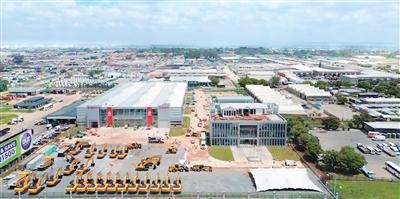
Core Insights - China's foreign direct investment (FDI) reached 1,033.23 billion RMB from January to October this year, marking a 7% year-on-year increase [5] - Chinese investors have made non-financial direct investments in 9,553 overseas enterprises across 152 countries and regions, totaling 872.6 billion RMB, which is a 6% growth [5] - The trend of Chinese enterprises is shifting from merely "going out" to "going in," indicating a focus on both product export and service export alongside foreign investment [6] Investment Trends - As of the end of 2024, Chinese investors have established 52,000 overseas enterprises in 190 countries, with 19,000 in Belt and Road Initiative countries [7] - Nearly 80% of China's FDI flows to Asia, with significant growth in investments in South America, Europe, and Oceania [7] - Investment in wholesale and retail, leasing and business services, manufacturing, finance, and mining has exceeded 10 billion USD each, with construction and IT services seeing growth rates of 80.5% and 205.5% respectively [7] Corporate Strategies - Companies like SANY Group are establishing manufacturing hubs abroad, such as a 28,000 square meter industrial park in South Africa, which is expected to produce 1,000 excavators annually [6] - Haier's new air conditioning production base in Thailand has achieved a production capacity of 6 million units per year, incorporating advanced technologies for efficiency and sustainability [9][10] - SF Express is enhancing logistics for Chinese automotive brands in the Philippines, establishing a smart delivery network to meet the unique geographical challenges of the region [11] Local Engagement and Sustainability - Chinese enterprises are increasingly focusing on local development and environmental sustainability, as demonstrated by the successful implementation of the Hafei Natural Gas Processing Plant project, which significantly reduces emissions and creates local jobs [12] - China Nonferrous Metal Mining Group operates multiple overseas mining and smelting facilities, emphasizing safety, efficiency, and environmental protection in their operations [13] Future Directions - Experts suggest that to enhance the effectiveness of overseas investments, there should be improvements in management systems and encouragement of diversified investment models [13] - The emphasis is on increasing the quality and safety of investments while ensuring sustainable development and local community engagement [13]




比亚迪破48万、鸿蒙智行破8万、零跑再破7万、小米持续破4万!11月新能源销量公布,多家车企再创新高!
电动车公社· 2025-12-01 16:04
Group 1 - The core viewpoint of the article highlights the strong performance of various electric vehicle manufacturers in November, showcasing significant sales growth and market competition as the year comes to a close [1][7][8]. Group 2 - BYD sold 474,921 passenger vehicles in November, with a total of over 4.18 million units sold in the first 11 months of the year, maintaining a leading position in the new energy sector [2][7]. - Geely's November sales reached 310,428 units, with 187,798 units being new energy vehicles, marking a continuous growth trend for nine months [8][13]. - SAIC-GM-Wuling achieved 161,726 total sales in November, with 118,726 units being new energy vehicles, driven by the popularity of the Hongguang MINI EV family [14][16]. - Chery sold 255,809 vehicles in November, with 110,017 being new energy vehicles, indicating a strong commitment to the new energy market [18][20]. - Hongmeng Zhixing delivered 81,864 units in November, benefiting from strong demand for its models and technological advancements [21][23]. - Leap Motor delivered 70,327 units in November, with a focus on self-research and a diverse product line [25]. - Great Wall Motors sold 133,216 vehicles in November, with 40,113 being new energy vehicles, showing significant growth in the new energy segment [26][29]. - Xiaomi's sales exceeded 40,000 units in November, with expectations for further growth as production capacity improves [30][32]. - XPeng Motors delivered 36,728 units in November, with a year-to-date growth of 156% [34]. - NIO delivered 36,275 units in November, with notable performance from its various brands [38]. - Li Auto delivered 33,181 units in November, facing competitive pressures but maintaining a positive outlook [40]. - Deep Blue Automotive achieved 33,060 global deliveries in November, with strong performance from its S05 model [42]. - BAIC New Energy sold 32,328 units in November, with a focus on increasing its annual sales [43][46]. - Lantu Automotive delivered 20,005 units in November, marking a significant milestone for the brand [47][48]. - Bestune sold 19,520 vehicles in November, with a strong focus on appealing to younger consumers [49][51]. - Avita achieved a record high of 14,057 units in November, reflecting significant progress and future market potential [52]. - Zhiji Automotive delivered 13,577 units in November, expanding its product offerings while maintaining a focus on electric vehicles [55]. - Jishi Automotive saw a steady increase in sales, particularly in international markets, indicating a successful product strategy [57].

车企11月“翘尾”行情降温,比亚迪月度销量仍未超50万辆
Zhong Guo Ji Jin Bao· 2025-12-01 15:20
Core Insights - The automotive industry in China is experiencing a mixed performance in November, with some leading companies showing a slowdown in sales growth or declines, while others achieve record sales [2][3][21] - BYD's November sales reached 480,186 units, a year-on-year decrease of 5.25%, with domestic sales down 26.81% [2][5][11] - New energy vehicle companies like Leap Motor and others have successfully met their annual delivery targets ahead of schedule [15][17] Group 1: Sales Performance - BYD's November sales were 480,186 units, failing to surpass the 500,000 mark [5][11] - SAIC and Geely saw significant year-on-year growth in November, with sales increasing by 19.75% and 53.36%, respectively [11][12] - Leap Motor's sales reached 70,327 units, marking a 75.08% increase year-on-year [4][15] Group 2: Market Trends - The expected year-end sales surge, known as the "tailwind effect," is cooling down, with many companies reporting lower growth rates compared to the previous year [21][22] - NIO's delivery guidance for Q4 remains unchanged, expecting deliveries between 120,000 and 125,000 units [21][22] - The suspension of vehicle trade-in subsidies in several regions is impacting short-term sales expectations [21][22] Group 3: Competitive Landscape - Geely's new energy vehicle penetration rate reached a record high of 60.50% in November, driven by the success of its Galaxy brand [12][14] - New energy vehicle companies like Lantu and Avita are also seeing significant sales growth, with Lantu's sales up 84.28% year-on-year [19][20] - Xiaomi and Xpeng have also set ambitious new sales targets for 2025, reflecting confidence in their market positions [17][15]


11月压力大!车企销量看环比就露馅
Jing Ji Guan Cha Bao· 2025-12-01 15:03
Group 1 - The Chinese automotive market remains strong in November, but the impact of subsidy reductions is spreading beyond price-sensitive consumers, leading to a general delay in purchasing decisions [2] - NIO's CEO Li Bin noted a significant drop in new orders across the industry in November, with consumers adopting a wait-and-see approach [2] - BYD's sales in November reached 480,000 units, a year-on-year decline of 5.25%, indicating a shift from rapid growth to a need for structural adjustment [2] Group 2 - Geely's sales in November were 310,000 units, a year-on-year increase of 24%, supported by multiple product lines [3] - SAIC's overall sales reached 316,000 units, with a growth rate of 9.5%, indicating a stable performance across its brands [3] - Great Wall and Chery maintained steady sales, with Great Wall selling 133,200 units (up 4.57%) and Chery selling 255,800 units (down 2%) [3] Group 3 - The new energy vehicle segment is gaining traction among state-owned enterprises, with Dongfeng's Lantu surpassing 20,000 units in November [4][5] - Traditional brands like FAW showed stable performance, with total sales of 306,000 units in November, including a significant increase in new energy vehicle sales [5] Group 4 - Huawei's automotive strategy is evolving, with its smart vehicle delivery reaching 81,864 units in November, reflecting its growing influence in the industry [6] - The competition is shifting from vehicle-to-vehicle to ecosystem-to-ecosystem, highlighting the importance of integrated capabilities [6] Group 5 - New entrants like Leap Motor delivered 70,327 units in November, marking a year-on-year growth of over 75%, positioning themselves as significant competitors [6] - Xiaomi maintained stable delivery levels above 40,000 units, while XPeng and NIO also reported strong growth in November [7] Group 6 - The automotive market is entering a phase that tests companies' capabilities, with consumers becoming more discerning and extending their decision-making processes [8] - The focus of competition is shifting from subsidies to long-term brand value, supply chain stability, and technological advancement [9]


11月车企产销“揭榜”? 吉利汽车增速领先
Zheng Quan Shi Bao Wang· 2025-12-01 15:00
Core Insights - In November, the automotive market showed a clear differentiation among leading manufacturers, with Geely Automotive leading in sales growth, while overseas markets emerged as a crucial growth driver for new energy vehicles [1][2] Group 1: Sales Performance - BYD maintained the top position with a monthly sales volume of 480,000 units, despite a slight year-on-year decline, accumulating 4.182 million units for the year, reflecting an 11.3% growth [1] - Geely Automotive achieved a monthly sales volume of 310,000 units, marking a 24% year-on-year increase and a cumulative growth of 42% for the year, leading among mainstream manufacturers [1] - SAIC Group's total sales decreased by nearly 4% in November, but its sub-brand Maxus saw an impressive 81.28% year-on-year increase, while Zhiji Automotive's sales grew by 34.34% [1] Group 2: Brand Performance - Geely's Galaxy brand experienced a remarkable 76% year-on-year increase in monthly sales, contributing significantly to the overall growth [1] - Great Wall Motors reported approximately 130,000 units sold in November, with its WEY brand achieving around 80% year-on-year growth and a cumulative increase of 93.94% [2] - Geely's high-end brand Zeekr also saw a 7% year-on-year increase in monthly sales, nearing a cumulative total of 200,000 units [2] Group 3: International Expansion - Many automotive companies are expanding their overseas operations, which have become important growth points; for instance, SAIC Group's exports and overseas sales increased by 13.87% year-on-year, while Geely's exports rose by 22% [2] Group 4: Strategic Developments - SAIC Group announced the establishment of a partnership to enhance its smart electric vehicle ecosystem, with an initial fund size of 1.09 billion yuan, where SAIC's subsidiary will contribute 270 million yuan [2] - The partnership involves several investment firms focusing on hard technology and health consumption sectors, emphasizing innovation and product upgrades [2]