
GEELY AUTO(00175)

Search documents
国内车企11月销量,“冰火两重天”
DT新材料· 2025-12-02 16:05
Core Viewpoint - The domestic automotive industry is experiencing a "two extremes" situation in November, with some leading companies showing a decline in sales while others report significant growth [2]. Group 1: Sales Performance - BYD's November sales reached 480,186 units, a year-on-year decrease of 5.25%, with domestic sales down by 26.81% [3][4]. - SAIC Group and Geely's new energy vehicle sales in November were 209,401 units and 187,798 units, respectively, showing year-on-year growth of 19.75% and 53.36% [3][4]. - Geely's high-end new energy vehicle brand, Galaxy, achieved sales of 132,700 units, a remarkable year-on-year increase of 76% [3]. - New car manufacturers like Leap Motor, Xiaomi Auto, and Xpeng Auto have completed their annual delivery targets ahead of schedule, with Xpeng achieving a 100% year-on-year growth, totaling 380,200 units [3]. - Lantu and Avita, state-owned new energy vehicle companies, reported record monthly sales of 20,005 units and 14,057 units, reflecting year-on-year growth of 84.28% and 25.29% respectively [3][4]. Group 2: Market Trends - The overall sales performance in November 2025 is weaker compared to November 2024, indicating potential short-term disruptions due to various factors [3]. - The implementation of the new energy vehicle purchase tax subsidy reduction starting January 1, 2026, is prompting companies to accelerate sales efforts by the end of 2025 [3].






11月份销量保持高水平 主流车企开启年度目标冲刺
Zheng Quan Ri Bao Zhi Sheng· 2025-12-02 16:05
Core Insights - The automotive market in November showed strong resilience and vitality, driven by traditional peak season sales, intensified promotions, and sustained demand for new energy vehicles [1] Group 1: Sales Performance - BYD topped the sales chart in November with 480,200 units sold, setting a new record for the year, with overseas sales exceeding 130,000 units [1] - SAIC Motor achieved sales of 460,800 units in November, with over 310,000 units from its own brands and 209,000 units from new energy vehicles, marking a new monthly record [1] - Geely Group's sales reached 310,400 units in November, a year-on-year increase of approximately 24%, with a new energy penetration rate exceeding 64% [2] - Chery Group sold 272,500 vehicles in November, with new energy vehicle sales reaching 116,800 units, a year-on-year increase of 50.1% [2] - China FAW sold 306,000 vehicles in November, with continued growth in its own new energy vehicles [2] - Great Wall Motors achieved sales of 133,200 units in November, with significant contributions from its Tank and Wey brands [2] - Changan Automobile reported sales of 283,000 units in November, with new energy vehicle sales reaching 125,000 units, setting a new record [2] Group 2: Market Trends - The November automotive market exhibited three notable characteristics: widespread sales growth among mainstream automakers, increasing sales proportion of new energy vehicles, and enhanced competitiveness of domestic brands [3] - The overall performance in November has laid a solid foundation for many automakers' year-end sales push, with the recovery of terminal demand influencing their annual performance and strategic positioning for 2026 [4] Group 3: Year-End Targets - BYD is on track to meet its adjusted target of 4.6 million units, having sold 4.18 million units in the first 11 months, with potential to approach its initial target of 5.5 million units depending on December performance [3] - SAIC Motor is close to its annual target of 4.5 million units, having sold 4.1 million units in the first 11 months [3] - Geely Group is nearing its annual target of 3 million units, with cumulative sales of 2.78 million units in the first 11 months [4] - Chery Group has surpassed 2.56 million units in cumulative sales, making its annual target of 3.1 million units achievable [4] - China FAW and Great Wall Motors face more significant challenges in meeting their annual targets, with cumulative sales of 2.995 million and 1.1996 million units, respectively [4]

千里科技再添筹码,将整合吉利智能座舱团队|36氪独家
3 6 Ke· 2025-12-02 14:29
Core Viewpoint - Geely aims to transform Qianli Technology into a "second Huawei" by integrating its smart cockpit team into Qianli Technology, enhancing its technological capabilities [1][5]. Group 1: Company Strategy - Geely has invested in Qianli Technology, which was formerly Lifan Technology, and has been steering the company towards an "AI + vehicle" strategy since 2024 under Chairman Yin Qi [1]. - The integration of the smart cockpit team is part of a broader strategy to consolidate Geely's intelligent business units, which have undergone multiple reorganizations this year [1][2]. - Geely's CEO has emphasized the importance of maximizing shared resources in smart cockpit technology to unify software and hardware development [2]. Group 2: Team Integration - The smart cockpit team from Geely Central Research Institute, led by Jiang Jun, will be integrated into Qianli Technology, while Jiang will continue as Chief Scientist [1]. - Prior to this integration, Geely's smart cockpit development was fragmented across multiple teams, including those from Zeekr, Lotus, and others [2]. - The integration aims to streamline operations and enhance the development of smart cockpit systems across Geely's various brands [2]. Group 3: Advanced Driver Assistance Systems (ADAS) - Geely has multiple teams working on ADAS, including those from the research institute, Zeekr, and Lotus, which are now being consolidated under the "Qianli Haohan" unified intelligent travel solution [3][4]. - The "Qianli Haohan" system includes five versions (H1, H3, H5, H7, H9), with H5 already utilizing an end-to-end large model [3]. - A deeper integration of the ADAS teams occurred in August, forming a new entity called Qianli Zhijia, which includes contributions from Geely, Qianli Technology, and Megvii [4]. Group 4: Financial Backing and Future Prospects - In September, Mercedes-Benz invested approximately 1.3 billion yuan in Qianli Technology, strengthening its financial position [5]. - Qianli Technology has submitted a listing application to the Hong Kong Stock Exchange, indicating its growth ambitions and efforts to compete with Huawei [5].

吉利汽车销量再创新高,1-11月累销超278万部
Ju Chao Zi Xun· 2025-12-02 13:34
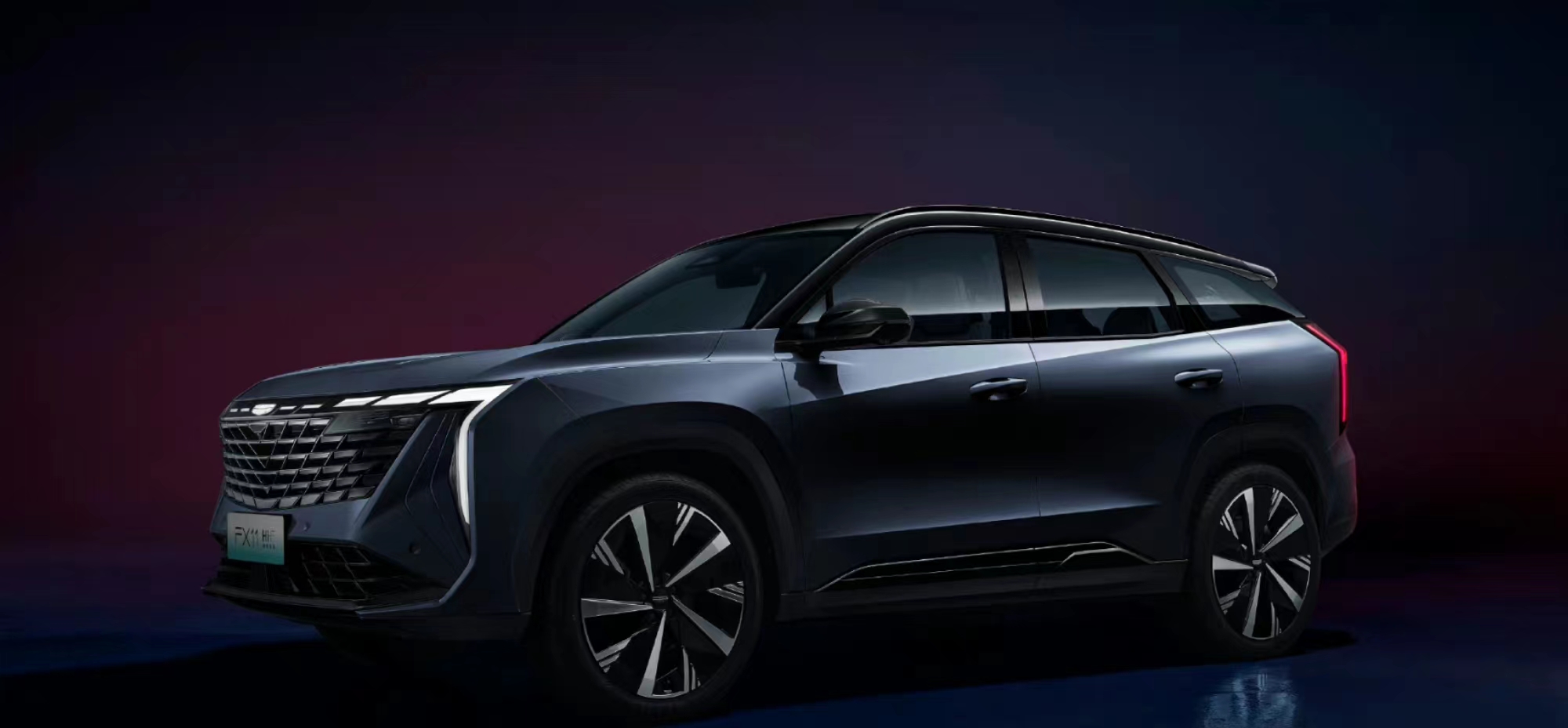
Core Insights - Geely Automobile Holdings Limited reported significant year-on-year sales growth for November and cumulative sales for the year, particularly in the new energy vehicle segment, with plug-in hybrid electric vehicles (PHEVs) showing an increase of over 170% [2] Sales Performance - In November, Geely's total sales reached 310,428 units, a 24% increase from 250,136 units in the same month last year [3] - Year-to-date cumulative sales reached 2,787,750 units, a substantial 42% increase from 1,966,512 units in the previous year [3] Brand Performance - The Geely brand led sales with 246,526 units in November, up 29% from 190,446 units year-on-year, and a cumulative total of 2,277,140 units, reflecting a 51% increase [4] - The Galaxy brand showed remarkable growth, with November sales of 132,652 units, a 76% increase from 75,228 units last year, and a cumulative total of 1,135,113 units, up 167% [4] - Zeekr and Lynk & Co brands experienced stable growth, with Zeekr selling 28,843 units (up 7%) and Lynk & Co selling 35,059 units (up 7%) in November [4] New Energy Vehicles - The new energy vehicle segment was a highlight, with battery electric vehicles (BEVs) selling 102,602 units in November, a 12% increase from 91,333 units last year, and a cumulative total of 994,674 units, nearly doubling from 499,525 units [4] - PHEVs saw even more significant growth, with November sales of 85,196 units, a 174% increase from 31,120 units last year, and a cumulative total of 538,829 units, up 94% [4] Export Performance - Geely's export sales reached 42,091 units in November, a 22% increase from 34,447 units year-on-year, while cumulative export sales for the year were 379,787 units, a slight decrease of 2% from 387,472 units last year [5]
吉利汽车11月销量超31万 单月新能源渗透率提升至60.5%
Yang Shi Wang· 2025-12-02 10:05
Core Viewpoint - Geely Automobile Holdings Limited reported strong sales growth in November, with a 24% year-on-year increase in passenger car sales, continuing a trend of growth for nine consecutive months [1]. Sales Performance - In November, Geely's passenger car sales reached 310,428 units, marking a 24% year-on-year increase [1]. - Cumulative sales for the first 11 months of the year reached 2,787,750 units, a 42% increase year-on-year, achieving 93% of the annual sales target [1]. - The company reported third-quarter revenue of 89.2 billion yuan, up 27% year-on-year, and a core net profit attributable to shareholders of 3.96 billion yuan, a 19% increase [1]. New Energy Vehicles (NEVs) - In November, NEV sales (including Geely, Lynk & Co, and Zeekr brands) reached 187,798 units, a 53% year-on-year increase, with a monthly NEV penetration rate of 60.5% [1]. - Cumulative NEV sales for the first 11 months reached 1,533,503 units, a 97% increase year-on-year [1]. Brand Performance - The Galaxy brand sold 132,652 units in November, a 76% year-on-year increase, with cumulative sales of 1.135 million units for the first 11 months, up 167% [1]. - The Zeekr brand sold 28,843 units in November, a 35% month-on-month increase, with an average selling price of 538,000 yuan [4]. - Lynk & Co sold 35,059 units in November, a 7% year-on-year increase, with 75% of sales coming from NEV models [6]. Export and Global Expansion - Geely's overseas exports in November reached 42,091 units, a 22% year-on-year increase, with nearly 380,000 units exported in the first 11 months [8]. - In Latin America, Geely launched the Star Wish in Brazil and signed a strategic cooperation agreement with Renault Group to invest approximately 5.1 billion yuan for local NEV production [8]. - Geely entered the South African market with plans to establish a dealer network and expand into Kazakhstan and Italy [8]. Product Development - The company is set to enhance its product structure and technical safety assurance system with the launch of multiple new models and the opening of a global safety center with an investment exceeding 2 billion yuan [9].
海通国际:内地11月新能源车“翘尾”行情遇冷 车企年终冲刺更考验销量与盈利之间平衡
智通财经网· 2025-12-02 09:25
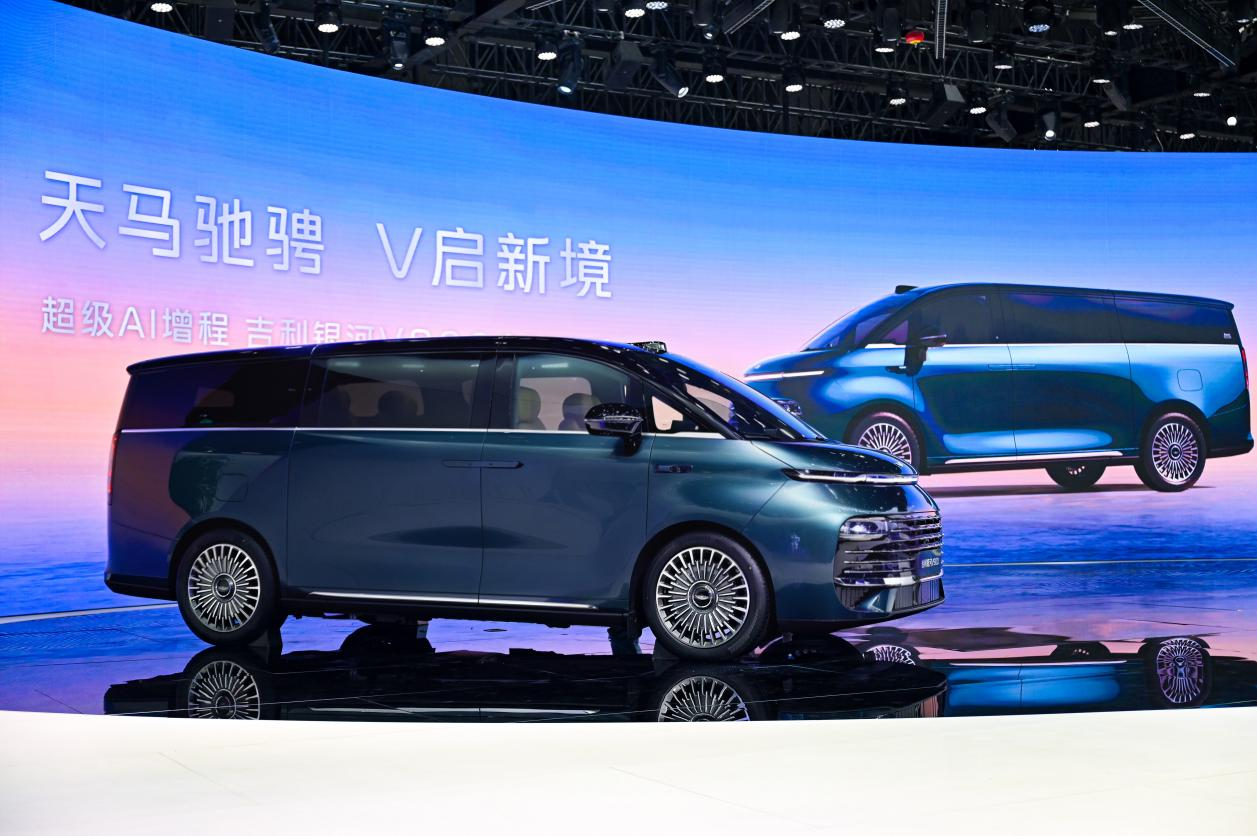
Core Insights - The automotive industry in mainland China is experiencing a significant divergence in sales performance as major car manufacturers report their November sales figures, with the impact of the "two new" policies fading and sales growth slowing down or even declining [1][2][3] Group 1: Sales Performance - Geely Automobile reported November sales of 310,000 units, a year-on-year increase of 24% and a month-on-month increase of 1%, with a cumulative total of 2.79 million units for the first eleven months, representing a 42% year-on-year increase [1] - Leap Motor achieved over 70,000 units in November, maintaining a year-on-year growth of 75%, with a cumulative delivery of 536,000 units for the first eleven months, up 113% year-on-year [2] - Xiaomi Automobile delivered over 40,000 units in November, maintaining this level for three consecutive months, and is expected to exceed its annual target of 350,000 units by the third week of December [3] Group 2: New Energy Vehicles - Geely's new energy vehicle sales reached 188,000 units in November, a year-on-year increase of 53%, with a penetration rate exceeding 60% [1] - Leap Motor's B and C series vehicles are seeing increased deliveries, with the A10 model recently unveiled at the Guangzhou International Auto Show [2] - The "Five Realms" product matrix of Chery Automobile has been completed, indicating strong future performance potential [2] Group 3: Competitive Landscape - Ideal Auto's November deliveries were 33,000 units, a year-on-year decrease of 32%, with cumulative deliveries for the first eleven months at 362,000 units, down 18% year-on-year [3] - NIO's November sales were 36,000 units, a year-on-year increase of 76%, but cumulative deliveries for the first eleven months were only 278,000 units, indicating challenges in meeting year-end targets [3] - The overall industry is facing a challenging environment with regulatory pressures and the withdrawal of subsidies, limiting the potential for significant changes in market structure in December [3]


吉利汽车集团设立每年12月为“吉利安全月”
Zhong Guo Qi Che Bao Wang· 2025-12-02 07:48
2025年12月2日是第14个全国交通安全日,吉利汽车集团正式宣布将每年12月正式设立为"吉利安全月"。此举是吉利积极履行守护公域安全企业责任的 关键举措,为用户的年终出行筑起一道前瞻性的安全防线。吉利此次将"全国交通安全日"从一日的公众倡导扩展为更持续更深度的安全系列行动,也是践 行"用户至上、安全第一"的造车核心价值观的进一步体现。全新落成的吉利全球全域安全中心也将在12月12日正式启用。作为规模更大、测试功能更多的汽 车安全试验中心,将同步向全行业开放共享,标志着吉利将以持续进化的全域安全技术体系,更高更完善的智能汽车安全标准,为用户履行"安全伙伴"的长 期承诺。 ...

从“车间老师傅”到“门店销冠”:飞书AI正在重塑吉利汽车研究院、亚朵酒店的一线战场
Jiang Nan Shi Bao· 2025-12-02 07:32
Core Insights - The article highlights the role of frontline business personnel as the true drivers of the AI technological transformation, showcased through the first "Feishu AI Efficiency Pioneer National Competition" in East China, where six notable companies advanced to the finals with innovative AI applications [1] Group 1: Service Industry Empowerment - AI is significantly enhancing efficiency in service industries by standardizing operations and improving employee training, as demonstrated by Luolai Super Soft Bedding's AI "Magic Mirror" system, which automates appearance checks and has led to increased sales and operational efficiency [1] - The "Yadu 1900+ Store AI Food Safety Guardian Plan" by Yadu Hotel integrates multiple technologies to create an intelligent management loop, reducing manual workload and providing valuable insights for management [2] Group 2: Manufacturing Innovation - In the manufacturing sector, AI is breaking traditional models, as seen with Geely Automobile Research Institute's intelligent size detection system, which has halved measurement time and significantly improved efficiency while saving labor costs [3] - Yongzhuo Holdings has utilized AI to address challenges in steel production, creating a smart management system that provides real-time alerts and actionable insights, transforming experience-based decision-making into data-driven strategies [3] Group 3: Cross-Industry Integration - AI is proving to be a universal capability that transcends specific industries, as evidenced by Jitu Express's use of AI for video production, enhancing exposure while reducing costs, and New City Holdings' development of an intelligent operational platform that integrates previously isolated data systems [4] - The practices of these six East China companies illustrate that AI is no longer a distant concept but a practical tool embedded in various business scenarios, setting the stage for a nationwide impact as they approach the finals [4]
销量、营收、核心市场份额占比不断提升 海外市场成新增长极
Huan Qiu Wang· 2025-12-02 07:04
Core Insights - The Chinese automotive industry is experiencing a significant shift towards overseas markets, with exports growing faster than domestic sales, indicating a transition from incremental competition to stock competition [1][4][12] - By 2030, it is projected that Chinese automotive brands will achieve nearly 10 million units in overseas sales, highlighting the increasing importance of international markets for growth [1][13] Export Growth - In October, China exported 666,000 vehicles, a month-on-month increase of 2.1% and a year-on-year increase of 22.9%. From January to October, total exports reached 5.616 million units, up 15.7% year-on-year [1] - Chery's overseas sales reached 1.06 million units from January to October, accounting for 46% of its total sales, maintaining a steady growth trend [1] - BYD's exports for the same period were 780,000 units, a significant increase of 130%, with overseas sales making up 21% of total sales [2] - Geely's overseas sales approached 300,000 units, with a remarkable 214% increase in exports of new energy vehicles [3] Financial Performance - Chery's revenue for the first three quarters of 2025 was 214.83 billion yuan, a 17.9% increase year-on-year, with overseas sales contributing significantly to this growth [6] - BYD's overseas revenue share rose from 28% in 2024 to 36.5% in the third quarter of 2025, with a net profit margin of 4.2% surpassing domestic margins [7] - Great Wall Motors reported overseas revenue of 80.3 billion yuan in 2024, accounting for 39.69% of total revenue, indicating the growing importance of international markets [8] Market Share and Competitive Position - By 2025, China's automotive global market share is expected to exceed 38%, with significant growth in Europe, where Chinese brands achieved a record 7.4% market share in September 2025 [10] - In Southeast Asia, particularly Thailand, Chinese brands captured 34.3% of the market share in the first three quarters of 2025, leading the segment [11] - Chinese brands are also making significant inroads in Brazil, with market share increasing from 6.8% in 2024 to 9.1% in 2025, particularly in the new energy vehicle segment [11] Strategic Initiatives - Chinese automotive companies are increasingly establishing local production facilities overseas, allowing them to better meet local market demands and navigate trade barriers [5][9] - The shift from product export to a comprehensive ecosystem approach is evident, with companies focusing on local production, service, and supply chain integration [9][14] - The emphasis on localization and understanding local consumer preferences is crucial for success in international markets, as highlighted by the need for tailored products and services [12][15]


海通国际:“翘尾”行情遇冷 新能源车全年格局基本落定
Zhi Tong Cai Jing· 2025-12-02 06:09
Core Viewpoint - The automotive market is experiencing a significant shift in sales dynamics as major car manufacturers report their November sales figures, with a notable decline in the "tail-end" effect compared to previous years. The exit of subsidy policies is leading to a slowdown in sales growth, making it challenging for companies to balance sales and profitability during the year-end push [1][2]. Group 1: Sales Performance - BYD (002594) achieved sales of 480,000 units in November, a month-on-month increase of 9%, with domestic sales at 348,000 units. Cumulative sales from January to November reached 4.182 million units, reflecting an 11% year-on-year increase. Notably, overseas exports exceeded 130,000 units, marking a nearly 300% year-on-year increase [2]. - Geely Automobile (00175) reported November sales of 310,000 units, a year-on-year increase of 24% and a month-on-month increase of 1%. Cumulative sales for the first eleven months reached 2.79 million units, a 42% year-on-year increase, positioning the company to meet its annual target of 3 million units [2]. - New energy vehicle sales for Geely in November reached 188,000 units, a year-on-year increase of 53%, with a penetration rate exceeding 60% [2]. Group 2: Emerging Players - Leap Motor (09863) sold over 70,000 units in November, a year-on-year increase of 75%, maintaining a steady performance. Cumulative deliveries for the first eleven months reached 536,000 units, a 113% year-on-year increase, surpassing its annual target of 500,000 units [3]. - Hongmeng Zhixing delivered 82,000 units in November, a year-on-year increase of 90%, with strong demand for its models [3]. - Xiaomi Automobile delivered over 40,000 units in November, maintaining this level for three consecutive months, and is expected to exceed its annual target of 350,000 units [3]. Group 3: Competitive Landscape - Li Auto (02015) delivered 33,000 units in November, a year-on-year decrease of 32%, with cumulative deliveries of 362,000 units, an 18% year-on-year decline [4]. - Xpeng Motors (09868) delivered 37,000 units in November, a year-on-year increase of 19%, with cumulative deliveries of 392,000 units, reflecting a 156% year-on-year increase [4]. - NIO (09866) reported November sales of 36,000 units, a year-on-year increase of 76%, with cumulative deliveries of 278,000 units from January to November [4].