
GEELY AUTO(00175)

Search documents
港股开盘:恒指涨0.65%、科指涨0.82%,科网股、有色金属及汽车股走高,新消费概念股走势分化,乐欣户外IPO首日高开逾96%
Jin Rong Jie· 2026-02-10 01:34
Market Overview - The Hong Kong stock market opened higher on February 10, with the Hang Seng Index rising by 0.65% to 27,202.96 points, the Hang Seng Tech Index up by 0.82% to 5,461.96 points, and the National Enterprises Index increasing by 0.64% to 9,226.56 points [1] - Major technology stocks saw gains, with Alibaba up 1.14%, Tencent Holdings up 0.54%, JD Group up 1.2%, Xiaomi up 0.85%, NetEase up 2.35%, and Kuaishou up 1.01% [1] - The new consumption concept stocks showed mixed results, with Pop Mart rising over 2% and Weilon falling over 2% [1] Corporate News - Pop Mart (09992.HK) expects global sales of all IP products to exceed 400 million units by 2025, with THE MONSTERS product line projected to sell over 100 million units [2] - Youjia Innovation (02431.HK) has secured a contract with a leading domestic automotive brand to provide several key products, including the iPilot 4 Plus driving controller and driver monitoring systems [2] - Ruifeng New Energy (00527.HK) signed an investment framework agreement to build the largest inference computing cluster park in North China, with a total investment of approximately RMB 240 billion [2] Earnings Forecasts - Hong Kong Telecom (06823.HK) reported a 5% increase in total revenue to HKD 36.553 billion for 2025, with EBITDA growing by 4% to HKD 14.234 billion and net profit attributable to shareholders increasing by 4% to HKD 5.286 billion [4] - China Nuclear International (02302.HK) anticipates revenue for 2025 to exceed HKD 2.46 billion, with gross profit expected to reach at least HKD 260 million, driven by increased uranium trading volumes [4][6] - Mingyuan Cloud (00909.HK) expects a net profit of approximately HKD 26.9 million to HKD 32.8 million for 2025, representing a growth of about 114% to 117% [4] - China Oriental Education (00667.HK) forecasts a 46% to 51% increase in net profit for 2025 [5] Market Dynamics - Several companies are actively repurchasing shares to boost market confidence, including Xiaomi Group-W (01810.HK), which repurchased 1.5 million shares for HKD 52.7268 million, and Geely Automobile (00175.HK), which repurchased 1.408 million shares for HKD 23.4587 million [8] - China Smart Energy (01004.HK) announced a share consolidation effective February 10, pending approval from the Stock Exchange [8] Institutional Insights - Galaxy Securities noted a significant "Spring Festival effect" in the Hong Kong market, with optimistic market sentiment and early capital positioning [10] - Dongwu Securities indicated that while short-term challenges remain, the market should be monitored for overseas risks and domestic AI catalysts [10] - Bank of China International believes that after the recent negative factors have subsided, market sentiment is at a low point, with potential rebounds in the AI multi-modal industry chain [10]
吉利控股集团法定代表人变更,李东辉卸任吉利控股集团法定代表人
Zhong Guo Neng Yuan Wang· 2026-02-10 01:33
浙江吉利控股集团有限公司成立于2003年3月,注册资本10.3亿人民币,经营范围含以自有资金从事投 资活动、汽车新车销售、汽车旧车销售、电力电子元器件制造、电池制造、电动机制造、道路机动车辆 生产等。股东信息显示,该公司由李书福、宁波翊马企业管理合伙企业(有限合伙)、李星星共同持股。 天眼查工商信息显示,近日,浙江吉利控股集团有限公司发生工商变更,李东辉卸任法定代表人并由总 经理、董事改任副董事长,由安聪慧接任法定代表人并担任董事兼总经理,同时,部分高管发生变更。 ...

2026格局与趋势 |(上):天黑请睁眼
3 6 Ke· 2026-02-10 01:20
Core Viewpoint - The Chinese automotive market is facing significant challenges in 2026, with predictions of a decline in sales due to economic pressures and changing consumer behavior, despite some optimistic forecasts for growth in exports and specific segments like new energy vehicles [1][3][4]. Group 1: Market Trends and Predictions - In 2026, the overall automotive sales in China are expected to range between 34.5 million to 35 million units, with a potential decline in domestic retail sales by over 5% if no significant policy changes occur [3][7]. - January 2026 data shows a dramatic decline in retail sales, with a 28% year-on-year drop, indicating a challenging start to the year [6]. - Various institutions predict a range of outcomes for 2026, with the most pessimistic forecasts suggesting a 7% decline in sales, while the most optimistic predict only a 1% increase [4][7][8]. Group 2: Policy and Economic Influences - Key factors affecting the market include adjustments to subsidy policies for new energy vehicles, which have shifted from full exemptions to partial reductions, impacting consumer purchasing behavior [6][9]. - The decline in consumer confidence and shrinking middle-class income due to economic downturns are expected to further suppress automotive sales [6][9]. Group 3: Competitive Landscape - The automotive industry is experiencing intense competition, with a shift from price wars to a focus on technological advancements and value creation as companies seek to stabilize their market positions [12][16]. - Major players are adjusting their sales targets, with some aiming for significant growth while others adopt more conservative strategies in response to market conditions [18][19]. Group 4: Export Opportunities - Exports are projected to be a key growth area, with expectations of a 12-15% increase, potentially reaching 8 million units, which could help offset domestic market declines [22][26]. - The global supply chain dynamics are pushing Chinese automotive companies to enhance their international presence, with a focus on building global production and R&D capabilities [26][28]. Group 5: Segment-Specific Insights - The new energy vehicle segment is anticipated to grow, with retail sales expected to increase by 12-15%, driven by favorable policies for mid-range models [9][10]. - The large six-seat SUV market is projected to maintain strong growth, with expectations of a 30-50% increase in sales, despite overall market challenges [31][32].



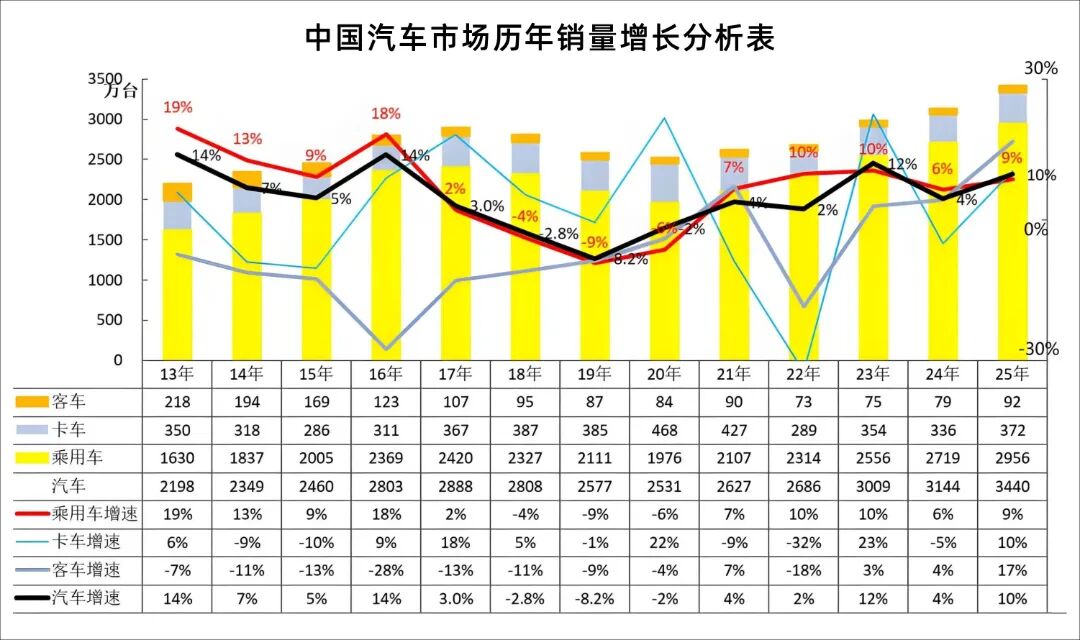
吉利星瑞:进店六成客户全看它,同城店多便宜500块就跑单
车fans· 2026-02-10 00:30
Sales Performance - The local dealership sold a total of 76 vehicles last month, with 48 units being the Starry model, indicating strong demand [2] - The most popular configuration is the 1.5T Kunlun version, accounting for 60% of the inventory, while the colors black and white make up 60% and 40% of sales respectively [2][18] Customer Demographics - The Starry model attracts a diverse customer base, ranging from retirees to young graduates, with a balanced gender ratio of approximately 64% male to 36% female [4] - A notable customer, a young teacher, chose the Starry after comparing it with competitors, highlighting the importance of practical features over aesthetics [4][6] Competitive Landscape - The main competitors identified include Chery Arrizo 8, Toyota Corolla, Nissan Sylphy, and Volkswagen Sagitar, with the Arrizo 8 being the most frequently compared model [7][8] - Customers who did not purchase the Starry cited reasons such as distrust in domestic brands, preference for Chery's engine technology, and competitive pricing from other dealerships [8] Customer Preferences - Customers who ultimately chose the Starry highlighted four key factors: high aesthetic appeal, positive test drive feedback, reasonable configuration, and attractive trade-in policies [12][13] - The most popular purchase method is the 1.5T Kunlun version, with 70% of sales, while the 2.0T top version struggles due to its high price [18] Pricing and Discounts - The Starry model has seen significant price reductions, with discounts increasing from 7,000 to 11,000-13,000 in a short period [15] - A detailed budget for financing the Starry model shows a final price of approximately ¥96,700 after discounts, with monthly payments around ¥1,875 [17] Customer Feedback and Maintenance - Common customer complaints include software issues with the central control system, limited software availability, and noise levels at high speeds [20] - Maintenance costs are relatively low, with regular servicing estimated at around ¥600 per visit, and the purchase includes three years of free maintenance [22] Trade-in and Subsidy Policies - The company offers a trade-in subsidy of ¥20,000 for its own brand and ¥14,000 for other brands, with specific rules regarding eligibility [23] - Special subsidies are available for certain professions, including teachers and military personnel, providing an additional incentive for purchasing [23]
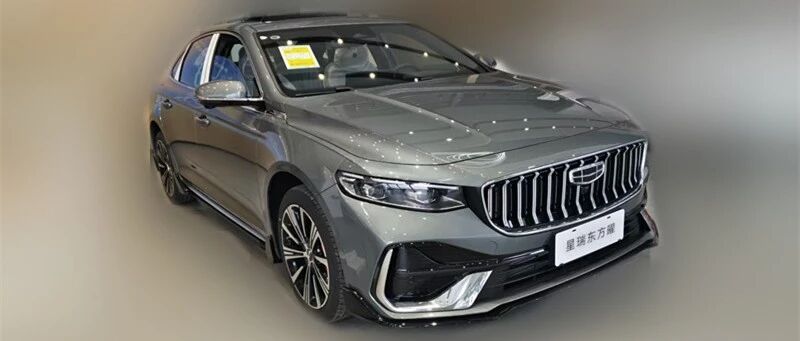
整车主线周报:404批工信部新车公告发布,蔚来25Q4业绩超预期
Soochow Securities· 2026-02-10 00:25
Investment Rating - The industry investment rating is "Overweight," indicating an expected outperformance of the industry index relative to the benchmark by more than 5% over the next six months [35]. Core Insights - The report highlights a recovery in the passenger vehicle sector, driven by the implementation of subsidy policies and a shift in consumer demand. It emphasizes the importance of focusing on high-end electric vehicle manufacturers that are less sensitive to policy fluctuations, such as Jianghuai Automobile and Geely [25][26]. - In the heavy truck segment, the report anticipates a positive outlook for 2026, projecting domestic sales to reach 800,000 to 850,000 units, a year-on-year increase of 3% [30][28]. - The bus market is expected to see growth in 2026, with a conservative estimate of 40,000 units sold, reflecting a 40% year-on-year increase, supported by the continuation of subsidy policies [30][29]. - The motorcycle sector is projected to achieve total sales of 19.38 million units in 2026, a 14% increase year-on-year, with a significant focus on the large-displacement motorcycle market [26]. Summary by Sections Passenger Vehicles - Short-term recovery is anticipated in the passenger vehicle sector due to established subsidy policies, with a focus on high-end electric vehicles and companies less affected by policy changes [25][26]. - Key companies to watch include Jianghuai Automobile, Geely, Great Wall Motors, and BYD, among others [25]. Heavy Trucks - In 2025, wholesale heavy truck sales reached 1.144 million units, a 26.8% increase year-on-year, with domestic sales of 799,000 units, up 32.8% [30]. - The report recommends leading heavy truck manufacturers such as China National Heavy Duty Truck Group, Weichai Power, and FAW Jiefang [30][28]. Buses - The bus market saw a slight decline in 2025, with sales of 29,000 units, down 6% year-on-year. However, a rebound is expected in 2026, with a projected 40% increase in sales [30][29]. - Recommended companies include Yutong Bus and King Long [30]. Motorcycles - The motorcycle industry is forecasted to grow, with total sales expected to reach 19.38 million units in 2026, a 14% increase year-on-year, driven by large-displacement models [26]. - Recommended companies include Chunfeng Power and Longxin General [26].



电池存热失控隐患,极氪召回超3.8万辆汽车
Guan Cha Zhe Wang· 2026-02-10 00:22
Core Viewpoint - Zhejiang Geely's Zeekr Intelligent Technology Co., Ltd. has initiated a recall of 38,277 Zeekr 001 WE version vehicles due to potential safety hazards related to high-pressure battery components, which may lead to battery performance degradation and thermal runaway risks [1][3]. Group 1: Recall Details - The recall plan, numbered S2026M0023V, affects vehicles produced between July 8, 2021, and March 18, 2024, starting from March 6, 2026 [1]. - Zeekr will conduct inspections or remote diagnostics on the recalled vehicles and will replace the battery assembly for free if necessary [1]. - An emergency response system will alert users of potential safety issues, and users are advised to contact Zeekr's service hotline for assistance [1]. Group 2: Background and Legal Context - The recall traces back to a partnership formed in July 2021 between battery supplier Sunwoda and Geely Group, leading to the establishment of Shandong Geely Sunwoda Power Battery Co., Ltd. [3]. - In December 2025, Geely's subsidiary sued Sunwoda for 2.314 billion RMB due to quality issues with battery cells supplied, claiming damages for losses incurred [3]. - A settlement was reached in February 2026, significantly reducing the financial impact on Sunwoda to 608 million RMB, with payment structured over five years [4][6]. Group 3: Industry Implications - The incident highlights significant issues within the electric vehicle supply chain, particularly regarding the legal gaps in long-term contracts for high-performance components [6]. - The resolution of the dispute through negotiation rather than prolonged litigation is seen as beneficial for maintaining supply chain integrity and brand reputation [6].

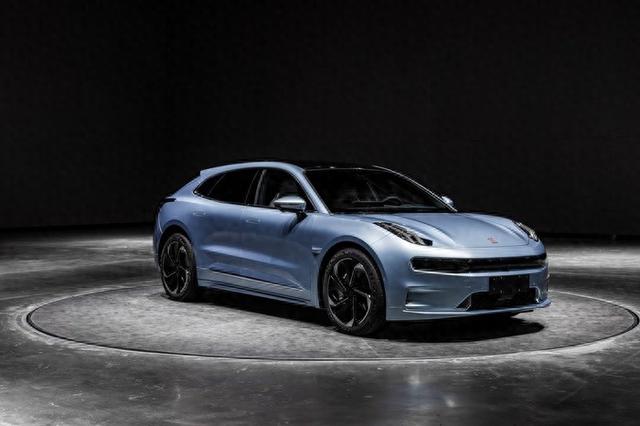
极氪主动召回部分老款001 WE 86 不涉及目前在售车型
Xin Jing Bao· 2026-02-09 15:53
Core Viewpoint - Zeekr has initiated a recall of 38,277 units of the Zeekr 001 WE 86 model due to performance degradation risks associated with battery manufacturing consistency issues, while all currently sold models are unaffected [1] Group 1: Recall Details - The recall involves vehicles produced from July 2021 to March 2024, and Zeekr will provide free battery replacements through inspections or remote diagnostics, maintaining the warranty on the replaced batteries [1] - The recall is linked to a lawsuit where Aoxin Wanda Power was sued by Weir Electric for 2.314 billion yuan over battery quality issues, with a settlement reached on February 6, 2025 [1] Group 2: Financial Implications - Aoxin Wanda anticipates that the incident will impact its net profit attributable to shareholders by 500 million to 800 million yuan in 2025 [1] Group 3: Industry Collaboration - The involvement of Geely in the legal process has facilitated a more transparent and collaborative relationship between the technical teams of the companies, leading to a mutually accepted solution and a healthier cooperation model [2]
经纬恒润:公司ZCU产品交付共计超200万件
Zheng Quan Ri Bao· 2026-02-09 13:37
Core Insights - The company Jingwei Hengrun has delivered over 2 million ZCU products to date, indicating strong market demand and production capabilities [2] - The ZCU 3.0 platform, developed in collaboration with Geely, has achieved large-scale production and is set to be first installed in the Geely Galaxy A7 by July 2025, with plans for expansion to other mainstream models [2] - The ZCU 3.0 platform integrates multiple functions such as body comfort and air conditioning control into a single controller, significantly simplifying wiring and reducing system complexity [2] - The platform features high-performance hardware and incorporates Jingwei Hengrun's proprietary algorithms, enabling a smart closed-loop system from perception to control and decision-making [2]

【行业观察】竞争升级下2026年汽车制造行业发展怎么看?
Xin Lang Cai Jing· 2026-02-09 12:08
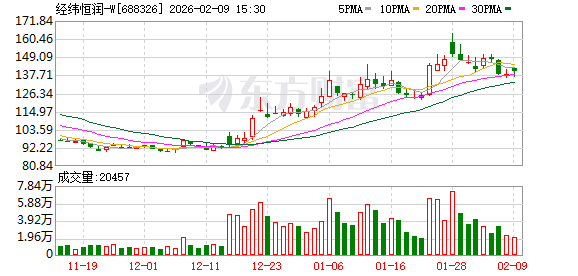
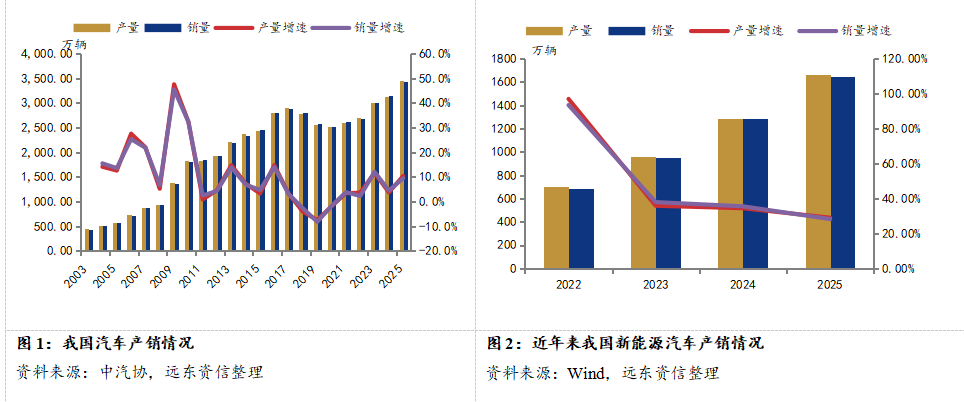
Group 1 - The automotive manufacturing industry in 2025 is characterized by a dual policy environment that supports consumption while regulating market competition, guiding the industry towards high-quality transformation [1][6][7] - The industry achieved record highs in production and sales, with total production reaching 34.53 million units and sales at 34.40 million units, marking a year-on-year increase of 10.4% and 9.4% respectively [2][8] - New energy vehicles (NEVs) and exports are the core engines driving supply and demand growth, with NEV production and sales increasing by 29% and 28.2% year-on-year [2][10] Group 2 - The bond issuance in the automotive sector totaled 61.02 billion yuan in 2025, with over 70% being sci-tech bonds, indicating a stable credit level across the industry [3][20][21] - Financial performance shows a significant decline in net profits, with a 30.47% year-on-year decrease in net profits for the first three quarters of 2025, leading to many companies reporting losses [4][25] - The average gross margin for sample companies remains stable at around 12%, while the average net margin dropped to -3.5% in the same period, indicating operational challenges [4][26] Group 3 - The outlook for 2026 highlights four key themes: stable production and sales growth, accelerated smart technology adoption, deepening global ecological expansion, and intensified competition [5][38] - The industry is expected to maintain high production and sales levels, with NEVs continuing to be the main growth driver, although the growth rate may slow down [5][39] - The competitive landscape is shifting towards a "value war," with industry consolidation accelerating as weaker companies face challenges in maintaining profitability [5][41]
吉利系与欣旺达纠纷后续:极氪召回超3.8万辆车
Di Yi Cai Jing· 2026-02-09 11:47
Group 1 - The core issue involves a recall of 38,277 Zeekr 001 WE vehicles due to potential safety hazards related to high-voltage battery components, which may lead to performance degradation and thermal runaway risks [1] - The recall is a result of a dispute between Geely's battery company, Weir Power, and Aoxin Wanda, with Weir Power suing Aoxin Wanda for over 2.3 billion yuan due to quality issues with battery cells delivered between June 2021 and December 2023 [1] - The recall is classified as a proactive measure due to safety defects, with the recall code S2026M0023V indicating the nature of the issue [1] Group 2 - Zeekr 001, which utilizes the affected Aoxin Wanda battery cells, sold over 70,000 units in 2022, with the WE86 version accounting for more than 60% of sales [2] - Customers reported issues such as slow charging speeds and inaccurate battery level readings, prompting Zeekr to previously replace battery packs for some WE86 owners [2] - A settlement was reached between Geely and Aoxin Wanda on February 6, with Aoxin Wanda agreeing to pay 608 million yuan for costs incurred up to December 31, 2025, and to share costs for future expenses related to the recall [2]