CHINA RES BEER(00291)

Search documents
002910,再次开盘涨停
Di Yi Cai Jing Zi Xun· 2025-10-10 04:56
Core Insights - The dairy sector has shown signs of recovery following the "Double Festival" period, with stocks like Zhuangyuan Pasture experiencing significant price increases driven by the broader consumer market trend [2] - The average purchase price of fresh milk in major production areas has stabilized, indicating a potential recovery in supply and demand dynamics within the industry [3] Group 1: Market Performance - Zhuangyuan Pasture (002910.SZ) has seen its stock price hit the daily limit for two consecutive days, contributing to an overall rise in dairy stocks [2] - Other dairy companies, such as Knight Dairy (920786.BJ) and New Dairy, have also reported stock price increases of 4.44% and 5.85%, respectively [2] - The company reported a revenue of 420 million yuan in the first half of 2023, a year-on-year decrease of 1.3%, while its net profit attributable to shareholders was -30 million yuan, reflecting a 68.5% year-on-year increase [2] Group 2: Price Trends - The average price of fresh milk rose from 3.02 yuan/kg in August to 3.04 yuan/kg in late September, indicating a halt in the previous downward trend [3] - Prices for scattered milk have shown significant increases, with reports of prices rising from 2.5 yuan/kg to 4.2 yuan/kg in Hebei, and from 2.1 yuan/kg to between 3.5 and 3.7 yuan/kg in Ningxia [3] Group 3: Market Dynamics - Despite initial price increases, scattered milk prices have begun to decline post-festival, with prices in Hebei dropping to 2.8 yuan/kg, suggesting ongoing market pressures [4] - Analysts note that the rise in milk prices is influenced by both inventory preparations for the festival and ongoing adjustments in production capacity, but the sustainability of market recovery remains uncertain due to increasing fragmentation in dairy product consumption [4]


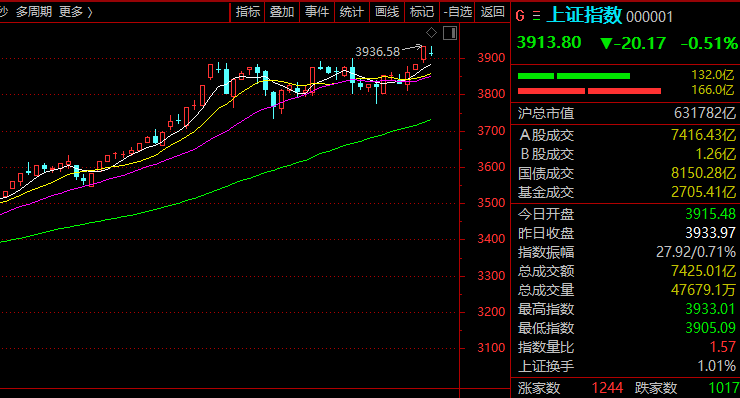
5分钟,直线涨停!002910,突现2连板!
Zheng Quan Shi Bao· 2025-10-10 04:42
Group 1: Market Overview - A-shares opened lower and experienced fluctuations, with the Shanghai Composite Index testing the 3900-point support level, while the ChiNext Index fell over 3% below 3200 points [1] - The market saw a stable trading volume, with technology growth stocks undergoing significant adjustments, particularly the STAR Market Index which dropped over 4% [1] Group 2: Food and Beverage Sector - The food and beverage sector showed resilience, with the beverage and dairy segments leading the gains, as the sector index rose over 2% for the fifth consecutive day [2] - Notable performers included Zhuangyuan Pastoral, which hit the daily limit, and Yangyuan Beverage, which also reached the daily limit, alongside other companies like New Dairy and Dongpeng Beverage [2] - The positive sentiment was bolstered by PepsiCo's Q3 earnings report, which revealed revenues of $23.94 billion, slightly above Wall Street's expectations, and an adjusted EPS of $2.29, exceeding the forecast [2] Group 3: Pre-prepared Food Standards - The State Council's Food Safety Committee is prioritizing the establishment of national standards for pre-prepared foods, following recent controversies, which will enhance consumer rights and transparency in the restaurant sector [2] - The draft for the national food safety standards for pre-prepared foods has passed review and is set to be publicly consulted [2] Group 4: Cultivated Diamond Sector - The cultivated diamond sector opened significantly higher, with the sector index rising over 4% to reach a historical high [4] - Key stocks included Huanghe Whirlwind, which hit the daily limit and achieved a new annual high, and Sifangda, which also opened at a 20% limit up [4] - The Ministry of Commerce and the General Administration of Customs announced export controls on various synthetic diamond products, which may impact the sector [4] Group 5: Investment Opportunities - Analysts suggest that the food and beverage industry presents structural investment opportunities driven by policies to boost domestic demand and trends in rational, emotional, and health-oriented consumption [3] - Focus areas for investment include the beverage sector, particularly energy drinks, the snack industry with innovative channels and products, and health products targeting younger consumers [3]
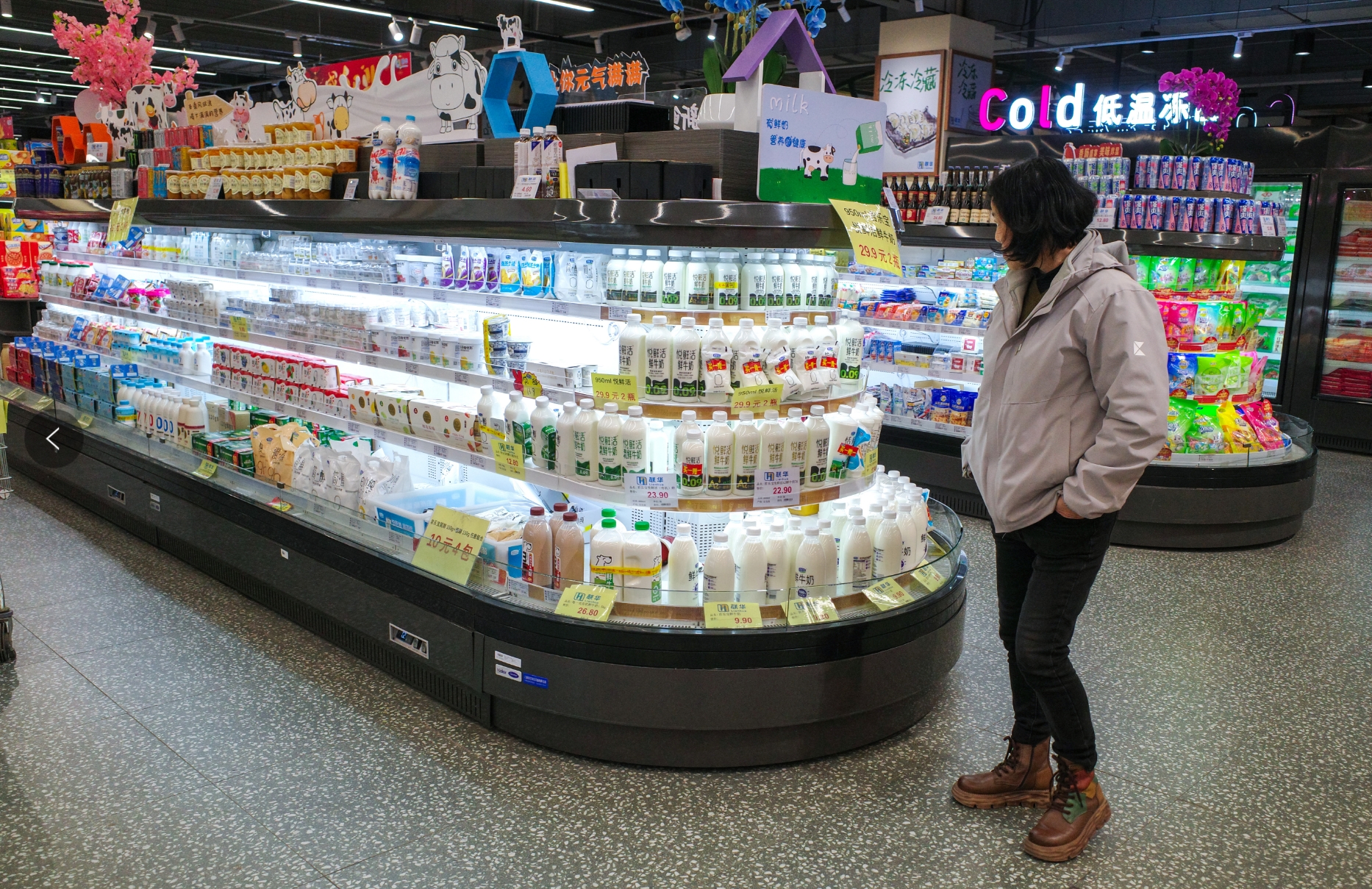
002910再次开盘涨停,行业触底复苏也有新苗头
Di Yi Cai Jing· 2025-10-10 04:32
Core Viewpoint - The dairy industry shows signs of recovery following the recent holiday season, with milk prices beginning to rise, although the sustainability of this trend remains uncertain [1][3]. Group 1: Market Performance - Dairy stocks, particularly Zhuangyuan Pasture (002910.SZ), have experienced significant gains, with Zhuangyuan Pasture hitting the daily limit for the second consecutive day, driven by a broader consumer market rally [1]. - Other dairy companies also saw increases, with Knight Dairy (920786.BJ) up 4.44% and New Dairy up 5.85%, while several stocks rose over 2% [1]. Group 2: Financial Performance - Zhuangyuan Pasture reported a revenue of 420 million yuan in the first half of 2023, a year-on-year decrease of 1.3%, and a net profit attributable to shareholders of -30 million yuan, which is a 68.5% increase compared to the previous year [3]. - Major domestic dairy companies have shown signs of bottoming out after two years of decline, with expectations for recovery in the second half of the year [3]. Group 3: Milk Price Trends - The average purchase price of fresh milk in major production areas rose from 3.02 yuan/kg in August to 3.04 yuan/kg in late September, indicating a stabilization in prices [3]. - Prices for spot milk have seen significant increases, with prices in Hebei rising from 2.5 yuan/kg to 4.2 yuan/kg, and in Ningxia from 2.1 yuan/kg to between 3.5 and 3.7 yuan/kg [3]. Group 4: Market Dynamics - Analysts expect that the demand for dairy products will peak during the holiday season, potentially leading to a more balanced supply-demand situation [4]. - However, post-holiday, spot milk prices have begun to decline, with prices in Hebei dropping to 2.8 yuan/kg, indicating ongoing market pressures [4]. - The dairy market is experiencing fragmentation in consumption patterns, which may affect the sustainability of the recovery [4].
5分钟,直线涨停,002910突现2连板
Zheng Quan Shi Bao· 2025-10-10 04:24
Market Overview - A-shares opened lower and experienced fluctuations, with the Shanghai Composite Index testing the 3900-point support level. The tech growth stocks faced significant adjustments, with the Sci-Tech Innovation 50 index dropping over 4% and falling below 1500 points, while the ChiNext index fell over 3% and dropped below 3200 points. Market trading volume remained stable [1]. Sector Performance - The food and beverage, cultivated diamond, cement, and ground weaponry sectors saw the largest gains, while energy metals, semiconductors, photovoltaic equipment, and medical services sectors experienced the largest declines [3]. Food and Beverage Sector - The food and beverage sector showed resilience, with the beverage and dairy segments leading the gains. The sector index surged over 2%, marking its fifth consecutive day of increase. Notable stocks included Zhuangyuan Pasture, which hit the daily limit shortly after opening, and Yangyuan Beverage, which also reached the daily limit. Other significant gainers included New Dairy and Dongpeng Beverage [5][4]. - Other segments within the food sector, such as snack foods, agricultural product processing, prepared dishes, and condiments, also saw upward movement, with companies like Baba Foods and Shuangta Foods leading the gains [7]. - PepsiCo reported third-quarter earnings of $23.94 billion, slightly above Wall Street's expectation of $23.85 billion, with adjusted earnings per share of $2.29, exceeding the anticipated $2.27. This positive news led to a significant increase in Pepsi's stock price, which rose over 4%, marking its largest single-day gain in three months [7]. - The State Council's Food Safety Committee has prioritized the "prepared dishes controversy," leading to the development of national standards for prepared dishes. The draft of the food safety standards, led by the National Health Commission, has passed review and will soon be open for public consultation [7]. - Wanlian Securities suggests that under the influence of policies to boost domestic demand and trends in rational, emotional, and health consumption, there are structural investment opportunities in the food and beverage industry. Key areas of focus include the beverage sector, particularly energy drinks, and snack foods that innovate in channels and categories, as well as health products targeting young consumers [8]. Cultivated Diamond Sector - The cultivated diamond sector opened significantly higher, with the sector index rising over 4% to reach a historical high. Notable stocks included Huanghe Whirlwind, which hit the daily limit and achieved a new annual high, and Sifangda, which also opened at the daily limit price [10]. - The Ministry of Commerce and the General Administration of Customs announced export controls on various superhard material products, including synthetic diamond micro-powder and single crystals, following State Council approval [12].
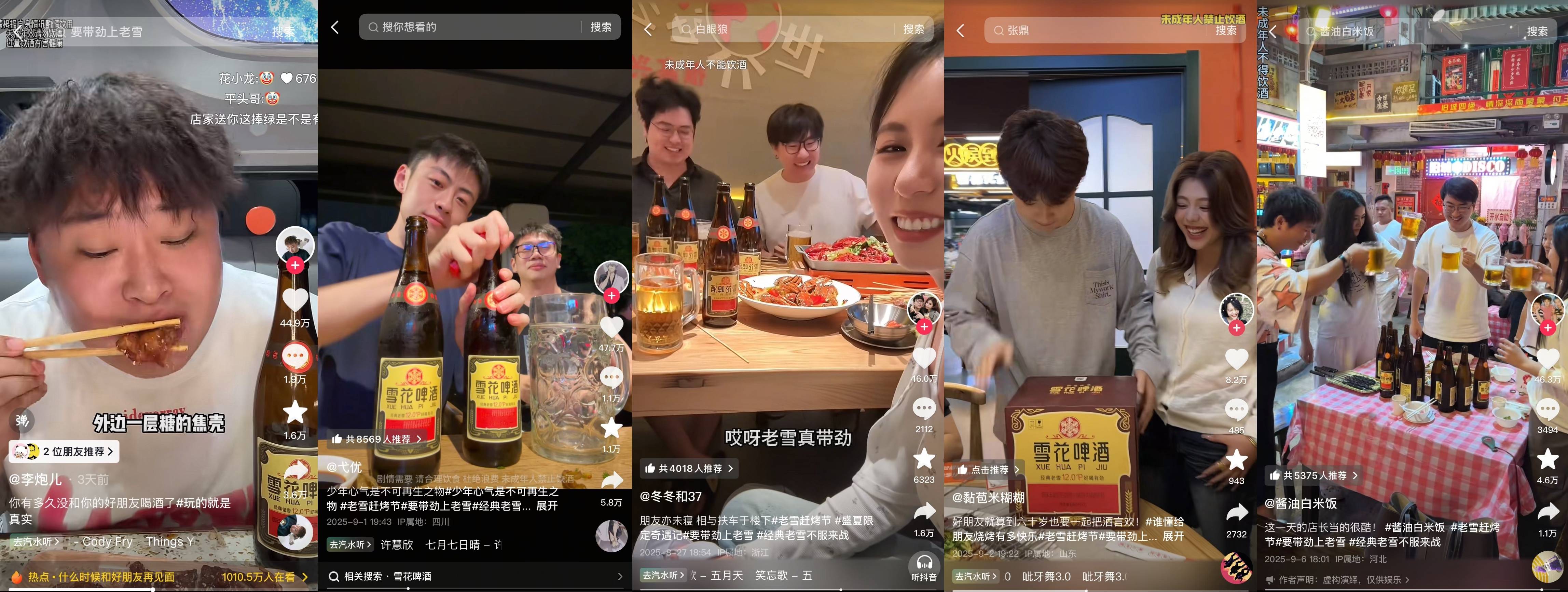
从地域种草到全国热销,经典老雪 “全国巡烤” 玩透场景营销
Zhong Guo Shi Pin Wang· 2025-10-09 07:10
Core Insights - The article discusses a successful marketing campaign by Snow Beer, focusing on the integration of beer consumption with local barbecue culture, enhancing brand recognition and sales through targeted strategies [1][37]. Group 1: Marketing Strategy - The campaign utilized a "national tour" theme, linking Snow Beer with barbecue experiences, achieving over 410 million topic exposures and over 10 million interactions [1][25]. - The strategy emphasized local cultural differences, creating a unique identity for Snow Beer in various cities, thus enhancing brand resonance with consumers [2][34]. - Influential local figures were engaged to promote the brand, effectively bridging the gap between the product and local consumer preferences [3][6]. Group 2: Consumer Engagement - The campaign fostered social connections by associating Snow Beer with friendship and shared experiences, positioning it as a catalyst for social gatherings [6][20]. - Interactive topics were created to encourage consumer participation, transforming the brand message into a widely accepted lifestyle choice [7][22]. - The use of social media and local influencers helped amplify the campaign's reach, creating a strong emotional connection with the audience [20][32]. Group 3: Sales Conversion - The campaign successfully converted online engagement into offline sales, with a notable increase in restaurant sales by 320% following the promotional activities [28][33]. - Special meal packages were introduced to cater to group dining experiences, effectively lowering consumer decision-making costs and enhancing sales efficiency [28][30]. - The integration of online and offline strategies allowed for precise tracking of consumer behavior, optimizing future marketing efforts [33][34]. Group 4: Long-term Brand Positioning - The campaign aimed to establish a sustainable competitive advantage by embedding the brand into the local barbecue culture, ensuring long-term consumer loyalty [37]. - A nationwide exploration strategy was implemented, involving local influencers to create authentic brand experiences in retail environments [34][37]. - The overall approach transformed Snow Beer from a mere product into a cultural symbol associated with barbecue gatherings, achieving a synergistic effect between brand awareness and sales performance [37].
2025啤酒行业趋势洞察报告
Sou Hu Cai Jing· 2025-10-08 07:42
Core Insights - The Chinese beer industry is experiencing structural transformation and high-quality development, driven by consumption upgrades and the young demographic becoming the core market engine [1][6] - The industry has moved past a period of declining production, showing a clear trend of "stable volume and improved quality" [1][6] Market Overview - In the first ten months of 2024, retail sales of tobacco and alcohol grew by 6.1%, outpacing the overall growth of consumer goods [1][15] - Beer production has rebounded since hitting a low in 2021, maintaining steady growth for four consecutive years, with 2023 seeing low inventory levels and strong confidence among distributors [1][16] - The top five brands (China Resources, Tsingtao, Yanjing, Chongqing, and Zhujiang) control over 70% of the market share, with positive growth in sales, revenue, and net profit in 2023 [1][22] Consumer Demand Trends - The beer market is evolving from a simple alcoholic beverage to a social medium for young consumers, with a significant increase in social media engagement around beer [2] - The "micro-drunk economy" is gaining traction, with beer consumption becoming more about experience rather than just drinking [2] - Flavor innovation and health consciousness are driving product diversification, with traditional yellow beer still dominant but white beer and fruit-flavored beers gaining popularity [2][3] Health and Wellness Trends - The demand for low-alcohol and non-alcoholic beers is rising, with the global market for these products valued at 94.07 billion yuan in 2023, expected to grow by 4% by 2027 [3] - Non-alcoholic beers like Qingdao's non-alcoholic white beer are catering to health-conscious consumers and those with alcohol sensitivities [3] Marketing and Distribution Innovations - Digital marketing and scenario-based innovations are prominent, with platforms like Douyin and Xiaohongshu becoming key for brand promotion [4] - Instant retail is reshaping beer consumption, with brands like Snow Beer and Tsingtao enhancing delivery services to meet consumer demand for immediate access [5] - The rise of experiential marketing through beer festivals and music events is strengthening brand engagement with younger audiences [5] Future Outlook - The Chinese beer industry is shifting from "scale-driven" to "value-driven," focusing on product innovation, channel transformation, and deepening consumer engagement [6] - The market is expected to continue evolving with a focus on personalized and diverse consumer needs, particularly among younger demographics [6]


华润啤酒(00291) - 截至2025年9月30日止月份的月报表
2025-10-02 08:39
| 截至月份: | 2025年9月30日 | 狀態: 新提交 | | --- | --- | --- | | 致:香港交易及結算所有限公司 | | | | 公司名稱: | 華潤啤酒(控股)有限公司 | | | 呈交日期: | 2025年10月2日 | | | I. 法定/註冊股本變動 不適用 | | | FF301 第 1 頁 共 10 頁 v 1.1.1 股份發行人及根據《上市規則》第十九B章上市的香港預託證券發行人的證券變動月報表 FF301 II. 已發行股份及/或庫存股份變動 | 1. 股份分類 | 普通股 | 股份類別 | | 不適用 | | 於香港聯交所上市 (註1) | 是 | | | --- | --- | --- | --- | --- | --- | --- | --- | --- | | 證券代號 (如上市) | 00291 | | 說明 | | | | | | | 多櫃檯證券代號 | 80291 | RMB 說明 | | | | | | | | | | 已發行股份(不包括庫存股份)數目 | | | 庫存股份數目 | | 已發行股份總數 | | | 上月底結存 | | | | 3,244 ...
食品饮料周报:高端酒批价上行,短期或提振市场信心-20250930
Tianfeng Securities· 2025-09-30 15:26
Investment Rating - The industry rating is maintained as "Outperform" [6] Core Views - The high-end liquor prices have rebounded, which may temporarily boost market confidence. The current Shenyin Wanguo white liquor index PE-TTM is at 18.66X, which is 3.13% lower than the reasonable level over the past decade. The dividend returns from leading liquor companies are attractive, and consumer spending is expected to gradually recover, suggesting a focus on recovery opportunities in the sector [1][13][19]. Summary by Sections Market Performance Review - From September 22 to September 26, the food and beverage sector declined by 2.49%, while the Shanghai Composite Index increased by 0.21% and the CSI 300 Index rose by 1.07%. Specific sub-sectors include soft drinks (+0.86%), meat products (-0.02%), beer (-0.77%), snacks (-1.33%), and others [20]. Weekly Updates - **Liquor**: The white liquor sector fell by 3.03%, underperforming the overall food and beverage sector. High-end liquor prices have increased, with Feitian Moutai rising by 90 yuan per bottle over five days. Despite slight pressure on consumption, the price increase may boost market confidence [1][13]. - **Yellow Wine**: Key players like Kuaijishan and Guyuelongshan saw declines of 5.80% and 2.24%, respectively. The sector is entering a verification phase for product distribution and sales [2]. - **Beer**: The beer sector decreased by 0.77%. Notable companies include Qingdao Beer (+0.2%) and Yanjing Beer (+1.7%). Future consumption policies are expected to drive sales recovery [2][14]. - **Soft Drinks**: The soft drink sector showed positive performance, with significant gains from companies like Yangyuan Beverage (+32.49%) and Jinziham (+11.93%). The sector remains attractive due to ongoing trends [3][15]. Investment Recommendations - **White Liquor**: Focus on three main lines: strong beta stocks (e.g., Jiugui Liquor, Shui Jing Fang), recovery concept stocks (e.g., Yingjia Gongjiu), and strong alpha stocks (e.g., Shanxi Fenjiu, Guizhou Moutai) [19]. - **Beer**: Emphasize three main lines: sustained growth stocks (e.g., Dongpeng Beverage, Nongfu Spring), potential performance rebound stocks (e.g., Angel Yeast), and category expansion stocks (e.g., Kuaijishan) [19]. Sector and Individual Stock Performance - The food and beverage sector's dynamic PE ratio is 21.0 times, ranking 22nd among primary industries. The soft drink sector has the highest valuation increase this week, while the health product sector saw the smallest decrease [28]. Key Data Tracking - The average price of fresh milk in major production areas is 3.03 yuan per kilogram, reflecting a year-on-year decrease of 3.50%. The decline in prices has been narrowing since the beginning of the year [18].



中国必选消费品9月价格报告:白酒批价多数下跌,大众品价格多数稳定
Haitong Securities International· 2025-09-30 11:25
Investment Rating - The report assigns an "Outperform" rating to multiple companies in the consumer staples sector, including Guizhou Moutai, Wuliangye, and others, indicating a positive outlook for these stocks [1]. Core Insights - The wholesale prices of Baijiu have mostly declined, with notable decreases in prices for Guizhou Moutai and Wuliangye, while prices for most consumer goods remain stable [4][10]. - The report highlights a significant drop in the discount rates for liquid milk products, indicating a shift in consumer purchasing behavior [6][18]. - Overall, the report suggests that the impact of funds is greater, advising attention to low-position stocks and heavyweight stocks in the consumer staples sector [8]. Summary by Sections Baijiu Pricing - Guizhou Moutai's wholesale prices for Feitian (case and single bottle) are 1790 and 1770 yuan, respectively, reflecting a decrease of 55 and 70 yuan from the previous month [4][37]. - Wuliangye's eighth-generation price is 895 yuan, down 25 yuan from last month [4][37]. - Luzhou Laojiao's Guojiao 1573 price increased by 10 yuan to 850 yuan [4][37]. Consumer Goods Pricing - The average discount rate for liquid milk products decreased from 74.8% to 69.4% since the end of August [6][21]. - Discount rates for soft drinks, condiments, instant foods, and beer remained stable, with slight variations in average and median values [19][35]. - The report notes that the discount rate for infant formula products also showed a minor decrease from 89.5% to 88.7% [21][35]. Investment Strategy - The report emphasizes the importance of monitoring low-position stocks and heavyweight stocks due to the greater impact of funds on the market [8].


中国必选消费品9月成本报告:双节前成本指数波动较小
Haitong Securities International· 2025-09-30 09:23
Investment Rating - The report provides various investment ratings for companies in the consumer staples sector, with "Outperform" ratings for several companies including China Feihe, Haidilao, and China Resources Beer, while Budweiser APAC is rated "Neutral" [1]. Core Insights - The overall cost indices for six categories of consumer goods showed mixed trends, indicating stability in the market. Spot cost indices for soft drinks, beer, instant noodles, dairy products, frozen foods, and seasonings changed by +0.97%, +0.51%, +0.26%, -0.13%, -0.44%, and -0.57% respectively, while futures cost indices changed by -1.08%, +1.06%, -1.06%, -1.67%, -0.78%, and -0.06% respectively [31][32][33][34][35][36][37]. Summary by Category Beer - The spot cost index for beer increased by 0.51% month-on-month, while the futures index rose by 1.06%. Year-to-date, the spot and futures indices have decreased by 3.71% and 4.95% respectively [12][32]. Seasonings - The spot cost index for seasonings decreased by 0.57% month-on-month, while the futures index fell by 0.06%. Year-to-date, the indices have changed by -2.41% and -6.71% respectively [15][33]. Dairy Products - The spot cost index for dairy products decreased by 0.13% month-on-month, while the futures index fell by 1.67%. Year-to-date, the indices have changed by -3.36% and -3.93% respectively [18][34]. Instant Noodles - The spot cost index for instant noodles increased by 0.26% month-on-month, while the futures index decreased by 1.06%. Year-to-date, the indices have changed by -3.23% and -6.06% respectively [22][35]. Frozen Foods - The spot cost index for frozen foods decreased by 0.44% month-on-month, while the futures index fell by 0.78%. Year-to-date, the indices have changed by -2.3% and -3.37% respectively [25][36]. Soft Drinks - The spot cost index for soft drinks rose by 0.97% month-on-month, while the futures index fell by 1.08%. Year-to-date, the indices have changed by -4.19% and -10.86% respectively [28][37].