TENCENT(00700)
Search documents
腾讯旗下财付通小贷公司增资至150亿元
Zheng Quan Shi Bao Wang· 2025-12-01 07:11
Core Viewpoint - Recently, Shenzhen Cai Fuyin Network Financial Microloan Co., Ltd., an affiliate of Tenpay, underwent a significant change in its registered capital, decreasing from approximately 10.53 billion yuan to 150 yuan [1] Company Summary - The company was established in 2013 and is represented by Du Xiku [1] - The shareholders of the company include Shenzhen Tencent Network Domain Computer System Co., Ltd. and Shenzhen Tencent Computer System Co., Ltd. [1]
光控资本:“AI泡沫”争议搅动全球资本市场
Sou Hu Cai Jing· 2025-12-01 06:10
Core Viewpoint - The ongoing debate about the "AI bubble" is causing turmoil in global capital markets, but the AI industry still has significant market potential despite some stock price fluctuations [1][3][6] Market Performance - Since late October, the Nasdaq index has declined from a high of 24,000 points to around 22,000 points, with major tech stocks like Nvidia and Oracle experiencing notable drops of 10.33% and 14.99% respectively [3] - In the A-share market, technology stocks related to AI have also faced adjustments, particularly in sectors like consumer electronics and semiconductors [3] Financial Results - Nvidia reported third-quarter revenue of $57.01 billion, exceeding market expectations, with a net profit of $31.91 billion, a year-on-year increase of 65%. However, this did not fully alleviate market concerns about the AI bubble, as Nvidia's stock fell by 3.15% following the report [3][4] Investment Sentiment - Organizations generally remain optimistic about the long-term prospects of the AI industry, viewing the current stock price fluctuations as potentially temporary [5][6] - Despite high valuations for leading AI companies, the long-term industrial trends and broad market space suggest that valuations are still within a reasonable range [6] Capital Expenditure Trends - Major tech companies are increasing capital expenditures, with Oracle's 5-year CDS prices rising by 167% since September, indicating heightened market sensitivity to economic performance and monetary policy [4] - Chinese tech companies are also significantly increasing their investments in AI, with Alibaba planning to potentially increase its previously announced capital expenditure of 380 billion yuan [9][10] Strategic Importance - AI is viewed as a critical component in national strategies and global leadership, with ongoing technological advancements indicating that the industry is far from reaching its peak [8]
澳门打造首个微信礼物线下体验店,微信蓝包代替“大包小包”
Huan Qiu Wang· 2025-12-01 04:48
Core Insights - The launch of the "Gift to Macau" live e-commerce festival aims to enhance the shopping experience for mainland tourists in Macau and promote the use of WeChat ecosystem for small and medium-sized enterprises (SMEs) [1][4] Group 1: Event Overview - The "Gift to Macau" live e-commerce festival is supported by the Macau Economic and Technological Development Bureau and organized by the Macau Live Streaming Association in collaboration with Tencent [1] - The first offline WeChat gift experience store has been established near the bustling Senado Square, featuring over 20 local specialty shops for tourists to experience a "one-stop" shopping experience [1][4] Group 2: Consumer Experience - The new offline store addresses common pain points for cross-border tourists, such as the inconvenience of carrying multiple items, by allowing customers to scan a "gift code" to order products online for delivery to friends and family [4] - The festival will also involve various content creators and influencers from the WeChat ecosystem to conduct live streaming sales, enhancing visibility for local businesses [4] Group 3: Business Impact - The WeChat store is seen as a crucial step for Macau SMEs to achieve e-commerce and digitalization, enabling them to convert one-time customers into repeat buyers through direct interaction [6] - The "front store, back warehouse" model allows for orders placed in Macau to be shipped from the mainland, optimizing operational efficiency and enhancing the experience for cross-border tourists [6] - The WeChat gift function is expected to become a standard feature in offline cultural and tourism scenarios, similar to the "WeChat payment code" [6]
Ubisoft: Tencent's €1.16 Billion Lifeline Erases Debt, But The Turnaround Still Isn't Proven
Seeking Alpha· 2025-12-01 03:33
Group 1 - The article focuses on fundamental analysis of both crypto and equity markets, emphasizing the intersection of culture, technology, and valuation in future-oriented industries [1] - The analysis covers a range of digital assets including XRP, Bitcoin, and Ethereum, as well as gaming publishers like Nintendo, Capcom, and Square Enix, highlighting their roles in reshaping global finance and entertainment [1] - Consumer brands such as Monster Beverage, Sprouts, and Macy's are also analyzed, with a focus on how brand and consumer behavior contribute to long-term value [1] Group 2 - The analytical approach combines discounted cash flow (DCF) and relative valuation methods, contextualized within macroeconomic trends and narratives [1] - The goal is to assist readers in identifying early investment opportunities in companies and assets that are poised to lead the next growth cycle [1]
47家港股公司出手回购(11月28日)
Zheng Quan Shi Bao Wang· 2025-12-01 01:44
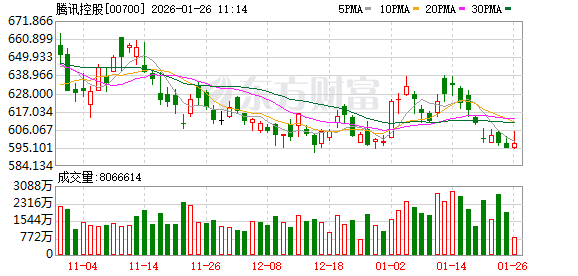
Summary of Key Points Core Viewpoint - On November 28, 47 Hong Kong-listed companies conducted share buybacks, totaling 38.525 million shares and an aggregate amount of HKD 1.147 billion [1][2]. Group 1: Buyback Details - Tencent Holdings repurchased 1.039 million shares for HKD 636 million, with a highest price of HKD 616.50 and a lowest price of HKD 609.00, bringing its total buyback amount for the year to HKD 66.686 billion [1][2]. - Xiaomi Group-W repurchased 7 million shares for HKD 288 million, with a highest price of HKD 41.18 and a lowest price of HKD 40.74, totaling HKD 3.038 billion in buybacks for the year [1][2]. - China Petroleum & Chemical Corporation repurchased 9.25 million shares for HKD 40.99 million, with a highest price of HKD 4.48 and a lowest price of HKD 4.40, accumulating HKD 1.566 billion in buybacks for the year [1][2]. Group 2: Buyback Rankings - The highest buyback amount on November 28 was from Tencent Holdings at HKD 636 million, followed by Xiaomi Group-W at HKD 288 million [1][2]. - In terms of share quantity, China Petroleum & Chemical Corporation led with 9.25 million shares repurchased, followed by Xiaomi Group-W with 7 million shares and COSCO Shipping Holdings with 3 million shares [1][2].
智通港股回购统计|12月1日
智通财经网· 2025-12-01 01:12
Core Insights - A total of 30 companies conducted share buybacks on November 28, 2025, with Tencent Holdings (00700) leading in both the number of shares repurchased and the total amount spent [1][2] Buyback Summary - Tencent Holdings (00700) repurchased 1.039 million shares for a total of 636 million, representing 0.870% of its total share capital for the year [2] - Xiaomi Group-W (01810) repurchased 7 million shares for 288 million, accounting for 0.250% of its total share capital [2] - China Petroleum & Chemical Corporation (00386) repurchased 9.25 million shares for 40.99 million, which is 0.170% of its total share capital [2] - COSCO Shipping Holdings (01919) repurchased 3 million shares for 39.78 million, representing 1.965% of its total share capital [2] - Yum China (09987) repurchased 52,400 shares for 19.70 million, which is 3.990% of its total share capital [2] - Other notable buybacks include VITASOY International (00345) with 171,000 shares for 11.20 million and China Feihe (06186) with 2.3 million shares for 9.59 million [2][3] Additional Company Insights - Companies like 康臣药业 (01681) and 固生堂 (02273) showed significant buyback activity, with 康臣药业 repurchasing 19,600 shares for 2.90 million, representing 13.613% of its total share capital [2][3] - The buyback activities reflect a trend among companies to return capital to shareholders amid market conditions [1][2]
中国消费者(HA):中国仍在消费不足吗
Sou Hu Cai Jing· 2025-12-01 00:46
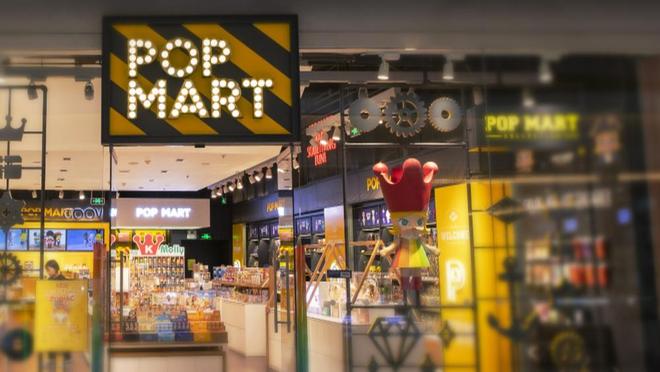
Core Conclusion - The notion of "insufficient consumption in China" is a distorted perception amplified by pricing and statistical methods. Bank of America provides extensive data showing that the true picture of Chinese consumption is not "volume shrinkage," but rather "high volume, low price." Total commodity consumption has reached or even surpassed that of the US, Japan, and South Korea; service consumption has met basic standards but still has gaps in quality. The main contradiction in the current market is the mismatch between "mass supply" and "upgraded demand." Companies focusing on the four key areas of "Efficiency, Experience, Service, Globalization (E2SG)" will thrive through cycles [1]. Group 1: Commodity Consumption - China's total commodity consumption is impressive, with certain categories outperforming developed countries. For example, per capita egg consumption is 128.5 g/day, which is 6% higher than the US and 42% higher than the global average. Sulfur consumption is 1117.9 g/day, which is 3.2 times that of the US. Seafood consumption is 114 g/day, nearly double that of the US. However, dairy consumption is only 86.9 g/day, which is 1/7 of the US level, but this gap is mitigated by plant proteins and eggs. The ownership of cooking appliances is 2.14 times the global average and 1.22 times that of the US. The number of new energy vehicles is 7.7 per thousand people, surpassing the US by 1.66 times and Japan by 8.75 times [3][4]. Group 2: Service Consumption - In terms of service consumption, China has met basic standards but still has quality gaps. The average housing area per person is 49 m², slightly below the US's 65 m² but higher than the UK and France. Medical visits average 6.8 times per year, exceeding the US by 3.4 times. Education duration is 15.5 years, on par with the US and Japan, but extracurricular spending is only $140/year, which is 1/28 of South Korea's. The prices for leisure and entertainment, such as concerts and exhibitions, have increased by 53%, indicating a significant supply-demand gap in high-quality offerings [5][6]. Group 3: Misconceptions of Consumption - The illusion of "insufficient consumption" stems from three main sources: 1. Low prices: Most goods/services are priced at only 20%-60% of US prices (e.g., mobile plans at 15%, taxis at 20%, utilities at 24%). 2. Supply chain advantages: China's role as the "world's factory" and innovations in distribution (like community group buying) continue to drive prices down. 3. Statistical discrepancies: If government transfer payments are included, the actual consumption to GDP ratio aligns with that of South Korea, which is approximately 40% [6]. Group 4: Mismatches and E2SG Investment Framework - There are three core mismatches in the market: 1. Supply vs. Demand: There is an oversupply of mass-market products, but insufficient emotional value and experience. 2. Channels vs. Communication: Fragmented media and ineffective traditional marketing require precise targeting and content-driven e-commerce. 3. Expectations vs. Reality: While income expectations are weak, there is a high demand for quality, necessitating affordable yet high-quality offerings [7]. Group 5: E2SG Investment Tracks - The E2SG investment framework emphasizes four key dimensions for companies to succeed in a "high volume, low price" market: 1. Efficiency: Achieving low costs and quick turnover through supply chain optimization and scale effects. 2. Experience: Creating differentiation through product innovation and capturing emotional consumption needs. 3. Service: Filling the gap in high-quality supply. 4. Globalization: Leveraging China's high volume and low price advantage to expand into international markets [10][11][12]. Group 6: Recommended Companies - Bank of America has identified seven companies with long-term competitive advantages across various sectors, including: - Pop Mart: Strong IP operation capabilities and global expansion, with an expected EPS growth of 30% by 2026. - Midea: Leading in global white goods with supply chain efficiency, focusing on overseas OBM business growth. - Geely: Rich in new energy vehicle reserves, planning to launch over 10 new models by 2026 with a target growth of 50%-80%. - Huazhu Group: Benefiting from leisure travel demand recovery and expanding through a light asset model, with a projected 21% CAGR in profits from 2024-2026. - Trip.com Group: Leading in OTA with expected 45% growth in international business revenue over the next six years. - Tencent Holdings: Dominating digital entertainment with stable mobile game revenue and AI-driven efficiency improvements. - Damai Entertainment: Leading in live entertainment ticketing with a projected 60% CAGR in profits from 2025-2028 [20][21].
粤117所职校开设306个AI相关专业
Sou Hu Cai Jing· 2025-12-01 00:43
制图:史明磊(元宝AI生成) 人工智能行业一路高歌猛进,吸引巨额投资,相关公司估值屡创新高。与此同时,业界对其是否存在泡 沫的担忧挥之不去。11月30日下午,在2025年"读懂中国"国际会议(广州)上,多位嘉宾谈及此话题。有 嘉宾提出,中国提出的"人工智能+"行动思路是破解泡沫担忧的根本办法。 强调人工智能与实体经济融合 人工智能行业是否存在泡沫,是该领域的主要争论之一。第十四届全国政协委员、人口资源环境委员会 委员,工业和信息化部原副部长王江平指出,"泡沫论"的声音认为,当前AI投资呈现"集中度高、风险 特殊、瓶颈凸显"三大特征。具体表现在:发生在AI领域的投资规模过高和集中,95%企业的AI投入未 能产生实际回报等。 第十四届全国政协委员、教科卫体委员会委员,科技部原副部长李萌在主旨报告中也提到了"AI泡沫"。 他以互联网为例分享道,互联网行业初期缺乏"内容产业",也伴随泡沫担忧,但后期催生和繁荣了移动 支付、电商、物流、外卖、工业互联网、智能网联汽车、智能电网、共享单车等欣欣向荣的新产业新经 济。 "中国的思路是破解泡沫担忧的根本办法。"李萌分享道,正因为吸取了互联网泡沫的教训,我国在鼓励 发展人工智能 ...
智通港股沽空统计|12月1日
智通财经网· 2025-12-01 00:26
智通财经APP获悉,新鸿基地产-R(80016)、商汤-WR(80020)、吉利汽车-R(80175)上一交易日沽空比率 位于前三位,分别为100.00%、100.00%、100.00%。阿里巴巴-SW(09988)、美团-W(03690)、腾讯控股 (00700)的沽空金额位居前三,分别为15.02 亿元、11.31 亿元、5.31 亿元。吉利汽车-R(80175)、中银香 港-R(82388)、广发证券(01776)的偏离值位居前三,分别为54.50%、45.83%、40.23%。 前十大沽空比率排行 | 股票名称 | 沽空金额 | 沽空比率↓ | 偏离值 | | --- | --- | --- | --- | | 新鸿基地产-R(80016) | 8.98 万元 | 100.00% | 25.33% | | 商汤-WR(80020) | 10.23 万元 | 100.00% | 38.77% | | 吉利汽车-R(80175) | 9.24 万元 | 100.00% | 54.50% | | 李宁-R(82331) | 7.09 万元 | 100.00% | 25.80% | | 京东健康-R(8661 ...
逐浪AI大时代:从A股到全球,人工智能基金怎么选?
阿尔法工场研究院· 2025-12-01 00:06
Core Viewpoint - The article emphasizes that artificial intelligence (AI) is transforming the global economy and presents a significant investment opportunity for investors through various fund options, particularly ETFs and public/private funds [1]. ETF Investment - ETFs are highlighted as an efficient tool for investors who prefer to follow industry trends without the hassle of selecting fund managers. The main focus of AI investment in A-shares is on "computing power infrastructure" and "application end" [2]. - Core broad-based ETFs include the AI ETF (515980) and AI ETF (515070), which track the China Securities Artificial Intelligence Index. These ETFs cover leading companies across the AI value chain, including chip manufacturers (e.g., Cambricon, Haiguang Information), large models and algorithms (e.g., iFlytek), and application scenarios (e.g., Hikvision, Kingsoft) [3][4]. - Segment-specific ETFs such as Cloud Computing 50 ETF (516630) and Communication ETF (515880) focus on computing power hardware and high-speed network facilities that support AI data transmission, respectively. The rationale is that hardware providers often see early performance returns in the AI development phase [5][6][7][8]. Public Funds (Active Equity) - Public funds rely on professional stock selection to seek alpha. The A-share market experiences rapid style rotation, and skilled fund managers can rotate investments within the AI value chain based on fundamental research [9][10]. - Focus on veteran managers in the "digital economy" and "TMT" sectors, particularly those with a track record during the mobile internet wave from 2013-2015. These managers tend to select companies with real performance rather than mere narratives [11][12]. - Quantitative public funds, such as those tracking the CSI 500 or CSI 1000 indices, excel in the active mid- and small-cap companies within the AI sector, often outperforming benchmark indices [13]. Private Funds - Private funds are characterized by greater flexibility in position management and the use of derivatives for risk hedging. They can effectively manage volatility in the AI sector by controlling drawdowns during declines and capitalizing on gains during upswings [14][15]. - Notable institutions include Huanfang Quantitative, Jiukun Investment, and Yifan Investment, which leverage deep learning to uncover market patterns and opportunities that active management may overlook [16]. - The article also highlights the importance of investing in global AI leaders through local private funds, as the U.S. maintains a dominant position in high-end computing and foundational models [18]. Recommended Fund Analysis - The Keywise Penguin No. 1 fund is recommended for its strong reputation and global investment scope, covering major tech markets and key AI players like Nvidia, Microsoft, and TSMC. The fund's strategy includes both long and short positions to protect net value during market fluctuations [19][20][21]. Investment Strategy Summary - The article concludes with a tailored investment strategy for different investor types, recommending ETFs for conservative investors, public funds for those seeking alpha, and the Keywise Penguin No. 1 for high-net-worth individuals looking for global exposure to AI assets [22].