BYD(01211)

Search documents
2025年全球十大车企出炉
Di Yi Cai Jing· 2026-02-06 11:11
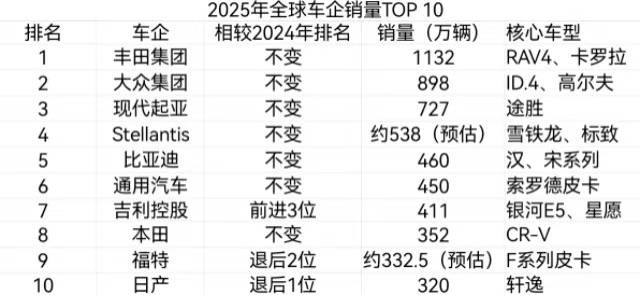
Core Insights - By 2025, the penetration rate of electric vehicles in China is expected to exceed 50%, leading to a shift in global automotive sales rankings, with Chinese automakers rising in prominence [1] Group 1: Global Automotive Sales Rankings - The top three global automakers in 2025 remain Toyota, Volkswagen, and Hyundai-Kia, with sales of approximately 11.32 million, 8.98 million, and 7.27 million units respectively [2] - BYD ranks fifth globally with sales of 4.6 million units, surpassing General Motors and Ford [2][4] - Geely's ranking improves from 10th in 2024 to 7th in 2025, with annual sales exceeding 4 million units for the first time [2][5] Group 2: Performance of Chinese Automakers - BYD's sales growth is primarily driven by its electric vehicle segment, achieving 460,000 units sold in 2025, a year-on-year increase of 7.73% [4] - BYD's overseas sales exceed 1.049 million units, marking a significant growth of 145%, with Mexico and Brazil being the top export markets [4] - Geely's electric vehicle sales reach 2.29 million units, a nearly 60% increase, with an overall penetration rate of 56% for new energy vehicles [5] Group 3: Challenges for Japanese Automakers - Toyota maintains its leading position with a 4.6% increase in sales to 11.32 million units, while Honda and Nissan face declines [7] - Honda's global sales drop to 3.52 million units, a decrease of 7.56%, with significant declines in European and Chinese markets [7] - Nissan's sales fall to 3.2 million units, a 4.4% decline, marking its seventh consecutive year of sales drop in China [3][8]



科创板企业扎堆登陆“中国500强”
3 6 Ke· 2026-02-06 10:55
Group 1 - The total value of the top 500 companies in China increased by 21 trillion yuan (38%), reaching 77 trillion yuan, with an average value growth of 41.5 billion yuan, now at 1.53 trillion yuan [1][2] - The entry threshold for the list rose to 34 billion yuan, an increase of 7.5 billion yuan from the previous year, marking a historical high [1][2] - The technology sector continues to be a growth engine, with significant increases in the number and market value of companies in semiconductor, biomedicine, artificial intelligence, and new energy sectors [1][2] Group 2 - Nearly 40% of this year's listed companies were not on the list four years ago, with new entrants primarily from consumer electronics, AI computing, and new energy sectors [2] - The semiconductor industry surpassed the life sciences sector to become the second-largest industry in the list, with TSMC leading the growth [3] - Notable semiconductor companies include TSMC, which saw a value increase of 3.5 trillion yuan, and Cambrian, which grew by 370 billion yuan [3] Group 3 - The new energy sector also performed well, with CATL's value increasing by 690 billion yuan, and other companies like Sungrow and EVE Energy showing significant growth [4] - The Shanghai region had 57 companies on the list, an increase of 7 from the previous year, making it the city with the fastest growth in the number of listed companies [10] - Shanghai is a key research and development hub, with 101 companies establishing their main R&D bases there, reflecting its strong innovation capabilities [10][11] Group 4 - The STAR Market (科创板) has a strong presence in the list, with 45 companies, showcasing the focus on hard technology sectors like semiconductors and biomedicine [6][7] - The semiconductor sector is particularly prominent among STAR Market companies, with many of the highest-valued startups in this field [8] - The overall trend indicates that STAR Market companies are in a high-growth phase, aligning with the broader trend of nearly 40% of this year's companies being new entrants [9]


2025年全球十大车企出炉:比亚迪、吉利力压两大日系巨头
Di Yi Cai Jing· 2026-02-06 10:00
Core Insights - The global automotive sales ranking has shifted, with Chinese automakers rising in prominence as the penetration rate of new energy vehicles (NEVs) in China surpasses 50% by 2025 [1] Group 1: Global Sales Rankings - The top three global automakers remain Toyota, Volkswagen, and Hyundai Kia, with sales of approximately 11.32 million, 8.98 million, and 7.27 million units respectively in 2025 [2] - BYD maintains its position as the fifth-largest automaker globally with sales of 4.6 million units, surpassing General Motors and Ford [2][4] - Geely's ranking improved from 10th in 2024 to 7th in 2025, with annual sales exceeding 4 million units for the first time [2][5] Group 2: Performance of Chinese Automakers - BYD's NEV sales reached 4.6 million units in 2025, marking a year-on-year growth of 7.73%, driven largely by overseas markets [4] - Geely's total sales surpassed 4 million units, with NEV sales reaching 2.29 million units, reflecting a nearly 60% year-on-year increase and a NEV penetration rate of 56% [5][6] Group 3: Challenges for Japanese Automakers - Toyota's sales increased by 4.6% to 11.32 million units, maintaining its lead in the global market [7] - Honda's global sales fell to 3.52 million units, a decrease of 7.56% compared to the previous year, with significant declines in Europe and China [7] - Nissan's sales dropped to 3.2 million units, down 4.4% from 2024, resulting in a decline in its global ranking to 10th place [3][8]

麻省理工发布十大突破性技术榜单 能源领域两项入选!
Ren Min Wang· 2026-02-06 09:38
Group 1: Breakthrough Technologies - The 2026 "Top Ten Breakthrough Technologies" list by MIT Technology Review highlights sodium-ion batteries and next-generation nuclear energy as key advancements in the energy sector, indicating a global shift towards safer, more economical, and sustainable energy systems [1] - Both sodium-ion batteries and next-generation nuclear technologies are expected to achieve large-scale mature applications within the next 3 to 5 years [1] Group 2: Sodium-Ion Batteries - Sodium-ion batteries are emerging as a significant alternative to lithium-ion batteries in electric vehicles and grid storage due to their abundant raw materials, lower costs, and enhanced safety [2] - China is leading the development of sodium-ion batteries, with companies like CATL launching their Naxtra product line in 2025 and BYD constructing large production facilities [2] - Applications of sodium-ion batteries are already in progress, with Jiangling Group offering sodium-ion battery options for its EV3 model in 2024, and several Chinese cities piloting sodium-ion battery swap stations [2] - Despite currently having lower energy density than high-end lithium-ion batteries, sodium-ion batteries are improving in performance and are expected to significantly impact grid storage due to their low cost, high safety, and long lifespan [2] Group 3: Next-Generation Nuclear Technologies - Next-generation nuclear technologies aim to address the high costs and long construction times associated with traditional nuclear power by utilizing new fuels, coolants, and small modular designs, potentially leading to the largest nuclear power expansion since the 1970s [3] - These technologies include fourth-generation reactors and small modular reactors, which can produce less than one-thousandth of the output of traditional designs while enhancing safety and providing diverse energy outputs [3] - Various companies and institutions are actively advancing these technologies, with initial demonstration projects entering late planning or construction phases, crucial for meeting the growing global electricity demand driven by AI, data centers, and electric vehicles [3]

震荡下跌,港股三大指数全绿,科网巨头齐跌!汽车股爆发,蔚来涨近7%,理想、小米、比亚迪等齐涨|港股收盘
Mei Ri Jing Ji Xin Wen· 2026-02-06 09:16
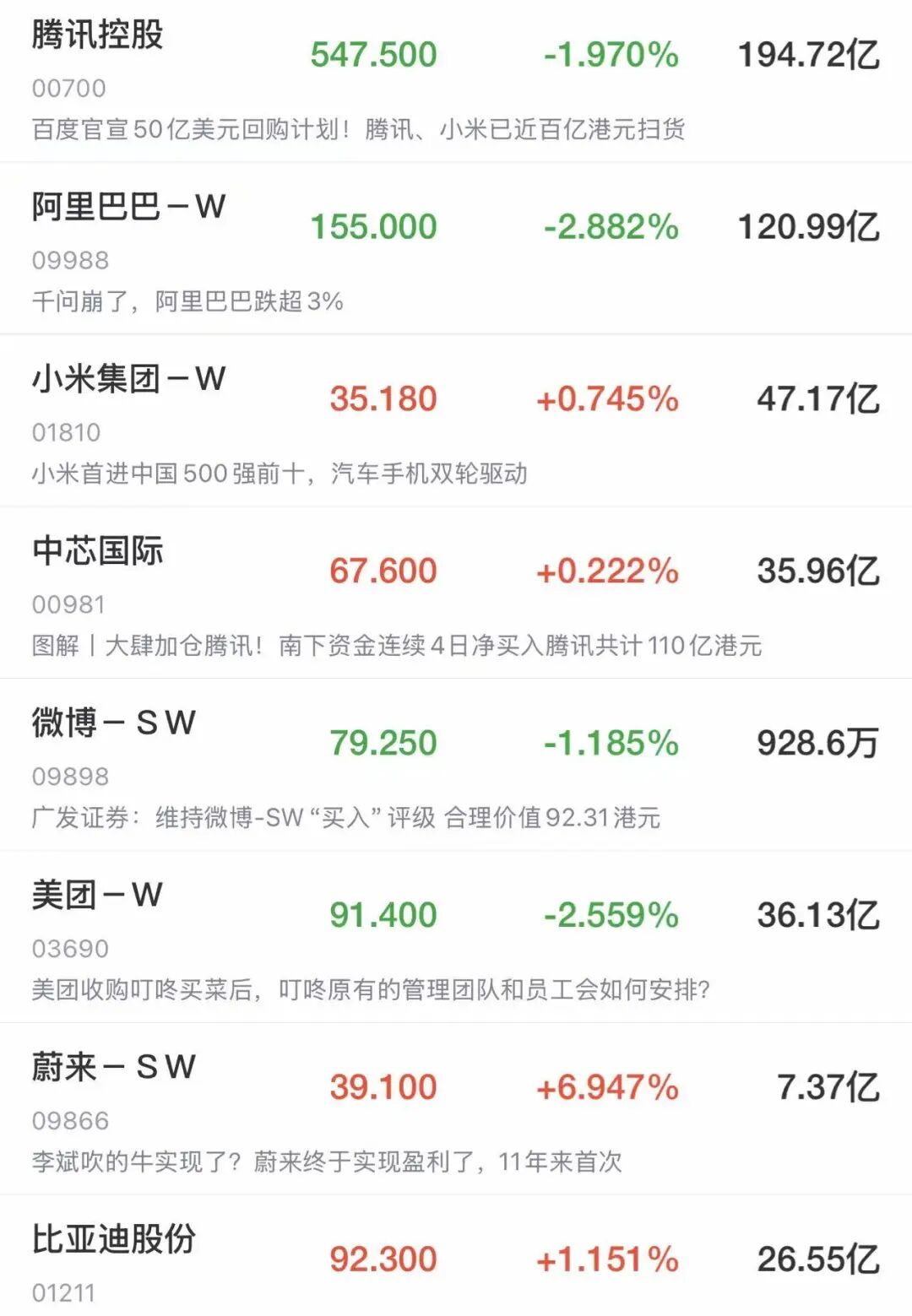
Market Overview - The Hong Kong stock market experienced a decline, with the Hang Seng Index falling by 1.21%, the Hang Seng China Enterprises Index down by 0.681%, and the Hang Seng Tech Index decreasing by 1.109% [1] - Technology stocks saw a significant drop, with Alibaba down nearly 3%, Meituan, Kingsoft, JD Health, Baidu, and NetEase all falling over 2%, while Tencent Holdings decreased by nearly 2% [1] - In contrast, automotive stocks rose, with NIO increasing by nearly 7%, Li Auto up over 5%, and Xpeng Motors rising over 3% [1] Company Specifics - NIO announced an earnings forecast indicating that it expects to achieve adjusted operating profit of approximately 700 million to 1.2 billion yuan for Q4 2025, marking the company's first quarterly adjusted operating profit in its 11-year history [3] - According to reports, Tencent and Xiaomi have been actively buying back shares, with Tencent seeing net purchases totaling 11 billion Hong Kong dollars over four consecutive days [2] - Meituan's acquisition of Dingdong Maicai raises questions about the future arrangements for the existing management team and employees of Dingdong [2] Investment Trends - Analysts suggest that the recent adjustments in the Hong Kong market are primarily technical corrections rather than a trend reversal, driven by overly optimistic market sentiment and external factors such as liquidity concerns related to the nomination of the Federal Reserve Chairman [4] - There is a noticeable shift in capital from high-performing tech stocks to more defensive sectors, such as consumer and dividend stocks, which are favored for their lower valuations and stable performance [4] - Resource stocks, particularly coal, have shown strong performance due to external catalysts like Indonesia's suspension of coal spot exports, indicating a market focus on physical assets [4]



【热点评述】简析2026年汽车以旧换新补贴新政
乘联分会· 2026-02-06 08:55
Core Viewpoint - The 2026 policy for replacing old products with new ones will continue to be implemented, focusing on the automotive, home appliance, and digital product sectors, with an emphasis on nationwide consistency and regulatory measures to enhance market efficiency [3][5][7]. Group 1: Policy Changes - The 2026 subsidy mechanism will shift from a fixed amount to a "proportional + cap" model, which will primarily benefit lower-priced, subsidy-sensitive economic models while maintaining stable incentives for mid-to-high-priced vehicles [6][11]. - The new subsidy guidelines aim to standardize the subsidy amount across the country, reducing local discrepancies and potential arbitrage opportunities [5][12]. Group 2: Market Impact - The 2025 old-for-new policy significantly boosted passenger car sales in China, demonstrating a strong correlation between the policy and market performance, particularly in promoting the adoption of new energy vehicles [8][12]. - The completion of annual sales targets by several automakers, including BYD and SAIC, indicates a competitive landscape, with traditional manufacturers adopting cautious growth targets while new entrants remain optimistic [9]. Group 3: Tax and Financial Measures - In 2026, the purchase tax for new energy vehicles will be halved, with a maximum tax reduction of 15,000 yuan, prompting various automakers to introduce compensatory measures to cover tax differences [10]. - The adjustment in subsidy algorithms is expected to reshape market dynamics, emphasizing sustainable and balanced use of subsidies rather than merely increasing them [11][12].



开箱广货爆款!全球新能源汽车销冠在粤,力拼“智造”立潮头
Nan Fang Du Shi Bao· 2026-02-06 08:16
广东是全国新能源车渗透率最高的地区之一,也成为产业升级的示范者。2025年前11个月,广东省汽车 产量达271.96万辆,其中新能源汽车产量101.61万辆;新能源汽车销量达123.5万辆,同比增长15%,产 销规模稳居全国前列。销量端的表现,集中体现在头部企业的集体发力。比亚迪以460.2万辆的全年销 量问鼎全球新能源汽车销量冠军,其中海外销量首次突破100万辆,成为中国车企出海的标志性样本; 广汽集团全年终端销量181.35万辆,正加快在东南亚、美洲等市场布局;小鹏汽车全年交付42.9万辆, 并通过与大众集团的技术合作,实现智能电动车平台的反向输出。 "广东造"汽车驶向全球,并非孤军作战。从广州的整车制造基地,到深圳的芯片与软件研发,从佛山的 精密零部件生产,到东莞、惠州的动力电池集群,广东已形成覆盖"整车—电池—芯片—智能系统"的完 整新能源汽车产业链,核心部件自给率超过90%。在产业链细分环节,广东同样聚集了一批具备全球竞 争力的"隐形冠军":电池材料领域有贝特瑞、欣旺达,传感器领域有奥比中光、速腾聚创,智能驾驶解 决方案领域有元戎启行等企业协同发力,使广东具备"整车+核心零部件+技术服务"一体化出海 ...
3月19-20日 常州!2026锂电关键材料及应用市场高峰论坛
鑫椤锂电· 2026-02-06 08:15
Core Viewpoint - The lithium battery industry is poised for a significant growth cycle in 2026, characterized by strong demand recovery, accelerated global expansion, and disruptive technological advancements, leading to a "spiral rise" in both volume and price [3]. Group 1: Market Predictions - Global lithium battery production is expected to reach 2297 GWh by 2025, with a growth rate of 34.6% in 2026. The shipment growth rate for energy storage cells is projected to be as high as 70%, driven by both domestic and international demand [5]. - There is a notable supply gap in the effective production capacity of battery cells and various materials, making supply chain stability and efficiency crucial for capitalizing on this growth opportunity [5]. Group 2: Conference Details - The 2026 Lithium Key Materials and Applications Market Summit will be held on March 19-20, 2026, in Changzhou, Jiangsu, organized by Xinluo Information [4]. - The summit will focus on two main topics: in-depth discussions on cutting-edge technologies and market supply-demand dynamics, and B2B procurement matchmaking to connect top battery manufacturers and material suppliers [6]. Group 3: Key Topics and Speakers - The conference will feature discussions on lithium carbonate futures and options, market volatility responses from lithium battery companies, and the potential of global lithium resources in 2026 [7][8]. - Other topics include the strategic resource competition in nickel and cobalt supply, the development opportunities presented by solid-state batteries, and the current market trends for various battery materials [8][9].


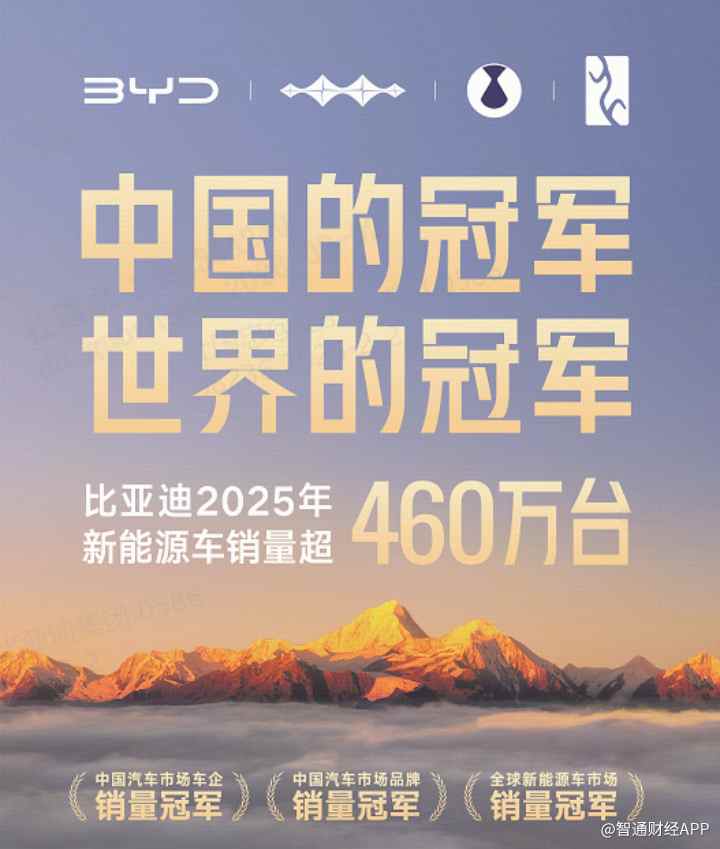
比亚迪蝉联三冠王背后:重研发,才有硬技术
Zhi Tong Cai Jing· 2026-02-06 06:57
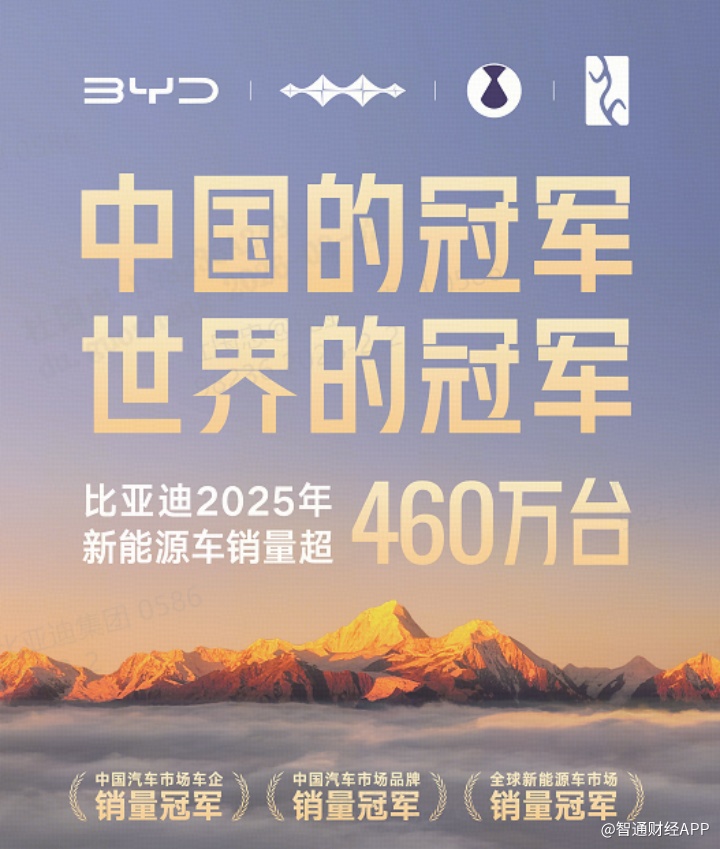
Core Insights - In 2025, China's automotive industry achieved a historic milestone with production and sales exceeding 34 million units, marking the 17th consecutive year as the global leader, while domestic sales of new energy vehicles surpassed 50% [1] - BYD maintained its position as the global leader in new energy vehicle sales for the fourth consecutive year, with total sales exceeding 4.6 million units in 2025 [1] - The growth momentum for BYD continued into 2026, with January sales of new energy vehicles reaching 210,000 units, reflecting strong market recognition [1] Group 1: Global Expansion - BYD's overseas sales reached 1.0496 million units in 2025, representing a 145% year-on-year increase, making international markets a key growth driver [4] - The company emphasizes a long-term strategy, focusing on building a comprehensive ecosystem of distribution networks, local factories, and logistics systems for sustainable growth [4] - BYD's products are now available in 119 countries and regions, with significant sales increases in core markets such as Brazil, Germany, and the UK, enhancing brand influence [4] Group 2: Research and Development - BYD's R&D investment reached 43.75 billion yuan in the first three quarters of 2025, a 31% increase year-on-year, with total R&D spending exceeding 220 billion yuan [6] - The company has consistently invested more in R&D than its annual net profit for 13 out of the last 14 years, indicating a strong commitment to technological advancement [6] - New technologies, such as the "Tian Shen Zhi Yan" driver assistance system and the Super e-platform, were launched in 2025, pushing the boundaries of industry technology [6] Group 3: High-End Market Strategy - BYD's approach to high-end market penetration is based on technological capabilities rather than brand premium, differentiating it from other Chinese brands [8] - The company has established three sub-brands—Yangwang, Tengshi, and Fangchengbao—to target various segments of the high-end market, achieving significant sales growth in each [8][9] - Fangchengbao's sales reached 234,600 units in 2025, a 316.1% increase, while Tengshi D9 sold 103,500 units, breaking the dominance of foreign brands in the luxury MPV market [8] Group 4: Industry Impact - BYD's success signifies a broader transformation in the Chinese automotive industry, moving from merely "chasing parameters" to "building systems" [10] - The company's ability to support global expansion while driving high-end breakthroughs represents a new phase of high-quality development for the Chinese automotive sector [10] - BYD is becoming a pivotal reference point in this transition, highlighting its significance beyond just being a successful enterprise [10]
比亚迪(01211)蝉联三冠王背后:重研发,才有硬技术
智通财经网· 2026-02-06 06:55
Core Insights - In 2025, China's automotive industry achieved a historic milestone with production and sales exceeding 34 million units, marking the 17th consecutive year as the global leader, while domestic sales of new energy vehicles surpassed 50% [1] - BYD maintained its position as the global leader in new energy vehicle sales for the fourth consecutive year, with total sales exceeding 4.6 million units in 2025, and continued strong performance into 2026 with January sales reaching 210,000 units [1] Group 1: Growth Drivers - The growth logic behind these achievements is shifting, characterized by accelerated globalization, a solidified technological framework, and rapid advancements in high-end offerings [3] - In 2025, overseas markets became a significant growth engine for BYD, with overseas sales reaching 1.0496 million units, a 145% increase year-on-year [4] - BYD emphasizes long-term strategies over short-term gains, focusing on building a comprehensive system of dealerships, local factories, and logistics networks to support its global expansion [4] Group 2: R&D and Technological Advancements - BYD's sustained global expansion is underpinned by significant long-term investments in R&D, with expenditures reaching 43.75 billion yuan in the first three quarters of 2025, a 31% increase year-on-year [6] - The company has consistently invested more in R&D than its annual net profit for 13 out of the last 14 years, translating these investments into marketable technologies [6] - New technologies such as the "Tian Shen Zhi Yan" driver assistance system and the Super e-platform have been launched, pushing the boundaries of industry technology [6] Group 3: High-End Market Strategy - BYD's approach to high-end market penetration differs from traditional Chinese brands, focusing on technological capabilities rather than brand premium to drive high-end development [8] - The company has segmented its high-end strategy through three sub-brands: Yangwang, Tengshi, and Fangchengbao, targeting various market segments from personalized luxury to ultra-high-end offerings [8] - In 2025, Fangchengbao achieved sales of 234,600 units, a 316.1% increase, while Tengshi D9 sold 103,500 units, breaking the dominance of foreign brands in the luxury MPV market [8][9] Group 4: Industry Impact - BYD's significance extends beyond its corporate success, representing a shift in the Chinese automotive industry from merely "chasing parameters" to "building systems" [10] - The ability of technology to support global expansion and further enhance high-end breakthroughs signifies a new phase of high-quality development for the Chinese automotive industry [10]