BYD(01211)

Search documents
央视曝光汽车圈黑产乱象,倡导依法维权守护产业生态
Chang Sha Wan Bao· 2026-02-05 10:21
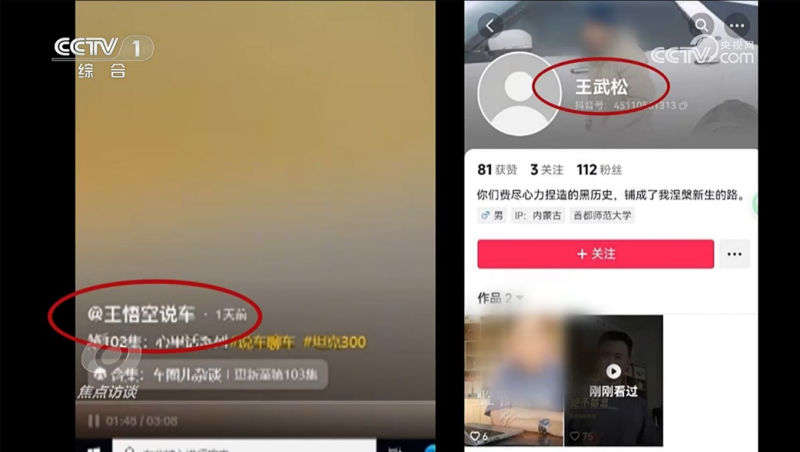
Core Viewpoint - The recent CCTV report on the automotive industry highlights the pervasive issue of online black market activities, particularly in the rapidly growing new energy vehicle sector, calling for collaborative efforts to maintain fair practices and protect consumer rights [1][2][3]. Group 1: Industry Issues - The automotive industry, especially the new energy vehicle sector, faces significant challenges from online chaos, which is described as a "chronic disease" hindering healthy development [1]. - Online black market activities include false evaluations, malicious defamation, and misleading information aimed at consumers, creating a complete industrial chain that harms legal rights of companies and disrupts market order [1][2]. - The report emphasizes the need for regulatory bodies, car companies, media, and consumers to work together to address these online issues effectively [2][3]. Group 2: Company Actions - BYD has been highlighted for its legal actions against online defamation, with specific cases such as the self-media account "Wang Wukong Says Car" being penalized for spreading false information about BYD [1][3]. - BYD's public relations manager stated that the root of black public relations and media issues stems from competitors within the industry, indicating a broader problem that requires collective action [2][3]. - The company has successfully pursued legal action against individuals spreading false information, such as the case involving the blogger "Yao Shiba," who was ordered to pay 2.01 million yuan for damaging BYD's reputation [3].


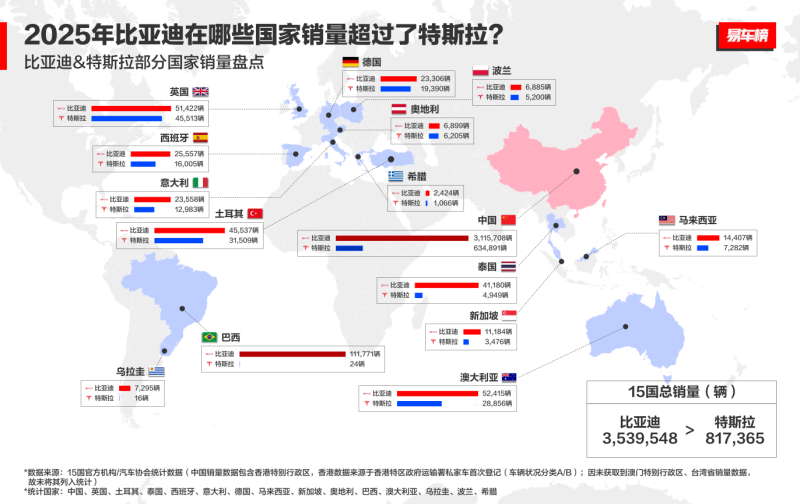
纯电动汽车销量登顶全球榜首!比亚迪重构全球新能源汽车格局
Chang Sha Wan Bao· 2026-02-05 09:54
Core Insights - In 2025, BYD surpassed Tesla with a total of 2.257 million pure electric vehicle sales, marking a historic shift in the global electric vehicle industry [1] - This achievement reflects the systematic innovation and strategic globalization of Chinese automotive brands, establishing a leading position in the core track of the global automotive industry [1] Group 1: Technological Advancements - BYD's success is built on a robust full-industry chain technology moat, with key innovations such as the "Tian Shen Eye" driver assistance system and "Super e-platform Mega Flash Charging" [1] - The vertical integration of its supply chain ensures rapid iteration of technology and products, providing a competitive edge in global markets [1] Group 2: Market Performance - In Europe, BYD transitioned from a single product approach to a systematic breakthrough, achieving over 50,000 sales in the UK, a 485% year-on-year increase [3] - In traditional automotive strongholds like Germany, Spain, and Italy, annual sales exceeded 20,000 units [3] - In emerging markets like Turkey and Thailand, annual sales reached 45,000 and 41,000 units respectively, with local production significantly enhancing market dominance [3] Group 3: Global Expansion Strategy - BYD's dual strategy of "going global" and "localization" has led to its presence in 119 countries and regions, with overseas sales surpassing one million units in 2025 [4] - The establishment of production facilities in Thailand, Brazil, Uzbekistan, and the upcoming factory in Hungary reflects a commitment to localize operations, shorten delivery times, and meet market demands [4] - BYD's ascent signifies a new phase in global automotive competition, demonstrating the capability of the Chinese automotive industry to lead in technology-intensive high-end manufacturing [4]
补能设施、技术路线日趋成熟,北方新能源汽车市场“破冰”
Hua Xia Shi Bao· 2026-02-05 09:33
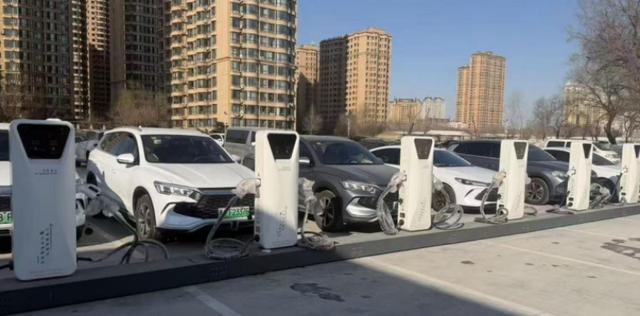
Core Viewpoint - The automotive market in Harbin is undergoing a significant transformation, shifting from traditional fuel vehicles to a diverse range of powertrains, including electric and hybrid models, driven by changing consumer preferences and improved infrastructure [2][3][4]. Group 1: Market Dynamics - The sales of electric vehicles (EVs) in Harbin saw a remarkable year-on-year increase of 110.09% in the first quarter of 2025, while hybrid vehicles accounted for 30.08% of the market, emerging as a vital segment [4]. - Traditional fuel vehicles still maintain a solid market presence, particularly in scenarios requiring long-distance travel and reliability in cold starts, with models like Nissan Sylphy and RAV4 remaining popular [3][4]. - The shift in consumer behavior reflects a growing acceptance of various vehicle types, with families opting for different powertrains based on convenience, cost, and practicality [3][4]. Group 2: Infrastructure Development - The charging infrastructure in Harbin has rapidly evolved, with 250 charging stations established across highway service areas, ensuring comprehensive coverage for long-distance travel [6]. - Urban charging networks are expanding, with charging facilities integrated into public transport hubs and the creation of additional parking spaces equipped with charging stations [6][7]. - The transition to electric vehicles is supported by advancements in technology, such as range-extending solutions that address winter performance concerns, enhancing consumer confidence [6][7]. Group 3: Consumer Preferences - Consumers are increasingly making rational choices based on their specific driving needs, with compact and cost-effective models like the Wuling Hongguang MINI EV gaining popularity for urban commuting [3][4]. - The high-end market is witnessing a blend of traditional luxury fuel vehicles and new energy brands, indicating a diversification in consumer preferences and a shift towards a more nuanced understanding of vehicle value [5][7]. - The market is moving towards a "power equality" movement, where no single technology dominates, and consumers select vehicles based on their unique requirements and cost considerations [5][7]. Group 4: Systemic Changes - The transformation in Harbin's automotive market represents a shift from policy-driven growth to a more resilient system driven by suitable technology, available infrastructure, and trustworthy brand services [7]. - The integration of digital experiences and standardized services in new energy vehicle showrooms is lowering barriers for consumers, facilitating quicker acceptance of innovative technologies [7]. - The collective effort of policies, market dynamics, technology, and consumer trust is reshaping the narrative around electric vehicles in traditionally challenging markets like Harbin [7].
中泰证券:维持比亚迪“买入”评级,进一步加速自建船队+海外工厂建设
Jin Rong Jie· 2026-02-05 09:15
Core Viewpoint - BYD's wholesale sales in January reached 210,000 units, showing a year-on-year decline of 30.1% and a month-on-month decline of 50.0%, with domestic sales at 100,000 units (down 53.2% year-on-year, down 61.9% month-on-month) and overseas sales at 110,000 units (up 51.5% year-on-year), accounting for 47.8% of total sales in January [1] Group 1 - The decline in January sales is attributed to proactive inventory reduction and a transitional policy period, resulting in a structure characterized by "domestic destocking and high overseas sales" [1] - The outlook for 2026 and beyond emphasizes that exports are the most crucial support for the company's long-term strategy [1] - The company is accelerating the establishment of its own shipping fleet and overseas factories to enhance export capabilities [1] Group 2 - Drawing parallels with Toyota's operational history, the overseas business is expected to positively impact stock prices during periods of domestic sales pressure [1] - The research maintains a "buy" rating for the company [1]

新广益:自主开发的冷板辊压胶膜、侧板PI绝缘胶带等特种功能膜已顺利通过比亚迪的产品测试
Ge Long Hui· 2026-02-05 09:03
Core Viewpoint - The company has successfully passed product testing for its self-developed special functional films, which creates positive conditions for large-scale production in the future [1] Group 1: Product Development - The company has developed cold-rolled film and side PI insulating tape, which have been tested by BYD [1] - Successful testing indicates readiness for future mass production of these products [1] Group 2: Employee Incentives - Core technical personnel have acquired company shares through an employee stock ownership platform [1] - The company plans to implement employee equity and option incentive plans based on business development [1] - The aim is to continuously attract excellent R&D talent to establish a strong team for sustainable development [1]
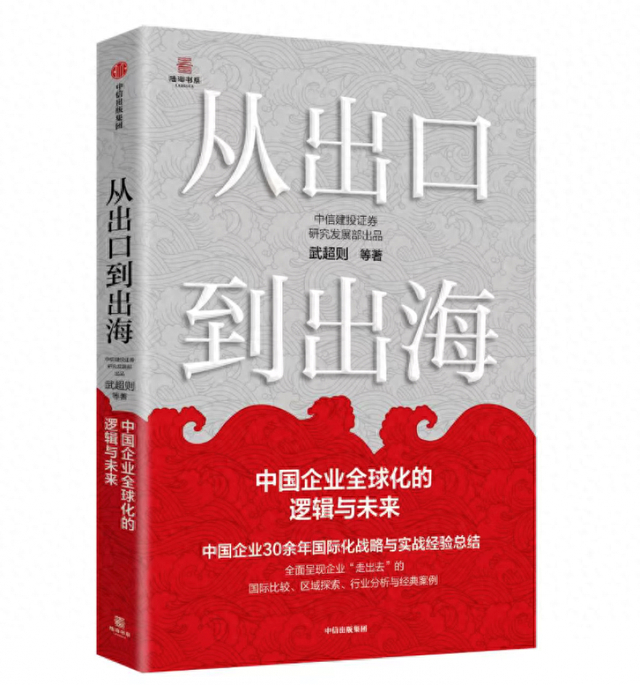
中国企业出海的十大展望
Hua Xia Shi Bao· 2026-02-05 09:01
Group 1: Global Expansion of Chinese Manufacturing - The trend of Chinese manufacturing companies expanding globally is accelerating, particularly in tariff-sensitive sectors such as automotive, consumer electronics, and machinery, which are relocating production to countries with lower tariffs or favorable policies to reduce costs and mitigate trade risks [2][3] - Chinese manufacturers are diversifying their global supply chains by exploring emerging markets in Latin America, the Middle East, and Africa, thereby enhancing supply chain stability and risk resilience [2][3] - The implementation of regional economic cooperation mechanisms and free trade agreements, such as RCEP, is creating a more favorable policy environment for the globalization of Chinese manufacturing [3] Group 2: Overseas Mergers and Acquisitions - Chinese manufacturing companies are leveraging overseas mergers and acquisitions to transition from OEMs to self-owned brands, gaining market share, sales channels, and high-end brand images [3][4] - The focus of these acquisitions is shifting towards strategic alignment in brand, market, technology, and supply chain integration, enhancing global competitiveness [3][4] - Companies like Haier exemplify this trend by achieving breakthroughs in the European and American markets through acquisitions, thereby strengthening their global competitive advantage [3][4] Group 3: Labor-Intensive Industries and Cost Migration - Labor-intensive industries are increasingly relocating to low-cost regions such as Southeast Asia and South Asia, benefiting from local labor advantages and policy support [4][5] - The trend of regional industrial clusters is forming as companies seek to reduce costs and improve response efficiency through localized production [4][5] - The global supply chain is becoming more regionalized, with multinational companies establishing collaborative industrial clusters in emerging regions to enhance supply chain resilience [4][5] Group 4: Resource Sector Globalization - Chinese resource companies are accelerating their global expansion by constructing complete industrial chains from mining to processing and application, enhancing their control and influence in the global resource sector [6][7] - The focus is shifting from merely acquiring resources to deep integration of upstream and downstream operations, utilizing diverse cooperation methods such as equity investments and joint ventures [6][7] - Notable examples include the acquisition of cobalt mines in the Democratic Republic of Congo and lithium companies in Australia, showcasing the strategic foresight of Chinese enterprises [6][7] Group 5: Digital Transformation and Brand Value - Chinese companies are transitioning from low-cost manufacturing to brand value creation, utilizing digitalization to enhance brand building and global competitiveness [9][10] - Companies like Anker and Xiaomi are leveraging localized operations and digital marketing to establish strong brand identities and achieve significant sales growth [9][10] - The focus on digital transformation is enabling companies to create differentiated brand matrices and improve supply chain management, enhancing market competitiveness [9][10] Group 6: Compliance and Localization - Compliance and localized operations are becoming core competitive advantages for Chinese enterprises in international markets, with a focus on establishing robust global compliance systems [11][12] - Companies are actively building global compliance monitoring systems to ensure adherence to regulations in areas such as data security and environmental standards [11][12] - The ability to navigate compliance challenges is increasingly seen as integral to brand value and international market acceptance [11][12] Group 7: Policy Support for Globalization - Recent policy initiatives from the Chinese government are creating unprecedented opportunities for enterprises to expand internationally, emphasizing high-level openness and integration into the global economy [13][14] - The focus on developing new production capabilities and promoting the integration of the real economy with the digital economy is expected to provide clear guidance for companies in the new round of global competition [13][14] - Structural monetary policies are anticipated to offer targeted financial support to foreign trade enterprises, aiding their internationalization efforts [14] Group 8: Cultural and Ideological Export - Chinese enterprises are increasingly integrating cultural content with brand ideology to enhance cultural soft power and global brand value [18][19] - The growth of cultural consumption globally is driving the export of diverse cultural products, including games and films, with significant revenue growth reported [18][19] - The focus on building a robust IP ecosystem and localizing content production is crucial for enhancing global appeal and emotional resonance with audiences [18][19]


新广益(301687.SZ):自主开发的冷板辊压胶膜、侧板PI绝缘胶带等特种功能膜已顺利通过比亚迪的产品测试
Ge Long Hui A P P· 2026-02-05 09:01
Core Viewpoint - The company has successfully passed product testing for its self-developed special functional films, which creates positive conditions for large-scale production in the future [1] Group 1: Product Development - The company has developed cold-rolled film and side PI insulating tape, which have been tested by BYD [1] - Successful testing of these products indicates readiness for future mass production [1] Group 2: Employee Incentives - Core technical personnel have acquired company shares through an employee stock ownership platform [1] - The company plans to implement employee equity and option incentive plans based on business development [1] - The aim is to continuously attract excellent R&D talent to establish a strong team for sustainable development [1]
2025年ESG与中国国际化企业的商誉研究报告
Sou Hu Cai Jing· 2026-02-05 08:50
Core Findings - The research indicates a significant positive correlation between good ESG practices and corporate brand value, with the environmental (E) and governance (G) dimensions having a more pronounced positive impact [2][9] - Under the "dual carbon" goals, companies' green production and energy-saving performance are more likely to gain international recognition, while governance structure optimization enhances market trust [2][3] - The social (S) dimension's impact on brand value is relatively weaker due to differences in standards between China and the West [2][3] ESG Practices and Corporate Governance - Leading companies typically adopt an embedded governance model for ESG, integrating it into strategic planning, product innovation, and supply chain management [2][3] - Hikvision has established a dual-axis governance structure, Huabao New Energy has developed a green factory system, BYD links ESG performance to executive compensation, and Haier Biomedical achieves a blend of commercial and social value through technological innovation [2][3] - These companies reflect a shift from "compliance-oriented" to "value-driven" ESG practices, aligning with international technical standards while retaining local characteristics [2][3] Challenges and Recommendations - Current challenges include non-unified ESG information disclosure standards, insufficient transformation capabilities of small and medium-sized enterprises, and the need for improved international discourse adaptability [3] - Recommendations include embedding ESG deeply into governance structures, constructing localized narrative systems, and enhancing industry chain collaboration [3] - The government should improve a tiered and categorized ESG standard system and establish diverse incentive mechanisms and public service platforms [3] Importance of ESG in Global Competitiveness - ESG has become a core indicator of corporate international competitiveness amid the global sustainable development agenda [3] - Chinese international enterprises need to implement systematic ESG practices to balance international standards with local adaptation, using environmental innovation as a breakthrough point to enhance brand value and international influence [3]



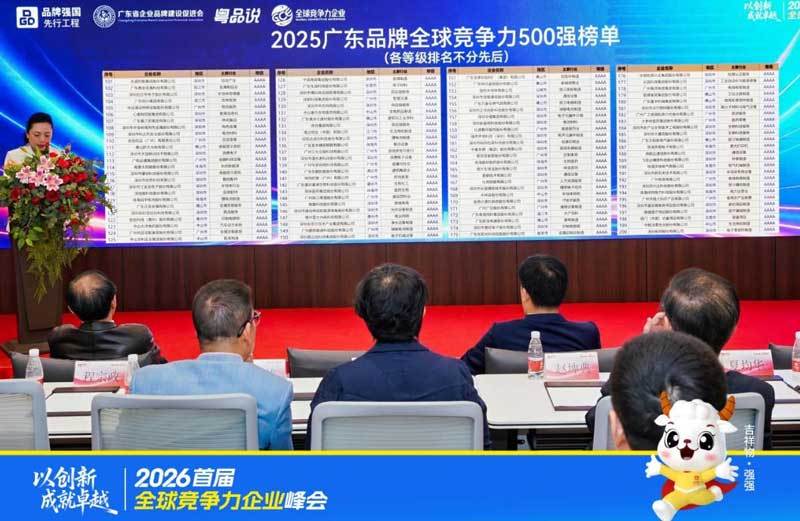
佛山新闻:2025广东品牌全球竞争力500强名单在佛山南海揭晓
Sou Hu Cai Jing· 2026-02-05 08:38
Core Insights - The 2026 Global Competitiveness Enterprise Summit was held in Foshan, Guangdong, focusing on the theme "Chinese Brands, Global Rise" and featured the release of the "2025 Guangdong Brand Global Competitiveness Top 500 Report" [1][2] - The summit highlighted the importance of brand strength as a key strategy for global competitiveness, with a strict evaluation process for the top 500 companies [2][5] Group 1: Event Overview - The summit was co-hosted by the Brand Strong Country Pilot Project Committee and the Guangdong Enterprise Brand Construction Promotion Association [1] - The "2025 Guangdong Brand Global Competitiveness Top 500" and "Global Competitiveness Enterprises" lists were officially unveiled, providing a scientific guide for brand globalization [1][2] Group 2: Company Performance - A total of 500 AAA-rated and above companies were selected, including major players like Huawei, Tencent, and BYD, showcasing Guangdong's manufacturing strength and global brand potential [2][5] - The report indicated that the total revenue of the top 500 companies reached 14.11 trillion yuan, surpassing the GDP of several developed countries [4] Group 3: Industry and Regional Insights - The top 500 companies displayed a clear trend of "regional concentration, industrial strength, and innovation-driven" characteristics, with 333 companies located in Shenzhen, Guangzhou, and Foshan [5][6] - Manufacturing dominated the list, with 416 companies (83.2%) in this sector, highlighting the strength of strategic emerging industries like biomedicine and new energy vehicles [6] Group 4: Future Directions - The summit emphasized the need for Guangdong brands to continue leveraging technological innovation and global operations to enhance their position in the global value chain [8][10] - Initiatives were announced to support brand development, including the establishment of a public welfare platform and specialized committees to aid in overseas expansion [10]

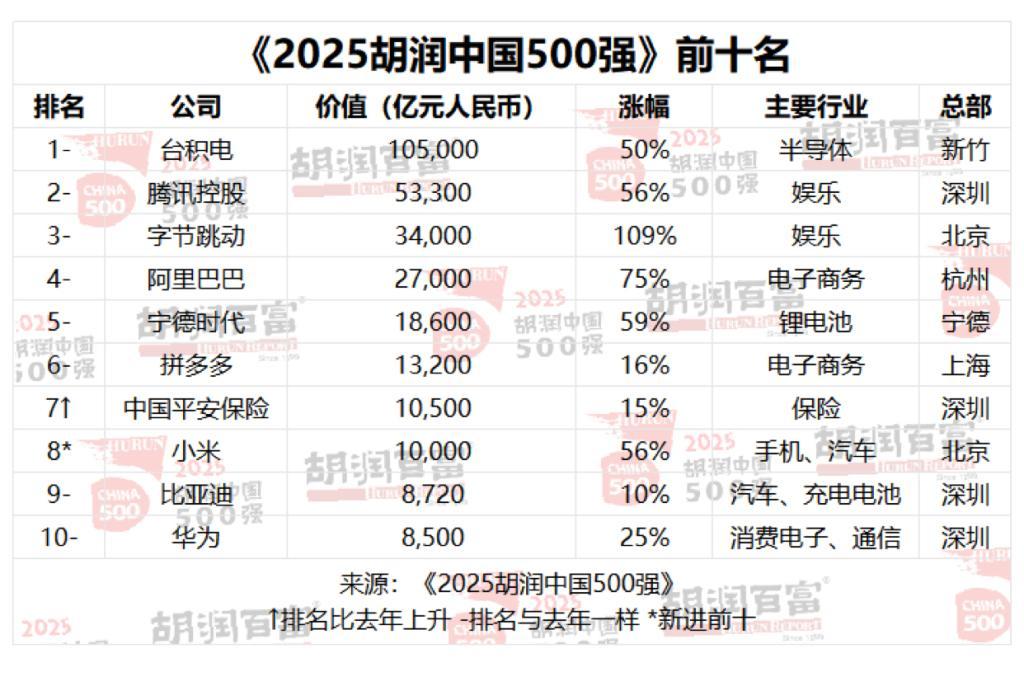
2025胡润中国500强榜单发布,小米超越华为排第八
Qi Lu Wan Bao· 2026-02-05 08:22
Core Insights - The "2025 Hurun China 500" list ranks the top 500 non-state-owned enterprises in China based on their value, with TSMC, Tencent, and ByteDance leading the rankings [1][2] Group 1: Company Rankings - TSMC retains its position as the highest-valued private enterprise in China, with a value of 10.5 trillion RMB, an increase of 3.5 trillion RMB [1][2] - Tencent follows in second place with a value of 5.3 trillion RMB, up by 1.9 trillion RMB [1][2] - ByteDance ranks third with a value of 3.4 trillion RMB, increasing by 1.8 trillion RMB [1][2] Group 2: Overall Market Trends - The threshold for entering the top 500 increased by 7.5 billion RMB to 34 billion RMB, reflecting a growth rate of 28% [2] - The total value of the top 500 companies grew by 21 trillion RMB, a 38% increase, reaching a total of 77 trillion RMB [2] - Among the 500 companies, 386 saw an increase in value, including 95 new entrants, while 102 experienced a decline [2] Group 3: Industry Distribution - 75% of the companies provide physical products, while 25% offer software or services [2] - The semiconductor, media and entertainment, industrial products, and consumer goods sectors account for half of the total value of the Hurun China 500 [2] Group 4: Geographic Distribution - Beijing, Shanghai, and Shenzhen are the top three cities with the most companies in the Hurun China 500, with 59, 57, and 49 companies respectively [5][6] - The Yangtze River Delta region has 161 companies in the list, making up 32% of the total, while the Guangdong-Hong Kong-Macau Greater Bay Area has 108 companies, accounting for 22% [7]