YADEA(01585)
Search documents
轻工造纸行业2025年中报业绩前瞻:Q2出口板块个股业绩分化,内需整体仍存盈利压力,两轮车、黄金珠宝表现较好
Shenwan Hongyuan Securities· 2025-07-20 12:12
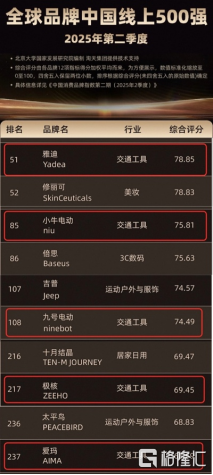
Investment Rating - The report maintains a positive outlook on the light industry and paper-making sector for the mid-2025 earnings forecast, indicating a favorable investment rating for these industries [1]. Core Insights - The report highlights a divergence in performance within the export sector for Q2 2025, with companies that have a global supply chain showing resilience against external tariff disruptions. Notable performers include Jiangxin Home, Jiayi Co., and Tianzhen Co. [4][5]. - The two-wheeler segment is expected to benefit from government subsidies and new standards, with companies like Yadi Holdings and Aima Technology showing strong growth potential [4]. - The light consumer goods sector is characterized by a robust domestic demand, particularly in personal care products, with companies like Baiya Co. and Dengkang Oral Care expected to perform well [4]. - The packaging industry is undergoing consolidation, with leading companies experiencing a slowdown in capital expenditure, indicating a shift towards a harvest phase [4]. - The home furnishing sector is facing short-term order impacts due to the pause in government subsidies, but long-term growth is anticipated through market integration and new product categories [4]. - The paper-making sector is expected to see stable profitability due to low raw material costs and improved supply-demand dynamics [4]. Summary by Sections Export Sector - Q2 2025 shows performance divergence due to increased external disruptions, with companies like Jiangxin Home expected to see a 40%+ growth in net profit [5][6]. - Jiayi Co. anticipates a 30%+ revenue increase, while Tianzhen Co. is expected to recover orders significantly [4][5]. Two-Wheeler Sector - Companies like Aima Technology and Ninebot are projected to grow by 20% and 50% respectively in Q2 2025, driven by new product launches and market demand [8][9]. Light Consumer Goods - The sector is expected to show resilience, with companies like Chaohongji and Baiya Co. projected to grow by 20% and 2% respectively in revenue [10][11]. Packaging Industry - The report notes a continued consolidation trend, with companies like Yutong Technology and Baosteel Packaging expected to maintain stable revenue growth [12][14]. Home Furnishing Sector - The sector is facing challenges due to subsidy pauses, but companies like Mousse and Zhizhong Home are expected to adapt and show growth in the long term [13][15]. Paper-Making Sector - The report indicates stable profitability for the paper-making sector, with companies like Sun Paper and Huawang Technology expected to benefit from improved market conditions [17].
轻工周报:Juul获批验证美国合规雾化扩容趋势,轻工消费重视龙头回调机遇-20250720
SINOLINK SECURITIES· 2025-07-20 09:27
Investment Rating - The report emphasizes a focus on companies with high earnings growth certainty and relatively high dividend support in the domestic market [4][9]. Core Insights - The home furnishing sector shows a year-on-year increase of 28.7% in furniture retail sales in June, but demand has weakened since July due to the lack of new government subsidies [4][9]. - The new tobacco sector is witnessing a recovery, with Smoore's H1 2025 revenue expected to grow by 18% year-on-year, indicating stabilization in the vaping business [15][16]. - The paper and packaging industry is experiencing price stabilization, with expectations for a recovery in demand for white cardboard and cultural paper [17][18]. - The light industry and personal care sector is facing a downturn, but there are investment opportunities in leading brands [19][20]. - The toy sector, particularly Bubble Mart, is highlighted for its strong performance, with a 94% year-on-year increase in online sales of blind boxes in Q2 [21][22]. - The two-wheeler market is expected to see a rebound in Q3, driven by new policies in Vietnam promoting electric vehicle replacements [22][31]. Summary by Sections Home Furnishing Sector - Retail sales of furniture increased by 28.7% year-on-year in June, but demand has weakened since July due to subsidy issues [4][9]. - The overall real estate investment decreased by 10.3% year-on-year in June, with residential construction area down by 4.3% [4][9]. New Tobacco Sector - Smoore's H1 2025 revenue is projected to grow by 18% year-on-year, indicating a recovery in the vaping market [15][16]. - The FDA's recent approvals for JUUL products suggest a positive trend in the U.S. compliance market [15][16]. Paper and Packaging Sector - Paper prices are stabilizing, with expectations for recovery in demand for specific paper types [17][18]. - The packaging sector is seeing improvements in profitability for metal packaging companies due to industry consolidation [17][18]. Light Industry and Personal Care - The sector is experiencing a downturn, but leading brands are still seen as investment opportunities [19][20]. - Online sales for personal care products have shown mixed results, with some categories facing increased competition [20][23]. Toy Sector - Bubble Mart is highlighted for its strong performance, with a 209% year-on-year increase in GMV [21][22]. - The overall toy market is benefiting from new operational models and IP advantages [21][22]. Two-Wheeler Market - The market is expected to rebound in Q3, with new policies in Vietnam promoting electric vehicle replacements [22][31]. - Leading companies in the sector are expected to show good growth in their mid-year reports [22][31].
雅迪717全球骑行节骑玩盛典举行
Ren Min Wang· 2025-07-20 04:42
Core Viewpoint - The Yadea 717 Global Cycling Festival has been established as a significant event promoting green travel, engaging with young audiences through a blend of music, cycling, and social interaction [1][2]. Group 1: Event Overview - The theme of this year's festival is "FUN to Ride," focusing on interactive experiences that resonate with younger demographics [1]. - The festival has evolved into a super IP for green travel, aiming to integrate the concept of sustainable transportation into millions of households [2]. Group 2: Environmental Impact - Yadea has reported that global users have accumulated a total cycling distance of over 3,685 billion kilometers, resulting in a reduction of carbon emissions by approximately 638 million kilograms [2]. - The Yadea Smart Travel APP has seen nearly 1.9 billion user visits, with the smart control feature being utilized over 100 million times [2]. Group 3: Product Launch and Engagement - At the festival, Yadea collaborated with Sanrio to launch new products featuring popular characters like Hello Kitty and Kuromi, which attracted significant attention from young attendees [2]. - The ongoing "Meet the Champion: Unmatched Endurance" challenge showcased the Yadea Kaneng S model's long-range capabilities across various challenging terrains [3]. Group 4: Future Commitment - Yadea aims to continue fostering deep communication with users and promoting industry development, with a commitment to making green travel a preferred choice for more families [3].
一台3万元,打工人养不起小电驴
3 6 Ke· 2025-07-18 01:05
Core Viewpoint - The electric two-wheeler industry is increasingly adopting smart technologies, with brands like Tailg, Ninebot, Yadea, and Niu introducing features such as autonomous driving and various smart functionalities, leading to a significant increase in vehicle prices, making them less affordable for average consumers [1][2][4]. Industry Trends - Smart features have become standard in electric two-wheelers, with major brands equipping their models with dedicated apps for functions like unlocking, monitoring vehicle status, and tracking [5]. - The competition among manufacturers has shifted from merely offering smart features to enhancing the strength and capability of these technologies [5][11]. Price and Consumer Impact - The average price of electric two-wheelers has risen sharply, with smart models costing approximately 30% more than traditional models with similar specifications [1][2]. - Consumers are experiencing a disconnect between the price and functionality of electric two-wheelers, leading to confusion and frustration when faced with unfamiliar smart features [4][8]. Cost Implications - The introduction of smart technologies not only increases the initial purchase price but also leads to higher ongoing costs for software maintenance, system upgrades, and repairs, which can burden consumers financially [6][10]. - The cost of repairs for smart components is significantly higher than for traditional models, further adding to the financial strain on consumers [10]. Market Dynamics - The electric two-wheeler market is becoming saturated, prompting manufacturers to compete on aesthetics, high-end features, and smart technology to differentiate their products [11]. - The average selling price of smart models from new entrants like Ninebot and Niu is significantly higher than traditional brands, indicating a clear market segmentation based on technology and features [11][12]. Future Outlook - The industry is expected to see a wave of vehicle replacements due to a high ownership rate and a typical replacement cycle of 4 to 5 years, which may favor smart models over traditional ones [14]. - The competition will likely intensify as brands aim to balance smart features with practical value to meet consumer expectations [14].
中国轻工业联合会会长张崇和:挺膺奋进 建设自行车强国
Xiao Fei Ri Bao Wang· 2025-07-17 02:38
Core Points - The China Bicycle Association celebrated its 40th anniversary, highlighting its role in enhancing the industry’s cohesion and influence over the past four decades [1][2] - The total production of bicycles and electric bicycles is projected to reach approximately 99.6 million units in 2024, which is five times the production 40 years ago, with cumulative exports exceeding 1.5 billion units, representing a 58-fold increase [2] - The bicycle industry has created millions of jobs and significantly contributed to social economic growth, evolving from a small and weak sector to a strong and influential industry [2] Industry Development - The association has emphasized the importance of political guidance, innovation, and self-improvement to adapt to new development trends and enhance service capabilities [3][5] - Key companies such as "Phoenix," "Forever," and "Aima" have made significant historical contributions and continue to thrive in the modern era, while contemporary stars like "Yadea" and "New Day" are advancing the industry [2] - The industry has seen substantial improvements in manufacturing capabilities, market scale, and technological innovation, establishing a strong international presence and brand recognition [6] Future Directions - The association aims to strengthen political leadership, enhance service efficiency, promote innovation, and improve organizational structure to better serve the industry [6] - There is a focus on original innovation and the development of new technologies and materials to maintain a competitive edge in the global market [5] - The association plans to leverage the achievements of the past 40 years as a new starting point to meet the needs of the public and contribute to the modernization of China [6]
两轮车行业近况更新
2025-07-16 06:13
Summary of Conference Call Industry Overview - The conference call primarily discusses the electric vehicle (EV) industry, focusing on the performance and competition among various brands, particularly in the electric two-wheeler segment. Key Points and Arguments Market Performance - The overall market for electric two-wheelers has seen fluctuations, with estimates suggesting a production and sales volume of approximately 43 million units in 2024, with a slight increase expected to around 46-47 million units in 2025 [9][10]. - Specific brands like Yadea and Aima have reported significant shipment numbers, with Yadea estimated to have shipped around 1 million units in February alone [1][2]. Competitive Landscape - New entrants and established brands are competing fiercely, with companies like Niu and Ninebot showing strong performance. Niu shipped over 110,000 units in the first two months, while Ninebot reached close to 600,000 units [2][3]. - The competition is particularly intense in the mid to high-end market segment (priced above 4,000 yuan), where traditional brands like Yadea and Aima are facing challenges from newer brands like Niu and Ninebot [6][7]. Regulatory Impact - The implementation of new national standards (New National Standard) is anticipated to affect the market dynamics, potentially leading to the exit of smaller brands and increased costs for manufacturers [3][4]. - The enforcement of these standards could compress the survival space for smaller brands, pushing them towards lower-tier markets [4]. Brand Strategies - Niu and Ninebot are focusing on expanding their presence in second and third-tier cities, which represent significant growth opportunities [12][14]. - The pricing strategy is crucial, with brands needing to balance between maintaining profitability and competitive pricing, especially in light of government subsidies that vary by region [10][28]. Future Outlook - The market is expected to evolve with a potential shift towards higher-priced models as brands adapt to new standards and consumer preferences [30][31]. - There is skepticism about whether all brands can collectively raise prices without losing market share, given the competitive nature of the industry [31]. Emerging Competitors - New brands like Suzhou Duimi Technology are entering the market, aiming to capture market share by leveraging innovative strategies and targeting gaps left by established players [20][21]. Digital Transformation - The adoption of digital tools for monitoring sales and inventory is still in its early stages, with traditional methods predominating in many companies [29]. Additional Important Insights - The call highlighted the importance of brand perception, especially in northern markets where brand loyalty is less pronounced compared to southern regions [32]. - The discussion also touched on the challenges of maintaining price integrity in the face of government subsidies and market pressures [34]. This summary encapsulates the key discussions and insights from the conference call, providing a comprehensive overview of the current state and future outlook of the electric two-wheeler industry.
国泰海通:国外二轮车市场广阔 龙头雅迪控股、爱玛科技全速发力
Zhi Tong Cai Jing· 2025-07-16 03:31
Group 1 - The report highlights the growing importance of electric two-wheelers in India and Southeast Asia, with companies like Yadea and Aima actively expanding their overseas presence [1] - The transition from fuel to electric vehicles is supported by policies aimed at reducing carbon emissions, with Southeast Asian countries implementing measures to phase out gasoline motorcycles [2] - Electric two-wheelers offer lower carbon emissions, reduced noise, and lower maintenance costs compared to fuel-powered vehicles, making them suitable for urban short-distance travel [3] Group 2 - China's electric two-wheeler market is poised to replicate the export trends seen in bicycles and motorcycles, with significant potential for growth in international markets [4] - The domestic electric two-wheeler market in China is mature, but export activities are just beginning, indicating substantial room for expansion [4]
国泰海通:国外二轮车市场广阔 龙头雅迪控股(01585)、爱玛科技(603529.SH)全速发力
智通财经网· 2025-07-16 03:29
Group 1 - The motorcycle is an important mode of transportation in India and Southeast Asia, while electric bicycles are particularly popular in Europe and Japan. The overseas electric two-wheeler market is in its early development stage, with major brands actively expanding their presence. Leading companies in China, Yadea and Aima, are making significant strides in establishing overseas factories and channels [1] - The trend of "oil to electric" is gaining momentum, supported by policies that favor the development of electric vehicles. The push for carbon neutrality benefits the electrification of motorcycles, as fuel-powered vehicles have higher pollution emissions and fuel prices are relatively high compared to electricity [1] - Southeast Asia is a major motorcycle market, with cities like Hanoi and Ho Chi Minh City proposing bans on motorcycles. Thailand has implemented a tax on motorcycles based on carbon emissions since January 2020, and Singapore aims to eliminate fuel vehicles by 2040. Vietnam has committed to achieving carbon neutrality by 2050, with electric vehicle infrastructure being prioritized [1] Group 2 - Electric two-wheelers have lower carbon emissions, reduced noise, and a wide range of energy sources, along with lower purchase and maintenance costs. High-end electric two-wheelers offer excellent smart features, and the performance gap between electric and fuel motorcycles is narrowing [2] - The rapid development of the electric vehicle industry will benefit the electric two-wheeler sector as the core components overlap, leading to a more mature supply chain and continuous technological upgrades [2] Group 3 - The market environment in India and Southeast Asia is similar to China's experience from 2000 to 2010, with urban expansion and insufficient infrastructure. In this context, electric two-wheelers are suitable for short-distance travel. In 2020, the average prices for motorcycles and scooters in Southeast Asia were approximately $4,010 and $1,310, respectively, while the average price for electric cars was $54,000 [3] - The purchasing power of residents in India and Southeast Asia aligns well with electric two-wheelers, making them a more accessible option [3] Group 4 - China's electric two-wheeler industry is expected to replicate the export trends seen in bicycles and motorcycles, capturing global demand. China has become the world's largest exporter of bicycles and motorcycles, with export ratios of 89% for bicycles in 2018 and 54%, 33%, and 35% for motorcycles from 2019 to 2021 [4] - The domestic electric two-wheeler market in China is mature, but export activities are just beginning, with only 5.2% of total shipments being exported in 2020. Leading electric two-wheeler companies in China have developed a robust supply chain and competitive advantages over years of domestic operations [4]
山东开展“黄河大集”“运河大集”“海洋大集”系列活动,丰富夏季消费场景——在烟火大集里探寻消费密码
Da Zhong Ri Bao· 2025-07-14 01:04
Core Viewpoint - The summer "Daji" (large market) events in Shandong are enhancing local consumption and cultural experiences, attracting a significant number of young participants and showcasing regional products [1][2][3]. Group 1: Event Highlights - The "2025 Shandong Vibrant Summer Consumption Season" was launched in Yantai, featuring five themed exhibition areas with 126 booths, showcasing over 1,400 products across 12 categories, attracting nearly 10,000 attendees, primarily young people [3]. - The "Daji" events are not limited to Yantai; they are being held across Shandong, emphasizing local specialty products, such as "Dongchang Good Products" from various towns in Liaocheng [5]. - The "Daji" events are designed to create a continuous consumption pattern with over 100 activities planned in Yantai, focusing on themes like robotics competitions and local cuisine [4]. Group 2: Economic Impact - The "Daji" events have facilitated significant sales, with the "Good Products Entering the City" initiative in Dongchangfu District generating 3 million yuan in sales from 29 events this year [6]. - In Ju County, the electric bicycle trade-in program has led to the sale of 36,200 electric bicycles, generating over 72 billion yuan in sales, indicating strong consumer engagement [7]. - Ju County has seen sales of 7,367 electric bicycles this year, amounting to 2.37383 million yuan, with subsidies provided to consumers totaling 338,680 yuan [8]. Group 3: Cultural Integration - The "Daji" events serve as a platform for cultural consumption, with activities like the "Cultural Promotes Consumption · Youth Carnival" in Longkou City, where traditional crafts like Henan face sculpture are showcased and sold [9]. - The integration of culture and consumption at these events has led to a sales figure exceeding 320,000 yuan for the non-heritage market in Longkou City since June [9]. - The events are seen as a way to promote local culture and products, enhancing rural consumption and creating immersive shopping experiences [9].
换电之城 智慧两轮——2025第五届起点两轮车换电大会暨轻型动力电池技术高峰论坛圆满闭幕!
起点锂电· 2025-07-11 11:53
Core Viewpoint - The 2025 Fifth Annual Qidian Two-Wheeled Vehicle Battery Exchange Conference emphasizes the rapid transformation of the electric two-wheeler industry towards battery safety, intelligent networking, and the need for technological innovation to capture market opportunities [5][12]. Group 1: Conference Overview - The conference featured over 300 key players in the two-wheeled vehicle battery exchange sector and included discussions on cutting-edge technologies such as lithium batteries, sodium batteries, and fast-charging solutions [1][3]. - The event consisted of multiple segments, including an opening ceremony, specialized forums on electric two-wheeled vehicles, and the presentation of the 2025 China Two-Wheeled Vehicle Battery Exchange Awards [3][4]. Group 2: Industry Trends and Insights - The electric two-wheeler industry is undergoing a significant shift towards battery safety and intelligent networking, with a focus on enhancing product quality and compliance to drive market consolidation [5][12]. - The demand for specialized vehicles in the delivery sector is surging, with over 16 million registered riders and a projected user base of 761 million by 2025, highlighting the need for efficient battery solutions [12][13]. Group 3: Technological Innovations - Companies are innovating in battery management systems (BMS) and safety technologies, with advancements such as real-time monitoring and predictive maintenance to enhance battery safety and operational efficiency [20][24]. - The introduction of sodium-ion batteries is gaining traction due to their cost and safety advantages, while lithium batteries continue to dominate the market [17][50]. Group 4: Market Dynamics - The market is witnessing a shift from lead-acid batteries to lithium and sodium batteries, driven by regulatory changes and consumer demand for higher safety and performance standards [33][50]. - The competition among battery types is intensifying, with companies focusing on developing high-performance cylindrical batteries that meet the diverse needs of the two-wheeled vehicle market [61][62]. Group 5: Future Outlook - The future of the electric two-wheeler industry is expected to be shaped by technological advancements in battery design, safety features, and the integration of smart technologies [41][50]. - The industry is poised for growth, with significant opportunities in both domestic and international markets, particularly in regions like Southeast Asia and Africa [33][37].