EAST BUY(01797)

Search documents
俞敏洪、董宇辉,「分手」一周年不后悔
Xin Lang Ke Ji· 2025-07-27 01:39
Core Insights - The separation between Dong Yuhui and Dongfang Zhenxuan has been marked as a significant event in the live-streaming e-commerce industry, with both parties exploring different business models post-split [3][20][25] Company Performance - Dong Yuhui's company, Yuhui Hangxing, has surpassed 30 million followers, while Dongfang Zhenxuan lags behind with around 28 million followers [5] - In terms of live-streaming viewership, Yuhui Hangxing achieved an average of 15.73 million daily views over the past month, compared to Dongfang Zhenxuan's 3.84 million [5][6] - Despite a significant drop in viewership, Yuhui Hangxing still outperformed Dongfang Zhenxuan in sales figures [5][6] Challenges Faced - Yuhui Hangxing experienced a 45% year-on-year decline in average daily viewership in the first half of 2025, with a notable drop in follower growth and average viewing time [8][10] - Dongfang Zhenxuan reported a 9.3% decline in revenue to 2.187 billion yuan, transitioning from a profit of 160 million yuan to a net loss of 96.5 million yuan in its mid-year report [9][10] - Both companies are grappling with issues such as talent loss and the need for a stable supply chain, with Yuhui Hangxing heavily reliant on Dong Yuhui's personal brand [10][21] Strategic Directions - Yuhui Hangxing focuses on content creation and nurturing new hosts, while Dongfang Zhenxuan aims to build a self-sustaining supply chain and develop its own brand [12][20] - The two companies are no longer direct competitors but are pursuing distinct paths: Yuhui Hangxing as a content-driven entity and Dongfang Zhenxuan as a supply chain-focused business [12][20] - Dongfang Zhenxuan's strategy includes enhancing its membership model and expanding its product offerings, while Yuhui Hangxing is exploring new content avenues, such as cultural and tourism-focused programming [17][24] Market Implications - The separation has led to a reevaluation of their respective business models, with Dongfang Zhenxuan aiming for long-term brand building and Yuhui Hangxing seeking to stabilize its operations amid reliance on a single influencer [20][21] - The industry trend indicates a shift away from dependency on top influencers, as companies recognize the risks associated with having a single point of failure in their business models [24][25]


辛巴卫生巾出事,说明直播间里的“雷军”还不够
Hu Xiu· 2025-07-25 14:09
Core Viewpoint - The sanitary napkin industry is facing a trust crisis, highlighted by the controversy surrounding Xinba's brand "Mian Mima," which has been found to contain high levels of carcinogenic substances, while other brands like those promoted by Yu Minhong and Huang Zitao are gaining popularity for their quality and marketing strategies [1][2][4]. Group 1: Industry Overview - The sanitary napkin market in China is significant, impacting the health of approximately 700 million women, and there is a strong demand for reform and quality assurance in the industry [25]. - The average gross margin in the sanitary napkin industry is reported to be around 45%, but due to high marketing and channel costs, the net profit margin is only between 7% and 11% [27]. - Recent sales data indicates that new entrants like Dongfang Zhenxuan and Huang Zitao's brands have achieved impressive sales figures, with Dongfang Zhenxuan's sanitary napkin sales reaching approximately 18 million units in just two days [5][26]. Group 2: Company-Specific Insights - Xinba's "Mian Mima" brand has generated sales of 3.33 billion yuan over eight years and claims to have 10 million users, but it is now under scrutiny due to health concerns [3][9]. - In contrast, Dongfang Zhenxuan has successfully leveraged its existing customer base and marketing strategies to enhance brand trust and sales, with a reported stock price increase of 53% since July [31]. - Huang Zitao has invested 275 million yuan into acquiring factories and innovating production lines for his brand, emphasizing transparency and quality in response to market demands [42]. Group 3: Product Quality and Safety Concerns - Reports indicate that multiple batches of "Mian Mima" sanitary napkins have been found to contain excessive levels of thiourea, a substance classified as a potential carcinogen [10][11]. - Despite the controversy, Xinba's representatives claim that their products are compliant with safety standards, presenting testing reports that show no thiourea presence in recent samples [13][14]. - Industry experts suggest that the presence of thiourea may be linked to cost-cutting measures, as it is cheaper than other antioxidants [19]. Group 4: Marketing and Consumer Trust - The recent sanitary napkin crisis reflects a broader consumer demand for product quality over low pricing, as seen in the contrasting strategies of Xinba and other emerging brands [4][44]. - Influencers like Yu Minhong and Huang Zitao are capitalizing on their reputations to build trust and drive sales, focusing on product quality rather than solely on price [7][43]. - The success of these brands in the sanitary napkin market illustrates a shift towards a product-centric approach, which is essential for long-term sustainability in the industry [51].
25Q2 基金港股持仓点评:加仓创新药新消费,减仓互联网
Haitong Securities International· 2025-07-22 09:42
Core Insights - Public funds continued to increase their holdings in Hong Kong stocks in Q2 2025, with the market value of Hong Kong stocks in the sample of actively managed equity funds rising to 20.0%, up from 19.2% in Q1 2025 [6][10] - The increase in holdings was primarily in small and medium-sized Hong Kong stocks, with the Hang Seng Small Cap Index's component stocks' market value share in the total Hong Kong stock holdings of funds increasing by 5.6 percentage points [6][10] - Sector-wise, public funds mainly increased their positions in the pharmaceutical, light manufacturing, non-bank financials, and banking sectors, corresponding to themes of innovative drugs, new consumption, and dividends [6][10] Fund Holdings Analysis - The report indicates a significant shift in fund holdings, with a reduction in the technology sector, particularly in internet and automotive stocks, which had previously seen substantial gains [6][10] - The technology sector's market value share in fund holdings decreased by 3.7 percentage points, while the media and retail sectors also saw declines [10][12] - Conversely, the consumer sector saw an increase of 3.8 percentage points in market value share, indicating a strategic pivot towards consumer-related investments [10][12] Specific Stock Movements - Notable changes in specific stock holdings include Tencent Holdings decreasing from 21.5% to 17.8%, while Alibaba's share dropped from 10.6% to 6.3% [12] - In contrast, stocks like Kuaishou and Pop Mart saw increases in their holdings, reflecting a shift towards emerging consumer brands [12] - The report highlights a significant increase in holdings for companies like Xinda Biopharmaceuticals, which rose from 1.2% to 3.5%, indicating a growing interest in innovative healthcare solutions [12]





卖爆国产白虾 ,直播机构与工厂做对了什么
Bei Jing Shang Bao· 2025-07-21 06:34
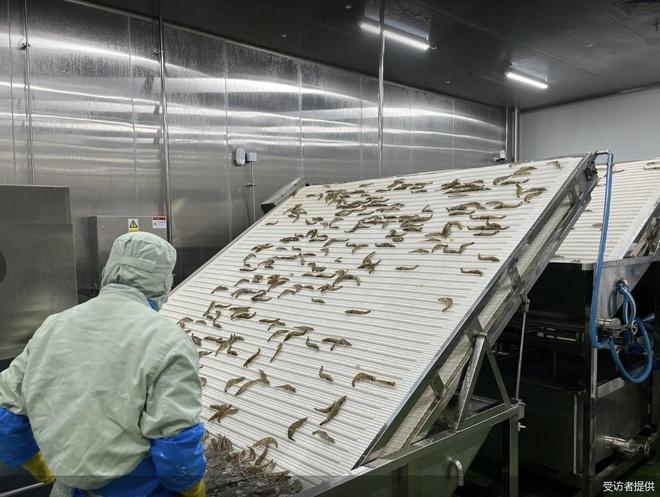
Core Insights - The collaboration between live streaming platforms and OEM factories aims to create popular products by closely monitoring market trends and consumer preferences [1][3] - The partnership has led to significant production adjustments, including an investment of over 100 million yuan and an increase in annual production capacity from 300 tons to 540 tons [1][4] Group 1: Product Development and Market Strategy - The live streaming institution and the OEM factory have developed a successful product, a domestic white shrimp, which sold over 200,000 units and generated a GMV of over 19 million yuan in a short period [3][4] - The product's success is attributed to the factory's adaptation to consumer habits, including individual quick freezing of shrimp and enhanced water circulation from 24 times to 36 times per day to ensure cleanliness [4][5] - The target demographic for the product primarily consists of women aged 30-45 with families, focusing on quality and nutrition [4][6] Group 2: Supply Chain and Cost Management - The collaboration allows the factory to access C-end market demands, expanding sales channels and exploring partnerships with platforms like JD and Meituan [5][6] - The factory is optimizing its operations to reduce costs, including transitioning to a flat farming model to minimize transportation costs and improve efficiency [6][7] - The live streaming institutions are shifting from a focus on low prices to building brand trust and loyalty among consumers, which is essential for long-term success [8][9] Group 3: Brand Development and Market Expansion - Leading live streaming institutions are increasingly controlling their supply chains, moving towards self-owned brands to enhance profit margins and reduce reliance on third-party brands [7][8] - The expansion of self-owned brands has been successful, with significant sales figures reported for various products, indicating a strong market presence [8][9] - The factory plans to further increase production capacity, with a new facility expected to be operational in Lianyungang, aiming for a total capacity of 10,000 tons within three years [9]
超级大单品卫生巾来了,东方甄选股价大涨12%
2 1 Shi Ji Jing Ji Bao Dao· 2025-07-18 13:47
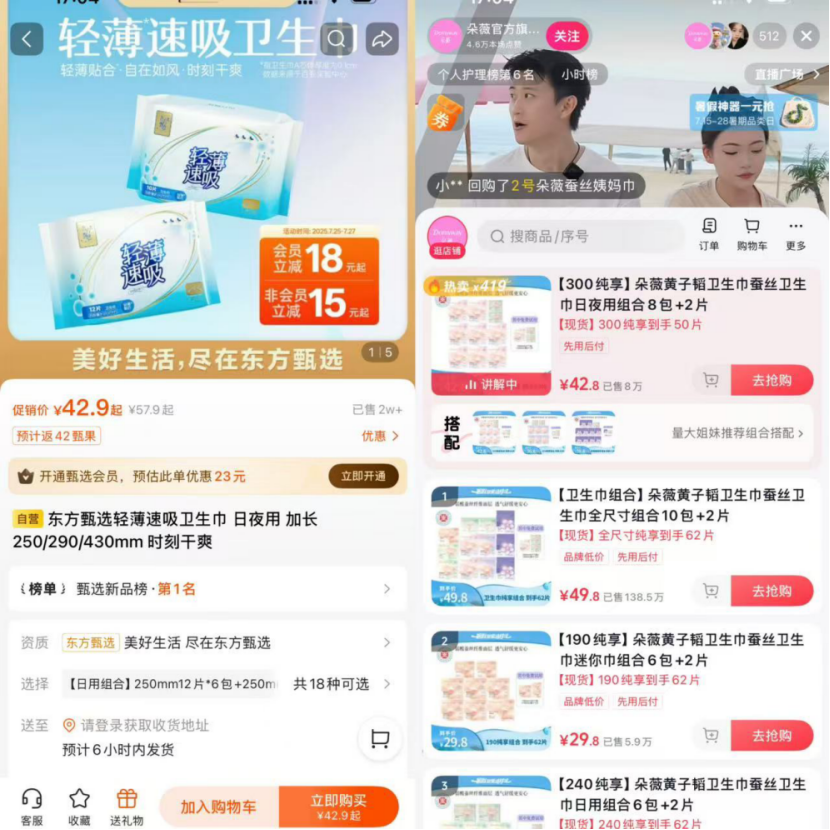
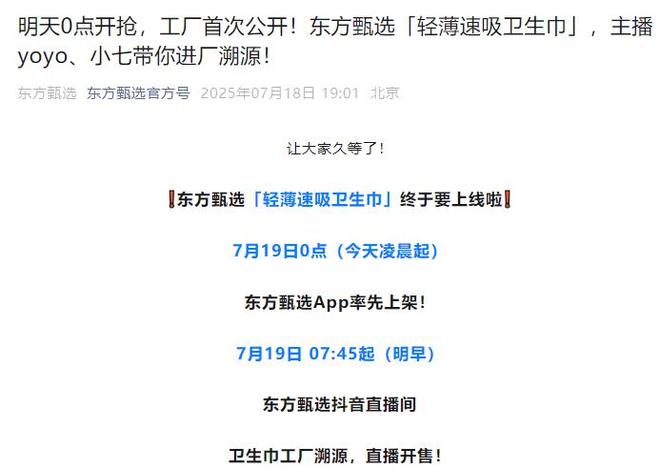
Core Viewpoint - Oriental Selection (01797.HK) saw a closing increase of 12.78% on July 18, reaching a new high since January, driven by the upcoming launch of its second self-operated sanitary napkin product on July 19 [1]. Product Launch and Market Response - The company will launch its second self-operated sanitary napkin, "Lightweight Quick Absorb Sanitary Napkin," on its app [1]. - The first self-operated sanitary napkin, "Cotton Surface Sanitary Napkin," sold out quickly in June and received widespread consumer praise [1]. - The Zhejiang Merchants Consumer Team noted that sanitary napkin products address strong consumer pain points, and Oriental Selection's product, made from 100% pure Xinjiang cotton and exceeding national standards, has the potential to stand out in the market [1]. Consumer-Centric Approach - Oriental Selection's product development strategy is similar to that of other companies like Pang Donglai and Sam's Club, focusing on high-quality, cost-effective products that meet health needs and drive stable repurchase rates [1]. Safety and Transparency Initiatives - The company announced its commitment to safety by ensuring that its sanitary napkins are produced with "zero additives" and using traceable raw materials [4][6]. - In March, Oriental Selection revealed plans for sanitary napkin products and a transparent factory initiative to control sales channels and prevent illegal distribution of second-hand sanitary napkins [3]. Industry Context - The entry of Oriental Selection into the sanitary napkin market coincides with increased consumer awareness regarding product safety, particularly following the exposure of refurbished sanitary napkins during the "3.15" gala [6]. - Other brands, including Free Point and All Cotton Era, have also entered the market, indicating a growing competition in the sanitary napkin sector [6].
智通港股解盘 | 美国稳定币立法通过 大金融再起智能体热度不减
Zhi Tong Cai Jing· 2025-07-18 12:26
Market Overview - The market is experiencing an upward trend without negative news, with Hong Kong stocks jumping 1.33% today [1] - Insurance companies are adjusting product pricing in response to market interest rates, leading to a decrease in liability costs and an increase in equity allocation [1] - Regulatory changes allow insurance companies more flexibility in asset allocation, boosting their profitability [1] Securities Sector - The approval of the U.S. Stablecoin Innovation Act is expected to catalyze the securities sector, with Tether's USDT market cap surpassing $160 billion [2] - The anticipated signing of an executive order by President Trump could allow significant investments in alternative assets, including stablecoins [3] AI and Technology - The upcoming World Artificial Intelligence Conference (WAIC) will showcase advancements in AI infrastructure, including Huawei's new AI computing technology [7] - The launch of the H20 chip for sale in China is expected to boost demand for AI applications, with companies like Tencent and ByteDance placing orders [4] Performance of Specific Companies - China Life and China Pacific Insurance saw stock increases of over 5% due to favorable market conditions [1] - Companies like JD Health and Ant Group are planning to apply for stablecoin licenses in Hong Kong, indicating a shift towards digital currency [2] - Goldwind Technology reported a 35.72% increase in revenue for Q1 2025, driven by strong order growth and international expansion [9] Industry Trends - The rare earth sector is experiencing significant profit growth, with companies like Huahong Technology and Northern Rare Earth projecting substantial increases in net profit [4] - The wind energy market is expected to see high growth, with Goldwind's international business expanding across six continents [10]


智通港股空仓持单统计|7月18日
智通财经网· 2025-07-18 10:34
Group 1 - The top three companies with the highest short positions are WuXi AppTec (02359), CATL (03750), and COSCO Shipping Holdings (01919), with short ratios of 23.99%, 17.39%, and 14.14% respectively [1][2] - The companies with the largest increase in short positions are Giant Biogene (02367), WuXi AppTec (02359), and Henderson Land Development (00012), with increases of 2.05%, 1.43%, and 1.41% respectively [1][2] - The companies with the largest decrease in short positions are SF Holding (06936), Far East Horizon (03360), and Jiumaojiu International Holdings (09922), with decreases of -1.94%, -1.22%, and -1.18% respectively [1][3] Group 2 - The top ten companies with the highest short ratios include Ganfeng Lithium (01772) at 13.09%, Xiexin Technology (03800) at 12.57%, and Shandong Gold (01787) at 12.35% [2] - The companies with the largest increase in short ratios also include Fuyou Glass (06865) at 12.07% and Tigermed (03347) at 9.81% [2] - The companies with the largest decrease in short ratios include Vanke Enterprise (02202) at 11.38% and Green Leaf Pharmaceutical (02186) at 11.96% [3][4]

【港股收评】三大指数齐涨!SaaS概念、稳定币概念表现活跃
Sou Hu Cai Jing· 2025-07-18 09:15
Group 1: Market Performance - The Hong Kong stock market indices collectively rebounded, with the Hang Seng Index rising by 1.33%, the Hang Seng China Enterprises Index increasing by 1.51%, and the Hang Seng Tech Index gaining 1.65% [1] - The SaaS sector saw significant gains, with companies like Huilyang Technology rising by 15.56%, Yika by 10.11%, and Kingdee International by 7.27% [1] - The stablecoin concept also surged, highlighted by Yaocai Securities rising by 16.93% and Huajian Medical increasing by 20.41% following the U.S. House of Representatives passing a bill to establish a legal framework for stablecoins [1] Group 2: Sector Performance - Gold and non-ferrous metal stocks experienced a broad increase, with Lingbao Gold rising by 6.24% and China Molybdenum by 3.96% as spot gold prices rose above $3340 per ounce [2] - Major financial sectors, including Chinese brokerage and insurance stocks, also saw gains, with Xingsheng International up by 7.41% and China Life by 5.13% [2] Group 3: Automotive and Related Sectors - The automotive sector, including lithium battery and Tesla-related stocks, showed strong performance, with Tianqi Lithium rising by 5.82% and NIO increasing by 4.62% [3] - Other consumer sectors such as film, tobacco, and food stocks also performed well, with companies like Simoer International rising by 4.99% [3] Group 4: Declining Sectors - Sectors such as cosmetics, aviation, and luxury goods saw declines, with China Eastern Airlines dropping by 2.72% [3] - Notably, Chuangmeng Tiandi experienced a significant drop of 30.12%, despite expectations of turning a profit in the first half of the year [3]
香港恒生指数收涨1.33% 恒生科技指数涨1.65%
news flash· 2025-07-18 08:10
Group 1 - The Hang Seng Index rose by 1.33% [1] - The Hang Seng Tech Index increased by 1.65% [1] - Lepu Biopharma surged over 24% [1] - Dongfang Zhenxuan climbed over 12% [1] - Kingsoft Cloud gained over 8% [1] - CATL (Contemporary Amperex Technology Co., Limited) rose over 5% [1]

异动盘点0718|AI应用早盘走高,金山云涨超11%;耀才再涨8%;Lucid携手优步推出无人驾驶出租车队;奈飞盘后跌近2%
贝塔投资智库· 2025-07-18 04:02
Group 1: Hong Kong Stocks - Oriental Selection (01797) surged over 14% with the upcoming launch of a second sanitary napkin product, indicating growth potential in self-operated products [1] - AI application stocks rose in early trading, with Kingsoft Cloud (03896) and Innovation Works (02121) both up over 11%, and other companies like Kintor Pharmaceutical (01860) and Kingdee International (00268) also showing gains [1] - Yao Cai Securities (01428) increased over 8% as Ant Group actively develops stablecoins in Hong Kong, enhancing the prospects for Yao Cai's virtual asset business [1] - Meitu (01357) saw a rise of over 7% during trading, with institutions optimistic about the company's performance potential due to AI Agent product validation [1] - Jinli Permanent Magnet (06680) initially rose over 8%, with a projected net profit increase of up to 180% year-on-year for the first half of the year, as institutions reassess the value of rare earth strategic metals [1] - NIO-SW (09866) increased over 4% as the pre-sale price of the L90 model exceeded expectations, with Morgan Stanley forecasting monthly sales to surpass 5,000 units [1] - Guoquan (02517) rose over 11% following an earnings forecast, expecting a net profit of approximately 180 million to 210 million yuan for the first half of the year, a year-on-year increase of about 111%-146% [1][2] Group 2: US Stocks - PepsiCo (PEP.US) rose 7.45% after Q2 earnings exceeded expectations, with EPS at $2.12, surpassing the forecast of $2.03, and revenue growing 1.0% year-on-year to $22.73 billion [3] - Lucid (LCID.US) soared 36.24% as it announced a partnership with Uber to launch a self-driving taxi fleet [3] - Abbott (ABT.US) fell over 8% due to Q3 guidance falling short of expectations and a downward revision of the annual profit forecast [3] - AI application software stocks saw gains, with Unity Software (U.US) rising over 12% at one point, and other companies like SoundHound AI (SOUN.US) and AppLovin (APP.US) also increasing [3] - Taiwan Semiconductor Manufacturing Company (TSM.US) rose 3.38%, achieving a record high with Q2 EPS of $2.47, exceeding the forecast of $2.39, and revenue growing 44.4% year-on-year to $30.07 billion [4] - Oracle (ORCL.US) increased 3.09%, reaching a new high as it announced a $3 billion investment in AI and cloud infrastructure in Germany and the Netherlands over the next five years [4] - BigBear.ai Holdings (BBAI.US) rose 15.45% ahead of its earnings report, with expectations of a loss of $0.07 per share but revenue projected to reach $40.99 million, a year-on-year increase of 3.04% [4] Group 3: Drone and Streaming Stocks - Drone-related stocks strengthened, with Palladyne AI (PDYN.US) rising 31.4% and Joby Aviation (JOBY.US) increasing 8.51% amid U.S. Department of Commerce investigations into drone systems and key solar materials [5] - Netflix (NFLX.US) saw a slight decline of over 2% after reporting Q2 revenue of $11.079 billion, slightly above the forecast, but underperformed in the APAC and LATAM regions [5]