LI AUTO-W(02015)

Search documents
KLÉPIERRE ANNOUNCES THE ACQUISITION OF A MALL IN ITALY
Globenewswire· 2026-01-02 17:35
Core Insights - Klépierre has announced the acquisition of the Casamassima shopping mall in Italy, which is a leading retail destination in the Bari metropolitan area with a population of 1.4 million and an annual footfall of 7.5 million [1][2] Group 1: Acquisition Details - The Casamassima mall features 100,000 sqm of retail and leisure space, including major brands such as Zara, Primark, and a 9-screen movie theater [2] - The acquisition aligns with Klépierre's Business-to-Business strategy, focusing on expanding the presence of international retailers and enhancing the retail mix [3] Group 2: Operational Enhancements - By integrating Casamassima into its portfolio, Klépierre aims to improve operational performance through reversion, retenanting, and introducing mall income, targeting a high single-digit cash return on investment in the first year [4] Group 3: Company Overview - Klépierre is the European leader in shopping malls, with a portfolio valued at €20.6 billion as of June 30, 2025, hosting over 700 million visitors annually across more than 10 countries in continental Europe [6] - The company is listed on Euronext Paris and included in various ethical indexes, reflecting its commitment to sustainable development and climate change initiatives [7]



2 Chinese EV Makers Pop After Surpassing Delivery Estimates
Schaeffers Investment Research· 2026-01-02 16:54
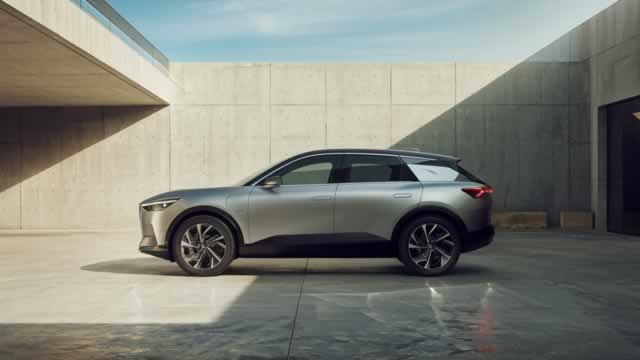
Group 1: Company Performance - Li Auto Inc delivered 44,246 cars in December, exceeding estimates by approximately 4,000 units, but this represents a 24% year-over-year decrease [1] - Nio Inc reported 48,135 sales in December, slightly surpassing estimates and marking a significant 55% year-over-year increase [1] Group 2: Stock Performance - Li Auto's stock was up 1.6% at $17.20, still near its three-year low of $16.11, and has lost 29.4% in 2025, marking its second consecutive year in the red [2] - Nio's stock was last seen up 1.7% at $5.18, having recently found support at the $5 region after a pullback from its 52-week high of $8.01 [4] Group 3: Options Activity - Li Auto has seen 12,000 calls exchanged, double the typical volume, with significant activity at the January 2026 16.50-strike call, and its Schaeffer's Volatility Index (SVI) is at 46%, higher than 14% of annual readings [3] - Nio's call options have been more popular than usual, with a 10-day call/put volume ratio of 10.75, ranking higher than 98% of readings from the past year [4]
Li Auto Deliveries Fall. The Stock Is Up.
Barrons· 2026-01-02 13:28
Combined, Li Auto, NIO, and XPeng delivered almost 130,000 cars in December, a monthly record. ...
理想2025年高速1200站目标完成, 4000站目标差93站
理想TOP2· 2026-01-02 13:17
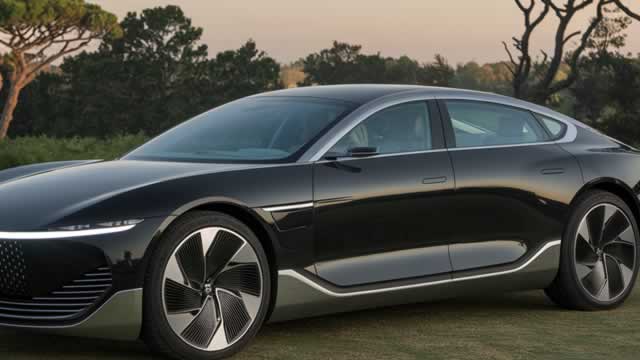
Core Viewpoint - The article discusses the expansion of Li Auto's supercharging stations, highlighting significant growth in the number of stations and their strategic placement along highways, which is expected to enhance the charging infrastructure for electric vehicles in China. Group 1: Expansion Plans - As of December 31, 2024, Li Auto has 1,727 supercharging stations, with an increase of 345 stations in the last week of December and 136 stations added on December 31 alone [1] - By December 31, 2025, the number of supercharging stations is projected to reach 3,907, with 194 stations added in the last week of December and 72 on December 31 [1] - Li Auto plans to have a total of 4,800 supercharging stations by the end of 2026, with over 35% of these located on highways, equating to approximately 1,680 stations [1] Group 2: Charging Infrastructure Statistics - Currently, about 20% of highway service areas have Li Auto supercharging stations, with an average of one station every 318 kilometers on all highways in China [1] - By the end of 2026, it is expected that around 28% of highway service areas will feature Li Auto supercharging stations, reducing the average distance between stations to approximately 227 kilometers [1] - During the period from October 1 to 8, 2025, Li Auto's supercharging stations accounted for 12% of the total charging volume on national highways, with a total charging volume of 14.7 million kWh [4] Group 3: National Charging Station Growth - As of December 27, 2024, over 5,800 out of 6,000 highway service areas in China have installed charging piles, achieving a coverage rate of 97% [4] - The total number of charging piles in highway service areas has reached 33,000, with an increase of 12,000 compared to 2023 [4] - The number of charging sessions for new energy vehicles on highways reached 5.169 million, with a total charging volume of 1.23 trillion kWh during the same period, reflecting a 23.61% increase in daily average charging volume compared to the May Day holiday and a 47.3% increase compared to the previous year's National Day holiday [4]
七成新势力车企年度KPI翻车! 谁是“销量倒退玩家”?
Xin Lang Cai Jing· 2026-01-02 10:11
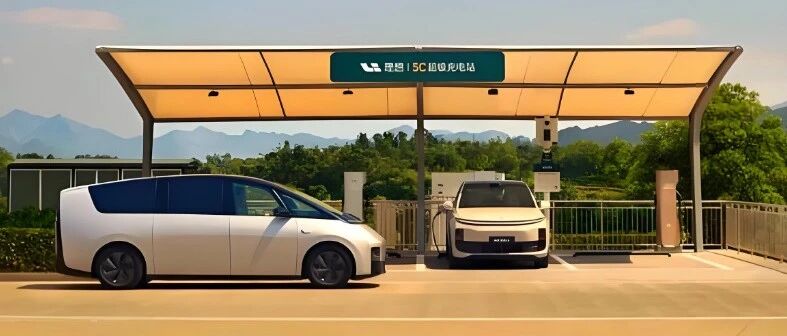
Core Insights - The new energy vehicle industry is facing significant challenges, with many companies failing to meet their annual sales targets, indicating a competitive and rapidly evolving market environment [2][11]. Group 1: Performance of Key Players - Among the "Wei Xiao Li" trio, only XPeng Motors met its sales target, while NIO fell short but achieved a nearly 50% year-on-year growth, and Li Auto was the only company in the top 15 to experience a year-on-year sales decline of 18.8% [3][5][10]. - Xiaomi's automotive division achieved approximately 410,000 units in sales, surpassing its target by 17% [4][11]. - Overall, 8 out of 12 new energy vehicle companies failed to meet their annual targets, representing about 67% of the companies analyzed [4][11]. Group 2: Company-Specific Challenges - NIO aimed for a sales target of 440,000 units but only sold 326,000 units, despite a year-on-year growth of 46.88% [5][13]. - Li Auto's sales for the year were 406,300 units, achieving only 58.05% of its ambitious target of 700,000 units, marking a significant setback for the company [6][14]. - Changan's brands, including Avita and Deep Blue, also struggled, with Deep Blue's sales falling short of its revised target of 360,000 units, achieving only 333,100 units [8][16]. Group 3: Market Dynamics and Future Outlook - The competitive landscape is characterized by overcapacity, intense competition, and price wars, making it difficult for companies to meet their sales goals [17]. - Industry experts suggest that the current instability in the new energy vehicle market contrasts with the more stable dynamics of traditional fuel vehicles, indicating a period of rapid evolution and competition [17].


美股热门中概股盘前普涨,网易(NTES.O)涨6.1%,蔚来汽车(NIO.N)涨5.5%,阿里巴巴(BABA.N)涨4.13%,理想汽车(LI.O)涨近...
Jin Rong Jie· 2026-01-02 09:45
本文源自:金融界AI电报 美股热门中概股盘前普涨,网易(NTES.O)涨6.1%,蔚来汽车(NIO.N)涨5.5%,阿里巴巴(BABA.N)涨 4.13%,理想汽车(LI.O)涨近3%,京东(JD.O)、台积电(TSM.N)、拼多多(PDD.O)涨超2%。 ...
港股收盘|科技指数涨超4%迎“开门红” 硬科技与政策消费双轮驱动
Xin Lang Cai Jing· 2026-01-02 08:41
Core Viewpoint - The Hong Kong stock market started 2026 with a strong performance, indicating a continuation of the structural bull market from 2025, with a clear investment focus on hard technology sectors like semiconductors, AI, and smart hardware, as well as policy-driven consumption sectors like home appliances and automobiles [1][5]. Market Performance - The Hang Seng Index rose by 2.76% to close at 26,338.47 points, while the Hang Seng Technology Index surged by over 4% to 5,736.44 points, and the Hang Seng China Enterprises Index increased by 2.86% to 9,168.99 points [1]. Semiconductor Sector - The semiconductor sector saw significant gains, driven by mergers and acquisitions as well as domestic production initiatives. Notable stock performances included Huahong Semiconductor (up 9.42%), SMIC (up 5.11%), and Jingmen Semiconductor (up 3.53%) [5][6]. - Huahong Semiconductor announced a major asset restructuring plan to acquire a 97.5% stake in Huali Micro for a transaction price of 8.268 billion yuan, alongside plans to raise up to 7.556 billion yuan for technology upgrades [6][7]. Internet Technology Sector - Internet technology stocks rebounded strongly, with Baidu Group rising by 9.53%, NetEase by 6.62%, and Alibaba by 4.34%. A key catalyst was Baidu's announcement of its AI chip subsidiary Kunlun's application for a mainboard listing [9][10]. - Kunlun's expected revenue for 2025 is around 5 billion yuan, with a potential valuation of 3 to 11 billion USD for Baidu's stake in the company [11]. Home Appliances Sector - Home appliance stocks benefited from favorable policies, with Skyworth Group rising by 10.45%, Midea Group by 5.12%, and Haier Smart Home by 4.20%. The National Development and Reform Commission and the Ministry of Finance announced a new policy to support large-scale equipment updates and trade-in programs [11][12]. - The new policy is expected to alleviate sales pressure in the short term and benefit leading companies with R&D and brand advantages in the long term [13]. Automotive Sector - Several automotive stocks gained, including Li Auto (up 4.93%) and BYD (up 3.57%), supported by the implementation of the "old-for-new" vehicle trade-in policy [14][16]. - The policy allows consumers to receive subsidies for trading in eligible old vehicles for new ones, which is expected to stimulate market confidence [16]. Solar Energy Sector - Solar energy stocks saw gains, with GCL-Poly Energy rising by 20.99% and GCL-Technology by 4.72%. The market regulator is enhancing compliance guidance for price competition in the solar industry [17]. Commercial Aerospace Sector - Commercial aerospace stocks performed well, with Asia Pacific Satellite rising by 34.53% and Aerospace Holdings by 18.33%. Blue Arrow Aerospace's IPO application was accepted, marking a significant milestone in the sector [18][19]. Individual Stock Movements - Delin Holdings rose by 11.76% following the conditional approval of its subsidiary to provide virtual asset trading services [21]. - Meitu Inc. increased by 6.14% after issuing $250 million in convertible bonds to Alibaba, which could make Alibaba the third-largest shareholder in Meitu [22].




恒指午盘上涨2.18%,恒生科技指数飙升3.38%,壁仞科技大涨超72%


Mei Ri Jing Ji Xin Wen· 2026-01-02 04:19
Market Performance - The Hang Seng Index increased by 2.18%, reaching 26,189.79 points [1] - The Hang Seng Tech Index surged by 3.38%, closing at 5,702.56 points [1] - The Hang Seng China Enterprises Index rose by 2.26%, ending at 9,115.17 points [1] - The market recorded a half-day trading volume of 76.869 billion HKD [1] Notable Stock Movements - Wallen Technology experienced a significant increase of over 72% [1] - Hua Hong Semiconductor rose by 9.89% [1] - Baidu Group-SW saw a gain of 7.45% [1] - Sanhua Intelligent Control increased by 6.37% [1] - NetEase-S rose by 5.87% [1] - Li Auto-W gained 4.93% [1] - SMIC increased by 4.9% [1] - Trip.com Group-S rose by 4.33% [1] - Huatai Securities increased by 4.04% [1] Declining Stocks - Global New Material International fell by 8.99% [1] - 361 Degrees dropped by 10.89% [1] - Goldwind Technology increased by 17.15% [1] - Derin Holdings rose by 14.22% [1]
港股午评|恒生指数早盘涨2.18% 商业航天概念股全线飙升
智通财经网· 2026-01-02 04:07
Group 1: Market Overview - The Hong Kong stock market opened the year 2026 with the Hang Seng Index rising by 2.18%, gaining 559 points to close at 26,189 points, while the Hang Seng Tech Index increased by 3.38% [1] - The early trading volume in the Hong Kong market reached 76.8 billion HKD [1] Group 2: Aerospace and Technology Sector - Blue Arrow Aerospace's IPO on the Sci-Tech Innovation Board has been accepted, accelerating the capitalization process in the commercial aerospace sector, leading to significant gains in related stocks: Goldwind Technology rose over 17%, Asia-Pacific Satellite surged over 32%, Aerospace Holdings increased by over 18%, and AVIC Industry rose by 4% [1] - Huahong Semiconductor surged over 10% as it plans to invest 8.27 billion RMB to acquire equity in Huali Microelectronics [2] - The robotics sector continues to rise, with frequent industry chain exchanges and market anticipation for Tesla's Optimus project, leading to gains in companies like Lijiang Technology (up over 6%), Sanhua Intelligent Control (up 6.37%), and Delta Electronics (up 4.1%) [2] Group 3: Notable Company Developments - Baidu Group's stock rose over 7% as its subsidiary Kunlun Chip submitted a listing application to the Hong Kong Stock Exchange [3] - NetEase's stock increased by over 5%, with its game "Yanyun" topping the iOS sales chart in China, indicating a strong product pipeline [4] - Xirui's stock rose over 8% as the U.S. classified advanced air traffic as a national strategy, benefiting Xirui's long-standing presence in the U.S. market [5] - Skyworth Group's stock increased by nearly 10% following the formal signing of a 10MW distributed photovoltaic power station project in Italy [6] - Li Auto's stock rose over 5%, with cumulative deliveries surpassing 1.5 million units, and reports indicate adjustments to the company's product line [7] - Biran Technology debuted on the market with an opening increase of 82.14%, later rising by 72%, focusing on self-developed GPGPU chips and intelligent computing solutions [7]


异动盘点0102 |商业航天概念股全线飙升,SaaS概念涨幅居前;万达生物制药涨25.46%,Corcep医疗暴跌50.42%
贝塔投资智库· 2026-01-02 04:01
Group 1 - NetEase-S (09999) rose over 6.5% after the announcement of the anniversary version of "Yanyun Sixteen Sounds" launching on December 27, 2025, which topped the iOS game sales chart. Huatai Securities previously indicated that the first-year revenue could reach 20-30 billion [1] - Commercial aerospace concept stocks surged, with Asia Pacific Satellite (01045) up 31.29%, Aerospace Holdings (00031) up 20%, and Goldwind Technology (02208) up 18.27%. Blue Arrow Aerospace's IPO application was accepted, marking it as the first company to be accepted under the new listing standards since the expansion [1] - Li Auto-W (02015) increased over 5.6% after reporting 44,246 vehicle deliveries in December 2025, totaling 109,194 for Q4. By December 31, 2025, cumulative deliveries reached 1,540,215, making it the first new force brand to achieve the 1.5 million delivery milestone [1] Group 2 - Hua Hong Semiconductor (01347) surged over 11% after announcing plans to acquire 97.4988% of Huali Micro's shares and raise funds through a stock issuance to specific investors [2] - Skyworth Group (00751) rose over 10% following the signing of a 10MW distributed photovoltaic power station project in Italy, marking a significant step in its overseas market expansion [2] - Baidu Group-SW (09888) increased over 8.1%, with a cumulative rise of over 15% this week, after announcing the submission of a listing application for Kunlun Chip on the Hong Kong Stock Exchange [2] Group 3 - SaaS concept stocks saw significant gains, with Lion Holding (02562) up 16.48%, Kingdee International (00268) up 7.22%, and Huily Technology (01860) up 4.52%. Meta announced a multi-billion dollar acquisition of the AI product developer Manus [3] - Xirui (02507) rose nearly 10% following the release of the U.S. Department of Transportation's strategic plans aimed at advancing the future of aviation [3] Group 4 - Meitu Company (01357) increased over 5.7% after announcing a $250 million convertible bond issuance to Alibaba, which could result in Alibaba holding 6.82% of Meitu's shares, making it the third-largest shareholder [4] Group 5 - Bitcoin surpassed $88,000, leading to a rise in some cryptocurrency mining stocks, including TeraWulf (WULF.US) up 3.05% and Applied Digital (APLD.US) up 1.83% [5] - Mindonghong (ORIS.US) surged 22.13% after signing a non-binding letter of intent to acquire Hubei Daguan Tea Industry Group, aiming to strengthen upstream supply control [5] - Wanda Biopharmaceuticals (VNDA.US) rose 25.46% after announcing FDA approval for its new drug Nereus, intended for preventing exercise-induced vomiting [5] Group 6 - Storage concept stocks fell, with SanDisk (SNDK.US) down 1.18%, Western Digital (WDC.US) down 2.15%, and Micron Technology (MU.US) down 2.47% [6] - Corcep Medical (CORT.US) plummeted 50.42% after receiving a complete response letter from the FDA regarding its new drug application for Relacorilant [6] - TSMC (TSM.US) rose 1.44% as Nvidia is negotiating new orders for its H200 chip, with TSMC expected to expand capacity by Q2 2026 [6] Group 7 - New energy vehicle stocks declined, with Tesla (TSLA.US) down 1.04%, NIO (NIO.US) down 7.27%, and Li Auto (LI.US) down 1.97% [7] - Pony.ai (PONY.US) fell 0.96% despite announcing that its Robotaxi fleet exceeded 1,159 vehicles, surpassing its 1,000 vehicle target for 2025 [7]