
LI NING(02331)

Search documents
李宁、安踏,打响奥运营销战
2 1 Shi Ji Jing Ji Bao Dao· 2026-02-03 02:25
Group 1 - Anta has officially announced its strategic partnership with the Hellenic Olympic Committee, providing professional sportswear for the Greek sports delegation at major international events [1] - The partnership comes as Li Ning has secured the collaboration with the Chinese Olympic Committee, becoming the official sportswear partner for the Chinese sports delegation from 2025 to 2028 [2] - Anta will continue to support the domestic market by providing equipment for 13 Chinese national teams, including 10 teams in various winter sports [2] Group 2 - The collaboration with the Hellenic Olympic Committee is part of Anta's strategy to enhance its global presence, aiming to establish itself as a global brand [3][4] - Major players in the sports market are willing to invest heavily in the Olympics, indicating their confidence in future growth despite market fluctuations [5] - As of February 2, Li Ning's stock closed at 19.56 HKD per share, down 4.31%, while Anta's stock closed at 77.9 HKD per share, down 0.45% [6][7]

下架!多品牌已不见联名产品!消费者:非常失望,不会再买了
Nan Fang Du Shi Bao· 2026-02-03 01:41
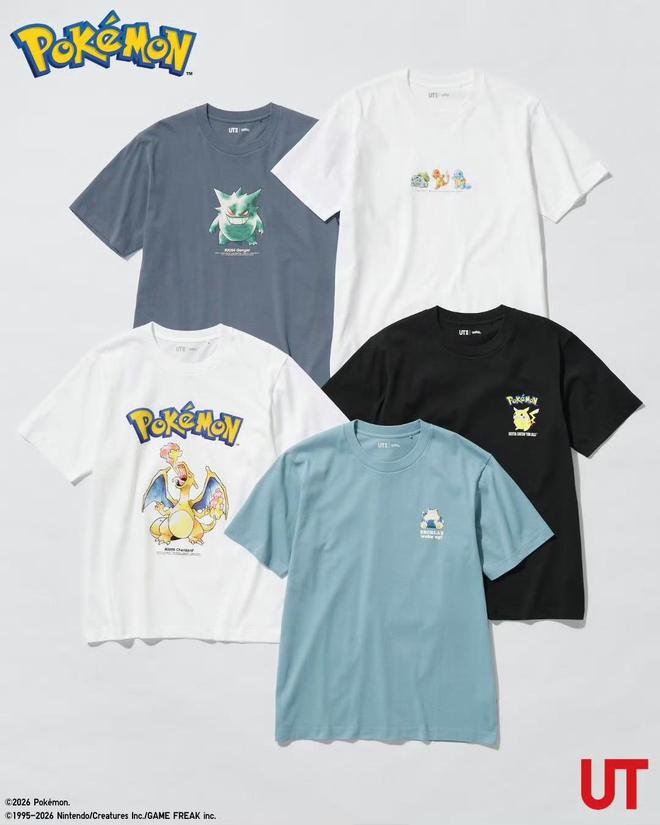
Core Viewpoint - The Pokémon Company faced significant backlash after announcing a card experience event at Yasukuni Shrine, leading to the cancellation of the event and the removal of related products from major retailers [1][3]. Group 1: Company Response - On January 30, the Pokémon Company issued an apology, stating that they deleted the event information and canceled the activity after receiving feedback [3]. - The company committed to fundamentally changing and strengthening its review and confirmation processes for event information to prevent similar issues in the future [3]. Group 2: Market Reaction - Following the controversy, products related to Pokémon were removed from several e-commerce platforms, including Uniqlo and Li Ning, with specific items like the Pokémon collaboration series being unavailable [3][6]. - Uniqlo's Pokémon series products, including custom T-shirts and canvas bags, were reported to be completely taken off the shelves shortly after the incident [6]. Group 3: Consumer Sentiment - Many consumers expressed strong dissatisfaction with the Pokémon Company's actions, highlighting the importance of historical and political context in their marketing strategies [8]. - Some consumers indicated they would no longer consider purchasing Pokémon-related products due to the company's repeated disregard for historical sensitivities [8].


触碰红线风波后,宝可梦联名商品遭多家品牌下架
Nan Fang Du Shi Bao· 2026-02-02 13:18
Core Viewpoint - The Pokémon Company faced significant backlash after announcing a card experience event at Yasukuni Shrine, leading to the cancellation of the event and the removal of related products from major retailers like Uniqlo and Li Ning [1][4][6] Group 1: Company Response - The Pokémon Company issued an apology on January 30, stating that they deleted the event information and canceled the activity after receiving feedback [1] - The company committed to fundamentally changing and strengthening its review and confirmation processes for event information to prevent similar issues in the future [1] Group 2: Market Reaction - Following the controversy, Pokémon-themed products were removed from various e-commerce platforms, including Uniqlo and Li Ning, with specific items like custom T-shirts and canvas bags no longer available [1][4] - Uniqlo and Li Ning stores confirmed that all Pokémon-related products were taken off the shelves, with no clear information on when or if they would be restocked [4] Group 3: Consumer Sentiment - Consumers expressed strong dissatisfaction with the Pokémon Company's actions, highlighting the importance of historical and political sensitivity, especially in a significant market like China [6] - Some consumers stated they would no longer consider purchasing Pokémon-related products due to the company's repeated disregard for historical context [6] - Concerns were raised about the potential impact on younger audiences' understanding of history, emphasizing the need for cultural sensitivity in global IPs [6]
解码消费新浪潮,世研指数发布《2025年度消费榜单》趋势报告
3 6 Ke· 2026-02-02 10:44
Core Insights - The report titled "2025 Consumer Rankings: Decoding Consumption Trends" was officially released by the World Research Index on January 27, providing a systematic analysis of hot categories, brands, and consumption hotspots for 2025, aimed at helping businesses accurately grasp consumption trends and identify growth opportunities [1]. Group 1: Key Observations - The report's core observation revolves around two main themes: "Rational Foundation, Value Return" and "Emotional Leap, Scene Integration," utilizing a proprietary consumption index evaluation system developed by the World Research Index [4]. - The report systematically outlines annual hot categories, the top 100 brands, twelve major industry hot brands, a hot consumption map, and key events, presenting an objective and dynamic view of consumption trends in the Chinese market [4]. Group 2: Annual Hot Categories - The top annual hot categories include cooking oils and seasonings (1.82), mobile communications (1.74), major appliances (1.70), and main fermented foods (1.65), indicating a strong consumer focus on essential goods and the continued penetration of technology in daily life [6]. - Categories such as smart devices (1.59) and facial care (1.55) reflect a trend towards intelligent and convenient upgrades in consumer products [6]. Group 3: Annual Brand Rankings - The top brands in the annual brand rankings include Apple (1.93), BYD (1.91), and Huawei (1.82), showcasing strong brand loyalty and consumer interest in technology and lifestyle products [8]. - In the 3C digital and home appliance sectors, brands like Apple, Huawei, and Xiaomi are noted for their innovation in AI smartphones and smart home products, indicating a shift towards integrated smart living solutions [12]. Group 4: Industry Trends - The outdoor trend is reshaping the sportswear and outdoor industries, with domestic brands like Anta and Li Ning leveraging functional technology and aesthetic styles to penetrate everyday fashion, promoting a "national outdoorization" consumption trend [14]. - The pet product market is evolving from basic care to high-quality living, with brands focusing on scientific and premium offerings, driven by trends towards "humanization" in pet care [19]. Group 5: Consumption Hotspots - The report identifies social livelihood and digital technology as the two main engines of annual consumption hotspots, intertwined with seasonal rhythms and cultural tourism emotions, shaping a rich and interconnected consumption pulse [24]. - Key consumption events for 2025 have shifted from traditional holiday promotions to a diverse network of social emotions, technological innovations, and cultural phenomena, marking the entry into an era of omnipresent consumption triggers [26].





消费大组联合-布局消费反转
2026-02-02 02:22
Summary of Key Points from Conference Call Records Industry Overview Alcohol Industry - The liquor sector, particularly the baijiu segment, has shown strong performance leading up to the Spring Festival, with Moutai's sales exceeding expectations and institutional holdings at a historical low of 3.5% [1][3] - Moutai's price has increased from 1,550 RMB to 1,700 RMB, with expectations for further price increases before the festival, maintaining a price floor above 1,500 RMB for the year [3] - Recommended stocks include Moutai, Wuliangye, and Fenjiu, with Moutai being the top pick due to its attractive valuation and dividend yield above 4% [1][4] Agriculture Industry - Haida Group is projected to achieve a compound annual growth rate (CAGR) of 10%-15% in its domestic feed business over the next 5-10 years, with overseas market growth exceeding 40% [1][6] - The company plans to reduce capital expenditures to lower per-ton depreciation costs, thereby releasing profits [6] - In the pig farming sector, the focus is on the breeding sow inventory, which has decreased by 1.8% year-on-year, indicating a potential rebound in pig prices post-adjustment in production capacity [8][9] Pharmaceutical Industry - The pharmaceutical sector is experiencing a multi-point development trend, with promising prospects in innovative drugs and AI healthcare [11] - Retail pharmacy growth is expected to be between 10%-15%, supported by government policies encouraging high-quality development in the sector [12] - The market confidence is recovering, with opportunities in traditional Chinese medicine and retail pharmacy expected to increase due to improved inventory and consumption characteristics [12][13] Home Appliance Industry - The home appliance sector is benefiting from signals of financial easing in real estate, with major brands like Midea and Haier entering a price increase cycle [14] - Midea's dividend rate may increase to 75% by 2025, with a projected dynamic PE of 12-13 times for 2026 [14] - The LCD panel market is also seeing price increases, with TCL Technology expected to double its earnings in 2026 due to the expiration of depreciation on its panels [14] Textile and Apparel Industry - Li Ning Company is highlighted as a key investment target, with inventory levels returning to 4.5-5 months and positive cash flow from distributors [15][16] - The company has entered a technology upgrade cycle, with strong feedback on new running shoe lines and a partnership with the Chinese Olympic Committee to sponsor the national team's uniforms [16][17] E-commerce and Cloud Computing - Alibaba is viewed positively for its AI and cloud computing businesses, with expectations for rapid user growth in its Q&A app and potential price increases in its cloud services [18] - The target price for Alibaba is set at 194 HKD, with a valuation of at least 10 times PE for its e-commerce business and 10 times PS for its cloud business [18] Snack Industry - The bulk snack industry is in a high-growth phase, with a market size of approximately 60,000 stores and potential for 50% growth [20] - Recommended companies include Mingming Hen Mang and Wancheng Group, with expected revenue growth rates exceeding 20% and profit growth around 30% [20] Additional Insights - The overall market sentiment is shifting towards consumer sectors, with a focus on increasing consumption rates in China as a key economic goal [2] - The anticipated recovery in various sectors, including pharmaceuticals and home appliances, suggests a favorable environment for investment in these industries [11][14]





2026年第3周:服装行业周度市场观察
艾瑞咨询· 2026-02-02 00:05
Group 1: Luxury Goods Market Trends - The luxury goods industry is shifting towards high-quality growth, with major players like LVMH and Richemont adjusting strategies to focus on core businesses and supply chain control [2] - LVMH is divesting non-core brands and enhancing supply chain and experiential layouts, while Richemont is strengthening its jewelry business and divesting loss-making e-commerce [2] - Kering is selling its beauty business to concentrate on eyewear and jewelry manufacturing, indicating a trend of precise investment and asset optimization in the industry [2] Group 2: Retail Industry Transformation - The retail supermarket sector is facing a transformation challenge, with some companies attempting to emulate successful models like "胖东来" but experiencing limited success [3] - The retail industry has evolved through four stages, culminating in a "fashion" phase post-2023, where consumer rational needs and emotional values must be met [3] - Creating fashionable retail spaces requires attention to store design, product selection, and customer experience to enhance customer dwell time and increase sales [3] Group 3: Footwear Trends - The footwear trend for 2025 is characterized by diversification and personalization, with consumers prioritizing comfort and self-expression over limited edition collaborations [4] - 3D printing technology is becoming a focal point in the industry, with brands like Nike and Adidas innovating their product lines [4] - Domestic footwear brands are improving in design and quality, challenging previous biases, while the popularity of thin-soled shoes faces criticism for lack of innovation [4] Group 4: Luxury Brands and High-End Retail - High-end retail spaces in first-tier cities are experiencing a wave of luxury brand withdrawals, driven by low foot traffic and the rise of online channels [5] - Major luxury brands are shifting focus to online sales and core business areas, leading to a transformation in high-end retail strategies [5] - Shopping centers are adapting by introducing new concepts and experiences to attract customers, moving from traditional retail to experiential consumption [5] Group 5: Emerging Brands and Market Dynamics - Bubble Mart reported a revenue of 13.876 billion yuan in the first half of 2025, a 204.4% increase year-on-year, driven by cross-brand collaborations [7] - The "排骨羽绒服" has transformed from an unpopular item to a trending fashion piece, achieving significant sales growth through social media and influencer marketing [8] - The Swedish outdoor brand Haglöfs is entering the Chinese market with plans to open 25 stores by the end of 2025, targeting high-net-worth individuals [9] Group 6: Strategic Adjustments in Established Brands - The brand Wolf Claw is undergoing a strategic shift towards the mid-to-high-end market after being acquired by Anta, closing its online flagship store [10][11] - Anta's strategy includes leveraging Wolf Claw to fill gaps in the high-end outdoor market, reflecting a broader trend of brand repositioning in response to market dynamics [10][11] - Li Ning is expanding its coffee business while also entering the high-end outdoor market, indicating a multi-faceted growth strategy [18]


预见2025:《2025年中国网球行业全景图谱》(附市场规模、竞争格局和发展趋势等)
Qian Zhan Wang· 2026-02-01 02:15
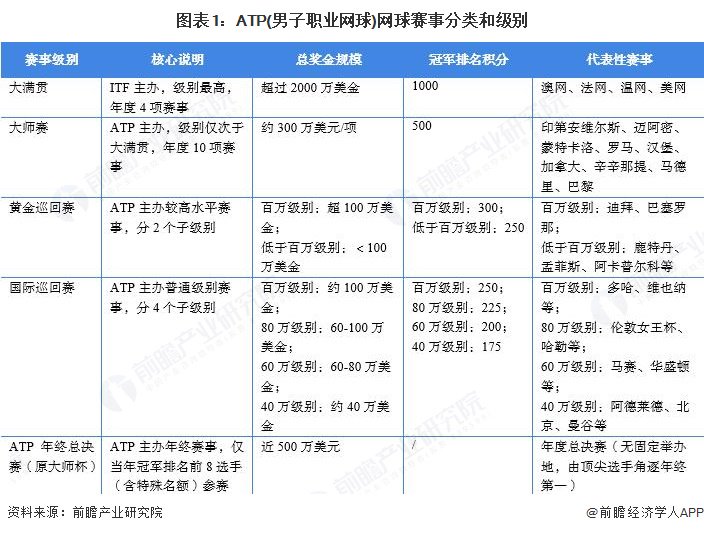
Industry Overview - Tennis is a sport typically played between two players or two pairs, aiming to hit a ball over a net using rackets, with the goal of making it difficult for opponents to return the ball [1] - The tennis events are categorized into ATP (men's professional tennis) and WTA (women's tennis), with ATP being the Association of Tennis Professionals and WTA being the Women's Tennis Association [1] Prize Money and Rankings - Grand Slam events, the highest level of tournaments, have a total prize pool exceeding $20 million, awarding 1000 ranking points [2] - ATP Masters events, the second highest level, offer around $3 million per event and 500 ranking points [2] - WTA events also have a similar structure, with Grand Slams offering approximately $3 million and various levels of tournaments providing different prize amounts and ranking points [3] Industry Chain Structure - The tennis industry chain consists of three main segments: upstream (equipment supply and venue construction), midstream (tennis services), and downstream (consumer spending) [5][7] - Upstream focuses on equipment suppliers, including brands like YONEX and DUNLOP, while midstream includes tennis clubs and training services [7] - Downstream encompasses ticket sales, equipment purchases, venue rentals, and media dissemination [5] Market Growth - The Chinese tennis market is experiencing rapid growth, with a market size of 37 billion yuan in 2024, reflecting a 14.4% increase from the previous year [18] - The market is expected to continue expanding, with projections indicating it could exceed 65 billion yuan by 2030, driven by increased participation and interest in the sport [27] Competitive Landscape - The tennis industry is concentrated in economically developed regions, particularly Guangdong and Beijing, which host a significant number of enterprises across the industry chain [18][22] - Guangdong is identified as a core area for production, while other provinces like Jiangsu and Zhejiang also have notable industry presence [22] Policy and Development Trends - Recent policies have shifted from focusing solely on competitive performance to supporting the entire industry chain, promoting infrastructure, event ecosystems, and talent development [11][13] - The industry is moving towards a more diversified participation model, aiming to attract various demographics through community programs and partnerships [23] - The government is actively encouraging the development of tennis through various initiatives, enhancing the sport's accessibility and integration into broader economic activities [13][16]

2025年度消费榜单:从指数看趋势,解码消费新浪潮
值得买科技· 2026-01-31 09:39
Investment Rating - The report does not explicitly state an investment rating for the industry Core Insights - The report highlights the dual focus of consumer behavior on "rational health" and "emotional satisfaction" in the food and beverage sector, indicating a shift towards higher demands for nutritional value and product traceability while also catering to emotional needs through enjoyable and affordable snacks [40][54] - The rise of "active health" consumption among the elderly demographic is driving growth in categories such as smart monitoring devices and high-purity nutritional products, with brands like 诺特兰德 and 鱼跃 leading the way [46] - The integration of AI and innovative product forms is creating significant brand differentiation in the 3C digital sector, with companies like Apple and Huawei establishing strong market positions through advanced technology [19][21] Summary by Sections Annual Data Overview - The report provides a comprehensive overview of consumer trends across 12 key industries, including 3C digital, food and fresh produce, home appliances, and more [11][10] Key Industry Observations - **Food and Fresh Produce**: The sector is characterized by a focus on essential goods like grains and fresh foods, with brands like 伊利 and 蒙牛 emphasizing transparency and nutritional value [15][40] - **3C Digital**: Brands are leveraging AI and innovative designs to create competitive advantages, with Apple and Huawei leading the brand rankings [19][21] - **Home Appliances**: The industry is moving towards smart home solutions, with brands like 海尔 and 美的 focusing on health and technology integration [28][29] - **Sports and Outdoor**: Domestic brands like 安踏 and 李宁 are capitalizing on the outdoor trend, merging functionality with aesthetic appeal [22][24] - **Beauty and Personal Care**: The sector is shifting towards efficacy-driven products, with brands like 雅诗兰黛 and 珀莱雅 focusing on scientific formulations [31][33] - **Pet Products**: The market is evolving towards premium offerings, with brands like 麦富迪 and 蓝氏 focusing on high-quality ingredients and innovative products [25][26] - **Automotive**: The industry is experiencing a transition towards electric and smart vehicles, with brands like 比亚迪 and 丰田 leading the charge [37][39] - **Healthcare**: The focus is on proactive health solutions for the elderly, with brands like 诺特兰德 and 鱼跃 providing comprehensive health management products [46][48] Annual Hot Categories - The report identifies key hot categories for the year, including grains and seasonings, mobile communications, and home appliances, with respective heat index scores indicating consumer interest [17][15] Brand Rankings - The report lists top brands across various categories, highlighting their annual heat index scores, which reflect consumer engagement and popularity [18][21][24][33][35][39][41][48] Consumer Trends - The report outlines emerging consumer trends such as the "atmosphere economy," where consumers seek to create immersive experiences through their purchases, and the shift towards outdoor lifestyles as a form of identity expression [68][71]


盘点丨2025运动服饰本土化与场景延伸双重竞速
Xin Lang Cai Jing· 2026-01-30 06:12
Core Insights - The sports fashion apparel industry in 2025 is undergoing significant transformation, with opportunities and risks intertwined, as international giants seek new growth points while local brands innovate and niche players achieve breakthroughs [2][29] Event Summaries Event 1: Li Ning Sponsors the Chinese Olympic Committee - In May 2025, Li Ning became the sports apparel partner for the Chinese Olympic Committee for 2025-2028, enhancing brand value [18] - The brand launched the "Milan Shining" event in October, showcasing the Chinese sports delegation's award outfits and a new lifestyle series, reinforcing its cultural and technological integration [18][3] Event 2: Anta Group's Brand Matrix Growth - Anta achieved low double-digit growth in retail sales, stabilizing total revenue at 70 billion, with a notable performance in the fourth quarter despite market pressures [19] - The main brand saw low single-digit growth, while FILA and other brands like Descente experienced higher growth rates, indicating a diversified brand strategy [19][4] Event 3: Controversy Surrounding 361° Brand Image - In September 2025, 361° terminated its endorsement with Zhang Shuihua due to a scandal, which negatively impacted the brand's image and performance [20] - Despite maintaining growth, 361° faced its lowest growth rates in five years, highlighting systemic flaws in brand endorsement risk management [20][5] Event 4: Lululemon's Growth in China - Lululemon's comparable sales in China surged by 25% in Q3 2025, becoming a key growth driver despite previous downward adjustments in performance guidance [21][22] - The brand's strategic focus on core athletic categories and product line optimization contributed to its success in the Chinese market [21][22] Event 5: Xtep's Strong Profit Growth - Xtep reported a revenue of 6.838 billion yuan in the first half of 2025, with a 7.1% year-on-year increase, and a net profit of 914 million yuan, reflecting strong profitability [22] - The brand's focus on marathon sponsorships and product innovation has solidified its position in the professional running segment [22][6] Event 6: Nike's Return to Innovation - Facing declining profits, Nike restructured its innovation teams to focus on athlete-centered product development, unveiling several new technologies in 2025 [23] - This strategic shift aims to enhance product performance and address market demands for innovation [23][9] Event 7: Puma's Crisis Due to Tariffs and Performance Decline - Puma faced a 10.4% decline in global sales and significant losses due to increased production costs from tariffs, leading to layoffs and a drop in stock price [24] - The company's strategic missteps in supply chain management have exacerbated its challenges in a competitive market [24][10] Event 8: Clarks' Channel Transformation Failure - Clarks experienced a 10% revenue decline in the UK due to over-reliance on physical stores and a lack of digital strategy, resulting in significant layoffs [25] - The brand's failure to adapt to changing consumer habits highlights the necessity for channel transformation in the retail sector [25][11] Event 9: Under Armour's Struggles with Growth - Under Armour's brand image suffered as it faced challenges from previous expansion efforts, leading to high inventory turnover and financial losses [26] - The company's restructuring efforts focus on core business areas but have yet to yield positive results [26][12] Event 10: HOKA's Growth Slowdown - HOKA's growth rate significantly decreased, with a mere 11.1% increase in net sales for Q2 2026, prompting concerns about its long-term sustainability [27] - The brand's reliance on high growth without establishing strong technical barriers has led to vulnerabilities in a competitive landscape [27][13] Event 11: IPO Aspirations of BERSHKA and Tamboor - BERSHKA filed for an IPO aiming to become a leading player in high-performance outdoor apparel, while Tamboor also submitted documents for public listing [28] - These moves reflect the growing trend of local brands capitalizing on market opportunities in the outdoor segment [28][14] Conclusion - The sports fashion apparel industry in 2025 has undergone a profound value reconstruction, with brands like Lululemon and Nike achieving breakthroughs through precise positioning and local adaptation [29] - The shift from scale expansion to quality growth emphasizes the importance of innovation and risk management for sustained success in the evolving market landscape [29]
国信证券:运动品牌行业增长难掩价格战隐忧 关注价格内卷中引领新方向的品牌机遇
智通财经网· 2026-01-30 03:33
Core Insights - The sports brand industry is experiencing a duality, with a strong growth in overall market demand but intense price competition, leading to a critical point in the product lifecycle [1][2] Industry Overview - The sports and outdoor market continues to grow, with apparel showing a clear "volume and price increase" trend driven by high-priced brands, while footwear is experiencing a "volume increase and price drop" trend [2][3] - In Q4 2025, the overall sports category saw a slight price increase of 0.9% but a sales volume decline of 1.7%, with outdoor products achieving a sales growth of 13.5% [3] International Brands - Nike is undergoing significant adjustments, with a 15.5% year-on-year sales decline and a market share drop to 9.7%, while Adidas also saw a 6.2% sales decline but maintained a market share of 8.5% [4] - Adidas' basketball shoes and casual shoes are experiencing growth despite overall declines in other categories [4] Domestic Brands - Domestic brands are facing substantial price competition, with a slight decline in market share across four major brands, while professional products are receiving positive market feedback [5] - The pricing strategy of domestic brands has led to only marginal sales increases, particularly in footwear [5] Key Takeaways - The industry shows strong growth potential, with a stable penetration rate in the sports and outdoor sector, while price competition intensifies [6] - Nike is under pressure with ongoing product adjustments, while Adidas stabilizes its market share with specific product growth [6] - Domestic brands are leveraging professional product lines to maintain market presence amidst increasing price competition [6]

