
MEITUAN(03690)

Search documents
美团上线分配抢单模式,彻底“封杀”单王骑手
3 6 Ke· 2025-12-31 11:56
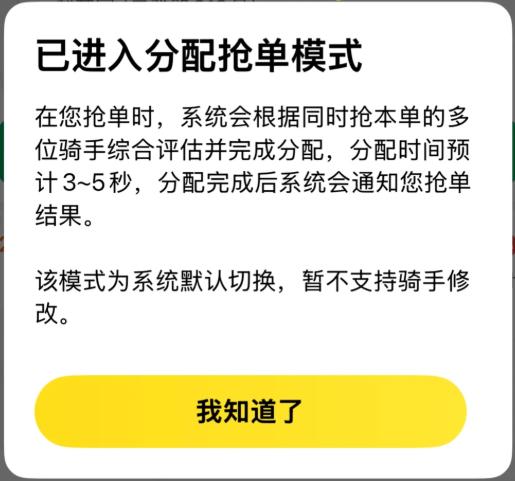
Core Viewpoint - Meituan has introduced a new order distribution model that replaces the previous pure抢单 (grab order) mechanism, leading to significant changes in the working conditions and income of delivery riders, sparking mixed reactions within the rider community [1][10]. Group 1: Reasons for Changing Order Distribution Rules - The new distribution model was implemented in mid-December and is currently being tested in cities like Guangzhou, Dongguan, Foshan, and Changsha [1]. - The distribution model still allows for a抢单 (grab order) approach, but introduces a 3 to 5 second waiting period for the system to evaluate and assign orders, effectively shifting control from riders to the platform [2][3]. - The previous抢单 model had significant issues, including the prevalence of "外挂" (cheating software) that undermined fair competition, leading to frustration among regular riders [2][3]. Group 2: Impact on Riders - Riders have expressed dissatisfaction with the loss of autonomy in choosing orders, as the new model enforces mandatory order assignments, which can lead to penalties for rejecting orders [10][11]. - Income disparities have emerged, with top riders experiencing a decrease in order volume and income due to the average distribution of orders, while less experienced riders may not see significant income improvements despite receiving more orders [13][14]. - The new model has intensified "order anxiety" among riders, as they are now compelled to accept orders that may not align with their preferences or capabilities, leading to a more stressful working environment [3][10]. Group 3: Strategic Considerations for Meituan - Meituan aims to enhance user experience by ensuring better coverage in less serviced areas, thus increasing overall market share in the competitive food delivery sector [4][7]. - The platform's algorithm is designed to optimize order distribution based on rider, user, and merchant experiences, potentially improving efficiency and reducing delivery times [4][7]. - The shift to a distribution model reflects a long-term strategic adjustment in response to increasing competition and the need for improved rider retention and user satisfaction [7][18].


智通港股通活跃成交|12月31日
智通财经网· 2025-12-31 11:03
Core Insights - On December 31, 2025, Alibaba-W (09988), Tencent Holdings (00700), and Sanhua Intelligent Control (02050) ranked as the top three companies by trading volume in the Southbound Stock Connect, with trading amounts of 1.783 billion, 1.460 billion, and 1.259 billion respectively [1] - In the Shenzhen-Hong Kong Stock Connect, Tencent Holdings (00700), Alibaba-W (09988), and SMIC (00981) were the top three companies by trading volume, with amounts of 1.218 billion, 1.201 billion, and 0.767 billion respectively [1] Southbound Stock Connect Trading Activity - The top three active companies in the Southbound Stock Connect by trading amount were: - Alibaba-W (09988): 1.783 billion with a net buy of -79.182 million - Tencent Holdings (00700): 1.460 billion with a net buy of -139 million - Sanhua Intelligent Control (02050): 1.259 billion with a net buy of 115 million [2] - Other notable companies included: - SMIC (00981): 1.202 billion with a net buy of 142 million - Zijin Mining (02899): 1.146 billion with a net buy of -590 million [2] Shenzhen-Hong Kong Stock Connect Trading Activity - The top three active companies in the Shenzhen-Hong Kong Stock Connect by trading amount were: - Tencent Holdings (00700): 1.218 billion with a net buy of -508 million - Alibaba-W (09988): 1.201 billion with a net buy of 179 million - SMIC (00981): 0.767 billion with a net buy of 249 million [2] - Other notable companies included: - Sanhua Intelligent Control (02050): 0.534 billion with a net buy of 93.908 million - Huahong Semiconductor (01347): 0.475 billion with a net buy of 69.942 million [2]




高瓴美团,投一个深圳团队
3 6 Ke· 2025-12-31 09:33
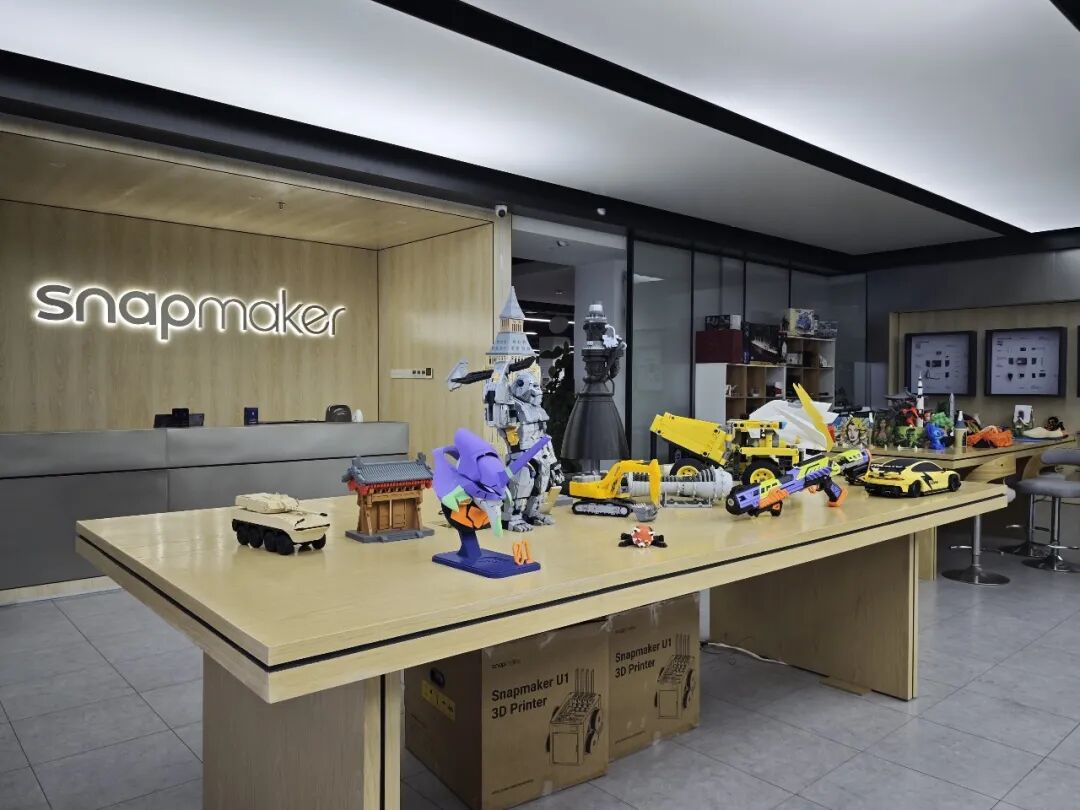
Core Insights - Snapmaker, a 3D printing startup, recently completed a multi-billion RMB Series B financing led by Hillhouse Capital and Meituan, highlighting the booming hardware entrepreneurship in Shenzhen [1][6]. Company Overview - Snapmaker was founded by Chen Xuedong and his team, who aimed to create a versatile tool for creative needs, leading to the development of a multifunctional printer that integrates 3D printing, laser engraving, and CNC cutting [2][3]. - The company faced a revenue bottleneck in 2023, prompting a strategic shift from a "three-in-one" product to focusing solely on 3D printing, resulting in the launch of the U1 printer, which became the highest crowdfunded 3D printing project on Kickstarter, raising over 150 million RMB [5][6]. Financing and Growth - Snapmaker's B round financing, amounting to several hundred million RMB, was noted as a significant event in the 3D printing sector, with expectations of several-fold revenue growth in the coming year as the company transitions from product development to ecosystem building [6]. - The company has attracted a surge of investor interest, with dozens of investors approaching them in just the second half of the year [7]. Industry Landscape - The 3D printing industry has seen a dramatic rise, particularly after the emergence of companies like拓竹, which has become a unicorn valued over 10 billion USD, prompting investors to seek the next big opportunity in this space [7][9]. - The competitive landscape has evolved, with major players like拓竹, 创想三维, and others forming a new tier in the consumer-grade 3D printing market, while Snapmaker and other emerging companies are also gaining traction [9][10]. Shenzhen as a Hub - Shenzhen is recognized as a global center for consumer hardware and 3D printing, offering a rich talent pool and robust supply chain, making it an attractive location for hardware startups [12][13]. - The city has been actively promoting hardware entrepreneurship through initiatives like the "X-Day" event, which has facilitated significant funding and support for numerous startups [13].
美团:洗浴中心搜索量同比增长超6倍,成跨年热门目的地
Guan Cha Zhe Wang· 2025-12-31 09:01
Core Insights - The leisure and entertainment consumption is experiencing a significant boost driven by the New Year atmosphere and winter weather conditions, with various sectors showing remarkable growth in search and transaction volumes [1][2]. Group 1: Consumption Trends - The search volume for beauty services, including hairdressing, nail art, and eyelash extensions, doubled in the week leading up to New Year's Day [1]. - KTV bookings saw a transaction scale increase of over 44% year-on-year, with new AI-driven entertainment options contributing to this growth [1]. - The keyword "24-hour bathing centers" experienced a search volume increase of over 6 times, indicating a strong interest in traditional winter leisure activities [1]. Group 2: Regional Performance - Harbin led the transaction growth for bathing centers with a remarkable increase of over 211% compared to the previous period, making it the city with the highest growth rate [1]. - Cities like Taiyuan and Changsha reported KTV transaction growth exceeding 70%, with the post-2000 generation showing the highest increase in participation, up over 57% year-on-year [2]. Group 3: Market Dynamics - The beauty service sector saw a nearly 40% increase in discussion and reviews, particularly among the 20-35 age group in major cities like Shanghai, Beijing, and Shenzhen [1]. - To further stimulate consumption during the New Year, the company plans to launch multiple promotional activities aimed at enhancing urban consumption vitality [2].

微醺悦己成跨年消费热门趋势 美团闪购新奇酒水销量翻倍
Xin Jing Bao· 2025-12-31 05:46
Group 1 - The core trend for New Year's consumption is the pursuit of self-indulgence and ritual among young consumers, with various products catering to these desires becoming popular [1] - Sales of alcoholic beverages surged, with craft beer and white wine seeing over 100% year-on-year growth, while brandy sales increased by over 230% and fruit-flavored beer by over 70% [1] - Innovative alcoholic products, such as low-alcohol options, gained traction, exemplified by the launch of a 29-degree Five Grains Liquor, which quickly became a hot item [1] Group 2 - Young consumers are the main force in New Year's spending, prompting multiple platforms to offer consumer incentives [2] - Meituan Flash Purchase plans to distribute a maximum of 2026 yuan in New Year's flash purchase vouchers from December 31, 2025, to January 1, 2026, enhancing the shopping experience [2]
微醺悦己成跨年消费热门趋势,美团闪购新奇酒水销量翻倍
Bei Ke Cai Jing· 2025-12-31 05:41
Group 1 - The core trend in New Year's consumption is the pursuit of self-indulgence and ritual among young consumers, with various products catering to this demand [1] - On December 31, data from Meituan Flash Purchase indicated that various alcoholic beverages, including craft beer and white wine, saw significant sales increases, with white brandy sales up over 230% and fruit-flavored beer sales up over 70% year-on-year [1] - New and trendy fruit and flower products are also popular among young consumers for creating a New Year's atmosphere, with certain items like yogurt apples seeing a search volume increase of 13 times compared to the previous week [1] Group 2 - Young consumers are the main force in New Year's spending, prompting multiple platforms to offer consumption incentives, including Meituan Flash Purchase, which plans to distribute up to 2026 yuan in New Year's vouchers [2]
长沙上榜元旦全国休闲玩乐交易规模前十城市
Chang Sha Wan Bao· 2025-12-31 03:52
Core Insights - The consumption trend data released by Meituan indicates a strong vitality in leisure and entertainment spending for New Year's Day 2026, driven by multiple factors including the New Year celebrations [1] - The KTV industry, traditionally seen as outdated, has transformed into a comprehensive entertainment space by integrating new features such as specialty food, script killing, and AI-assisted singing [1] Group 1: Market Trends - Major cities leading in leisure and entertainment transaction scale include Shanghai, Beijing, Shenzhen, Chengdu, Hangzhou, Wuhan, Guangzhou, Xi'an, Changsha, and Chongqing [1] - KTV industry transaction scale has seen a nearly 30% year-on-year growth in the two weeks leading up to New Year's Day, with Taiyuan and Changsha being the top two cities with over 70% growth [1] Group 2: Consumer Demographics - The post-00s generation is the fastest-growing demographic in terms of transaction growth, with a year-on-year increase of over 57% [1] Group 3: Company Initiatives - Meituan has launched multiple promotional activities to boost consumption during the New Year, aiming to enhance urban consumption vitality [2] - The platform is focused on connecting supply and demand, meeting diverse service consumption needs, and helping merchants improve quality and expand business [2]
320亿丘栋荣波段操作抄底美团,逢高减持中海油,布局计算机、电子
Ge Long Hui· 2025-12-31 03:20
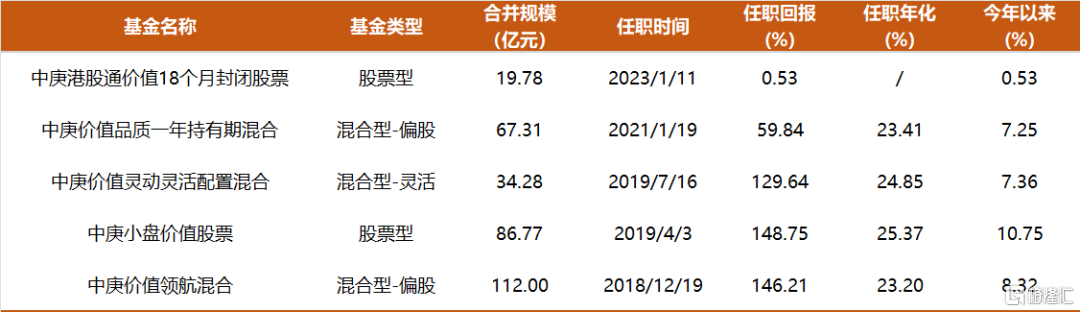
Group 1 - The core viewpoint of the article highlights the stable performance of Qiu Dongrong's funds, with five funds achieving positive returns in the first quarter of the year, particularly the Zhonggeng Small Cap Value Fund, which has returned over 10% [1][2] - The total management scale of Qiu Dongrong's funds has reached 32 billion, with the Zhonggeng Small Cap Value Fund experiencing net subscriptions, while other funds faced varying degrees of net redemptions [2][4] - The investment strategy shows a high stock allocation of over 90%, with a significant focus on Hong Kong stocks, particularly in the newly established Zhonggeng Hong Kong Stock Connect Value Fund, which has an equity position of 98.68% [5][7] Group 2 - Qiu Dongrong's view on Hong Kong stocks indicates that the overall valuation is around the historical 20th percentile, with value stocks at the 10th percentile, suggesting long-term attractiveness and systematic opportunities [8][21] - The fund manager has made notable adjustments, including a significant increase in holdings of Meituan, which has become the largest position in several funds after being cleared out last year [9][15] - Other adjustments include reducing positions in China National Offshore Oil Corporation and China Hongqiao, while increasing holdings in Guanghui Energy, which is now a top ten holding across multiple funds [22][29] Group 3 - The first major sector in Qiu Dongrong's portfolio is non-ferrous metals, with reductions in holdings of China Hongqiao and Shenhuo Co., indicating a strategic shift in the sector [34][38] - The investment focus includes low-valuation but growth-oriented stocks, particularly in sectors like energy, technology, and manufacturing, with an emphasis on companies with unique competitive advantages [41][43] - The funds are also looking at opportunities in the healthcare sector, driven by domestic demand growth and supply constraints, particularly in the pharmaceutical manufacturing industry [44]


美团在深圳成立乐豹科技公司
Zheng Quan Shi Bao Wang· 2025-12-31 02:18
人民财讯12月31日电,企查查APP显示,近日,深圳乐豹科技有限公司成立,经营范围包含:五金产品 零售;第一类医疗器械销售;第二类医疗器械销售;食品添加剂销售等。企查查股权穿透显示,该公司 由美团科技有限公司全资持股。 转自:证券时报 ...
好客山东·美食争霸赛拉动文旅消费17.1亿元
Da Zhong Ri Bao· 2025-12-31 00:59
12月28日,历时5个月的"好客山东·美食争霸赛"在青岛落幕。记者了解到,为点燃消费热情,大赛 联合银联、美团等搭建线上活动专区,累计发放各类消费券、优惠礼包超1000万元。其中,仅美团平台 就新吸引全省1.58万文商旅商户进驻,订单量同比增长18.8%。16场美食争霸赛举办期间,活动现场及 周边参与人数达380.1万人次,综合带动线上线下参与总人数1.5亿人次,拉动文旅总消费额17.1亿元。 "每一道美食都承载着地域文化基因,每一场赛事都成为展示地方魅力的窗口。"中国烹饪协会会长 杨柳表示,赛事吸引2500余家餐饮企业、6000余名烹饪从业者参与,真正实现了"以小切口推动大消 费、以烟火气汇聚高人气",为全国餐饮行业的高质量发展提供了经验。"活动开创了'美食+'产业生态 融合的新平台,链接美食赛事与产业展销平台,整合餐饮、旅游、农业、文创、数字等多板块资源,打 造出全国首个省级美食产业生态赛事品牌。"省文化和旅游厅副厅长王炳春表示,此次通过美食赛事带 动就业培训、促进农产品上行、助力区域品牌孵化,形成了"一赛促一业、一味惠民生"的可复制样本。 (记者 唐晓宁) ...