JD(09618)

Search documents
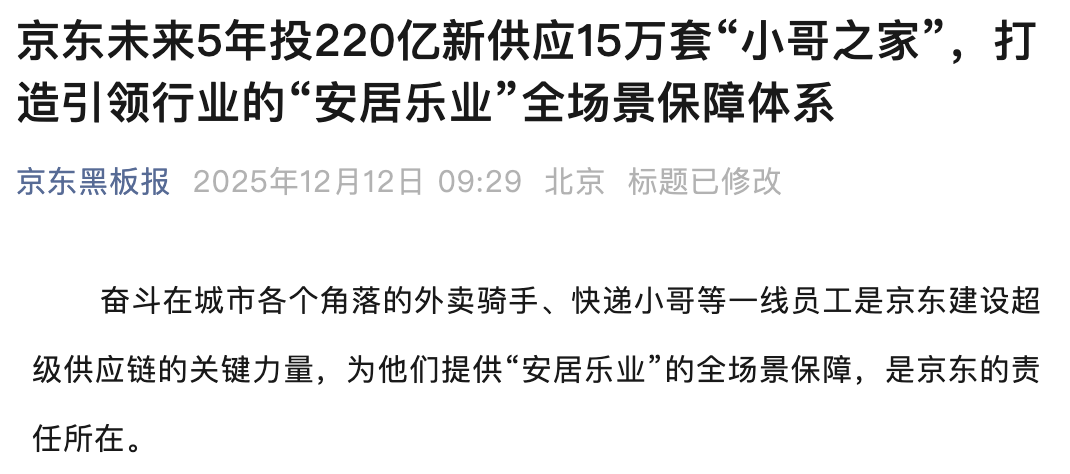
京东重磅宣布:再投220亿元!
Zhong Guo Ji Jin Bao· 2025-12-12 09:26
Core Insights - JD.com announced a plan to invest an additional 22 billion yuan over the next five years to provide 150,000 "Little Brother Homes" for delivery workers, improving their living conditions [1][2] - The initiative is expected to benefit at least 200,000 employees and is part of JD's ongoing commitment to enhance housing conditions for its workforce [2] Group 1: Housing Initiative - JD.com will invest 22 billion yuan to supply 150,000 "Little Brother Homes" through various methods including leasing and self-construction [2] - The company has already provided 28,000 housing units for frontline employees across 145 cities [2] - Over the past 20 years, JD.com has cumulatively invested 22 billion yuan in improving employee housing conditions [2] Group 2: Employee Benefits and Training - Starting March 1, 2025, JD.com will begin contributing to social insurance for full-time delivery riders and provide accident and health insurance for part-time riders, becoming the first platform to do so [3] - JD.com has established the first modern Rider Academy in collaboration with Guangdong Province, offering courses in English communication, food safety, and mental health for riders [3] - The Rider Academy aims to assist riders in advancing their careers and obtaining vocational skill certificates, facilitating transitions to other roles within the company [3]


京东重磅宣布:再投220亿元!
中国基金报· 2025-12-12 09:16
Core Viewpoint - JD.com plans to invest an additional 22 billion yuan over the next five years to provide 150,000 "Little Brother Homes" to improve living conditions for delivery personnel [1][4][5]. Group 1: Housing Initiative - The new housing initiative is expected to benefit at least 200,000 employees, further enhancing the living conditions of delivery riders and couriers [5]. - To date, JD.com has provided 28,000 housing units for frontline employees across 145 cities through leasing and self-construction [5]. - Over the past 20 years, JD.com has cumulatively invested 22 billion yuan in improving employee housing conditions, with a recent 10 billion yuan added to the housing security fund in 2023 [5]. Group 2: Employee Benefits - Starting March 1, 2025, JD.com will gradually provide full-time delivery riders with social insurance and housing fund contributions, becoming the first platform to do so for delivery personnel [8]. - JD.com has also partnered with Guangdong Province to establish the first modern Rider Academy in the country, offering courses in English communication, food safety, and mental health for riders [9]. - The Rider Academy aims to assist riders in advancing their education and transitioning to other roles within JD.com, with opportunities for obtaining vocational skill certificates [9].

5年再投220亿,京东计划新建15万套“小哥之家”
Guan Cha Zhe Wang· 2025-12-12 09:16
Core Viewpoint - JD.com is significantly investing in improving the living conditions of frontline workers, specifically delivery riders and couriers, by committing 22 billion yuan to build 150,000 "Rider Homes" over the next five years [1][6]. Housing Improvement - JD.com has already provided 28,000 housing units for frontline workers across 145 cities and plans to expand this coverage [1][6]. - The "Rider Homes" are designed for practicality, with units like a 60 square meter two-bedroom apartment in Beijing offered at 50% below market rent [3]. - New self-built dormitories in Daxing District reduce commuting time from one hour to ten minutes, saving employees significant rental costs [4]. Employee Welfare - JD.com has invested a total of 22 billion yuan in employee housing improvements, with 10 billion yuan allocated to the housing security fund in 2023, benefiting 77% of frontline workers [6]. - The company ensures 100% of full-time riders have signed labor contracts and receive full employee benefits, including paid leave and health check-ups [7]. - Additional benefits include subsidized meals, special allowances during extreme weather, and a "New Year in JD" program that has invested over 700 million yuan to support employees during the holidays [7]. Skills Development - JD.com has partnered with Guangdong Province to establish the first "Modern Rider Academy" for skill enhancement and job transition opportunities for full-time riders [8]. - The academy will provide training in various areas, including safety protocols, English communication, and mental health, and will serve as a training base for drone operators [10]. - The "I Study at JD" program has supported over 6,500 employees in further education, with plans to cover 360,000 frontline workers in skill competitions by 2025 [10].

港股收评:指数集体上扬!大金融股、黄金股走强,药品股低迷


Sou Hu Cai Jing· 2025-12-12 09:01
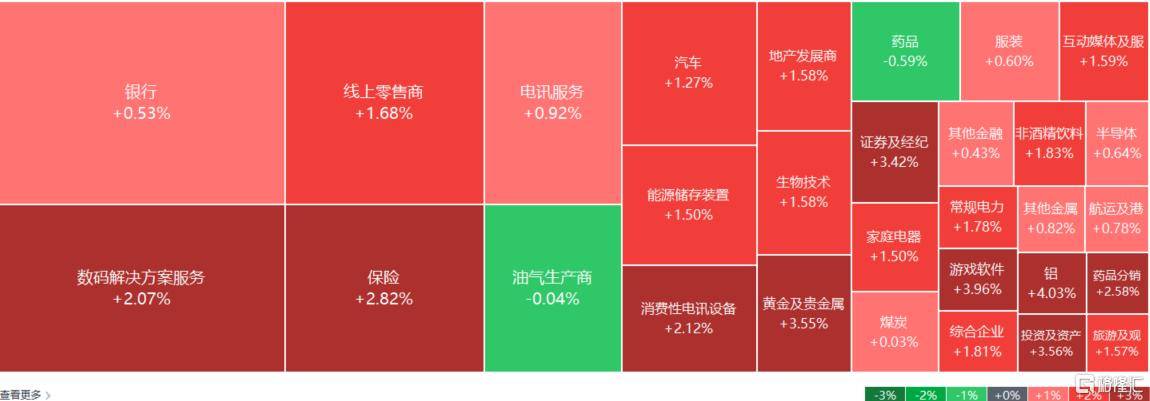
Market Overview - The market sentiment improved significantly due to favorable news from the Central Economic Work Conference, with the Hang Seng Index rising by 1.75% and returning to 26,000 points [1] - Major technology stocks collectively increased, with NetEase rising over 4%, Tencent and Alibaba up over 2%, and other tech companies like Xiaomi, Baidu, JD.com, and Kuaishou also seeing gains [1][3] Sector Performance - **Electric Power Equipment**: Strong performance with Dongfang Electric up over 13% and other companies like Harbin Electric and Shanghai Electric also showing significant gains [1][5] - **Financial Sector**: All major financial stocks, including China Pacific Insurance and CITIC Securities, saw increases, with HSBC reaching a market value of over HKD 2 trillion [1][8] - **Precious Metals**: Gold and silver prices surged, leading to active trading in gold stocks, with China Silver Group rising nearly 6% [1][6] - **Consumer Sector**: Restaurant stocks were active, with companies like Da Shi and Haidilao seeing notable increases, driven by policies aimed at boosting consumption [10] - **Real Estate**: Property stocks rose, with Longguang Group increasing over 4%, supported by policies to stabilize the real estate market [12] Individual Stock Highlights - **NetEase**: Stock price increased by 4.20% to HKD 218.40 [4] - **Dongfang Electric**: Stock price surged by 13.59% to HKD 24.90 [5] - **China Pacific Insurance**: Stock price rose by 5.68% to HKD 34.60 [9] - **China Silver Group**: Stock price increased by 5.80% to HKD 0.730 [7] - **Xuan Bamboo Bio**: Stock price increased by 25.19% to HKD 96.90, reaching a new high [16][19] Economic Policy Impact - The Central Economic Work Conference emphasized the importance of domestic demand and consumer spending, with plans to implement measures to boost consumption and stabilize the real estate market [10][12]
积极促消费,京东政企业务搭建优商优品供需匹配 “快车道”
Cai Fu Zai Xian· 2025-12-12 08:56
Core Insights - The total variety of consumer goods in China has reached 230 million, with over 100 categories such as home appliances and clothing leading global production, indicating a new development stage of high-quality supply and pricing [1] - The State Council has issued a plan to enhance the adaptability of consumer goods supply and demand, aiming to establish three trillion-level consumption sectors and ten hundred-billion-level consumption hotspots by 2027 [1] - JD's government and enterprise business has built a "super supply chain" over the past decade, integrating diverse supply, digital platform technology, and nationwide logistics to support rapid growth for brand partners and stimulate domestic demand [1] Company Collaborations - Shandong Luhua Group, a leader in high-end edible oil, has seen a 160% growth in performance on JD's platform since 2021, with its 5L peanut oil achieving a 69% year-on-year increase in 2025 [2] - Midea, a leading home appliance company, has established an efficient collaboration mechanism with JD, resulting in a threefold increase in sales for products like electric steamers and ice makers since 2025 [2] - Bosideng, a global down clothing brand, has become JD's largest single brand in the apparel category, with a 2.5 times growth in the consumer goods sector [3] - Deli, a leader in office supplies, has expanded its product line to over 12,000 items and launched a printer with a domestic chip, achieving a 136% growth in printer sales [3] Strategic Initiatives - JD's government and enterprise business has launched a "billion market partner plan" to help over 300 brand partners achieve annual sales exceeding 100 million yuan within three years [4] - The establishment of the "Ten Billion Brand Alliance Club" includes notable companies like Huawei and Midea, aiming to enhance market reach and consumer engagement [4] - JD's focus on building a high-quality development framework through effective supply-demand interaction is set to contribute significantly to economic growth and consumption upgrades [4]

20秒售罄!京东独家首发湖南跨晚门票,抢票热潮引爆全网
Jin Rong Jie Zi Xun· 2025-12-12 07:59
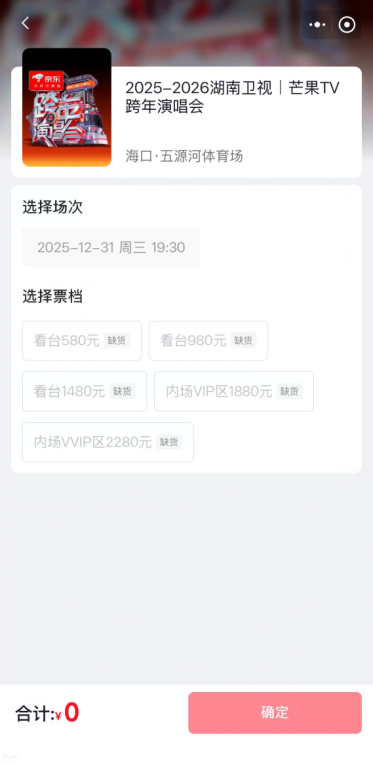
Core Points - The 2025-2026 Hunan TV New Year's Eve concert tickets were released on JD.com and sold out in under one minute, indicating high demand for the event [1][3] - JD.com served as the exclusive ticketing platform for the concert, providing a seamless purchasing experience for consumers [3] - The concert is scheduled for December 31 at 19:30 at the Wuyuanhe Sports Center in Haikou, and will be broadcast live on both Hunan TV and Mango TV [3] Group 1 - The concert's theme is "Ready to Go, Passionate New Year," marking the 21st anniversary of the Hunan TV New Year's Eve concert brand [3] - JD.com has partnered with Hunan TV for the third consecutive year as the exclusive title sponsor of the event [3] Group 2 - Starting December 12, users on JD.com can participate in interactive activities related to the concert, with opportunities to win shopping red envelopes, coupons, and exclusive prizes [5] - Continuous participation in the activities could lead to becoming a "VVVVIP" user, with rewards including hotel packages, exclusive airport pickup services, celebrity photo opportunities, and front-row seats at the concert [5]
未来5年投220亿,京东:新供应15万套“小哥之家”
Yang Zi Wan Bao Wang· 2025-12-12 07:52
Core Viewpoint - JD.com is significantly enhancing housing support for its frontline employees by providing 15,000 new "Xiao Ge Zhi Jia" (delivery personnel homes) over the next five years, with an investment of 22 billion yuan, aiming to improve living conditions for delivery riders and couriers [1][3]. Group 1 - JD.com has already provided 28,000 housing units for frontline employees across 145 cities [3]. - The company plans to invest 22 billion yuan over the next five years to create approximately 150,000 additional housing units, benefiting at least 200,000 employees [3]. - The "housing security fund" has seen a significant increase in investment, with 10 billion yuan allocated in 2023, and 77% of applications coming from frontline employees [3]. Group 2 - The "Xiao Ge Zhi Jia" homes are designed to be fully furnished and affordable, with monthly rents being 50% lower than surrounding areas [2]. - Employees have reported substantial improvements in their living conditions, such as reduced commuting times and lower housing costs, enhancing their overall quality of life [2]. - JD.com has invested a total of 22 billion yuan over the past 20 years to improve employee housing conditions [3].
多维防控体系持续夯实优化 京东构建全链路安全屏障
Zheng Quan Ri Bao Zhi Sheng· 2025-12-12 06:45
本报讯 (记者袁传玺) 近年来,随着人工智能技术的快速发展,电商领域黑灰产作案手段日趋隐蔽化、智能化,不仅严重扰乱 正常平台经营秩序,更对消费者合法权益构成直接威胁。京东始终以合规作为立身之本,围绕消费者权 益保护与平台良好经营生态构建,依托强大的供应链、AI与数字技术等,持续推动平台生态治理体系 优化升级。 为落实《反电信网络诈骗法》要求,京东依托行业领先的反诈风控能力构建了全流程防护体系。当系统 识别到用户存在被骗风险时,将实时阻断风险交易并向用户推送预警提示,必要时联动公安机关开展劝 阻工作;针对用户反馈的诈骗问题,平台会第一时间拦截风险订单,并对涉诈资产采取临时性保全冻结 措施,后续将根据公安机关要求完成资金返还。 对于有诈骗嫌疑的行为,京东坚持"零容忍"并重拳出击,根据违规程度可采取款项冻结、货款延迟结 算、商品下架、后台登录限制等多项处置措施,同时对关联店铺实施联动管控。 针对商品质量管控,京东不仅要求商家严格遵守国家标准,更对部分品类制定了更为严格的专属标准, 已构建起一套由京东超市品质实验室、26个专业实验室及第三方权威机构等组成的行业最大规模商品质 量检测体系,覆盖新品测评、入仓检测、日常抽 ...
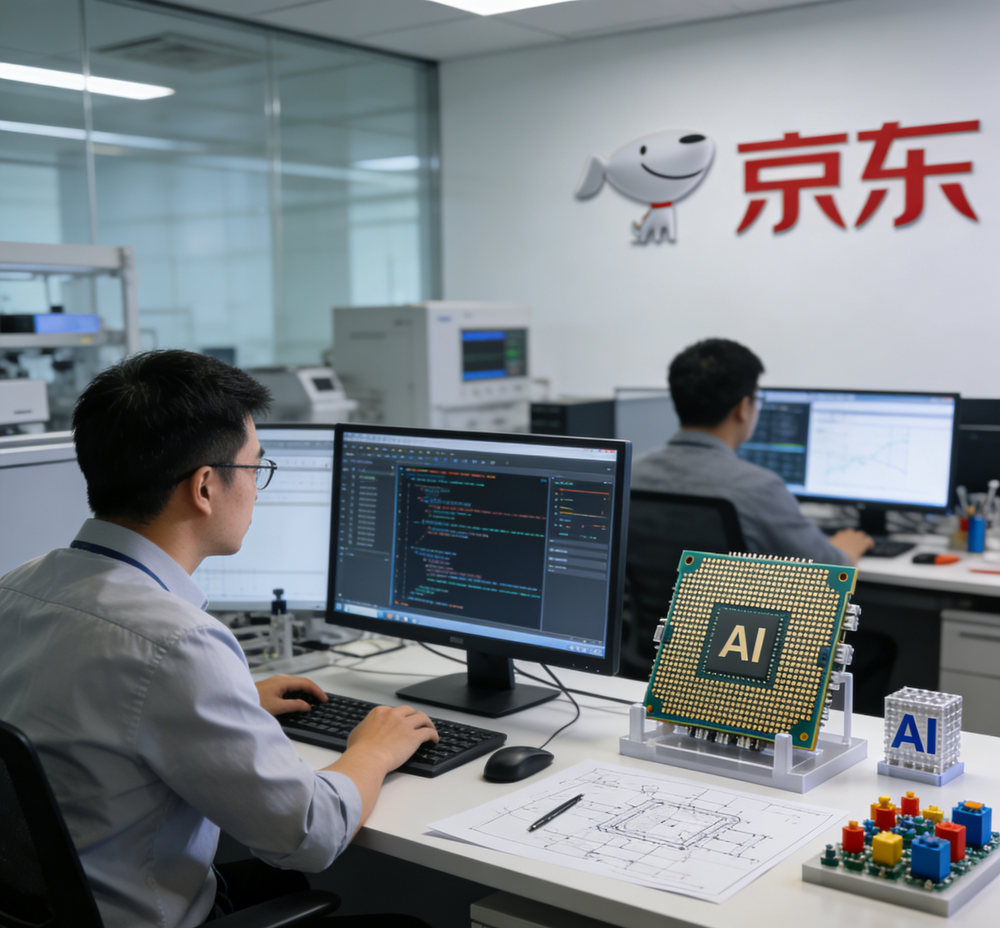
京东正招募端侧AI芯片人才 存算一体技术引关注
Xin Lang Cai Jing· 2025-12-12 06:45
Core Insights - JD.com is actively recruiting talent in the field of edge AI chips, focusing on integrated storage and computing chips for applications in robotics, smart home appliances, and voice-activated devices [1][10] Group 1: Recruitment and Compensation - JD.com is offering competitive salaries for positions related to integrated storage and computing chip design, ranging from 25,000 to 100,000 CNY per month depending on experience [3] - The recruitment aims to support the development of AI computing power products for consumer and household applications [11] Group 2: Technology and Market Trends - Integrated storage and computing technology is becoming a hot topic in the semiconductor industry, with major players like Samsung, SK Hynix, TSMC, Intel, Micron, and IBM making significant advancements [10] - The demand for local computing power and energy efficiency in smart devices is increasing due to the explosive growth of edge AI technology, highlighting the limitations of traditional von Neumann architecture [10] Group 3: JD.com's Strategic Initiatives - JD.com has been actively expanding its presence in edge AI, launching AI-powered toys and establishing a dedicated embodied intelligence business unit focused on home scenarios [12] - The company has also registered the trademark "Joyrobotaxi," indicating its entry into the autonomous taxi market, alongside its logistics initiatives involving unmanned vehicles and drones [12] Group 4: Competitive Landscape - Other major tech companies like Alibaba, Baidu, ByteDance, and Tencent have already ventured into the chip sector, with Alibaba's Tsinghua Unigroup and Baidu's Kunlun chip making significant strides in AI chip deployment [13]
通往欧洲之路 刘强东快乐并痛着
Xin Lang Cai Jing· 2025-12-12 06:40
Core Viewpoint - The acquisition of Ceconomy by JD.com represents a significant move by a Chinese company into the European market, highlighting the complexities of cultural barriers and trust-building in international business [1][19]. Group 1: Acquisition Details - JD.com announced its intention to acquire Germany's largest electronics retailer, Ceconomy, for approximately €2.2 billion (about 18.5 billion RMB), marking one of the largest acquisitions by a Chinese company in Europe in recent years [3][21]. - The acquisition has received approval from the German Federal Cartel Office, paving the way for the transaction [3][21]. - JD.com aims to acquire a 45.5% stake in Ceconomy in the first phase of the stock buyback plan, with a second phase to complete the remaining 29% by November 27 [11][29]. Group 2: Cultural and Economic Concerns - The acquisition has raised concerns in France due to Ceconomy's status as the second-largest shareholder of Fnac Darty, a company deeply rooted in French culture [3][21]. - French authorities have imposed conditions on JD.com to ensure that it will not influence the governance or management of Fnac Darty, addressing public concerns about cultural sovereignty [4][22]. - The French Minister of Economy emphasized the cultural significance of Fnac and the need for JD.com to respect its heritage [6][24]. Group 3: Market Position and Strategy - Fnac Darty, with projected sales of approximately €8.25 billion in 2024, is a major player in the European retail market, selling a wide range of products through both online and offline channels [7][25]. - JD.com has been expanding its presence in Europe, including launching the online platform Joybuy in France, which offers a diverse range of products with a promise of same-day delivery [16][34]. - The acquisition is seen as beneficial for both JD.com and European retailers, as it allows JD.com to leverage advanced technology and efficiency while gaining insights into consumer behavior in Europe [35].