
NONGFU SPRING(09633)

Search documents
8点1氪|肯德基回应老人占座打牌顾客站着;临期红色尖叫被炒到88元一瓶,农夫山泉回应;高铁一次性座椅套热销
3 6 Ke· 2025-07-22 00:12
Group 1 - Yushu Technology has initiated its IPO counseling with CITIC Securities as the advisory firm, aiming to submit its IPO application by October 2023 [2] - The capital competition in the embodied intelligence sector is intensifying, with multiple companies like Zhiyuan Robotics and others disclosing financing progress in July [2] - Goer Microelectronics has re-submitted its listing application to the Hong Kong Stock Exchange, with several financial institutions acting as joint sponsors [2] Group 2 - The first national standard for campus meal services will be implemented on December 1, 2023, aimed at enhancing food safety in schools [5] - Good Products has been involved in a share transfer dispute amounting to 996 million yuan, with the case currently accepted by the Guangzhou Intermediate People's Court [5] - JD.com has made significant investments in three robotics companies, indicating a focus on technological innovation in supply chain scenarios [6] Group 3 - The Chinese third-generation autonomous superconducting quantum computer "Benyuan Wukong" has been deployed in multiple locations, supporting major national research projects [6] - Xiaomi SU7 has achieved the highest one-year resale value among electric vehicles at 88.91%, indicating strong market performance [8] - The overseas market for online literature is projected to exceed 5 billion yuan in 2024, with a significant increase in overseas user numbers [9] Group 4 - Ant Group's AI health application AQ has launched on iOS and quickly topped the Apple App Store's medical category, indicating strong market interest [16] - Alibaba's Tongyi Qianwen has updated its flagship Qwen3 model, enhancing its capabilities for long text processing [17] - The number of generative AI services registered in China has reached 346, reflecting the rapid growth of AI applications [18] Group 5 - "Box Box Sharing" has completed over 100 million yuan in Series F financing, aimed at enhancing its industry capabilities [19] - "Jiliu Technology" has secured nearly 100 million yuan in A+ round financing, focusing on core technology development [20] - "Tongxin Medical" has completed over 100 million USD in strategic financing to accelerate its international expansion [21]



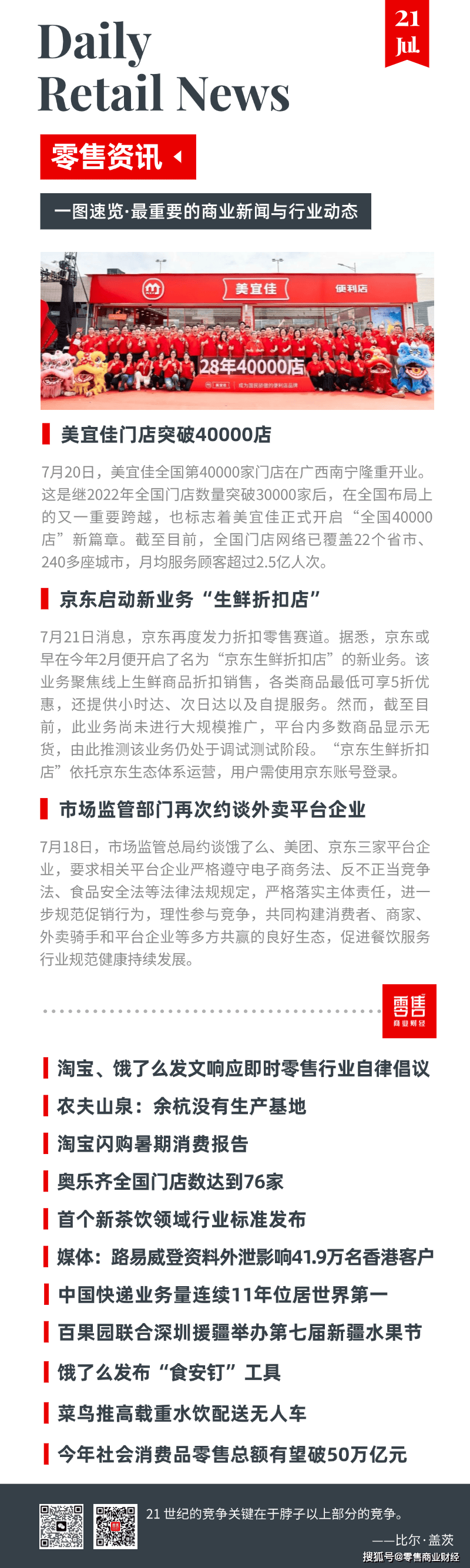
美宜佳门店突破40000店;京东启动新业务“生鲜折扣店”
Sou Hu Cai Jing· 2025-07-21 16:56
Group 1: Company Developments - Meiyijia has opened its 40,000th store in Nanning, Guangxi, marking a significant milestone in its national expansion, with coverage in 22 provinces and over 240 cities, serving more than 250 million customers monthly [6] - ALDI has expanded its presence in China, reaching a total of 76 stores nationwide, with new openings in Wuxi and Suzhou [14] - JD.com has launched a new business called "JD Fresh Discount Store," focusing on online discounts for fresh products, although it is still in the testing phase with limited product availability [8] Group 2: Market Trends and Consumer Behavior - Taobao Flash Sale reported a significant increase in night-time orders, with a more than 100% month-on-month growth in 127 cities since July, particularly in central and western regions [10] - The Chinese express delivery industry continues to lead globally, with an average of over 500 million packages collected daily, reflecting efficient resource allocation [15] - The retail sales of consumer goods in China are expected to exceed 50 trillion yuan this year, maintaining the country's position as the second-largest consumer market globally [22] Group 3: Regulatory and Industry Standards - The State Administration for Market Regulation has held discussions with major food delivery platforms, emphasizing compliance with e-commerce laws and promoting fair competition [9] - The first industry standard for fresh tea beverages has been officially released, which will take effect in January 2026, setting quality requirements for ingredients and packaging [14] - A new digital tool called "Food Safety Nail" has been launched by Ele.me to enhance food safety monitoring across the supply chain [18]




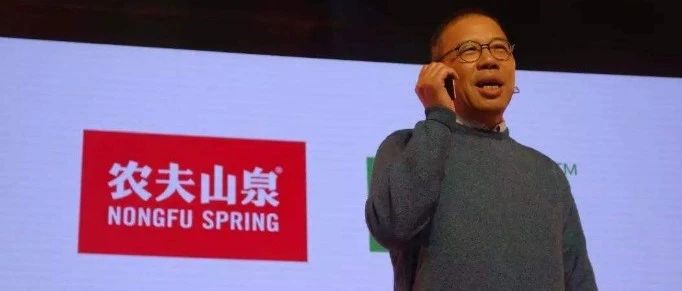
农夫山泉回应红色尖叫被炒至88元一瓶
第一财经· 2025-07-21 13:44
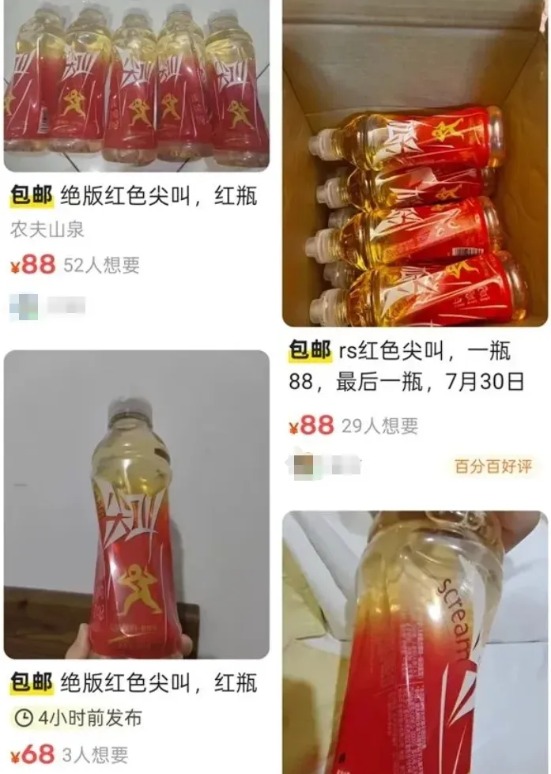
Core Viewpoint - The article discusses the recent surge in the resale price of the "Red Scream" beverage from Nongfu Spring, highlighting its limited availability and the consumer perception of it being a collectible item despite negative taste reviews [1][2]. Group 1: Product Pricing and Market Behavior - The "Red Scream" beverage, originally priced at 5 yuan per bottle, is now being resold for prices ranging from 48 yuan to 128 yuan, representing a markup of over 9 times the original price [1]. - A seller on a second-hand platform claims to have two complete boxes of "Red Scream" but is only willing to sell one at a price of 1000 yuan, indicating its status as a "limited edition collectible" [1]. Group 2: Production and Availability - The "Red Scream" beverage was produced to celebrate the 20th anniversary of the brand and was available for a limited time, with 10,000 boxes sold out within three days [1]. - Nongfu Spring has confirmed that the "Red Scream" is no longer in production, and the beverage contains ginseng as an added ingredient [1]. Group 3: Trademark and Legal Issues - Nongfu Spring has applied for multiple trademarks related to "Scream" and "尖叫," covering categories such as beer beverages and pharmaceuticals, with some trademarks already successfully registered [2]. - The company has been involved in multiple legal disputes concerning trademark rights and infringement [2].
食品饮料周报:白酒情绪边际修复,关注中报确定性个股-20250721
Tai Ping Yang Zheng Quan· 2025-07-21 11:49
Investment Rating - The overall investment rating for the food and beverage industry is positive, with expectations of returns exceeding the CSI 300 index by more than 5% in the next six months [23]. Core Insights - The food and beverage sector has shown signs of stabilization and recovery, with soft drinks, liquor, and dairy products leading in growth. The sector index increased by 0.97%, ranking 14th among 31 sub-industries [4][13]. - The liquor segment is experiencing a rebound, with the SW liquor index rising by 0.88%. The sector is in a bottoming phase, with a focus on the upcoming demand during the Mid-Autumn Festival and National Day [5][17]. - The beverage market is seeing mixed short-term performances due to external events, but there is a long-term positive outlook for companies with upward momentum [6][18]. Summary by Sections Liquor Sector - The liquor sector is recommended for investment, with specific companies like Guizhou Moutai, Luzhou Laojiao, Shanxi Fenjiu, and Jianshiyuan receiving "Buy" ratings. The sector is currently at a historical low valuation, suggesting a potential recovery [3][5][21]. - The price of Moutai (bottle) is reported at 1890 RMB, showing a slight increase, while the price of Wuliangye remains stable at 870 RMB [5][17]. Beverage Sector - The beverage sector is experiencing fluctuations due to public sentiment affecting certain brands. Companies like Nongfu Spring and China Resources Beverage have shown resilience, with Nongfu Spring's market share recovering significantly [6][20]. - Recommendations include Youyou Foods, Dongpeng Beverage, and Dashi Co., with a focus on companies that can capitalize on market share recovery [6][18][21]. Food Sector - The food sector has seen some companies facing challenges due to external events, but there are still opportunities for growth in the long term. The focus remains on companies with strong mid-year performance [6][18].



农夫山泉(09633):包装水份额回补,东方树叶增势延续
HTSC· 2025-07-21 06:16
Investment Rating - The investment rating for the company is "Buy" with a target price of HKD 53.59, compared to a closing price of HKD 43.00 as of July 18, 2025 [1]. Core Views - The report highlights a recovery in the packaging water market share for the company, with a strong growth trend expected to continue in 2025. The company is reallocating its marketing expenses from green bottle purified water to red bottle natural water, which has shown a significant recovery in market share since the low point in 2024 [5][6]. - The company is also focusing on expanding its product lines, including NFC juice, carbonated coffee, and iced tea, which are anticipated to contribute to revenue growth [5][6]. - The report anticipates that the industry cost advantages will persist in 2025, positively impacting the company's gross margin, while the expense ratio is expected to decrease year-on-year [5][9]. Summary by Sections Financial Projections - Revenue is projected to grow from RMB 42,896 million in 2024 to RMB 59,508 million by 2027, reflecting a compound annual growth rate (CAGR) of approximately 9.19% [4]. - Net profit attributable to the parent company is expected to increase from RMB 12,123 million in 2024 to RMB 17,902 million in 2027, with a CAGR of 9.49% [4]. - The earnings per share (EPS) is forecasted to rise from RMB 1.08 in 2024 to RMB 1.59 in 2027 [4]. Market Position and Competitive Landscape - The report notes that the competitive landscape in the packaging water industry has eased since 2025, allowing the company to regain market share [5]. - The company is recognized as a relatively rare platform-type enterprise within the soft drink sector, with a strong focus on consumer education and product innovation [6]. Valuation Metrics - The report adjusts the earnings forecast for 2025-2027, with EPS estimates revised to RMB 1.29, RMB 1.45, and RMB 1.59 respectively, reflecting an increase of 4% from previous estimates [7]. - The target price of HKD 53.59 corresponds to a price-to-earnings (PE) ratio of 38x for 2025, indicating a premium valuation due to the company's strong market position and competitive advantages [7].
异动盘点0721| 监管约谈外卖平台,美团续涨4%;雅江水电站开工,点燃水泥、水电设备股;奈飞跌超5%、BZAI飙涨59%
贝塔投资智库· 2025-07-21 03:57
Group 1 - Meituan-W (03690) rose nearly 4% as regulatory discussions with food delivery platforms suggest a slowdown in subsidy wars, which may benefit Meituan's user experience rebound [1] - The Yarlung Tsangpo River hydropower project commenced with an investment of 1.2 trillion yuan, equivalent to the construction of three Three Gorges projects [1] - Cement stocks surged in the Hong Kong market, with Huaxin Cement (06655) increasing over 29% following the hydropower project announcement [1] - Stablecoin concept stocks strengthened after Trump signed a stablecoin bill, with Huajian Medical (01931) rising over 23% [1] - UBTECH (09880) saw a nearly 10% increase after winning a major procurement order for humanoid robots worth nearly 100 million yuan [1] Group 2 - Nongfu Spring (09633) increased over 3% as analysts believe the company will benefit from competitive public sentiment, indicating a strong business recovery [2] - Xintong Medical-B (02160) rose over 5% as MicroPort plans to inject its CRM business into Xintong Medical, aiding in the establishment of a heart disease product platform [2] - Oil stocks generally rose, with Sinopec (00386) increasing nearly 4% after Goldman Sachs raised its oil price forecast for the second half of the year [2] - Chinese brokerage stocks remained active, with major brokerages reporting a year-on-year net profit growth of 50%-80% for the first half of the year [2] Group 3 - Netflix (NFLX.US) fell over 5% as investors had overly high expectations for Q2 performance, despite revenue growth of 15.9% year-on-year to $11.08 billion [3] - Interactive Brokers (IBKR.US) rose 7.77% as Q2 profits and revenues increased [4] - Blaize Holdings (BZAI.US) surged 58.75% after securing a $120 million AI infrastructure contract [4] - OpenDoor Technologies (OPEN.US) jumped 36.36% as interest in the platform surged significantly on social media [4] - Talen Energy (TLN.US) rose 24.48% to a record high after announcing a $3.5 billion acquisition of two gas power plants, expected to boost free cash flow per share by over 40% [4] - Futu Holdings (FUTU.US) increased 7% as Barclays highlighted its potential for accelerated growth as a leading online brokerage in Asia [4]

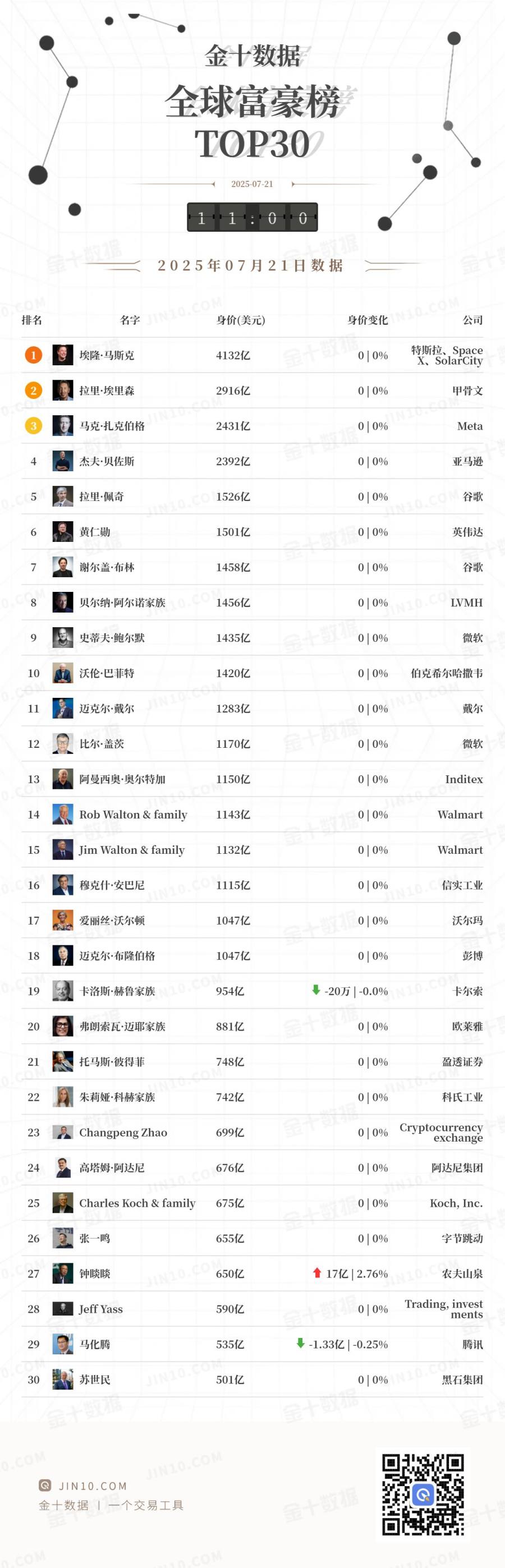
金十图示:2025年07月21日(周一)全球富豪榜



news flash· 2025-07-21 03:05
金十图示:2025年07月21日(周一)全球富豪榜 | 排名 | 名字 | 身价(美元) | 身价变化 | 公司 | | --- | --- | --- | --- | --- | | 1 | 埃隆·马斯克 | 4132亿 | 0 0% | 特斯拉、Space | | 2 | 拉里·埃里森 | 2916亿 | 0 0% | 甲骨文 | | | 马克·扎克伯格 | 2431亿 | 0 0% | Meta | | 4 | 杰夫·贝佐斯 | 2392亿 | 0 0% | 亚马逊 | | 5 | 拉里·佩奇 | -0 1526亿 | 0 0% | 谷歌 | | 6 | 黄仁勋 | 1501亿 | 0 0% | 英伟达 | | 7 | 谢尔盖·布林 | 1458亿 | 0 0% | 谷歌 | | 8 | 贝尔纳·阿尔诺家族 | 1456亿 | 0 0% | LVMH | | 9 | 史蒂夫·鲍尔默 | 1435亿 | 0 0% | 微软 | | 10 | 沃伦·巴菲特 | 1420亿 | 0 0% | 伯克希尔哈撒韦 | | 11 | 迈克尔·戴尔 | 1283亿 | 0 0% | 戴尔 | | 12 | 比尔·盖茨 ...
红色尖叫溢价超9倍!网友:之前不是没人喝吗?曾登最难喝饮料排行榜
Bei Jing Shang Bao· 2025-07-20 05:38
Core Viewpoint - The recent surge in demand and pricing for the "Red Scream" beverage, despite its previous reputation as an unpopular flavor, highlights a unique market phenomenon where scarcity and nostalgia drive consumer interest and speculative pricing [1][3]. Group 1: Market Dynamics - Sellers on second-hand platforms are listing near-expiry "Red Scream" drinks at prices ranging from 48 to 88 yuan per bottle, representing a markup of over 9 times the original price [1]. - The "Red Scream" beverage, a part of the Scream series launched by Nongfu Spring in 2004, has seen a revival due to its limited availability, with sellers claiming it is the last batch before expiration [3][8]. Group 2: Product Background - "Red Scream" is known for its controversial taste, often described negatively by consumers, yet it contains ingredients like ginseng extract and electrolytes, which some view as beneficial [8]. - In 2023, Nongfu Spring reported that functional beverages, including the Scream series, generated revenue of 4.902 billion yuan, marking a 27.7% increase from 2022 [8].
智通港股52周新高、新低统计|7月18日





智通财经网· 2025-07-18 08:43
Core Viewpoint - As of July 18, 160 stocks reached their 52-week highs, with notable performances from China New Economy Investment (00080), Aoyuan Group Equity (02905), and Zhong An Holdings Group (08462) showing high growth rates of 288.89%, 55.28%, and 50.00% respectively [1][2]. Summary by Category 52-Week High Performers - China New Economy Investment (00080) closed at 0.440, with a peak price of 0.700, achieving a growth rate of 288.89% [2]. - Aoyuan Group Equity (02905) closed at 0.218, with a peak price of 0.250, achieving a growth rate of 55.28% [2]. - Zhong An Holdings Group (08462) closed at 0.221, with a peak price of 0.228, achieving a growth rate of 50.00% [2]. - Other notable performers include Hualian International (00969) with a growth rate of 40.13% and Zhongke Bio (01237) with a growth rate of 37.25% [2]. Additional High Performers - Wanma Holdings (06928) closed at 0.550 with a growth rate of 30.43% [2]. - Lepu Biopharma-B (02157) closed at 7.940 with a growth rate of 24.54% [2]. - Other stocks with significant growth include ZhiJianYueDong (06860) at 17.14% and China Jindian Group (08281) at 17.12% [2]. 52-Week Low Performers - The document also lists stocks that reached their 52-week lows, with XI Ernan CO-U (09311) showing a decline of 16.10% [6]. - Other notable declines include XI Ernan CO (07311) at -12.62% and Haotian International Construction Investment (01341) at -5.70% [6].
港股开盘,恒指开涨1.06%,科指开涨1.31%;蔚来汽车(09866.HK)涨超7%,阿里巴巴(09988.HK)涨近2.5%,华润啤酒(00291.HK)、网易(09999.HK)、农夫山泉(09633.HK)均涨超2%。


news flash· 2025-07-18 01:24
Group 1 - The Hong Kong stock market opened with the Hang Seng Index rising by 1.06% and the Tech Index increasing by 1.31% [1] - NIO Inc. (09866.HK) saw a significant increase of over 7% [1] - Alibaba Group (09988.HK) experienced a rise of nearly 2.5% [1] Group 2 - China Resources Beer (00291.HK), NetEase (09999.HK), and Nongfu Spring (09633.HK) all recorded gains of over 2% [1]