LEAPMOTOR(09863)

Search documents
零跑汽车浙江子公司增资至8.5亿元
Zhong Guo Qi Che Bao Wang· 2026-01-23 03:58
近日,浙江零跑汽车销售服务有限公司发生工商变更,注册资本由2亿元增至8.5亿元,增幅 325%。企查查信息显示,该公司成立于2018年,由零跑汽车全资持股。 ...

零跑汽车浙江子公司增资至8.5亿元 增幅325%
Zheng Quan Shi Bao Wang· 2026-01-23 01:48
人民财讯1月23日电,企查查APP显示,近日,浙江零跑汽车销售服务有限公司发生工商变更,注册资 本由2亿元增至8.5亿元,增幅325%。企查查信息显示,该公司成立于2018年,由零跑汽车全资持股。 ...
注定悲剧的2026,还有多少车企不信邪?
汽车商业评论· 2026-01-22 23:07
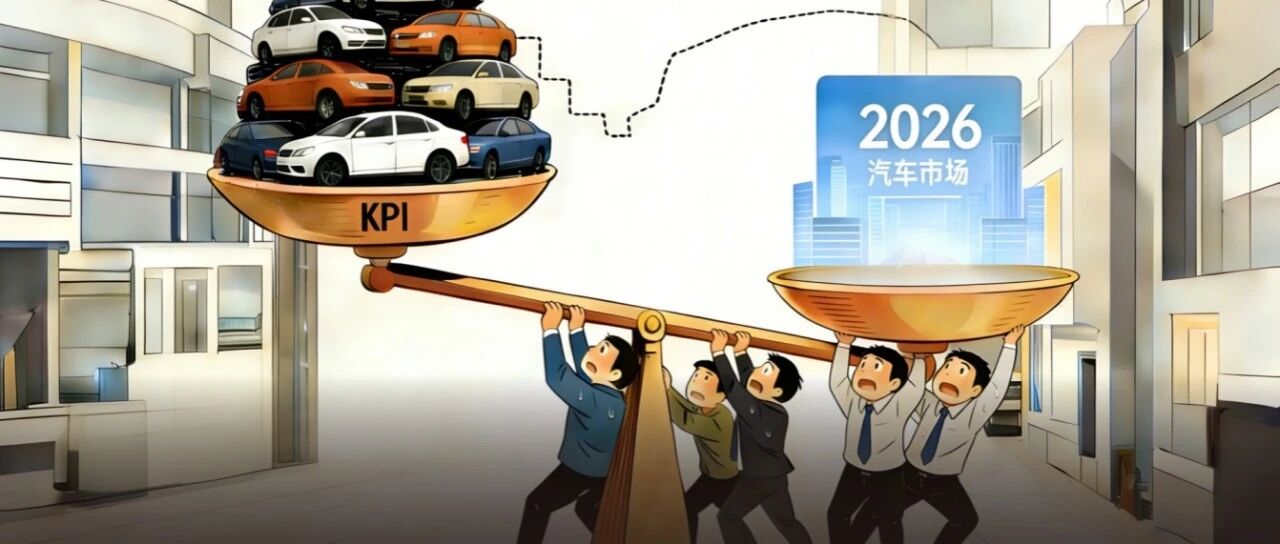
Core Viewpoint - The article discusses the challenges and strategies of the Chinese automotive industry as it faces declining domestic sales and increasing pressure to transition towards higher-value and technology-intensive vehicles. The focus is on the 2026 sales targets set by various automakers amidst a backdrop of changing government policies and market dynamics [3][6][8]. Group 1: Market Overview - In 2025, China's automotive production and sales reached 34.4 million units, a 9.4% increase year-on-year, maintaining its position as the world's largest market for the 17th consecutive year [3]. - Domestic sales, excluding exports, were 27.3 million units, up 6.7%, with passenger vehicles accounting for approximately 24.1 million units, growing by 8.0% [5]. - However, December 2025 saw a significant decline in domestic sales, with only 2.519 million units sold, marking a 6.7% month-on-month drop and a 15.6% year-on-year decrease [5]. Group 2: Industry Challenges - The average profit margin in the Chinese automotive industry has fallen to 4.4%, only slightly above the historical low of 4.3% in 2024, indicating extremely thin profit margins [6]. - The new vehicle replacement subsidy policy, shifting from fixed subsidies to percentage-based subsidies, targets higher-priced vehicles, which may pressure companies that rely heavily on low-cost models [8]. Group 3: Sales Targets and Strategies - Major automakers have set ambitious sales targets for 2026, with a combined goal of approximately 35 to 36 million passenger vehicles, reflecting a year-on-year increase of 12% to 15% [5]. - Traditional automakers are focusing on stability and efficiency improvements, while new entrants are experiencing significant divergence in their growth strategies [10][30]. - For instance, Changan aims for a total sales target of 3.3 million units in 2026, with a strong emphasis on new energy vehicles, projecting 1.43 million units from this segment [12][15]. Group 4: New Energy Vehicle Focus - The article highlights the increasing importance of new energy vehicles (NEVs) in the sales strategies of various automakers, with companies like Dongfeng targeting 1.7 million NEVs in 2026, representing a significant portion of their overall sales goals [15][26]. - Geely plans to launch over ten new models in 2026, focusing on a comprehensive product matrix to drive sales growth [23]. Group 5: Export Market Dynamics - The export market for Chinese vehicles is thriving, with exports reaching 7 million units in 2025, a 21% increase year-on-year, and NEV exports doubling to 2.6 million units [49]. - Automakers are increasingly prioritizing overseas markets, with many setting aggressive export targets that significantly exceed their overall sales growth targets [51][54]. - For example, Changan's overseas sales target for 2026 is set at 750,000 units, accounting for nearly a quarter of its total sales goal [52].






英国要恢复疫情前市场规模?中国新车加速进程
Guan Cha Zhe Wang· 2026-01-21 10:38
Group 1 - The UK automotive market is attracting attention from Chinese manufacturers due to the lack of domestic automakers targeting the mass market and the absence of tariffs on Asian electric vehicle imports [1][3] - The UK automotive market has not yet recovered to its pre-pandemic level of 2.5 million vehicles annually, and the entry of Chinese brands is expected to accelerate this recovery [1] - Chinese brands, led by SAIC's MG, doubled their market share in the UK to 10% last year, with BYD and Chery increasing their shares significantly in December [3][5] Group 2 - New entrants such as Geely, Changan, Xpeng, and Leap Motor have entered the UK market since 2023, with Geely's premium electric brand targeting the UK after entering 12 European markets [3] - BYD plans to introduce its high-end brand Tengshi, while Chery may launch its new energy brand Lepas in the UK [5] - The UK market is projected to see Chinese brands capture 20% of the market share by 2028, with plans to offer not only electric vehicles but also fuel and hybrid models [5]


重磅利好,中国电车能领德国补贴了,两国为新能源出海开政策绿灯
3 6 Ke· 2026-01-21 01:39
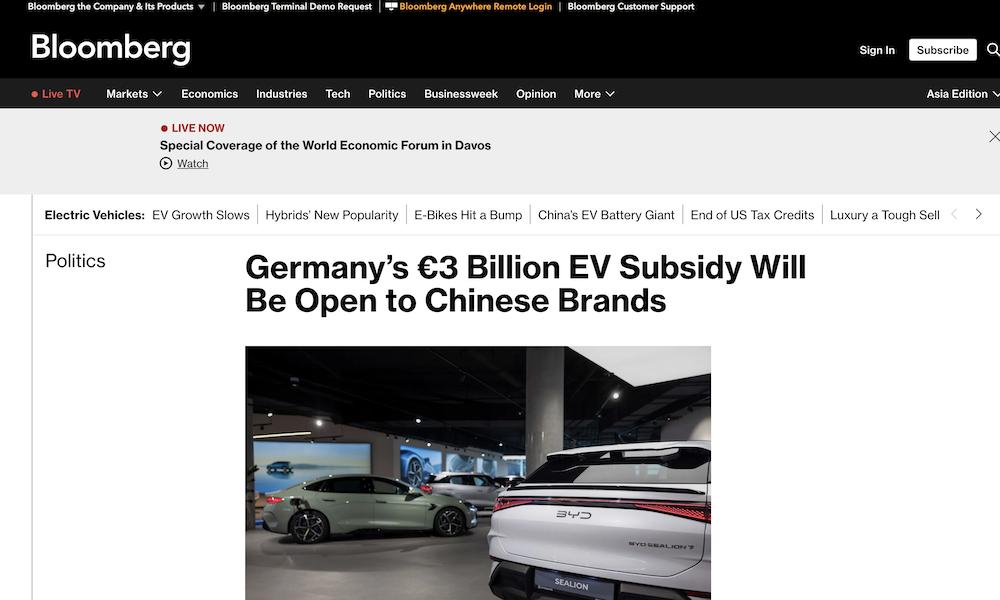
Core Viewpoint - Recent policy changes in Germany and Canada are creating favorable conditions for Chinese electric vehicle manufacturers to expand internationally, particularly in the European and North American markets [1][2][5]. Group 1: Germany's Policy Changes - The German government has announced a €3 billion (approximately ¥24.5 billion) subsidy plan for electric vehicles, providing up to €6,000 (approximately ¥49,000) for households purchasing new electric cars, which is open to all manufacturers, including Chinese brands [1][2]. - This subsidy aims to boost electric vehicle sales and support the automotive industry after a significant drop in demand following the end of previous subsidy programs [5]. - The German Federal Environment Minister emphasized the need to embrace competition rather than impose restrictions, indicating a welcoming stance towards Chinese automotive manufacturers [5]. Group 2: Canada's Policy Adjustments - Canadian Prime Minister Justin Trudeau announced the cancellation of a 100% tariff on Chinese electric vehicles and introduced an annual quota of 49,000 vehicles that will benefit from a 6.1% most-favored-nation tariff rate [1][8]. - This quota corresponds to the export volume from China to Canada before the imposition of additional tariffs, with expectations for gradual increases over the years [10]. - Trudeau highlighted China's undeniable advantages in the electric vehicle sector, aiming to learn from innovative partners to enhance Canada's competitive automotive industry [10]. Group 3: Export Growth of Chinese Automakers - In 2025, China's total automobile exports are projected to reach 8.32 million units, marking a 30% year-on-year increase, continuing a five-year growth trend [11]. - The export value is expected to grow from $34.5 billion (approximately ¥240.1 billion) in 2021 to $142.4 billion (approximately ¥991 billion) in 2025, reflecting a 21% increase [11]. - Notably, the export volume of new energy vehicles is anticipated to double, reaching 2.615 million units in 2025, with significant contributions from major automakers like BYD and Chery [11][16]. Group 4: Performance of Major Chinese Automakers - Chery is expected to lead in export volume in 2025, with 1.34 million units, while BYD's exports are projected to reach 1.05 million units, a 144% increase from the previous year [16][18]. - SAIC Group is also set to export 950,000 units, leveraging its joint ventures and brand portfolio [18]. - New entrants like Leap Motor and Xpeng are showing remarkable growth, with exports increasing by 600% and 150%, respectively, indicating a strong competitive presence in the international market [19][20]. Group 5: Industry Implications - The evolving international landscape for Chinese automakers signifies a historic shift from "bringing in" to "going out," enhancing the global influence of Chinese automotive brands [21]. - The advancements in technology, such as smart cabins and battery innovations, are contributing to the transformation of the global automotive industry [21]. - The current complex international environment and restructuring of the global automotive landscape suggest that Chinese automotive exports are likely to maintain a robust trajectory, becoming a key driving force in global mobility transformation [21].
【整车主线周报】12月零售符合预期,看好26年景气度向上
东吴汽车黄细里团队· 2026-01-20 14:07
Investment Highlights - The passenger car sector is expected to see a recovery in Q1 2026 due to the implementation of subsidy policies, with a focus on high-end electric vehicles that are less sensitive to policy changes, such as Jianghuai Automobile, Geely, Great Wall Motors, BAIC Blue Valley, Seres, and Li Auto [2][7] - For exports, priority should be given to leading companies with established overseas systems and proven execution capabilities, including BYD, Great Wall Motors, Chery, Leap Motor, Xpeng, SAIC Motor, and Changan Automobile [2][7] Heavy Truck Sector - In 2025, wholesale heavy truck sales reached 1.144 million units, up 26.8% year-on-year, with domestic sales of 799,000 units, up 32.8%, and exports of 341,000 units, up 17.2% [3][37] - The expected domestic sales for heavy trucks in 2026 is optimistic, projected at 800,000 to 850,000 units, a 3% increase year-on-year [3][37] - Recommended leading heavy truck companies include China National Heavy Duty Truck Group, Weichai Power, Foton Motor, FAW Jiefang, and CIMC Vehicles [3][37] Bus Sector - The implementation of the vehicle replacement policy in 2026 is slightly better than expected, with bus sales in 2025 projected at 38,000 units, a 25% increase year-on-year [3][37] - For 2026, bus sales are expected to grow to 40,000 units, a 5% increase year-on-year, supported by the number of buses over eight years old that need replacement [3][37] - Recommended leading bus companies include Yutong Bus, King Long Motor, and Zhongtong Bus [3][37] Motorcycle Sector - The motorcycle industry is projected to achieve total sales of 19.38 million units in 2026, a 14% increase year-on-year, with large-displacement motorcycles expected to reach 1.26 million units, a 31% increase [4][34] - Domestic sales of large-displacement motorcycles are expected to grow slightly to 430,000 units in 2026, a 5% increase year-on-year, while exports are projected to reach 830,000 units, a 50% increase [4][34] - Recommended leading motorcycle companies include Chunfeng Power and Longxin General [4][34]



博俊科技:公司为零跑供货的量产车型有零跑B01等
Zheng Quan Ri Bao Zhi Sheng· 2026-01-20 14:02
Group 1 - The company, Bojun Technology, is currently supplying mass production models to various clients, including Leap Motor and Changan [1] - The mass production models supplied to Leap Motor include B01, LAFA5, B10, and C11 [1] - The mass production models supplied to Changan include Deep Blue S7, SL03, S05, L05, G318, Avita 12, Changan Qiyuan A06, Qiyuan New Q05, and Changan CS75PLUS [1]

就在今天|“车研有AI”国泰海通汽车+AI主题投资研究沙龙
国泰海通证券研究· 2026-01-19 22:49
Core Viewpoint - The article discusses an upcoming investment research seminar focused on the automotive and AI sectors, organized by Guotai Junan Securities, highlighting the importance of these industries in current market trends [1][2]. Group 1: Event Details - The seminar will take place on January 20, 2026, at Guotai Junan's Lujiazui flagship store in Shanghai, featuring a full-day schedule [3]. - The event includes a series of expert talks, starting with a welcome address by the Vice President of the Research and Institutional Business Committee, Lu Ying [5]. - Notable speakers include a professor from Tongji University, experts in intelligent driving detection, and representatives from various automotive companies [5]. Group 2: Participating Companies - The seminar will feature a range of companies, including Altec, Beite Technology, Hengbo Co., Huayi Technology, and Junsheng Electronics, among others [5]. - Additional companies listed for participation include Lotus, Leap Motor, and Ningbo Huaxiang, indicating a diverse representation from the automotive sector [5].




一季度整车有望反弹,零部件聚焦新产业投资:汽车行业周报(20260112-20260118)-20260118
Huachuang Securities· 2026-01-18 12:26
Investment Rating - The report maintains a positive outlook for the automotive industry, expecting a rebound in vehicle sales in Q1 and focusing on investments in intelligent driving, robotics, and liquid cooling technologies [3]. Core Insights - The automotive sector is experiencing significant dynamics, including sales, pricing, exports, and robotics developments [2]. - The report highlights that January's early sales data shows a substantial year-on-year decline, primarily due to subsidy reductions and rising vehicle prices, leading to consumer hesitation [5]. - The report anticipates that the pressure on vehicle prices will be managed through strict enforcement of anti-competitive practices, aiming to stabilize prices and profit margins [5]. - The export market is expected to grow rapidly, supported by agreements that lower trade barriers for electric vehicles, enhancing profitability for manufacturers and dealers [5]. - The robotics sector is gaining traction, with the Optimus V3 generating market excitement and expectations for product launches [5]. Data Tracking - In early January, the average discount rate remained stable, with a 9.6% increase year-on-year, and the average discount amount reached 22,259 yuan, up by 2,192 yuan year-on-year [4]. - December's wholesale vehicle sales were reported at 2.85 million units, reflecting a year-on-year decline of 8.7% and a month-on-month decline of 6.3% [4]. - Notable sales performance in December included significant year-on-year growth for new energy vehicle manufacturers like NIO and Li Auto, while traditional automakers like SAIC and Changan showed mixed results [6]. Industry News - The report discusses various industry developments, including the price commitments for electric vehicles between China and Europe, which aim to facilitate trade [27]. - The Ministry of Industry and Information Technology is focusing on enhancing the competitiveness of the new energy vehicle sector and regulating market practices to prevent price wars [27]. - Recent data indicates a significant drop in retail sales of passenger vehicles in early January, with a 32% year-on-year decline [27]. Market Performance - The automotive sector saw a weekly increase of 0.71%, ranking 8th out of 29 sectors, while the overall market indices showed mixed results [10].

新能源车的“硬核”战事,2026年卷向何处?
Xin Lang Cai Jing· 2026-01-18 02:02
Core Insights - The electric vehicle (EV) industry in China is transitioning from reliance on government policies to market-driven growth, marking the end of the "policy infusion" era and the beginning of "self-sustaining" operations [2][4][17] Group 1: Market Dynamics - In 2025, the penetration rate of new energy vehicles (NEVs) in China surpassed 50%, reaching 59.5% by November, indicating a significant shift towards electric vehicles [5][25] - The charging infrastructure has improved significantly, with a total of 19.32 million charging points by the end of November 2025, a 52% year-on-year increase, and over 5,000 battery swap stations established [5][25] - The competition landscape has changed, with Tesla's retail sales in China declining by 4.8% to 625,698 units, while domestic brands like BYD, Geely, and Changan have seen substantial growth [5][27] Group 2: Sales Performance - BYD led the NEV sales in 2025 with 3.48 million units sold, despite a 6.3% year-on-year decline, holding a market share of 27.2% [6][27] - Geely and Changan reported significant sales increases of 81.3% and 26.8%, respectively, with Geely selling 1.56 million units and Changan 789,141 units [6][27] - New entrants like Leap Motor and Xiaomi have emerged as strong competitors, with Leap Motor's sales increasing by 86.3% to 529,503 units and Xiaomi entering the rankings with 411,837 units, a 200.9% increase [6][27] Group 3: Technological Advancements - The focus on "intelligent driving" has intensified, with companies like BYD, NIO, and Xpeng launching advanced driver-assistance systems and AI-driven models [11][32] - Despite advancements, there remains a gap between technology and user experience, with consumers expressing concerns over the reliability of intelligent driving systems [11][35] - The industry is witnessing a shift towards more comprehensive AI models that aim to enhance decision-making capabilities in complex driving scenarios [12][33] Group 4: Future Outlook - Starting in 2026, the EV industry will face new challenges as the government reduces subsidies, shifting the focus to market-driven strategies and user experience [15][38] - The competitive landscape is expected to evolve with a mix of pure electric, hybrid, and range-extended vehicles, as traditional automakers and new entrants adapt to changing consumer preferences [19][40] - Companies are increasingly looking to expand internationally, marking a new phase of competition that emphasizes technology depth, cost efficiency, and brand loyalty [20][41]