LEAPMOTOR(09863)

Search documents
平安证券:民营车企2025年加速辅助驾驶平权 推荐比亚迪股份(01211)等
智通财经网· 2025-06-12 07:47
Group 1: Private Car Manufacturers - Private car manufacturers exhibit strong profit resilience, driven by high-end breakthroughs, increased export ratios, and scale effects in the new energy vehicle sector [1] - Key players like BYD and Geely are expected to lead the push for advanced driver assistance systems by 2025, capitalizing on their scale and industry advantages [1] - The profitability of major private car manufacturers is improving, with Seres benefiting from the popularity of its AITO series and Great Wall Motors leveraging its core brands like Tank and pickup trucks [1] Group 2: New Forces in the Automotive Industry - New forces in the automotive sector are facing increased urgency to achieve self-sustainability, with companies like Li Auto maintaining robust profitability while others like Leap Motor and Xpeng show significant improvements in gross margins [2] - The upcoming product launches in 2025 are crucial for these new entrants to expand their growth potential, with Li Auto focusing on pure electric models and Xpeng enhancing its product matrix with range-extended models [2] - The financing environment and valuation levels for new forces have changed significantly since their initial public offerings, necessitating a quicker path to self-sufficiency [2] Group 3: State-Owned Car Manufacturers - State-owned car manufacturers are experiencing weaker profitability due to declining investment returns from joint ventures and challenges in achieving scale effects in the new energy vehicle market [3] - Many state-owned enterprises are actively deepening strategic partnerships with Huawei to facilitate their transition towards smart and electric vehicle production [3] - The domestic automotive market's structural adjustments have led to decreased profitability in the traditional fuel vehicle segment, adding to the pressures faced by state-owned manufacturers [3]



工业和信息化部:支持整车企业切实践行“支付账期不超过60天”承诺
中汽协会数据· 2025-06-12 07:02
一汽、东风、广汽、赛力斯等17家重点汽车企业日前发表声明,就对供应商"支付账期不 超过60天"作出承诺。如何看待汽车企业承诺?推动构建"整车—零部件"协作共赢发展生态, 将会采取哪些措施?工业和信息化部相关负责人回答了记者问题。 这位负责人说,汽车企业主动承诺"支付账期不超过60天",对构建"整车—零部件"协作共赢 发展生态、促进产业健康可持续发展具有重要意义。 这位负责人表示,产业链供应链是汽车产业的"筋骨血脉",是产业转型升级的关键一环。随 着新能源汽车市场竞争加剧,竞争压力从整车向产业链环节传导,出现了供应商货款支付账 期加长、资金周转困难等现象,不利于产业技术创新和健康可持续发展。 工业和信息化部支持整车企业切实践行有关承诺,继续引导整车企业与供应链企业建立长期 稳定的合作关系,促进大中小企业融通创新、协同发展,积极营造"大河有水小河满"的良好 局面,不断提升产业链供应链韧性和安全水平,也为全球汽车产业发展作出新贡献。 延伸阅读 一汽、东风、广汽、赛力斯四家车企承诺:支付账期不超过60天! 吉利、长安、比亚迪、奇瑞陆续承诺支付账期不超过60天 最新!小鹏、小米、长城、零跑、上汽陆续承诺:支付账期不超过 ...






汽车早餐 | 市场监管总局在汽车领域部署开展CCC认证试点工作;齐泽凯出任大众汽车乘用车品牌中国首席执行官;零跑汽车进入香港市场
Zhong Guo Qi Che Bao Wang· 2025-06-12 01:01
Domestic News - The Ministry of Commerce's international trade negotiation representative announced that a framework agreement has been reached between China and the U.S. during the first meeting of the negotiation mechanism held in London on June 10 [2] - The State Administration for Market Regulation has initiated a pilot program to enhance the international capabilities of automotive CCC certification institutions, aiming to support China's automotive exports and address quality infrastructure shortcomings [3] - The Central Cyberspace Affairs Commission and the State Administration for Market Regulation jointly issued the "Standardization Guidelines for the Development and Governance of Intelligent Society (2025 Edition)," emphasizing the need to identify and assess the social impacts of intelligent technology applications [4] International News - U.S. President Trump plans to sign three resolutions on June 12 to revoke California's authority to set its own vehicle emissions standards [5] - General Motors announced a $4 billion investment in three U.S. assembly plants, which includes transferring or increasing production of two models currently made in Mexico to U.S. facilities, aiming to assemble over 2 million vehicles annually by 2027 [6] - The Zambian government is encouraging automotive manufacturers to establish electric vehicle component factories near its copper mines to enhance value addition [7] - Marelli Corp, a Japanese automotive parts company, filed for Chapter 11 bankruptcy protection in the U.S. and secured approximately $1.1 billion in financing commitments from lenders [8] Corporate News - Robert Cisek will succeed Stefan Mecha as the CEO of Volkswagen Passenger Cars in China starting July 1, 2025 [9] - Leap Motor officially entered the Hong Kong market with the opening of its first store, aiming to use the region as a platform for global exposure [10] - Xiaomi's SU7 Ultra production model set a new record for mass-produced electric vehicles at the Nürburgring Nordschleife with a time of 7 minutes and 4.957 seconds [11] - XPeng Motors announced legal action against an automotive media outlet for breaching a confidentiality agreement related to a new model product shoot [12] - Alibaba's AliExpress launched a car sales business, primarily featuring Chinese new energy vehicles, marking a significant step in cross-border e-commerce [13] - CATL signed a strategic cooperation agreement with the University of Hong Kong to focus on zero-carbon policy standards and innovations [14] - AAC Technologies completed a strategic acquisition of Hebei Chuguang Automotive Parts Co., aiming to enhance automotive intelligence and sensing technology [15]

治理汽车业“长账期”问题可探索强化立法
21世纪经济报道· 2025-06-11 23:26
Core Viewpoint - The collective commitment of domestic automotive companies to unify supplier payment terms to within 60 days is a response to the "anti-involution" policy and aims to stabilize the industry while complying with the new regulations effective June 1, 2025 [1][2]. Group 1: Industry Context - The rapid development of China's new energy vehicle (NEV) industry has led to continuous price reductions to compete with fuel vehicles, negatively impacting upstream suppliers who bear the cost of these price cuts [1]. - The average accounts payable turnover days for 16 listed Chinese automotive companies is estimated to be 182 days in 2024, significantly longer than the 60 days maintained by 14 international automotive companies [2]. Group 2: Financial Implications - The profit margin of the Chinese automotive industry is projected to decline from 4.3% in 2024 to 3.9% in Q1 2025, which is below the average level of the manufacturing sector [3]. - Companies with high accounts payable ratios and extended payment terms face increased risks of losses from price competition, which could lead to cash flow issues and impact upstream suppliers [3]. Group 3: Regulatory and Structural Issues - The current self-regulation and corporate commitments lack sufficient effectiveness and enforcement, as some companies may still pressure suppliers to lower prices or absorb costs that should be borne by the automakers [4]. - Long-term solutions to the issue of extended payment terms require legal and systematic approaches, including stricter legislation against delayed payments and better quality regulation of components and materials [4].



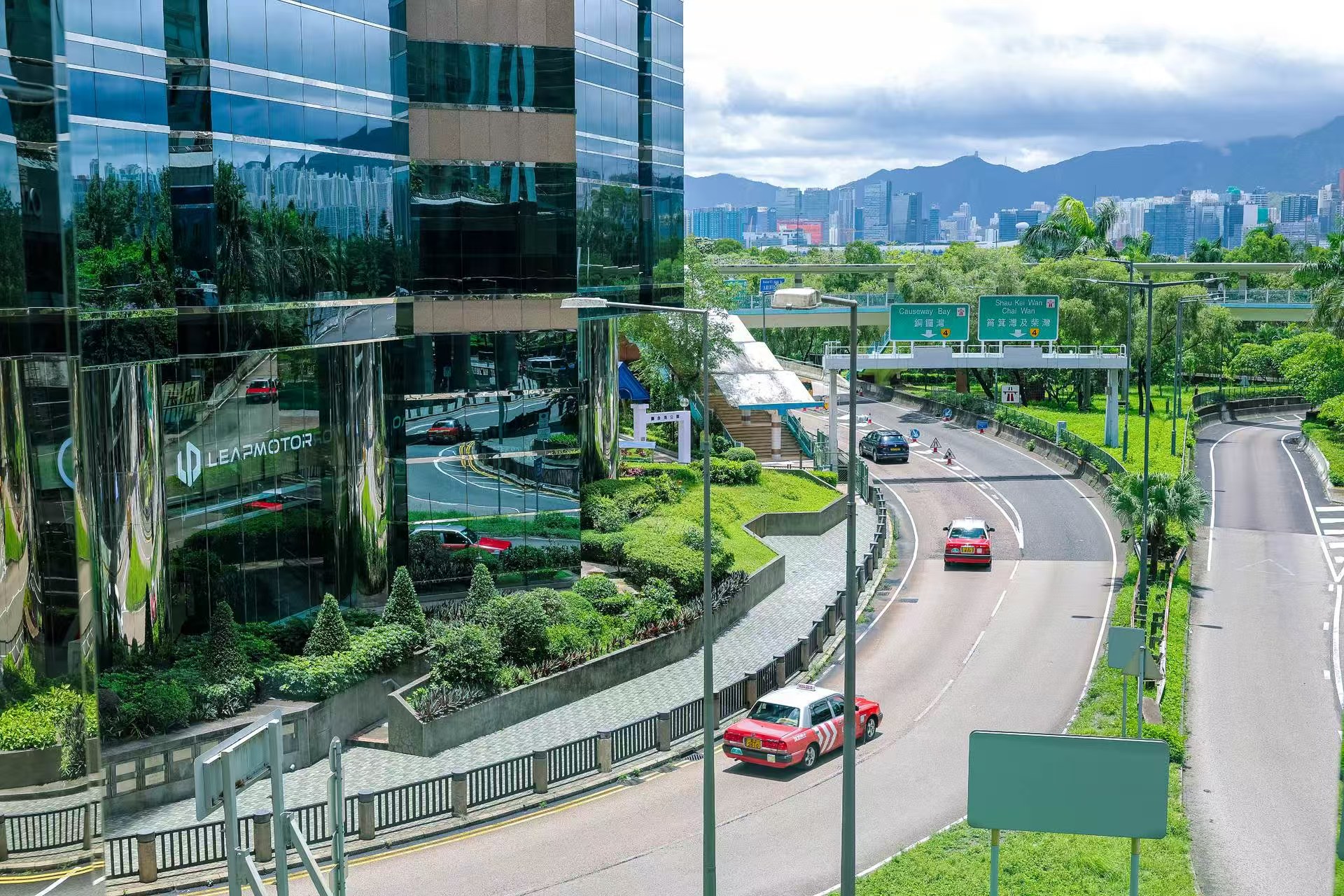
正式进军香港市场,零跑汽车加速全球化布局
Di Yi Cai Jing· 2025-06-11 14:03
Group 1 - Hong Kong is becoming an important strategic hub for Chinese automotive companies to expand globally [1][4] - Leap Motor has opened its first store in Hong Kong and plans to establish a second experience center by December this year [1][4] - The company has a global network of 1,500 outlets and operates in over 24 international markets, including Europe, the Middle East, Africa, and Asia-Pacific [1] Group 2 - Leap Motor's initial models in Hong Kong are the right-hand drive versions of C10 and T03, which are also sold in Europe [3] - The company has achieved nearly 800,000 cumulative sales, with C11 selling over 250,000 units in three years and C10 surpassing 100,000 units in 13 months [3] - Leap Motor aims for overseas sales of 50,000 to 80,000 units by 2025 and plans to start local production in Europe by mid-2026 [3] Group 3 - The Hong Kong government has extended tax reduction policies for electric vehicles until March 31, 2026, promoting EV adoption [4] - In the first four months of this year, 8,916 electric vehicles were registered in Hong Kong, with a penetration rate of 68% for new energy vehicles [4] - The 2025 International Automotive and Supply Chain Expo will be held in Hong Kong, featuring 11 mainland car companies, including Leap Motor [4]
汽车业“反内卷”进行时 | 供应商盼来“及时雨”,17家车企承诺“账期不超60天”
Bei Jing Shang Bao· 2025-06-11 11:09
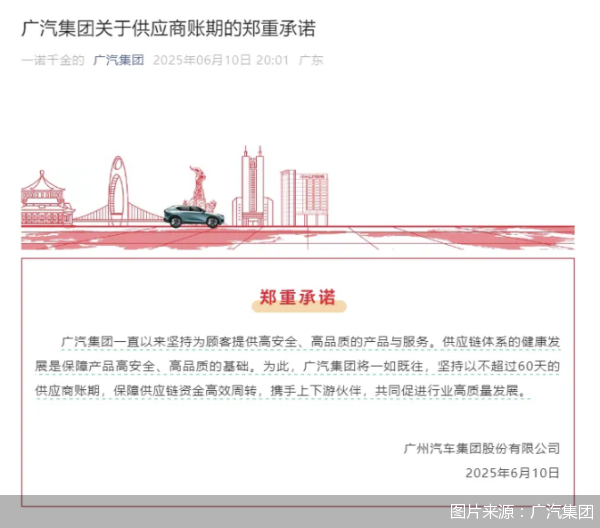
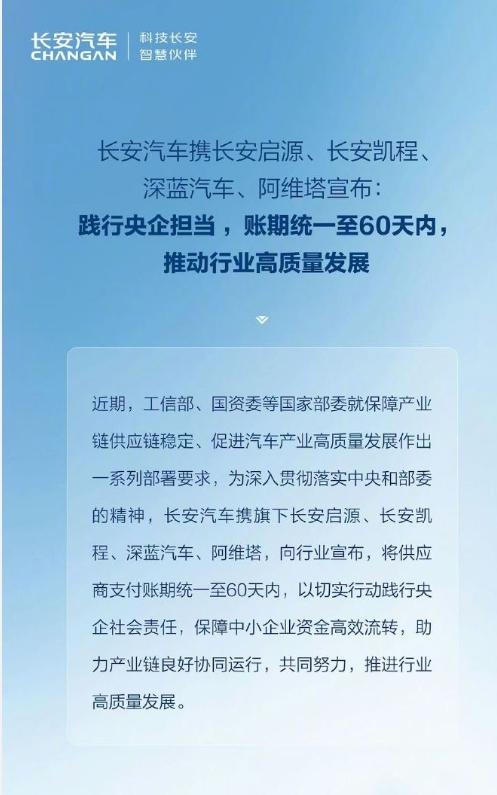
在政府相关部门整治汽车行业"内卷式"竞争背景下,各车企率先从解决供应商账期问题入手"反内卷", 推动上下游关系重构。6月10日晚,中国一汽、东风汽车、广汽集团、赛力斯集团等车企相继宣布,对 供应商的支付账期不超过60天。6月11日,比亚迪汽车、奇瑞汽车、小鹏汽车等多家车企跟进。据统 计,目前共有17家重点汽车生产企业作出相应承诺。在外界看来,政府相关部门与行业协会相继发声, 强化对"价格战"等无序竞争的监管,将推动汽车产业链向高质量的协同转型,而车企的"账期"自律则能 够进一步缓解供应链资金压力。 汽车"链"60天提现 在汽车行业"反内卷"背景下,众多车企开始破除上游供应商痛点。6月10日晚开始,中国一汽、东风汽 车、广汽集团和赛力斯集团相继发声,承诺将供应商支付账期压缩至60天以内,意在通过实际行动维护 市场经济秩序健康稳定。 此后,吉利汽车宣布,将旗下各品牌供应商账期统一压缩至60天以内,进一步提升产业链资金周转效 率,稳定产业链运作,并以行业领军企业身份推动整个行业的健康发展。同样作出承诺的还有长安汽 车,涵盖旗下长安启源、长安凯程、深蓝汽车、阿维塔等品牌,表示将统一执行60天付款账期,以履行 央企社会 ...

电池企业重大利好!车企承诺“60天付款”
起点锂电· 2025-06-11 10:30
Core Viewpoint - The implementation of the revised "Regulations on Payment of Funds for Small and Medium-sized Enterprises" by the State Council aims to shorten the payment period for suppliers to within 60 days, which has been positively received by multiple automotive companies, potentially improving supply chain efficiency and collaboration [2][6][7]. Group 1: Automotive Industry Response - Over ten automotive companies, including GAC Group, FAW Group, and BYD, have committed to reducing supplier payment terms to within 60 days, marking the beginning of a significant shift in the automotive industry's payment practices [3][4]. - The average payment cycle for domestic automotive companies has deteriorated from approximately 45 days a decade ago to much longer periods due to intensified competition and market pressures [6]. - The collective response from major automotive manufacturers is seen as a resistance to "involution" in the industry, with leaders publicly criticizing the negative impacts of price wars and extended payment terms [6][7]. Group 2: Impact on Suppliers - Shortening payment terms is expected to benefit suppliers by allowing quicker access to funds, thereby reducing operational risks and enabling faster production scale-up and product iteration [8]. - However, this shift may pose challenges for automotive companies with poor cash flow management, potentially leading to the elimination of weaker players in the market [8]. Group 3: Battery Industry Implications - The commitment to a 60-day payment term is particularly significant for the battery supply chain, where battery costs account for 30% to 40% of the total vehicle cost [12]. - The current lithium battery industry is facing challenges such as increased accounts receivable and extended customer payment cycles, impacting even leading companies like CATL [13][14]. - The new payment terms could enhance cash flow for battery suppliers, especially smaller firms, and foster deeper partnerships between automakers and battery manufacturers, promoting innovation and new business models [16].


汽车产业链“账期困局”迎来破冰,港股汽车ETF(520600)盘中涨超2%,换手108%!
Xin Lang Cai Jing· 2025-06-11 06:32
Group 1 - The Hong Kong Stock Automotive ETF (520600) has seen a strong performance, rising 2.42% recently, with a cumulative rebound of nearly 24% since its low on April 10 [1] - The index tracking the automotive industry, the CSI Hong Kong Stock Connect Automotive Industry Theme Index (931239), has increased by 1.69%, with significant gains from major stocks like BYD (01211) and others [1][2] - The ETF's trading volume was active, with a turnover of 6.88 billion and a turnover rate of 108.56%, indicating strong market participation [1] Group 2 - The CSI Hong Kong Stock Connect Automotive Industry Theme Index includes 50 listed companies involved in the automotive industry, with the top ten stocks accounting for 77.55% of the index [2] - BYD and Li Auto (02015) are the largest weight stocks in the index, together making up over 34% [2] - Major automotive companies, including BYD and Dongfeng Motor, have committed to reducing supplier payment terms to within 60 days, responding to government initiatives to support small and medium enterprises [3] Group 3 - Analysts predict that the automotive sector will enter a phase of high sales growth and favorable events, supported by policies like trade-in incentives [3] - Long-term price declines are expected to stimulate downstream demand, leading to increased sales and encouraging automakers to seek differentiated competitive advantages [3] - The commercialization of intelligent driving is anticipated to benefit both major manufacturers and component companies, particularly those with strong growth potential [3]

多家车企迅速跟进:账期不超60天!汽车零部件板块多股涨停
Nan Fang Du Shi Bao· 2025-06-11 06:19
Core Viewpoint - The automotive industry is witnessing a significant shift as multiple companies commit to controlling supplier payment terms within 60 days, responding to government regulations aimed at stabilizing the supply chain and promoting high-quality development in the sector [1][10]. Group 1: Company Commitments - GAC Group, FAW Group, Dongfeng Motor Group, and Seres were the first to announce their commitment to keeping supplier payment terms within 60 days [2]. - Following this, companies such as Geely, Changan Automobile, BYD, and Chery also declared their adherence to the 60-day payment term, emphasizing the importance of efficient cash flow and supply chain stability [2][3][7]. - Great Wall Motors has also pledged to unify payment terms to 60 days, contributing to the healthy development of the entire industry chain [4]. Group 2: Industry Response - The automotive supply chain is expected to benefit from these commitments, as they are seen as a positive signal for suppliers and may help reshape the upstream and downstream ecosystem [10]. - The stock market reacted positively, with the automotive parts sector experiencing a surge, leading to multiple stocks hitting the daily limit up [10]. Group 3: Government Regulations - The "Regulations on Ensuring Payment to Small and Medium Enterprises" was revised and approved by the State Council, set to take effect on June 1, 2025, further supporting the push for timely payments in the industry [10].


冲上热搜!集体跟进,小米也来了
天天基金网· 2025-06-11 05:08
Core Viewpoint - Multiple automotive companies in China have committed to unifying their supplier payment terms to a maximum of 60 days, responding to national policies aimed at stabilizing the supply chain and promoting high-quality development in the automotive industry [1][15]. Group 1: Company Commitments - Xiaomi Auto has pledged to implement a 60-day payment term for suppliers to enhance supply chain stability and support high-quality development in the automotive sector [5]. - Geely Auto Group announced a similar commitment to unify supplier payment terms to 60 days, aiming to accelerate capital turnover efficiency within the industry [5]. - Changan Automobile, along with its subsidiaries, has also committed to a 60-day payment term to fulfill its social responsibility and support the efficient flow of funds for small and medium-sized enterprises [8]. - BYD has declared its intention to unify supplier payment terms to 60 days, aligning with national directives to stabilize the supply chain and promote the healthy development of small and medium enterprises [9]. - Chery Group has decided to implement a 60-day payment term starting June 10, to enhance capital turnover efficiency and ensure supply chain stability [11]. - XPeng Motors has committed to a 60-day payment term to support the healthy development of small and medium enterprises [13]. - BAIC Group has promised to strictly adhere to a 60-day payment term for all eligible partners, eliminating unreasonable settlement methods that increase cash flow pressure on suppliers [14]. - Leap Motor has reiterated its commitment to the "60-day payment" principle, ensuring efficient payment processes [14]. Group 2: Industry Response to National Policies - The automotive companies' unified commitment to a 60-day payment term is a proactive response to the State Council's revised "Regulations on Ensuring Payment to Small and Medium Enterprises" and the China Association of Automobile Manufacturers' initiative to maintain fair competition and promote healthy industry development [16][17]. - The revised regulations stipulate that large enterprises must pay small and medium enterprises within 60 days of delivery, emphasizing the importance of timely payments to support the financial health of smaller suppliers [17].