BABA(09988)

Search documents
30亿大额现金红包即将开抢,马云现身阿里千问办公点
Sou Hu Cai Jing· 2026-02-05 13:15
Group 1 - The core point of the news is that Alibaba's Qianwen project is launching a significant Spring Festival red envelope campaign with an investment of 30 billion yuan, marking the largest investment in Alibaba's history for a Spring Festival event [1][4] - The Qianwen app will implement a "free meal" policy for the red envelope campaign, covering major Alibaba businesses such as Taobao, Flash Purchase, Fliggy, Damai, Gaode, and Hema [1] - The campaign is part of a broader strategy to engage users during the Spring Festival, coinciding with a competitive AI landscape among major tech companies [4] Group 2 - Qianwen app has announced exclusive sponsorship of the Spring Festival Gala on four major television stations, including Oriental TV, Zhejiang TV, Jiangsu TV, and Henan TV, enhancing its visibility [4] - The interactive feature of the Qianwen app allows viewers to participate in real-time during the Spring Festival Gala, providing an opportunity to win large red envelopes [4]



众信旅游:阿里为公司战略投资者,现持有公司10.20%股份
Zheng Quan Ri Bao Zhi Sheng· 2026-02-05 13:09
Core Viewpoint - The strategic partnership between Zhongxin Tourism and Alibaba is aimed at enhancing the integration of online and offline business models, creating a new industry ecosystem and driving growth momentum [1]. Group 1: Shareholding and Governance - Alibaba holds a 10.20% stake in Zhongxin Tourism as a strategic investor [1]. - Zhou Xiaocheng from Alibaba has been appointed as a director of Zhongxin Tourism, participating in important decision-making processes [1]. Group 2: Business Collaboration - The collaboration focuses on building an industry chain through "resources + channels + technology" [1]. - Both companies are committed to enhancing their service system and business model integration [1].

48亿红包大战,谁赢谁输?
3 6 Ke· 2026-02-05 13:04
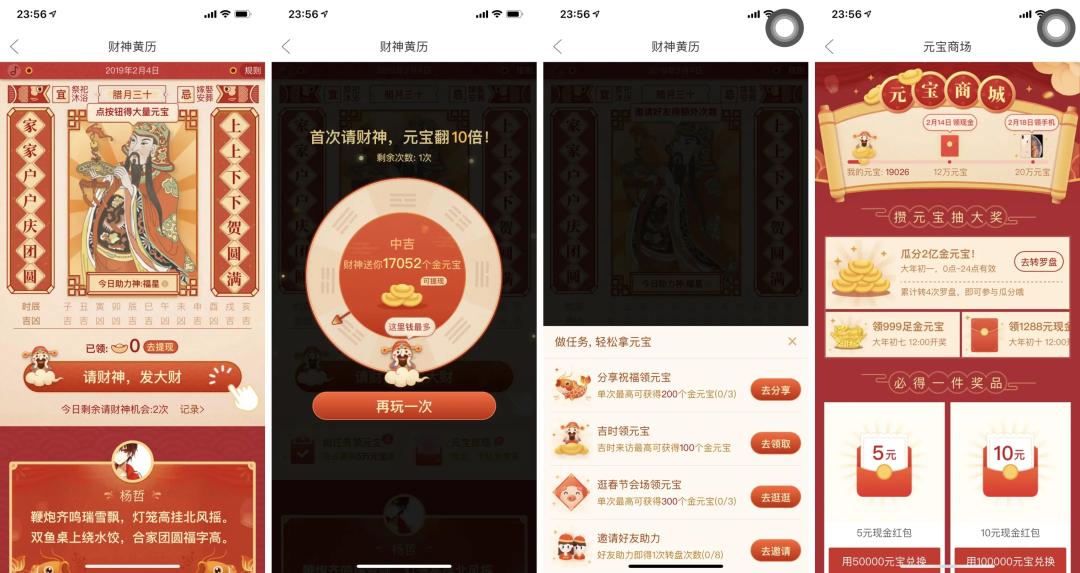
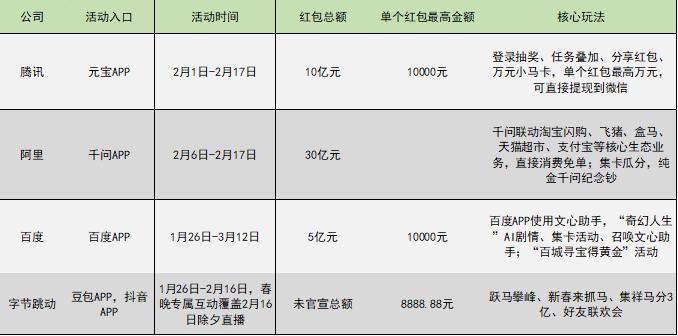
Core Insights - The 2026 Spring Festival "Red Packet War" marks a significant moment in the history of the internet, evolving from a traditional celebration into a fierce commercial competition among major tech giants [1] - The total amount of red packets distributed by the "BATZ" companies reached nearly 5 billion yuan, indicating a strategic battle for user engagement and AI application dominance [1][2] Group 1: Company Strategies - Tencent's strategy involved a "social裂变式" approach, leveraging WeChat for viral sharing, which led to a rapid rise in app downloads but faced backlash from users [3][4] - Alibaba adopted a "场景闭环式" strategy, integrating its various platforms to drive real-world usage of its services, with a significant investment of 3 billion yuan in red packets [4] - ByteDance focused on "内容互动式" strategies, using entertainment and social engagement to promote its AI applications, capitalizing on its strong content creation capabilities [4] - Baidu's approach was more traditional, embedding red packets within AI features, but faced challenges in user retention due to complex processes [4] Group 2: AI Product Development - All major companies are still in the exploratory phase of AI product development, with no clear market leader yet, but differentiation is beginning to emerge [8] - Tencent's AI product, Yuanbao, is positioned as a social tool but lacks strong retention outside social contexts [9] - Alibaba's Qianwen offers a comprehensive service but faces challenges due to its complex user journey [10] - ByteDance's Doubao is recognized for its innovative content and interaction, appealing to younger users [10] - Baidu's Wenxin Assistant has a solid foundation in search but struggles with user perception as merely a search tool [10] Group 3: Financial Investments and Performance - ByteDance leads in profitability and aggressive investment plans, with projected capital expenditures reaching 160 billion yuan in 2026 [12][13] - Alibaba plans to invest between 380 billion to 480 billion yuan in AI and cloud infrastructure over the next three years, but faces cash flow challenges [13] - Tencent reported a profit of over 30 billion USD in the first three quarters of 2025, supported by strong revenue from gaming and finance [13] - Baidu's financial structure is more reliant on search advertising, necessitating proof of commercial viability in AI investments [13] Group 4: AI Capabilities and Technology - Tencent's AI capabilities are currently lagging behind competitors, with a focus on restructuring and enhancing its data infrastructure [14][15] - Alibaba has a robust self-developed chip and a strong open-source ecosystem, enhancing its AI capabilities [15][16] - Baidu's Wenxin model is positioned as a leader in search and AI integration, with significant long-term investments [15][17] - ByteDance's Doubao model is recognized for its advanced multi-modal capabilities and high processing capacity [15][17] Group 5: Leadership and Strategic Focus - Founders' involvement is crucial during this transformative period, with Tencent's Ma Huateng acknowledging the need for faster action in AI [18][19] - Alibaba's leadership is heavily invested in AI, with Ma Yun personally overseeing strategic initiatives [19][20] - ByteDance's Zhang Yiming emphasizes the importance of AI as a core strategic focus, reflecting a unified vision within the company [19][20] - Baidu's Li Yanhong stresses the significance of AI for the company's future, positioning it as a critical area for growth [19][20] Group 6: Internal Collaboration and Challenges - Effective internal collaboration is essential for success in the AI super entrance competition, with varying degrees of synergy among companies [21][22] - Tencent faces challenges in cross-departmental cooperation, which has led to data issues in its AI initiatives [22][23] - Alibaba's organizational strength is high, but the complexity of integrating various business units poses risks to user experience [23] - ByteDance's internal competition and resource allocation issues could hinder its overall strategy [23] Group 7: User Engagement and Retention - Companies are exploring ways to convert existing high-activity users into AI product users, with varying success rates [24][25] - ByteDance's Doubao achieved over 100 million daily active users by the end of 2025, establishing a significant user base [25][26] - Tencent's Yuanbao saw rapid growth in active users but needs to validate long-term retention [26] - Alibaba's Qianwen quickly reached over 30 million monthly active users, but its sustainability outside promotional activities remains uncertain [26] - Baidu's Wenxin Assistant has a solid user base but requires improvements in engagement and retention [26]


博观文旅大模型三大应用场景西安发布
Xin Lang Cai Jing· 2026-02-05 12:25
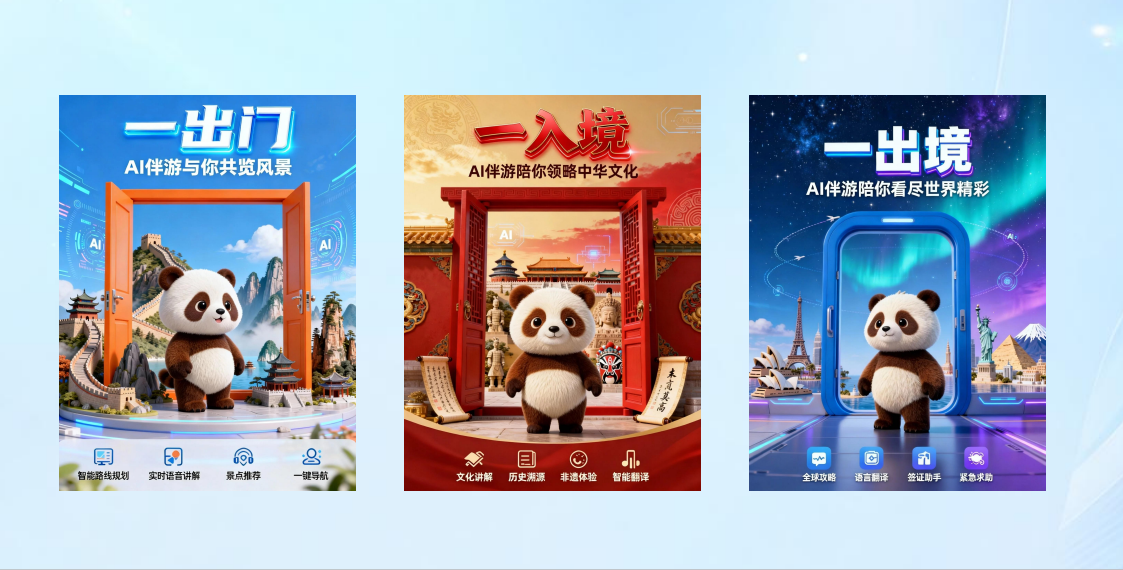
Core Viewpoint - Shaanxi Cultural Investment Group collaborates with Alibaba DingTalk, Alibaba Cloud, and Ant Group to promote the integration of "cultural tourism + AI" through the launch of three application scenarios, aiming to enhance innovation and create new consumer experiences in the cultural tourism sector [1][8]. Group 1: Application Scenarios - The three application scenarios launched include: 1. "Cultural Tourism Ding" which provides AI smart badges for tourism and guide teams, creating new income opportunities for guides while enhancing the overall visitor experience through intelligent services [3][10]. 2. "Tap and Go x Cultural Tourism" which utilizes multi-port intelligent agents to support tourists with all-channel ticket verification and services such as consultation, reservation, and navigation, thereby improving the operational capabilities of scenic spots and service providers [3][10]. 3. The AI travel assistant "Xiao Qi" which integrates the capabilities of Tongyi Qianwen and the Boguang model to develop a one-stop smart service product for scenic areas, promoting deep application and value realization in the cultural tourism field [5][12]. Group 2: Future Collaboration and Development - Shaanxi Cultural Investment Group and Alibaba will continue to deepen their collaboration in the "cultural tourism + artificial intelligence" ecosystem, focusing on top-level design and leveraging their respective resource advantages across industry, technology, and business models [7][14]. - The partnership aims to explore further integration points for empowering the fusion of cultural tourism and technology, enhancing data flow in the cultural tourism industry, and strengthening the research and application of "cultural tourism + AI" technologies [7][14]. - They plan to pilot initiatives in areas such as "AI + marketing," "AI + short videos," and "AI + operational management," creating replicable and scalable practices to jointly develop new consumer scenarios, business models, and products in the cultural tourism sector [7][14].
全国第十!宁波11家企业入围“胡润中国500强”
Xin Lang Cai Jing· 2026-02-05 12:25
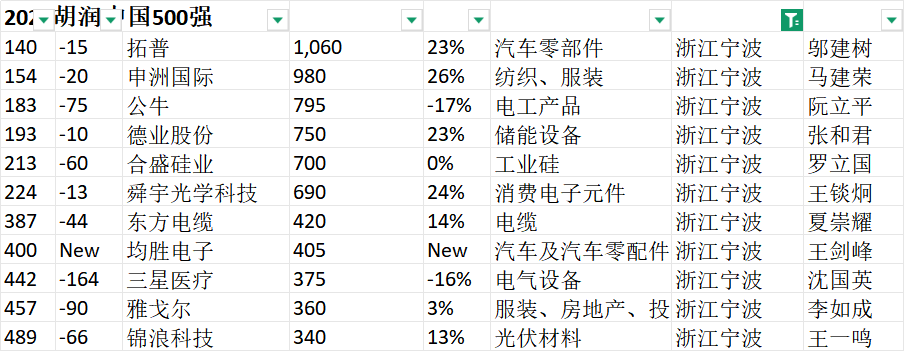
榜单显示,中国500强总价值达77万亿元,较上年增长38%;上榜门槛提升至340亿元,386家企业实现价值增长,95家新面孔入 围。 头部阵营中,台积电以10.5万亿元蝉联榜首,腾讯、字节跳动分别稳居第二、第三;字节跳动以109%价值涨幅成为黑马,小米 跻身前十。 2月5日,胡润研究院发布《2025胡润中国500强》榜单。这份聚焦中国最具价值非国有企业的权威榜单,折射出2025年民营经济 的强劲活力。 值得关注的是,本次共有11家宁波企业入围,合计市值达6875亿元。宁波入围企业数量居全国城市第10位,大陆第6位,成为长 三角民营经济的重要力量。 宁波入围企业数量居全国第十 宁波11家企业入围,数量与上年持平,位居全国第10(含港澳台)、大陆城市第7。同时,宁波也成为全国最受企业欢迎的研发 基地(第7)、制造基地(第10)。 | | 201▼ 胡润=国500强 | | ▼ | ▶ V | | レ | T: | ▲ | | --- | --- | --- | --- | --- | --- | --- | --- | --- | | 140 | -15 | 拓普 | 1,060 | 23% | 汽车零部件 | ...



国际奥委会联合阿里推出首个奥运官方大模型
Zhong Guo Jing Ying Bao· 2026-02-05 12:11
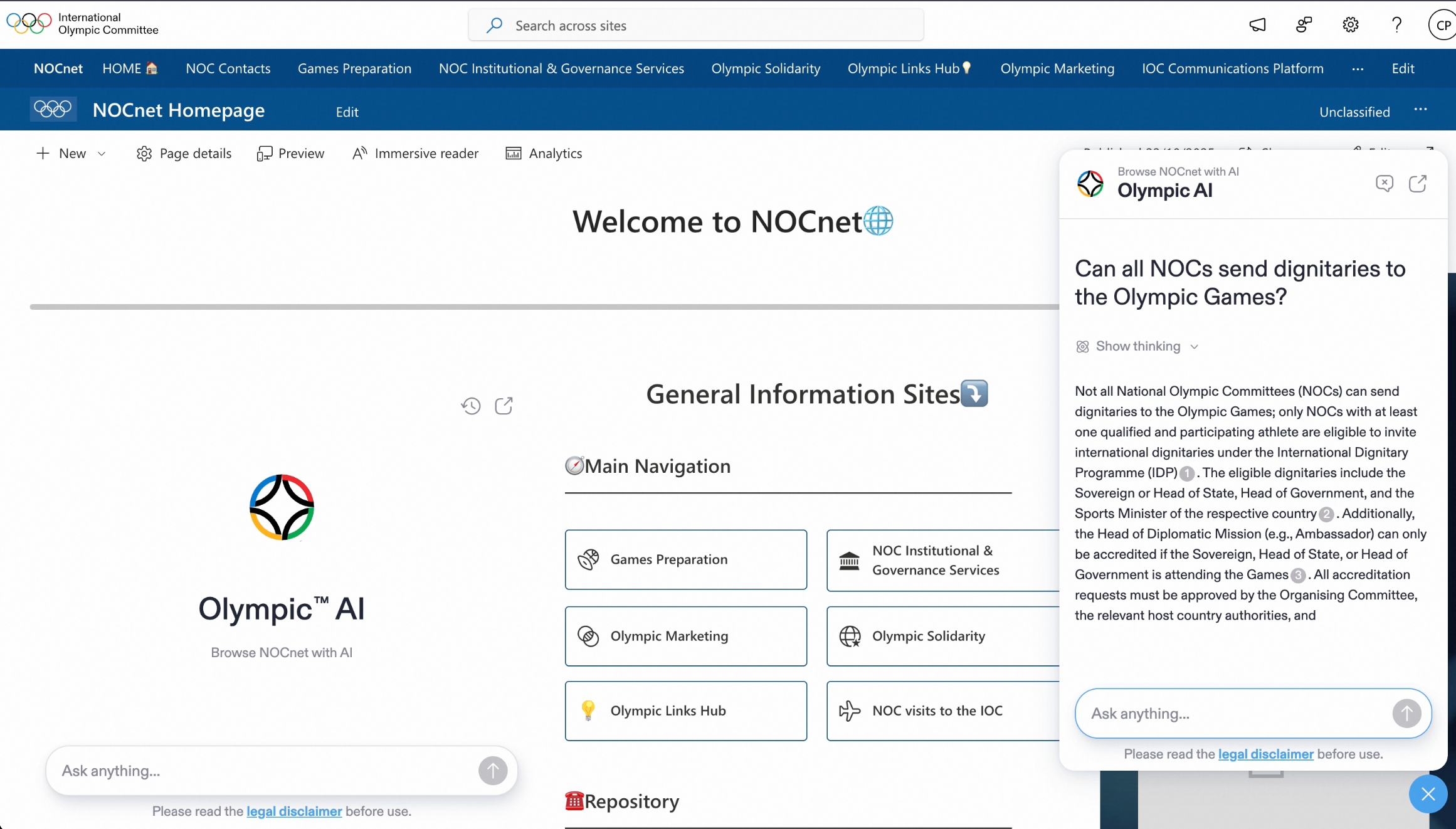
Core Insights - The International Olympic Committee (IOC) has launched the first official Olympic AI model based on Alibaba's Qianwen model, aimed at enhancing both professional operations and public services during the Milan Winter Olympics [1][2] Group 1: Professional Operations - The IOC has introduced a "National Olympic Committee AI Assistant" on its website for staff from various national Olympic committees, leveraging the Qianwen model's multilingual capabilities to provide precise answers to queries related to qualification and logistics [1] - This application significantly improves collaboration efficiency among global delegations by eliminating language and regional barriers [1] Group 2: Public Engagement - An "Olympic AI Assistant" will also be available on the IOC's official website (Olympics.com), designed to answer questions about event rules and Olympic history in real-time for global audiences [1] - The use of AI technology aims to bridge the gap between the public and the Olympic Games, enhancing overall engagement [1] Group 3: Future of the Olympics - IOC President Kirsty Coventry highlighted the transformative impact of AI technology on the Winter Olympics, suggesting that the 2026 Milan Games will be the "smartest" in history due to the support of the Qianwen model [1] - Coventry emphasized that each Olympic Games leaves a unique legacy, and the legacy of the Milan Winter Olympics will be characterized by AI-driven intelligence [2]

高盛:内地AI领域竞争料春节前再升级 看好阿里及腾讯
Zhi Tong Cai Jing· 2026-02-05 12:08
Core Insights - The competition in China's consumer-grade artificial intelligence sector is expected to intensify before the Chinese New Year, with major players like Tencent Holdings (00700), Alibaba-W (09988), and ByteDance remaining central to AI's ultimate entry points [1] Group 1: Company Outlook - Goldman Sachs maintains a positive outlook on Alibaba and Tencent over a one to three-year horizon as the best-positioned internet giants, while also noting that some tech companies may outperform these giants this year [1] - The report anticipates that regulatory policies will combine growth promotion with "anti-involution," positively impacting the competitive landscape of the industry [1] Group 2: Market Trends - Goldman Sachs predicts that this year will be driven by profitability growth, with a focus on Alpha, identifying three key segments: cloud and data centers, gaming and entertainment, and AI models as the most promising areas [1]
高盛:内地AI领域竞争料春节前再升级 看好阿里(09988)及腾讯(00700)
智通财经网· 2026-02-05 12:01
Group 1 - The core viewpoint of the article is that competition in China's consumer-grade artificial intelligence sector is intensifying ahead of the Chinese New Year, with major players expected to be Tencent, Alibaba, and ByteDance [1] - Goldman Sachs remains optimistic about Alibaba and Tencent as the best-positioned internet giants over the next one to three years, while also noting that some tech companies may outperform these giants this year [1] - The report anticipates a combination of growth-promoting and "anti-involution" regulatory policies, which will positively impact the competitive landscape of the industry [1] Group 2 - Goldman Sachs predicts that this year will be driven by profitability growth, with a focus on three key segments: cloud and data centers, gaming and entertainment, and AI models [1]
刚刚官宣!奥运史上首个官方AI交给阿里千问
Zhong Guo Jing Ji Wang· 2026-02-05 11:48
Core Insights - The International Olympic Committee (IOC) announced a partnership with Alibaba to create the first official AI model for the Olympics, marking a significant technological advancement for the Milan Winter Olympics [2][4] - This collaboration signifies a shift from traditional satellite communication to cloud computing and AI technology, positioning Chinese tech as a core driver for global sporting events [2][5] Group 1: Technological Advancements - The partnership is built on nine years of trust and technological validation, evolving from "Cloud Olympics" to "AI Olympics" [3][4] - Alibaba's journey began in 2017, leading to milestones such as the launch of OBS Cloud in 2018, global cloud broadcasting in 2021, and full cloud integration of core systems by 2022 [4] - The Milan Winter Olympics will integrate AI deeply with cloud technology, enhancing the operational backbone of the event [4] Group 2: AI Applications - The AI model, known as the "National Olympic Committee AI Assistant," has been deployed in 11 countries, improving operational efficiency by providing multilingual support for various inquiries [8] - AI technology addresses challenges in broadcasting, such as capturing high-speed actions against a snowy backdrop, enhancing viewer experience with clearer visuals [9] - A new energy tracking system, "Energy Treasure," contributes to the sustainability goals of the Milan Winter Olympics, reflecting a commitment to resource efficiency [9] Group 3: Global Positioning - The IOC's choice of Alibaba represents a shift towards recognizing Chinese technological capabilities, moving from reliance on foreign IT infrastructure to self-developed solutions [10][12] - The Qwen model has surpassed Meta's Llama in downloads, showcasing China's leadership in the global AI open-source market [12] - The 2026 Winter Olympics symbolizes a milestone in China's digital economy infrastructure, demonstrating the country's technological prowess across various industries [15]
45亿砸出7000万新用户,但留下多少人才是胜负关键
3 6 Ke· 2026-02-05 11:44
Core Insights - Major AI applications like Tencent's Yuanbao, Baidu's Wenxin, and Alibaba's Qianwen launched a marketing campaign with over 4.5 billion yuan in cash incentives to attract users and cultivate AI usage habits, reminiscent of past Spring Festival red envelope wars [1][2] - The campaign faced immediate backlash as WeChat's security center announced restrictions on sharing red envelope links due to user complaints about disruptive behaviors, highlighting the importance of maintaining a non-intrusive user experience [1][5] Group 1: Marketing Strategy and User Engagement - The AI red envelope activity is fundamentally a combination of cash incentives and task completion, where users must engage with AI to earn rewards, effectively paying users' "education costs" [2] - The event underscores WeChat's dominance as a traffic pool in the mobile internet era, with its core value being a high signal-to-noise ratio social environment, which was compromised by the high-frequency sharing of red envelope links [3][6] - Despite the initial success in user acquisition, with Yuanbao topping the App Store charts and significant increases in downloads, the long-term effectiveness of such strategies remains questionable [7][8] Group 2: User Retention and Long-term Viability - The critical factor for success lies not in short-term user acquisition but in fostering user habits and retention through meaningful engagement with AI functionalities [8][10] - The current AI red envelope strategies risk reducing AI to mere tools for short-term engagement rather than fostering deeper user interactions and problem-solving capabilities [9][10] - Companies are attempting to integrate AI into practical use cases, such as food delivery and social interactions, to enhance user retention and relevance in daily life [11][13] Group 3: Competitive Landscape and Future Directions - The competition among AI applications is expected to evolve from short-term promotional tactics to a focus on functional strength and integration into user scenarios [14] - The ongoing struggle for user attention and engagement will likely require a shift from traditional internet marketing strategies to technology-driven growth [14][15] - The current red envelope campaigns serve as defensive measures in a saturated market, with the true competition for AI applications yet to unfold as they seek to establish lasting user relationships [13][14]