
DFAC(600006)

Search documents
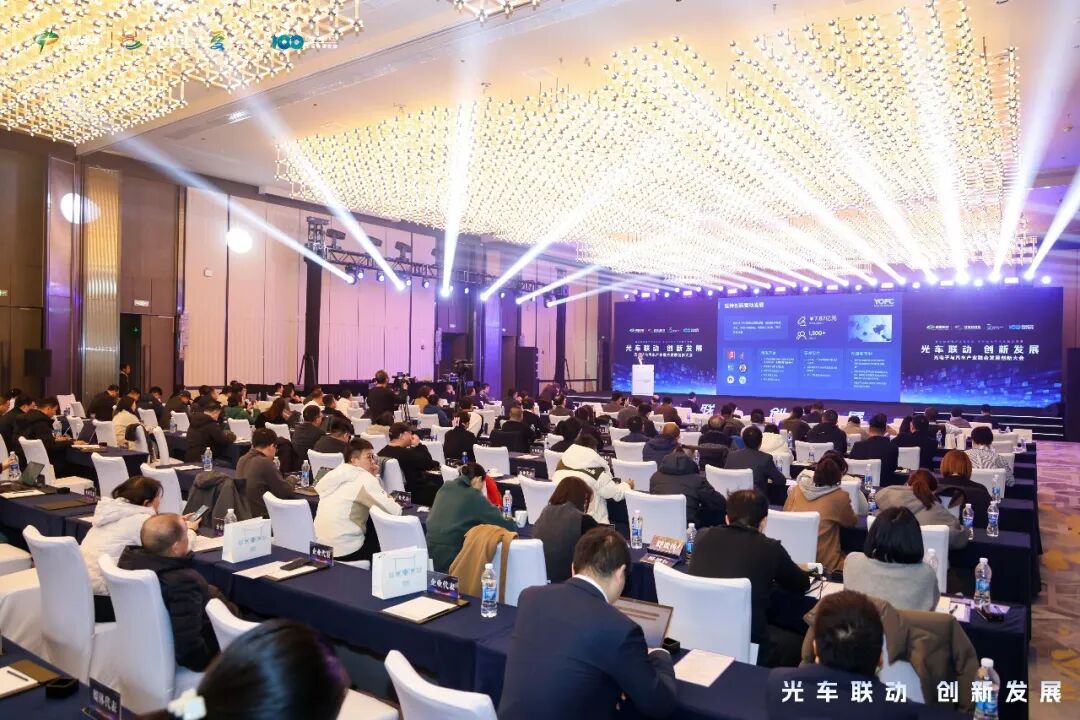
“光纤上车”爆发前夜 武汉抢占“光车融合”先机
Di Yi Cai Jing· 2026-01-19 06:50
Group 1 - The core viewpoint is that the integration of optical communication technology in the automotive industry is expected to lead to a significant transformation, marking the beginning of a new phase characterized by "optical-vehicle fusion" technology [1][2] - A collaborative initiative called "Optical-Vehicle Linkage" was signed by several companies and local governments in Wuhan, focusing on key areas such as automotive-grade chips, smart sensors, and optical communication [1] - Wuhan is positioned as a key hub for both the optical information and automotive industries, with a production capacity of 2.27 million vehicles and a historic increase in the share of new energy vehicles to 55% [1][2] Group 2 - The optical information industry in Wuhan is projected to reach a scale of approximately 850 billion yuan by 2025, with electronic information manufacturing contributing about 445 billion yuan and software business revenue at 405 billion yuan [2] - The automotive industry in China is expected to exceed 10 trillion yuan in revenue by 2025, providing significant application scenarios for new technologies such as semiconductors and artificial intelligence [2] - Companies like Wuhan Haimei Technology and Wuhan Binary Semiconductor are making advancements in automotive-grade reliability and high-speed optical communication technology, respectively, with the latter's first domestically produced high-performance MCU chip set to be launched this year [3] Group 3 - Yang Zhiyong, chairman of Wuhan Binary Semiconductor, emphasized the advantages of optical fibers over traditional copper cables, including higher bandwidth, lighter weight, and better resistance to electromagnetic interference [3] - Changfei Company, a leader in the optical fiber market, predicts that the economic benefits from the transition to optical fibers in vehicles could reach a scale of hundreds of billions [4] - Zhang Yongwei, chairman of the Automotive Industry Association, highlighted the need for a sustainable industrial ecosystem to facilitate the deep integration of communication, optics, and artificial intelligence into the automotive sector [4]


中国汽车设计与全球汽车的对话
Zhong Guo Qi Che Bao Wang· 2026-01-19 03:39
Core Insights - The automotive industry is undergoing a significant transformation, with rapid product and technology iterations and increasingly diverse user demands. The design philosophy and values of automobiles are evolving, emphasizing the importance of brand culture and values in automotive design [1] Group 1: Globalization of Chinese Automotive Design - Chinese automotive design is entering a global era, with increasing visibility and recognition on the world stage. The transition from "Made in China" to "Chinese aesthetics" signifies a growing resonance of Chinese automotive design globally [1] - The discussion at the 18th "China Automotive News" Consumer Model Ceremony highlighted the global development of Chinese automotive design, with industry leaders sharing insights on this evolution [2][4] - The integration of electric and intelligent technologies into automotive products is expanding the definition and functionality of vehicles, presenting both challenges and opportunities for design [6][7] Group 2: Design Challenges and Innovations - The automotive design landscape faces challenges such as homogenization, where differentiation through design becomes crucial as technology reaches a level of parity. This necessitates a focus on design innovation to create unique product value [8] - The integration of AI tools in design processes is reshaping the role of designers, enhancing their capabilities while also raising questions about the future of design jobs [9] - The long-term vision for automotive design must balance current market demands with sustainable brand development, moving beyond superficial design elements to create meaningful user experiences [14][18] Group 3: Cultural Transmission through Design - Chinese automotive design plays a critical role in conveying cultural values and narratives to the global market, facilitating a deeper understanding of Chinese culture and innovation [11][10] - The evolution of design education and the emergence of talented Chinese designers are contributing to the global competitiveness of Chinese automotive products [12][13] - The design process must focus on user needs and experiences, ensuring that products resonate with consumers while also reflecting the brand's identity and values [20] Group 4: Future Directions in Automotive Design - The future of automotive design will require a shift towards creating value for users, with designers potentially evolving into lifestyle designers who address broader consumer needs [19] - Continuous adaptation to market demands and technological advancements will be essential for maintaining competitiveness in the global automotive landscape [16][17] - The establishment of a global design framework is necessary for Chinese automotive companies to effectively respond to international market challenges and consumer expectations [12][13]





重要倡议,武汉发起!
Chang Jiang Ri Bao· 2026-01-19 00:43
Core Viewpoint - The "Light and Vehicle" dialogue in Wuhan emphasizes the integration of optoelectronics and the automotive industry, marking a significant step in promoting the deep fusion of these two key sectors in the context of intelligent and connected vehicles [1][3]. Group 1: Industry Integration - The initiative aims to create a development blueprint, focus on key innovations, build an open ecosystem, unify industry standards, and establish demonstration benchmarks, highlighting Wuhan's strategy to leverage its strengths in both optoelectronics and automotive sectors [3][5]. - The automotive industry is seen as a hallmark of integrated development, with the fusion of communication, optoelectronics, and artificial intelligence being crucial for China's automotive sector to surpass its competitors [5][9]. - Wuhan has established a trillion-yuan industry cluster centered around "light, chip, screen, terminal, and network," positioning itself as a global leader in optical fiber and cable manufacturing [5][7]. Group 2: Technological Advancements - Wuhan's industry is making strides in core technologies, with the establishment of Wuhan Binary Semiconductor Co., which is on the verge of mass production of a domestically developed automotive-grade MCU chip, expected to be on vehicles by 2026 [10][11]. - The transition from copper to fiber optics in automotive applications is anticipated, with fiber optics offering advantages in bandwidth, weight, and electromagnetic interference resistance, making it ideal for next-generation vehicle networks [10][11]. - Companies like Longfei and Dongfeng are collaborating on smart automotive optical communication solutions, demonstrating the reliability of these technologies through extensive road tests [11]. Group 3: Ecosystem Development - The initiative for "light-vehicle fusion" is just the beginning; a sustainable industrial ecosystem must be built to deepen this integration, addressing technical links, vehicle standards, and certification issues [12][14]. - Standardization is identified as a cornerstone for high-quality industry development, with participants committing to collaboratively advance standard-setting efforts [12]. - The potential economic benefits from the integration of fiber optics into vehicles are projected to reach billions, significantly enhancing the synergy across the supply chain [12][14]. Group 4: Future Outlook - The automotive sector's components can be adapted for use in robotics and other fields, indicating a broader application of technologies developed through "light-vehicle fusion" [14]. - The internationalization of these innovations is crucial, as Chinese smart components are already leading in various fields, and the integration could yield globally competitive optical devices [14]. - The presence of a complete upstream and downstream industrial chain in Wuhan is attracting interest from companies looking to establish a foothold in this promising market [14].
新能源牵引车全年销超17万辆增216%!解放/徐工/三一破2万 TA们暴涨 | 头条
第一商用车网· 2026-01-18 13:06
Core Viewpoint - The domestic sales of new energy heavy trucks in December 2025 exceeded 45,300 units, marking a year-on-year increase of 198%, setting a new monthly sales record [1][4]. Group 1: Market Performance - In December 2025, the sales of new energy heavy trucks reached 45,300 units, a month-on-month increase of 62% and a year-on-year increase of 198% [4]. - New energy traction trucks accounted for 76.62% of the new energy heavy truck market in December 2025, a slight decrease from the previous month [6]. - The overall sales of heavy trucks in December 2025 were 84,000 units, with traction trucks contributing 51,600 units, reflecting a year-on-year growth of 21% [10]. Group 2: Sales Trends - The new energy traction truck market has shown consistent growth, with sales exceeding 10,000 units for ten consecutive months starting from March 2025 [8]. - December 2025 saw a record monthly sales of 34,700 units for new energy traction trucks, continuing the trend of explosive growth [8][16]. - The average year-on-year growth rate for new energy traction trucks in 2025 reached 239%, with total sales for the year amounting to 176,500 units, an increase of over 120,000 units compared to 2024 [26]. Group 3: Market Share and Competitors - In 2025, the top three companies in the new energy traction truck market were FAW Jiefang, XCMG, and SANY, with cumulative sales of 28,000, 27,400, and 22,900 units respectively [20][23]. - The market share of FAW Jiefang increased by 2.0 percentage points compared to 2024, reaching 15.8% [24]. - A total of 31 companies participated in the new energy traction truck market in 2025, indicating a sustained competitive landscape [19]. Group 4: Regional Distribution - New energy traction trucks were registered in all 31 provincial-level administrative regions in China, with significant concentrations in Shanghai, Guangdong, and Shanxi, which together accounted for over 40% of the market share [13].




2025商用车销量榜:福田超64万辆登顶,重汽/东风超40万拼前二,谁领涨?| 头条
第一商用车网· 2026-01-17 13:36
Core Viewpoint - The commercial vehicle market in China has shown consistent growth since June 2025, with total sales expected to exceed 4 million units for the year, reaching approximately 4.2965 million units, marking a year-on-year increase of 11% [1][17][25]. Sales Performance - In December 2025, the commercial vehicle market sold 425,000 units, reflecting an 8% month-on-month increase and a 15% year-on-year increase, although the growth rate compared to the previous month decreased by 9 percentage points [3][10]. - The December 2025 sales figure is the highest for that month in the past five years, surpassing December 2024 by approximately 56,400 units and exceeding the lowest figure from December 2022 by over 130,000 units [5]. Market Share and Rankings - The top ten companies in December 2025 accounted for 72.5% of the market share, with the top five companies holding over 46.7% [14]. - Foton led the monthly sales with 57,700 units, maintaining its position as the annual sales champion for 2025 [9][19]. - The rankings of companies in the top ten saw changes, with Dongfeng and Changan moving up in the rankings, while some companies experienced declines [15]. Yearly Performance of Leading Companies - Foton's total sales for 2025 exceeded 600,000 units, while other leading companies like Heavy Truck and Dongfeng also surpassed 400,000 units, with sales figures of 428,200 and 403,100 units respectively [19]. - The overall market share for the top ten companies reached 75.3%, with Foton and Heavy Truck having market shares of 15.0% and 10.0% respectively [22]. Industry Trends - The commercial vehicle market has shown a competitive landscape with significant shifts in rankings and market shares among leading companies, indicating a dynamic and evolving industry [23]. - The year 2025 concluded with a strong performance, setting the stage for potential developments in 2026 [25][26].

【联合发布】一周新车快讯(2026年1月10日-1月16日)
乘联分会· 2026-01-16 08:50
Core Viewpoint - The article provides an overview of new vehicle models set to launch in January 2026, detailing specifications, pricing, and market segments for various manufacturers, highlighting the competitive landscape in the automotive industry. Group 1: New Vehicle Launches - BYD's Song Pro DM-i is scheduled for release on January 10, 2026, positioned as an A SUV with a price range of 12.28 to 13.08 million yuan, featuring a 1.5L plug-in hybrid engine and a pure electric range of 220 km [9]. - Chery's QQ Ice Cream will also launch on January 10, 2026, classified as an A00 HB, with a price range of 4.39 to 4.99 million yuan, powered by a pure electric engine and offering a range of 220 km [17]. - The Chery Little Ant is set to debut on the same day, with a price range of 5.49 to 6.09 million yuan and a pure electric range of 271 km [25]. - Dongfeng Nissan's Qichen D V DD-i will launch on January 13, 2026, as an A SUV, priced between 12.99 and 14.99 million yuan, featuring a 1.5T plug-in hybrid engine [33]. - BAIC's ARCFOX Kaola S will also be released on January 13, 2026, as an A SUV, with prices ranging from 9.98 to 11.98 million yuan and a pure electric range of 520 km [41]. Group 2: Specifications and Features - The Song Pro DM-i has dimensions of 4,735 mm in length, 1,860 mm in width, and 1,690 mm in height, with a wheelbase of 2,712 mm [9]. - The QQ Ice Cream measures 3,030 mm in length, 1,496 mm in width, and 1,637 mm in height, with a wheelbase of 1,960 mm [17]. - The Little Ant has dimensions of 3,242 mm in length, 1,670 mm in width, and 1,550 mm in height, with a wheelbase of 2,150 mm [25]. - The Qichen D V DD-i features dimensions of 4,620 mm in length, 1,917 mm in width, and 1,629 mm in height, with a wheelbase of 2,700 mm [33]. - The ARCFOX Kaola S has dimensions of 4,500 mm in length, 1,870 mm in width, and 1,675 mm in height, with a wheelbase of 2,820 mm [41]. Group 3: Market Positioning - The Song Pro DM-i targets the A SUV segment, indicating a focus on the growing demand for hybrid vehicles in the SUV market [9]. - The QQ Ice Cream and Little Ant are positioned in the A00 HB segment, appealing to budget-conscious consumers seeking electric vehicles [17][25]. - The Qichen D V DD-i and ARCFOX Kaola S are also targeting the A SUV segment, reflecting the competitive nature of this market with multiple new entrants [33][41].



向质而行!2025中国汽车驶出增长新动能
Zhong Guo Jin Rong Xin Xi Wang· 2026-01-15 13:33
Group 1 - The core viewpoint of the article highlights that China's automotive industry has achieved significant milestones in 2025, with production and sales both exceeding 34 million units, and new energy vehicles (NEVs) surpassing 16 million units, marking a continuous 17-year dominance in the global market [1][2] - The market share of NEVs in domestic new car sales has exceeded 50%, indicating that NEVs have become the dominant force in China's automotive market [2][3] - Major breakthroughs in the automotive sector include BYD surpassing Tesla in annual pure electric vehicle sales, and significant milestones achieved by other companies like FAW-Volkswagen and Changan Automobile [2] Group 2 - The penetration of intelligent assisted driving technology has accelerated, with over 60% of new passenger cars sold featuring advanced driving assistance systems [3] - The cost of battery cells has decreased, and improvements in battery life and charging speed have alleviated "range anxiety" for electric vehicles, with a growing charging infrastructure [3] - The automotive industry is experiencing a convergence with robotics and low-altitude economy, creating a new ecosystem that enhances technological integration and innovation [6] Group 3 - The automotive industry in China is undergoing a phase of standardization, with measures being implemented to regulate market competition and ensure safety [7][9] - A series of reforms have been introduced to combat "involution" in the market, promoting a shift from scale expansion to value enhancement among car manufacturers [9][10] - The "14th Five-Year Plan" emphasizes the importance of building a modern industrial system and enhancing the supply-demand adaptability of consumer goods, with smart connected vehicles being a key focus area [10]


东风股份:海外出口重点市场包括中南美、东南亚、非洲、中东等地区
Zheng Quan Ri Bao Wang· 2026-01-15 11:43
Group 1 - The company, Dongfeng Motor Corporation, has identified key overseas export markets including Central and South America, Southeast Asia, Africa, and the Middle East [1] - The main export products of the company include light trucks, micro and small trucks, micro vans, and buses [1]
新能源重卡12月实销超4.5万辆!重汽超6000辆摘冠,徐工/三一/解放累销破3万 | 头条
第一商用车网· 2026-01-15 11:30
Core Viewpoint - The Chinese new energy heavy truck market achieved record sales in December 2025, with a total of 45,300 units sold, marking a year-on-year increase of 198% and a total annual sales of 231,100 units, up 182% from the previous year [1][3][5]. Sales Performance - December 2025 saw sales of 45,300 new energy heavy trucks, a 62% increase from November 2025 and the highest monthly sales ever recorded [3][5]. - The overall heavy truck market sold 84,000 units in December 2025, with new energy trucks accounting for 53.89% of total sales, surpassing the 50% penetration rate for the first time [5][7]. - The new energy heavy truck market has maintained a growth streak, with 35 consecutive months of year-on-year increases, and the total sales for 2025 reached 231,100 units, a net increase of nearly 150,000 units compared to 82,000 units in 2024 [7][19]. Market Dynamics - The surge in December sales was influenced by the impending expiration of the old truck replacement policy and changes in tax incentives for new energy vehicles starting January 1, 2026, leading to a potential overestimation of actual market demand [5][29]. - The penetration rate of new energy heavy trucks has consistently increased, starting from over 20% in March 2025 and exceeding 30% in November, reaching 50% in December [7][19]. Company Performance - In December 2025, 21 companies sold over 100 units, with 13 exceeding 500 units and 6 surpassing 4,000 units, indicating a highly competitive market [11][12]. - The top five companies in December all sold over 5,000 units, with China National Heavy Duty Truck Group leading at 6,022 units, followed by SANY and XCMG [10][14]. - The market share of the top ten companies accounted for 89.3% of total sales, with the top five companies holding 60.7% [18][19]. Yearly Overview - In 2025, 14 companies sold over 1,000 units, with the top three companies (XCMG, SANY, and FAW Jiefang) each selling over 30,000 units [21][26]. - The overall market share for the top five companies increased significantly, with notable growth for FAW Jiefang, China National Heavy Duty Truck Group, and Shaanxi Automobile [26][27]. - The total sales for new energy heavy trucks in 2025 reached 231,100 units, reflecting a substantial increase in market activity and competition [22][28].



东风股份:2025年第三季度末股东户数为122486户
Zheng Quan Ri Bao Wang· 2026-01-15 10:11
Group 1 - The core point of the article is that Dongfeng Co., Ltd. (stock code: 600006) reported a total of 122,486 shareholders as of the end of the third quarter of 2025 [1]